
Veterinary & Affiliate Disclaimer: Bunnyowners.com shares educational rabbit care resources, not professional veterinary advice. Always consult a qualified veterinarian regarding your rabbit’s medical, dietary, or behavioral needs. This post may also contain affiliate links; as an Amazon Associate and affiliate partner, we earn from qualifying purchases at zero extra cost to you.
Rabbits are masters of the poker face, naturally hiding pain, dental issues, or stomach discomfort to avoid showing weakness to potential predators. Because of this deep survival instinct, waiting for your pet to look obviously sick is a dangerous strategy that often leaves you dealing with an advanced medical crisis. If you want to catch illnesses early, you have to look past their stoic exterior and learn how to proactively evaluate their health at home.
A complete at-home rabbit health check combines a weekly head-to-tail physical exam with daily tracking of your pet’s eating, drinking, and litter box habits. Using a digital scale to record exact weight and manually checking their body condition are the single most effective ways to catch hidden medical conditions early. This routine inspection allows owners to establish a normal physical standard, making it easy to identify subtle abnormalities before they escalate into health crises.
While learning your pet’s normal physical standard is your primary goal, the real trick is knowing how to handle your rabbit safely and non-invasively. This guide walks you through the exact mechanics of a quick weekly check, providing a structured head-to-tail protocol that covers visual signs, physical touch, and simple health records. By pairing this routine with reliable rabbit health guides and mastering these preventive steps, you can confidently protect your rabbit’s delicate system and spot tiny changes before they turn serious.
1. Why Regular Rabbit Health Checks Matter
Catching a hidden health shift before it spirals into a major veterinary emergency comes down to understanding exactly how your rabbit processes pain.
Rabbits Naturally Mask Pain
Because rabbits are evolutionarily hardwired as prey animals, they do not complain, whine, or sigh when they are hurting. A rabbit with a jagged tooth spur or an early ear infection might still hop around, destroy your baseboards, and act completely fine. If you only react when your rabbit completely refuses food, you have missed the golden early window where treatment is straightforward. Weekly checks allow you to peek behind the curtain before their body gives out.
The Benefits of Weekly Checks
Turning this physical exam into a weekly ritual gives you a massive advantage in managing your rabbit’s long-term health:
Table 1: At-Home Preventive Metrics and Long-Term Health Impact
| Preventive Metric | Practical Benefit | Long-Term Health Impact |
| Early Detection | Identifies minor skin scratches, early ear mites, or tiny heel calluses before they worsen. | Prevents localized abnormalities from turning into severe, deep-tissue infections. |
| Baseline Calibration | Teaches your hands the exact normal density of your rabbit’s belly and the typical clear look of their eyes. | Eliminates guesswork, allowing you to instantly notice when something feels off. |
| Vet Desensitization | Habituates your rabbit to regular handling, paw manipulation, and close anatomical inspection. | Drastically lowers your rabbit’s stress levels and blood pressure during clinic visits. |
| Longitudinal Tracking | Collects weekly physical data and exact weight points in a dedicated tracking sheet. | Uncovers gradual, slow-moving health declines that are invisible day-to-day. |
Monitoring vs. Diagnosing
It is vital to distinguish between monitoring an animal and diagnosing a disease. A home health check is a screening tool, not a replacement for a veterinary degree. If your weekly check reveals an unexpected lump, a wet chin, or crusty ears, your job is officially done. Your next step is simply to pick up the phone and schedule a visit with a specialized veterinarian who actually understands exotic pets.
2. How Often Should You Check Your Rabbit?
Staying on top of your rabbit’s wellness doesn’t require constant wrestling; it relies on a strategic balance between simple daily observation and a structured weekly exam.
Daily Observations (1–2 Minutes)
A daily check requires zero handling. It is simply a conscious mental assessment you perform while feeding your rabbit or scooping out their living space.
- Appetite: Do they rush over with unbridled enthusiasm for their morning hay, pellets, or fresh greens?
- Poop: Is the litter box predictably full of normal, round, uniform pellets?
- Activity: Are they up, alert, and moving around normally during their active morning and evening hours?
- Breathing: Is their breathing quiet and relaxed, without any loud clicking, wheezing, or heavy chest movement?
Weekly Hands-On Check
This is the full physical examination covered in this guide. Once a week, you will physically evaluate your rabbit from their nose down to their tail, part their fur to inspect the skin, and document their overall condition.
3. Preparing for Your Rabbit’s Health Check
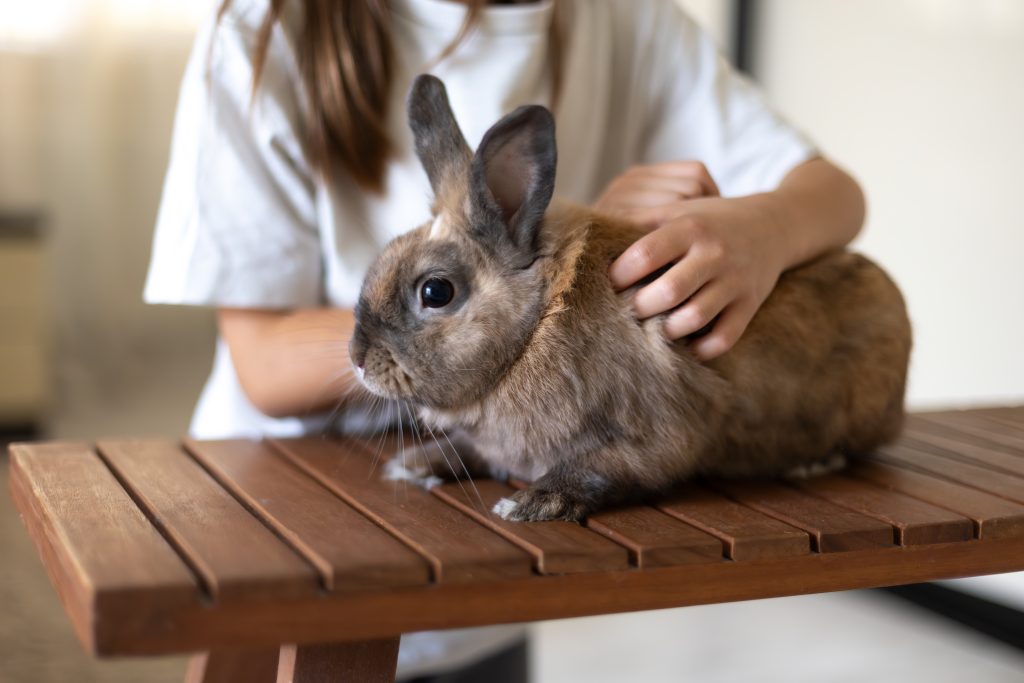
Before you even pick up your rabbit, you need to set up a calm environment and lay out your tools to ensure the process remains quick and entirely stress-free.
Choose a Safe Spot
Pick a quiet room where you can work without disruptions from loud noises, children, or predatory household pets like dogs and cats.
Set up the exam on a waist-high surface like a sturdy table to save your back. Never place a rabbit directly on a slick surface like polished wood, laminate, or stainless steel. They will instantly panic if they cannot grip the floor, which leads to a dangerous, high-stress struggle. Always cover the table with a non-slip rubber mat or a thick, dry cotton towel so they feel completely anchored.
Gather Your Supplies
Have your clinical toolkit laid out on your workspace before you bring your rabbit over to avoid awkward mid-exam scrambles:
Table 2: Essential At-Home Rabbit Examination Toolkit
| Exam Tool | Intended Purpose | Clinical Value |
| Digital Scale | Obtains exact weight measurements down to the nearest ounce or gram. | The single most precise tool for catching early metabolic shifts or hidden illness. |
| Small Cotton Towel | Stabilizes the rabbit on the table or provides a secure wrap for wiggly animals. | Minimizes struggling and keeps the spine perfectly aligned during inspection. |
| Penlight / Flashlight | Directs bright, focused light down into the narrow ear canals and behind the lips. | Illuminates internal anatomical pathways to spot early wax plugs or tooth damage. |
| Notebook or Log Sheet | Immediately records numerical weight metrics, physical scores, and habits. | Removes human bias and reliance on memory, building a reliable health archive. |
| High-Value Treats | Bribes your rabbit with fresh herbs (cilantro, parsley) or a single food pellet post-exam. | Reconditions the exam table as a rewarding space, preserving your bond. |
Safe Handling Techniques
When lifting a rabbit, you must always support their heavy hindquarters. Their bones are incredibly fragile, but their back leg muscles are immensely powerful. If they kick out wildly into thin air, they can actually exert enough force to injure their own spine.
Slide one hand under their chest right behind the front legs, scoop up their bottom securely with your other hand, and hold them close against your body as you move them to the table. Handling is never one-size-fits-all, and adapting to individual quirks is half the battle. For example, my rabbit Chino gets incredibly nervous on raised tables unless he can bury his nose under a folded towel to pretend he’s completely invisible. Paying attention to what makes your specific rabbit feel secure prevents them from panicking during the exam.
Never flip a rabbit onto their back to check them. This makes them freeze completely because of a severe fear response known as tonic immobility. Understanding physiological responses to stress is vital for minimizing handling risk; you can read the clinical boundaries on lagomorph anxiety handling via the FAB Clinicians Guide on Rabbit Welfare and Low-Stress Management. If your rabbit struggles violently or thumps in high distress, stop the exam immediately, put them back on the floor, and try again when they have calmed down.
⚠️ CRITICAL WARNING: If your rabbit ever goes completely limp, breathes through an open mouth, or has icy cold ears during handling, stop everything. This is a major medical emergency. Get them to a vet immediately.
4. What Is Normal for Your Rabbit?
Before you begin the physical exam, remember that there is no single “perfect” blueprint for a rabbit. Some breeds naturally have massive dewlaps (the large fold of skin under the chin that looks like a built-in travel pillow), while others are completely sleek.
Similarly, older rabbits often move with a bit less flexibility due to normal aging, and certain individuals naturally breathe a little faster or weigh more than others of the exact same breed.
Your true goal is to discover what is normal for your specific rabbit. A minor deviation on a generic internet chart is far less important than a sudden shift away from your rabbit’s personal regular habits. By conducting these checks weekly, you will learn your pet’s unique baseline.
5. Step 1 – Observe Before Touching
Hands-off observation is a crucial first step that reveals crucial details about your rabbit’s comfort level before you ever trigger their defensive masking instincts by handling them.
Watch Their Posture
Take a minute to watch your rabbit while they are sitting quietly in their normal pen. A happy, healthy rabbit uses a variety of relaxed body positions, like flopping completely on their side like a discarded plush toy, or lounging in a relaxed “loaf” position with their front paws tucked neatly inward.
An abnormal finding is a rigidly hunched position where the rabbit sits tightly balled up, keeping their belly lifted off the floor, or repeatedly pressing their stomach flat against the ground in clear discomfort.
Check Their Movement
Encourage your rabbit to hop a short distance across a non-slip floor. Healthy locomotion should look balanced, smooth, and completely effortless.
Pay close attention to how their back legs move; both sides should push off with equal strength. Check whether there are any indicators of a limp, a shortened step, stiffness when they first stand up, or dragging a foot.
Assess Their General Behavior
Healthy rabbits are naturally nosey, alert to sounds, and intensely interested in what is happening around them. They actively groom themselves and interact willingly with their environment. If you want a complete diagnostic framework of normal vs. subtle clinical shifts, review our diagnostic overview on whether your rabbit’s behavior or eating habits are changing
Be alert if a normally friendly rabbit suddenly withdraws, hides in a dark corner, acts aggressively when approached, or ignores their favorite green vegetable. This behavior is a loud announcement that something is physically wrong.
Count Their Breathing Rate
Watch the rise and fall of your rabbit’s chest while they are resting quietly. A normal adult rabbit takes between 30 and 60 breaths per minute. If you count a rate far outside this frame while they are resting, it’s vital to explore the distinct triggers behind why your rabbit is breathing fast immediately.
The breathing should be completely silent. Flared nostrils, heavy pumping motions in the stomach, wheezing, or open-mouth breathing are major red flags that require urgent veterinary attention.
6. Step 2 – Check from Head to Tail
Running through a methodical, head-to-tail physical inspection allows you to screen every major anatomical zone for the earliest signs of localized irritation or structural changes.
Eyes
Gently stabilize your rabbit’s head to look at their eyes.
- ✓ Bright, clear, and fully open
- ✓ Symmetrical on both sides of the face
- ✓ Dry fur around the eyelids
An abnormal finding includes watery eyes, thick white crust, hair loss around the eyelids, or cloudiness inside the eye itself. These signs often point to deep-seated issues like blocked tear ducts or dental root changes. If you notice epiphora, exploring the underlying causes behind your rabbit’s watery eyes can help differentiate simple hay dust from a progressive eye infection. For a detailed breakdown of clinical diagnostics, review the Merck Veterinary Manual Guidance on Rabbit Conjunctivitis and Ocular Disease.
Nose
Healthy rabbits should have nostrils that are clean, open, and dry.
Check whether clear or thick white nasal discharge, wetness, or frequent sneezing are present. Because rabbits clean their faces using their front legs like windshield wipers, always check the fur on the inside of their front paws. If the nose looks dry but the fur on their front paws is matted or crusted, it means they have been wiping away nasal discharge, a classic secondary sign of chronic respiratory problems.
Ears
For lop-eared rabbits, gently lift the ear flap; for upright-eared rabbits, look straight down into the ear canal using your small flashlight. A healthy inner ear canal should feature smooth, pale pink skin that is completely clear of debris, with no distinct odor. Localized inflammation deep within the canal can quickly disrupt balance, making it critical to identify classic rabbit ear infection symptoms early.
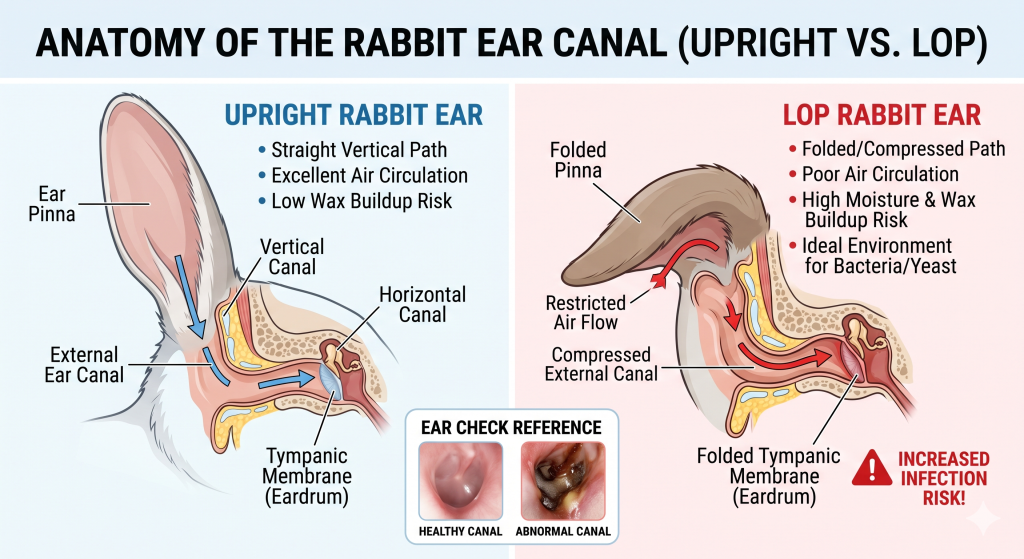
When examining the ears, look out for any accumulation of dark brown chunks that resemble coffee grounds, thick white fluid, or localized redness. Ear mites are highly contagious and spread quickly between animals; you can review structural damage and parasite profiles via the Medirabbit Archive on Parasitic Ear Mites.
Teeth and Mouth
Never try to force your rabbit’s mouth wide open at home—you can easily hurt their delicate jaw. Instead, gently pull back their lips to check the front incisors. The two top front teeth should cleanly overlap the two bottom teeth, allowing them to naturally wear each other down as they chew.
Check for broken teeth, jagged edges, or teeth that are growing sideways or curling backward into the mouth like tiny tusks. An abnormal finding includes a wet chin or drool mats along their neck, which is a major indicator of painful molar spurs further back in the mouth. Progressive structural issues can lead to severe issues over time; catch molar points early to prevent the advanced cascades associated with systemic dental disease in rabbits and overgrown teeth. You can also learn more about root anatomy via the House Rabbit Society Health Registry on Rabbit Teeth and Dental Problems.
Coat and Skin
Systematically run your fingers through your rabbit’s fur, parting it down to the skin against the natural direction of the hair. Healthy skin should be smooth, clean, and free of discoloration.
Look out for bald spots, red irritated skin, scabs, or a sudden buildup of heavy, white dandruff flakes along their back or between their shoulder blades. Heavy flaking is often caused by walking dandruff mites (Cheyletiella), which need targeted prescription treatment to clear safely.
Feel the Body
Gently press the pads of your fingers along your rabbit’s entire body. Start at the base of their head and move slowly down their neck, shoulders, back, sides, and down each leg.
Your goal is to check for any hard lumps, soft fluid-filled bumps, swelling, or localized heat. Pay close attention to how your rabbit reacts. If they flinch, grunt, or try to nip when you touch a specific spot, you have found an area of localized pain or injury.
Feet and Nails
Support your rabbit securely so you can look at the bottoms of their feet. Rabbits do not have soft, squishy foot pads like cats or dogs; they rely entirely on a thick cushion of coarse fur to protect their heel bones. Part the fur on their back heels to check the skin underneath.
The skin should be completely intact and pale pink. If you see bare skin, a hard red callus, or an open sore, your rabbit is developing ulcerative pododermatitis. For clinical pressure-point tracking and treatment options, look at the University of Missouri CVM Clinical Guide on Ulcerative Pododermatitis in Rabbits. Finally, ensure their nails are short enough that they don’t curl sideways or catch on bedding. If you observe them chewing at their digits during your inspection, exploring why rabbits bite their nails can reveal whether it’s normal grooming or stress.
Rear End and Scent Glands
Look closely at the area beneath your rabbit’s tail. The fur and skin here must be perfectly dry, clean, and free of any stuck poop or yellow urine staining.
Wet, urine-stained fur causes raw sores. Stuck cecotropes (the soft, shiny droppings rabbits normally eat) can cause a messy buildup on the fur, which dramatically increases the risk of flystrike during warm weather. Because this parasitic infestation progresses with terrifying speed, reviewing a dedicated breakdown on rabbit flystrike emergency symptoms and care
is highly recommended for all caretakers. You can explore additional prevention parameters via the RSPCA Guidelines on Flystrike Risk Factors and Prevention.
While you are checking the rear end, check the two small pockets of skin on either side of their genitals—the scent glands. These can collect a dark, waxy, smelly buildup over time. If you notice a strong odor or a hard plug of wax, gently wipe the area clean with a damp cotton swab.
7. Step 3 – Weight and Body Condition
Relying on visual checks isn’t enough to track nutritional status; you need to combine the concrete numbers of a digital scale with hands-on body scoring to look past a fluffy coat.
Use a Digital Scale
Because rabbits are small animals, a loss of just a few ounces is a major red flag. It is often the very first sign of a hidden health issue before any behavioral changes appear.
Always place your digital scale on a flat, hard surface. Weigh your rabbit at the same time of day (before their morning meal is best) to get a true comparison, and write the number down to the exact ounce or gram.
Assess Their Body Condition Score
A fluffy coat can easily hide a skeleton that is losing muscle mass. You must physically feel their body shape to know if their weight is healthy. Gently run your hand over their spine, ribs, and hip bones.
Table 3: Physical Assessment Metrics for Skeletal Fat Density
| Body Condition | What It Feels Like |
| Underweight | The spine, ribs, and hip bones feel sharp, jagged, and very prominent under your fingers. |
| Ideal Weight | You can easily feel the bones under a thin layer of fat, but they feel smooth and rounded. |
| Overweight | The bones are difficult to locate at all, buried under a thick, soft layer of fat pads. |
A real-world data point from our internal tracking at BunnyOwners.com highlights this well: my resident rabbit, Mocha, showed a steady 4% drop in weight on the scale over a two-month period. She was acting completely fine and eating her hay as usual, but that clear downward trend prompted me to get an early dental check.
Sure enough, she had a tiny molar spur starting to form; catching it early kept her from going into full stomach stasis. If your fingers begin tracking prominent spinal structures, exploring the metabolic triggers behind why your rabbit is losing weight should be your immediate next step.
8. Check Your Rabbit’s Daily Habits
Monitoring the subtle patterns of your rabbit’s litter box and food bowl acts as a sensitive, real-time diagnostic window into their delicate gastrointestinal system.
Appetite Shifts
A healthy rabbit needs a steady supply of grass hay to keep their digestive tract moving. They should show an immediate, enthusiastic interest when you offer fresh hay, daily pellets, or leafy greens.
If your rabbit suddenly becomes a picky eater, chews their food incredibly slowly, or lets pieces drop out of their mouth, they are likely dealing with oral pain or the very early stages of a digestive shutdown. Specifically, tracking why your rabbit is not eating hay but eating pellets is an essential diagnostic line for identifying early dental root shifts.
Water Tracking
Take note of how much water your rabbit drinks each day. While their intake shifts depending on how warm the room is and how many wet greens they eat, sudden changes matter. Sudden fluid refusal is a severe threat to their kidneys; understanding the triggers behind a rabbit not drinking water can help you troubleshoot hydration dynamics before clinical complications arise.
Droppings (The Litter Box Window)
Your rabbit’s daily fecal output serves as an incredibly accurate, real-time snapshot of their internal digestive health. Healthy droppings should ideally look like large, uniform, round spheres packed with tightly compressed, visible fragments of hay.
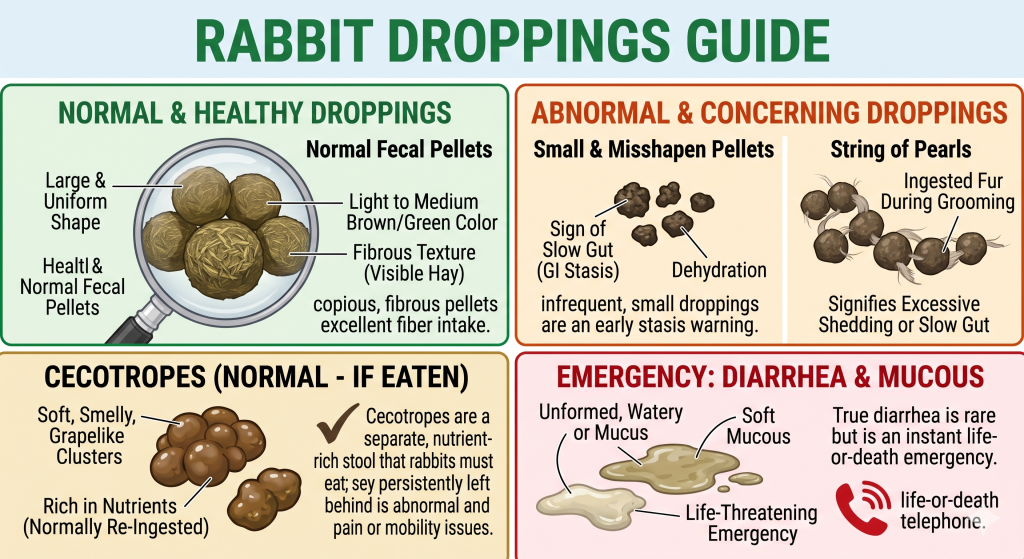
When reviewing the litter box during your weekly check, look out for any distinct abnormalities. This includes pellets that are suddenly very small, hard, dark, or misshapen, as well as clusters of droppings strung together like a necklace by swallowed fur. Recognizing exactly why your rabbit’s poops are small or dry lets you intercept GI slow-down early. For a structural breakdown of these fecal shifts, cross-reference the Rabbit Welfare Association & Fund (RWAF) Rabbit Digestion and Healthy Poo Guide.
Urine Colors and Consistency
Rabbit urine can naturally range in color from pale yellow and amber all the way to orange or dark rust-red. Healthy urine should be a clear liquid that leaves a light, powdery white residue when it dries.
However, if you notice distinct changes in consistency, texture, or excessive straining behaviors, caution is required. Bladder sludge or systemic issues can significantly impact urine density; if the output shifts from a watery amber to a thick, chalky paste, cross-referencing clear rabbit bladder sludge symptoms metrics will protect their renal pathways. You can also cross-examine symptoms using the VCA Animal Hospitals Guide on Bladder Sludge and Bladder Stones in Rabbits and Guinea Pigs.
9. Identify Signs of Pain
Rabbits don’t cry out, so mastering rabbit pain signs and how to identify them bridges the vital gap between simple observation and life-saving care:
Table 4: Behavioral and Postural Pain Assessment Markers
| Pain Indicator | Specific Signs to Look For | Hidden Physical Trouble |
| Facial Tension | Half-closed eyes, backward-pulled ears, and pinched cheeks with whiskers pointing down. | Indicates systemic discomfort, localized head trauma, or advanced dental pain. |
| Loud Teeth Grinding | A harsh, slow, crunching or clicking noise that sounds like gravel rubbing together. | Signals severe, unmanageable pain (distinct from soft, happy tooth “purring”). |
| Belly Pressing | Pressing the abdomen completely flat against the cold floor or switching spots constantly. | A classic sign of severe gas pain, a digestive block, or intestinal cramping. |
| Hunched Compaction | Sitting rigidly balled up in a corner, keeping their entire body weight off the stomach. | Indicates the rabbit is protecting an injured or highly inflamed internal region. |
10. Keep a Written Health Record
Data is only valuable if you write it down. Keep a simple notebook next to your rabbit supplies or use a digital spreadsheet to log your weekly checks. Record the date, their exact weight, and a quick “normal” checkmark for their eyes, nose, ears, teeth, skin, feet, rear end, appetite, and litter box output.
It can be incredibly helpful to cross-examine these logged figures with a structured rabbit health guide to see how your pet’s data maps against established developmental timelines. Note down the dates they trim their nails or when they receive their routine vaccinations. Having this historical record makes it incredibly easy to spot gradual health declines before they turn into major crises.
11. Printable Weekly Rabbit Health Checklist
Print this section or copy this table into your pet binder. Run through these 12 quick checks every week to stay completely ahead of hidden health issues.
Table 5: 12-Point Weekly Head-to-Tail Health Evaluation Matrix
| Body Zone | What to Check | Done? (✔) | Notes / Weight |
| 1. Posture | Is your rabbit sitting in a normal, relaxed loaf or flop? (Not rigidly hunched or pressing their belly into the floor). | □ | |
| 2. Movement | Are they hopping around smoothly? (No limping, stiffness when standing up, or dragging a foot). | □ | |
| 3. Breathing | Is their breathing completely quiet and relaxed? (No flare in the nose or heavy pumping in the belly). | □ | |
| 4. Eyes | Are both eyes bright, clear, and fully open? (No watery discharge, white crust, or cloudiness). | □ | |
| 5. Nose | Is the nose dry and clean? (Check the inside of the front paws too—ensure the fur there isn’t matted from wiping a wet nose). | □ | |
| 6. Ears | Is the skin inside pale pink and smooth? (No dark brown wax chunks, white fluid, or foul odor). | □ | |
| 7. Teeth & Chin | Do the front teeth overlap neatly? Is the chin bone bone-dry? (No crooked teeth or wet, drooly fur on the neck). | □ | |
| 8. Coat & Skin | Run your fingers backward through the fur. Is the skin smooth? (No bald spots, scabs, or heavy white dandruff flakes). | □ | |
| 9. Lumps & Bumps | Run your hands gently over their head, back, belly, and legs. Did they flinch or show any pain? (No new lumps or swellings). | □ | |
| 10. Back Heels | Are the bottoms of the back feet covered in thick, clean fur padding? (No bare skin, red calluses, or open sores). | □ | |
| 11. Rear End | Is the fur under the tail dry and perfectly clean? (No stuck poop, yellow urine stains, or dampness). | □ | |
| 12. Weekly Weight | Place your rabbit on your digital scale. Record the exact number below to catch any sudden drops early. | □ | Current Weight: ___________ |
💡 Quick Tip: Keep a few favorite herbs (like fresh cilantro or parsley) right next to your scale. Giving your rabbit a tiny treat the moment they step off the scale turns health check day into a positive routine they will actually look forward to!
12. Common Mistakes to Avoid
Even the most dedicated owners can accidentally overlook early health indicators by rushing through the process or relying purely on visual cues instead of physical touch.
- Only Checking When They Look Sick: If you wait until your rabbit shows obvious symptoms, you have lost the benefit of early detection. Consistency is what saves lives.
- Skipping the Scale: You cannot accurately judge a rabbit’s weight simply by looking at them or picking them up. Their thick, fluffy coat easily hides severe muscle loss. Always use a digital scale.
- Rushing Through the Steps: A hurried check means you will miss tiny crusts in the ears, early red calluses on the heels, or minor shifts in skin texture. Set aside an undisturbed ten minutes once a week.
- Brushing Off Small Changes: It is easy to assume a slightly watery eye is just a temporary speck of hay dust. In rabbits, minor changes are often the only warning you get. Treat any persistent change as a sign that needs monitoring or a vet visit.
13. When to Contact Your Vet
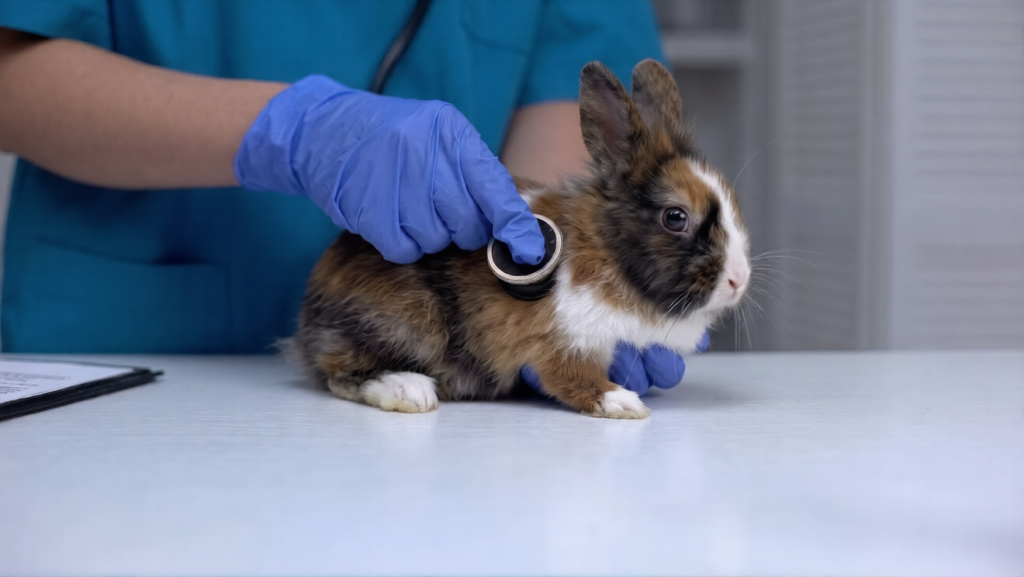
If your weekly home inspection reveals progressive or non-emergency changes, you should contact your rabbit-savvy veterinarian within 24 to 48 hours to arrange a regular appointment. Look out for these early warning signs:
- Gradual Weight Loss: A steady drop in overall body mass spanning two or more weeks.
- Ocular Changes: Chronic watery eyes or persistent damp, matted fur around the eye corners.
- Skin Abnormalities: Localized hair loss, dry flaking skin, unexplained scabs, or frequent scratching.
- New Growths: Any newly discovered lump, hard nodule, or unusual swelling on the body.
- Mobility Shifts: Persistent stiffness when rising or a minor change in how they hop.
Signs That Require Immediate Emergency Care
Because a rabbit’s condition can deteriorate rapidly, certain symptoms require skipping the regular scheduling process entirely. Head to an emergency exotic vet hospital immediately if your rabbit displays any of the following critical red flags:
- Loss of Appetite or Droppings: A complete refusal to eat food or a total stop in poop production. Waiting allows gastrointestinal issues to become rapidly life-threatening. For an acute diagnostic breakdown of gut standstill, read the emergency protocol on the PDSA Clinical Resource on Reduced Appetite and Gut Stasis in Rabbits.
- Severe Breathing Distress: Open-mouth breathing, loud clicking or wheezing sounds, or heavy, exaggerated abdominal gasping.
- Lethargy: A rabbit that is completely limp, unresponsive to your touch, or possesses ears that feel icy cold.
- Visible Abdominal Bloat: A stomach that feels uncharacteristically hard, tight, distended, or drum-like to the touch. Differentiating acute emergency distension from standard gas buildup is critical; parsing these complex rabbit bloated stomach patterns can save your pet’s life in a crisis. Read more about acute bloat dynamics via the Veterinary Partner Guide on Gastrointestinal Stasis and Blockages in Rabbits.
- Acute Traumatic Injury: Active bleeding, deep cuts, obvious fractures, or a sudden, complete inability to use their legs.
14. Frequently Asked Questions
How often should I perform a rabbit health check at home?
You should conduct a thorough, hands-on physical examination of your rabbit once per week. This weekly checking routine should be paired with quick, non-invasive visual observations every single day during feeding times to monitor their immediate appetite, breathing patterns, and litter box habits.
How long does a home rabbit health check take?
Once you and your pet become familiar with the head-to-tail handling routine, a complete physical assessment and weight measurement takes less than ten minutes. Setting aside this small window weekly is the most efficient way to catch hidden health developments early.
What is the very first sign of a sick rabbit?
The earliest indicator of a sick rabbit is almost always a subtle shift in their daily behavior or appetite. This frequently presents as a rabbit ignoring their favorite morning treat, hiding during hours they are normally social, or producing slightly smaller or fewer fecal pellets.
Can I check my rabbit’s back teeth at home?
No, you cannot safely inspect a rabbit’s back teeth at home. While you can easily check the front incisors by parting their lips, evaluating the back molars requires specialized medical tools, such as an otoscope or dental endoscope, used exclusively by a exotic veterinarian.
What should a healthy rabbit look like?
A healthy rabbit should appear alert, curious, and physically balanced. Key markers of good health include bright and clear eyes, clean nostrils, pale pink inner ears, a smooth and shiny coat, dry hindquarters, and a symmetrical, effortless hopping gait.
Why should I keep a written rabbit health log?
Maintaining a written health log is vital because it tracks slow, incremental physical changes—such as a gradual weight loss of a few ounces—that happen too slowly to notice day-to-day. This historical data provides your veterinarian with an invaluable timeline if your rabbit ever requires medical care.
15. Final Thoughts
Integrating a systematic, weekly home health check into your rabbit care routine is one of the most effective preventive habits you can develop. By dedicating just ten minutes each week to objective physical tracking, you transcend guesswork and establish a clear baseline for your animal’s health.
Remember that your primary objective is simply to observe and record deviations, not to perform medical interventions at home. By combining vigilant daily observations with methodical weekly checks and consistent professional veterinary care, you maximize your rabbit’s potential for a long, healthy, and comfortable life.
Medical & Veterinary Disclaimer: Bunnyowners.com is an informational resource for rabbit owners and enthusiasts. We are not veterinarians. The content on this website is for educational purposes only and is not a substitute for professional veterinary advice, diagnosis, or treatment. Always consult a qualified veterinarian with any questions or concerns regarding your pet’s health, medical conditions, diet, or overall care. If you have concerns about your rabbit’s health, it’s always best to reach out to a veterinarian rather than relying solely on information found online.