
Veterinary & Affiliate Disclaimer: Bunnyowners.com shares educational rabbit care resources, not professional veterinary advice. Always consult a qualified veterinarian regarding your rabbit’s medical, dietary, or behavioral needs. This post may also contain affiliate links; as an Amazon Associate and affiliate partner, we earn from qualifying purchases at zero extra cost to you.
Discovering your rabbit has a bloated stomach is enough to send any caregiver into an immediate panic—and for good reason. Rabbits are biologically incapable of burping or vomiting, meaning their gastrointestinal tract is a strictly one-way street. When that highly efficient digestive conveyor belt stalls out, trapped gas has nowhere to go. What starts as a minor backup quickly escalates into a critical physiological vulnerability, turning a bloated belly into a high-pressure emergency.
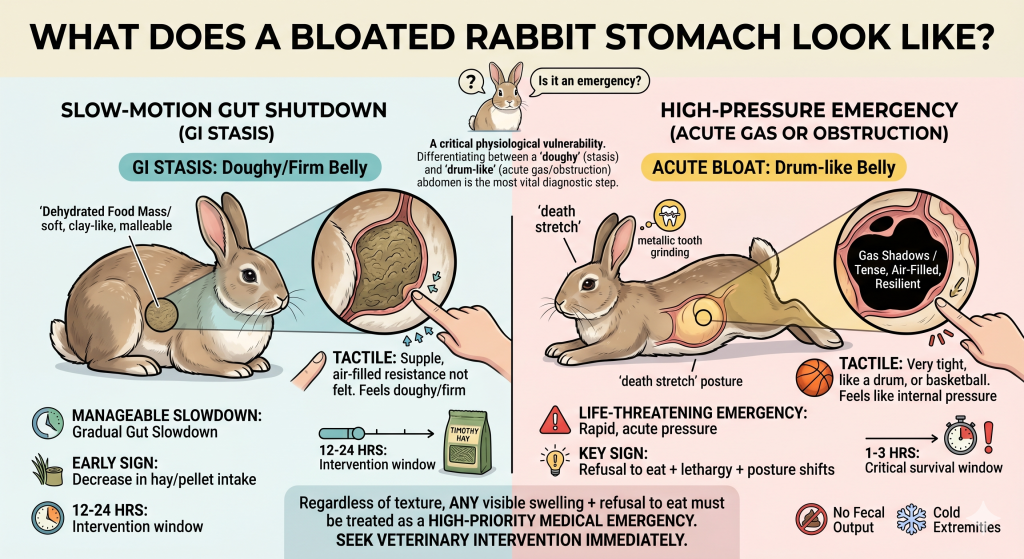
A rabbit with a bloated stomach requires an immediate tactile assessment to distinguish between a “doughy” abdomen, which is a hallmark of GI stasis, and a “drum-like” stomach that signals acute gas or a physical obstruction. While GI stasis involves a gradual, dehydrating slowdown of the gut, gas bloat creates rapid, life-threatening pressure that can lead to shock within a few hours. Regardless of the texture, any visible swelling paired with an unexplained refusal to eat must be treated as a high-priority medical emergency.
Differentiating between a slow-motion gut shutdown and a high-pressure emergency is the most vital diagnostic step a caregiver can take for their rabbit’s health and wellness. This guide breaks down the clinical nuances of abdominal distension and the behavioral red flags that indicate when a “wait and see” approach has officially become dangerous.
1. What Does a Bloated Rabbit Stomach Look Like?
Spotting a bloated rabbit requires a sharp eye for subtle geometric shifts. A healthy rabbit has a belly that feels like a soft, pliable pillow tucked neatly behind the ribs. When bloating enters the picture, that sleek silhouette vanishes, replaced by an unnatural roundness that can seem to appear out of thin air.
In observational research with my own rabbits, Mocha and Chino, it’s often these minute changes in “loaf” symmetry—rather than a giant, swollen belly—that provide the first clues of a shutdown.
Visible Signs of Abdominal Bloating
A bloated rabbit often looks as though they’ve swallowed a grapefruit whole. You might notice the sides of the abdomen distending outward, making the rabbit look oddly wide when viewed from above. One of the most telling signs is the “sploot with a twist”—the rabbit tries to press their belly against a cool floor to find relief, but they can’t get comfortable.
This leads to constant shifting, or conversely, a rigid, hunched posture where they look like they’re protecting their midsection. According to the House Rabbit Society, these postural shifts are often the first outward indicators of significant internal distress.
What a Bloated Belly Feels Like
If you gently palpate the abdomen, the texture provides the most honest data you’ll get. A “doughy” feel usually points toward GI stasis, suggesting the food bolus has dehydrated into a solid, clay-like mass. However, if the belly feels tight and drum-like—as if it might pop if poked—you’re likely dealing with acute gas or a physical obstruction. This “drum” sensation means the stomach wall is being stretched to its absolute physiological limit.
Tactile Examination: Assessing Tension
When checking for tension, use the pads of your fingers to apply very light pressure to the flank. In a healthy rabbit, the area behind the last rib is pliable. In a bloated rabbit, you’ll feel an “air-filled” resistance. This is distinct from a “fat” rabbit; fat feels soft and moves with the skin, while bloating feels like internal pressure pushing back against you.
Normal Rabbit Belly vs. Bloated Belly
| Feature | Normal Rabbit | Bloated Rabbit |
|---|---|---|
| Abdomen Texture | Supple, moves easily | Tight, distended, or “doughy” |
| Appetite | Aggressive for hay/greens | Refuses all food and water |
| Posture | Relaxed (flopped or loafed) | Hunched or belly-pressing |
| Fecal Output | Uniform, round pellets | Small, misshapen, or absent |
| Movement | Active and curious | Reluctant to move; lethargic |
2. GI Stasis vs. Gas in Rabbits
The terminology often gets blurred, but the biology is distinct. Understanding the mechanical difference tells you exactly how fast you need to get to a clinic.
What Is GI Stasis?
Gastrointestinal (GI stasis), or ileus, is a mechanical slowdown of the gut’s smooth muscles. Normally, the “conveyor belt” is kept in motion by a constant stream of high-fiber intake. When this stalls, the food stays in the tract too long and becomes a compact mass. This stagnation allows the gut flora to shift, often leading to a dangerous overgrowth of gas-producing bacteria. It’s a “quiet” emergency that builds over several hours.
What Is Gas Bloat?
Gas bloat is the actual accumulation of air and fermentation byproducts trapped within the stomach or intestines. It is much more “loud” and painful than simple stasis. Merck notes a grim reality: if gas builds up in the stomach (gastric dilation), it can expand so much that it physically cuts off blood flow to the heart and other organs, leading to rapid shock and cardiovascular collapse.
Fermentation Gone Wrong
The rabbit’s cecum is essentially a fermentation vat. When the pH shifts—often due to excess sugar or starch—gas-producing bacteria like Clostridium can take over the environment. This gas isn’t just uncomfortable; it is voluminous and creates a high-pressure environment that the rabbit’s delicate tissues simply aren’t designed to withstand.
Comparison of Clinical Presentations
| Condition | Primary Mechanism | Abdominal Sound Profile | Urgency Window |
|---|---|---|---|
| GI Stasis | Muscular slowdown (Ileus) | Silent or faint gurgles | 12-24 Hours |
| Simple Gas | Bacterial fermentation | Loud gurgles or pings | 6-12 Hours |
| Acute Bloat | Gastric dilation/Pressure | Often silent/High-pitched | 1-3 Hours |
3. Signs Your Rabbit Has Gas Pain
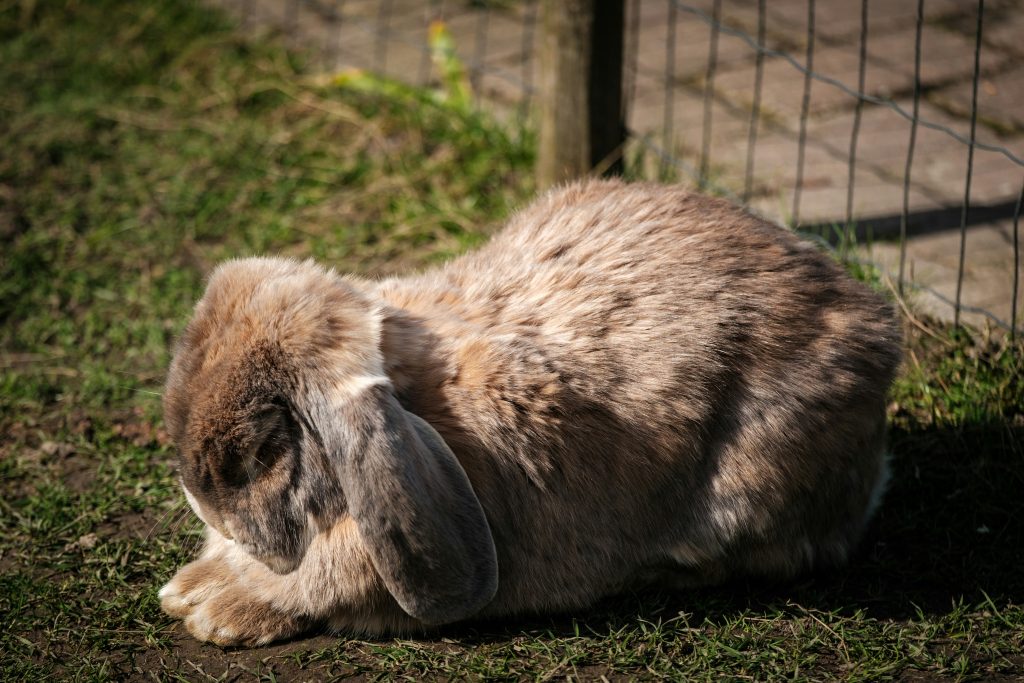
Gas pain in rabbits is a systemic crisis. Because they are prey animals, they are hardwired to hide discomfort, but acute gas pain is often too intense to mask for long.
Sudden Behavioral Changes
A rabbit experiencing gas will often go from “normal” to “miserable” in a heartbeat. You might see them run a few steps and then suddenly collapse, or stand up on their hind legs and then immediately hunch back down. This restlessness is a sign they are trying to manually shift the gas bubbles. If you notice your rabbit hiding in unusual spots or becoming irritable when touched, these are high-probability pain indicators.
Pain Behaviors and the “Death Stretch”
One of the most characteristic signs of gas is loud, rhythmic tooth grinding, known as bruxism. This is different from the soft “tooth purring” associated with contentment; it sounds metallic and stressed.
You may also see the “death stretch,” where the rabbit pushes their belly into the floor and kicks their back legs out repeatedly. This is an instinctive attempt to create a few millimeters of extra space in their abdominal cavity to reduce the pressure against their diaphragm.
Why Gas Is So Dangerous in Rabbits
VCA Hospitals report that the real danger of gas is the “vicious cycle” it creates. Pain causes the rabbit to release adrenaline, which naturally slows down the gut even further. This means the more pain the rabbit is in, the less their gut moves, which allows even more gas to form. Breaking this cycle requires professional pain management to lower adrenaline levels so the gut can resume its work.
4. Signs Your Rabbit Has GI Stasis
GI stasis is the “silent killer” because its early signs are so incredibly subtle. Highly intelligent animals, much like Mocha and Chino, often mask their vulnerability until the condition is well advanced.
Early GI Stasis Symptoms
The first sign is almost always a change in fecal pellets. You might see pellets that are suddenly half their usual size, darker, or completely stop appearing in the litter box. The rabbit might also become “picky,” eating their favorite greens but leaving their hay untouched. This is the stage where intervention is most successful, often requiring only hydration and increased fiber volume
Moderate Symptoms
As the condition progresses, the rabbit will stop eating entirely and go into hiding. Their gut sounds—which should be a constant low gurgle—will become silent or develop occasional loud “pings.” Dehydration starts to set in, making the stomach feel increasingly “doughy” as the body sucks moisture out of the food mass to maintain its own blood volume.
Advanced Shutdown and Toxicity
In advanced stasis, the stagnant food begins to rot. This releases toxins into the bloodstream, a process known as enterotoxemia. At this stage, the rabbit may become extremely weak, and their ears may feel cold as their body begins to prioritize blood flow to the heart and lungs over the extremities. This is a sign of impending shock.
5. What Causes a Rabbit’s Stomach to Bloat?
A rabbit’s digestive system is a specialist designed for high-volume, low-calorie fiber. Anything that deviates from that “conveyor belt” model can cause a backup.
Low-Fiber Diets and Sudden Changes
A lack of long-strand fiber (hay) is the primary cause of digestive failure. Without fiber to physically push things through, the gut slows down. Similarly, sudden dietary changes—like a new brand of pellets or a sudden influx of sugary fruit—can shock the cecum’s microbial population, leading to a fermentation explosion and gas.
Intestinal Obstruction: The Mechanical Emergency
An obstruction is a physical blockage, often caused by the ingestion of carpet fibers, plastic, or a massive hairball. Unlike stasis, which is a “soft” stop, an obstruction is a “hard” stop. The MediRabbit database notes that this is the most common cause of true, drum-like gastric bloat and usually require surgical intervention rather than just medical management.
Common Bloat and Stasis Triggers
| Trigger Category | Environmental Example | Biological Impact |
|---|---|---|
| Dietary | Sudden kale/broccoli introduction | Bacterial bloom/Gas |
| Mechanical | Chewing on polyester carpets | Physical blockage/Obstruction |
| Psychological | Nearby construction/Predators | Adrenaline-induced gut slowdown |
6. Emergency Signs That Require Immediate Vet Care
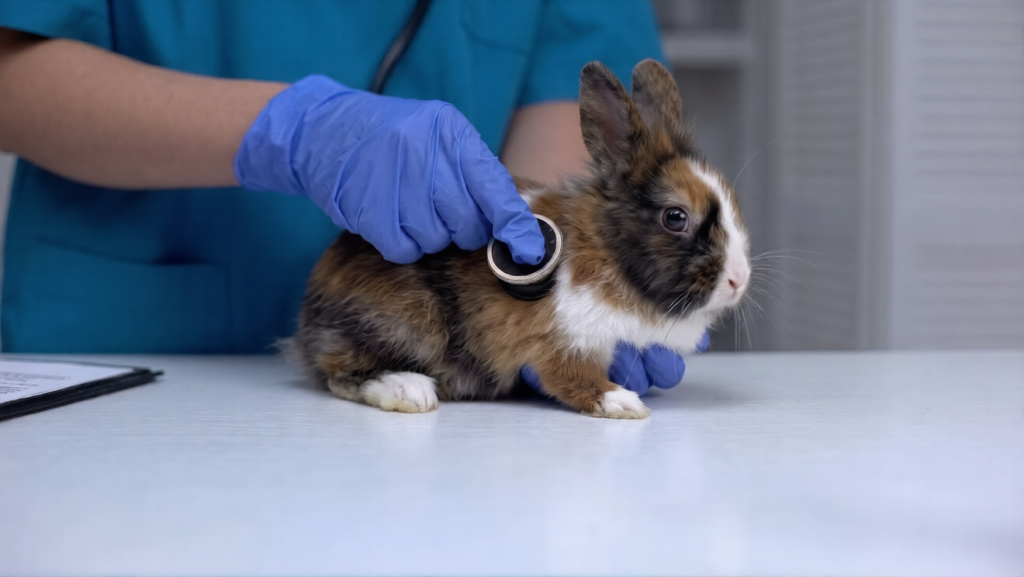
Rabbits are masters at masking, so by the time these signs appear, the situation is already severe. Skip the home remedies and drive to a clinic.
Red Flag Symptoms
- A Hard, Distended Abdomen: If the belly feels like a basketball, the rabbit is in extreme danger.
- Total Anorexia: Refusing even a favorite treat for more than 6–8 hours.
- No Fecal Output: If there has been no poop in 12 hours, the gut has stopped.
- Cold Extremities: Ears and feet that feel cold indicate the rabbit’s core temperature is dropping below the normal 101-103°F.
Signs of Shock and Circulatory Failure
Shock is a state where the circulatory system begins to fail. A rabbit in shock will be limp, unresponsive, and may have pale or bluish gums. Their breathing will be rapid and shallow. Clinical research warns that once a rabbit enters a state of shock, the window for successful intervention is extremely narrow and requires professional stabilization to prevent a sudden death crisis.
7. What To Do If Your Rabbit’s Stomach Is Bloated
While preparing for the vet, there are a few things you can do to stabilize the situation, but these are not substitutes for clinical care.
Keep the Rabbit Warm and Calm
A rabbit in pain cannot maintain its own body temperature. Wrap them in a warm towel or place them near a safe heat source. Do not use high heat, but gentle warmth can help prevent the onset of fatal hypothermia. Ensure the environment is quiet to keep adrenaline levels low.
Movement and Massage
If the belly feels soft or doughy, a very gentle abdominal massage can sometimes help move gas bubbles. Using your fingertips, make light circular motions around the abdomen, starting from the ribs and moving toward the tail. However, if the belly is hard or the rabbit struggles, stop immediately. This could indicate an obstruction where pressure could cause a rupture.
The Dangers of Force Feeding
A common piece of advice is to syringe feed recovery formulas like Oxbow Critical Care. Do not do this if the abdomen is hard. If there is a physical blockage, adding more material into the stomach will only increase the pressure and the risk of the stomach wall tearing. Only force-feed if a vet has confirmed there is no obstruction.
8. Veterinary Treatment for Rabbit Bloating
Once at the clinic, the veterinarian will move into diagnostic mode to determine which of the “big three” (gas, stasis, or obstruction) is the culprit.
Diagnostics: X-Rays and Palpation
When trying to decode the internal mechanics of a silent rabbit, the diagnostic “gold standard” is the abdominal radiograph. On an X-ray film, a veterinarian identifies “gas shadows”—the visual evidence of a digestive standstill.
A massive, singular black bubble in the stomach area usually indicates gastric dilation, while a constellation of smaller bubbles throughout the intestines suggests the fermentation characteristic of stasis. Professional palpation is equally vital; a trained vet can detect specific points of tenderness or the density of an impaction that an amateur touch might miss. These diagnostic imaging steps are the only way to transition from observational theory to clinical certainty.
Clinical Treatments
Standard treatment involves aggressive medical management:
- Subcutaneous or IV Fluids: Essential to rehydrate the gut and the food bolus.
- Buprenorphine: High-level pain relief to break the adrenaline-pain cycle.
- Motility Drugs: Meds like Cisapride are used to physically restart the gut muscles, but only if an X-ray has ruled out an obstruction.
9. How To Prevent Rabbit Bloating
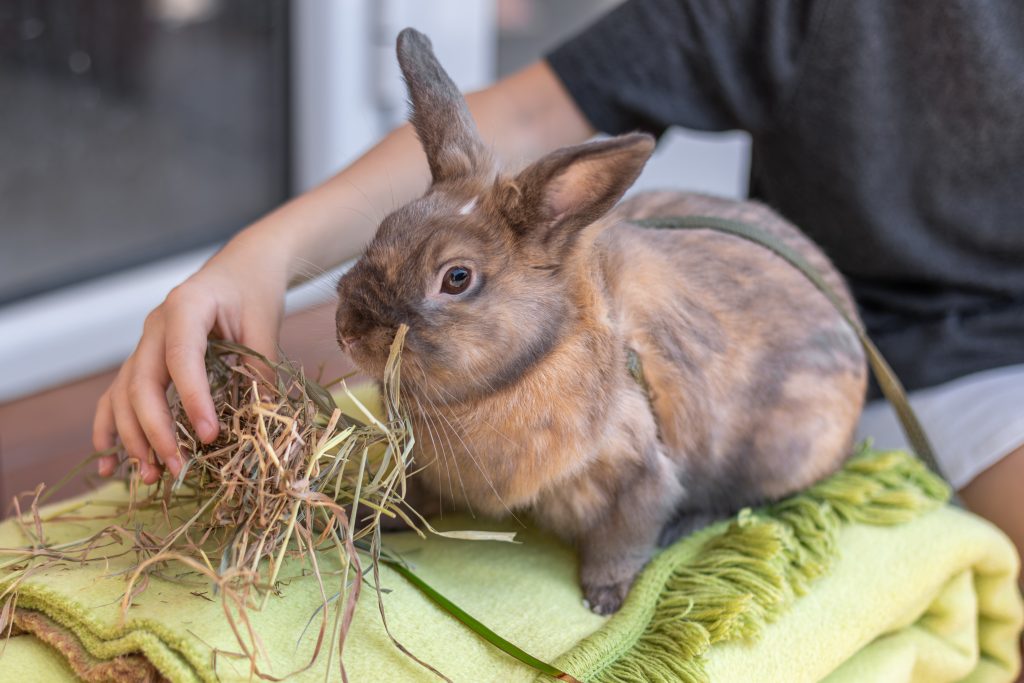
The best way to handle a bloated stomach is to ensure it never happens through proactive husbandry.
The Unlimited Hay Standard
Hay is a mechanical tool. The long-strand fiber keeps the cecal “pump” moving and prevents hair from clumping into obstructions. Providing a rich variety of the best hay types for rabbits keeps them engaged and ensures they are getting the fiber volume needed to keep their digestive system running at peak performance.
Hydration and Monitoring
Water is the primary lubricant of the lagomorph digestive tract. Because the physics of lapping from an open surface matches their natural anatomy, many rabbits drink significantly more from a heavy ceramic bowl than a mechanical drip bottle. The American Veterinary Medical Association (AVMA) reinforces this baseline reality, emphasizing that maintaining hydration is the single most effective way to prevent the painful, “doughy” impactions associated with stasis.
To simplify your daily husbandry routine, think of the following protocol as your preventative maintenance manual for keeping that internal pipeline perfectly lubricated and moving:
- Unlimited Forage Baseline: Provide an optimized high-fiber diet plan consisting of 80% to 85% long-stem grass hay to maintain active mechanical gut pacing.
- Fresh Leafy Greens: Boost hydration parameters by serving wet, raw greens like romaine, parsley, and cilantro.
- Pellet Limit: Strictly ration plain Timothy pellets (maximum 1/4 cup per 6 lbs of body weight) to protect the cecum from bacterial dysbiosis.
- Molt Grooming: Step up brushing frequency during heavy coat blows to prevent hair from binding into tight intestinal plugs.
Cross-reference these actions with the diagnostic summary matrix below to track your preventative goals at home:
Digestive Health Maintenance Checklist
| Daily Action | Researcher’s Goal | Importance |
| Unlimited Hay | Provide 80% fiber intake | Essential |
| Fresh Greens | Supplement hydration | High |
| Pellet Limit | Prevent cecal dysbiosis | High |
| Grooming | Prevent hair ingestion | Critical during molts |
10. Frequently Asked Questions
Can rabbit gas go away on its own?
While mild gas may resolve with movement, any gas that causes a rabbit to stop eating for more than four hours requires professional evaluation. Waiting often leads to a fatal state of shock.
Is a hard rabbit stomach always an emergency?
Yes. A rigid or “drum-like” abdomen is a clinical sign of either extreme gas accumulation or a physical obstruction, both of which can lead to organ failure within a very short window.
What is the “death stretch” in rabbits?
It is a behavioral sign of intense abdominal pain where the rabbit repeatedly presses its belly to the floor and kicks out its hind legs to find relief from internal pressure.
Should I give my rabbit bread to settle their stomach?
No. High-carbohydrate foods fuel the “bad” bacteria in the cecum, which produce the gas that leads to bloating. Stick to high-fiber hay and water.
How do I know if my rabbit is in GI stasis?
The earliest signs are behavioral: a sudden decrease in appetite for hay, smaller or fewer fecal pellets, and a sudden lack of interest in high-value treats.
11. Conclusion: The Survival Window
A bloated rabbit abdomen represents a critical system failure where the window for intervention is measured in hours, not days. Whether the underlying cause is a slow-moving ileus or an acute mechanical obstruction, the biological objective remains constant: restarting the gut’s “conveyor belt” before systemic shock sets in.
Effective long-term management relies on a data-driven approach—monitoring fecal output and prioritizing high-fiber Timothy hay to maintain mechanical motility. If the abdomen feels “drum-like” or appetite ceases entirely, time is your most valuable resource. In the delicate economy of lagomorph health, immediate veterinary intervention is the only reliable methodology for survival.
Medical & Veterinary Disclaimer: Bunnyowners.com is an informational resource for rabbit owners and enthusiasts. We are not veterinarians. The content on this website is for educational purposes only and is not a substitute for professional veterinary advice, diagnosis, or treatment. Always consult a qualified veterinarian with any questions or concerns regarding your pet’s health, medical conditions, diet, or overall care. If you have concerns about your rabbit’s health, it’s always best to reach out to a veterinarian rather than relying solely on information found online.