
Disclaimer: The information provided on bunnyowners.com is for educational purposes only and does not constitute veterinary medical advice; always consult your vet before changing your rabbit’s diet. Additionally, this post contains affiliate links. As an Amazon Associate, and other affiliate advertising programs, I earn from qualifying purchases at no extra cost to you
If you find a thick, chalky residue caked onto your rabbit’s litter box, isn’t just an annoying cleanup job—it is usually an early indicator of a serious urinary issue. This gritty buildup can cause real discomfort when your pet tries to urinate, and it can quickly escalate into a full-blown emergency if left ignored. To protect your pet, you must first understand the specific clinical reality of this urinary issue.
Rabbit bladder sludge is a thick, toothpaste-like accumulation of excess calcium carbonate crystals that settles at the bottom of a rabbit’s bladder. Unlike most mammals, rabbits absorb calcium passively from their diet and excrete the excess through their kidneys, meaning an unbalanced diet or dehydration can quickly turns his normal powdery urine into a thick sediment. Recognizing the early symptoms of this painful condition allows caretakers to seek immediate veterinary diagnostics and initiate fluid therapies before the sludge hardens into solid bladder stones.
Unpacking this condition requires looking at how a rabbit’s daily environment and unique biology collide. In this guide, which belongs to my rabbit health article hub, I strip away the clinical jargon to examine how normal metabolic byproducts transform into a dangerous, caked paste. By understanding the physical reality behind this mineral buildup, you will be able to read the litter box like a map, spot subtle behavioral warning signs before they trigger a painful system shutdown, and make the permanent lifestyle shifts needed to safeguard your companion.
1. How Rabbit Calcium Metabolism Works
Rabbits handle minerals in a weird way. Most mammals have a biological gatekeeper in their gut that only absorbs the calcium the body actually needs. Rabbits don’t. Their bodies blindly absorb pretty much every bit of calcium they eat, with no regard for actual demand. The kidneys filter out this massive mineral surplus and dump it straight into the bladder.
That’s why healthy rabbit pee can dry into a light, white powdery ring. But if the rabbit is dehydrated or sitting still too long, those loose crystals sink. They pool at the very bottom of the bladder and eventually compress into a heavy, sand-like sludge. This physiological quirk is the primary driver behind most chronic urinary tract issues in pet rabbits. You can read more about how rabbit physiology differs from human or feline systems in the Merck Veterinary Manual’s guide on small mammal metabolic pathways.
2. Normal Rabbit Urine vs. Bladder Sludge
True sludge happens when calcium carbonate crystals get trapped instead of flushing out cleanly. It changes the urine from a normal liquid into something that looks like gritty toothpaste. You have to know the difference between normal mineral processing and an actual medical problem.
Visual and Physical Differences Between Normal Rabbit Urine Sediment and Bladder Sludge
| Diagnostic Metric | Normal Calcium Residue | Bladder Sludge |
| Consistency | Thin, watery fluid | Thick, heavy, paste-like liquid |
| Sediment Level | Small, light powdery film when dry | Heavy, gritty, sandy sediment |
| Comfort Level | No discomfort during urination | Painful, strained urination |
| Bladder Clearance | Easily and fully emptied | Difficult to empty; settles at the bottom |
3. Primary Causes of Bladder Sludge
Diet supplies the raw materials, but sludge usually needs a trigger. It takes a bad mix of low hydration and physical or behavioral limits to stop the bladder from emptying properly.
Diet and Dehydration
Feeding lots of alfalfa hay, alfalfa pellets, or high-calcium greens like spinach and kale floods the system with minerals. A healthy rabbit handles occasional spikes, but a constant overload overwhelms the tract. If the rabbit is suffering from a severe case of dehydration and isn’t drinking enough water to flush it out, the pee gets thick, and loose crystals drop straight to the bladder floor. For a complete mineral breakdown across different types of forage, check out the Rabbit.org Foundation’s deep dive into the importance of hay.
Lack of Exercise and Poor Mobility
Rabbits need to run and jump to shake up their bladder contents. When they move, it keeps the crystals floating so they can leave the body during a normal bathroom break. In lazy or heavy rabbits, that sediment just sits on the bladder floor and packs tight. Age makes it worse; older rabbits with arthritis can’t get into that high-backed squat needed to empty out completely, leaving a permanent puddle of grit behind.
4. How Physical Activity Affects Bladder Health
Monitoring how physical activity impacts urinary output reveals a direct, mechanical link to sediment prevention. When left undisturbed, gravity is a rabbit’s worst enemy; calcium crystals rapidly sink to the bottom of the bladder. Regular exercise acts as a biological cocktail shaker, creating enough physical agitation to keep those loose crystals suspended in liquid form so they can be flushed out naturally.
I see this dynamic play out daily during home health tracking of my bonded pair, Mocha and Chino. While the endlessly agile Chino easily maintains a clean bill of health through constant binkying and high-speed laps, an older or more sedentary rabbit like Mocha requires a lot more environmental coaxing. Without intentional movement, a lazy lifestyle allows that heavy sludge to settle on the bladder floor, where it packs down into an organized, gritty paste that becomes incredibly difficult to pass.
5. Common Symptoms of Bladder Sludge
Don’t wait for an obvious crisis. Watch how your rabbit acts in the litter box to catch the problem before it turns into a painful emergency.
Early Warning Signs
As sediment builds up, it irritates the bladder wall and makes the area raw, which often leads to painful urine scald. Watch for changes in posture; rabbits with sludge will hang out in the litter box for long stretches, hunched over with their tail lifted high, straining to go. They might also leak pee constantly, leaving them with wet back legs. The urine itself turns into a thick, creamy paste that leaves a gritty, sand-like crust on their bedding once it dries.
Advanced Symptoms
If the buildup gets worse, your rabbit faces severe stomach pain and a huge risk of digestive shutdown. Look for clear signs of agony like loud teeth grinding, low grunting, or whimpering when they try to pee. The sheer stress of the pain will make them stop eating and drinking, which can cause the onset of gastrointestinal stasis in a matter of hours. Eventually, the body begins to fail, leading to cold ears, extreme lethargy, or complete collapse from a total urinary blockage. If you are trying to understand the wider metabolic impacts of this chronic pain, you can look over the gastrointestinal stasis breakdown hosted by the Veterinary Information Network.
Use this symptom checklist to figure out if you are dealing with a routine dietary fix or an immediate emergency.
Symptom Progression and Severity Levels
| Clinical Phase | Primary Physical Markers | Required Action Plan |
| Mild Accumulation | Intermittent dry white rings, chalky fluid consistency | Dietary adjustments, fluid scaling |
| Moderate Straining | Persistent hunched posture, tail elevation, wet tail fur | Routine exotics veterinary appointment |
| Acute Obstruction | Inability to pass liquid, extreme lethargy, cold ear tissue | Immediate emergency clinical stabilization |
6. What Bladder Sludge Looks Like
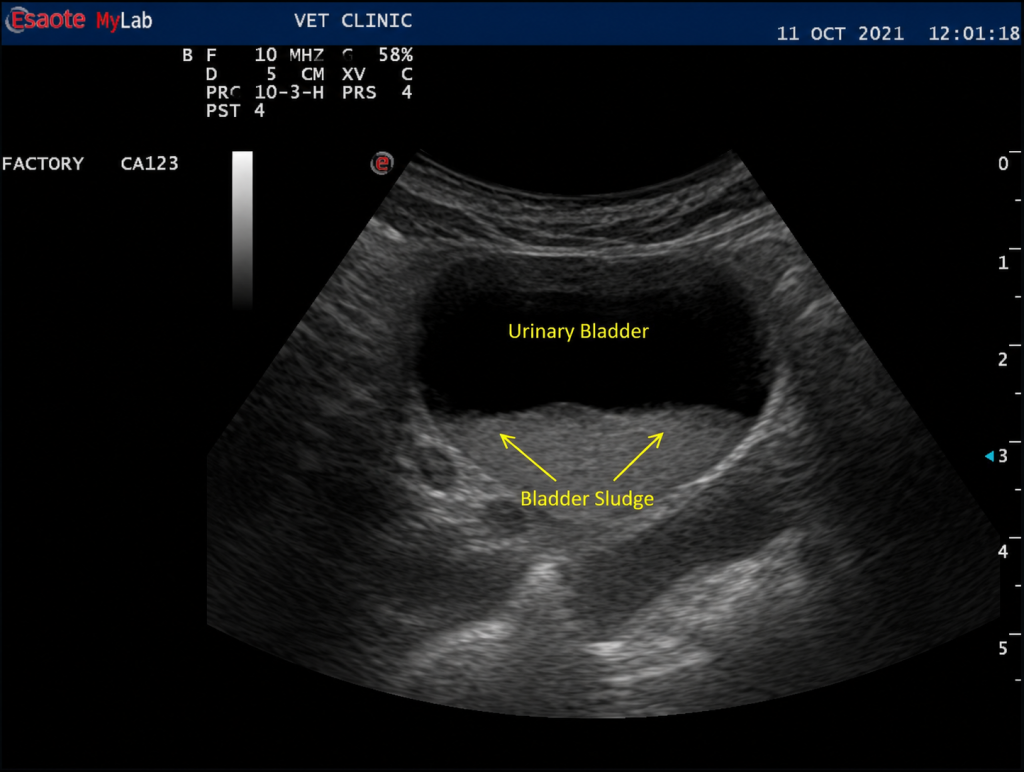
Check the litter box daily. Rabbit pee can naturally look yellow, orange, or even an alarming rust-red, but sludge completely ruins the actual texture of the liquid.
Appearance and Cleaning Tips
Sludge looks like wet plaster, chalky mud, or thick gray cream. If you touch the wet spot, it will feel rough, like wet sand, instead of a smooth liquid.
Normal powdery pee residue wipes away with a wet paper towel, but true sludge bakes onto plastic like cement. Regular soap won’t touch it because calcium carbonate is highly alkaline. Spray the crust with straight white vinegar instead; it breaks down the mineral bonds immediately so you can wipe the box clean without scrubbing.
7. Identifying a Bladder Emergency
Mild sludge is a chronic issue that requires a vet visit, but a total blockage is an absolute emergency.
Home Monitoring Goals
- The 48-Hour Feeding Window: Watch their food intake like a hawk after a vet visit. If they don’t eat fresh grass hay or low-calcium greens within 24 hours of coming home, call your exotics vet right away to avoid GI stasis.
- Urine Scald Prevention: Check their back legs twice a day. Wipe away any wet spots with a damp cloth and dry the skin completely so the alkaline pee doesn’t burn the skin.
- Litter Box Substrate Selection: Ditch rough wood shavings or clay litter while they heal. Use highly absorbent paper bedding or soft fleece liners to keep the area clean and stop dust from irritating their tract.
⚠️ Red Alert Emergency Signs
Take your rabbit to an emergency exotics clinic immediately if you see these signs:
- Total Urinary Blockage: The rabbit is straining hard but passing zero liquid. A blocked urethra can cause a fatal bladder rupture within hours.
- Severe Pain: The rabbit is hunched up tight, grinding their teeth loudly, and refusing to move.
- Systemic Shutdown: The rabbit won’t touch food or treats, feels cold, or has collapsed on their side.
8. Veterinary Diagnosis Methods
You can’t diagnose this on your own. An exotics vet has to handle the diagnostics to see exactly how much sediment is trapped inside the tract.
Physical Examination
The vet will start with a hands-on check of the abdomen:
- Abdominal Palpation: A normal bladder feels soft and squishy. A bladder full of sludge feels like a firm, doughy balloon or a beanbag that holds its shape when squeezed.
- Symptom History: The vet will review your notes on how long the rabbit has been straining to rule out hard stones.
Imaging and Lab Tests
Next, the clinic will use imaging tools to see the scale of the buildup:
- X-rays: Calcium shows up bright, solid white on an X-ray. It is the easiest way for a vet to see exactly how much sediment is sitting on the bladder floor. You can review standard radiographic pathology examples and clinical presentation data in the DVM360 Veterinary Database.
- Ultrasound: If the X-ray is blurry, an ultrasound reveals whether the mass is still a loose, flushable mud or if it has hardened into solid rock.
- Urinalysis: The clinic will test a urine sample to check the pH and make sure a secondary bacterial infection isn’t brewing in the stagnant puddle. Current professional guidelines for collecting samples and evaluating cloudy sediment parameters are outlined in the Royal Veterinary College Clinical Database.
9. Treatment Options for Bladder Sludge
Once the vet sees the imaging, they will start an active treatment plan to get the sediment out of your rabbit’s body.
Veterinary Treatment Protocols
The first step is always pain relief and stabilization. The vet will give strong anti-inflammatories before trying to empty the bladder. Relaxing the tract is crucial; if the urethra goes into a painful spasm, it locks the gritty sediment inside.
Next comes aggressive fluid therapy via an IV or injections under the skin. This extra water floods the kidneys and waters down the caked mud in the bladder. For mild cases, the vet can then gently squeeze the abdomen to push the softened sludge out. If it’s packed too tight, they will sedate the rabbit and slide a tiny catheter inside to wash the bladder clean with sterile saline. Step-by-step clinical updates on handling emergency medical needs and companion care can be cross-referenced through the Association of Exotic Mammal Veterinarians Library Database.
10. Bladder Sludge vs. Bladder Stones
Ignore sludge long enough, and those loose crystals will weld themselves together into solid stones (uroliths). Sludge is still a flushable mud that yields to fluid therapy, but true stones are hard rocks. Once they form, your rabbit usually needs an invasive surgery called a cystotomy to cut them out.
Both issues will return if you don’t change their lifestyle, but acting early keeps a soft paste from turning into solid rock. Surgical case data and clinical methodology updates on these specific small mammal procedures are indexed directly within the Nature Lab Animal Clinical Database.
Comparing Sludge vs. Stones
| Diagnostic Characteristic | Bladder Sludge | Bladder Stones |
| Material State | Soft, semi-solid sediment | Hard, solid mineral mass |
| Primary Treatment | Aggressive fluid flushes & medication | Surgical removal (cystotomy) |
| Consistency | Paste-like or sandy | Solid and rock-like |
| Recurrence Risk | High if diet/lifestyle isn’t altered | High if underlying causes persist |
11. Prevention Strategies for Owners
Stopping a recurrence means changing daily habits for good. Because a rabbit’s unique metabolic design means you cannot alter how their body absorbs minerals, you must strictly control what goes into their mouth and keep them moving.
Core Dietary and Environmental Changes
- Provide Unlimited Low-Calcium Grass Hay: Ditch the alfalfa hay entirely; it is packed with far too much calcium for an adult rabbit. Base their entire diet on fresh Timothy, Orchard, or Meadow hay to keep the digestive tract and kidneys moving safely.
- Maximize Hydration with Water Bowls: Swap out hanging water bottles with metal sipping pins. Rabbits drink significantly more water from a heavy ceramic bowl because they can lap naturally. More water intake directly equals cleaner, well-flushed kidneys.
- Feed Wet, Low-Oxalate Leafy Greens: Wash daily greens and serve them soaking wet to sneak extra hydration into their system. Step away from daily helpings of kale, parsley, and spinach. Stick to romaine, cilantro, and green leaf lettuce instead. If you need a safe reference sheet for checking oxalate groups and daily ratios, explore the Rabbit.org Foundation’s guide to natural rabbit nutrition.
- Encourage Daily Free-Roam Movement: Physical exercise mechanically agitates the bladder, which keeps loose sediment from settling into a dense cake. Give your rabbit a few hours of open floor time every single day with tunnels and cardboard boxes to climb on.
The Long-Term Monitoring Protocol
Dietary adjustments provide the foundation, but long-term success relies on tracking baseline health metrics at home. Monitoring these variables ensures you intercept minor metabolic shifts before they consolidate into hard bladder paste. Instead of using generic bullet points for this phase, we use targeted, metric-driven tracking categories:
Strict Pellet Food Restrictions: Measure pellets precisely rather than eyeballing them. Cap daily portions to a maximum of one to two tablespoons per five pounds of body weight. Always inspect the ingredient list to ensure the brand is strictly Timothy-based rather than alfalfa-based to avoid accidental calcium loading.
Routine Weight Assessments: Weigh your rabbit weekly on a digital scale. Obesity dramatically reduces lower-body mobility and hinders crucial grooming habits, which indirectly prevents the mechanical emptying of the lower bladder. Keeping your rabbit lean is a vital protective barrier.
Periodic Urinalysis Screens: Coordinate with an exotics veterinarian to check a routine urine sample every six months. Catching rising crystal concentrations early allows you to adjust therapy before an obstructive paste forms. Recommended clinical management and monitoring protocols can be cross-referenced through the Rabbit Welfare Association and Fund Clinical Database.
12. Litter Box Monitoring and Caretaker Pitfalls
Paying close attention to daily habits is our best line of defense against urinary issues. Through regular observation of Mocha and Chino’s litter habits, I have learned that subtle changes in behavior—such as a rabbit lifting their tail longer than usual or leaving tiny, concentrated wet spots rather than large, clear pools—are the absolute earliest indicators that something is amiss.
Catching these small shifts saves a stressful trip to the emergency clinic later. Keep an eye on how the urine dries on hard surfaces or fleece liners to stay ahead of sediment build-up. You can easily integrate these tracking protocols using the diagnostic template in my comprehensive rabbit health guide.
Common Management Mistakes
Don’t panic and try to cut 100% of the calcium out of their diet. That is impossible and will give your rabbit brittle bones and severe tooth problems. They still need baseline minerals; the secret is heavy hydration and lots of exercise, not starving them of basic nutrients.
Also, avoid the trap of small cages and lazy water bottles. Those little metal spouts take too much work, so rabbits drink less than they would from a big open bowl. And if they are confined to a small hutch all day, they won’t move enough to shake up their bladder. The sediment will just settle right to the bottom and pack tight.
13. Frequently Asked Questions
Can bladder sludge go away on its own?
No. Once it turns into a thick paste, the rabbit can’t physically pass it without help. They need vet fluids and proper pain meds to relax the tract enough to flush it out.
Is white rabbit urine always bladder sludge?
No. Normal pee can dry into a white, powdery ring. It only means sludge if the puddle is thick, creamy, or feels like rough sand while it is still wet.
Can diet alone cure bladder sludge?
Only if it’s very mild. Minor sediment can clear up with diet changes, but moderate to severe sludge requires a vet to flush the bladder out with a catheter or IV lines.
Does bladder sludge hurt rabbits?
Yes, a lot. The grit acts like sandpaper against the sensitive lining of the bladder and urethra, making every bathroom trip highly painful.
Can young rabbits get bladder sludge?
Yes, if they are dehydrated or kept in a tiny cage. Young rabbits eat alfalfa for growth, but if they don’t move enough, that extra calcium will drop right to the bottom of the bladder.
Is bladder sludge the same as bladder stones?
No. Sludge is a wet, muddy paste made of loose crystals. Stones are hard rocks that have fused together and usually require surgery to cut out.
14. Conclusion
Discovering bladder sludge can certainly be an unsettling experience for any rabbit caretaker. However, when caught early, this condition is entirely manageable through targeted husbandry shifts and timely clinical care. By prioritizing consistent hydration and daily environmental enrichment, you can successfully rewrite your rabbit’s metabolic patterns and keep their urinary tract operating smoothly.
If you suspect your rabbit is showing early changes in their litter habits or posture, do not hesitate to schedule an evaluation with an exotics veterinarian. Taking proactive steps today is the absolute best way to safeguard your companion from chronic urinary discomfort and keep them hopping happily for years to come.
Medical & Veterinary Disclaimer: bunnyowners.com is an informational resource for rabbit owners and enthusiasts. We are not veterinarians. The content on this website is not a substitute for professional veterinary care, diagnosis, or treatment. Always seek the advice of your veterinarian with any questions you may have regarding your pet’s medical condition, diet, or overall health.