
Veterinary & Affiliate Disclaimer: Bunnyowners.com shares educational rabbit care resources, not professional veterinary advice. Always consult a qualified veterinarian regarding your rabbit’s medical, dietary, or behavioral needs. This post may also contain affiliate links; as an Amazon Associate and affiliate partner, we earn from qualifying purchases at zero extra cost to you.
With so many rabbit hays on pet store shelves—from Timothy and Orchard to Alfalfa and Oat—it’s tough to know which variety your rabbit actually needs. Each hay differs in fiber content, calcium levels, texture, and aroma, and what works for a growing baby won’t suit a healthy adult. Matching the right plant variety to your rabbit’s age and dietary needs is essential for long-term health.
The most common types of hay for rabbits are high-fiber grass hays (such as Timothy, Orchard, Meadow, Oat, Brome, and Bermuda) and nutrient-dense legume hays (such as Alfalfa and Clover). Healthy adult rabbits require unlimited grass hay as their main daily staple to support digestive motility and wear down continuously growing teeth. Legume hays contain significantly higher protein and calcium levels, making them best suited for growing bunnies under six months old, nursing does, or rabbits with higher energy needs.
Understanding these biological classifications makes it much easier to decipher product packaging and navigate the broader landscape of healthy rabbit nutrition. Whether you are looking for a soft alternative for a picky eater, a low-pollen option for human allergies, or a crunchy mix-in to encourage foraging, this guide breaks down the physical traits, flavor profiles, and primary uses for every major rabbit hay.
1. Rabbit Hay Comparison Chart
Before diving into the specific details of each plant variety, it helps to see how all the major options stack up against one another. Grass hays like Timothy and Orchard form the daily foundation of a healthy adult rabbit’s diet, while richer legume hays like Alfalfa and Clover serve as targeted nutrition for young, nursing, or rabbits with higher energy requirements.
The chart below provides a quick side-by-side look at the physical texture, aroma profile, and primary characteristic for every common type of rabbit hay:
Rabbit Hay Types Compared
| Hay Variety | Family | Texture | Sweetness & Aroma | Primary Characteristic |
|---|---|---|---|---|
| Timothy | Grass | Medium to Coarse | Mild, Earthy | Baseline adult forage |
| Orchard Grass | Grass | Soft & Leafy | Sweet, Fragrant | Preferred by owners seeking soft, low-dust hay |
| Meadow | Grass Mix | Mixed / Variable | Floral, Herby | Introduces natural pasture variety |
| Oat | Grass | Coarse & Crunchy | Nutty, Grain-like | Provides crunchy seed hull texture |
| Brome | Grass | Soft to Medium | Mild, Sweet | Softer cool-season Timothy alternative |
| Bermuda | Grass | Fine & Wiry | Earthy, Neutral | Fine-stemmed warm-season grass |
| Alfalfa | Legume | Stiff Stems, Leafy | High, Rich | High-calcium forage for babies & nursing does |
| Clover | Legume | Soft Leaf, Fragile | Sweet, Rich | Rich legume commonly found mixed into pasture hays |
2. Grass Hay vs. Legume Hay: What’s the Real Difference?
Before exploring individual varieties, it helps to understand why hay is divided into two distinct botanical families. Balancing these two families forms the foundation of healthy rabbit nutrition:
Grass Hays
Grass hays come from true pasture grasses (Poaceae family). Grass hays are the appropriate daily forage for healthy adult rabbits because they are naturally high in fiber and relatively low in calories, calcium, and protein.
- Popular Varieties: Timothy, Orchard Grass, Meadow, Oat, Brome, and Bermuda.
Legume Hays
Legumes belong to the pea family (Fabaceae). Unlike grasses, these flowering plants store significant amounts of protein and calcium in their broad leaves. That extra nutrient density makes legume hays ideal for young bunnies developing strong bones or rabbits with higher energy requirements, but far too rich for a healthy adult on a standard maintenance routine.
- Popular Varieties: Alfalfa (Lucerne) and Clover.
3. Popular Grass Hays for Adult Rabbits
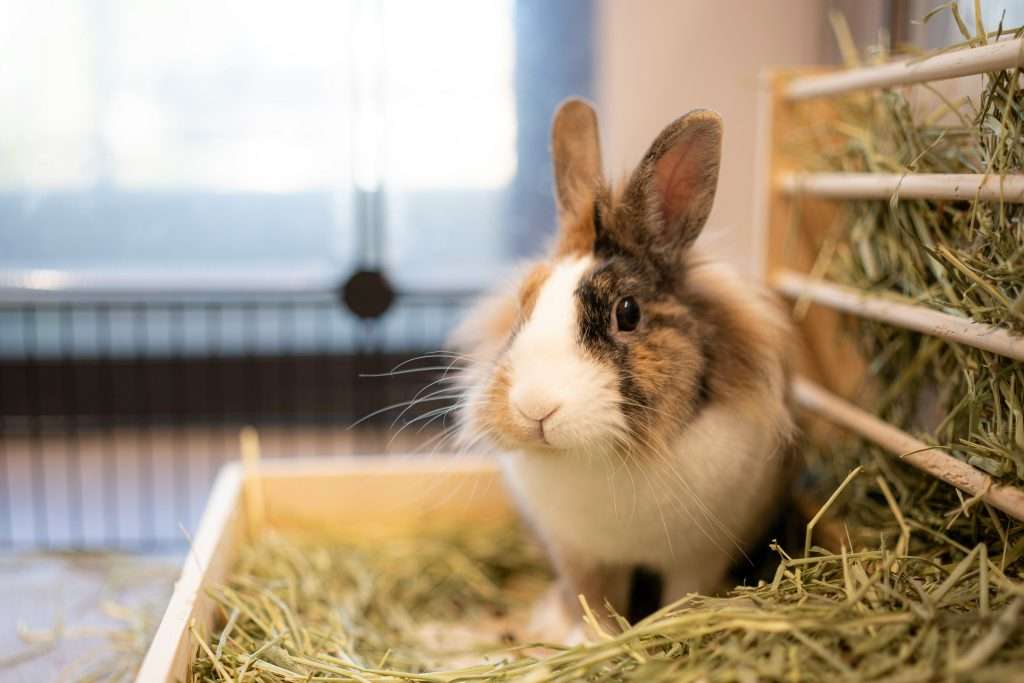
Grass hays make up the vast majority of forage on pet store shelves. While they all deliver long-strand fiber, their physical plant structures, textures, and scents vary widely. Determining whether coarse Timothy or soft Orchard grass makes the best daily hay option usually comes down to your rabbit’s chewing style and your home setup.
Below is a breakdown of the botanical classifications and physical traits of the most common grass hays:
Popular Grass Hays Compared
| Hay Variety | Botanical Name | Fiber / Texture | Flavor & Aroma |
|---|---|---|---|
| Timothy | Phleum pratense | Moderate to Coarse | Mild, Earthy |
| Orchard Grass | Dactylis glomerata | Soft, Leafy | Sweet, Fragrant |
| Meadow Hay | Mixed Field Grasses | Variable / Mixed | Herby, Floral |
| Oat Hay | Avena sativa | Coarse, Crunchy | Nutty, Grain-like |
| Brome Hay | Bromus spp. | Soft to Medium | Mild, Sweet |
| Bermuda Grass | Cynodon dactylon | Fine, Wire-like | Earthy, Neutral |
Timothy Hay (Phleum pratense)
- Family: Grass (Poaceae)
- Texture: Medium to coarse with firm, straight stems
- Appearance: Long green stalks mixed with distinct, fuzzy “cattail” seed heads
- Aroma: Mild, fresh, earthy scent
- Primary Trait: Recognized across North America as a traditional staple forage for adult pet rabbits, providing the essential fiber and dental wear needed for long-term health.
Orchard Grass Hay (Dactylis glomerata)
- Family: Grass (Poaceae)
- Texture: Soft, leafy, and pliable
- Appearance: Broad leaf blades with compact, rounded seed clusters
- Aroma: Sweet and fragrant
- Primary Trait: Features a softer stem density than Timothy and releases fewer airborne pollen spores during handling.
Meadow Hay
- Family: Grass Blend (Poaceae mix)
- Texture: Variable mix of soft leaves and fibrous stems
- Appearance: Blended pasture grasses, wild field flowers, and varied seed stalks
- Aroma: Floral and herby
- Primary Trait: Harvested directly from permanent pastureland to provide natural botanical variety.
Oat Hay (Avena sativa)
- Family: Cereal Grass (Poaceae)
- Texture: Very coarse, thick, and crunchy
- Appearance: Broad, hollow green-to-tan stems featuring signature flattened oat seed hulls
- Aroma: Nutty and grain-like
- Primary Trait: Harvested while green before the grain matures, offering a distinctively crunchy stem texture.
Brome Hay (Bromus spp.)
- Family: Grass (Poaceae)
- Texture: Soft to medium-leafy
- Appearance: Smooth, wide leaf blades with slender, open branching seed heads
- Aroma: Mild and sweet
- Primary Trait: A cool-season grass that provides a softer alternative to Timothy while maintaining a similar fiber profile.
Bermuda Grass Hay (Cynodon dactylon)
- Family: Warm-Season Grass (Poaceae)
- Texture: Fine, thin, and wiry
- Appearance: Slender green stems with small, narrow leaf blades
- Aroma: Earthy and neutral
- Primary Trait: A warm-season grass that provides a fine-stemmed alternative to cool-season staples while delivering the high-fiber diet rabbits need for daily digestion.
4. Richer Legume Hays for Young Rabbits or Higher Energy Needs
Because legume hays carry higher levels of protein and calcium, they serve a specific purpose during growth, nursing, or recovery phases.
Below is a breakdown of the botanical classifications and structural traits of common legume hays:
Richer Legume Hays Compared
| Hay Variety | Botanical Name | Calcium / Protein | Structural Traits |
|---|---|---|---|
| Alfalfa | Medicago sativa | Very High | Leafy, Stiff Stems |
| Clover | Trifolium pratense/repens | High | Broad Leaf, Fragile |
Alfalfa Hay (Medicago sativa)
- Family: Legume (Fabaceae)
- Texture: Rigid, woody stems packed with soft, dense leaves
- Appearance: Coarse stems surrounded by small, oval, dark-green three-part leaves
- Aroma: Rich, sweet, and leafy
- Primary Trait: Delivers a naturally high calcium and protein density compared to true grasses, making it ideal for young bunnies and nursing does.
Clover Hay (Trifolium spp.)
- Family: Legume (Fabaceae)
- Texture: Delicate, fragile stems with broad leaves
- Appearance: Distinct broad, rounded, three-lobed leaves attached to thin stalks
- Aroma: Sweet and rich
- Primary Trait: High-protein forage typically found blended into pasture or meadow mixes rather than sold pure.
5. What Is “Botanical Hay”?
A common question among pet owners is whether “Botanical Hay” represents a distinct plant species.
- Family: Grass base (Poaceae) with broadleaf herbal additives
- Texture: Soft to medium grass mixed with fragile dried blossoms
- Appearance: Green grass stems interspersed with colorful petals, dandelion leaves, and herbs
- Aroma: Highly aromatic, sweet, and floral
- Primary Trait: Commercial term for a standard grass hay (usually Timothy or Orchard) blended with dried herbs and edible flowers like marigold, chamomile, and rose petals.
6. Physical Identification & Texture Guide
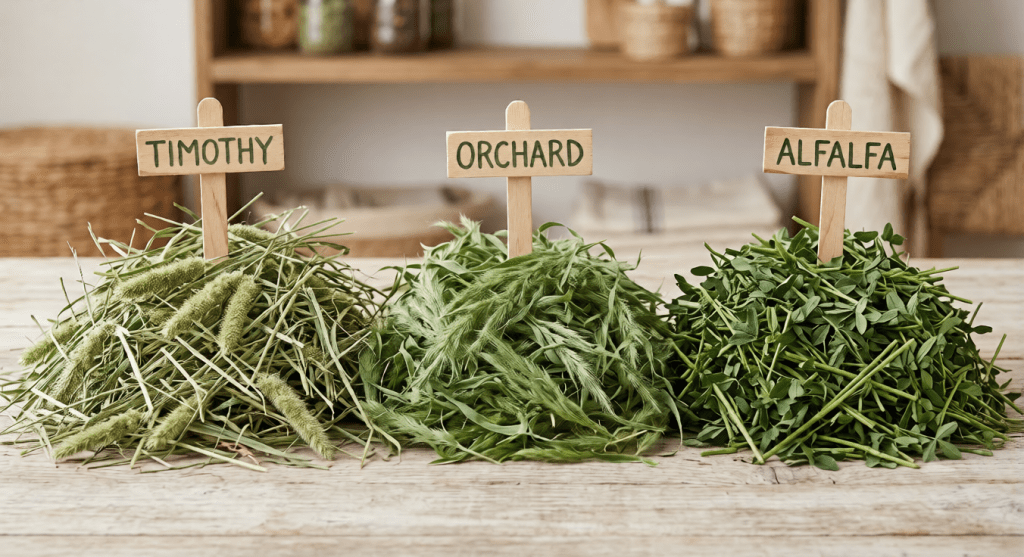
If you are trying to identify a bag of hay simply by opening it up, this breakdown covers how each variety feels in your hands and looks in the box:
How Each Hay Looks and Feels
| Hay Type | Category | Texture Profile | Quick Visual Identification |
|---|---|---|---|
| Timothy | Grass | Coarse to Medium | Stiff stems with long, cylindrical “cattail” seed heads |
| Orchard | Grass | Soft to Medium | Broad leaves with compact, rounded seed clusters |
| Meadow | Mixed Grass | Variable / Mixed | Blended pasture grasses, wild flower bits, varied stems |
| Oat | Grass | Very Coarse / Crunchy | Thick hollow stems with broad, flattened oat seed hulls |
| Brome | Grass | Soft to Leafy | Fine, smooth leaves with slender, open seed branches |
| Bermuda | Grass | Fine / Wiry | Thin, wiry stems with small, narrow leaf blades |
| Alfalfa | Legume | Stiff & Leafy | Rigid stems packed with dense, oval three-part leaves |
| Clover | Legume | Fragile / Soft Leaf | Delicate stems with broad, rounded three-lobed leaves |
7. Hay Cuts vs. Hay Types: What’s the Difference?
Pet owners often mix up a hay type and a hay cut, but they refer to two completely different aspects of production.
Hay type describes the specific plant species grown in the field (such as Timothy, Orchard, or Alfalfa), which dictates whether it is a high-fiber grass or a nutrient-rich legume. Hay cut describes when that plant was harvested during the growing season. While the plant variety determines the underlying biological profile, the harvest cut directly shapes the softness, stem thickness, and overall leafiness of the batch.
8. Why Does Hay Color and Appearance Change?
If your latest box of hay looks a little paler or stemmier than your last batch, it stems from natural harvesting variables. Natural color differences don’t necessarily indicate poor quality; plant species, harvest timing, solar drying, and leaf-to-stem ratios all influence final appearance.
Monitoring your bunny’s daily forage intake ensures their teeth stay naturally worn down, keeps their digestive system moving, and helps safeguard them against serious blockages like gastrointestinal stasis. Tracking how much hay your rabbit eats each day is one of the simplest ways to protect their long-term gut health.
9. Why Mix Different Types of Hay?
In wild settings, European rabbits do not graze on single-crop fields; they encounter a wide variety of field grasses, seed heads, and foliage.
Offering a varied structural mix of grass hays satisfies their instinctual drive to search for different textures, encouraging enriching foraging and chewing behaviors that keep rabbits active and mentally engaged. Combining coarse, stem-heavy hays with softer broadleaf varieties simply reflects natural pasture variety.
10. Why Are Rabbits So Picky About Hay?
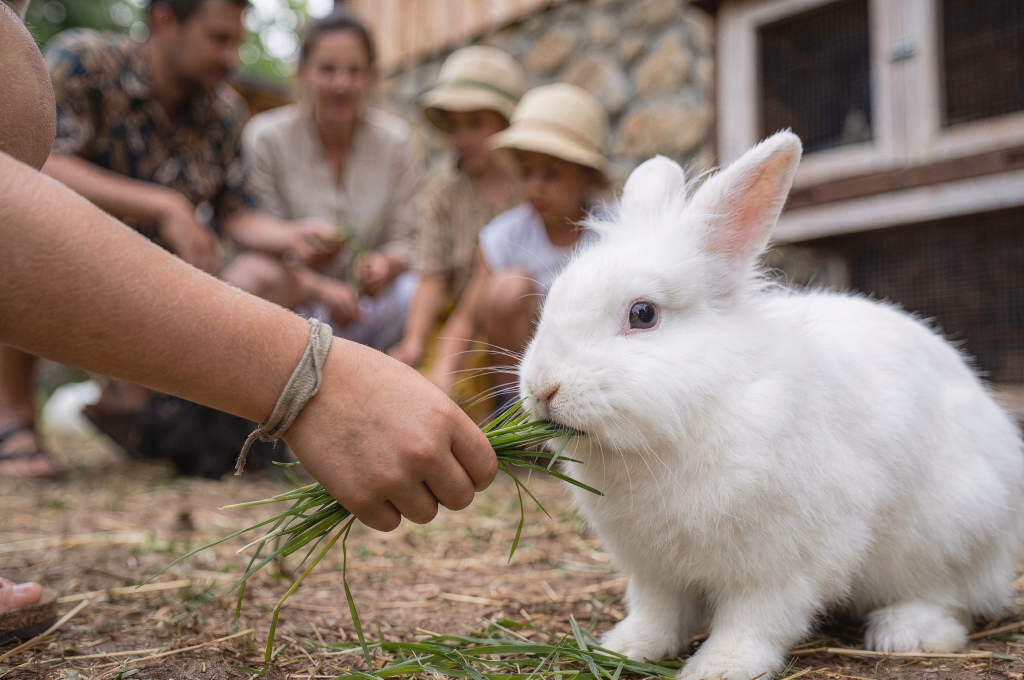
Rabbits rely heavily on smell, texture, and familiarity when selecting forage. Their preferences come down to sensory feedback:
- Fragrant Aromas: Hays rich in sweet, floral scents (like Orchard or early Meadow) often trigger immediate chewing interest compared to low-odor, mature hays.
- Texture & Pliability: Pliable leaves are easier to manipulate with teeth and lips, which is why leafier batches are usually eaten first.
- Habit & Personality: Rabbits are stubborn creatures of habit, each with their own distinct preferences. My own resident bunnies, Mocha and Chino, make this contrast obvious: Mocha eagerly hunts for the sweet, soft leaves of Orchard grass, while Chino selectively pulls out the rigid, crunchy stems of first-cut hay.
Catching a sudden shift in eating habits early makes all the difference—especially if your bunny decides refusing to eat hay
is their new routine. If they’re stubbornly filling up on pellets instead of hay, scaling back their daily bowl portions usually coaxes them back to their hay rack.
In fact, deciding whether an adult rabbit can thrive without commercial pellets almost always hinges on how consistently they munch their daily forage.
11. Which Type of Hay Is Best for My Rabbit?
Choosing the right hay type depends primarily on your rabbit’s age, physical requirements, and personal chewing preferences:
- Healthy Adult Rabbits: High-fiber grass hays like Timothy, Orchard, Meadow, Brome, or Bermuda.
- Picky Eaters or Human Allergies: Soft, sweet grass hays like Orchard Grass.
- Adding Texture & Foraging Variety: Mixed pasture hays like Meadow or crunchy Oat Hay.
- Young Kits (Under 6 Months) & Nursing Does: Nutrient-dense legume hays like Alfalfa.
- Rabbits with Higher Energy Requirements: Alfalfa or legume-blended hays (under veterinary guidance).
Evaluating these plant varieties alongside harvest timing, overall freshness, and daily feeding amounts makes it easier to choose the ideal hay for an adult rabbit.
12. Frequently Asked Questions
What are the main types of rabbit hay?
The main options include high-fiber grass hays (Timothy, Orchard, Meadow, Oat, Brome, Bermuda) and nutrient-rich legume hays (Alfalfa, Clover).
Is Timothy hay the same thing as grass hay?
Timothy hay is a specific species of grass hay. All Timothy hay is grass hay, but not all grass hay is Timothy (Orchard, Oat, and Brome are also grass hays).
What is the difference between Timothy and Orchard hay?
Timothy (Phleum pratense) features stiffer stems and distinct cattail-like seed heads. Orchard grass (Dactylis glomerata) has wider, softer leaves, a sweeter aroma, and sheds fewer allergy-inducing pollens.
Is Alfalfa a grass hay?
No. Alfalfa is a legume hay in the pea family (Fabaceae). It carries significantly more protein, calcium, and calories than grass hays.
What is the most common hay for pet rabbits?
Timothy hay is the most widely produced forage across North America and Europe. Consistently offering high-fiber grass hay forms the backbone of how pet rabbits digest their food safely every single day.
Can Meadow hay replace Timothy hay?
Yes! High-quality Meadow hay consisting of mixed pasture grasses makes a wonderful alternative or supplement to Timothy. Any high-fiber grass hay naturally satisfies a rabbit’s need to wear down their teeth through constant daily chewing.
Can rabbits survive without pellets if they eat enough hay?
Yes. For many adult rabbits, unlimited grass hay combined with fresh leafy greens provides complete nutrition, though deciding whether to eliminate pellets depends on your rabbit’s age, weight goals, and health status.
13. Conclusion: Summary of Rabbit Hay Classifications
Understanding rabbit hay becomes much simpler once you look at the plants themselves. Everything on the shelf traces back to two basic categories: high-fiber grass hays and nutrient-rich legume hays.
While Timothy remains the go-to standard for adult rabbits, options like Orchard, Meadow, Oat, Brome, and Bermuda give you plenty of room to match your rabbit’s textural preferences or ease human pollen allergies. Legumes like Alfalfa and Clover play an entirely different role, providing the higher protein and calcium needed during specific life stages. Recognizing these plant differences takes the guesswork out of product labels, helping you pick out exactly what your rabbit needs at a glance.
Medical & Veterinary Disclaimer: Bunnyowners.com is an informational resource for rabbit owners and enthusiasts. We are not veterinarians. The content on this website is for educational purposes only and is not a substitute for professional veterinary advice, diagnosis, or treatment. Always consult a qualified veterinarian with any questions or concerns regarding your pet’s health, medical conditions, diet, or overall care. If you have concerns about your rabbit’s health, it’s always best to reach out to a veterinarian rather than relying solely on information found online.