
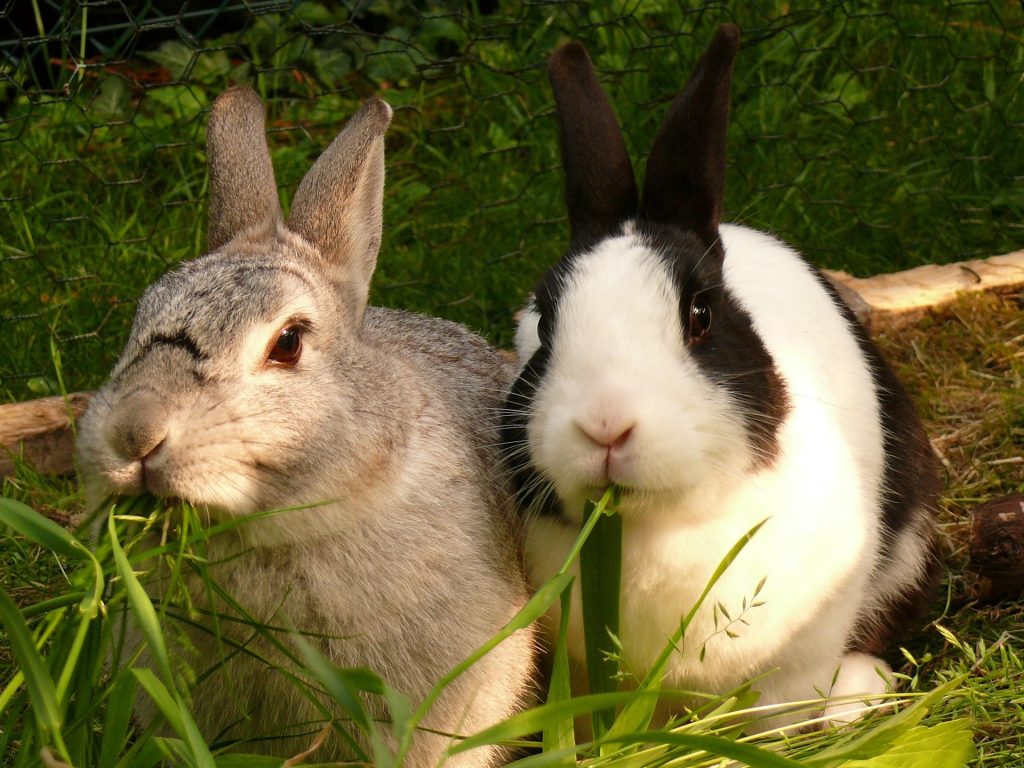
Veterinary & Affiliate Disclaimer: Bunnyowners.com shares educational rabbit care resources, not professional veterinary advice. Always consult a qualified veterinarian regarding your rabbit’s medical, dietary, or behavioral needs. This post may also contain affiliate links; as an Amazon Associate and affiliate partner, we earn from qualifying purchases at zero extra cost to you.
Most rabbit health complications are not the result of exotic environmental pathogens or bad genetics. More often than not, they start with well-intentioned grocery store selections. A rabbit’s digestive system is a high-speed, precision-engineered fermentation engine that requires constant mechanical movement and a highly specific chemical balance to function. Fiber is life; when this internal engine stalls due to insufficient roughage or a sudden influx of sugar, the clinical result is gastrointestinal hypomotility—commonly known as GI stasis. In 2026, the data is clear: dietary consistency is the single greatest predictor of a rabbit’s longevity.
What is the Best Food for Rabbits?
The precise dietary ratio for an adult rabbit is 80–90% unlimited grass hay (such as Timothy, Orchard, or Brome), 10–15% diverse, low-oxalate leafy greens, and a maximum of 5% high-fiber, extruded pellets. Fruits and high-sugar root vegetables like carrots must be categorized strictly as “metabolic treats.” They should be limited to 1–2 teaspoons per day to prevent cecal dysbiosis, systemic obesity, and the development of severe dental disease.
As a researcher of lagomorph behavior and physiology, I have spent years analyzing clinical nutritional standards to move beyond the outdated feeding protocols of the agricultural industry. While I am not a practicing veterinarian, my goal is to provide a metabolic blueprint designed to sustain your rabbit’s health well into their second decade. Explore the full archive of evidence-based deep dives in my comprehensive rabbit diet and food research center. There, I dissect the chemical and mechanical “why” behind every leaf and stalk, providing the data-backed clarity you need to navigate the supermarket like a seasoned researcher.
2. How Rabbit Digestion Works
To manage a rabbit’s diet effectively, you have to stop looking at them as small dogs and start viewing them as biological “tiny horses.” Rabbits are basically high-maintenance horses that live in your living room and have an irrational grudge against your baseboards. They are specialized hindgut fermenters. While primary digestion occurs in the stomach and small intestine, the heavy lifting happens in the cecum, a large fermentation vat located at the junction of the small and large intestines.
According to comprehensive research on rabbit fiber and microbiota, this system is incredibly sensitive to the balance of indigestible versus fermentable materials.
The Biochemistry of the Cecum
The cecum is a massive organ, holding up to 40% of the rabbit’s total digestive content. Think of it as a microscopic, highly sensitive brewery. It operates at an ideal pH of 6.0 to 6.8 and houses billions of anaerobic bacteria, yeasts, and protozoa.
This microscopic workforce breaks down the tough, fibrous walls of plants into volatile fatty acids (VFAs). These VFAs are absorbed straight into the bloodstream, providing up to 40% of your rabbit’s daily energy. If a rabbit consumes excessive simple starches, rapid fermentation produces excess lactic acid, dropping the cecal pH and allowing opportunistic pathogens like Clostridium to bloom.
The Colonic Sorting Mechanism: Fast vs. Slow Fiber
Rabbits possess a unique “colonic sorting mechanism” governed by complex neuromuscular triggers. As chewed food leaves the cecum and enters the colon, the muscular walls perform a rhythmic “washing” action. Large, indigestible fiber particles (long-stem hay) are pushed into the center of the colon.
Water is rapidly extracted, and these large particles are moved quickly out as the hard, round fecal pellets you see in the litter box. These “fast-moving” fibers act as a mechanical broom, stimulating the gut wall to maintain continuous movement. Without a constant influx of long-stem, coarse grass, this internal conveyor belt grinds to an absolute halt.
Why Rabbits Eat Cecotropes
The metabolic process of cecotrophy is a vital evolutionary adaptation. Cecotropes are nutrient-dense packets expelled from the cecum, typically during periods of rest. They consist of a soft, grape-like cluster of fermented material coated in a protective layer of mucus. This mucus protects the beneficial bacteria and nutrients from being destroyed by harsh stomach acid during re-ingestion.
Cecotropes contain double the protein and significantly elevated levels of B-complex vitamins compared to the original plant material. If a diet is too rich in protein, the cecum over-ferments, resulting in liquid cecotropes—a clinical sign that the fermentation engine is misfiring.
3. The Hay Hierarchy: The Science of Structural Fiber
Hay is the primary mechanical and nutritional tool for gut motility and dental maintenance. Researchers categorize hay by its Neutral Detergent Fiber (NDF) and Acid Detergent Fiber (ADF) metrics, alongside its silica content. Understanding these metrics gives you a massive advantage, as detailed in the House Rabbit Society’s Diet Guide.
How Hay Protects Rabbit Teeth
Rabbit teeth are “elodont,” meaning they possess open roots and never stop growing—erupting up to 12 centimeters per year. Grass hays are rich in phytoliths, which are microscopic, rigid structures made of silica. As a rabbit performs its natural side-to-side chewing motion, these silica particles act as industrial-grade sandpaper. This continuous grinding wears down the enamel. Without this constant mechanical abrasion, the teeth overgrow, developing sharp “molar spurs” that lacerate the cheek tissues and cause the rabbit to stop eating entirely.
Deciphering 1st, 2nd, and 3rd Cut Hay
- Neutral Detergent Fiber (NDF): Measures the total cell wall bulk. High NDF dictates how much volume a rabbit can physically eat before feeling full.
- Acid Detergent Fiber (ADF): Measures only the least digestible parts. ADF is the bouncer of the digestive club—it keeps everything moving toward the exit.
- First Cut: Harvested early, boasting the highest ADF (over 35%) and thick, stalky stems. It is the most abrasive and optimal for dental spurs, though its coarse texture may make picky eaters turn up their noses.
- Second Cut: The clinical gold standard for adults. It provides an ideal balance of about 30% ADF, maintaining structural fiber while offering enough soft leaf to encourage high-volume eating.
- Third Cut: Harvested late. It is extremely lush, low in ADF, and higher in protein. It should be reserved specifically for underweight seniors or rabbits recovering from surgery.
Botanical Alternatives to Timothy Hay
While Timothy is the benchmark, agricultural diversity keeps things interesting. Orchard grass is slightly higher in crude protein and lower in structural fiber, but its intense fragrance makes it a powerful tool for hay-reluctant rabbits. Meadow hay offers a complex “bouquet” of grasses, providing mental enrichment through scent-based foraging. Oat hay is highly fibrous but contains starchy seed heads that you’ll want to portion-control.
Researcher’s Note: In my controlled observations with Mocha and Chino, I’ve quantified a distinct behavioral shift when transitioning between hay cuts. While Mocha is a “Timothy purist,” maintaining consistent intake of coarse 1st cut, Chino often requires a 50/50 botanical blend of Orchard grass to maintain his required intake volume. This isn’t mere pickiness; providing a mix of structural textures is a documented strategy to ensure continuous chewing.
Table 1: Hay Nutritional Profile Comparison
| Hay Type | Clinical Application | ADF (Motility Fiber) | NDF (Bulk Fiber) | Texture |
| 1st Cut Timothy | Dental spurs, Obesity | ~35-40% | ~60-65% | Coarse, heavily stalked |
| 2nd Cut Timothy | Daily adult maintenance | ~30-35% | ~55-60% | Balanced, leafy |
| Orchard Grass | Picky eaters, Allergies | ~30-33% | ~55-62% | Soft, highly fragrant |
| Meadow Hay | Foraging enrichment | Variable | Variable | Mixed herbal strands |
| Alfalfa (Legume) | Kits (<6 months) | ~28-32% | ~40-50% | Rich, high-calcium |
4. Safe Vegetables for Rabbits
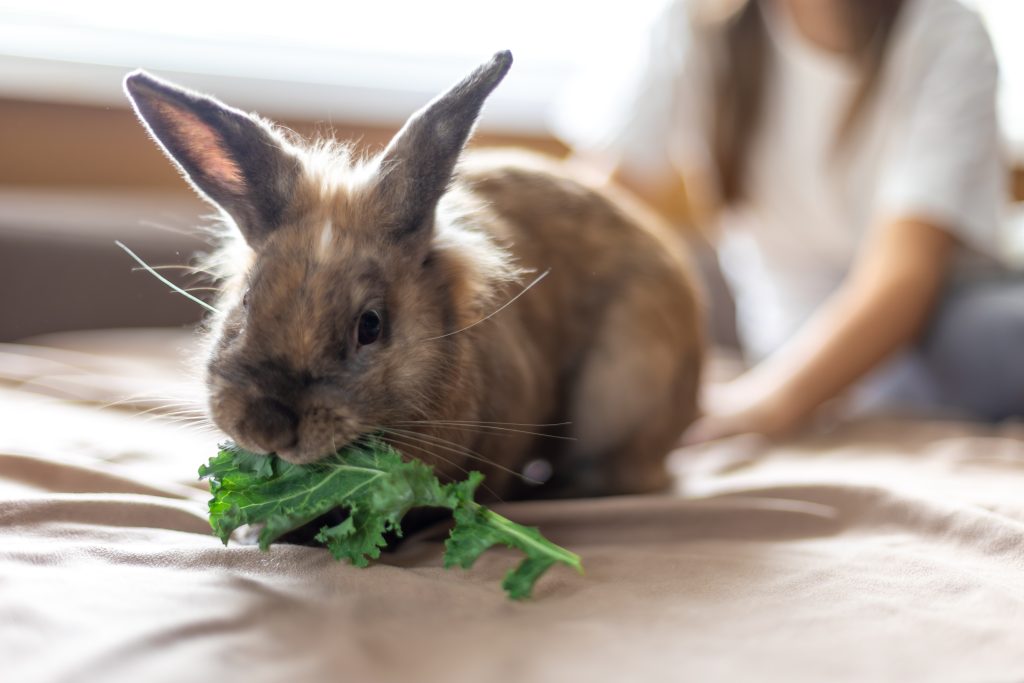
Vegetables provide the essential “living” enzymes, hydration, and phytonutrients that dried hay cannot supply. The RSPCA provides a foundational database for safe greens, but how you rotate them is where the real science happens.
Alkaloid Rotation and Variety
A well-informed owner never relies on a single leafy green. Plants naturally produce alkaloids as an evolutionary defense mechanism. While a rabbit’s liver is highly efficient at processing low levels of diverse alkaloids, feeding a single vegetable constantly can overwhelm those hepatic pathways. I mandate a “rotation” of at least three disparate vegetable families daily to dilute this exposure.
The Biochemistry of Oxalates and Calcium Chelation
Oxalic acid is a compound found in many dark leafy greens. When consumed, oxalates bind strongly to dietary calcium in the gut, forming calcium oxalate crystals. Rabbits absorb nearly all dietary calcium passively into their bloodstream. If a rabbit consumes a high-oxalate diet, calcium oxalate forms instead of normal calcium carbonate. These crystals are sharper and highly prone to clumping into uroliths (solid bladder or kidney stones).
- Low-Oxalate Staples: Romaine, Bok Choy, Cilantro, and Fennel fronds should formulate 80% of the daily salad base.
- High-Oxalate Greens: Parsley, Spinach, and Mustard Greens are highly nutrient-dense but must be restricted to 20% of the daily greens and rotated every 48 hours. Reference the Pasadena Humane vegetable biochemistry guide for categorization.
RHDV2 Safety and Washing Vegetables
In 2026, bio-security regarding fresh produce is an absolute must. Rabbit Hemorrhagic Disease Virus Type 2 (RHDV2) is an exceptionally hardy virus that can survive on organic material for up to 105 days at room temperature. A quick rinse under the faucet is entirely insufficient. The standard protocol requires submerging all store-bought and foraged greens in a cool water bath for a minimum of two to three minutes. This mechanical soaking physically dislodges viral particles and pesticide residues from the leaves.
Table 2: The Botanical Rotation Matrix
| Daily Staples (Low Oxalate / Low Risk) | Rotate 2-3x Weekly (High Oxalate) | Rare Treats (Gas Risk) |
| Romaine, Cilantro, Bok Choy | Kale, Parsley, Spinach | Carrots, Bell Peppers |
| Dill, Mint, Endive, Basil | Mustard Greens, Swiss Chard | Broccoli, Cauliflower, Cabbage |
5. Safe Fruits: Osmotic Gradients and Sugar Limits
Rabbits are evolved for low-calorie environments. Genetically modified, high-fructose supermarket fruit is a severe metabolic anomaly for them. The RWAF dietary guidelines explicitly outline that excessive sugar fundamentally disrupts the delicate cecal microbiome.
Why High Sugar is Dangerous
When a rabbit ingests fruit, the simple sugars hit the cecum rapidly. This sudden influx alters the osmotic pressure within the gut, drawing a massive amount of water out of the bloodstream to dilute the sugars. This results in acute osmotic diarrhea—a rush of water into the gut that ends exactly as terribly as you’re imagining. Simultaneously, the sugar fuels an explosive bloom of gas-producing bacteria, causing painful and dangerous bloat.
Safe Fruits and the Amygdalin Warning
- Optimal Choices: Blueberries and raspberries contain beneficial antioxidants for vascular health without entirely overwhelming the glycemic index.
- Toxicity Warning: Never feed apple or pear seeds. These seeds contain amygdalin, a compound that converts into hydrogen cyanide during digestion. Limit all safe fruit flesh to a strict maximum of 1 teaspoon per 2 lbs of body weight per day.
6. Choosing the Right Rabbit Pellets
Commercial pellets should be viewed strictly as a fortified “multivitamin,” utilized to close trace mineral gaps that may occur in dried agricultural hay. Detailed clinical nutritional standards are established by MSU Extension.
Why to Avoid Muesli Mixes
Muesli mixes (pellets mixed with flaked peas, whole corn, and seeds) are the fast-food drive-thru of the rabbit world. Rabbits will “selectively feed,” eating the high-fat seeds and completely ignoring the fibrous pellets. This results in a catastrophic drop in daily fiber intake, leading to obesity, gut stasis, and molar elongation. The PDSA strictly advises against any muesli-based diets.
How to Read Pellet Nutrition Labels
- Crude Fiber: Minimum 18% (ideally 22%+).
- Crude Protein: 12–14% (anything higher taxes an adult rabbit’s kidneys).
- Calcium: strictly below 0.9%.
- First Ingredient: Must be a grass meal (Timothy, Orchard). Avoid formulations relying on agricultural byproducts like “soybean hulls.”
Table 3: Daily Extruded Pellet Feeding Guidelines
| Rabbit Weight | Daily Pellet Ration | Clinical Rationale |
| 2–4 lbs (Dwarf) | 1 to 2 Tablespoons | Prevents dwarf breed obesity |
| 5–7 lbs (Standard) | 1/4 Cup | Maintains baseline micronutrients |
| 8–10+ lbs (Giant) | 1/2 Cup | Supports larger skeletal frames |
7. The Clinical Gap: Calcium-to-Phosphorus Ratio
In humans, calcium absorption is tightly regulated; our bodies only absorb what we need. Rabbits lack this internal calcium thermostat. They absorb calcium like a sponge, passively pulling nearly all dietary calcium present in the gut directly into their bloodstream. The ideal systemic ratio for an adult rabbit is precisely 2:1 (Calcium to Phosphorus).
If you artificially lower calcium while maintaining high phosphorus levels (often found in seeds and grains), you invert the natural ratio. When blood phosphorus exceeds calcium, the body triggers a hormonal release that chemically leaches calcium out of the rabbit’s own skeleton to re-balance the blood. This demineralization weakens the jawbone, causing tooth roots to “sink” into the skull and resulting in abscesses. A researcher-grade diet relies heavily on grass hay because its natural botanical makeup sits perfectly near this 2:1 physiological requirement.
8. Foraging and Natural Treats
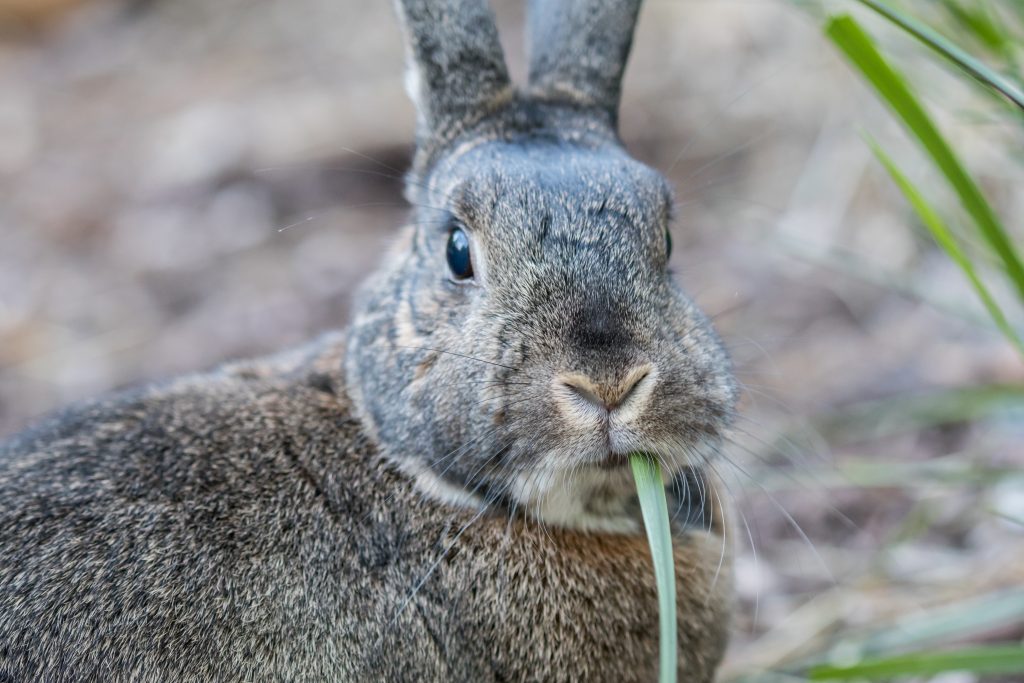
A rabbit’s psychological stability is inextricably linked to “foraging time.” Simply tossing food into a bowl robs them of mental enrichment. Providing safe arboreal forage (twigs and branches) supplies essential phytochemicals. Wild forage such as willow bark (containing salicin) or apple twigs contains high concentrations of lignin, a complex organic polymer that is completely indigestible; it provides unparalleled structural resistance to keep those elodont teeth in check.
Safe vs. Toxic Woods for Rabbits
- Safe Woods: Apple, Pear, Willow, Hazel, and Hawthorn.
- Toxic Woods: Any species within the Prunus genus (Cherry, Plum, Peach, Apricot) is strictly forbidden. The bark and leaves of these trees contain cyanogenic compounds. Avoid them entirely to prevent accidental toxicoses.
9. Providing Fresh Water for Rabbits
Water is the universal biological solvent. The VCA Animal Hospitals clinical guide emphasizes that adequate hydration is the paramount defense against gastrointestinal blockages. Research proves rabbits drink significantly higher volumes of water from an open ceramic bowl compared to a vacuum-sealed drip bottle. A bottle forces the rabbit to extend its neck at an unnatural angle and repeatedly lick a metal ball bearing. This physical barrier causes early fatigue, leading to chronic, low-level dehydration. Let them drink with dignity from a heavy bowl.
10. How to Monitor Rabbit Health
Let’s be honest: researching lagomorphs means you spend an unreasonable amount of time analyzing poop. The fecal output is the primary clinical report card for internal physiological function. Consult Oxbow Animal Health’s guide on fecal analysis for visual baselines.
Monitoring Rabbit Droppings
Healthy droppings are uniform, spherical, light-brown, and visibly textured with hay fragments. When compressed, they should crumble easily into a sawdust-like consistency. Warning Signs include small, dark, dense “peppercorns” or “strung feces” linked together by ingested hair. Because rabbits cannot vomit, strung feces indicate a severe lack of motility fiber necessary to push grooming hair through the stomach.
Checking Your Rabbit’s Weight and Body Condition
You must perform a weekly hands-on assessment using the 5-point Body Condition Score (BCS). Run your hands lightly over the rabbit’s spine and ribs.
In an Ideal (BCS 3) rabbit, the ribs are easily palpable but covered by a thin, smooth layer of fat. If the ribs feel like a sharp comb, they are underweight. If they cannot be felt at all, the rabbit is obese and at risk for heart failure and malnutrition because they cannot reach their rear to perform cecotrophy.
Researcher’s Note: When systematically monitoring Mocha and Chino, I rely entirely on their fecal volume as a leading clinical indicator. Long before Mocha exhibits lethargy or a drop in body temperature, her fecal diameter will decrease by millimeters if her fiber intake drops. By maintaining this strict, daily monitoring protocol, I can adjust their hydration and vegetable rotation immediately, resolving a minor digestive slowdown before it escalates into a multi-thousand-dollar veterinary emergency.
11. Nutrition for Baby, Adult, and Senior Rabbits
A rabbit’s metabolic parameters are a moving target. The AVMA small mammal guidelines detail the required dietary shifts.
- Kits (under 6 months): Require unlimited Alfalfa hay and pellets to fuel exponential bone growth.
- Adults (6 months–7 years): Must shift to Timothy or Orchard hay to restrict protein to 12% and prevent calcium overload.
- Seniors (7+ years): Often suffer from muscle loss and may require softer 3rd cut hay or a re-introduction of minor Alfalfa to halt muscle wasting.
12. Toxic Foods Rabbits Should Never Eat

Rabbits lack a gag reflex. Once they commit to swallowing something, it must be metabolized by the liver or passed entirely through the 20-foot gastrointestinal tract.
- Alliums: Onions and garlic contain thiosulfates that cause anemia and organ failure.
- Persin: Found in avocado; causes severe tissue necrosis and heart failure.
- Lactucarium: Found in Iceberg lettuce; acts as an opiate-like sedative that can induce lethargy and hepatic toxicity.
- Human Starches: Bread, crackers, and cereal dump massive loads of glucose into the cecum, triggering a bacterial bloom and rapid-onset bloat.
13. How to Store Rabbit Food Safely
If hay is stored in sealed plastic containers without ventilation, micro-condensation occurs, allowing fungi like Aspergillus to proliferate and synthesize highly toxic mycotoxins. Hay must always be stored in breathable canvas or cardboard. Similarly, commercial pellets are fortified with vitamins that oxidize when exposed to air. An open bag of pellets loses over 50% of its vitamin efficacy within 90 days. Buy only a 30-day supply and store it in airtight, opaque bins.
14. Frequently Asked Questions (FAQ)
What is the absolute healthiest food for rabbits?
Unprocessed, high-quality grass hay (specifically 2nd cut Timothy or Orchard). It is the only material that simultaneously fulfills the mechanical abrasion required for their teeth and provides the structural fiber required to stimulate digestion.
Can an adult rabbit live without pellets?
Yes. A rabbit can maintain excellent physiological health on a “pellet-free” diet, provided the owner supplies a wide agricultural variety of high-quality hays and a meticulously calculated rotation of nutrient-dense leafy greens.
Is spinach safe for daily feeding?
Absolutely not. Spinach contains high levels of oxalic acid. Daily consumption causes dietary calcium to bind into crystals that accumulate in the renal system, causing extremely painful bladder stones.
Why do rabbits eat their own droppings?
They are performing cecotrophy. Rabbits consume soft, mucus-coated cecotropes directly from the source to re-absorb high-value proteins and essential B-complex vitamins synthesized by their gut bacteria during the first pass of digestion.
How do I clinically recognize GI stasis?
The two defining clinical markers are absolute anorexia (refusal to consume even their favorite high-value treats) and a total cessation of fecal output for 12 hours. This is a severe medical emergency. For immediate protocols, consult VCA Animal Hospitals’ clinical guide on GI stasis.
15. The Final Verdict: Consistency over Perfection
Building a superior metabolic blueprint for your lagomorph is a daily act of preventative veterinary medicine. It’s less about being a “perfect” owner and more about being a vigilant observer of biology. By prioritizing structural fiber, strictly managing carbohydrate loads, and respecting the specialized biochemistry of the cecal microbiome, you provide the optimal foundation for longevity.
The transition is everything. Adhere to the rule of biological adaptation: introduce all dietary modifications incrementally over a 14-day protocol. This allows the cecal bacteria time to adjust, preventing a metabolic meltdown. Consistency is your best tool. Happy feeding.
Medical & Veterinary Disclaimer: Bunnyowners.com is an informational resource for rabbit owners and enthusiasts. We are not veterinarians. The content on this website is for educational purposes only and is not a substitute for professional veterinary advice, diagnosis, or treatment. Always consult a qualified veterinarian with any questions or concerns regarding your pet’s health, medical conditions, diet, or overall care. If you have concerns about your rabbit’s health, it’s always best to reach out to a veterinarian rather than relying solely on information found online.