
Veterinary & Affiliate Disclaimer: Bunnyowners.com shares educational rabbit care resources, not professional veterinary advice. Always consult a qualified veterinarian regarding your rabbit’s medical, dietary, or behavioral needs. This post may also contain affiliate links; as an Amazon Associate and affiliate partner, we earn from qualifying purchases at zero extra cost to you.
Rabbits express happiness using a completely distinct set of behaviors than dogs or cats, communicating through subtle body language rather than vocal cues. When owners ask how to tell if a rabbit is happy, they are looking for clear confirmation that their bunny feels safe, healthy, and emotionally secure. Because these sensitive prey animals mask discomfort out of survival instinct, learning to identify their positive emotional cues is the single best way to ensure your pet is truly thriving.
Learning how to tell if your rabbit is happy relies on recognizing key positive rabbit body language. A truly happy rabbit frequently displays signs of trust and affection, such as high-energy “binkies,” relaxed full side-flops, and gentle tooth purring during interaction. These behavioral milestones, paired with a hearty appetite and confident curiosity, provide clear confirmation that your rabbit feels safe and comfortable in their environment.
In my daily observations of my resident rabbits, Mocha and Chino, I constantly see how minor shifts in environmental comfort translate directly into these positive behavioral metrics. To help you accurately read your own pet’s emotional state, this comprehensive guide balances foundational data from my dedicated rabbit behavior guides with a breakdown of the definitive visual signs of a happy bunny—ranging from high-intensity expressions of pure joy to the subtle physiological baselines that prove your rabbit feels completely safe in your home.
1. Binkies and Zoomies: High-Intensity Joy
When a rabbit experiences a sudden burst of energy and excitement, they perform a physical maneuver known as a “binky.” During a binky, a rabbit leaps straight into the air, twisting their body and flicking their hind feet before landing.
According to the Great Field Small Animal Rescue behavioral archive, this exuberant leap is a primary indicator of a secure, happy bunny. You may also witness a “mini-binky,” where the rabbit stays grounded but twists their head and shoulders while shaking their ears.
The Anatomy of a Binky
- Phase 1: The Start – The rabbit is moving or hopping normally before gaining sudden speed.
- Phase 2: The Leap – They jump straight up off the ground with an explosive push.
- Phase 3: The Twist – They contort their back mid-air and kick their back legs out to the side.
- Phase 4: The Landing – They drop back down onto all four paws and immediately run or shake their head.
Binkies are often paired with “zoomies”—sudden, high-speed laps around an enclosure or room. While a panicked rabbit runs in a straight line toward a dark hiding spot to escape a threat, a happy rabbit doing zoomies runs in erratic loops, zig-zagging across the floor and tossing toys out of their path.
2. The Flopped Over Resting Position
Few things startle a new rabbit owner quite like the first time they witness a dramatic side-flop. A rabbit will be hopping casually, then suddenly drop onto their side or back, staying completely motionless with their legs extended.
Despite the initial shock it can cause, the flop indicates deep relaxation. Because rabbits are prey animals, their baseline instinct is to remain upright and ready to flee. As detailed in the Animal Welfare Foundation’s guide on rabbit happiness, rabbits only expose their vulnerable bellies when they feel safe from potential predators.
You may also see variations of this posture, such as the “loaf” (legs tucked completely underneath a rounded body) or the “superman” stretch, where the front paws point forward and the hind legs stretch straight out behind them.
Table 1: Visual Guide to Common Rabbit Resting Positions
| Resting Position | Visual Characteristics | What It Means |
| The Side-Flop | Dropping suddenly onto one side; legs fully extended. | Complete security; the rabbit feels safe from immediate threats. |
| The Superman | Lying flat on the belly; hind legs stretched straight out backward. | Deep relaxation and comfort; ready for a peaceful nap. |
| The Loaf | Paws tucked completely underneath a rounded, compact body. | Content and resting, but remaining slightly more alert than a flop. |
3. Happy Noises: Soft Tooth Purring and Buzzing
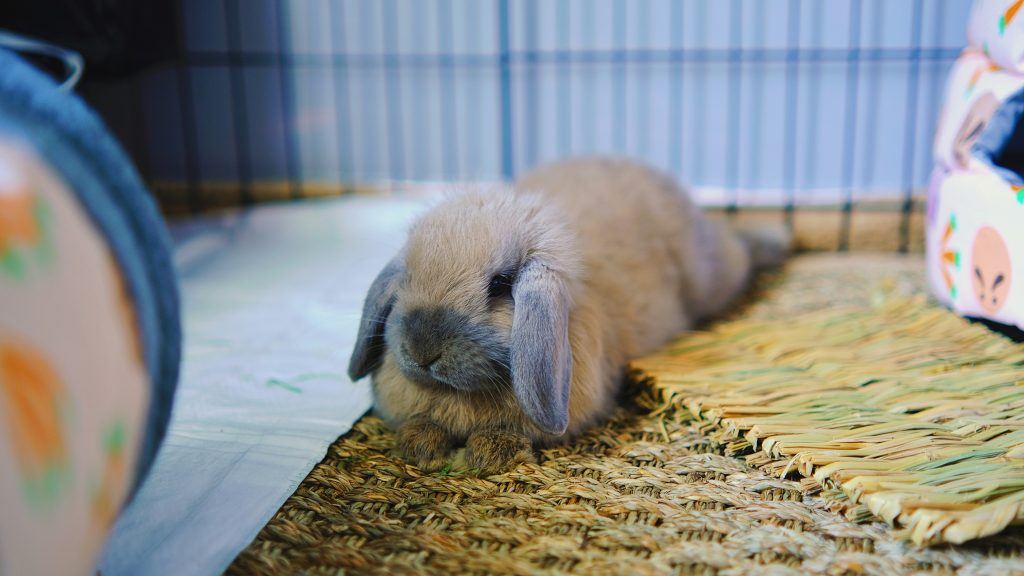
Rabbits are quiet animals, which means their vocalizations carry significant meaning. When a rabbit is content, most commonly while you are gently massaging the top of their head or behind their ears—they will softly click their teeth together. This action is known as “tooth purring” because it creates a gentle vibration that you can feel through their skull and see in the movement of their whiskers.
However, owners must distinguish between a happy purr and a painful grind.
Table 2: Deciphering Rabbit Sounds and Auditory Cues
| Sound / Action | Interpretation | Accompanying Body Language |
| Soft Tooth Purring | Contentment and relaxation | Body is relaxed, eyes may be partially closed, whiskers vibrating. |
| Loud Tooth Grinding | Severe physical pain or distress | Body is tense, rabbit sits in a tight, hunched posture, eyes wide. |
| Honking or Buzzing | Excitement / Affection | Circling your feet, begging for treats, high alertness. |
As outlined by the clinical data in the Veterinary Partner Rabbit Behavior Guide, loud, harsh grinding is a warning sign that requires immediate veterinary evaluation. Conversely, a soft buzz or honk is a positive sound, typically heard when they are circling your feet in anticipation of food.
4. Confident Exploration and Territorial “Chinning”
A fearful rabbit stays confined to their hiding spots, but a secure rabbit actively explores their environment. Confident curiosity—characterized by a rabbit moving through a room with a low, relaxed hop, sniffing baseboards, and standing upright on their hind legs to look around—signals positive mental well-being.
During these exploration periods, a happy rabbit will frequently engage in “chinning.” Rabbits possess scent glands directly beneath their jawlines. When they rub their chin against the corner of a cardboard box, the leg of a couch, or the tip of your shoe, they leave behind undetectable pheromones.
The Rabbit Welfare Association & Fund (RWAF) notes on enrichment explain that marking territory via chinning shows environmental confidence. A stressed rabbit prioritizes hiding; a comfortable rabbit prioritizes managing their space.
5. Healthy Physical Metrics: Appetite and the Nose Twitch
A rabbit’s emotional health is closely tied to their physical baselines. A happy rabbit shows strong enthusiasm for food, eagerly tackling a paper bag stuffed with herbs or running off to a secluded corner with a prized piece of romaine lettuce to enjoy it in peace.
Alongside appetite, you can assess their stress levels using the “nose twitch metric.”
Table 3: Reading Your Rabbit’s Nose Twitch Rhythms
| Twitch Speed | Associated Emotional State | Companion Behavior to Watch For |
| Steady, Rhythmic Wiggle | Content, alert, or resting normally | Neutral ear placement, normal exploratory blinking. |
| Frozen / Completely Still | Frightened, defensive, or hyper-vigilant | Chin tucked in tight, body tensed or balled up. |
| Rapid, Violent Vibration | Acute stress, panic, or overheating | Dilated pupils, rapid chest breathing, seeking cold surfaces. |
According to diagnostic parameters provided by Petco’s veterinary health portal, a healthy, content rabbit maintains a persistent, steady nose twitch. If the nose freezes entirely while the rabbit draws their chin inward, they are likely frightened or guarded. If the twitching becomes a rapid blur, they are experiencing acute panic or heat stress.
6. Signs of Trust and Affection Toward You
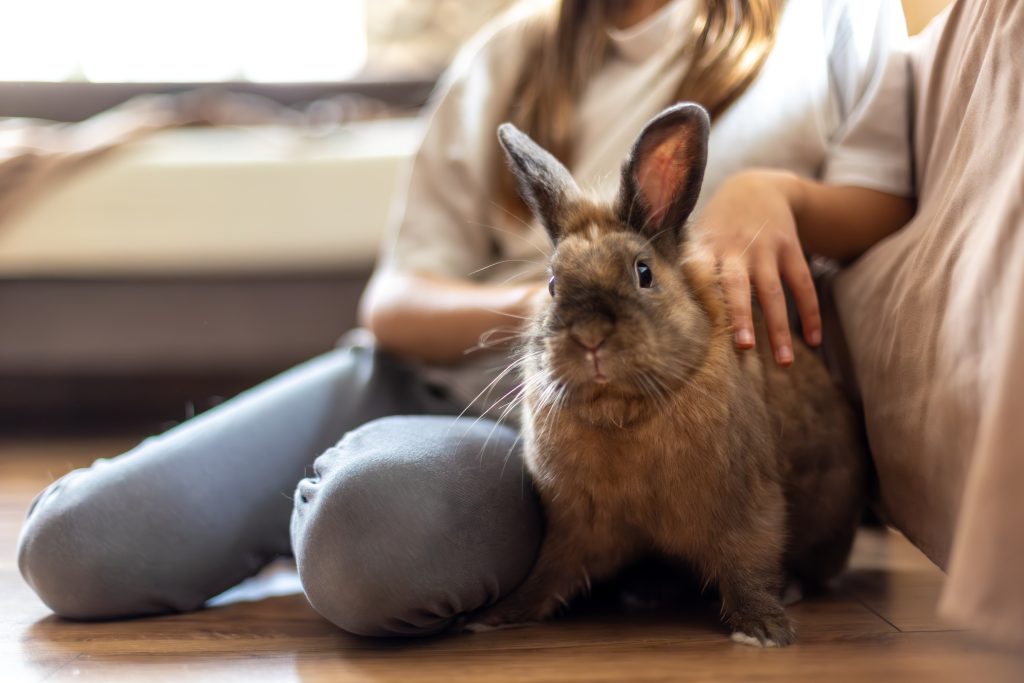
Because rabbits are prey animals that do not naturally seek out social contact with larger species, any voluntary interaction they initiate is a major sign of trust. If your rabbit hops over and begins licking your hands, ankles, or clothing, they are practicing social grooming, which indicates acceptance within their social hierarchy.
Another indicator is voluntary proximity. When a rabbit chooses to take their afternoon nap a foot away from where you are sitting, or comes over to nudge your hand with their nose, they are actively choosing you as a source of safety.
For a deeper look into these social bonds, check out my definitive guide to rabbit behavior, which details how prey species select safe spaces.
7. Maintaining Predictable Self-Care and Routines
Rabbits are dedicated to their daily schedules. A happy rabbit displays balanced self-care by keeping their coat clean and smooth through regular grooming sessions. They wash their face with their front paws and clean their hind legs without crossing the line into stress-induced hair pulling (barbering) or leaving bald patches.
Watching my own rabbits, Mocha and Chino, makes it clear how much individual personalities dictate these self-care patterns.While Mocha is high-energy and pairs her grooming with frequent binkies, Chino is much more independent, expressing his comfort through quiet, thorough grooming sessions and long, predictable afternoon naps.
Their behavioral stability is tightly tied to this internal clock. Rabbits are crepuscular, meaning they experience natural peaks of energy during the early morning and late evening, followed by quiet rest in the middle of the day. A content rabbit maintains these predictable cycles seamlessly.
8. Quick Check: Signs Your Rabbit is NOT Happy
To fully understand your rabbit’s happiness, it helps to recognize what distress looks like. If your rabbit displays any of the following behaviors, it indicates that their emotional or physical needs are not being met:
- Constant Hiding: Refusing to leave the back of a closet or hiding under the bed, even when the environment is quiet.
- Thumping: Striking the ground hard with their hind legs to express fear, annoyance, or perceived danger.
- Bar Chewing: Repetitive chewing on enclosure bars or baseboards, which is a common sign of boredom.
- The “Flattened” Posture: Pressing their body tightly against the floor with their eyes wide, pupils dilated, and ears pinned flat against their spine.
- Sudden Aggression: Lunging, boxing with their front paws, or suddenly becoming aggressive when you approach their space.
9. How to Maximize and Maintain Your Rabbit’s Happiness
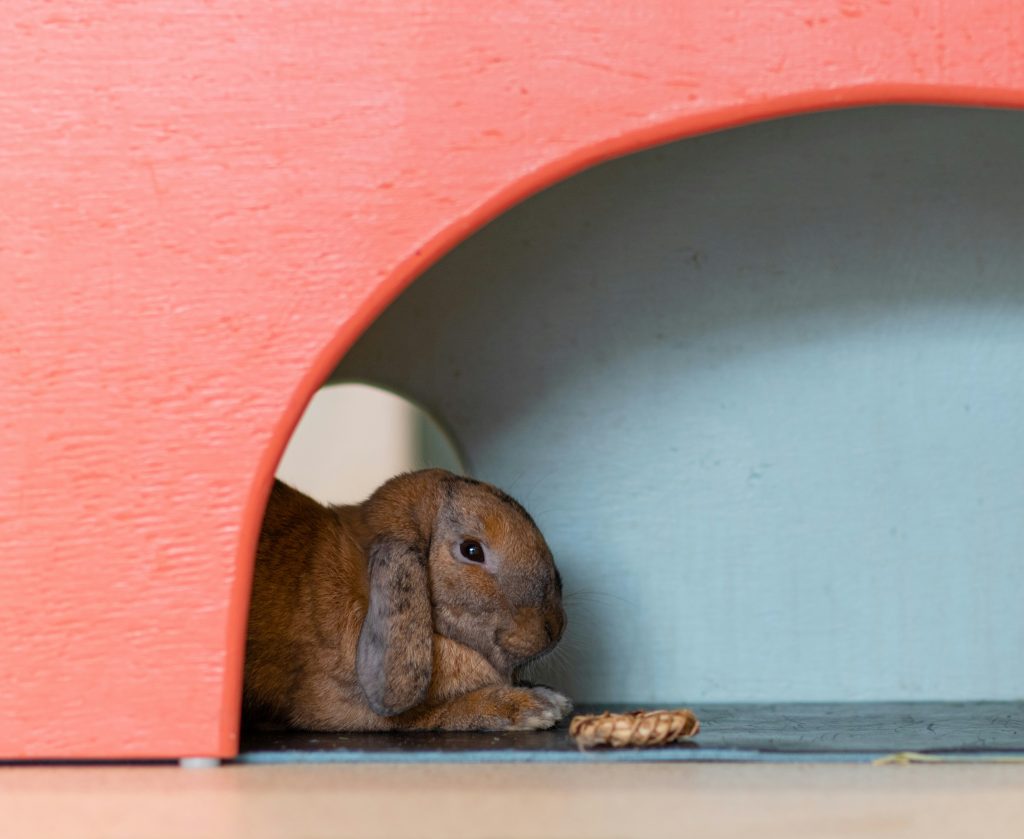
To support your rabbit’s natural behavioral needs, focus on a few key areas of daily care.
First, consider their physical environment. The PDSA housing and health standards state that long-term confinement can cause skeletal issues and anxiety. Provide a spacious, bunny-proofed area where they have permanent access to run and play.
Second, provide mental engagement. Instead of putting all their food in a standard bowl, try scatter-feeding their pellets across a clean floor, stuffing cardboard tubes with fresh hay, or setting up a dedicated dig box filled with cardboard and safe shredding materials.
Finally, consider their social needs. Because wild rabbits live in large, cooperative family groups, a solo rabbit requires significant time and attention to avoid loneliness. The most effective step you can take for long-term happiness is to safely introduce them to a compatible partner using our rabbit companion compatibility guide.
Table 4: Summary Checklist for Long-Term Rabbit Happiness
| Care Element | Goal Strategy | Why It Impacts Happiness |
| Space Strategy | Provide a permanently open, bunny-proofed exercise zone. | Prevents skeletal cramping, anxiety, and stress chewing. |
| Daily Enrichment | Rotate puzzle feeders, hay-stuffed tubes, and safe digging boxes. | Keeps intelligent minds active and curtails destructive behaviors. |
| Companion Bonding | Introduce a compatible, neutered second rabbit. | Satisfies deep-seated evolutionary social instincts. |
10. Frequently Asked Questions (FAQ)
How do rabbits show happiness?
Rabbits show happiness through behaviors like binkies (jumping and twisting mid-air), side-flops, soft tooth purring, steady nose wiggles, and confident room exploration.
What does it mean when a rabbit rubs its chin on things?
This behavior is called “chinning.” Rabbits possess scent glands beneath their chin and rub them on objects to leave behind pheromones, marking territory and indicating they feel secure in their home.
Why does my rabbit run in circles and make an oinking sound?
Running loops (zoomies) paired with a soft honking or buzzing noise indicates high excitement, most frequently seen when a rabbit is anticipating a meal or a favorite treat.
Is my rabbit happy if it lays down completely flat?
It depends entirely on their muscle tension. If the legs are stretched out and the eyes are relaxed, they are resting comfortably. If the body is rigid, the eyes are wide, and the ears are flattened tightly against their back, they are displaying fear.
Are quiet, independent rabbits still happy?
Yes. Rabbit personalities vary widely. While some bunnies are highly energetic and constant binkiers, more independent rabbits show their contentment through quiet consistency, maintaining a steady appetite, grooming meticulously, and calmly choosing to rest in the same room as you.
Conclusion
Reading a rabbit’s emotional state requires focusing on the specific indicators of prey-animal behavior rather than looking for the obvious signals we expect from dogs or cats. A rabbit’s well-being is best measured by consistency: a regular daily routine, a steady appetite, and a willingness to explore their surroundings without fear. By keeping track of small details like ear posture, nose rhythm, and interaction preferences, you can easily verify your rabbit’s true emotional state and build long-term trust.
Medical & Veterinary Disclaimer: Bunnyowners.com is an informational resource for rabbit owners and enthusiasts. We are not veterinarians. The content on this website is for educational purposes only and is not a substitute for professional veterinary advice, diagnosis, or treatment. Always consult a qualified veterinarian with any questions or concerns regarding your pet’s health, medical conditions, diet, or overall care. If you have concerns about your rabbit’s health, it’s always best to reach out to a veterinarian rather than relying solely on information found online.