
Veterinary & Affiliate Disclaimer: Bunnyowners.com shares educational rabbit care resources, not professional veterinary advice. Always consult a qualified veterinarian regarding your rabbit’s medical, dietary, or behavioral needs. This post may also contain affiliate links; as an Amazon Associate and affiliate partner, we earn from qualifying purchases at zero extra cost to you.
Finding your baseboards splintered or your favorite rug frayed can be incredibly frustrating, leaving many owners wondering if their pet has suddenly developed a behavioral issue. It is easy to view this destructiveness as a sign of rebellion, but from a biological standpoint, your rabbit is simply acting on a deeply hardwired survival instinct. To successfully protect your living space, you first have to understand the physical and mental drivers behind this non-stop urge.
Rabbits chew everything primarily because their teeth grow continuously throughout their lives and must be worn down naturally to prevent painful dental disease. In an indoor setting, this instinctual habit often transforms into household destruction when rabbits face boredom, lack appropriate fiber toys, or receive inadequate physical exercise. You can successfully protect your home by maximizing their daily grass hay intake and implementing physical barriers like split-loom tubing and corner guards.
While you cannot completely stop a rabbit from using their teeth, you can absolutely change what they choose to target. By identifying the exact triggers behind a sudden spike in destruction and modifying their environment with the right gear, you can easily protect your home while keeping your pet healthy. To explore how this fits into the wider context of your pet’s communication and routines, browse my full collection of deep-dives on rabbit behavior. The following breakdown covers everything from the evolutionary science of rabbit teeth to practical, budget-friendly rabbit-proofing strategies that actually work.
1. Normal Rabbit Chewing Habits
Every new rabbit owner eventually faces the realization that their quiet, gentle pet is fully capable of remodeling a room overnight. It is easy to label this as bad behavior, but it helps to look at things from an evolutionary perspective.
Chewing is entirely normal for rabbits, as they naturally use their teeth to explore their environment, wear down their dentition, and satisfy instinctual foraging drives. Without appropriate and appealing alternative chew toys, most indoor rabbits will naturally redirect this instinctual behavior toward available household objects.
To understand why a rabbit targets certain items, it is helpful to categorize their chewing habits. By analyzing the core purpose behind each chewing scenario, owners can better determine whether their pet is engaging in healthy instinctual play or displaced destruction, as detailed in the overview below.
Table 1: Distinguishing Normal vs. Destructive Chewing Contexts
| Rabbit Chewing Context | Behavioral Designation | Primary Purpose |
| Grinding down grass hay or apple wood | Normal Behavior | Essential dental wear and digestive health |
| Nibbling cardboard or seagrass mats | Normal Enrichment | Environmental exploration and foraging |
| Gnawing furniture legs or baseboards | Destructive Chewing | Displaced instinct due to lack of safe outlets |
In the wild, a rabbit’s day is dictated by processing tough, fibrous materials. When we bring them into our homes, the instinct does not simply vanish. The primary difference between normal chewing and destructive chewing is not the action itself, but the target. Normal chewing happens when a rabbit works through a pile of fresh mountain hay or gnaws on a backyard branch. Destructive chewing occurs when those same teeth are applied to your antique oak table legs or the drywall corners of your living room.
Understanding this distinction is vital. According to comprehensive data on lagomorph biology published by Frontiers in Ecology and Evolution, their physical and psychological framework demands this behavior. For a broader look at how these actions coordinate with structural habits like thumping, chinning, or nesting, see my definitive guide to rabbit behavior. You are not dealing with a behavioral flaw; you are dealing with a biological necessity.
2. The Biological Need to Chew
The number one biological driver behind your rabbit’s chewing habit is their unique dental anatomy. Unlike humans, dogs, or cats, a rabbit’s teeth possess open roots, meaning they grow continuously throughout their entire lives. A rabbit’s incisors can grow anywhere from 3 to 5 inches per year.
Because of this rapid, non-stop development, the top and bottom teeth must constantly grind against one another and against coarse materials to maintain a safe length. If a rabbit does not chew enough rough material, their teeth will quickly become overgrown. This leads to a severe, agonizing medical condition known as overgrown teeth and malocclusion, where the teeth misalign, form razor-sharp spikes called molar spurs, and can eventually pierce the tongue or cheeks.
Regular mechanical wear from chewing is their only defense against this painful condition, a fact supported by small animal clinical resources hosted at the National Institutes of Health.
Chewing Is Part of Natural Foraging Behavior
In their natural habitats, wild rabbits spend hours navigating open fields and brushlands. Their diet consists of far more than soft grasses; they routinely strip bark from low-hanging trees, chew through thick roots blocking their burrows, and gnaw on tough, woody twigs.
Indoor rabbits share the exact same genetic blueprint as their wild ancestors. Even if you supply them with the finest pellets in a ceramic dish, their brains are still hardwired to forage, rip, and shred. When they encounter carpet edges or baseboards, their ancestral programming tells them they are clearing away stray roots and brush to widen their territory.
Chewing Helps Rabbits Explore Their Environment
Rabbits do not have hands to pick up objects, inspect textures, or evaluate the safety of an item. Instead, they rely heavily on their mouths. A rabbit explores their territory through a combination of sniffing, chin-rubbing, light digging, and a behavior known as exploratory chewing.
When a rabbit approaches a new box, a stray shoe, or a piece of loose plastic, they will often give it a series of small, testing nibbles. This tactile feedback tells them whether the object is hard or soft, edible or inedible, stable or loose. It is essentially their way of mapping the physical boundaries of their world.
3. The 7 Main Causes of Destructive Chewing
Understanding the primary drivers behind destructive behavior requires looking closely at your rabbit’s daily routine, environment, and physical state. When a rabbit transitions from normal chewing to destroying household property, it is almost always a direct response to a specific physical or psychological trigger.
The following breakdown isolates the most common environmental and behavioral causes that prompt an indoor rabbit to target your living space.
1. Boredom
By far the most common culprit behind a thoroughly chewed home is sheer boredom. Inside a house, rabbits do not have to dodge predators or spend eight hours a day searching for their next meal. If they are left alone in a sterile environment for hours on end, that sharp intelligence and natural energy turns inward, manifesting as destructive rabbit boredom behaviors.
Rabbits frequently chew household items when they are bored and lack sufficient mental stimulation. When confined without adequate entertainment, they will target furniture, baseboards, walls, and carpet fibers as an outlet for pent-up energy, which can be managed by providing targeted enrichment activities.
2. Not Enough Hay
Grass hay should make up at least 80% of your rabbit’s daily diet. It provides the essential, long-strand fiber required to keep their complex digestive tracts moving, but it also serves as their primary natural dental wear outlet. The act of side-to-side grinding needed to break down coarse hay keeps their molars perfectly filed.
When an owner overfeeds pellets or treats, the rabbit fills up quickly on soft food. They stop chewing on hay because they are full, yet their biological drive to grind their teeth remains entirely unfulfilled. Consequently, they wander away from the food bowl and look for the closest hard surface to chew—which usually ends up resulting in rabbits chewing baseboards or cabinets. Nutritional reference material from Oxbow Australia stresses that a constant influx of high-quality grass hay is the single best dietary preventive against household wood damage.
3. Lack of Appropriate Chew Toys
If you don’t give your rabbit a dedicated job, they will create one for themselves. Many owners provide their pets with soft, brightly colored plastic toys from general pet stores, only to find the rabbit ignores them entirely. Rabbits prefer natural, challenging textures to satisfy their instinctual chewing needs. If they do not have access to real wood, dense cardboard, or woven seagrass, they will substitute your household furniture to satisfy that tactile craving.
4. Too Little Exercise
A cooped-up rabbit is a destructive rabbit. These animals are naturally crepuscular, meaning their energy levels peak during the early morning and late evening hours. If they are confined to a small cage or enclosure during these peak times, their frustration builds up. When they are finally let out, or even while they are still inside their enclosure, they will channel that explosive, pent-up physical energy directly into the nearest chewable surface, treating your walls like a gym. This dynamic is a common focus in behavioral surveys cataloged via Springer Link, highlighting how environmental confinement directly manifests as household property destruction.
5. Attention-Seeking Behavior
Rabbits are far smarter than many people give them credit for, and they are excellent at training their humans. They quickly figure out exactly which actions trigger an immediate response from you. If your rabbit chews on a baseboard and you instantly jump off the couch, yell their name, or run over to shoo them away, your rabbit views that as a massive win—they have successfully used destructive behavior to get attention.
I see this dynamic play out in my own home regularly. Chino, my personal rabbit, is an absolute master of the calculated attention-chew. He will hop over to a specific corner of a wooden cabinet, turn his head to make direct, unbroken eye contact with me, and slowly open his mouth to place his teeth against the wood. He knows exactly what he is doing. He doesn’t actually want to eat the cabinet; he wants me to stand up and walk over to him, preferably with a small piece of dried herb or a head scratch to distract him. If I fall for it, I am accidentally reinforcing the exact behavior I want to stop.
6. Stress or Frustration
Rabbits are deeply sensitive prey animals that thrive on strict routines and predictable environments. Any sudden disruption can cause a wave of anxiety, which they often soothe through repetitive, compulsive behaviors like chewing. A loud household argument, a neighbor’s barking dog, or a shift in the family schedule can trigger stress-induced chewing. Additionally, if you have a bonded pair of rabbits and there is underlying tension or a minor tiff over territory, the subordinate rabbit may vent their frustration on nearby objects. Studies on captive rabbits in enclosed systems published in MDPI Animals demonstrate how an inability to express natural gnawing behavior directly promotes abnormal, stereotypic chewing and aggressive habits.
7. Adolescence and Hormonal Behavior
If your young rabbit was a perfect angel for the first few months and suddenly transformed into a tiny, furry demolition crew around the four-to-six-month mark, you are dealing with rabbit adolescence. As sexual maturity hits, their hormone levels skyrocket. This biological shift triggers an intense territorial behavioral drive to mark boundaries, dig, and chew everything in sight.
Terrific behavioral research shows that scheduling a spay or neuter surgery with a rabbit-savvy vet is the single most effective way to level out these intense hormonal drives. Beyond standard boredom, secondary factors such as age, dietary balances, and chronic anxiety play a massive role in destructiveness. The table below outlines how these hidden structural triggers typically manifest in an indoor environment.
Table 2: Secondary Triggers for Sudden Spikes in Destruction
| Secondary Trigger Factor | Underlying Cause | Typical Presentation |
|---|---|---|
| Nutritional Deficit | Lack of structural fiber or minerals | Targeting drywall, baseboards, or wallpaper |
| Adolescence | Hormonal spikes (4-12 months old) | Sudden surge in territory marking, digging, and chewing |
| Environmental Friction | Stress from routine changes or bonding tension | Compulsive, repetitive gnawing in specific corners |
4. Triggers for Sudden Behavior Changes
There is a distinct difference between a rabbit that has always casually glued their teeth to things and a rabbit that abruptly switches gears into non-stop, frantic household destruction. If you are tracking a sudden behavioral pivot, you need to look closely at what changed in their immediate world over the last 48 hours.
A rabbit that suddenly starts chewing everything is usually responding to a recent shift in their environment or routine. Common triggers for sudden destructive chewing include moving to a new home, rearranged furniture, reduced free-roaming exercise time, seasonal indoor confinement, stress, or the loss of a bonded companion.
Rabbits notice even the smallest alterations to their territory. If you move a chair, you expose a section of wall or baseboard that was previously hidden, inviting them to explore and claim the “new” space with their teeth. Similarly, when winter arrives and outdoor or free-roaming hours are scaled back, the sudden loss of stimulation causes immediate behavioral pushback.
If there has been no change to the household layout or schedule, a sudden spike in chewing can point directly to internal stress, territorial insecurity, or hidden physical pain. To cross-reference wild behaviors against domestic environmental triggers, consult the anatomical assessments provided by Wiley Online Library, which evaluate how structural skull and body dimensions influence chewing motivations across diverse lagomorph populations.
5. The 6 Household Items Often Targeted by Rabbits
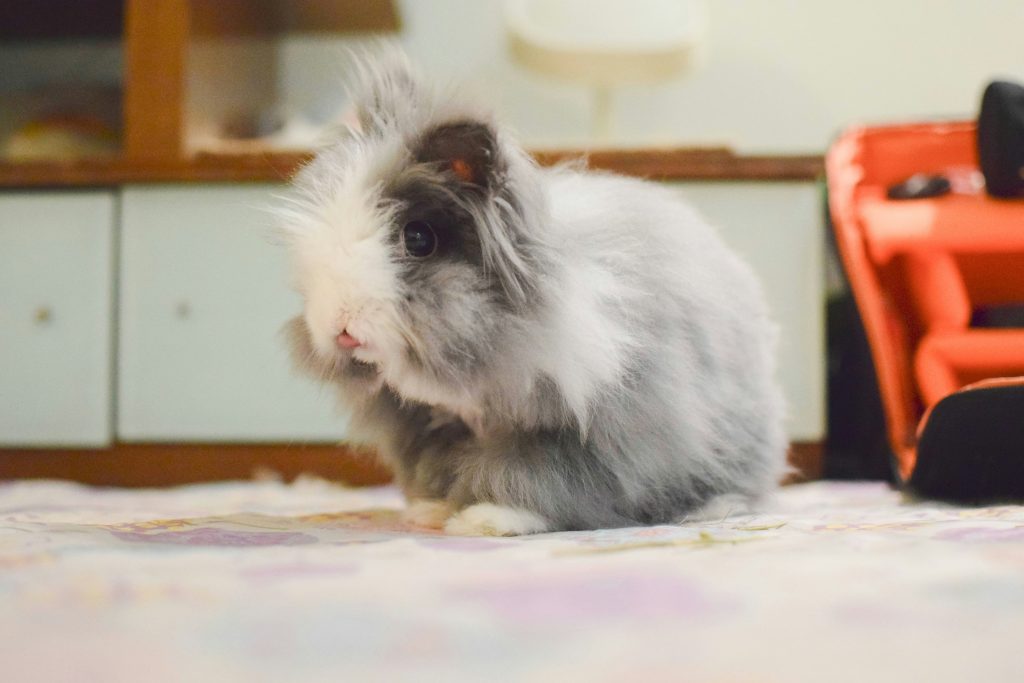
Even in a carefully managed environment, rabbits will naturally gravitate toward specific surfaces and objects that mimic their outdoor habitats. Understanding which household items are most vulnerable allows you to anticipate their targets and apply protective measures before any damage occurs.
The following outlines the specific household items indoor rabbits target most frequently and the instincts behind those choices.
1. Electrical Cords
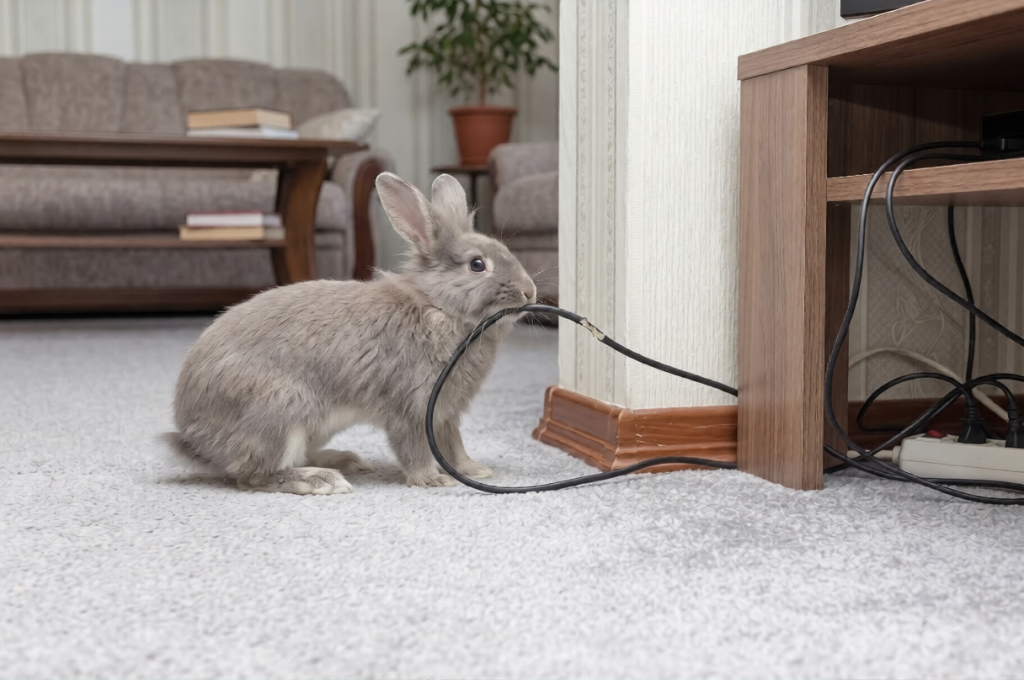
To a rabbit, a loose electrical cord hanging behind a television or running along a baseboard looks identical to a rogue tree root or vine blocking a pathway. Their natural instinct is to cleanly snip it in half to clear the trail. This is the single most dangerous item a rabbit can target in an indoor environment, carrying an incredibly high risk of severe oral electrical burns, fatal electrocution, or sparking a devastating house fire.
2. Baseboards and Trim
Baseboards are the perfect height for a rabbit, sitting directly at eye level. Wooden baseboards feature alluring right-angle corners that allow a rabbit to easily get their incisors around the edge to get leverage. Once they manage to splinter off the first small piece of wood, they will systematically return to that exact spot day after day to continue the job.
3. Furniture Legs
The legs of wooden chairs, tables, and couches are essentially indoor trees to a house rabbit. Solid wood features an organic texture and scent that is incredibly appealing to them. Left unprotected, a single determined rabbit can completely structurally compromise a chair leg within a few weeks of consistent gnawing.
4. Carpet and Rugs
Rabbits love to target loose carpet threads, specifically in corners or right underneath closed doors where they desperately want to dig their way through. They will catch a loose loop with their teeth, pull upward to rip it out, and then chew the fiber down to the backing. This presents an extreme medical hazard if they swallow the synthetic strings.
5. Walls and Drywall
If a rabbit finds a small chip in your wall paint or an exposed corner of drywall, they will use their teeth to scrape away the chalky gypsum inside. This often signals a lack of environmental entertainment, but it can also be a desperate attempt to seek out minerals or roughage missing from their daily diet.
6. Houseplants
Rabbits are natural herbivores, so any green leaf hanging low enough to reach will be viewed as a snack. Unfortunately, many common domestic houseplants are highly toxic to their delicate systems, making it absolutely vital to keep all vegetation completely out of their jumping range.
6. Household Hazards and Health Risks
As an owner, it is your responsibility to act as the ultimate gatekeeper for what enters your rabbit’s mouth. While wood splinters can cause localized mouth injuries, other common household materials introduce immediate, life-threatening risks.
Rabbits must be strictly prevented from chewing hazardous household objects, including electrical cords, painted trim, treated lumber, toxic houseplants, soft plastics, rubber materials, and synthetic carpet fibers. Ingestion of these materials frequently causes fatal electrocution, internal poisoning, or severe digestive blockages.
Because rabbits possess complex, delicate gastrointestinal systems, swallowing non-food items can quickly turn fatal. To identify specific botanical hazards and poisonous domestic items, you can reference the complete directory maintained on the ASPCA Poison Control master database. To help prioritize your home-proofing efforts, the following data details the primary medical risks and long-term consequences associated with common household surfaces.
Table 3: Immediate Hazards and Health Risks of Common Household Materials
| Household Item | Primary Risk to Rabbit | Long-Term Outcome |
| Electrical cords | Electrocution / Severe oral burns | Immediate emergency |
| Carpet fibers | Intestinal blockage (GI Stasis) | Surgical intervention |
| Plastic objects | Sharp internal lacerations / Blockage | Severe digestive distress |
| Toxic plants | Systemic poisoning / Organ failure | Fatal if untreated |
| Treated wood | Heavy chemical exposure (arsenic/copper) | Chronic toxicity |
| Painted trim | Lead or chemical paint ingestion | Neurological/GI issues |
7. Prevention Techniques and Management Strategies
The absolute foundational step in curbing household destruction is maximizing your rabbit’s hay intake. Fill their litter boxes and hay racks multiple times a day with high-quality, fragrant grass hays. Experimenting with different cuts—such as a crunchy, first-cut Timothy hay or a softer Orchard grass—keeps them engaged at the food source for hours, burning off their physical need to chew long broken before they wander over to your walls.
1. Offer Multiple Safe Chew Options
Do not expect a rabbit to be satisfied with a single wooden block dropped on the floor. Provide an abundant array of textures throughout their free-roam zone. Scatter willow balls, seagrass mats, unpainted wicker baskets, and heavy cardboard tubes stuffed with hay. By providing a diverse sensory menu, you ensure that whatever texture they are craving, they can find a safe version of it on the floor.
2. Rotate Toys Regularly
Novelty is a powerful tool when managing smart animals. If the same toys sit in the exact same corners for a week, your rabbit will entirely look past them. Implement a simple rotation system: keep half of their toys in a storage closet and swap them out every few days. The simple act of introducing a “new” cardboard box or a fresh willow structure instantly restarts their curiosity and diverts their focus from your home.
3. Increase Daily Exercise
Make sure your rabbit has ample room to run, binky, and exhaust themselves during their natural peak energy hours. Providing a minimum of four to six hours of daily free-roam time in a spacious area drastically cuts down on frustration-fueled destruction. If a rabbit spends their morning sprinting across a room and exploring safe setups, they will spend their afternoon sleeping instead of chewing.
4. Create a Rabbit-Safe Play Area
Successful long-term management relies entirely on proactive environmental design rather than human policing. You cannot simply watch your rabbit every second of the day; instead, you must protect the environment so that errors are physically impossible.
To secure your space, install heavy-duty split-loom tubing or solid plastic cord managers over every single exposed wire in the room. When wrapping cords, ensure the protective sleeve covers the wire all the way into the wall outlet plug. For your walls and furniture, use metal or plastic C&C grid panels (cube grid storage sheets) zip-tied together to form an impenetrable barrier along your baseboards and behind furniture legs.
Always snip your plastic zip-ties completely flush against the locking block; leaving sharp, jagged edges can scratch a rabbit’s sensitive nose or eyes during an enthusiastic digging session. Additionally, anchor grid panels firmly behind heavy furniture so a determined rabbit cannot use their head to wedge themselves back into tight, unprotected gaps. You can also attach clear, rigid plastic corner guards directly to drywall edges using pet-safe adhesive, completely removing their ability to get their teeth around the corners.
When planning a room layout, selecting the correct barrier tool is essential for effective proofing. The table below outlines the most dependable preventative gear used to establish physical boundaries in a rabbit’s primary play zone.
Table 4: Essential Rabbit-Proofing Prevention Gear
| Rabbit-Proofing Gear | Functionality | Areas Protected |
| Split-Loom Tubing | Heavy-duty protective sleeve for loose wires | Electrical cords, chargers, TV cables |
| C&C Grid Panels | Modular wire mesh grids zip-tied together | Baseboards, furniture legs, underside of couches |
| Plastic Corner Guards | Rigid, clear shields adhered to corners | Drywall edges, wall corners, door frames |
Use Positive Redirection
Never clap aggressively, chase, or spray your rabbit with water when you catch them chewing on a forbidden object. Instead, calmly walk over and slide a highly appealing, safe alternative—like a fresh apple stick or a cardboard tube—directly between their teeth and the forbidden surface. The moment they switch their attention to the safe item, praise them warmly or reward them with a small pinch of pellets. You are teaching them that targeting household items yields a boring interruption, while targeting their toys yields a reward.
Avoid Punishment
Physical or structural punishment completely fails when dealing with prey animals. A rabbit does not possess the cognitive framework to connect your anger or physical discipline with an action they completed moments ago. Punishment simply teaches them that you are a terrifying, unpredictable predator, which spikes their chronic stress levels and dramatically increases their compulsion to chew out of fear and anxiety. To explore the wider context of behavioral modification and stress-free housing, look through the comprehensive small animal management guides compiled at the World Rabbit Science Association library.
8. Recommended Items Safe for Chewing
When choosing items to satisfy your rabbit’s natural instincts, look for items that are completely free of pesticides, toxic dyes, and chemical finishes. Safe chew options that satisfy a rabbit’s dental and instinctual needs include fresh timothy hay, dried apple wood branches, willow sticks, untreated cardboard tunnels, seagrass mats, pear wood, and compressed hay cubes. These natural fibers safely wear down their teeth without risking chemical exposure or digestive impaction.
In my own household, I have found that structural variety is key. While loose twigs are great for a quick snack, heavy, woven willow structures or large, thick cardboard concrete forming tubes from local hardware stores hold up beautifully against aggressive chewers. Mocha, my other resident rabbit, will systematically tear apart woven willow structures over several days, completely leaving the baseboards alone as long as she has a fresh fiber project to focus on.
Providing a substantial, multi-layered chew item like a woven ball satisfies her for roughly 48 to 72 hours of intense, focused work, whereas a thin apple stick is destroyed and forgotten in under ten minutes. These natural structures provide that solid, resistant texture that mimics deep tree roots, keeping rabbits occupied for days without creating any health risks. For additional enrichment tips regarding toys, tunnels, and structured chew items, consult the behavioral evaluations of destructible environmental enrichment for rabbits published in the National Institutes of Health archives.
9. Chewing Linked to Medical Concerns
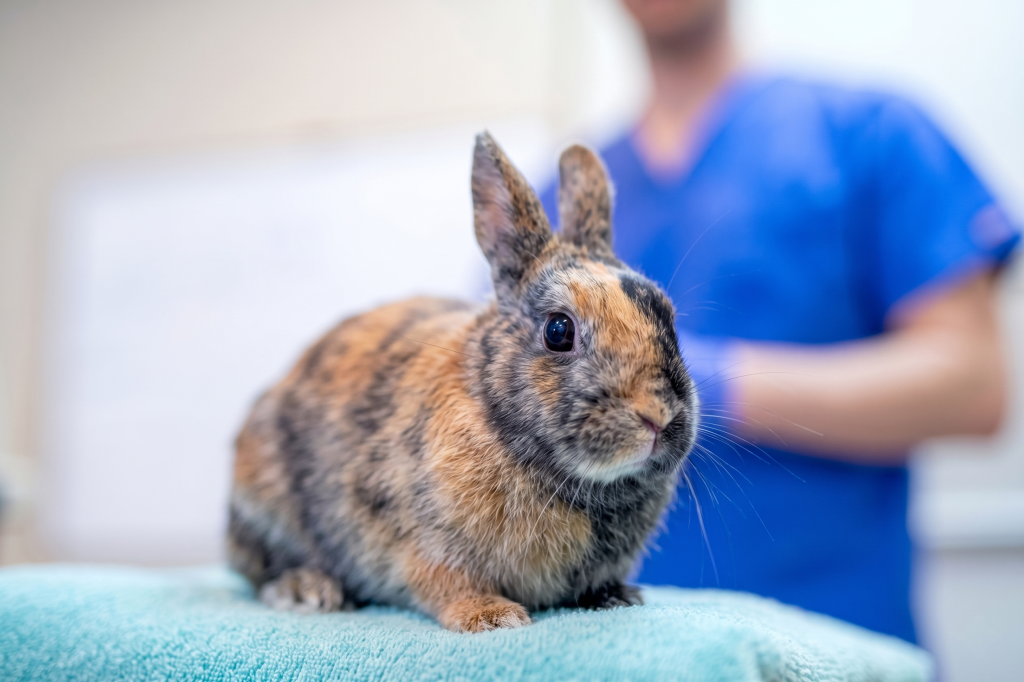
While most chewing is a completely normal expression of behavior or boredom, an intense, manic escalation can sometimes mask an underlying medical issue. This is a crucial area that many general pet care guides completely overlook.
When a rabbit develops hidden dental issues, such as painful molar spurs on the inside of their mouth or a deep tooth root infection within the jawbone, they experience non-stop discomfort. Because they cannot communicate this pain, they will often frantically chew on hard objects—like cage bars, metal enclosures, or stone tiles—in a desperate, mechanical attempt to shift their jaw alignment or grind away the source of the internal pressure.
Additionally, chronic systemic pain from arthritis or underlying gastrointestinal issues can cause a rabbit to display compulsive, repetitive behavioral tics, including destructive chewing and pulling at their own fur. If the behavior feels frantic, desperate, or completely detached from their normal personality, it is time to look deeper. Longitudinal analyses on Acquired Dental Disease (ADD) featured in PMC Veterinary Science confirm that over 25% of domestic rabbits suffer from underdiagnosed cheek teeth abnormalities, which strongly accelerate repetitive chewing on improper objects to relieve internal mandibular load.
10. Knowing When to Contact a Veterinarian
Because rabbits are prey animals, they are evolutionary masters at hiding illness until they are in a state of severe physical crisis. As an informed owner, you must carefully monitor their physical symptoms alongside their behavioral shifts to catch hidden rabbit dental disease symptoms early.
Medical Red Flags to Watch For:
- Frantic Behavioral Escalation: A sudden, frantic spike in chewing habits with absolutely no clear environmental or routine changes.
- Appetite Disparity: The rabbit displays a strong desire to chew on hard household surfaces but actively refuses to eat their daily hay or pellets.
- Hypersalivation and Jaw Friction: Visible drooling, wet fur around the chin or neck, or a frequent, rhythmic rubbing of their jaw with their front paws.
- Difficulty Prehending Food: The rabbit drops food directly out of their mouth while trying to eat, or tilts their head awkwardly while chewing fresh greens.
- Physical Wasting: Unexplained, steady weight loss or a sudden loss of muscle definition along the spine.
- Mandibular Asymmetry: Asymmetrical facial swelling or hard, structural bumps along the lower jaw line indicating potential tooth root abscesses.
- Acute Pain Indicators: Clear physical tics of severe discomfort, including loud, rhythmic clicking of the teeth (grinding), or a tightly hunched sitting posture.
- Changes in Digestion: A noticeable, sudden decrease in the size, shape, or overall quantity of their daily fecal droppings—a key indicator of a slowing digestive tract.
Excessive household chewing becomes an immediate medical concern rather than a behavioral issue if it is accompanied by drooling, a reduced appetite for hay, sudden weight loss, visible difficulty grinding food, or facial swelling. These symptoms strongly point to underlying dental disease, painful molar spurs, or severe mouth injuries that require urgent veterinary attention.
Because a rabbit’s health can decline rapidly when experiencing severe pain or blockages, owners must know exactly how quickly to act to prevent secondary complications. The reference schedule below identifies specific clinical red flags alongside their corresponding diagnostic concerns and recommended emergency care windows. For a complete analysis of how localized skull shape, cheek teeth lengths, and progressive dental decay influence these behaviors in domestic breeds, refer to the morphometric evaluations published in the Veterinary Sciences.
Table 5: Veterinary Evaluation Windows for Medical Chewing Triggers
| Medical Red Flag | Diagnostic Concern | Urgent Care Window |
| Drooling / Wet Chin / Jaw Rubbing | Advanced molar spurs, oral lacerations, or cheek ulcerations | Within 24 Hours |
| Refusing Hay while chewing hard objects | Severe malocclusion, incisor overgrowth, or open-root dental pain | Within 24 Hours |
| Reduced / Absent Fecal Droppings | Onset of life-threatening GI Stasis in rabbits from acute pain or an internal blockage | Immediate Emergency |
11. Frequently Asked Questions
Why does my rabbit chew walls?
Rabbits chew walls primarily because the exposed right-angle corners offer an easy grip for their front teeth. This behavior is typically driven by boredom, but it can occasionally indicate a nutritional deficiency, as rabbits may seek out the minerals found within drywall gypsum or plaster if their diet lacks proper mineral variety.
Why does my rabbit chew carpet?
Carpet chewing is closely tied to a rabbit’s natural instinct to dig out underground burrows. They will target corners or the spaces beneath closed doors, pulling at the fibers with their teeth to clear a path. This behavior carries a high risk of causing an intestinal blockage if the synthetic strings are swallowed.
Why does my rabbit chew wood furniture?
To a house rabbit, the solid wood legs of chairs and tables feel identical to the natural tree bark and branches they would forage on in the wild. The dense texture provides the perfect resistance needed to wear down their rapidly growing teeth.
Why is my rabbit chewing my bed?
Your bed is packed with soft, malleable textures like sheets, blankets, and mattresses, which trigger a rabbit’s instinct to tunnel, flatten, and clear out a nesting space. Additionally, because your bed carries your concentrated scent, a rabbit may chew or dig at it to assert their own presence and mix their scent with yours.
Do rabbits outgrow chewing?
Rabbits never outgrow the physical need to chew, as their teeth grow continuously throughout their entire lives. However, adolescent rabbits (between 3 and 12 months old) are significantly more destructive due to surging hormones. Once neutered or spayed and fully matured, their chewing generally becomes calmer and much easier to direct toward safe toys.
Does neutering stop destructive chewing?
Yes, spaying or neutering drastically reduces frantic, destructive chewing. Hormones drive young rabbits to aggressively dig, chew, and mark surfaces to establish their territory. Removing that hormonal drive stabilizes their behavior, making them far more receptive to positive redirection.
Can rabbits chew cardboard safely?
Yes, plain, unprinted cardboard is a fantastic, budget-friendly chew toy for rabbits. However, you must ensure that all plastic packing tape, shipping labels, and heavy industrial glues are completely removed. While swallowing tiny amounts of clean cardboard fiber is harmless, it should never become a substitute for their actual daily hay intake.
What is the best chew toy for rabbits?
The best chew toys are those that mimic natural outdoor materials. Woven willow balls, dried apple wood sticks, seagrass mats, and dense cardboard tubes stuffed with fresh hay are highly effective. The key is providing a variety of textures to see what your individual pet prefers.
Why does my rabbit chew things only at night?
Rabbits are crepuscular creatures, meaning their natural energy levels peak during the twilight hours of late evening and early morning. If they are locked up or bored during the night while the rest of the house is asleep, they will look for ways to entertain themselves, turning to whatever household objects are nearby.
How much chewing is normal for a rabbit?
A healthy rabbit should be chewing throughout the day, spending several hours grinding down their grass hay and working on safe wood toys. Chewing is a constant, daily requirement; it only becomes abnormal if it shifts away from their toys and transforms into a frantic, obsessive destruction of your home.
12. Final Thoughts on Managing Your Rabbit’s Chewing
Managing a destructive chewer is entirely a matter of environmental adaptation rather than behavioral modification. Because chewing is a vital biological necessity rather than an act of household rebellion, attempting to suppress the urge entirely is both impossible and harmful to your pet. The most effective approach shifts your strategy away from human frustration and toward proactive management, protecting your property with specialized gear while ensuring your rabbit’s instinctual needs are met.
To effectively manage a rabbit that chews everything, owners should provide unlimited grass hay, supply diverse wood and fiber toys, increase daily free-roam exercise, and proactively protect the home with rabbit-proofing gear. Successfully halting destruction relies on positive redirection to safe alternatives rather than verbal or physical punishment.
Medical & Veterinary Disclaimer: Bunnyowners.com is an informational resource for rabbit owners and enthusiasts. We are not veterinarians. The content on this website is for educational purposes only and is not a substitute for professional veterinary advice, diagnosis, or treatment. Always consult a qualified veterinarian with any questions or concerns regarding your pet’s health, medical conditions, diet, or overall care. If you have concerns about your rabbit’s health, it’s always best to reach out to a veterinarian rather than relying solely on information found online.