
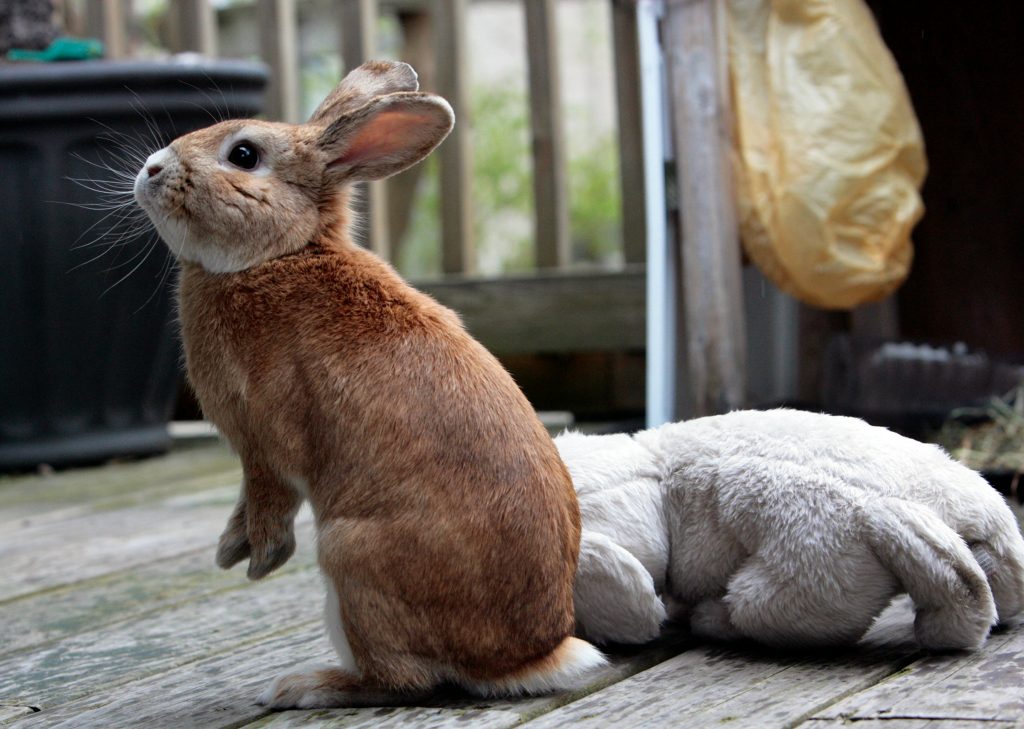
Veterinary & Affiliate Disclaimer: Bunnyowners.com shares educational rabbit care resources, not professional veterinary advice. Always consult a qualified veterinarian regarding your rabbit’s medical, dietary, or behavioral needs. This post may also contain affiliate links; as an Amazon Associate and affiliate partner, we earn from qualifying purchases at zero extra cost to you.
Rabbits get misread constantly because humans often struggle to understand an animal that doesn’t use loud vocalizations to communicate. While other species might cry out, bark, or make obvious noises to get attention, bunnies rely on a quiet, highly evolved setup of physical cues and hidden scent markers to tell you what is going on inside. If you want a genuine bond and a healthy pet, you have to learn to catch these fast, visual signals before they escalate into stress.
Rabbit behavior is primarily a language of movement and scent, where actions like binkying indicate pure joy while thumping serves as a sharp, instinctive warning of perceived danger. By observing your rabbit’s posture, ear position, and daily habits, you can accurately decode their emotional state and distinguish between normal play and signs of hidden illness. Understanding these specific behavioral cues is the foundational step in building a long-term, trusting relationship with your companion.
It is helpful to realize that rabbit behavior is never completely static. How a bunny acts on any given day varies based on their specific age, breed, hormonal status, and immediate environment. Their bonding status with companion rabbits, individual personality traits, and overall baseline health also play massive roles. Once you look at the whole picture, you can stop guessing and finally understand your pet by checking out comprehensive rabbit behavior guides.
1. What Do Rabbit Behaviors Mean?
To get your bearings before diving into the fine details, it helps to look at the big picture. The matrix below pairs high-frequency lagomorph behaviors with their primary meanings, established through veterinary behavior models. This cheat sheet gives you an instant baseline for what your rabbit is trying to say.
Table 1: Quick Reference Rabbit Behavior Matrix
| Behavior | What It Usually Means | Clinical or Behavioral Context |
| Binkying | Happiness and excitement | Play behavior; indicates zero perceived ambient threats. |
| Flopping | Feeling safe and relaxed | High trust; rabbit feels entirely safe in its territory. |
| Zoomies | Energy release and playfulness | High-velocity running; indicates comfort in the physical environment. |
| Thumping | Fear, warning, or frustration | Auditory warning meant to alert the social group to danger. |
| Digging | Instinct, boredom, or nesting | Normal burrowing drive; can escalate if enrichment is low. |
| Chewing | Natural tooth maintenance and exploration | Mechanical necessity due to continuous dental growth. |
| Licking | Affection and grooming | High bond reinforcement; bridges interspecies gap. |
| Chinning | Territorial scent marking | Pheromonal marking via submandibular scent glands. |
| Circling | Excitement, hormones, or attention-seeking | Courtship display or resource/attention anticipation. |
| Nudging | Wanting attention or interaction | Social demand or physical boundary clearance. |
| Hiding | Resting, stress, fear, or illness | Normal rhythm when resting; concerning if sudden and defensive. |
| Tooth Purring | Comfort and contentment | Soft friction of molars during positive stimulus (pets). |
While this matrix maps out the core meanings, a single row on a chart cannot capture the sheer kinetic energy of a live rabbit. To handle varying degrees of urgency—from casually researching play habits to navigating a sudden health crisis—use the detailed breakdowns below to identify your rabbit’s exact emotional state.
2. How Rabbits Communicate Through Behavior
Rabbits utilize multiple channels to project their internal state to the rest of the warren. Because they are classic prey animals, these channels are engineered to be highly effective without drawing the attention of passing predators. You can learn more about these overlapping systems by exploring my foundational guide on How Rabbits Communicate.
Body Language
The vast majority of a rabbit’s social statements are purely visual. They rely heavily on subtle shifts in baseline posture, immediate body movements, and strategic ear positioning to broadcast intent. Even a microscopic change in eye tension or facial expression can signal the transition from a relaxed rest to absolute predator awareness.
Scent Communication
What humans cannot perceive, rabbits read instantly through smell. Bunnies possess highly specialized scent glands underneath their chin that deposit unnoticeable pheromonal signatures onto household items. They also use carefully dropped territorial droppings and high-velocity urine spraying to build a sensory map of their domain and settle roommate disputes.
Social Communication
In a colony setup, social bonds are maintained through clear, physical touch points. This includes mutual grooming rituals, companionable following behaviors, and physical nudging. When group tensions rise, they will deploy specific dominance postures, like mounting or head lowering, to preserve order within the social hierarchy.
Vocal Communication
Bunnies are not entirely mute. While they lack vocal cords like ours, they use their throat and teeth to generate distinct sounds. You may hear low, happy honking during meal anticipation, sharp grunts of irritation, or defensive squealing. The most severe sound is a high-pitched scream, which indicates extreme physical pain or immediate terror.
3. Happy Rabbit Behaviors
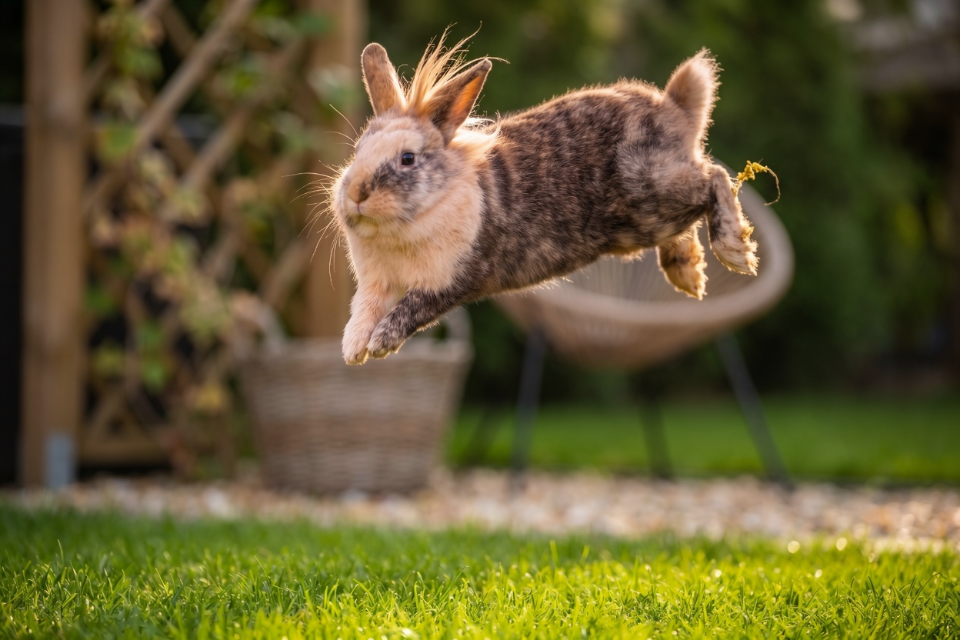
Want to verify your rabbit is actually thriving? Look for bursts of high-intensity movement. A rabbit simply won’t burn energy on these showy behaviors if it senses a threat or feels off.
Binkying
Binkies are sudden jumps and twists that rabbits do when they feel happy, playful, and energetic, serving as a primary indicator of psychological well-being.
A binky is hard to miss. The rabbit launches straight up, twists its body mid-air, and kicks its back legs out before hitting the ground. It’s pure, unadulterated play. When you see a bunny pulling off these acrobatic moves on your rug, it means they feel totally secure in their home.
My bonded pair, Mocha and Chino, provide an excellent observational baseline here; watching them coordinate a double-binky across the living room carpet is a masterclass in lagomorph joy, signaling that their immediate environment scores a perfect zero on the ambient threat scale. Frequent binkies throughout the day are the definitive indicator of optimal psychological well-being.
Flopping
Flopping is the ultimate compliment. A bunny will be sitting quietly, then suddenly crash onto its side, legs extended straight out. If you’ve never seen it before, it looks alarming—almost like a sudden medical collapse.
But remember: exposing the stomach is incredibly dangerous for a prey animal. A rabbit will only flop when it feels zero ambient stress and is ready for deep sleep. This high-trust transition into rest is explored as a vital indicator of behavioral health in the context of environment and stimulation in the Rabbit.org Classroom Rabbits Analysis.
Zoomies
Zoomies are high-speed, erratic laps around the room. The rabbit will bank off walls, clear obstacles, and pivot on a dime just to shed extra physical energy. Expect to see this most often at dawn and dusk, matching the natural crepuscular schedules of domestic lagomorphs documented in the House Rabbit Society Behavior Breakdown.
Tooth Purring
Don’t confuse this with painful grinding. True purring is a soft, rhythmic clicking sound when a rabbit gently rubs its back molars together. You’ll usually hear it when they are getting head scratches or cuddling. It vibrates their jawline slightly and means they are completely content.
Stretching Out
When transitioning into deep rest, bunnies love to change their physical profile. This includes extended side stretching or full “splooting,” where the hind legs are thrown flat behind the torso like a frog. These relaxed sleeping positions tell you the rabbit has officially declared their immediate area completely free of danger.
4. Affection and Bonding Behaviors
While explosive movements showcase individual happiness, rabbits reserve an entirely different set of behaviors for interspecies bonding. In the wild, complex social hierarchies dictate herd survival, and your domestic rabbit treats you directly as part of their collective warren. Understanding these tactile gestures allows you to recognize exactly where you stand in their subtle social hierarchy.
Licking
In the rabbit world, mutual grooming holds the social group together. When a bunny grooms your hands, feet, or clothes, it’s a massive sign of respect. They are officially treating you like trusted family. Read my comprehensive breakdown on Why Your Rabbit Licks You.
Sometimes, bunnies will direct this behavior toward non-living targets, systematically grooming your favorite blankets or shirts. This extension of allogrooming means they are attempting to clean items that carry your concentrated individual scent profile.
Following You Around
When your bunny shadows you from room to room, it isn’t random. They are deeply curious animals, and they’ve also learned that human footsteps often lead to treats or pellets. If they trace your steps with a low, relaxed tail, it’s companionable. If they weave tightly between your ankles, learn more by exploring my guide on Understanding Why Rabbits Follow Their Owners.
Nudging and Headbutting
A solid poke with a furry nose is a direct, unambiguous conversational tool. What they mean depends entirely on the physical force behind the movement:
- The Gentle Nudge: A polite ask for attention, or a demand to start petting their forehead.
- The Forceful Shove: A spatial command. If you are blocking their favorite runway, they will use their skull like a little plow to clear you out of the path.
To spot the difference between a friendly nudge and territorial warning signs, see my diagnostic overview on Rabbit Nudging and Headbutting Explained.
Circling Feet
Running tight figure-eights around your ankles is a classic behavior pattern. In young, unneutered rabbits, this is a courtship dance fueled by hormones, usually paired with soft honking. In altered adults, it typically acts as a high-intensity demand for high-value foods or immediate physical attention. Learn how to address these patterns in my guide to Rabbit Circling Behaviors.
Grooming Other Rabbits
When monitoring a bonded pair, pay close attention to who grooms whom. Mutual grooming strengthens family ties, but the direction of the lick reveals the social rank. The dominant rabbit will lower their chin flat to the carpet, demanding grooming from the submissive partner, who willingly offers the service to keep the peace.
Table 2: Social Bonding and Grooming Dynamics
| Action Type | Direction of Interaction | Meaning and Hierarchy Context |
| Allogrooming Demand | Dominant bunny lowers head flat to floor | Asserts status; demands grooming from others. |
| Allogrooming Submission | Submissive bunny licks eyes/ears of partner | Reinforces trust; acknowledges higher social rank. |
| Human Grooming Loop | Bunny licks human hands or clothing | Accepts human into primary social group framework. |
Sleeping Near You
Bunnies choose their resting locations with intense strategic care. If your rabbit settles down to sleep right next to your desk or feet, they are using you as a biological security guard. They trust your senses to monitor the room, allowing them to drop their defensive guard safely.
5. Curious and Playful Behaviors
When rabbits aren’t mapping territory, they focus on vital, everyday maintenance habits. Many behaviors that human owners label as destructive or “bad” are actually crucial physiological drives. By tracking how environmental enrichment interacts with these deep evolutionary instincts, you can give your bunny safe outlets.
Exploring Everything
Bunnies are naturally driven to map every square inch of their territory. When introduced to a new environment, they will systematically investigate corners, crawl under furniture, and test boundaries. This curiosity-driven behavior is a vital sign of cognitive health.
Tossing Toys
Rabbits love to grip plastic keys, wooden blocks, or small cups with their incisors and flip them violently over their shoulders. This throwing habit can be a form of self-directed play, but if they do it repeatedly right next to your feet, it often transitions into an attention-seeking behavior.
Rearranging Objects
Rabbits like absolute order in their space. If a blanket is bunched up wrong or a food bowl is blocking their runway, they will grab it with their teeth and flip it aside. Tossing toys gives them a cognitive workout and lets them control their immediate environment.
Standing on Hind Legs
When a bunny spots an unfamiliar silhouette or hears a distant rustle, they will rise straight up onto their hind feet like a little prairie dog. This alert posture expands their field of vision and helps them pinpoint sounds. They will also quickly deploy this stance to beg for treats when they see you opening a food container.
Begging for Treats
Rabbits possess incredible memory paths regarding household routines. They quickly learn which cupboard doors hold treats and will park themselves right in front of the kitchen island the moment those hinges move, showcasing highly advanced associative habit loops.
6. Territorial Behaviors

Beyond social hierarchy, rabbits are fiercely driven by environmental ownership. In the wild, selecting, defending, and mapping out structural tunnels determines whether a lagomorph survives the season. Inside a domestic home, those raw instincts remain fully active, prompting your bunny to utilize highly localized chemical markers to establish clear physical boundaries across your living space.
Chinning Objects
Rabbits chin objects to mark territory using scent glands under their chin, depositing unique pheromonal signatures that humans cannot perceive. Rabbits have scent glands tucked right under their jawline. They rub these glands on things to leave behind a mix of fatty acids and pheromones. Humans can’t smell it at all, but other animals read it instantly.
When a rabbit chins your furniture, toys, or shoes, they are marking the boundaries of their personal kingdom. This is a primary method of pheromonal scent marking via specialized submandibular glands, as detailed in the National Institutes of Health Rabbit Biology Manual.
If you’ve noticed your bunny rubbing its face along your furniture, they are engaging in a fascinating scent-marking behavior. To dive deeper into the science behind this scent-marking ritual and what your pet is trying to communicate, check out my comprehensive guide on rabbit chinning explained.
Territorial Pooping
Leaving hard, dry poops scattered outside the litter box is a deliberate olfactory boundary marker. This is completely separate from standard bathroom habits. These loose pills are usually dropped along the edges of a room or next to new items to claim ownership. It happens often after a room is rearranged or when a new pet enters the house. Discover exact correction steps in Stopping Your Rabbit From Pooping Everywhere.
Urine Spraying
This high-intensity territorial display involves a rabbit leaping slightly and firing a concentrated stream of urine sideways onto vertical surfaces. This hormonal behavior is used to court potential partners or claim dominant control over new household zones, and it drops drastically once a rabbit is surgically altered.
Defending Space
Some rabbits manifest a deep drive to protect their immediate enclosures. This cage aggression can cause them to lunge, growl, or aggressively guard their food bowl from your hands. To de-escalate these situations safely, check out my diagnostic breakdown on Rabbit Territorial Behavior and Enclosure Defense.
7. Natural Instinct Behaviors
Many habits that owners look at as behavioral problems are actually non-negotiable biological needs. Forcing a rabbit to stop these actions entirely is impossible; your job is to direct these ancient survival drives into safe, non-destructive targets.
Digging
Wild rabbits (Oryctolagus cuniculus) are master tunnel-builders. That deep urge to burrow doesn’t disappear just because they live indoors.
Rabbits dig to manage nail wear, tone their shoulder muscles, and organize their space. If your bunny is tearing at the carpet, they are trying to satisfy a biological need. This behavior pattern is thoroughly evaluated in the National Institutes of Health Lagomorph Science Review, which details their natural burrowing habits.
Provide an approved outlet by exploring this video on Building Safe Rabbit Digging Boxes:
Chewing Everything
A rabbit’s teeth grow continuously throughout its entire life—often several inches a year. Chewing is a mechanical necessity to grind down their teeth and prevent painful, life-threatening misalignments. It is also their primary method for exploring the texture and stability of their environment. Safeguard your home and satisfy their biological needs by using our blueprint for rabbit chewing.
Nest Building
Driven by hormonal spikes or a false pregnancy, female rabbits will systematically gather mouthfuls of hay and drag them into a dark corner. They will often follow this up by pulling soft fur from their own dewlap and chest to line the nest structure.
Eating Cecotropes
Rabbits eat cecotropes to absorb important nutrients produced during digestion, processing food twice to fully extract vital B vitamins and amino acids.
It can be alarming to watch, but rabbits must consume their own specialized droppings to survive. These soft, nutrient-dense packets are completely separate from ordinary round waste pellets.
Dawn and Dusk Activity
If your rabbit sleeps straight through the middle of the afternoon, don’t worry. Rabbits are crepuscular, meaning their natural evolutionary activity cycles peak during the low-light hours of dawn and dusk, which is when wild predators have the hardest time tracking movement. Because they are most active when the sun is low, owners often wonder if their pets feel anxious in total darkness; visit my nightlight guide to learn if your rabbit actually needs extra lighting for their nighttime security.
8. Fear, Stress, and Defensive Postures
While everyday instincts can be easily redirected, defensive behaviors require immediate intervention. As prey animals, a rabbit’s emotional state can cascade from minor annoyance to intense fear in seconds. Spotting these protective stances early allows you to de-escalate stressful environments before your rabbit slips into a dangerous state of physiological shock.
Thumping
Rabbits thump their back feet to warn of danger or express fear and stress, utilizing the kinetic vibration to communicate ambient threats to their social group.
Thumping is a hard strike of the back feet against the floor, making a loud popping sound. In the wild, this sends a vibration through the soil to warn the warren of predators.
In your living room, it means fear, heavy annoyance, or anxiety. Common triggers include sudden loud sounds, passing shadows, or the scent of an unfamiliar dog.
Hiding
Napping inside a dark box during the afternoon is normal. But there is a distinct difference when hiding is driven by stress.
- Normal Hiding: The rabbit is loose and resting inside a house, ears down, occasionally popping out for a snack.
- Concerning Hiding: The rabbit is wedged into a corner, tense, refusing favorite treats, with its eyes wide enough to show the white borders (sclera). If this lasts more than a few hours, something is wrong.
Freezing in Place
If a rabbit faces an immediate scare and cannot run, it freezes completely. The body stiffens, respiration spikes, and muscles lock. This natural defense mechanism makes them less visible to predators that track movement. If your bunny freezes, remove the stressor immediately and dim the lights so they can recover.
Running Away
If a rabbit systematically sprints away every time you step into the room, they are treating you like an active predator. This behavior pattern indicates a structural breakdown in environmental security and requires targeted, floor-level trust-building exercises.
9. Aggressive Behaviors

When fear escalates past the point of hiding or running, a cornered rabbit will launch into active self-defense. These aggressive patterns are almost always triggered by deep fear, intense territorial protection, changing puberty hormones, or latent physical pain.
- Lunging: A fast, forward punch of the front paws aimed directly at your hands or feet.
- Grunting: A low, growling vocalization that accompanies a lunge, serving as a final warning.
- Biting: A high-pressure clamp of the front incisors that can easily break human skin.
- Boxing: Rising onto the hind legs and swatting rapidly with both front paws to keep you away.
Table 3: Aggression Manifestation Profiles
| Aggressive Action | Typical Root Cause Trigger | Recommended Intervention Strategy |
| Lunging & Grunting | Enclosure invasion or territory panic | Back away; approach low and slow at floor level. |
| Front Incisor Biting | Severe fear, handling trauma, or pain | Check for dental anomalies or injuries at the vet. |
| Front Paw Boxing | Guarding food bowls or hidden nests | Offer treats from a distance; do not corner the bunny. |
10. Rabbit Body Language Guide
To read a rabbit accurately, you have to look at how their ears, eyes, and overall posture work together. A single body part rarely tells the whole story on its own.
Ear Positions and Their Strategic Meanings
A rabbit’s ears can rotate up to 270 degrees independently to monitor sounds and communicate mood.
- Upright and Forward-Facing: They are actively processing a sound. This position indicates curiosity, alertness, and interest.
- Relaxed and Outward-Facing (The ‘V’ Shape): The ears are resting loosely to the sides. This is the baseline for a calm, stress-free rabbit.
- Flattened Tight Against the Spine: Look closely at the eyes. If the eyes are bulging, the rabbit is terrified or angry. If the eyes and eyelids look soft, they are just relaxing or sleeping.
Posture Meanings Decoded
The physical presentation of the torso provides instant insight into a rabbit’s emotional state.
Table 4: Common Rabbit Postures Explained
| Posture Type | What It Looks Like | What It Actually Means |
| The Loaf | Paws completely tucked under, tail hidden, back rounded like a loaf of bread. | Content and alert. The rabbit is relaxed enough to rest, but keeping its feet under its body means it can still bolt if a threat pops up. |
| The Stretch | Body elongated, hind legs extended fully behind them, belly close to the ground. | Profound comfort. Exposing the legs like this means they have a long transition time to flight mode. They only do this when they feel entirely safe. |
| The Hunched Arch | Back tightly curved upward, tense core muscles, nose pressed low or down to the floor. | Pain profile. This is a critical warning sign. The rabbit is guarding its abdomen due to physical discomfort or gas, requiring a swift clinical review. |
| The Crouch | Flattened low to the earth, ears pinned tight, legs tucked for immediate launching. | Fear or uncertainty. The rabbit is trying to minimize its physical silhouette to blend into the floor, expecting an immediate strike. |
Eye and Facial Expressions
Tense, wide eyes that show the white borders (sclera) signal high anxiety or panic. Conversely, half-closed eyes paired with rhythmic whisker movement point toward complete relaxation. Rapid, shallow chest breathing while resting is a reliable indicator that the rabbit is processing environmental stress or overheating.
Vocalizations and Sounds
- Honking: Low, soft clicking sounds generated in the throat during moments of intense happiness, courtship, or treat anticipation.
- Grunting: A sharp, guttural sound indicating anger, territorial boundaries, or an imminent defensive lunge.
- Squealing or Screaming: A piercing, high-pitched emergency sound that represents extreme physical pain, deep trauma, or life-threatening terror.
11. Behavior Changes Through Life Stages
Just as body language changes context based on posture, a rabbit’s overall behavior profile shifts naturally as they age. From the high-energy chaos of youth to the highly routinized schedules of adulthood, tracking these shifting lifestyle habits ensures you can audit their well-being accurately throughout their entire life.
Baby Rabbit Behavior
Young kits have high metabolic drives and very little impulse control. Expect chaotic bursts of speed, intense environmental testing via chewing, and minimal fear. They are busy building brain pathways and mapping out their world. The early development cycles of kits are thoroughly outlined in the Royal Veterinary College Handrearing Guide.
Teenage Rabbit Behavior
When puberty hits, hormones flood their system. Perfect litter habits can temporarily break down, while territorial digging, spraying, and sudden mood swings increase. This is entirely normal for teenagers, and having them altered is the most reliable way to stabilize these habits for the long run.
Adult Rabbit Behavior
Following surgery and social stabilization, adult rabbits love routine. Our own Mocha and Chino display a textbook version of this maturity; their afternoons are entirely mapped out by a strict, self-imposed agenda of communal loafing, meticulous ear grooming, and synchronized nap cycles that perfectly mirror our daily household rhythms. Their social structures thrive alongside appropriate same-species companionship, a bonding pattern analyzed in the Royal Veterinary College Structural Pairing Analysis.
Senior Rabbit Behavior
Older rabbits slow down, spend more time resting, and show less interest in wild play. Senior bunnies require careful monitoring, as age-related slowing can easily mask the early signs of arthritis or chronic pain. Post-surgical and baseline behavioral shifts associated with aging or latent pathology are extensively cataloged in the National Institutes of Health Clinical Database.
12. Behaviors That May Signal Illness

Because showing weakness makes them an easy target in the wild, rabbits instinctively hide their injuries and illnesses. This means subtle, microscopic behavioral shifts are often your absolute only warning sign that a rabbit requires urgent, life-saving medical care.
Loud Tooth Grinding
While happy tooth purring is soft, cozy, and sounds like a tiny vibration, pathological grinding sounds crunchy, slow, and metallic. You can easily hear it from several feet away. This loud grinding is a primary behavioral indicator of extreme physical pain or systemic distress.
Sudden Behavior Changes
Any sudden departure from your rabbit’s established personal baseline must be treated as a medical issue until evaluated by an exotic veterinarian. This includes a sudden drop in appetite, total social withdrawal, unexpected bursts of aggression, or severe lethargy.
Pressing Belly to Floor
If a rabbit keeps shifting its body weight around, arches its back awkwardly, and forces its stomach flat against a hard floor, it is experiencing severe abdominal pain. This is a classic behavioral marker for Gastrointestinal Stasis (GI Stasis) or critical gas buildup. This condition is a true medical emergency that can become fatal within 12 to 24 hours without swift veterinary care, as documented by the Royal Veterinary College Husbandry Standards Guide.
Refusing Interaction
A happy rabbit is naturally inquisitive. If your bunny refuses to move for their favorite treats, ignores your presence entirely, or crouches into a tense, unresponsive ball inside a corner, they are likely dealing with an advanced illness stage rather than a simple mood swing.
13. Normal Rabbit Behavior vs. Concerning Behavior
To help you audit your rabbit’s daily routines effectively, use the comparison below to quickly separate safe, evolutionary drives from critical warning signs.
Usually Normal Rabbit Behaviors
- Chewing and Digging: Essential drives for tooth management, nail maintenance, and mental stimulation.
- Zoomies and Flopping: Healthy signs of physical energy release followed by total comfort and trust.
- Chinning Objects: Normal, non-destructive pheromonal boundary mapping.
- Occasional Hiding: Standard nap routines inside a dark, covered box during low-energy afternoon cycles.
Behaviors That Need Veterinary Attention
- Sudden Lethargy: Total loss of interest in moving, exploring, or investigating the room.
- Refusal to Eat: Rejecting fresh hay, pellets, or leafy greens for more than 6 to 8 hours.
- Loud Tooth Grinding: Crunchy, audible grinding paired with squinted eyes and a hunched posture.
- Physical Collapse: Dropping onto the side without control, accompanied by rolling eyes or rapid panting.
- Prolonged Hiding: Tense, defensive isolation inside a corner for extended hours while refusing interactions.
Table 5: Behavioral Health Audit Grid
| Monitored Parameter | Normal Range Threshold | Diagnostic Action Level Red Flags |
| Activity Levels | Active sprints at dawn/dusk; lounging midday | Total listlessness; unresponsive to voice/treats. |
| Nutritional Consumption | Consistent grazing of hay and water uptake | No intake for over 6 hours; complete product rejection. |
| Defecation Consistency | Uniform, dry, fibrous round waste pellets | Missing stool drop; small misshapen pills or diarrhea. |
14. How Environment Affects Rabbit Behavior

A rabbit’s daily behavior profile is directly tied to the layout and emotional tone of their immediate surroundings. Modifying their physical setup can instantly resolve many common behavioral complaints.
Space and Enrichment
Rabbits confined to small cages without adequate floor space quickly develop severe behavioral patterns. Bored rabbits routinely resort to destructive chewing, obsessive cage-bar biting, and frantic digging at plastic corners out of sheer frustration. Providing open exercise zones and safe foraging toys gives them a healthy outlet for their cognitive energy.
Social Interaction
Rabbits are fundamentally social colony animals. A solo rabbit requires an enormous amount of daily human interaction to prevent depression and behavioral withdrawal. Pairing a rabbit with a compatible, altered same-species companion naturally satisfies their psychological need for allogrooming and mutual security.
Routine Changes
Bunnies thrive on predictability. Sudden environmental disruptions—like moving furniture, introducing an unfamiliar pet, or shifting their feeding schedule—can trigger immediate stress responses, resulting in temporary litter box drops or sudden hiding patterns.
Spaying and Neutering
The single most effective way to eliminate destructive behavioral patterns is surgical altering. Spaying and neutering drastically reduces hormone-driven urine spraying, territorial pooping loops, courtship circling, and defensive cage aggression, paving the way for a relaxed, easygoing household companion.
Table 6: Environmental Modifiers Matrix
| Environmental Stressor | Induced Behavioral Reaction | Corrective Habitat Amendment |
| Severe Spatial Restriction | Cage bar biting, frantic corner scraping | Upgrade to an open exercise pen layout. |
| Cognitive Under-stimulation | Destructive chewing of household baseboards | Introduce wooden chew toys and foraging mats. |
| Hormonal Puberty Cycle | Urine spraying, territorial pooping lines | Schedule spay or neuter via an exotic vet clinic. |
15. Frequently Asked Questions (FAQ)
Why does my rabbit stare at me without blinking?
Rabbits have laterally placed eyes that grant them a near 360-degree field of vision, and they possess a specialized third eyelid that keeps the cornea moist without frequent blinking. A long stare means they are actively tracking movement in the room; if their posture is loose, they might actually be sleeping with their eyes wide open.
Why does my rabbit thump at night?
Nighttime thumping occurs because a rabbit’s acute senses catch low-frequency noises and shifting shadows that humans miss completely. A settling wall, a passing outdoor animal, or a sudden household appliance noise can trigger their alarm instinct, prompting them to warn the entire house of a perceived threat.
Why does my rabbit lick me and then immediately bite me?
This rapid behavioral shift is usually a form of direct communication regarding social dominance or personal boundaries. They may offer a few affectionate licks to solidify the family bond, then deliver a sudden nip to signal that they are done being handled, are experiencing localized mouth pain, or want you to stop petting them.
Why does my rabbit follow me everywhere?
They genuinely enjoy your company, but they have also connected you with rewards. They know that tracking your footsteps across the room highly correlates with the distribution of fresh greens, pellets, or a favorite head rub.
Why did my rabbit suddenly act aggressive?
A sweet rabbit who suddenly turns aggressive is almost always communicating severe physical pain, tooth discomfort, or internal gas. If the rabbit is between 4 and 8 months old and hasn’t been fixed yet, this shift points directly to puberty hormones hitting their system.
Why does my rabbit run away from me?
Walking straight toward a rabbit or reaching directly down over their forehead mimics the exact approach vector of a hunting hawk. Running away means they felt threatened. To build trust, sit on the floor and let them approach you on their own terms.
Why does my rabbit sleep next to me?
Lying down to sleep next to your feet or chair is a massive sign of psychological comfort. By placing themselves in a vulnerable position near you, they are confirming that they view you as a trusted protector who will secure the room from danger.
Why does my rabbit dig on my bed or couch?
Your bed and couch carry the absolute highest concentration of your personal scent profile. Rabbits will dig and chin these soft surfaces to blend their own pheromones into yours, claiming your favorite resting zones as shared territory.
Why does my rabbit throw toys?
Tossing plastic keys or wooden cups is a fantastic mental workout that tones their shoulder muscles. If they repeat this action loudly right next to your chair, it often shifts into a learned behavior to demand treats or attention.
Why does my rabbit chin everything?
Chinning is how a rabbit builds a secure, familiar olfactory map of their home turf. By passing their submandibular glands over objects, they leave behind invisible pheromones that make them feel safe and in control of their environment.
Why does my rabbit zoom around the room?
Zoomies are a completely healthy expression of pure happiness and physical health. Rabbits use these high-velocity laps to burn off extra physical energy, test their agility, and showcase total confidence in their immediate environment.
How can you tell if a rabbit is happy?
A happy rabbit displays a loose, relaxed body profile. They will routinely execute mid-air binkies, sprint into high-speed zoomies, drop flat into side flops, and emit soft, rhythmic molar purrs while you pet their forehead.
How do rabbits show affection?
Rabbits express love through gentle, physical touch. They will systematically lick your skin, run happy figure-eights around your feet, nudge your fingers to request head rubs, and choose to rest flat against your body.
How do rabbits show stress?
Stressed rabbits contract their physical footprint. They will hide inside dark corners for extended hours, thump their back feet, freeze completely with wide eyes showing the white borders, pin their ears flat against their spine, or lunge defensively.
16. Conclusion: The Power of Observation
Learning to read rabbit body language takes a bit of time and a lot of quiet, patient observation. Most quirks that look strange or destructive at first are simply ancient survival instincts or a clear attempt to talk to you. By tuning into these small movements, you can build incredible trust with your bunny and spot health issues before they become dangerous. Watch their normal daily patterns, and never hesitate to call an exotic veterinarian if their baseline habits change overnight.
Medical & Veterinary Disclaimer: Bunnyowners.com is an informational resource for rabbit owners and enthusiasts. We are not veterinarians. The content on this website is for educational purposes only and is not a substitute for professional veterinary advice, diagnosis, or treatment. Always consult a qualified veterinarian with any questions or concerns regarding your pet’s health, medical conditions, diet, or overall care. If you have concerns about your rabbit’s health, it’s always best to reach out to a veterinarian rather than relying solely on information found online.