
Veterinary & Affiliate Disclaimer: Bunnyowners.com shares educational rabbit care resources, not professional veterinary advice. Always consult a qualified veterinarian regarding your rabbit’s medical, dietary, or behavioral needs. This post may also contain affiliate links; as an Amazon Associate and affiliate partner, we earn from qualifying purchases at zero extra cost to you.
Walking into a room only to realize you have a tiny, long-eared shadow tracking your heels is an incredibly common experience for indoor rabbit owners. It is a charming behavioral quirk that instantly makes you wonder what kind of internal calculations are happening inside that small mammalian brain.
Rabbits often follow their owners because they feel bonded, curious, safe, or expect food and attention. Your rabbit may follow you because rabbits are social animals that enjoy companionship, routine, and naturally learn to associate their human caretakers with safety, treats, and affection. While this trailing behavior is usually perfectly normal, sudden clinginess combined with hiding, a poor appetite, or lethargy can sometimes signal underlying stress or clinical illness.
While having a personal security detail is usually a glowing performance review of your human-rabbit relationship, utilizing my comprehensive rabbit behavior hub to cross-reference their total body language is the best way to decode their daily motives. Let’s break down the evolutionary mechanics behind why your bunny shadows you, look at the frustrating “follow-and-run” paradox, and map out the exact data points that show when this habit transitions from normal curiosity to a medical red flag.
1. Why Rabbits Follow Their Owners
In the wild, European rabbits don’t do solo living; they exist in complex, tightly knit social structures where proximity equals survival. When an indoor rabbit is integrated into a home, they naturally project these deep companionship instincts onto you, treating you like a giant, oddly shaped member of their social group.
This “shadowing” behavior provides them with basic social comfort and fulfills an evolutionary drive to stay near their group members, a topic covered extensively in the Rabbit Welfare Association & Fund care overview. Unlike dogs, who tend to express social following with high-energy pacing and tail-wagging, a rabbit’s social trailing is much quieter, calmer, and relies on subtle proximity.
In my own daily observations of my household rabbits, Mocha and Chino, proximity is the primary currency of affection. Chino will frequently trail me into my workspace and sit quietly by my feet for an hour just to maintain social contact, proving that field research sometimes involves doing absolutely nothing while being silently monitored by a herbivore.
Your Rabbit Trusts You
Because rabbits are built as prey animals, their default setting around larger creatures is self-preservation. Voluntarily approaching you and trailing behind you is a massive vote of confidence. When a rabbit follows you calmly and then transitions into trust-based behaviors, it is an explicit sign of psychological safety.
You can spot this comfort level by watching for specific physical markers, which are outlined in the PDSA rabbit body language guide. Building this level of comfort takes time; rescue rabbits who have a history of chaotic handling may take significantly longer to grant you this security clearance.
Your Rabbit Associates You With Food
Rabbits are opportunistic thinkers equipped with highly accurate internal clocks, and they map out household feeding routines with surprising speed. Many owners accidentally train their rabbits to follow them by handing over a pinch of pellets or a fresh herb every time the rabbit shadows their steps.
This treat anticipation is a classic example of positive reinforcement rather than emotional manipulation. You will notice this clearly when your rabbit tracks you specifically into the kitchen, storms the room at the crinkle of a plastic bag, or loops around your ankles right when the morning or evening meal is due.
Curiosity and Exploration
Rabbits have an intense desire to investigate any changes in their environment, and they view your entire home as their personal territory. Your movement from room to room serves as an unpredictable source of environmental stimulation. This is especially true for free-roam indoor rabbits who like to run quality control on their domain. Younger bunnies and highly intelligent rabbit breeds will often track you simply to see what you are up to, checking out your chores without necessarily demanding your direct attention.
Your Rabbit Wants Attention or Interaction
Domestic rabbits enjoy social engagement and quickly figure out that following you around is an excellent way to get it. If your bunny follows you and then transitions into dynamic nudges against your ankle or hops onto the couch next to you, they are filing a formal request for a forehead scratch. It is helpful to separate this healthy attention-seeking from frantic anxiety; a healthy request is playful and calm, whereas an unhealthy one feels continuous, scattered, and deeply distressed.
Your Rabbit Is Bonding With You
Rabbits are capable of forming incredibly deep emotional attachments and frequently select a single “favorite person” within a household. Once that bond is set, staying nearby becomes their primary way of showing affection. Because rabbit affection looks nothing like the loud displays seen in dogs or cats, owners have to look for these quieter indicators. Sitting near you, trailing you from room to room, waiting outside closed doors, or relaxing at your feet are all major signs of lagomorph attachment.
2. Is It Normal for a Rabbit to Follow You Everywhere?
Usually, Yes. For the vast majority of well-socialized domestic house rabbits, trailing their owners is entirely normal behavior. It is particularly common in indoor, free-roam rabbits who have unrestricted access to human living areas and view themselves as equal members of the household.
Individual personalities always dictate the frequency of the behavior; some independent rabbits may only follow you when the pellet bag rattles, while highly people-oriented individuals want to be involved in every household chore. Age and mild breed temperament variations can also play a role, with younger bunnies displaying much more active, persistent trailing tendencies than mellow senior rabbits who prefer to manage operations from a distance.
When Following Becomes Excessive
While proximity is wonderful, there is a distinct line where healthy following morphs into excessive, anxiety-driven clinginess. If a rabbit panics the exact moment you leave the room, engages in obsessive pacing along a baby gate, or seems entirely unable to settle down and rest unless they are physically touching your feet, they may be struggling with severe boredom, loneliness, or a lack of environmental enrichment.
Rabbits still require a healthy baseline of independence. While pet owners should avoid aggressively diagnosing clinical “separation anxiety”—as verified data on this specific condition in rabbits is quite limited across the American Veterinary Medical Association domestic pet resource—it is a clear sign that your rabbit needs a more stimulating environment to build self-confidence.
3. Could Following Behavior Mean Something Is Wrong?
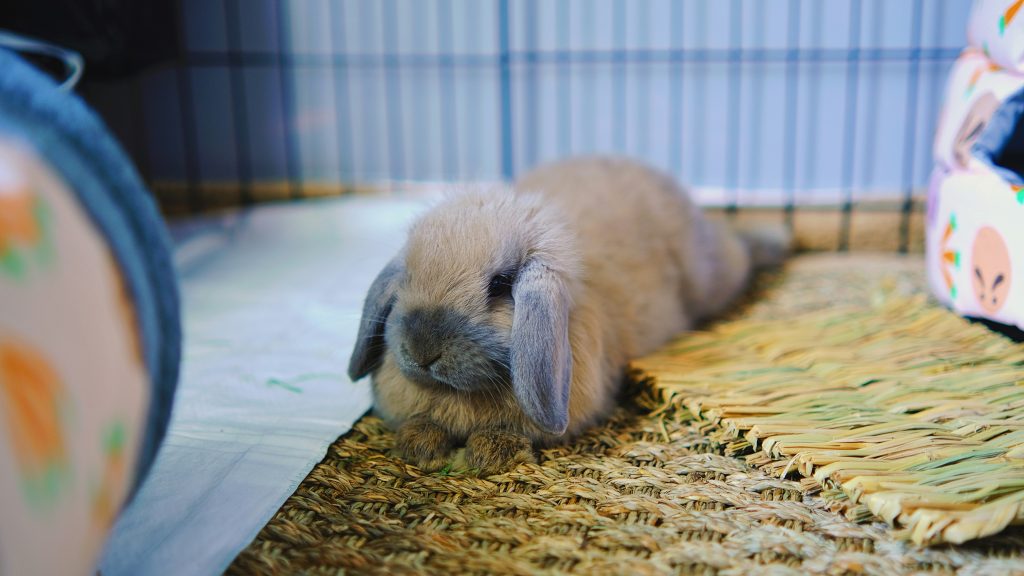
As a defense mechanism evolved to outsmart wild predators, rabbits are notorious for hiding physical illness and pain until they absolutely cannot mask it anymore. Because they hide their symptoms, sudden and uncharacteristic behavioral changes are often the only data points an owner receives.
While many sick rabbits become entirely withdrawn and hide in dark corners, some individuals will suddenly become intensely, uncharacteristically clingy. They may trail you constantly, seeking out your immediate presence as a source of physical protection because they feel vulnerable.
Table 1: Rabbit Illness Signs and Symptoms
| Potential Red Flags to Monitor | What They Indicate |
| Reduced Appetite or Refusal to Eat | A primary sign of systemic pain or dental issues. |
| Lethargy and Lack of Movement | Extreme weakness or severe internal discomfort. |
| Hunched Posture with Squinted Eyes | Classic visual signs of acute physical pain. |
| Loud, Grating Tooth Grinding | Distinct from happy “purring” chattering; signals severe distress. |
| Changes in Litter Box Output | Smaller, misshapen, or completely absent fecal pellets. |
⚠️ Critical Health Note
Sudden behavioral shifts always matter most in lagomorph medicine. According to the standard clinical overview of Gastrointestinal (GI) Stasis, if your rabbit’s sudden clinginess is accompanied by a partial or complete cessation of eating or fecal output, they can enter metabolic shutdown within a matter of hours. This is a life-threatening medical emergency that requires immediate intervention from an exotic veterinarian, as highlighted in theAnimal Medical Center Care Guide.
4. Why Does My Rabbit Follow Me but Run Away When I Reach Down?
This exact scenario is one of the most common content gaps found in standard rabbit care guides, leaving many owners feeling personally rejected by their pets. The “follow-but-run” paradox is entirely driven by deep-seated prey instincts that occasionally override their affection for you. Even if a rabbit fully trusts you while you are standing or walking, the physical mechanics of a large human turning around and reaching a hand down from directly overhead perfectly mirrors the movement of an aerial predator, such as a hawk or an owl, diving in for a strike.
Table 2: How to Stop the Follow-and-Run Panic Response
| Reaching Trigger | The Correction Strategy | Why it Works |
| Overhead approach | Drop down to floor level on the rug. | Removes the visual profile of a diving aerial predator. |
| Scent blocking | Offer the back of your hand at eye level. | Allows the rabbit to chin-mark or inspect you on their terms. |
| Forced scooping | Avoid forced handling or picking up. | Keeps their escape routes clear, preventing a panic response. |
By avoiding forced handling and always allowing the rabbit to complete their approach on their own terms, you neutralize the predatory trigger and teach them that your hands are entirely safe, not an incoming biological hazard.
5. Why Does My Rabbit Follow Me to the Bathroom?
This amusing, long-tail search topic highlights a rabbit’s love for rigid daily routines and their profound dislike of spatial barriers. Rabbits are highly territorial animals that create internal maps of their environment.
When you walk into the bathroom and shut the door, you are abruptly interrupting their daily schedule and slicing off a piece of their accessible territory. Because they are intensely curious and track your household movements carefully, they will often slide in right behind you or wait patiently outside the closed door simply to investigate where their favorite human vanished to.
6. Do Rabbits Follow Their Favorite Person?
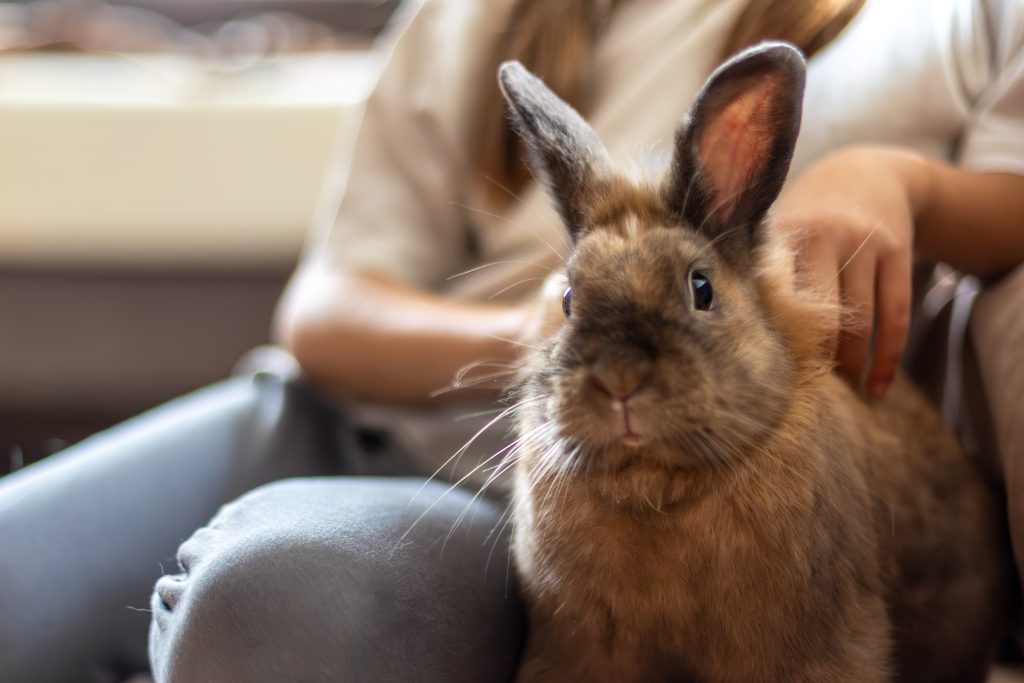
Rabbits are highly discerning, autonomous animals that absolutely form preferential attachments within a household. They don’t hand out their deepest trust easily; instead, a rabbit builds a bond through consistent, predictable daily interactions. They are naturally drawn to individuals who handle them gently, use a calm, low voice, feed them on a dependable schedule, and consistently respect their physical boundaries.
Signs that you have been chosen as the favorite include the rabbit following only you while ignoring other family members, seeking out your specific chair to relax beside, and specifically demanding head scratches from your hands while treating others with mild indifference.
Mocha exhibits this favoritism clearly in my home. While she is perfectly polite to visitors, she reserves her dedicated kitchen-trailing routines exclusively for her primary caretaker—mostly because she knows who holds administrative power over the cilantro drawer.
7. How to Encourage Healthy Bonding Without Creating Dependency
Building a secure bond involves setting up predictable interactions that respect your rabbit’s natural instincts. If your bunny is showing excessive dependency, refining your daily approach can help them feel more autonomous.
Table 3: Simple Methods to Build Rabbit Trust
| Strategy | Action Item | Intended Outcome |
| Passive Presence | Sit quietly on the floor while reading or watching TV. | Teaches the rabbit that your presence doesn’t equal forced handling. |
| Enclosure Safety | Never chase your rabbit back to their home base. | Keeps their primary territory free from predatory flight triggers. |
| Vocal Consistency | Use low, gentle vocal modulations when entering their space. | Avoids startling their sensitive hearing mechanics. |
Provide Enrichment and Independence
To prevent healthy trailing from degrading into anxious dependency, you must provide ample outlets for independent exploration. Ensure their living space is packed with physical enrichment, including cardboard tunnels, stacking cups, chewing toys, and complex foraging mats where they can hunt for dried herbs.
Providing adequate exploration space based on RSPCA overview metrics allows them to burn off mental energy safely. In many cases, if an owner’s schedule requires long hours away from home, implementing spatial setups derived from UC Davis School of Veterinary Medicine care summaries or introducing a compatible companion animal is the ultimate way to ensure they balance social interaction with healthy, independent activity.
8. Behaviors That Often Happen Alongside Following
When analyzing your rabbit’s motivation, look at the peripheral behaviors they display while shadowing you:
Table 4: Secondary Rabbit Behaviors and How to Respond
| Companion Behavior | What It Means Emotionally | How to Respond |
| Flopping Nearby | Dropping flat on their side, showing they feel totally secure where you led them. | Leave them be; this is the ultimate sign of relaxation. |
| Loafing Near Your Feet | Tucking their paws under like a loaf of bread to rest near your ankles. | Enjoy the proximity; they are using you as a social anchor. |
| Gentle Nudging | Softly poking your skin or clothes with their nose to ask for attention. | Deliver a few solid forehead scratches at their level. |
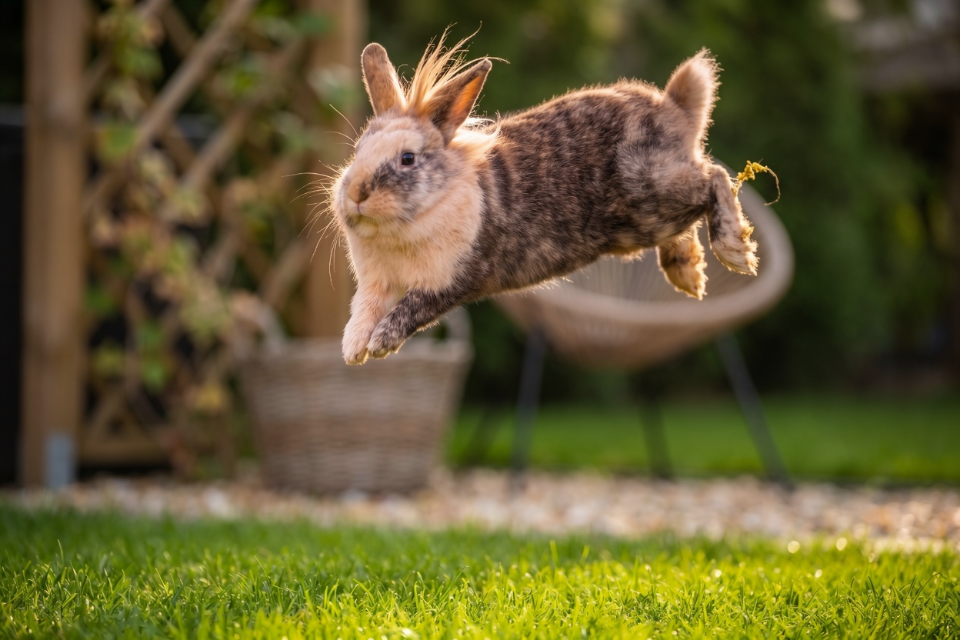
| Binkies | Performing twisting leaps into the air, indicating pure joy. | Celebrate; your movement just triggered a binky. |
| Waiting Outside Doors | Sitting expectantly outside a temporarily blocked room to track you. | Crack the door open slightly if safe to satisfy their curiosity. |
Understanding these adjacent behaviors can help you build a better understanding of rabbit communication—detailed further in my definitive guide to rabbit behavior, without confusing trailing with separate territorial issues.
9. FAQ (Frequently Asked Questions)
How do I know if my rabbit follows me out of love or just for food?
Your rabbit’s post-following actions give away their true intent. If you stop walking and they linger for forehead rubs or drop into a dead-flop, it is a display of genuine attachment. If they scan your fingers for treats and immediately abandon you when they realize your hands are empty, you are dealing with pure food motivation.
Why does my rabbit suddenly follow me more?
Sudden increases in following behavior typically occur after your emotional bond deepens or when household routines change. However, if this shift happens overnight alongside physical symptoms like lethargy or hiding, it can occasionally signal underlying illness or environmental stress.
Is it good if my rabbit follows me?
In almost all scenarios, yes. Following is an excellent behavioral indicator that your rabbit feels completely comfortable, safe, and socially bonded to you within the home.
Why does my rabbit wait outside the bathroom door?
Rabbits are naturally inquisitive animals that track household movements closely. Closed doors interrupt their territorial layout, causing them to wait outside to investigate where you went or to stay close to their favorite person.
Why does my rabbit follow me then run away?
Many rabbits genuinely enjoy being near their owners but still possess strong prey instincts that make them terrified of being picked up or reached toward from above. This is normal behavior that can be remedied by interacting at floor level.
Why does my rabbit circle my feet while following me?
While simple trailing is a calm social habit, tight circling or figure-eight looping around your ankles is usually an expression of high hormonal maturity or intense excitement regarding imminent treat delivery, an instinct often mitigated by following PDSA guidelines on rabbit alteration.
10. Conclusion
For the majority of indoor house rabbits, following their owner around the home is one of the clearest visual signs that they feel secure and connected to you. While the behavior is frequently reinforced by a desire for a tasty treat or pure environmental curiosity, it remains rooted in their fundamental need for a social pack structure. By learning to accurately read their subtle body language cues, respecting their instinctual boundaries, and providing a healthy mix of affection and independent enrichment, you can ensure that your bunny’s trailing habit remains a balanced, joyful expression of your unique bond.
Medical & Veterinary Disclaimer: Bunnyowners.com is an informational resource for rabbit owners and enthusiasts. We are not veterinarians. The content on this website is for educational purposes only and is not a substitute for professional veterinary advice, diagnosis, or treatment. Always consult a qualified veterinarian with any questions or concerns regarding your pet’s health, medical conditions, diet, or overall care. If you have concerns about your rabbit’s health, it’s always best to reach out to a veterinarian rather than relying solely on information found online.