
Veterinary & Affiliate Disclaimer: Bunnyowners.com shares educational rabbit care resources, not professional veterinary advice. Always consult a qualified veterinarian regarding your rabbit’s medical, dietary, or behavioral needs. This post may also contain affiliate links; as an Amazon Associate and affiliate partner, we earn from qualifying purchases at zero extra cost to you.
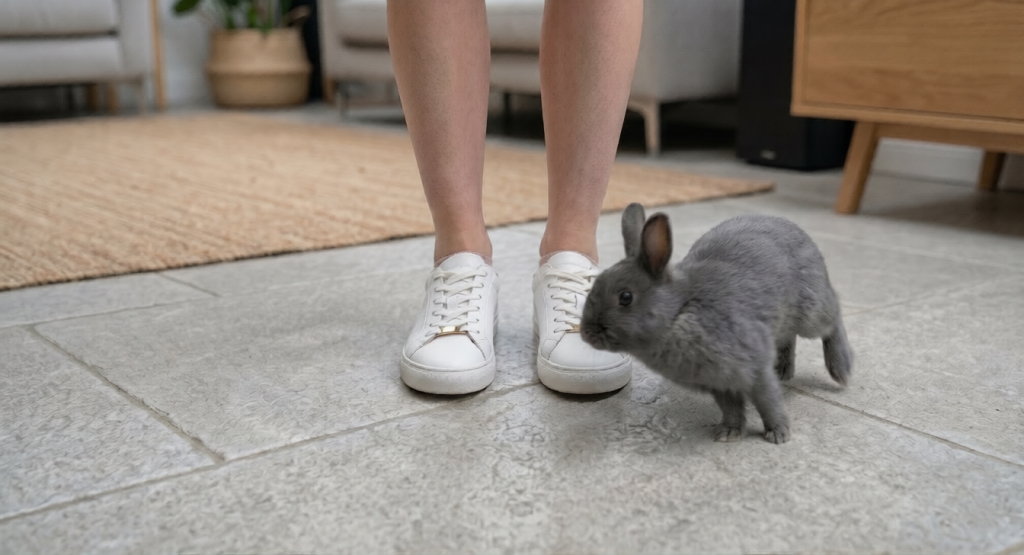
If a furry, long-eared hurricane is currently weaving relentless figure-eights around your ankles, you are likely wondering: Why is my rabbit doing this, and is it normal? This ankle-orbiting routine is a remarkably common behavioral display that leaves many pet parents thoroughly charmed yet completely mystified by the underlying psychology behind the movement.
Rabbits circle your feet because they are experiencing an intense emotional spike driven by excitement, social affection, attention-seeking, or reproductive hormones. This distinct behavioral ritual is entirely normal and is most frequently triggered by upcoming mealtime routines or a strong desire to bond with their favorite human. While usually a harmless sign of bunny love, excessive or frantic circling paired with honking or nipping can point to hormonal adolescence, territorial dominance, or overstimulation.
To decode this ankle-orbiting phenomenon, you simply need to evaluate your bunny’s age, posture, and accompanying vocal tracks. By examining documented rabbit behavioral data over at my rabbit behavior hub and comparing it with established house rabbit body language resources, this guide breaks down the seven primary reasons behind the loop, clarifies specific behavioral triggers like honking or nipping, and details exactly how to safely manage or reduce excessive circling without fracturing your relationship—or your shins.
1. Why Do Rabbits Circle Your Feet?
At its core, circling is a high-energy, multi-layered social signal. Out in the wild, rabbits lack the vocal machinery to broadcast their thoughts, so they rely heavily on physical choreography and strategic proximity to communicate everything from colony hierarchy to romantic availability. When you transition these hardwired evolutionary drives into a modern living room, your lower legs inadvertently become the grand central station for their localized messaging.
Key Takeaway: Rabbits circle feet because they are excited, affectionate, territorial, or hormonal. Many rabbits quickly learn that circling gets immediate attention, food, or interaction from their owners.
Rabbits target your feet for a remarkably pragmatic reason: your lower legs are the only moving parts of your giant human anatomy that operate on their exact eye level. As outlined in the peer-reviewed digital archives of the University of California eScholarship Repository, rabbits depend heavily on specialized posture sequences to communicate intent to non-lagomorphs. They quickly figure out that weaving through your laces places them directly in your primary field of vision, rendering it practically impossible for you to ignore their presence.
Table 1: Contextual Triggers for Rabbit Foot-Circling
| Trigger Category | Environmental Context | Expected Rabbit Behavior |
|---|---|---|
| Routine-Driven | Kitchen food prep, rustling bags | High-speed loops, intense anticipation |
| Social-Driven | Owner returning home, quiet sitting | Relaxed figure-eights, requests for pets |
| Biological-Driven | Reaching maturity (3-6 months) | Persistent buzzing, obsessive tracking |
Key Behavioral Indicators
- Natural rabbit social behavior: Built on close physical proximity and micro-tracking.
- Common around feeding routines: Triggered by environmental audio cues like rustling plastic.
- Often directed at favorite humans: Reserved almost exclusively for the primary bond partner.
- May happen with honking noises: Soft, rhythmic vocalizations that act as an emotional amplifier.
- Usually completely harmless: A standard, albeit eccentric, feature of domestic rabbit life.
While studying these loops, keeping this behavior strictly separated from other distinct physical actions, like persistent nudging, hand-licking, or defensive foot-thumping, helps pinpoint exactly what your rabbit is trying to text you.My overarching guide to rabbit behavior provides a broader taxonomy of these non-orbital actions. Furthermore, behavioral ethograms published in the Journal of Visualized Experiments emphasize that observing these minor mechanical differences prevents owners from misinterpreting everyday social habits, particularly when a submissive or dominant hierarchy is actively being navigated within the household.
2. 7 Common Reasons Rabbits Circle Your Feet
While a circling rabbit might look like a random, furry blur operating without a clear flight plan, their ankle-orbiting behavior is driven by highly predictable emotional and biological stimuli. To truly understand why your domestic rabbit has chosen your shins as the center of their universe, we have to look past the frantic movement and isolate the specific environmental and psychological catalysts. The following comprehensive breakdown and its accompanying diagnostic matrix map out the seven distinct root causes behind this orbital choreography, providing an immediate summary cheat sheet to help you cross-reference your bunny’s underlying motivations before we dive deep into the nuance of each behavioral profile.
Table 3: Comprehensive Breakdown of the 7 Rabbit Circling Catalysts
| The 7 Reasons | Primary Driving Emotion | Key Posture/Vocal Sign |
|---|---|---|
| 1. Excitement | Pure joy / Anticipation | High-speed activity spikes during routine hours |
| 2. Affection | Deep trust and bonding | Loose, relaxed body posture; following calmly |
| 3. Hormones | Reproductive instincts | Low rhythmic buzzing, mounting, or spraying |
| 4. Attention | Learned demand behavior | Escalating speed or tightness to block path |
| 5. Territorial | Space claiming / Dominance | Rigid tail held high, stiff outward radar ears |
| 6. Food Motivation | Conditioned treat seeking | Focus centered around kitchen sounds and routines |
| 7. Overstimulation | Stress / Lack of enrichment | Frantic, nonstop pacing or frantic loop running |
1. Your Rabbit Is Excited
The absolute most frequent cause of an ankle orbit is pure, unadulterated joy. Rabbits are creature-of-habit maximalists, and they are masters at predicting precisely when something fabulous is about to happen. You will most likely see this frantic pacing occur during early morning or evening twilight hours when their natural crepuscular internal clocks tell them it is peak time to be alive and active.
This pattern is highly evident during food preparation routines. For instance, my personal rabbit, Mocha, turns every single breakfast into a high-speed orbital ritual, executing incredibly tight figure-eights around my ankles the precise millisecond she hears the pellet container rattle. This behavior closely mirrors clinical observations documented in Frontiers in Veterinary Science, which track how human footsteps and tactile interactions trigger acute neuroendocrine and behavioral spikes in domestic lagomorphs.
2. Your Rabbit Is Showing Affection
When a rabbit is genuinely comfortable in their domestic territory, circling can be their way of offering the ultimate social compliment. Unlike territorial posturing or hormonal pacing, affectionate tracking is typically characterized by a beautifully relaxed, fluid body posture.
According to behavioral tracking data published in Archives Animal Breeding, securely bonded rabbits display a rich spectrum of affiliative and comfort behaviors when in close proximity to their chosen companion. These animals will happily follow their chosen humans from room to room like a fluffy, silent shadow. The main differentiator between pure affection and structural dominance here is the total absence of physical tension; the rabbit isn’t charging your legs defensively, and their ears aren’t pinned back flat like an angry jet wing.
3. Hormones and Mating Behavior
If your rabbit has crossed into adolescence (typically between 3 to 6 months of age) and has not yet had an appointment with a veterinary surgeon, foot circling takes on a vastly different, much more intense biological meaning. In the rabbit world, tight, relentless tracking circles accompanied by low, rhythmic clicking or buzzing noises are the foundational choreography of a courtship dance.
Because you are their primary social partner, your slippers inadvertently become the proxy target of their adolescent affection. Before his neutering surgery, my rabbit, Chino, displayed this textbook hormonal behavior vividly, running obsessive, frantic tracking circles while buzzing incessantly whenever anyone stepped into his enclosure space. This biological drive can step up significantly during the spring months due to natural seasonal shifts, an endocrine phenomenon evaluated in the American Journal of Veterinary Research regarding pheromone-influenced emotional coping strategies and reproductive maturity.
Table 2: Clinical Signs of Hormonal Courtship Responses
| Signs the Behavior Is Hormonal | Description / Visual Cues |
|---|---|
| Honking/grunting | Consistent, low vocalizations tracking your movement |
| Mounting | Clamping onto slippers, socks, or pant legs |
| Urine spraying | High-velocity scent marking on walls or your legs |
| Obsessive following | Inability to settle down unless physically separated |
| Aggression when ignored | Sudden boxy postures or nips if you walk away |
4. Your Rabbit Wants Attention
Rabbits are surprisingly calculating creatures that learn incredibly fast through basic operant conditioning. If your bunny ran around your feet once in the past, and you immediately dropped what you were doing to offer a forehead scratch or a piece of romaine lettuce, their brain permanently logged that sequence as a guaranteed win.
This attention-reinforced behavior can easily morph into a daily demanding pattern. Some rabbits will strategically escalate the speed or tightness of their circles if they feel you are walking too fast or ignoring their presence, effectively turning themselves into a mobile roadblock designed to grind your progress across the living room to a halt.
5. Territorial or Dominance Displays
Rabbits are deeply territorial real estate agents that like to map out exactly who owns what square inch of the carpet. When you walk into a room, you are technically reconfiguring the spatial dynamics of their territory. Sometimes, running circles around your feet is a subtle way of pulling rank.
As detailed in an epidemiological survey on companion rabbit behavioral problems in the Journal of Veterinary Behavior, owner-directed aggression and structural dominance displays often manifest right around puberty. To distinguish between a playful orbit and a defensive layout, you have to look closely at structural body clues. A territorial rabbit will often hold their tail high and rigid, keep their ears pointed outward like alert radar dishes, and may cut off your walking path abruptly with SQL, boxy movements rather than flowing around your ankles fluidly.
6. Food Motivation
Much like a Golden Retriever staring longingly at a dinner plate, a rabbit circling your feet in the kitchen is often operating on pure, unvarnished capitalist greed. They can easily distinguish the specific acoustic signatures of your household routine: the rustle of a plastic produce bag, the specific squeak of the crisper drawer, or the click of the pantry door. This conditioned excitement turns your feet into ground zero for their treat-seeking missions.
7. Stress or Overstimulation
While the majority of circling instances are benign or enthusiastic, frantic, non-stop pacing can occasionally serve as an emotional release valve for underlying stress or psychological anxiety.
If a rabbit is confined to an excessively small enclosure without proper physical enrichment, a 2026 study in Frontiers in Animal Science demonstrates that the restriction of locomotion and exploration significantly lowers behavioral diversity while triggering stereotypic pacing loops. If the looping feels frantic rather than playful, it is worth auditing their setup to ensure they have plenty of structural space to burn off mental adrenaline safely.
3. Why Does My Rabbit Circle My Feet and Honk?
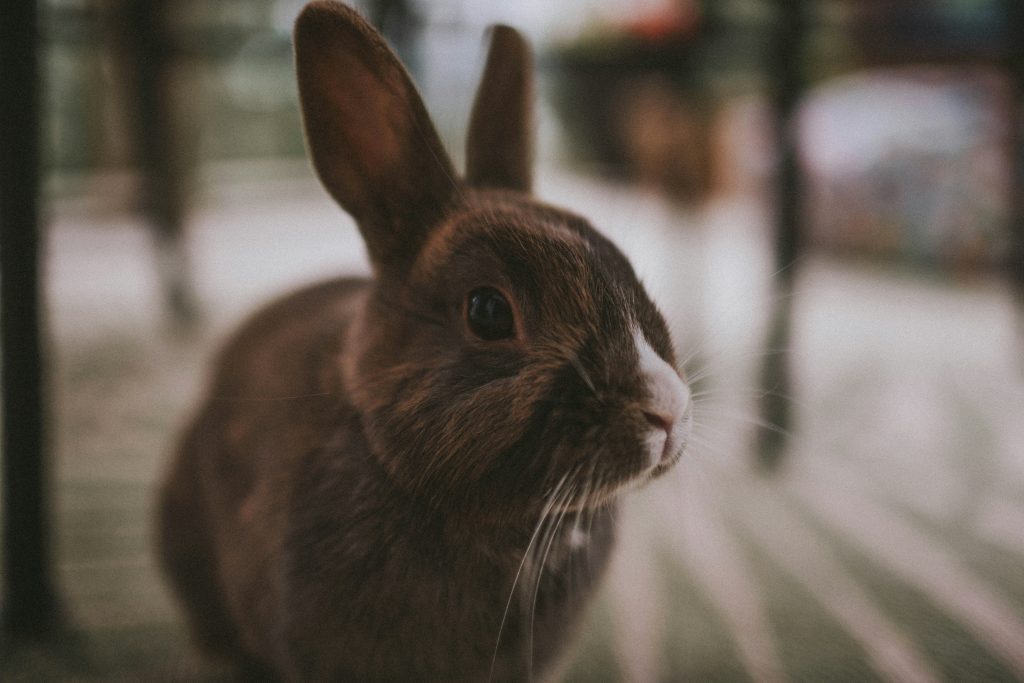
When circling is paired with a consistent vocal track, your rabbit is essentially adding exclamation points to their behavioral message. Rabbit vocalizations are subtle, but they speak volumes if you calibrate your ears to the correct frequency.
Circling combined with honking usually means excitement or hormonal courtship behavior. Honking is a common rabbit vocalization closely linked to attention-seeking and romantic rituals. It is vital to distinguish between a soft, happy “honk” (which often sounds like a faint, rhythmic vibration) and an angry, defensive grunt.
A happy honk is deployed when the rabbit is gathering serious momentum around your slippers during playtime or pellet delivery. An angry grunt, however, is sharper, louder, and typically paired with forward-facing ears and a tense snout. If the honking is relentless, obsessive, and paired with ankle-clamping, it is safe to assume it is being powered by adolescent biology.
4. Why Does My Rabbit Circle Me Then Bite?
It can be incredibly jarring when a lovely moment of ankle-weaving suddenly ends with a sharp, unexpected nip to your Achilles tendon. This sudden behavioral shift usually stems from a classic breakdown in inter-species communication.
A rabbit that circles then bites may be overstimulated, territorial, or frustrated. Hormonal rabbits are significantly more likely to nip or bite during circling behavior due to courtship frustration. There is a major structural difference between a light, exploratory nip and an aggressive bite. An attention-seeking nip is often your rabbit’s way of saying, “Excuse me, your service is too slow, look down!”
However, if the behavior transitions into a hard bite, it typically points to sensory overstimulation. When a rabbit gets too amped up during a high-speed tracking session, their brain can experience a brief neurological sensory overload, causing them to lash out physically. To avoid reinforcing this behavior, research focusing on pain grids and stress behaviors in Frontiers in Veterinary Science recommends letting out a sharp squeaking sound to signal that the physical boundary was crossed, followed by calmly walking away to break the reinforcement loop.
5. Is Circling a Sign My Rabbit Loves Me?
The short answer is yes—provided the surrounding body language is soft and cooperative. Rabbits are prey animals, which means their default survival setting is to maintain a calculated tactical distance from giant, predatory creatures (like humans). If they are actively choosing to put themselves directly underneath your heavy, moving feet, it demonstrates an immense amount of foundational trust.
Circling can be a genuine sign of affection when paired with relaxed body language and friendly interaction. Rabbits frequently circle people they view as safe, trusted members of their social group.
Table 4: Affection and Social Validation Indicators
| Bonding Sign | Physical Expression | What It Communicates |
|---|---|---|
| Flopping | Dropping onto side with legs stretched | Absolute safety and deep relaxation |
| Grooming | Licking your socks, toes, or pant legs | Returning social care and acceptance |
| Relaxed Posture | Ears resting casually along their back | Lack of fear or situational defensiveness |
| Following | Acting like a magnet to your lower legs | Active desire for ongoing human physical proximity |
To confirm that the circling is driven by genuine affection rather than a demanding personality, look for sister bonding behaviors such as:
- Flopping nearby: Abruptly dropping onto their side with their legs stretched out completely after a looping session.
- Grooming attempts: Actively licking your socks or pant legs when you finally stop moving.
- Relaxed ears: Keeping their ears resting casually along their back rather than standing stiffly at attention.
- Following behavior: Behaving like a tiny magnet to your lower legs without displaying signs of physical tension.
6. At What Age Do Rabbits Start Circling?
Circle behavior patterns generally track perfectly along with clear physical development stages. While tiny baby rabbits (kits) are incredibly energetic and may zip around your feet in random, chaotic bursts of play, true structured, persistent circling behavior typically kicks in right at the onset of puberty.
Depending on the specific breed size, rabbits enter their tricky adolescent phase between 3 and 6 months of age. Small breeds tend to mature significantly faster than giant breeds. When those juvenile hormones surge, owners often report that their once-calm, angelic bunny suddenly starts executing obsessive, highly structured orbital patterns around their legs almost overnight.
7. Does Neutering or Spaying Stop Circling?
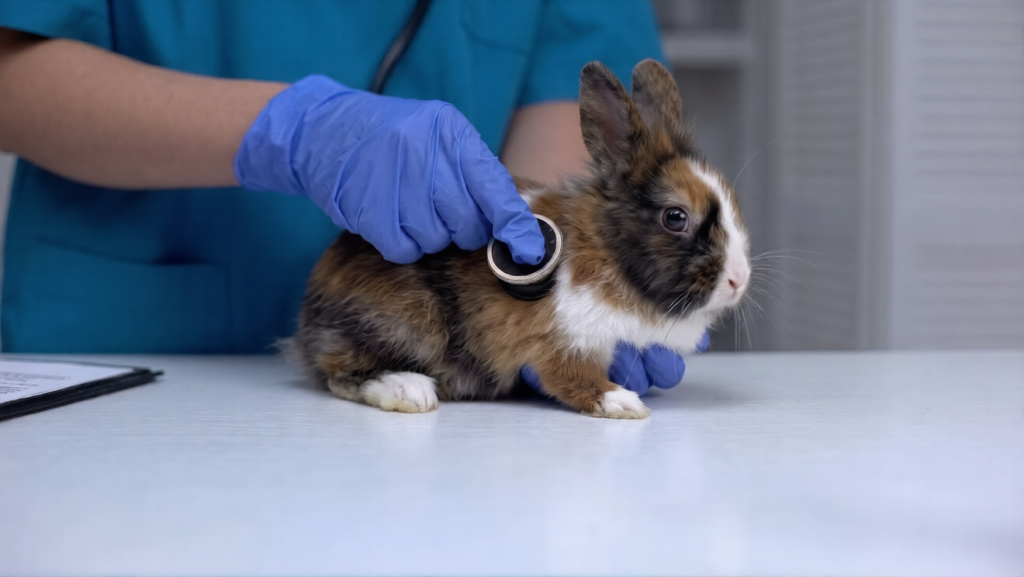
For the vast majority of house rabbits, the answer is a resounding yes. Because a significant portion of intense, obsessive circling is driven by pure biological reproductive urges, removing those hormonal triggers completely alters the behavioral landscape.
Neutering or spaying often significantly reduces hormonal circling behavior, particularly when it is paired with urine spraying or mounting. Some gentle, affectionate circling may still remain post-surgery. Clinical protocols published in the Veterinary Ireland Journal confirm that routine gonadectomy serves as a reliable intervention to address sex-hormone induced behaviors and territorial pacing in domestic rabbits.
Post-Surgery Behavioral Timeline: It typically takes anywhere from 4 to 6 weeks for residual hormones to completely dissipate from their system. Once their levels drop, the frantic courtship dances will fade away. Any minor looping that remains after this recovery window is purely social—meaning it is driven by affection, food motivation, or a learned desire for head scratches.
8. When Is Rabbit Circling a Problem?
While social and behavioral circling is a normal part of house rabbit ownership, there is a distinct line where the behavior shifts from an endearing personality trait into a legitimate health or safety concern.
Rabbit circling becomes concerning when it is obsessive, aggressive, frantic, or paired with structural health changes like head tilts, a loss of physical balance, or a sudden loss of appetite. It is absolutely vital to separate intentional, social foot-circling from a sudden neurological condition known in veterinary medicine as “head tilt” or “rolling.” If your rabbit is circling because they want treats or affection, they can stop on a dime, change directions fluidly, and focus their eyes clearly on you.
Conversely, if a rabbit is suffering from an underlying central nervous system issue—often linked to parasitic microsporidian pathogens like Encephalitozoon cuniculi detailed in Animals—they will spin involuntarily. As evaluated in clinical guidelines published by Veterinary Partner, central vestibular disease will cause a rabbit to spin blindly, display involuntary horizontal eye tracking (nystagmus), and undergo longitudinal rolling. If you notice any of these involuntary physical indicators, skip the behavioral training and contact an exotic animal veterinarian immediately.
9. How to Calm Excessive Circling Behavior
If your rabbit’s tracking has become so relentless that you are constantly worried about tripping over them or dropping your morning coffee, you can implement a few structured behavioral adjustments to restore calm to your walkways.
Table 5: Behavioral Intervention Framework for High-Speed Orbits
| Management Step | Practical Implementation | Target Outcome |
|---|---|---|
| Enrichment Expansion | Provide cardboard tunnels and willow rings | Mental outlet for pent-up energy channels |
| Routine Consistency | Feed at the exact same times daily | Elimination of frantic routine-begging cues |
| Ignoring Demands | Stand completely still during aggressive loops | Breaking the attention-reinforced behavior loop |
| Reset Adrenaline | Step out of the enclosure for a few minutes | Quick reduction of extreme sensory overload spikes |
To reduce excessive circling behavior, provide mental enrichment, establish consistent routines, avoid reinforcing demanding behavior with treats, and discuss spaying or neutering options with your vet.
- Increase Environmental Enrichment: Introduce cardboard tunnels, puzzle feeders, and safe willow chew rings to give them a healthy mental outlet.
- Maintain Consistent Routines: Feed your rabbit at the exact same times every day so they don’t feel the need to frantically beg every time you walk into the kitchen.
- Avoid Over-Rewarding Demands: If your rabbit starts circling your feet aggressively, stand completely still and ignore them. Do not offer a treat or pet them until they settle down into a calm sit.
- Reduce Sensory Overstimulation: If a play session gets too chaotic, step out of their enclosure space for a few minutes to let their adrenaline levels completely reset.
10. Should You Stop Your Rabbit From Circling Your Feet?
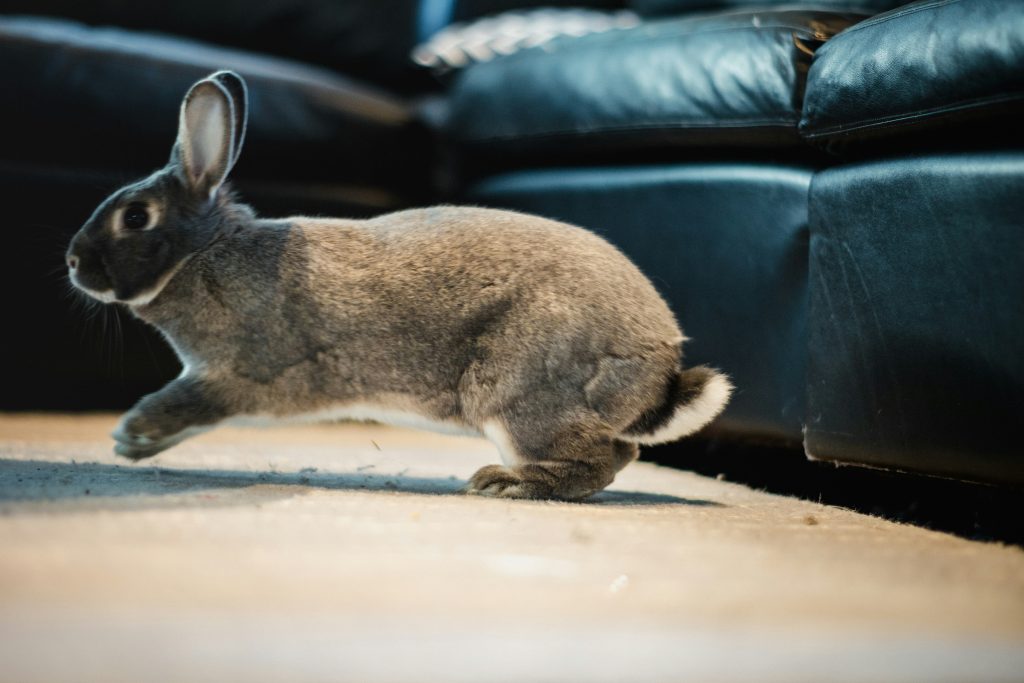
Under normal circumstances, there is absolutely no reason to eliminate this behavior entirely. It is a harmless, endearing expression of your rabbit’s distinct personality and their connection to you.
The only time you should actively step in to redirect them is if it poses a direct safety risk to either party. Because rabbits possess incredibly fragile skeletons, getting accidentally kicked or stepped on can cause severe injuries. If you are carrying hot liquids, balancing heavy grocery bags, or dealing with limited mobility, simply practice the “bunny shuffle.” By keeping your feet flat and sliding them forward along the floor without lifting them, you can safely navigate past your rabbit without pinning a paw or tripping over their orbit.
11. Quick Answers to Rabbit Circling FAQs
Why does my rabbit run circles around my legs?
Rabbits run circles around your legs to communicate intense emotions like excitement, deep social affection, food anticipation, or adolescent mating drives. They focus on your legs because that is their primary level of physical contact with you.
Why does my rabbit circle my feet when I have food?
This is a classic conditioned response. Your rabbit has successfully connected the sounds of food preparation with your presence, turning their circling into a high-energy method of begging for treats.
Do female rabbits circle too?
Yes. While intact male rabbits are famous for executing courtship loops, unspayed female rabbits will absolutely run circles around your feet, often accompanied by territorial nesting behaviors or grunting.
Why does my rabbit circle and grunt?
Unlike soft, happy honking, a circle paired with a sharp grunt is typically a defensive or territorial warning. Your rabbit is indicating that they feel cornered, protective of their space, or structurally annoyed.
Is circling always hormonal?
No. While hormones trigger the most obsessive forms of circling in intact rabbits, altered rabbits continue to circle their owners out of pure affection, joy, and routine-based excitement.
Why does my neutered rabbit still circle me?
If your rabbit is neutered but continues to loop around your legs, they are doing it for social rewards. They have learned that circling is an effective way to secure head rubs, playtime, or preferred snacks.
Can circling mean my rabbit is happy?
Absolutely. A relaxed, fluid orbit around your legs—especially when you first come home or during playtime—is an excellent indicator of a happy, well-adjusted house rabbit.
Why does my rabbit suddenly start circling me?
A sudden onset of circling usually correlates with reaching sexual maturity (puberty) around 3 to 6 months of age, or a major change in your daily schedule that alters their feeding anticipation.
12. Final Thoughts on the Bunny Orbit
At the end of the day, having a rabbit run laps around your feet is a vivid window into their internal emotional world. Whether they are driven by the simple joy of an upcoming piece of cilantro, a deeply ingrained social bond, or adolescent hormonal shifts, the behavior shows that you are the absolute center of their universe. By watching their accompanying vocal cues and posture, you can easily determine whether to pull out the grooming brush, step back to give them some quiet space, or simply enjoy the ultimate compliment of the bunny orbit.
Medical & Veterinary Disclaimer: Bunnyowners.com is an informational resource for rabbit owners and enthusiasts. We are not veterinarians. The content on this website is for educational purposes only and is not a substitute for professional veterinary advice, diagnosis, or treatment. Always consult a qualified veterinarian with any questions or concerns regarding your pet’s health, medical conditions, diet, or overall care. If you have concerns about your rabbit’s health, it’s always best to reach out to a veterinarian rather than relying solely on information found online.