
Veterinary & Affiliate Disclaimer: Bunnyowners.com shares educational rabbit care resources, not professional veterinary advice. Always consult a qualified veterinarian regarding your rabbit’s medical, dietary, or behavioral needs. This post may also contain affiliate links; as an Amazon Associate and affiliate partner, we earn from qualifying purchases at zero extra cost to you.
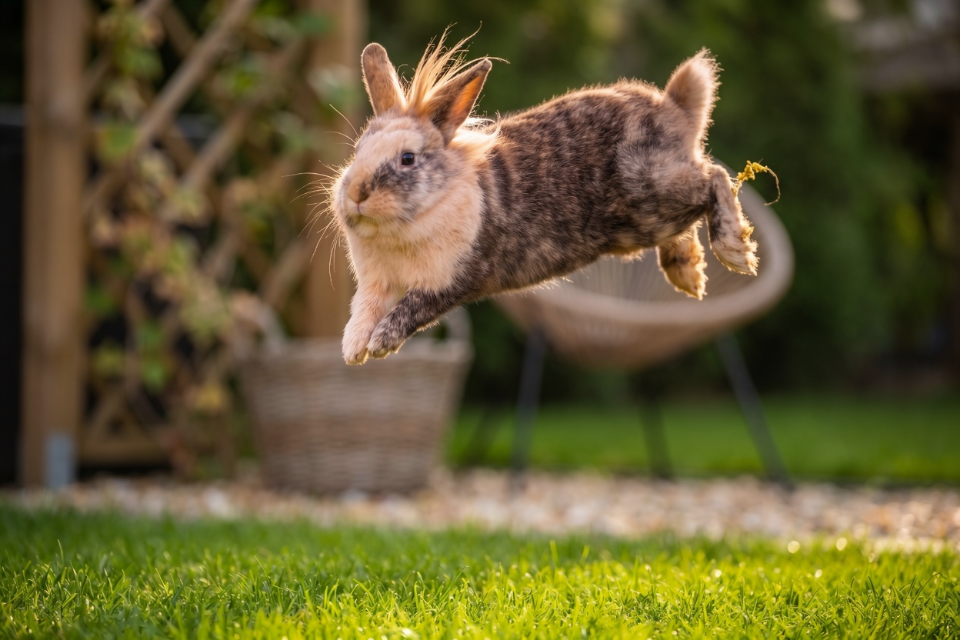
The first time you witness a binky, your instinct isn’t to applaud—it’s to check for a concussion. It resembles a high-speed mechanical glitch, typically concluding in a cartoonish heap on the rug. Yet, this isn’t just a jump; it’s a sophisticated signal of a “zero-threat” environment. In a world where stillness equals survival, the binky is a radical act of vulnerability and joy. To truly decode this airborne celebration, we must audit the primary biological and emotional drivers behind the behavior: Why do rabbits binky?
Rabbits binky to express peak happiness, security, and metabolic energy release. A binky is a high-speed jump combined with a mid-air body twist or a kick of the hind legs. It indicates that the rabbit feels 100% safe from predators and is experiencing a neurological “reward” state triggered by their environment, social interaction, or diet.
Before we dissect the evolutionary hardware that makes this move possible, we have to recognize that a binky isn’t just a “jump.” It is a behavioral display that signals a “zero-threat” environment—a rare state for a prey animal to achieve. In the world of a rabbit, stillness is survival, which makes the binky a radical act of vulnerability and joy.
Biomechanics of the Binky
Rabbits are essentially coiled springs wrapped in fur. To understand why a binky happens, you have to look at the clinical data regarding their skeletal structure. My pet rabbits, Mocha and Chino, serve as the perfect baseline for this; despite their fluff, a rabbit’s skeleton is incredibly light, comprising only about 7–8% of their total body weight. This shrunken skeletal mass is paired with dense, powerful muscle groups concentrated in the hindquarters.
Energy Storage in Hind-Leg Tendons
The binky is fueled by “explosive” movement. Research into Lagomorph Locomotion and Skeletal Mechanics reveals that rabbit tendons act like high-grade elastic bands. When a rabbit prepares to binky, they load their tendons with “elastic strain energy.” During the launch phase, this energy is released in a millisecond-long burst, catapulting the rabbit into the air with far more force than their lightweight frame would suggest.
Rotational Torque and Mid-Air Twisting
The “twist” is the defining characteristic of the binky. From a physics perspective, this requires a massive amount of core strength and spinal flexibility. Mid-air, the rabbit uses its head and front paws as a “rudder” while the hind legs kick out to provide rotational torque. This isn’t just a random movement; it’s a high-level display of athletic prowess that shows the rabbit is in peak physical condition.
Dopamine Release and the Nervous System
Why do they do it? It’s not just physical; it’s chemical. When a rabbit experiences positive stimulation—like a fresh pile of hay or the door to their enclosure opening—it triggers a dopamine surge. Because rabbits are prey animals with a “high-idle” nervous system, they often cannot process this joy through stillness. They must discharge the emotional energy physically, leading to the spontaneous jump-twist.
Biomechanical Force Distribution Audit
| Movement Type | Primary Muscle Group | Vertical Force | Rotational Torque | Energy Source |
|---|---|---|---|---|
| Standard Hop | Gastrocnemius (Calf) | Low | None | Low-Idle Metabolism |
| Defensive Bolt | Gluteal/Quadriceps | High | Minimal | Cortisol/Adrenaline |
| The Full Binky | Full Posterior Chain | Ultra-High | 180° to 360° | Dopamine/Elastic Strain |
Evolutionary Origins of Play Behavior
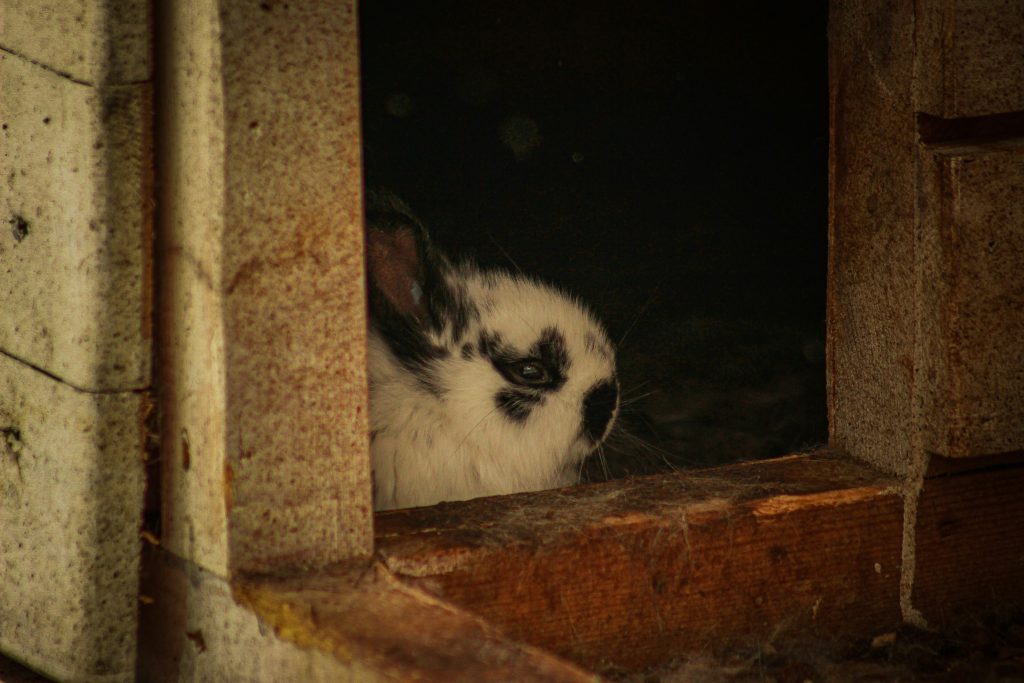
I’m often asked why a prey animal would waste precious calories jumping in circles. The answer lies in the survival software that every domestic rabbit still runs in the background of its brain. It’s a legacy system that hasn’t been patched out by domestication.
Predator Evasion and Line of Sight
In the wild, a straight line is a death sentence. If a fox is chasing a rabbit, the rabbit’s best defense is unpredictability. The binky—or the “zig-zag” maneuver—is a biological tool designed to break a predator’s line of sight. By twisting mid-air, the rabbit makes it impossible for a predator to predict where they will land. Insights into Evolutionary Rabbit Behavior suggest that the binky is a repurposed evasion tactic.
Survival Drills in a Domestic Setting
Domestic rabbits don’t have hawks in their living rooms, but their brains don’t know that. They still need to “test” their flight hardware. When a rabbit feels safe, they perform these evasion maneuvers as a form of play. It’s a “software update” for their muscles, ensuring that if they ever did need to escape, their body is primed to perform.
The Transition to Social Play
In a domestic setting, the binky transitions from a defensive reflex into “affiliative play”—behavior intended to show contentment or social bonding. When your rabbit binkies near you, they are essentially saying, “The environment is so safe that I can afford to waste energy on survival drills.” It is the ultimate certificate of trust between owner and rabbit.
Identifying Different Types of Binkies
Not every binky is a five-foot vertical leap. Just as humans have different levels of laughter—from a polite chuckle to a belly laugh—rabbits have a spectrum of intensity. If you are watching closely, you can actually rank their mood based on the air-time they achieve using a comprehensive rabbit body language guide.
The High-Intensity Full Twist
This is the “gold standard” of rabbit joy. The rabbit launches high into the air, twists its body completely, and often lands facing the opposite direction. This indicates maximum environmental satisfaction and a high caloric surplus. If your rabbit is doing this, you are winning at being an owner.
The Subtle Head Flick
Sometimes a rabbit is happy but physically “low-energy.” The “head flick” is a micro-binky where the rabbit stays on the ground but shakes its head and ears violently while giving a small twitch of the hindquarters. This is common when they are eating or settling into a cozy spot. It’s the rabbit equivalent of a contented sigh.
The Vertical Static Jump
This happens when a rabbit is surprised by joy. They might be standing perfectly still, hear the sound of a treat bag, and suddenly launch straight up like a piece of popcorn. There is very little forward momentum, just pure vertical height. It’s an involuntary explosion of “yes.”
Observational Data on Rabbit Personality
I don’t just rely on textbooks; I rely on my own resident rabbits at my home and observational lab. Personalities vary wildly, and those traits dictate exactly how and when a rabbit chooses to “let loose.” If you want to dive deeper into these unique quirks, I highly suggest checking out my Definitive Guide to Rabbit Behavior to learn more.
Territorial and Assertive Triggers
Some rabbits have a very specific trigger: a fresh environment. Whenever I deep-clean a space and rearrange tunnels, I often see what I call “territorial binkies.” The rabbit isn’t just happy it’s clean; they are physically “claiming” the new layout by marking the air with their energy. Mocha is a prime example of this; her binkies are heavy-set and loud, signaling her dominance over the “new” territory. If your pet scales this behavior up into persistent territory guarding, it’s worth investigating why your rabbit may be territorial.
Social Interaction and Feedback Loops
Other rabbits are social binkiers. Their joy is performative; they binky specifically when they see their partner or when a human enters the room with greens. Chino fits this profile perfectly. His binkies are “shorter” and more frequent—a series of rapid head flicks followed by a low-to-the-ground twist. This highlights that binkying is a personality-driven communication tool, a concept supported by House Rabbit Society behavioral data. To learn how these communicative boundaries establish social bonds, look into my guide on how rabbits communicate.
Age-Related Changes in Movement
One of the biggest concerns for new owners is when their rabbit “stops binkying.” They don’t stop being happy; they just change the way they express it. As the joints get older, the leaps get lower, but the intent remains the same.
Energy Discharge in Young Rabbits
Young rabbits (under 1 year) are in a state of constant metabolic overflow. They binky for no reason. A dust mote floating by or a slightly different blade of grass is enough to trigger a 360-degree twist. Their skeletal structure is still highly flexible, allowing for chaotic, uncoordinated leaps that would be dangerous for an older rabbit.
Selective Binkying in Adults
Adult rabbits are more “economical” with their energy. They binky when the stimulus is high—such as being let out into a larger space or receiving their favorite herbs. This is the stage where the “Victory Lap” (a zoomie-binky combo) becomes most prominent.
The Senior Micro-Binky
As rabbits age, their joints naturally stiffen. A 7-year-old rabbit might want to perform a massive twist, but their “hardware” advises against it. Instead, they perform the “vibrational binky.” This is a subtle ear twitch or a quick “shiver” of the shoulders while they remain on the floor. It is just as meaningful as a kit’s leap, but it requires a more observant eye to spot.
Binky Intensity Across the Rabbit Lifecycle
| Life Stage | Energy Level | Binky Style | Primary Trigger |
|---|---|---|---|
| Juvenile (0-1 yr) | Extreme | Continuous “Popcorn” | General Existence |
| Adult (1-5 yrs) | Moderate-High | High Vertical Twists | Play & Freedom |
| Senior (6+ yrs) | Low-Moderate | Head Flicks/Shudders | Food & Contentment |
Metabolism and Timing
The binky is closely tied to the rabbit’s “internal clock.” As crepuscular animals, their energy levels are not linear. If you’re trying to spot one at noon, you’re likely out of luck.
Surges at Dawn and Dusk
In the wild, dawn and dusk are the safest times to forage. Domestic rabbits still experience a metabolic surge during these hours. Clinical data on Rabbit Crepuscular Rhythms shows that their energy levels peak as the sun rises and sets. This is why you often hear “thumping” and binkying at 5:00 AM; it’s a biological “system check.” For an exhaustive review of their nighttime activity loops, see my what do rabbits do at night behavior guide.
Digestion and the Cecotrope Cycle
Rabbits have a unique digestive system that involves the consumption of cecotropes. After a cycle of digestion and rest, the influx of nutrients creates a physical energy spike. A binky is often the “exhaust pipe” for this metabolic heat. If a rabbit is not binkying, it can sometimes be an early indicator that their digestive motility is slowing down, warning you to monitor closely for early signs of GI stasis in rabbits.
Flooring and Safety Protocols

Rabbits are made of “glass and balsa wood.” Their bones are hollow and their spines are incredibly fragile. Compared to a robust canine, a rabbit’s structural safety net is non-existent. A “bad binky” isn’t just a clumsy moment; it can be a clinical disaster.
Traction and Spinal Stress
You cannot binky safely on tile, hardwood, or laminate. If a rabbit tries to launch or land on a slippery surface, their feet slide out from under them—a condition often referred to as “splayed legs.” This can lead to permanent spinal misalignment or torn ligaments. Research on Rabbit Pododermatitis and Traction highlights that traction is a clinical requirement for skeletal health. In fact, if you observe a rabbit digging everything in sight, it is often a secondary attempt to find structural grip or discharge pent-up energy against inadequate flooring.
Using Rugs as Launch Pads
To encourage binkying, you must provide “launch pads.” These are low-pile rugs or foam mats that allow the rabbit to “dig in” their claws during the explosive phase of the binky. Without traction, the rabbit will suppress their joy because their survival brain tells them the ground is unsafe. Joy requires friction.
Clearing Obstacles for Safe Landings
Because the twist mid-air breaks the rabbit’s line of sight, they are prone to “blind landings.” A safe binky zone must be free of sharp corners or stairs. As I learned from auditing VCA Hospitals guide on safe environmental setups, the most common “binky injuries” aren’t from the jump itself, but from the rabbit hitting an object while they are in their rotational phase.
How to Identify Stress or Pain
One of the most critical roles of anyone living with a rabbit is distinguishing between a “Happy Binky” and a “Stress Jump.” They can look similar if you aren’t paying attention to the ears and the aftermath of the movement.
Distinguishing Binkies from Startle Reflexes
A startle reflex is a vertical jump, but it lacks the “twist” and “flick.” If a rabbit jumps straight up and then immediately freezes or strikes the floor with its feet, they are running on cortisol, not joy. Learn to isolate these anxious triggers by consulting my manual on why do rabbits thump. A happy binky is usually followed by a relaxed zoomie or steady nose-twitch; a startle is followed by rigid, tense behavior.
Recognizing Signs of GI Stasis
If your rabbit is jumping and shaking its head violently, it could be a sign of ear mites or severe discomfort. Frantic, uncoordinated jumping that doesn’t seem to have a trigger is often a sign that the rabbit is trying to “escape” an internal pain. Veterinary guidelines emphasize that any sudden shift in movement quality warrants an immediate diagnostic check for a rabbit not eating to rule out a progressive gut shutdown.
Binky vs. Stress Jump Diagnostic Audit
| Feature | The Happy Binky | The Stress/Pain Jump |
|---|---|---|
| Movement | Controlled Twist/Kick | Frantic/Uncoordinated |
| Body Language | Soft Eyes/Relaxed | Wide Eyes/Showing Whites |
| Aftermath | Victory Lap or Flop | Hiding or Thumping |
| Context | Triggered by Play/Food | Sudden/Spontaneous Pain |
Comparing Binkies and Zoomies
While they often go hand-in-hand, a binky and a zoomie serve different biological purposes. One is about acrobatics, the other is about cardio.
Vertical Force vs. Horizontal Speed
A zoomie is a test of cardiovascular endurance and linear speed. It’s the “sprint” phase of their exercise. The binky is the “gymnastics” phase. Research in the Journal of Animal Science on small mammal activity patterns shows that zoomies are often used to survey a large area quickly, while binkies are used to celebrate a specific “safe spot.”
The Victory Lap Combination
You will often see a rabbit “zoom” across the room, perform a binky at the halfway point, and then finish the lap. This “Victory Lap” is the ultimate expression of health. It shows the rabbit has the heart health for the sprint and the skeletal integrity for the twist.
Increasing Activity Safely
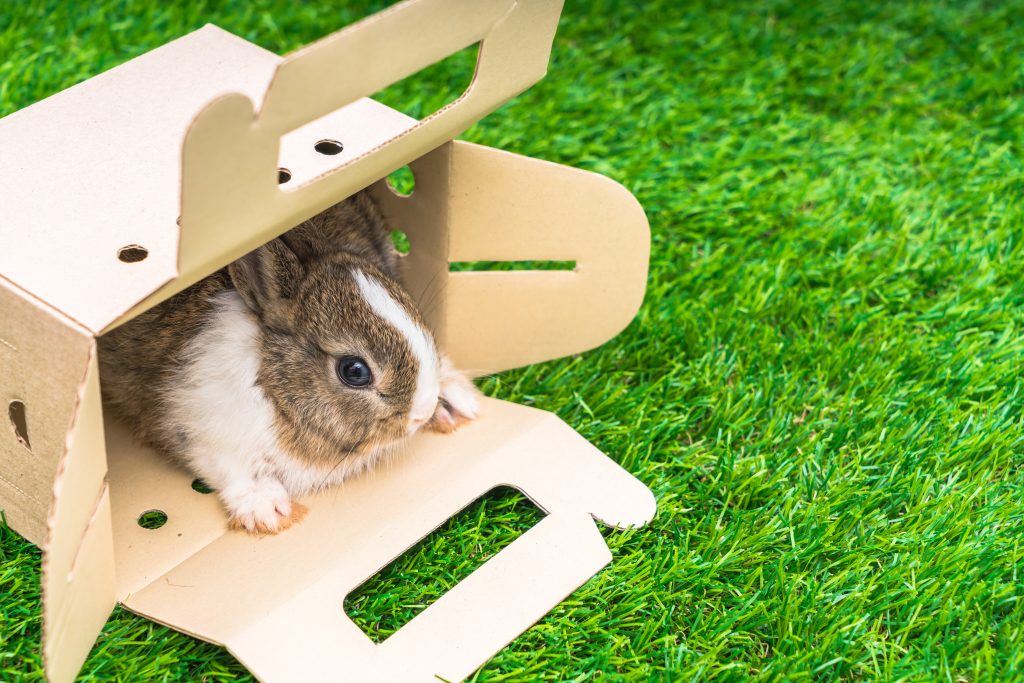
If your rabbit isn’t binkying, it’s rarely because they are “unhappy” by nature; it’s usually because the environment doesn’t meet the “Safety Audit” requirements. They need the physical and emotional space to be reckless.
Enrichment Strategies
To trigger a binky, you have to engage the high level of intelligence they possess. A bored rabbit is a stationary rabbit.
- Cardboard Tunnels: Mimics the safety of a burrow.
- Digging Boxes: Provides a safe outlet for high-energy behavior. Check the UC Davis Veterinary Guide for specific enrichment protocols.
Bonding and Trust
A rabbit will not binky if they don’t trust you. Trust is built through “floor time”—sitting on their level and allowing them to investigate you. The Royal Veterinary College (RVC) notes that binkying frequency is directly correlated to the amount of “unsupervised freedom” a rabbit has in a bunny-proofed room. If you aren’t sure where you stand socially, find out how to tell if your rabbit is happy through voluntary interactions.
Frequently Asked Questions
Do rabbits binky when they are alone? Yes, but they are far more likely to do it when they feel the presence of their social pack. According to Veterinary Partner behavior docs, binkying can be a form of social “contagion” where one rabbit’s joy triggers another’s.
Why does my rabbit binky toward me? This is a “Social Binky.” Your rabbit is including you in their celebratory dance. It means they view you as a source of safety rather than a threat. It’s a literal leap of faith.
Can a binky break a rabbit’s back? Yes. While the binky itself is natural, landing on a hard, slippery surface can cause the spine to twist unnaturally. This is why rugs are non-negotiable for a binky-safe home.
Is it bad if my rabbit never binkies? Not necessarily. Just like some people don’t dance at parties, some rabbits are naturally more stoic. Look for quiet teeth grinding signals (gentle tooth purring) or a completely relaxed side-flop as alternative joy markers. If they are eating, pooping, and exploring, they are likely thriving.
Conclusion: The Researcher’s Final Audit
The binky is more than just a cute jump; it is a complex biological event that requires a perfect alignment of health, safety, and trust. If your rabbit is binkying, your environment has passed the “Safety Audit.” It means their “survival software” has been successfully diverted into “joy software.” Respect the twist, provide the traction, and enjoy the show—it’s the best evidence you’ll ever have that you’re doing a great job as a bunny owner.
Medical & Veterinary Disclaimer: Bunnyowners.com is an informational resource for rabbit owners and enthusiasts. We are not veterinarians. The content on this website is for educational purposes only and is not a substitute for professional veterinary advice, diagnosis, or treatment. Always consult a qualified veterinarian with any questions or concerns regarding your pet’s health, medical conditions, diet, or overall care. If you have concerns about your rabbit’s health, it’s always best to reach out to a veterinarian rather than relying solely on information found online.