
Veterinary & Affiliate Disclaimer: Bunnyowners.com shares educational rabbit care resources, not professional veterinary advice. Always consult a qualified veterinarian regarding your rabbit’s medical, dietary, or behavioral needs. This post may also contain affiliate links; as an Amazon Associate and affiliate partner, we earn from qualifying purchases at zero extra cost to you.
If you’ve spent any amount of time observing rabbits, you’ve likely caught them casually rubbing the underside of their chin on table legs, toys, or even your favorite pair of shoes. While this might look like a quirky itch or an endearing demand for attention, this action is called chinning and serves as a vital form of scent marking.
Rabbits chin things to leave behind unique scent signals from glands located under their chins, helping them recognize their environment and feel secure. By rubbing these glands against objects, spaces, and even people, they actively mark them as familiar and safe. This instinctive behavior is completely normal and allows your bunny to confidently map out its territory without resorting to aggression.
Because scent marking is so deeply ingrained in their biology, your rabbit is simply leaving invisible sticky notes around the house to organize its world. To help you decode this silent language, the rest of this guide, backed by the deep-dive research over at my rabbit behavior hub, will explore the exact reasons behind this behavior, the everyday items rabbits target most, and how to distinguish a happy, harmless chin-rub from signs of sudden environmental stress.
1. What Is Rabbit Chinning?
At its core, a rabbit is chinning when it deliberately presses the underside of its chin onto something to deposit scent from its glands. The action is usually quick, subtle, and frequently repeated in the exact same areas. Depending on a rabbit’s personality and their environment, they might chin things daily or dozens of times an hour.
The biology behind this is fascinating. Scent glands located underneath the chin produce chemical markers that, while powerful to a bunny, are not usually detectable by humans. Rabbits rely heavily on scent-based communication over visual cues, which plays a major part in how rabbits communicate as a species. This chemical mapping is an intricate biological process documented in foundational studies on rabbit scent glands. As highlighted by the House Rabbit Society’s behavioral guides, this scent mapping helps them define territory, reinforces a sense of familiarity, reduces stress in new or changing environments, and supports social bonding between rabbits and humans.
Table 1: Biological Profile of Rabbit Scent Glands
| Scent Gland Type | Anatomical Location | Primary Communication Purpose | Detection by Humans |
| Submandibular (Chin) Glands | Underside of the lower jaw | Mapping territory, social group recognition, claiming resources | Completely undetectable |
| Inguinal Glands | Either side of the anus/genitals | Clear boundary warning, sexual readiness, strong identity signaling | Distinctly musky and detectable |
| Anal Glands | Inside the anal opening | Coating fecal pellets (pellet marking) to dictate territorial borders | Faintly pungent to highly noticeable |
2. Why Do Rabbits Chin Things?
The primary reason behind this rubbing ritual is territorial ownership. Rabbits naturally rely on scent to organize their environment, so chinning helps them define what belongs in their territory. It is their way of saying, “This is part of my space.”
You will notice this behavior is especially common in areas the rabbit uses frequently. Rabbits often chin areas they consider important parts of their home environment, such as litter boxes, cage or enclosure edges, doorways, furniture corners, and high-traffic pathways.
To Make Their Environment Feel Familiar and Safe
A well-scented environment is a safe environment. Chinning helps reduce uncertainty in unfamiliar spaces by creating scent “anchors” throughout the room. In my years of observational research, I’ve seen this firsthand with my own bonded pair, Mocha and Chino. Whenever I vacuum or rearrange the living room, they immediately set to work remarking the baseboards.
Rabbits commonly chin their owners because they are incorporating them into their familiar social environment. It signifies recognition, comfort, trust, and social bonding—much like the motivation behind why a rabbit licks you during quiet bonding sessions. If your rabbit chins you repeatedly, it is often treating you as part of its safe territory rather than a stranger.
To Mark Their Humans
Rabbits frequently chin their owners, targeting hands, legs, shoes, or clothing. This behavior often increases during relaxed interactions or bonding sessions. If Chino confidently rubs his chin over my slippers, it’s a high compliment. Rabbits commonly chin their owners because they are incorporating them into their familiar social environment. It signifies recognition, comfort, trust, and social bonding. If your rabbit chins you repeatedly, it is often treating you as part of its safe territory rather than a stranger.
To Communicate With Other Rabbits
As a silent form of communication, scent marking is highly effective. Rabbits sometimes chin other rabbits to reinforce shared social understanding through scent. This behavior helps rabbits recognize group members and reduce tension in shared spaces. It actively contributes to the delicate social structure in multi-rabbit environments, a topic explored deeply in academic studies on social spatial boundaries and pheromones in rabbits.
Hormones and Developmental Influence
While both sexes exhibit this behavior, intact rabbits tend to chin much more frequently. Unneutered bunnies are driven by hormonal surges that naturally increase the urge to claim territory and establish environmental control—a developmental spike tied directly to endocrine and environmental factors during maturity
Adolescence, in particular, is a prime period for these frantic marking sprees. This hormonal shift beautifully illuminates the foundational reasons behind why rabbits become territorial as they transition into social maturity.
However, here is an important clarification: spayed and neutered rabbits still chin normally. According to the RSPCA’s rabbit welfare resources, the behavior does not disappear after surgery; it only becomes less intense and frantic.
3. What Do Rabbits Commonly Chin?
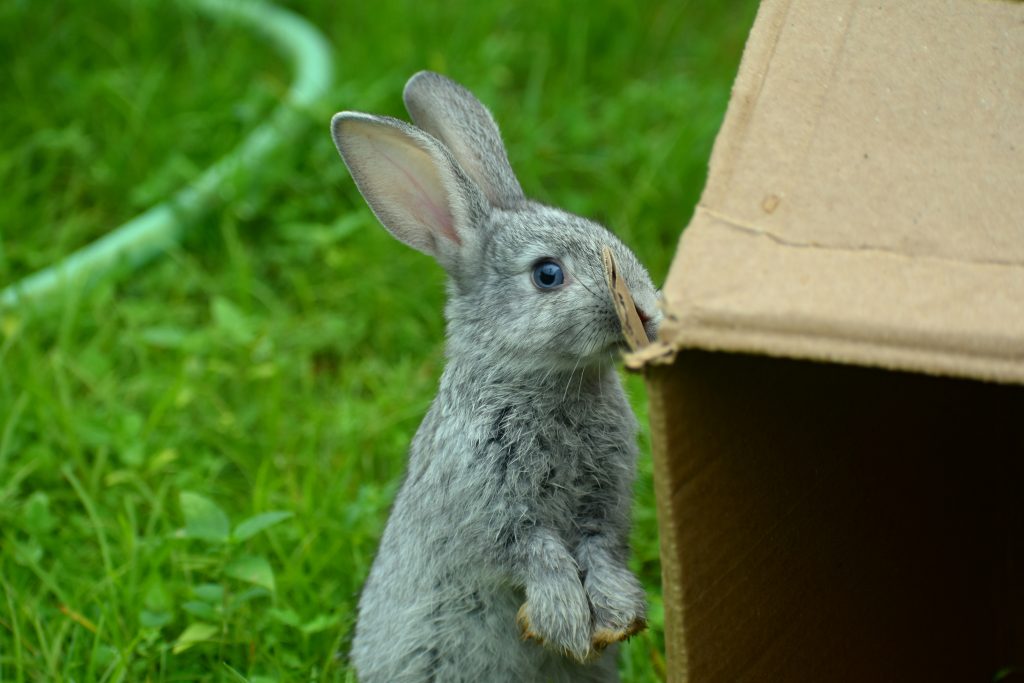
If it’s in their path, it’s getting marked. Everyday objects that rabbits frequently claim include food bowls, water dishes, hay racks, toys, furniture edges, rugs, blankets, carrier doors, and even electronic devices like phones and remotes. Rabbits often focus on objects they interact with regularly because those items are part of their daily routine.
New items introduce unfamiliar scent profiles. Rabbits often chin new things right away because unfamiliar scents are quickly turned into familiar ones through marking. This “rewrites” the smell and helps the rabbit integrate the object into its territory.
Table 2: Category Breakdown of Common Target Objects
| Object Category | Common Home Examples | Core Message to Other Animals | Why Immediate Marking Occurs |
| Resources & Foraging | Food bowls, hay racks, water bottles | “This food supply belongs within my safe zone.” | Overriding competing scent profiles of packaged feed or human touch. |
| Comfort & Sleep Zones | Fabric blankets, fabric tunnels, plush beds | “This is a secure resting area; sleep here without fear.” | High interaction rate dynamically strips away baseline scents. |
| Structural Borders | Doorways, floor baseboards, drywall corners | “You are now crossing the threshold into my core territory.” | High-traffic zones need clear physical signposts. |
| Foreign Commodities | Phone screens, human shoes, amazon boxes | “This item is newly evaluated and cleared as safe.” | New items carry confusing outside smells that require rewriting. |
4. Is Rabbit Chinning a Sign of Affection?
It’s easy to confuse a chin-rub with a kiss, but chinning is primarily a scent-marking behavior, not a pure emotional expression. That said, it frequently happens during calm, positive interactions and is often observed in trusting relationships. Rabbits may chin people or objects they feel safe around, but the behavior is still rooted in communication rather than affection alone.
Look for behavioral context clues: if your rabbit has a relaxed posture, sits nearby afterward, engages in grooming, and shows no signs of stress, you are in good standing. Understanding these signals via a comprehensive look at rabbit body language explained helps verify that chinning combined with relaxed behavior indicates the rabbit feels comfortable and secure in its environment.
5. Do Male or Female Rabbits Chin More?
Both sexes exhibit chinning behavior. Female rabbits and male rabbits both chin, though unneutered individuals of either sex may mark more frequently due to underlying hormonal drives.
The frequency varies more by hormones and individual personality than by gender alone. As noted by the People’s Dispensary for Sick Animals (PDSA), territorial marking often decreases in intensity after neutering or spaying, but the baseline habit of chinning remains a perfectly normal communication tool.
Table 3: Chinning Frequency and Behavioral Variations
| Rabbit Status / Profile | Typical Chinning Frequency | Primary Behavioral Trigger | Impact of Desexing Surgery |
| Intact Male (Buck) | Very High | Hormonal drive, direct territorial mapping | Reduces frequency and intensity significantly |
| Intact Female (Doe) | High | Nesting instincts, resource claiming | Lowers intensity, limits defensive marking |
| Spayed / Neutered (Any) | Moderate to Low | Environmental changes, social bonding, routine mapping | Becomes a stable, calm habit; baseline communication |
| Anxious / Stressed Rabbit | Frantic Burst Spikes | New environment, unfamiliar predators, loss of routine odors | Minimal impact; requires environmental stabilization |
6. Is Rabbit Chinning Normal Behavior?
Absolutely. Chinning is a completely normal rabbit behavior that is part of their natural communication and environmental mapping, occurring in both indoor and outdoor rabbits. It is normal for rabbits to chin objects regularly as part of their instinctive scent-marking system.
There is variation between individuals, some rabbits chin frequently throughout the day, while others do it only occasionally. Frequency simply depends on their personality, confidence levels, and environmental changes.
7. Why Is My Rabbit Suddenly Chinning Everything?
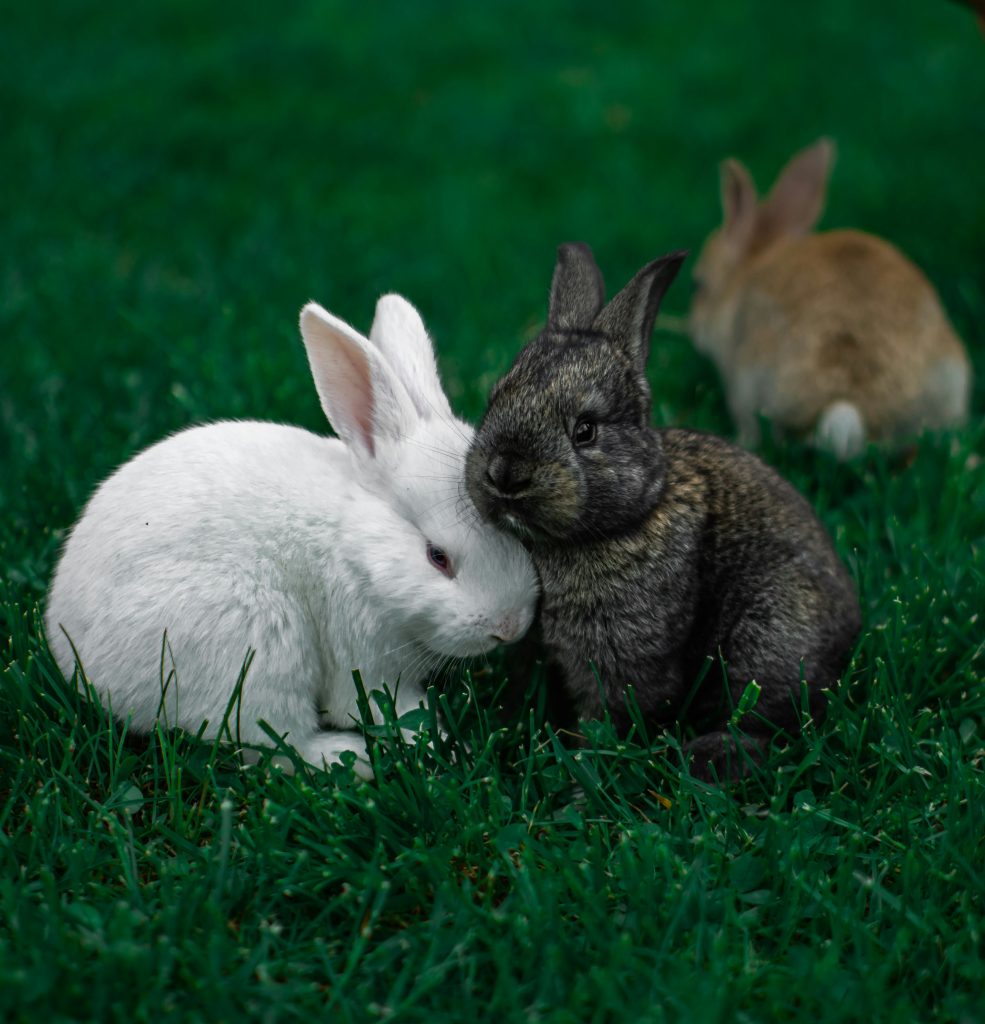
While baseline marking is expected, owners often worry when a bunny goes on a sudden, frantic rubbing spree across the entire household. If your rabbit suddenly shifts into overdrive, it is almost always an evolutionary reaction to a specific trigger.
Environmental shifts are the most common culprit. Moving to a new home, rearranging the furniture, or using new cleaning products will instantly disrupt your bunny’s map, causing them to increase chinning as they rush to re-establish familiar scent markers. You will see a similar reaction when introducing new animals or people into the household. This influx of unfamiliar scents heightens a rabbit’s territorial awareness, sparking an uptick in chinning to redefine social and environmental boundaries.
Age and mood also play massive roles. Hormonal shifts brought on by adolescence or sexual maturity can dramatically ramp up the urge to mark territory. On the flip side, a sudden increase can also stem from a simple boost in confidence. As a rabbit becomes entirely comfortable in its home and expands its exploration of the space, it will aggressively chin new areas simply because it finally feels secure enough to claim them.
Each of these scenarios fundamentally alters the structural balance of a rabbit’s space. When outside odors enter their safe haven, it alters the baseline scent profile of the home, forcing the rabbit to react quickly. This sudden burst of activity is an immediate physical coping mechanism designed to restore a comforting, recognizable scent to their living space.
8. Chinning vs Other Rabbit Behaviors
Because sudden shifts in chinning intensity often mirror other common lagomorph rituals, it is essential to accurately identify what your pet is actually doing. Misinterpreting a scent deposit for an entirely different communication method can lead to confusion about your bunny’s boundaries. It is helpful to separate chinning from other rabbit actions:
- Chinning vs spraying: Chinning is a dry scent-marking behavior, while spraying is a stronger territorial signal using urine.
- Chinning vs face rubbing: Face rubbing may just be general exploration or an itch. A rabbit is chinning when the underside of the chin makes direct contact with an object to deposit scent.
- Chinning vs biting: Chinning is entirely non-aggressive and serves as a calming method of spatial organization. In contrast, uncovering the true mechanics of why a rabbit bites reveals that nipping or lunging serves completely different purposes, typically pointing to direct physical defense, environmental fear, or demanding attention. The Rabbit Welfare Association & Fund (RWAF) emphasizes that chinning is completely harmless and should never be confused with actual aggressive or defensive behavior.
Recognizing these distinctions prevents owners from reacting negatively to harmless scent deposits. While behaviors like face rubbing are simply exploratory and biting requires careful boundary management, chinning sits in a completely different category. It should always be viewed as a non-confrontational, stabilizing habit that poses absolutely no physical threat to humans or property.
9. Should You Stop a Rabbit From Chinning?
Chinning is a natural instinct and usually should not be discouraged. It helps them understand their environment, and interfering with it can actually increase their stress. Most rabbits should be allowed to chin freely since it plays an important role in their natural communication system. Instead of stopping them, owners should provide consistent enrichment, maintain a stable environment, allow safe exploration, and clean regularly without over-sanitizing everything constantly.
10. When Chinning Might Signal Stress or Change
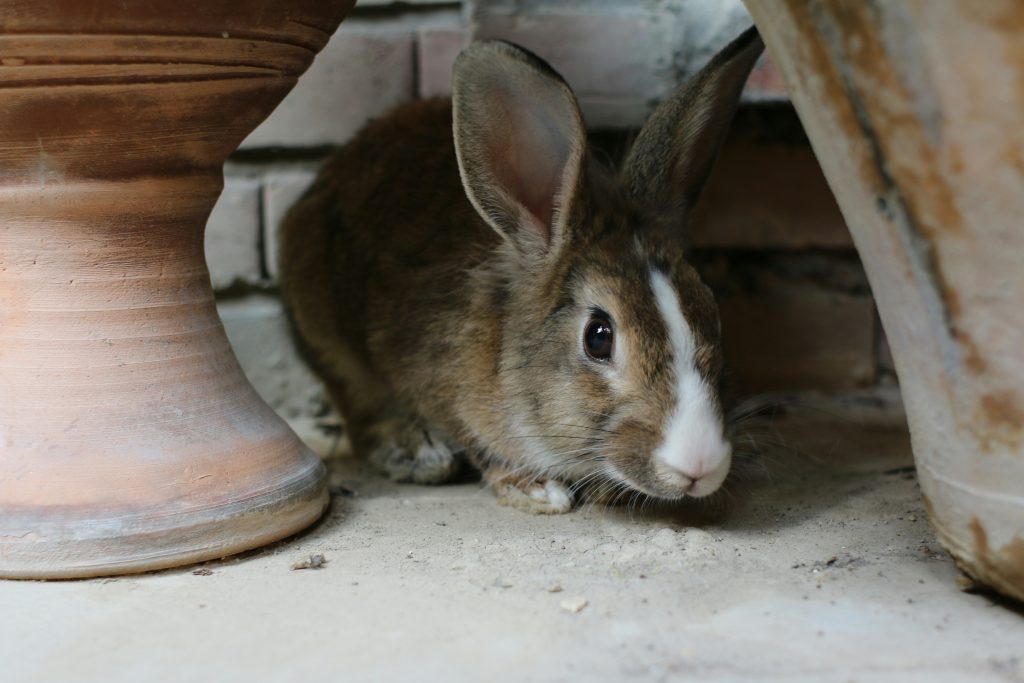
While harmless on its own, a sudden, frantic increase in marking behavior can be a red flag. Excessive chinning alone is rarely a problem, but it can sometimes reflect environmental stress or insecurity, especially after a major routine disruption. Watch for accompanying signs like loss of appetite, aggression, lunging, excessive hiding, or over-marking combined with urine spraying.
If multiple stress signals appear together, environmental or medical evaluation may be needed. If you observe these compounding signs, contacting a rabbit-savvy vet via the Association of Exotic Mammal Veterinarians (AEMV) is a wise next step.
Table 4: Distinguishing Healthy Behavior from Olfactory Stress
| Behavioral Metric | Safe, Baseline Communication | Stress-Driven Over-Marking |
| Chinning Motion | Slow, deliberate, relaxed body posture | Rapid, frantic, accompanied by rigid posturing |
| Co-occurring Habits | Flopping nearby, soft licking, binkying, grazing | Hiding, thumping, lunging, loss of appetite |
| Urine / Feces Use | Normal litter box habits maintained | Scatter-dropping or urine spraying alongside chinning |
| Primary Catalyst | Casual interaction with daily favorite items | Immediate reaction to dynamic environmental threats |
11. Frequently Asked Questions
Why does my rabbit chin me?
Rabbits chin people to mark them with scent, often because they are familiar and comfortable with them.
Why does my rabbit chin my shoes or feet?
Shoes and feet carry strong environmental scents from the outside world, making them common targets for marking and overriding with familiar odors.
Why does my rabbit chin new toys or objects?
New items are quickly marked so they become part of the rabbit’s familiar environment rather than an unknown intrusion.
Do rabbits chin other rabbits?
Yes, rabbits may chin each other as part of building social recognition and shared group familiarity.
Do neutered rabbits still chin things?
Yes, chinning remains a normal behavior even after neutering or spaying, just typically with less urgency.
Can humans smell rabbit chin scent?
No, the secretional compounds produced by these localized jaw glands remain entirely undetectable to our limited human senses.
12. Final Thoughts
Chinning is a core rabbit communication behavior intrinsically tied to scent marking. It helps them define their territory, recognize familiar objects, and feel secure in their home. The behavior is completely normal, harmless, and often misunderstood as a display of dominance or purely human-like affection.
Understanding why your rabbit chins objects—and observing how they do it—greatly improves your interpretation of their body language. For a deeper dive into decoding bunny body language, my rabbit behavior guide offers excellent supplementary context to round out your research.
Medical & Veterinary Disclaimer: Bunnyowners.com is an informational resource for rabbit owners and enthusiasts. We are not veterinarians. The content on this website is for educational purposes only and is not a substitute for professional veterinary advice, diagnosis, or treatment. Always consult a qualified veterinarian with any questions or concerns regarding your pet’s health, medical conditions, diet, or overall care. If you have concerns about your rabbit’s health, it’s always best to reach out to a veterinarian rather than relying solely on information found online.