
Disclaimer: The information provided on bunnyowners.com is for educational purposes only and does not constitute veterinary medical advice; always consult your vet before changing your rabbit’s diet. Additionally, this post contains affiliate links. As an Amazon Associate, and other affiliate advertising programs, I earn from qualifying purchases at no extra cost to you
If you are waiting for your rabbit to tell you how they feel with a bark or a meow, you are going to be waiting a very long time. Rabbits are the masters of the silent film; they communicate through a complex, high-speed series of physical cues that are often so subtle they go unnoticed by the untrained eye. In the wild, noise attracts predators, so rabbits have spent thousands of years perfecting a non-verbal “software” that allows them to signal everything from absolute terror to blissful contentment without making a sound.
How do you read rabbit body language?
You read rabbit body language by observing ears, posture, movement, and behavior together. Rabbits communicate emotions through combinations of signals, not single actions, so context and patterns are essential for accurate interpretation. To understand a rabbit, you must analyze their physical “silhouette” against their current environment—looking at how their ears, eyes, and tail interact as a single unit.
Understanding this silent language is the difference between a rabbit that tolerates your presence and a rabbit that views you as a trusted member of their social pack. To truly master the art of “lagomorph translation,” we have to look past the cuteness and audit the biological and neurological drivers that dictate why a rabbit moves the way they do. If you are ready to refine your field observations, I suggest you study my rabbit behavior resources to help decipher the complex motivations behind every subtle nose twitch and ear flick.
Why Rabbit Body Language Matters
In the world of a prey animal, showing weakness is a death sentence. Because of this, rabbits are biologically programmed to hide pain, illness, and fear until they can no longer physically mask it. By the time a rabbit “looks” sick to a human, the condition is often advanced.
The Biological Masking Phenomenon
Rabbits belong to a group of animals that utilize “masking” as a primary survival tactic. In a natural warren setting, an individual showing signs of lethargy or pain attracts predators to the entire group, compromising the safety of the colony.
The rabbit has evolved a “high-performance” facade. As noted by the UC Davis School of Veterinary Medicine, a rabbit might be experiencing significant dental pain or the early stages of GI stasis while still attempting to maintain a “normal” loaf posture. As a researcher, you must learn to see through this facade by identifying the “micro-signals” that break the mask, such as subtle orbital tightening or a decrease in the frequency of ear rotations.
Early Health Detection via Behavior
Learning to read their body language isn’t just about bonding; it is a clinical necessity for early health detection. Subtle shifts in how they carry their weight or the tension in their facial muscles are the first early-warning signs of life-threatening conditions.
According to AVMA behavioral guidelines, understanding these nuances is the primary way owners can advocate for their pet’s health. For instance, a rabbit shifting its weight from the front paws to the back while loafing may be attempting to alleviate abdominal pressure caused by gas.
Metabolic Costs of Communication
Every movement a rabbit makes has a metabolic price tag. In the wild, calories are hard to come by, and wasting energy on unnecessary displays can lead to starvation. Therefore, when a rabbit chooses to perform a high-energy move like a binky or a zoomie, it is a significant biological statement.
It indicates that their “energy budget” is in a massive surplus and their “security budget” is fully funded. Conversely, the “freeze” response is a low-energy survival state designed to make the rabbit indistinguishable from the background environment. It’s an efficient, albeit terrifying, way to stay alive.
The Vigilance-Performance Tradeoff
Rabbits are constantly balancing the need for rest with the need for vigilance. Their body language reflects this “Vigilance-Performance Tradeoff.” When a rabbit is in a domestic environment, their “safety audit” of the room never truly stops; it simply lowers in frequency. Reading their posture tells you exactly how much of their brain is dedicated to “guard duty” versus “metabolic recovery.”
The Vigilance vs. Relaxation Scale
| Behavior Stage | Focus Level | Biological State | Physical Indicator |
| Stage 1: Vigilant | 100% External | Sympathetic (Flight) | Pinned ears, wide eyes, “frozen” stance |
| Stage 2: Alert | 70% External | High-Idle Metabolism | Periscope, independent ear rotation |
| Stage 3: Relaxed | 30% External | Parasympathetic | Sphinx, soft ears, steady nose twitch |
| Stage 4: Safe | 0% External | Deep Sleep/Reward State | The Flop, the Binky, closed eyes |
The Core Rule: Reading Signals in Context
The biggest mistake new owners make is reading a rabbit in isolation. A rabbit with its ears pinned back in a dark corner means something entirely different than a rabbit with its ears pinned back while eating a piece of banana. To interpret behavior correctly, I use a three-part decoding framework.
1. Analyzing Body Signals (The Physical Audit)
This involves the literal audit of physical parts. What are the ears doing? Where is the tail? Are the whiskers swept forward or pulled tight against the cheeks? This is the “raw data” of rabbit communication. You are essentially looking for tension—where it is held and how it is released.
For example, a rabbit with forward ears but a tense, vibrating tail is showing “aggressive curiosity” rather than “friendly curiosity.” This stage requires the researcher to be objective; don’t interpret the emotion yet—just record the movement.
2. The Environmental Context (The Stimulus)
What just happened in the room? Context dictates the “translation.” If a door slams and the rabbit freezes, it is a fear response. If the rabbit freezes while staring at a new toy, it is an analytical response. Without context, body language is just noise.
You must always account for the “stimulus” before you judge the “response.” A binky on a rug is joy; a sudden jump on tile may simply be a loss of traction. We must also consider the “social context”—is there another rabbit nearby? Is the human holding a treat?
3. Historical Patterns and Baselines
Every rabbit has a “baseline” personality. Deviations from this baseline are the most important signals you will ever record. If a normally active rabbit becomes a “permanent loaf,” it is a red flag regardless of how “relaxed” the loaf looks. You must build a behavioral profile for your specific rabbit over weeks of observation to know what their “normal” looks like. This longitudinal data is the most valuable tool in your researcher’s toolkit for identifying chronic stress or hidden pain.
The Neurology of Rabbit Communication
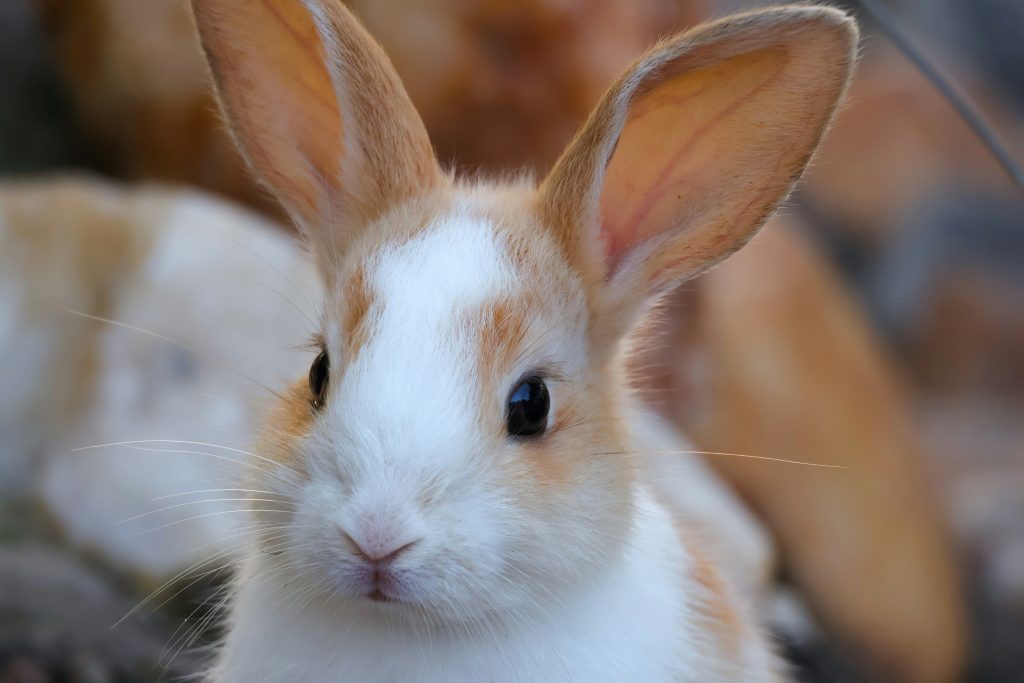
A rabbit’s nervous system is “high-idle.” They process visual and auditory information significantly faster than humans do. To understand their body language, you have to understand the “Amygdala Hijack” that occurs in prey animals.
The Thalamus-Amygdala Pathway
When a rabbit perceives a threat, the signal bypasses the “thinking” part of the brain and goes straight to the amygdala. This triggers an instantaneous physical shift. Research in Lagomorph Locomotion and Neurology highlights that their muscles are constantly primed for explosive movement via a highly developed sympathetic nervous system. Clinical studies on lagomorph stress responses further confirm that these neurological shifts are nearly instantaneous, dictating their “freeze-or-flee” body language.
Vagal Tone and Stress Recovery
The speed at which a rabbit returns to a parasympathetic state after a scare—known as their “vagal tone”—is a primary indicator of their overall mental health. A rabbit with poor vagal tone may remain in a “Sphinx” or “Frozen” state for hours after a loud noise, whereas a resilient rabbit will begin grooming or eating within minutes. Observing this recovery period is essential for auditing the stress levels of your rabbit’s environment.
Sensory Input: The Optic and Olfactory Drivers
A rabbit’s body language is a direct reaction to their sensory input. Because they have nearly 360-degree vision, their “staring” is actually a multi-angled scan of the room. When they turn their head to the side, they aren’t just looking at you; they are centering their high-resolution lateral vision on you. Furthermore, their olfactory bulb is massive; a rabbit “twitching” its nose is physically pulling air over millions of sensory receptors. This sensory “overload” means their body is constantly reacting to stimuli humans cannot even perceive.
Decoding Ear Positions
A rabbit’s ears are their emotional radar system. Controlled by over 20 muscles, they can move independently of one another, allowing the rabbit to monitor a threat behind them while focusing on a food source in front. For a deeper breakdown of tracking subtle auditory postures, see my detailed guide on rabbit ear positions explained.
Ears Forward and Alert
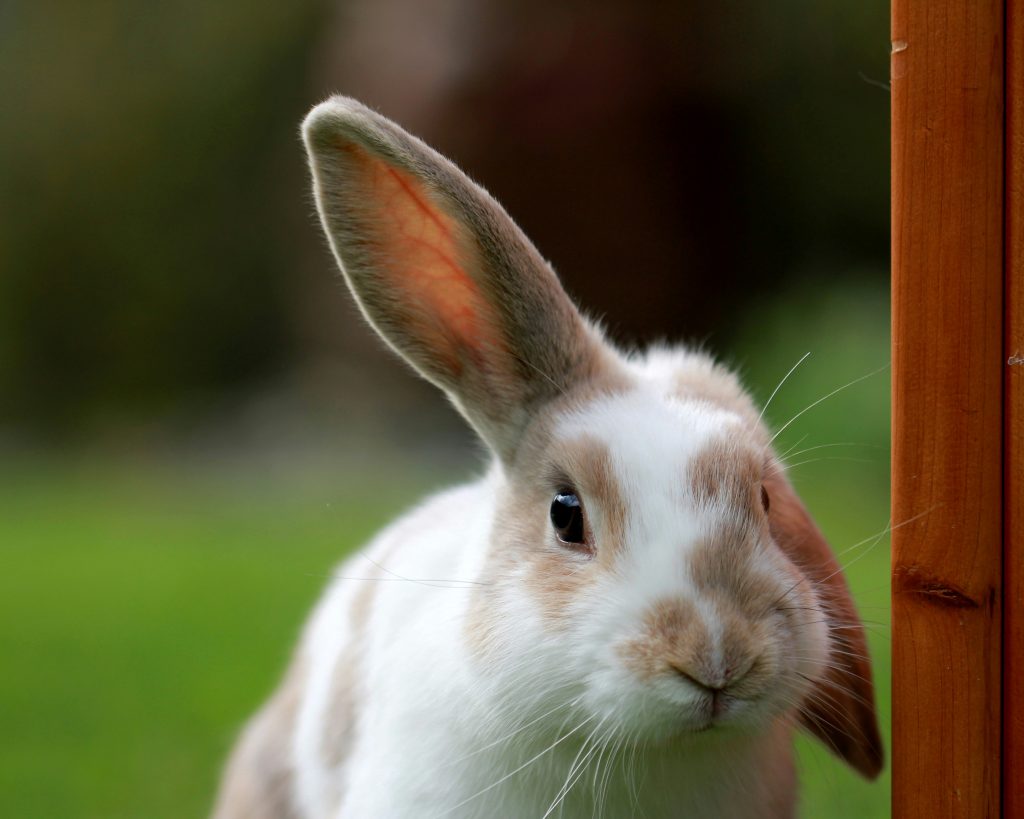
When both ears are tilted forward and slightly outward, the rabbit is alert and curious. They are gathering information. In this state, the rabbit is typically standing on all four paws or in a “periscope” position (standing on hind legs). This indicates that the rabbit’s brain is in “Active Analysis” mode. They are literally “pointing” their auditory hardware at the source of the stimulus to triangulate its position.
Ears Pinned Back: The Critical Distinction
This is the most misunderstood signal in the rabbit world.
- The Defensive Pin: Ears are flat against the back, body is crouched low, and eyes are wide. The rabbit is terrified and trying to hide.
- The Aggressive Pin: Ears are pinned, but the rabbit is leaning forward, tail is raised, and the nose is vibrating. The rabbit is about to lunge or box.
- The Restful Pin: Ears are back, but the body is soft, the eyes are half-closed, and there is no muscle tension in the face. The rabbit is simply napping and has lowered its “antennas” to save energy.
One Up, One Down (The Scanner)
This is the “scanning” position. It indicates relaxed curiosity. The rabbit is comfortable enough to keep one ear at rest (usually the one facing the “safe” zone) but remains aware of their surroundings with the other ear. This represents a “low-idle” vigilance state.
Ear Position Logic Audit
| Ear Position | Meaning | Body Language Pair | Intensity |
| Both Up/Forward | High Interest | Rapid Nose Twitch | High |
| Both Back/Flat | Fear or Sleep | Tense vs. Soft Muscles | Variable |
| One Up/One Down | Multi-tasking | Relaxed Loaf | Low |
| Rotating/Twitching | Audio Processing | Frozen Stance | High |
Posture and Body Position Indicators
A rabbit’s silhouette tells you their baseline emotional state. Because they are low to the ground, changes in how they distribute their weight are critical indicators of comfort or pain.
The Loaf (The Baseline)
In the loaf position, the rabbit tucks their paws under their chest. This indicates a “medium” level of relaxation. They feel safe enough to tuck their limbs away, but they aren’t in a deep sleep. Their weight is still balanced enough to allow for a quick “bolt” if necessary.
The Sphinx (Alert Resting)
Similar to the loaf, but the front paws are extended forward. This is “alert resting.” The rabbit is comfortable but remains in a “ready-to-launch” configuration. This is common in new environments where the rabbit wants to rest but doesn’t yet trust the “zero-threat” status of the room. It allows them to transition from rest to sprint without the millisecond delay of untucking their paws.
The Flop (The Ultimate Trust)
The flop is a dramatic movement where a rabbit throws themselves onto their side, often with a soft thud. For a prey animal to expose their belly and chest in this way is the ultimate sign of trust. According to the RSPCA, a flopping rabbit feels 100% secure. When a rabbit flops, they are essentially telling the environment: “I am so safe here that I can afford to be completely immobile.”
The Hunched “Pain” Position
This is a critical health signal. A rabbit sitting on all four paws with a curved back, head tucked in, and squinted eyes is likely in pain. Unlike the loaf, where the rabbit looks “soft,” the hunched rabbit looks “jagged.” You may also notice the rabbit “pressing” their belly into the floor to alleviate gas pain, or shifting frequently as they struggle to find a comfortable position. If you see this pattern paired with heavy tooth clicking, jump immediately to my profile on rabbit grinding teeth signals to evaluate if medical triage is required.
Action-Based Movement Signals
Action-based communication is where rabbits discharge metabolic energy or warn the group of danger. These are high-energy signals that require significant caloric expenditure.
Binkying: The Joy Explosion
A binky is a jump-twist that signals peak joy. If a rabbit is binkying, they are signaling that the environment is “zero-threat.” It is a radical act of vulnerability because a rabbit in mid-air cannot defend itself or change direction quickly. A binky is a discharge of “joyous” kinetic energy that cannot be contained by stillness. If you wish to research this phenomenon further, read over my complete breakdown on why do rabbits binky.
Zoomies and the Victory Lap
Zoomies are high-speed laps around the room. These are indicators of high cardiovascular health and a calorie surplus. Zoomies are often used to survey a large area quickly, ensuring that the “perimeter” remains safe. The “Victory Lap” is a specific pattern where the rabbit circles a human or another rabbit, signaling social inclusion and excitement.
Thumping: The Physics of the Alarm
Thumping is a loud strike of the hind legs against the floor. It is a biological alarm system intended to warn the “warren” of a predator. As explained by Frontiers, the sound travels through the ground, reaching rabbits in burrows who may not be able to see or hear the threat themselves. In a domestic setting, a rabbit may thump if they are annoyed with you or startled by a strange noise. Explore my comprehensive why do rabbits thump decoding guide to categorize their environmental triggers.
Facial Expressions and the Rabbit Grimace Scale

Recent veterinary research has led to the development of the Rabbit Grimace Scale (RGS). This is a clinical tool used to assess pain through facial muscle tension.
Nose Twitching RPMs
A rabbit’s nose rarely stops. A fast twitch indicates high arousal (excitement or stress). A slow, rhythmic twitch indicates a calm baseline. If the nose stops entirely while the rabbit is awake, it is a “freeze” response—a sign of extreme terror. The “speed” of the nose is your best real-time indicator of the rabbit’s heart rate.
Whisker Position and Tension
Curious rabbits have whiskers (vibrissae) that are fanned out and swept slightly forward. A stressed or pained rabbit will pull their whiskers flat against their cheeks, giving the face a “pinched” appearance. This is one of the most reliable indicators of internal distress. Whiskers are highly sensitive tactile organs; when they are pulled back, the rabbit is effectively “shutting down” their external sensory inputs to focus on internal pain.
The Biology of Orbital Tightening
In the RGS, orbital tightening refers to how much a rabbit is squinting. A pained rabbit will have a “tight” eye socket, whereas a relaxed rabbit has a round, open eye. This squinting is an involuntary muscle contraction triggered by the nervous system’s reaction to pain. Detailed studies by the National Centre for the 3Rs (NC3Rs) provide quantitative values for these facial shifts as diagnostic markers. By translating these subtle biological cues, we can essentially read their minds before their health visibly deteriorates.
The Rabbit Grimace Scale (RGS) Values
| Facial Feature | Relaxed (Score 0) | Moderate Pain (Score 1) | Severe Pain (Score 2) |
| Orbital Tightening | Wide & Round | Partly Closed | Squinted/Shut |
| Cheek Tension | Rounded/Full | Slightly Tense | Flat/Sunken |
| Nostril Shape | U-Shaped | Slightly Compressed | V-Shaped/Tight |
| Whiskers | Relaxed/Forward | Slightly Back | Flat against face |
| Ear Tension | Soft/Pliable | Slightly Rigid | Stiff/Pinned |
Tail Position Meanings
The tail is often the most overlooked part of rabbit communication. Because it is small and often tucked, you must pay close attention to its angle and movement to catch the “subtitles” of the conversation.
The Raised Tail and High Arousal
A tail that is lifted away from the body indicates high arousal. This can be “happy” arousal (during courtship or anticipation of food) or “aggressive” arousal (before a lunge). If the tail is wagging while raised, the rabbit is typically expressing defiance or deep frustration.
The Relaxed and Tucked Tail
A tail that follows the natural curve of the rump indicates a rabbit at peace. If the tail is so tucked it is almost invisible, the rabbit is likely trying to appear as small as possible (fear).
The Tail Flick (Social Displeasure)
As a rabbit hops away, they may flick their tail side-to-side. This is the rabbit equivalent of an “eye roll” or a “whatever.” It signals that they are annoyed with the current interaction (e.g., being picked up or told to go into their enclosure).
Vocalizations: The Unspoken Sounds
Rabbits aren’t completely mute. They have a small vocabulary of sounds that act as an extension of their body language. Understanding the “audio” of rabbit behavior is essential for a full interpretation of their emotional state.
Tooth Purring: Bone-Conducted Joy
Tooth purring is not a vocalization in the traditional sense; it is a mechanical vibration of the teeth that travels through the rabbit’s skull. It is a sign of deep parasympathetic activation. Interestingly, this sound is often used as a “social contagion” signal—if one rabbit in a pair purrs, the other often follows, effectively auditing and confirming the safety of the room for one another.
The Mechanics of the Loud Grind
Loud grinding is the clinical opposite of the purr. It is a slow, heavy crunching that indicates the rabbit is attempting to “process” acute physical pain. While purring is rapid and light, grinding is labored. If you see a rabbit grinding their teeth while in a hunched posture, their “masking” software has failed, and they are in significant distress.
Honking and Low-Frequency Oinks
A honk is a high-arousal sound usually associated with courtship or extreme excitement. In domestic rabbits, this is most common when food is being prepared. It is often paired with “circling” behavior. These low-frequency sounds are designed to be heard by social partners without carrying far enough to alert distant predators. If your bunny combines these sounds with localized vocal warning snaps, check out my report on 8 reasons for rabbit grunting to rule out territorial defensiveness.
Summary of Rabbit Vocalizations
| Sound | Biological Context | Emotional State |
| Soft Purr | Low-Idle / Resting | Deep Contentment |
| Loud Grind | Pain / Stress | Acute Physical Distress |
| Grunt | Territorial Defense | Aggression/Warning |
| Honk | High-Arousal Play | Excitement/Courtship |
| Scream | Fatal Threat | Absolute Terror/Pain |
Scent Marking and Olfactory Language
Rabbits “talk” through scent just as much as they do through movement. Their world is defined by who owns what and where the boundaries of the “safe zone” lie.
Chinning: The Invisible Boundary
Rabbits have submandibular scent glands under their chins. When they rub their chin on a chair, a toy, or your foot, they are depositing pheromones that mark the object as “safe” and “theirs.” This is a physical act of claiming territory and is a sign of a rabbit that feels confident and dominant in its space. For a deeper analysis of this scent behavior, see my detailed article on rabbit chinning explained.
Territorial Marking and “Scattered” Droppings
Rabbits use their droppings to mark territory. If you see a “scatter” of droppings in a new area, the rabbit is “claiming” that spot. This is different from a failure in litter training; it is a deliberate communication of ownership. They are “tagging” the new space with their olfactory ID to make it feel like home and to warn other potential rabbits that the space is occupied. If this behavior suddenly scales out of hand, look through my optimization troubleshooting guide on why is my rabbit pooping everywhere.
Inguinal Glands and Social ID
Rabbits possess inguinal glands near their tail. These glands produce a strong scent that is unique to the individual. When rabbits sniff each other’s rear ends, they are performing a “security check”—verifying the identity and health status of the other rabbit. If a rabbit is frequently grooming this area or “scooting” on the floor, it may be a behavioral signal that the glands are clogged and need clinical attention.
Social Dynamics and Hierarchy
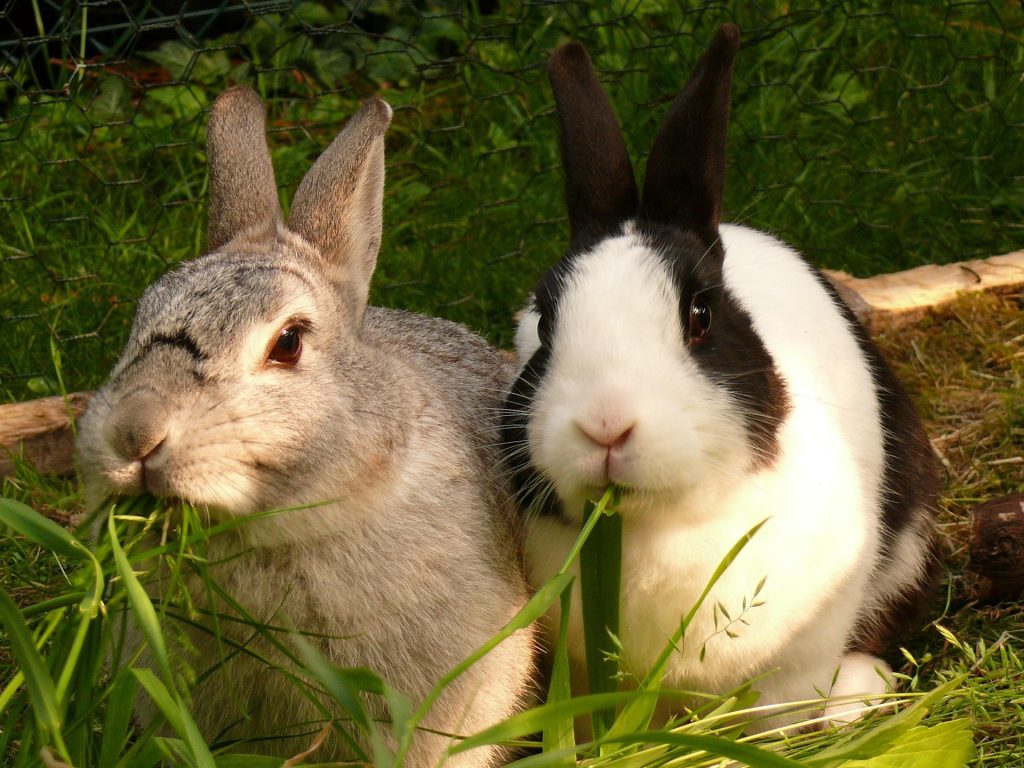
In rabbit society, everything is about who is in charge. Their body language during interactions is a constant negotiation of power and rank.
The Grooming Hierarchy (Superiority)
In the rabbit world, the “superior” rabbit gets groomed by the “subordinate.” If a rabbit hops up to you and lowers its head to the floor, it is demanding that you pet it. They are asserting their dominance. According to The Royal Veterinary College (RVC), understanding these ranks is key to successful bonding and herd stability.
Allo-grooming and Social Glue
When two rabbits lick each other, it is called allo-grooming. This is the ultimate “social glue.” It lowers cortisol levels in both rabbits and reinforces the bond. It is a reciprocal act that signals: “We are a pack, and we are safe together.” If your pet shifts this dynamic onto you, explore my targeted guide on why does my rabbit lick me to decode the specific social boundaries they are drawing.
The “Third Rabbit” Phenomenon
When a third rabbit is introduced to a bonded pair, the body language becomes significantly more “loud” and complex. This is often referred to as “triangulation.” You will see an increase in mounting, chasing, and “blocking” (where one rabbit physically stands between the other two). This is the social software attempting to recalibrate a hierarchy that was previously stable.
Situational Body Language
Contextual awareness is key during specific events. How a rabbit moves depends on the “stakes” of the situation and the perceived threat level of the environment.
At the Vet: The “Trance” Response
Tonic Immobility (TI), or “trancing,” is a state where a rabbit becomes paralyzed when flipped on its back. While they look “relaxed,” their heart rate and cortisol levels spike. This is a last-ditch fear response intended to make a predator lose interest in “dead” prey. As a responsible owner, you should never intentionally trance a rabbit, as it is a state of extreme neurological terror.
The Periscope: Scouting the Area
When a rabbit stands on its hind legs, they are in “Periscope Mode.” They are attempting to get a higher vantage point to assess a sound or movement. This is a sign of a curious but cautious rabbit. It indicates that their sensory hardware has detected a signal, but their brain has not yet classified it as a threat.
Identifying Assertive Personality Traits
Temperament dictates how a rabbit expresses their language. An assertive rabbit will use much broader, louder physical cues than a shy one. They are “loud” communicators who leave little room for ambiguity.
For example, when observing my pet rabbit Mocha, her body language is often “heavy.” After I clean her space, she doesn’t just hop; she performs loud, forceful binkies and aggressive chinning on every corner. She is a high-arousal communicator, meaning her signals of joy and her signals of annoyance are both impossible to miss.
If I am late with her greens, she doesn’t just nudge; she will “box” the air or lunge at the bowl. She has a way of “thumping” that feels less like an alarm and more like a demand for a manager. Understanding an assertive personality like hers requires looking for these “dominance” cues, which are her primary way of interacting with her environment and asserting her rank as the lead researcher of the living room.
Diagnostic Groupings: What Emotion Looks Like
Reading a rabbit is about grouping the signals we’ve discussed into a cohesive “mood profile.” You cannot rely on a single body part; you must audit the entire silhouette.
Emotional State Diagnostic Profile
| Emotional State | Ears | Body Posture | Movement |
| Pure Joy | Relaxed/Back | Flop or Binky | Zoomies |
| Alert/Curious | Forward/Twitching | Periscope or Sphinx | Slow, cautious hop |
| Fear/Anxiety | Pinned or Wide | Tense “Statue” | Thumping/Bolting |
| Pain/Illness | Pinned/Tense | Hunched/Jagged | Lethargy/No movement |
| Aggression | Pinned/Forward | Lunging/Boxing | Tail raised/Growling |
Environment and Behavioral Expression
The environment is the “stage” for the language. If the environment is unsafe, the language will be suppressed. A rabbit’s behavior is as much a reflection of their surroundings as it is their personality.
The Psychological Requirement of Traction
A rabbit on a slippery floor will never show you the “Flop” or the “Binky.” Their survival brain is focused entirely on the lack of traction. Without the ability to “bolt” safely, their nervous system remains in a state of low-level stress. As noted in clinical research on Rabbit Pododermatitis and Housing, traction is a psychological requirement for a rabbit to feel safe enough to communicate joy.
Urban Living: The “Apartment Effect”
Urban rabbits face unique behavioral challenges. In high-density living, artificial light cycles can disrupt their crepuscular rhythms, leading to “midnight binkies” that feel frantic rather than joyous. The British Rabbit Council emphasizes that hardwood floors and high-ceiling echoes can distort their audio-audits of the room.
An urban rabbit might remain in a “Vigilant” state for significantly longer than a rabbit in a carpeted, low-noise environment. Adding rugs and soft “sound-mufflers” like cardboard boxes is essential for auditing and improving their psychological state. If you need to map out these specific sleep disruptions, check my detailed what do rabbits do at night behavior guide.
Reading Subtle and Shy Personalities
On the opposite end of the spectrum are the “quiet” rabbits who communicate in whispers rather than shouts. These rabbits require a much more observant owner to truly understand.
My other pet rabbit, Chino, represents this more submissive, cautious personality. While Mocha is loud, Chino’s signals are micro-movements. He rarely binkies vertically; instead, he expresses joy through tiny “head flicks” or a subtle softening of his gaze while loafing. To read a rabbit like Chino, you have to be a diligent researcher, looking for the absence of tension rather than the presence of a dramatic jump.
He won’t stomp for treats; he’ll just stare at you with slightly wider eyes. His “loaf” is more tucked, and his trust is earned through months of quiet “floor time” rather than food bribes. If he is annoyed, he won’t grunt; he will simply retreat to a corner and turn his back—the subtle “Bunny Butt” of disapproval.
How to Build Trust Using Body Language

To bond with a rabbit, you must “speak” their language by mirroring their non-threatening behaviors. You must actively signal that you are “zero-threat.”
The Power of “Low and Slow”
Towering over a rabbit makes you look like a predator. By sitting or lying on the floor, you reduce your “threat profile.” Move slowly and avoid reaching over their head, which mimics the strike of a hawk. It’s about being boring. The more boring you are, the safer you feel.
Mirroring Calmness and Flooring Time
If your rabbit is loafing, sit quietly nearby and engage in a low-arousal activity like reading. This signals that you are also in a “zero-threat” state. According to the Merck Veterinary Manual, reducing environmental stressors is the first step in building a bond. By mirroring their stillness, you are validating their assessment that the room is safe.
Master Behavior Reference Chart
Master Behavior Reference Chart
| Signal | Meaning | Action to Take |
| Binky | Peak Joy/Safety | Continue enrichment |
| Thump | Alarm/Fear | Identify the stressor |
| Hunched | Physical Pain | Veterinary Audit |
| Chinning | Claiming Territory | Respect the marking |
| Flop | Absolute Trust | Stay quiet/Observe |
| Lunging | Back Off/Anger | Give the rabbit space |
| Screaming | Extreme Terror | Emergency Vet Visit |
| Nudging | Demand for Attention | Interact/Pet them |
Frequently Asked Questions
Why does my rabbit stare at me?
Rabbits have a wide field of vision. They stare to assess your movements and determine if you are a source of food or a potential threat.
What does it mean when a rabbit nudges you?
A nudge is a “move it” or “pet me” command. They are physically interacting with you to direct your attention.
Why does my rabbit gently bite my clothes?
This is often a grooming behavior. They are trying to “fix” your fur (your clothes) because they view you as part of their social group.
Conclusion: The Final Audit
Reading rabbit body language is a skill that requires patience, observation, and a “researcher” mindset. If you look at your rabbit and see a “loaf,” look deeper—check the nose speed, the ear angle, and the tension in the whiskers. When you successfully decode these signals, you move past being a mere owner and become a true companion. For more specific enrichment strategies to help your rabbit feel safe enough to communicate, I recommend reviewing my Definitive Guide to Rabbit Behavior.
Medical & Veterinary Disclaimer: bunnyowners.com is an informational resource for rabbit owners and enthusiasts. We are not veterinarians. The content on this website is not a substitute for professional veterinary care, diagnosis, or treatment. Always seek the advice of your veterinarian with any questions you may have regarding your pet’s medical condition, diet, or overall health.