
Veterinary & Affiliate Disclaimer: Bunnyowners.com shares educational rabbit care resources, not professional veterinary advice. Always consult a qualified veterinarian regarding your rabbit’s medical, dietary, or behavioral needs. This post may also contain affiliate links; as an Amazon Associate and affiliate partner, we earn from qualifying purchases at zero extra cost to you.
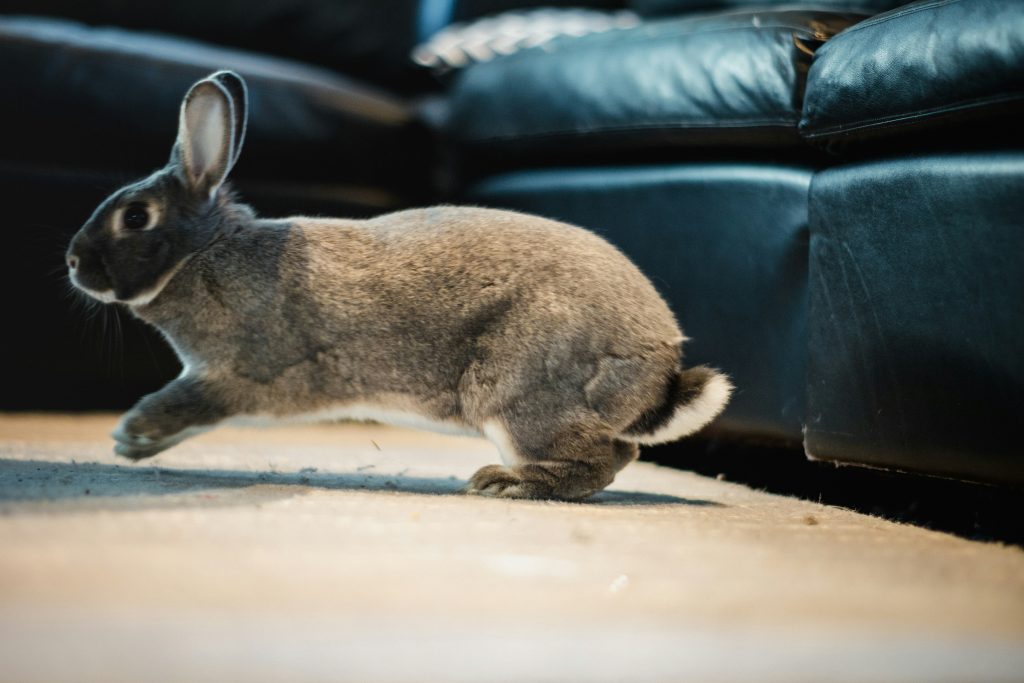
When a rabbit suddenly takes off after your ankles, it can be both adorable and confusing. Many owners wonder whether their rabbit is playing, asking for attention, or trying to tell them to move. The answer depends on your rabbit’s body language, timing, and the situation surrounding the chase.
Many house rabbits chase their owners out of excitement, habitual routine, or a shameless demand for snacks and head scratches. In unneutered or possessive bunnies, the behavior can also be driven by hormonal courting urges or a desire to defend their personal territory. You can quickly tell a friendly game of tag from an aggressive charge by looking for a loose, bouncy posture rather than pinned ears, grunting, or lunging.
Figuring out what triggers these sudden sprints makes it much easier to respond the right way and build a better bond with your bunny. What feels like random behavior at first usually comes down to simple communication. Exploring broader rabbit behavior helps put these moments into perspective, so let’s break down the eight most common reasons your rabbit is hot on your heels.
2. Understanding Why Your Rabbit Chases You
At its core, a chasing rabbit is simply communicating. Because rabbits rely far less on vocalizations than dogs and cats, they express themselves through movement, routines, and physical cues. Understanding the fundamentals of rabbit body language gives you a clear baseline for reading what your pet is trying to say.
Every rabbit develops unique communication patterns. For example, my bonded pair, Mocha and Chino, often show this type of anticipation during morning turnout, when they recognize the routine and follow me closely before breakfast.
A chase may mean your rabbit is excited to see you, expecting food, requesting attention, trying to play, or telling you that something in their environment needs your attention. The meaning behind the chase depends on what happens before, during, and after the behavior.
Common triggers behind rabbit chasing include:
- Positive interactions such as greetings and play
- Daily routines involving food or attention
- Requests related to their environment
- Hormonal or territorial behaviors
- Learned behaviors that receive a response
Watching these visual clues as your rabbit moves will tell you right away whether they want a treat, a game of tag, or some space. For a complete breakdown of posture shifts, ear signals, and vocalizations, check out my definitive guide to rabbit behavior.
3. Is It Normal for Rabbits to Chase Their Owners?
Yes, chasing is a completely normal behavior for domestic rabbits. While wild rabbits generally reserve fast running for escaping predators or defending territory, house rabbits adapt their behaviors to fit human households.
Rabbits are excellent at learning routines. They quickly associate specific caregivers, sounds, and daily patterns with food, attention, and movement around their territory. Over time, these daily interactions build strong visual and routine-based associations with primary caregivers.
Chasing often develops only after a rabbit feels entirely secure in their environment. A fearful rabbit will run away and hide; a rabbit that chases is actively choosing to engage with you. Whether that engagement is motivated by affection or a demand for space depends entirely on the context.
A rabbit that repeatedly chooses to follow, chase, or interact with you is often showing that they feel comfortable and socially connected. Unlike dogs, rabbits do not always show attachment through obvious excitement; their trust is often revealed through small repeated behaviors.
Why Pet Rabbits Learn to Chase People
Because rabbits quickly learn routines, chasing often becomes connected to predictable events like meals, greetings, or play. Over time, curiosity and established trust transform a simple approach into an energetic chase.
Chasing often happens during predictable routines, such as mealtimes, when you enter a room, or when your rabbit is following you closely during free-roam sessions. The timing of the behavior usually provides the biggest clue about what your rabbit is trying to communicate.
4. How to Tell What Your Rabbit’s Chasing Means
To figure out why your rabbit is pursuing you, look at the whole picture. Body posture, ear position, vocalizations, and the situation surrounding the chase reveal whether your rabbit is excited, playful, or defensive. A sudden change from normal chasing to lunging, biting, or defensive behavior may indicate a different problem, and understanding rabbit aggression can help you isolate environmental or health triggers.
The table below outlines the key visual signs to help you determine whether your rabbit is pursuing you out of excitement, curiosity, or frustration:
Playful vs. Aggressive Chasing
| Feature | Friendly Chasing | Defensive Chasing |
|---|---|---|
| Body Posture | Relaxed, fluid, bouncy | Rigid, tense, low or lunging |
| Ear Position | Upright or angled forward | Pinned back flat against the spine |
| Vocal Sound | Silent or soft honking | Low grunting or growling |
| Stopping Behavior | Pauses easily when you stop; may nudge your ankle | Continues pushing or charging |
| Physical Contact | Soft nose nudges | Sharp nipping or biting |
| Primary Goal | Connection, food, or play | Defense, space, or driving you away |
5. The 8 Main Reasons Your Rabbit Is Chasing You
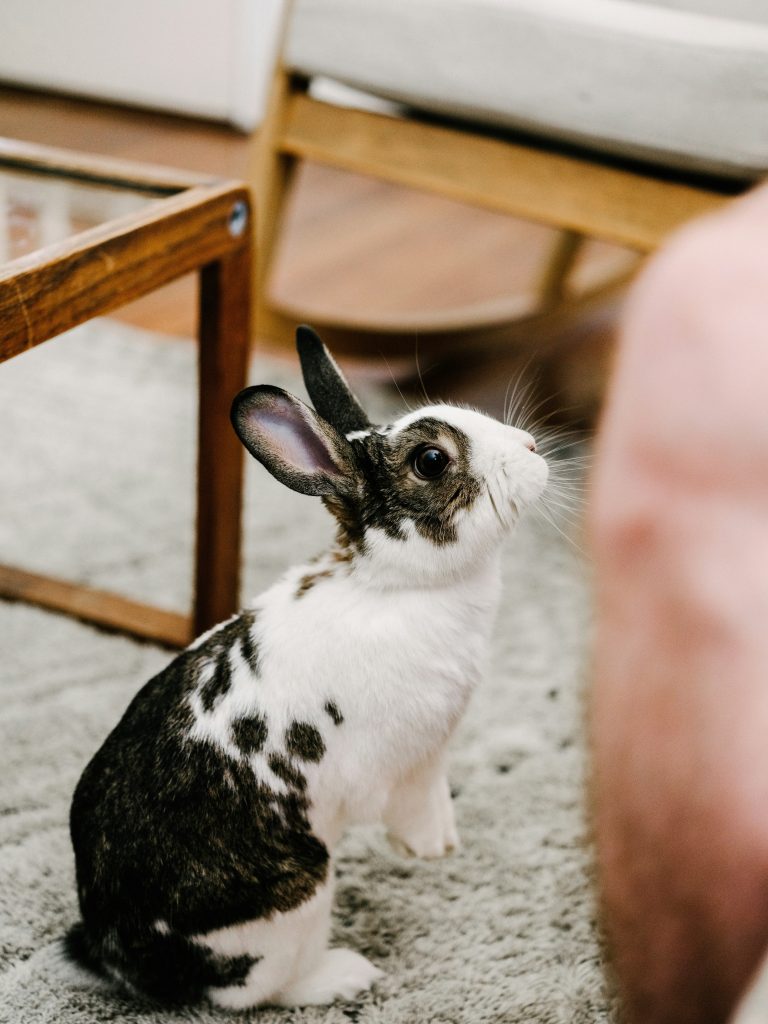
Once you have evaluated your rabbit’s body language and the context of the interaction, you can pinpoint the exact motivation behind their behavior. Here are the eight most common reasons rabbits chase their owners:
1. They Anticipate Food or Treats
Rabbits are extremely food-motivated and operate on precise internal clocks. Many owners first notice this behavior when they walk into the room carrying breakfast—the rabbit that normally ignores them suddenly becomes their shadow.
Rabbits quickly connect specific visual cues with meals—hearing a bag crinkle, seeing you walk toward the refrigerator, or watching you grab a ceramic dish can trigger an energetic pursuit.
- Signs This Is Food-Related: The chase happens near mealtimes or in the kitchen, and stops immediately once food is served.
- What to Do: Keep a consistent feeding schedule and avoid giving high-value treats during an intense chase so you don’t accidentally reinforce demanding behavior.
2. They Are Excited to Greet You
When a rabbit feels safe and well-bonded with their owner, they often express excitement simply by being near you. A rabbit running to meet you as you walk into the room is usually showing trust and social interest. Research on pet rabbit behavior published in the Journal of Veterinary Behavior has found that rabbits can display human-directed social behaviors and form meaningful interactions with their caregivers.
How to Recognize a Greeting Chase: The rabbit hops out from a resting spot as soon as you enter, shows relaxed body language, and gives a soft nose-nudge when they reach your feet.
What to Do: Enjoy the moment! Respond with calm praise or a quick head scratch to reinforce your bond.
3. They Are Demanding Attention
Rabbits are highly social animals. If you are walking around the room distracted, your rabbit may chase your feet to signal that it is time for a head scratch.
Through simple operant conditioning, rabbits learn that running after your ankles causes you to stop, look down, and talk to them or pet them.
- When Attention Is the Motivation: They nudge your ankles, circle your feet once you stop, or stand on their hind legs reaching toward your hands.
- What to Do: If you want to curb this habit, ignore the pursuit, step away, and offer petting only when all four paws are resting calmly on the floor.
4. They Are Trying to Interact With You
Chasing can be a vibrant display of energy and joy, common in young rabbits and active breeds. Interactive pursuit often looks like a lighthearted game of tag—the rabbit hops briskly behind you, pauses when you turn around, and dashes off in another direction. As the PDSA points out, rabbits naturally thrive when given plenty of indoor space for energetic movement, exercise, and social play.
- Signs of Social Play: Look for loose, fluid movements, short energetic hops, and a completely silent chase free of grunting or sharp nips.
- What to Do: Engage by walking slowly or sitting on the floor with interactive toys. Avoid sudden movements toward them so you don’t trigger a fear reaction.
5. They Want You to Move or Change Something
Rabbits have a strong sense of personal space and daily priorities. In rabbit social dynamics, a rabbit will use a mild chase or nudge to communicate an immediate request. They might be asking you to move out of their direct path, open a closed doorway, refill an empty hay rack, or step away from their favorite resting spot.
- Communication Clues: The chase occurs when you are blocking access to their litter box or hiding area, or when you are near their food storage.
- What to Do: Pay attention to where the chase leads. Taking a step aside or resolving the bottleneck respects their spatial needs.
6. Hormonal Drives Are Triggering the Behavior
Intact (unneutered or unspayed) rabbits experience strong hormonal drives starting around 4 to 6 months of age. This often brings a wave of intense, frantic chasing, circling behavior, and courting behavior aimed at their owners.
Hormonal chasing is often accompanied by spraying urine or attempting to mount feet and legs. The RSPCA notes that altered rabbits lead calmer, healthier lives with significantly reduced territorial stress.
- How to Tell Hormones Are Involved: You will observe obsessive following that is difficult to distract, often accompanied by soft honking sounds. Hormonal rabbits may also display related courting behaviors alongside persistent pursuit.
- What to Do: Spaying or neutering often reduces hormone-driven behaviors such as persistent chasing, mounting, and territorial behavior.
7. They Are Defending Their Territory
Territorial chasing is rooted in a rabbit’s natural drive to protect their home base from perceived intruders. While house rabbits usually view humans as companions, they can still become possessive over specific areas of the house. According to the House Rabbit Society, environmental triggers like reaching into a rabbit’s primary pen or cleaning their cage while they are inside often provoke territorial responses like lunging and defensive chasing.
Observing long-term behavioral habits reveals that rabbits form clear boundaries around their main living quarters. Rabbit territorial behavior can appear in several ways, including lunging, biting, guarding their enclosure, or chasing people away from specific areas.
- Territorial Clues: The pursuit happens exclusively near their pen, hutch, or litter box, and may include lunging, grunting, or swiping with front paws.
- What to Do: Respect their enclosure as a safe zone. Clean their space or restock hay while they are out free-roaming in another room.
8. They Have Learned Chasing Gets Results
Rabbits are sharp observers of human behavior. Many quickly learn that chasing gets results, whether that means a treat, an opened door, or immediate head scratches. However, if that persistent pursuit starts turning into aggressive nipping, taking steps to stop your rabbit from biting makes it much easier to break the habit.
- Learned Behavior Clues: The rabbit uses chasing as a universal tool to get whatever they want in the moment.
- What to Do: Remove the immediate reward when they chase aggressively, and reward them only when they display calm, stationary behavior.
6. What Should You Do If Your Rabbit Chases You?
If the chasing is friendly, you can safely encourage the interaction by moving slowly, allowing your rabbit to investigate you, and rewarding calm behavior with gentle petting or leafy greens.
However, aggressive chasing should not be encouraged or rewarded. Identify the trigger behind the pursuit, avoid physical or vocal punishment—which destroys trust and increases fear—and work on changing the situation that causes your rabbit to feel threatened. Wearing thick socks or pants can protect your ankles while you de-escalate the environment, and consulting a veterinarian can help rule out underlying health triggers if the behavior arises suddenly.
7. When Chasing May Signal a Medical Problem
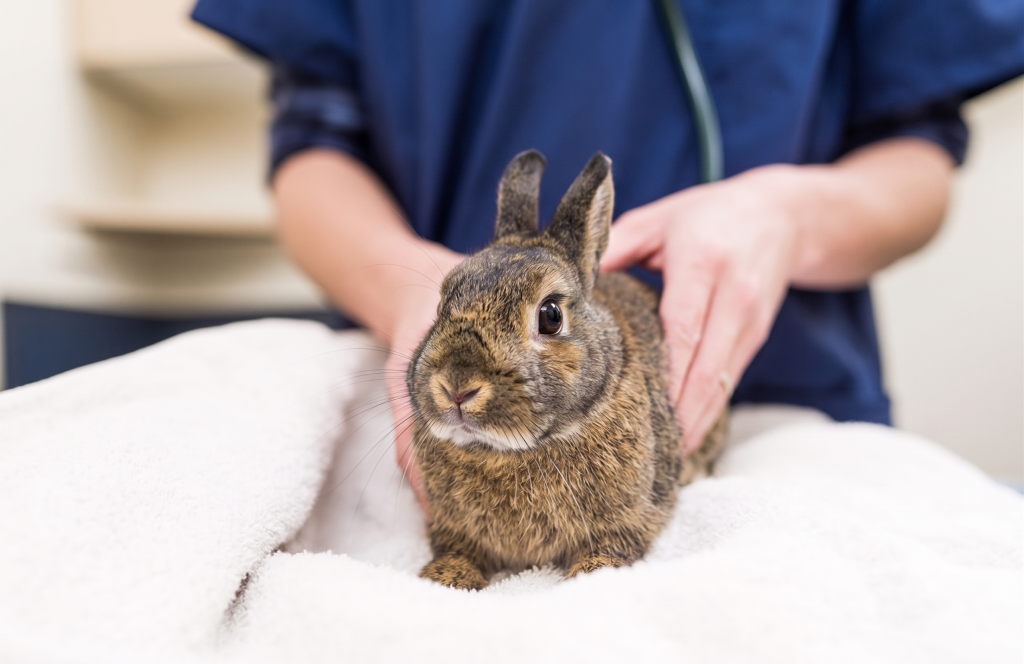
While chasing is usually behavioral, a sudden change in your rabbit’s personality or behavior can sometimes point to an underlying health issue.
Sudden Changes in Behavior
Rabbits naturally hide pain and illness, so unexpected aggression, irritability, or defensive behavior can sometimes be an early warning sign that something is wrong. As PetMD highlights, subtle posture changes and sudden shifts in behavior are usually your rabbit’s way of showing they are stressed, uncomfortable, or need a quick check-up with a vet.
When to Contact a Veterinarian
Schedule an appointment with an exotic animal veterinarian immediately if chasing is accompanied by:
- A sudden loss of appetite or changes in fecal output
- Lethargy, hiding, or unusual posture
- Limping, stiffness, or difficulty hopping
- Loud tooth grinding (a classic sign of severe pain)
- Unexplained aggression in a previously gentle, altered rabbit
8. Frequently Asked Questions
Why does my rabbit chase me around the house?
Tracking you from room to room is usually a sign of excitement, social bonding, or attention-seeking. Your rabbit views you as a source of companionship, food, and safety, and simply wants to participate in whatever you are doing.
Why does my rabbit chase and bite my feet?
Chasing paired with ankle-biting can indicate several things. Gentle nipping is often an urgent request for attention or a demand for you to move out of their path. Harder biting during a chase usually points to territorial defense or unneutered hormonal frustration.
Why does my rabbit only chase me and not other family members?
Rabbits often form strong preferences for primary caregivers. If you are the person who feeds them, offers the most treats, or spends the most time sitting on the floor with them, your rabbit will naturally target you for social chasing and greetings.
Is my rabbit playing or attacking me?
Look closely at their body language. A playing rabbit has a soft, bouncy posture, moves silently, and stops easily when you pause. An attacking rabbit exhibits a rigid body, pinned ears, raised tail, low grunting, and direct lunges intended to make physical contact.
Should I let my rabbit chase me?
If the chasing is lighthearted, friendly, and does not pose a tripping risk to you or a safety hazard to your rabbit, it is perfectly fine to let it continue. However, if the behavior is driven by aggression, territory guarding, or anxiety, it is best to address the underlying cause to keep interactions calm and safe.
9. Conclusion
Discerning why your rabbit chases you comes down to observing the full context of the behavior. Most of the time, a rabbit hot on your heels is simply expressing excitement, looking for a snack, or checking in with their favorite human. By paying close attention to their body posture, the timing of the chase, and where it happens, you can easily read your rabbit’s signals, strengthen your bond, and respond in a way that keeps your home safe and peaceful.
Medical & Veterinary Disclaimer: Bunnyowners.com is an informational resource for rabbit owners and enthusiasts. We are not veterinarians. The content on this website is for educational purposes only and is not a substitute for professional veterinary advice, diagnosis, or treatment. Always consult a qualified veterinarian with any questions or concerns regarding your pet’s health, medical conditions, diet, or overall care. If you have concerns about your rabbit’s health, it’s always best to reach out to a veterinarian rather than relying solely on information found online.