
Veterinary & Affiliate Disclaimer: Bunnyowners.com shares educational rabbit care resources, not professional veterinary advice. Always consult a qualified veterinarian regarding your rabbit’s medical, dietary, or behavioral needs. This post may also contain affiliate links; as an Amazon Associate and affiliate partner, we earn from qualifying purchases at zero extra cost to you.
Finding a puddle of urine soaking into the carpet or discovering a constellation of hard droppings across the floor can lead any owner to wonder whether rabbits can truly be house-trained. The reassuring truth is that you don’t have to teach a rabbit bathroom manners from scratch; you just need to steer habits they already have toward a litter box.
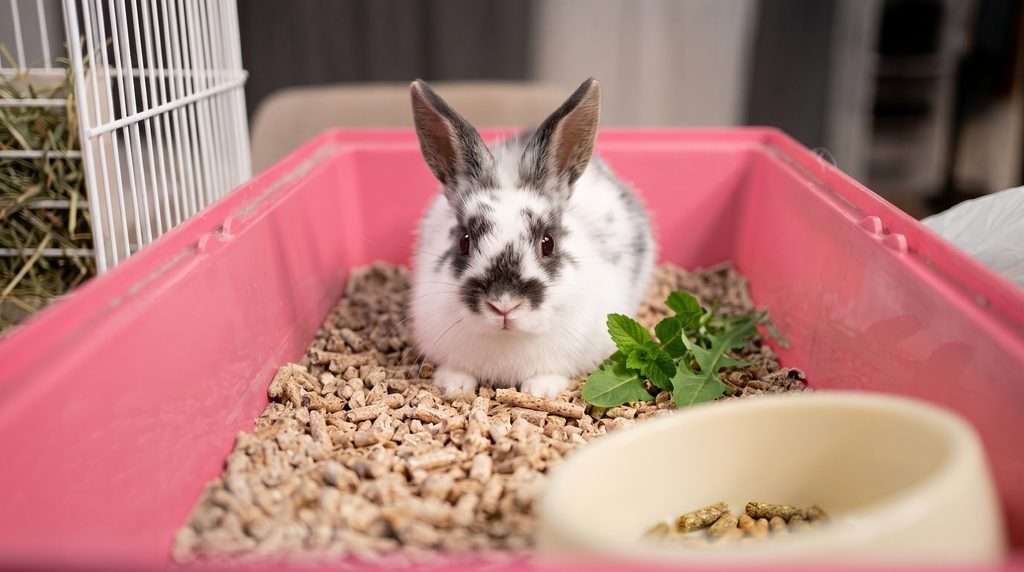
Rabbits can be litter trained by placing a roomy litter box with rabbit-safe litter and fresh hay in their preferred toilet corner while initially limiting them to a manageable area. Move stray droppings and a little urine scent into the box, reward voluntary use, and gradually expand their territory once their habits become consistent. Spayed or neutered rabbits are generally easier to litter train, although the time required varies from rabbit to rabbit.
In this guide, you’ll find the step-by-step training process, the gear you actually need, and simple fixes for stubborn accidents. We’ll also cover how to safely expand your bunny’s space into a free-roam setup that fits right into your daily rabbit-care routine. With a little patience and the right setup, you can turn a messy floor into a clean, stress-free routine for both of you.
1. Can Rabbits Really Be Litter Trained?
Yes, rabbits can be litter trained reliably. In fact, they already tend to pick specific, consistent spots to pee and leave most of their droppings. Instead of teaching a completely foreign concept from scratch, litter training is really just about steering that natural habit into an accessible box.
Successful training works with your rabbit’s natural instincts instead of fighting them. While many adults catch on quickly, expect a few temporary setbacks whenever life changes. Even a rabbit with spotless habits can start missing the box or leaving droppings outside the tray after moving to a new room or a different home while they map out the unfamiliar space.
Is Pee or Poop Easier to Litter Train?
Pee is usually easier to keep in the litter box than every last poop. Once a rabbit settles on a favorite bathroom corner and gets used to the box, urine accidents outside that spot should become fairly uncommon.
Poop is a little different. Rabbits don’t always leave those dry pellets just because they need to go; they can also scatter a few around to mark their territory. That’s why a perfectly litter-trained rabbit may still leave the occasional stray poop on the rug. If the pee stays in the box and nearly all the poop does too, training has done its job.
2. What Do You Need to Litter Train a Rabbit?
Setting up your rabbit for success starts with choosing practical, rabbit-appropriate equipment. Skip cramped corner pans sold for ferrets and steer clear of clumping cat litters, which are dangerous if swallowed. Before introducing your rabbit to their training space, gather these basic supplies:
Essential Rabbit Litter Training Supplies
| Item | What to Look For | Why It Matters |
|---|---|---|
| Litter Box | Large cat litter pan or shallow storage tub with low entry | Gives your rabbit plenty of room to hop in, sit, and turn around comfortably. |
| Rabbit-Safe Litter | Unscented compressed paper pellets | Absorbs liquid and controls odor safely while keeping dust to a minimum. |
| Fresh Hay | High-quality grass hay (such as Timothy, Orchard, or Meadow) | Encourages your rabbit to spend more time in the box while eating hay. |
| Exercise Pen (X-Pen) | Sturdy wire exercise pen of appropriate height | Keeps territory manageable during training without the stress of a tiny cage. |
| Urine Cleaner | Diluted white vinegar or rabbit-safe, unscented pet cleaner | Helps remove urine residue and lingering odors that invite repeat accidents. |
How Big Should the Litter Box Be?
Small triangular litter pans designed to clip into cage corners rarely work for full-grown rabbits. Your rabbit needs to hop in, turn around with ease, and lounge with their entire body inside the box. For most rabbits, an open-top cat litter tray or a shallow under-bed plastic tote provides plenty of breathing room.
What Litter Is Safe for Rabbits?
Rabbits spend a surprising amount of time lounging in their litter box with their noses right over the litter, so you want something low-dust and safe. Pick an unscented, absorbent paper-pellet litter.
Steer clear of clay-based clumping cat litters, which can cause serious digestive blockages if swallowed. You will also want to avoid heavily perfumed litters and wood shavings, particularly pine and cedar, which can irritate sensitive airways.
Want to see what a practical rabbit litter box setup looks like? This video from Small Pet Select walks through the basic setup, including the litter, hay, and box arrangement before you begin training:
3. Where Should You Put a Rabbit’s Litter Box?
The golden rule of rabbit litter training is simple: let your rabbit choose the bathroom corner, then put the box there.
When introduced to a new space, rabbits inspect their surroundings and naturally pick a quiet, low-traffic corner where they feel secure. Putting the box where it looks best to you instead of where your rabbit feels comfortable usually leads to wet carpet.
What If Your Rabbit Chooses a Different Corner?
If you place the box in one corner of the pen but your rabbit repeatedly pees in another, move the box to the corner your rabbit prefers. It’s usually much easier to move the box than convince your rabbit they’ve chosen the wrong bathroom.
Should You Put Hay in the Litter Box?
Putting fresh hay directly in or right above the litter box is one of the easiest ways to encourage good habits. Rabbits naturally spend a lot of time grazing and often poop while they eat, so putting their hay right at the litter box encourages them to hang around where you want them to go.
Place a generous pile of hay at one end of the pan, or hang a hay feeder low enough that your rabbit easily grazes while standing inside the box.
4. How to Litter Train a Rabbit Step by Step
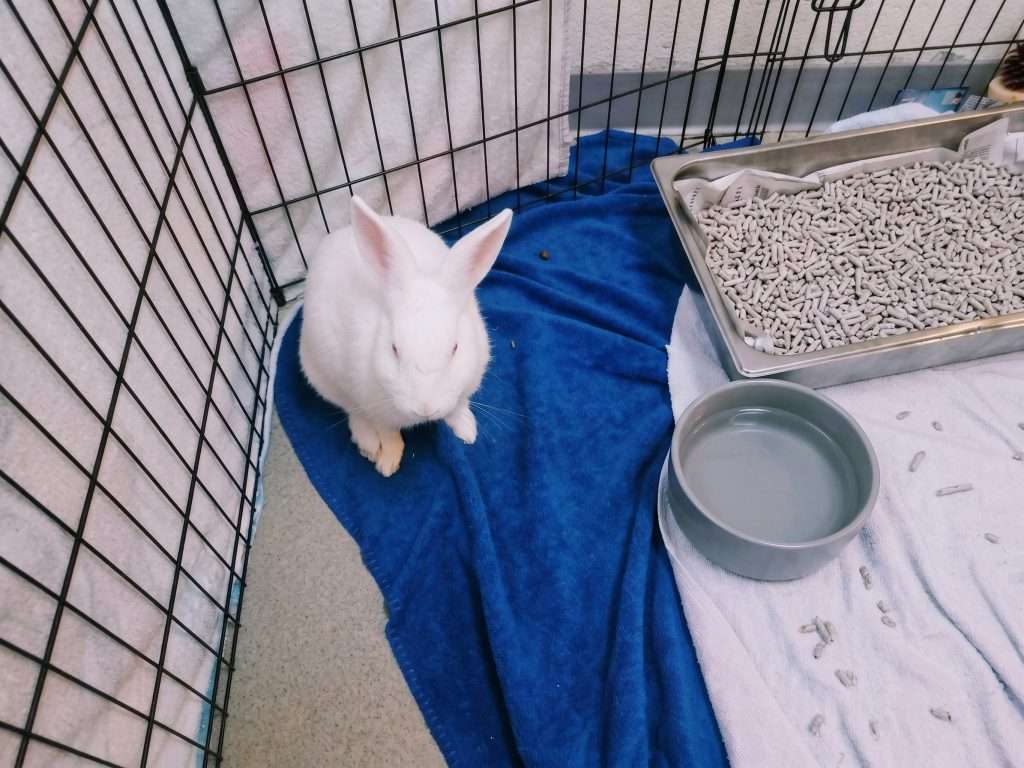
Training works best when you keep the routine simple and give your rabbit time to master one space before opening up the whole home. Giving them run of the house on day one makes building reliable habits almost impossible.
Step 1: Start With a Smaller Training Area
Start with your rabbit’s normal home-base pen or a secure, manageable enclosure setup rather than immediate access to an entire room. A smaller starting area keeps your rabbit from feeling overwhelmed and makes the bathroom location obvious.
Step 2: Find Your Rabbit’s Preferred Bathroom Corner
Spend the first day simply watching how your rabbit uses the pen. When I set up my two rabbits, Mocha and Chino, one claimed a bathroom corner almost instantly, while the other spent the afternoon testing out three different spots. Give your bunny a little time to show you what they prefer instead of guessing for them. Once you spot where the urine and small piles of droppings start collecting, that’s where the box goes.
Step 3: Set Up the Litter Box With Litter and Hay
Cover the bottom of the tray with an inch or two of rabbit-safe paper pellets. You only need enough to create an absorbent layer rather than filling the entire tray deeply. Put a fresh pile of hay at one end, leaving plenty of open floor space for your rabbit to sit comfortably.
Step 4: Add a Little Bathroom Scent to the Box
Rabbits rely heavily on scent cues to recognize their bathroom. When tidying up initial accidents, sweep up stray droppings and drop them into the pan. If your rabbit pees on the floor, soak up a little of the liquid with an unscented paper towel, tuck it under the pellets at the bottom of the box, and then clean the floor spot thoroughly.
Step 5: Reward Your Rabbit for Using the Box
Keep a close eye on your rabbit during the early stages of training. When they hop into the box on their own, munch on hay, or use the pan, offer calm praise and a tiny reward, like a sprig of fresh cilantro, a pinch of parsley, or a single pellet. A tiny reward helps your rabbit connect the box with something positive.
Step 6: Clean Accidents Without Punishing Your Rabbit
Never punish your rabbit for an accident. Yelling, clapping loudly, or stomping your feet scares a prey animal and creates anxiety that can worsen territorial spraying. If you notice a tail lift or the familiar backing-up posture, gently guide your rabbit toward the nearby litter box.
If the accident has already occurred, quietly clean the spot with a 50/50 mix of warm water and white vinegar to lift lingering odors, and sweep any droppings into the pan.
Step 7: Wait for Consistent Litter Box Use
Don’t rush to give your rabbit more space just because a certain number of days has passed. Keep your rabbit in their base pen until you see steady progress:
- Your rabbit is consistently peeing in the box over several consecutive days.
- Stray droppings outside the pan stay down to a minimum.
- Your rabbit voluntarily hops into the box whenever they need to go.
Step 8: Gradually Expand Your Rabbit’s Territory
Once your rabbit is consistently using the box in their home pen, start opening up the house one step at a time. Begin with short, supervised play sessions in a single enclosed room, keeping an eye out to make sure they actually hop back to the pen when nature calls. If they handle that well, you can let them stay out longer. If you start seeing accidents, simply dial their space back to the size that was working until they find their rhythm again.
Step 9: Add Extra Litter Boxes Where Needed
As your rabbit gains access to larger rooms or extra living spaces, traveling all the way back to their home pen can feel like a hike. Setting up extra litter boxes in quiet corners gives your rabbit a nearby place to go and prevents distance-related accidents.
5. How Long Does It Take to Litter Train a Rabbit?
There is no fixed calendar for litter training. Some rabbits figure out the box in a few days, while others take several weeks or longer to become dependable across a larger living area.
How quickly your rabbit catches on depends on a few things. Spayed and neutered rabbits are generally easier to train, young rabbits can become less reliable as puberty kicks in, and giving any rabbit too much territory too soon can slow the whole process down. Older rabbits can learn just fine, although seniors may appreciate a box with a lower rim that is easy to hop over if mobility becomes limited.
Figuring out what the litter box is for and staying reliable across the whole house are two very different milestones. Instead of stressing over an arbitrary deadline, just focus on steady, day-to-day progress.
6. Can You Litter Train a Rabbit That Isn’t Spayed or Neutered?
An unneutered rabbit can absolutely learn what the litter box is for. The tricky part is that hormones can make them much more interested in marking their territory, so you may still see urine spraying or trails of droppings even when they clearly understand the box.
Why Puberty Can Cause Litter Training Regression
Between three and six months of age, young rabbits hit puberty and experience a sudden surge of reproductive hormones. A bunny who previously used their box like a champ may suddenly start scattering droppings, marking baseboards, or spraying urine up the walls.
Your rabbit hasn’t suddenly forgotten their training—puberty has simply made marking territory a lot more important to them. Spaying or neutering commonly calms these hormonal urges, though spraying and scattering droppings may take some time to settle after surgery. Ask your exotic animal veterinarian what to expect during recovery.
7. How Do You Litter Train a Free-Roam Rabbit?

Free roaming can work very well for litter-trained house rabbits, but it works best when built on an established foundation. Giving a newly adopted or untrained rabbit run of the whole house right away is a recipe for frustration.
Start with a dedicated home-base pen containing their food, water, hay, and litter pan. Let your rabbit master that territory first before opening the pen into a single room, and only add extra rooms as their habits prove trustworthy.
Even after your rabbit graduates to a fully free-roaming setup, keep their home-base pen open and accessible so they always have a familiar home bathroom to return to.
How Many Litter Boxes Does a Free-Roam Rabbit Need?
There is no single formula for how many litter boxes a free-roam rabbit requires. A rabbit living in a compact living room may do fine with just one or two well-placed boxes. As your rabbit gains access to additional rooms or floors, add boxes where needed so a toilet is always reasonably close. Over time, if one extra box stays completely clean and unused for weeks, you can gradually phase it out.
8. Why Is My Rabbit Peeing or Pooping Outside the Litter Box?
When an otherwise reliable rabbit starts missing the box, looking at the exact pattern helps you figure out the fix. Use this reference guide to match what you see with the most practical adjustment:
Litter Box Accident Troubleshooting Guide
| What You’re Seeing | Possible Explanation | First Thing to Try |
|---|---|---|
| Urine puddles in a new corner | The rabbit chose an alternate bathroom spot. | Move the box or add a secondary box in that corner. |
| Pee puddles directly beside the box | The box is too small, entry is uncomfortable, or their rear is hanging over. | Switch to a larger box with higher sides and a low entry point. |
| Droppings scattered along room edges | Possible territorial marking. | Monitor if they’re occasional and urine habits remain reliable. |
| Accidents right after expanding space | Space was expanded before habits were fully established. | Return to the previous successful territory size until habits stabilize. |
| Litter and hay dug out of the box | Natural digging behavior or dislike of the litter texture. | Try denser paper pellets or a box with higher sides. |
| Sudden marking at 4–6 months old | Natural hormonal onset associated with puberty. | Discuss spaying or neutering and the behavior with a rabbit-savvy vet. |
| Sudden accidents in an established adult | Environmental stress or an underlying medical problem. | Check for changes in routine, and arrange a vet visit if unexplained. |
My Rabbit Pees Next to the Litter Box
Puddles landing just inches outside the tray are often a box problem rather than a training problem. If a litter pan is too short, a rabbit may hop in with good intentions, but their rear end hangs over the lip while they eat hay. Alternatively, high sides can make hopping in uncomfortable for older rabbits, leading them to go right outside the rim.
My Rabbit Uses the Box for Pee but Poops Everywhere
Scattered dry pellets along furniture borders or door frames usually mean your rabbit is simply marking boundaries with droppings rather than forgetting their training.
I’ve also noticed with Mocha and Chino that changing their space can temporarily bring back a little pellet scattering even when their urine habits remain reliable. If urine habits remain reliable and you’re only finding occasional dry pellets, regular sweeping is usually all that’s required.
My Rabbit Keeps Digging in the Litter Box
Rabbits have a natural urge to dig and tunnel. If your rabbit treats their box like a sandbox, avoid light, fluffy litters that fly everywhere. Using denser paper pellets can reduce how far litter gets thrown, while a larger or higher-sided box can help contain the mess.
My Rabbit Was Litter Trained but Suddenly Stopped
If a well-trained rabbit suddenly starts having accidents again, something has probably changed. Sometimes it’s as simple as rearranged furniture, a new pet, a different litter, or unusual household noise. If nothing in their environment has changed, it’s worth considering a health problem.
9. When Are Litter Box Accidents a Reason to Call a Vet?
A sudden change in a previously reliable rabbit’s litter habits deserves attention, particularly when there hasn’t been an obvious environmental change. Sudden accidents can sometimes be associated with pain, infections or urinary tract discomfort, reduced mobility, or other health issues.
Contact an exotic animal veterinarian if you observe:
- Straining or repeatedly crouching as though trying to pee.
- Thick, gritty, or paste-like sludge in the urine.
- Blood or visible pinkish-red tinges in the urine.
- Damp, urine-soaked fur on the hindquarters or inner legs.
- Accidents occurring alongside reduced appetite or unusually small droppings.
Urinary discomfort can change where or how a rabbit urinates, while painful conditions like osteoarthritis in older rabbits can make hopping over high box walls difficult. A qualified exotic veterinarian can check for underlying problems and help you figure out why your rabbit is avoiding the box or whether a medical issue needs treating.
10. How to Litter Train Two Bonded Rabbits
Training bonded rabbits should always be handled together. There’s generally no reason to separate an established bonded pair simply for litter training; instead, give them a setup that works for both rabbits.
- Use a larger box: Bonded rabbits prefer doing things together, including eating and using the bathroom. Pick an extra-roomy pan so both rabbits can sit, eat hay, and turn around at the same time.
- Provide an extra box initially: Offering a secondary box can reduce competition if one rabbit becomes possessive of a particular corner.
- Expect brief territorial marking: When bonded rabbits move somewhere new, don’t be surprised if a few extra droppings appear while they settle in and mark the new territory.
11. Seven Rabbit Litter Training Mistakes to Avoid
- Granting too much space too quickly: Opening up an entire home before basic pen habits are solid leads to wandering accidents.
- Fighting your rabbit’s preferred corner: Moving the box where you think it looks best rather than where your rabbit actually goes guarantees frustration.
- Choosing an undersized litter tray: Small boxes can leave your rabbit hanging over the edge, with the pee or poop ending up on the floor.
- Using clumping or unsuitable cat litter: Clumping clay and silica litters can cause dangerous intestinal blockages if swallowed.
- Punishing or scolding accidents: Scaring your rabbit can make them more nervous and may even make marking worse.
- Expecting zero stray pellets: Treating occasional dry droppings as training failures creates unrealistic expectations.
- Ignoring sudden behavioral changes: A rabbit who suddenly stops using the box may be in pain or feeling unwell, so don’t assume every regression is just behavioral.
12. How Do You Know When Your Rabbit Is Fully Litter Trained?
You will know litter training has really clicked when your rabbit consistently pees in the box, returns to it on their own from elsewhere in the room, and keeps those habits even as you give them more space.
Floor accidents should become rare over several consecutive weeks, and adding more room should not prompt a wave of new puddle-marking. A stray dry poop here and there is still normal and does not mean you have gone backward. When pee reliably stays in the box and using it is second nature, your rabbit is fully house-trained.
13. Rabbit Litter Training FAQs
What should you do if your rabbit sleeps in the litter box?
Don’t worry too much if your rabbit likes lounging or dozing in the box. A fresh pile of hay makes it a cozy spot to hang out, and plenty of bunnies treat their tray like a daybed. As long as the box stays reasonably clean and they’re still actually using it as a toilet, there’s no real reason to kick them out. If you notice them ditching the box to go on the carpet instead, take a look at basic setup issues—like box size, location, cleanliness, or how easy it is to hop in—rather than trying to police their nap habits.
How often should you clean the litter box while training?
Take a quick look at the box every day and tidy it up whenever it starts looking soggy or dirty. Scoop out damp clumps of litter and swap out soiled hay so your rabbit always has a dry, fresh spot to stand. How often you’ll need to do a full dump-and-scrub really depends on your litter type, the size of the tray, and whether you’re housing one rabbit or a bonded pair. Just let the condition of the box tell you when it’s time for a reset rather than sticking to a rigid calendar.
Should you use a covered or enclosed cat litter box?
An open-top box is almost always your best bet. It stays well-ventilated, makes daily spot-cleaning easy, and lets you keep an eye on their habits without taking anything apart. If your bunny tends to fling litter and hay across the room, try a roomy, high-sided storage tub with a low front entry cut out instead of an enclosed cat pan. Whichever style you choose, just make sure your rabbit can turn around comfortably and hop in and out without clipping the rim.
Can you use puppy pee pads under the litter?
They can work well as a protective barrier underneath or around the box, but you have to be careful. If your bunny is a digger or a chewer, they can quickly tear into the plastic backing and chew up the absorbent filler, which isn’t safe to swallow. If you want to use puppy pads to save your flooring, make sure they’re completely tucked away where curious teeth can’t reach them, or swap them out for washable, rabbit-safe alternatives.
Will changing litter brands cause a setback in training?
It definitely can. Some rabbits couldn’t care less what’s under their paws, while others get surprisingly offended if the texture or scent changes overnight. If you need to switch brands, try blending a little bit of the new litter into the old stuff over several days. Gradually upping the ratio lets your rabbit get used to the new feel and smell without staging a bathroom strike.
How do you litter train a blind or disabled rabbit?
The key is removing every physical obstacle you can. Rabbits with arthritis, stiffness, or mobility issues shouldn’t have to clamber over high plastic edges, so look for a wide box with a cutaway or very low entrance. For a rabbit with vision loss, consistency is everything. Keep the box in the exact same spot and avoid shifting furniture around so their mental map stays intact. Keep the area clean, dry, and padded with plenty of soft hay so they always feel secure stepping in.
14. Setting Up for Long-Term Success
Successful rabbit litter training is rarely about strict rules or human discipline. Once your rabbit has a box they actually want to use and you expand their freedom at their pace, litter training becomes much less about “training” and more about maintaining a routine that already makes sense to them.
By providing a roomy box, safe paper litter, plenty of fresh hay, and a little patience each time your rabbit gets more space, you can keep the setup clean without fighting the habits that come naturally to them.
Medical & Veterinary Disclaimer: Bunnyowners.com is an informational resource for rabbit owners and enthusiasts. We are not veterinarians. The content on this website is for educational purposes only and is not a substitute for professional veterinary advice, diagnosis, or treatment. Always consult a qualified veterinarian with any questions or concerns regarding your pet’s health, medical conditions, diet, or overall care. If you have concerns about your rabbit’s health, it’s always best to reach out to a veterinarian rather than relying solely on information found online.