
Veterinary & Affiliate Disclaimer: Bunnyowners.com shares educational rabbit care resources, not professional veterinary advice. Always consult a qualified veterinarian regarding your rabbit’s medical, dietary, or behavioral needs. This post may also contain affiliate links; as an Amazon Associate and affiliate partner, we earn from qualifying purchases at zero extra cost to you.
Pet stores routinely market plastic-bottomed cages as standard rabbit homes, while rabbit welfare groups generally recommend larger setups like exercise pens. Meanwhile, social media is full of rabbits roaming entire houses. That leaves new and prospective owners with a pretty common question: should you house your rabbit in a traditional cage, an exercise pen, a dedicated rabbit-proofed room, or a full free-roam setup?
For most indoor rabbits, an exercise pen is the best starting setup because it provides ample permanent space for normal hopping and stretching while keeping your rabbit safely contained. Dedicated rabbit-proofed rooms and full free roaming offer even greater freedom to explore, but they require extensive proofing against chewing and household hazards. Traditional commercial cages are simply too small to use as full-time living spaces and work best as open-door home bases or for short-term containment.
The best option depends less on the label attached to the enclosure and more on your available floor space, everyday rabbit care routines, household layout, rabbit-proofing, other pets, litter habits, and how much unsupervised freedom you can safely provide. To help you choose the right arrangement for your space, let’s compare the pros, cons, and everyday realities of each housing style.
1. Rabbit Cage vs Pen vs Free Roaming at a Glance
To help you compare the primary indoor housing options side by side, the decision matrix below outlines how each setup performs across space potential, containment security, required rabbit-proofing, cost and setup difficulty, and ideal household fit.
Once you’ve chosen a housing style, my complete rabbit housing guide explains how the overall living environment should be arranged:
Rabbit Housing Setup Comparison
| Setup | Space Potential | Containment | Proofing Required | Cost/Setup Difficulty | Best For |
| Traditional Cage / Crate | Very Low | Very High | Low (outside cage) | Low / Easy | Open home base; short-term containment |
| Exercise Pen (X-Pen) | High | High | Moderate | Low-Moderate / Easy | Most indoor homes and multi-use rooms |
| Rabbit-Proofed Room | Very High | Room-Level | High | Moderate / High Prep | Dedicated rabbit spaces; bonded pairs |
| Full Free Roam | Maximum | Lowest | Very High | Low Hardware / Ongoing Vigilance | Fully proofed homes; reliable litter habits |
Note: Whichever setup you choose, it still needs to provide enough permanent living space. Exact space recommendations belong in our dedicated space guide.
2. Cages, Pens, Rooms, and Free Roaming Explained
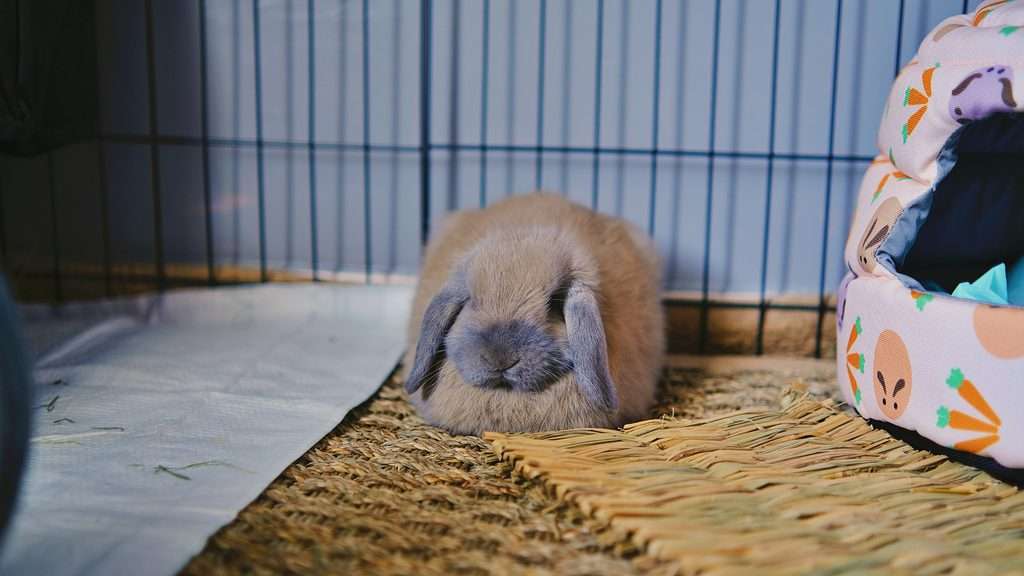
A traditional cage is a small manufactured enclosure intended to contain the rabbit within fixed walls. Although useful as an open home base, most commercial cages provide too little space to function as a rabbit’s complete living environment.
An exercise pen, or X-pen, uses movable wire panels to create a larger enclosed floor area. A rabbit-proofed room uses the room itself as the enclosure, while free roaming gives the rabbit access to multiple secured household areas.
The important distinction is therefore not simply whether walls are present. It is how much permanent freedom the rabbit receives and how much responsibility shifts from the enclosure to rabbit-proofing the surrounding home.
3. Which Rabbit Housing Setup Is Best for Your Home?

Every household is different, whether you’re dealing with a rental, limited floor space, or other pets in the home. Use the guide below to find the most sensible setup for your current situation:
Household Housing Selection Guide
| Situation | Best Starting Option | Practical Reason |
| First-Time Rabbit Owner | Exercise Pen (X-Pen) | Builds good litter habits and safety in a manageable space. |
| Rental Property | Exercise Pen on Protective Matting | Protects landlord carpets, baseboards, and doorframes. |
| Available Spare Bedroom / Office | Dedicated Rabbit-Proofed Room | Generous movement space without exposing the broader home to chewing. |
| Thoroughly Proofed Home + Solid Habits | Hybrid or Full Free Roam | Behavioral freedom in an environment already cleared of chewing hazards. |
| Living with Dogs or Small Children | Secure Exercise Pen or Closed Room | Provides a sturdy physical barrier to keep interactions safe. |
| Rabbit Is an Athletic Jumper | Tall Exercise Pen (Covered) or Rabbit Room | Prevents escape over open wire barriers. |
| Unknown Chewing or Digging Habits | Exercise Pen | Minimizes hazard access while assessing the rabbit’s personality. |
| Frequent Unsupervised Periods | Exercise Pen or Secured Room | Ensures safety while the home is empty. |
| Existing Small Commercial Cage Owned | Open Base Inside an X-Pen | Repurposes the cage shell as a cozy hideout or feeding den. |
An Exercise Pen Is Best If:
You want an affordable, modular setup that gives your rabbit plenty of room to move while keeping containment simple. Pens work particularly well when you need to close your rabbit in overnight, adjust panels to fit different rooms, or keep a clear boundary in busy living areas.
A Rabbit Room Is Best If:
You have a spare bedroom or office and want an open environment without wire pens taking over your main living room. A dedicated room gives bonded pairs plenty of space to share territory peacefully and keeps shedding fur, stray hay, and pet supplies in one spot.
Free Roaming Makes Sense If:
Your home is thoroughly protected against cord and baseboard chewing, your rabbit has rock-solid litter box habits, and there are no other pets in the house that could pose a danger. Free roaming works best when the entire accessible area is safe enough for your rabbit to explore when you’re not watching.
A Standalone Cage Is Not Enough If:
The door has to stay latched for most of the day and night. A closed commercial cage simply does not have enough open floor space for a rabbit to stretch out, hop around, or relax once food dishes and litter pans are inside.
4. Are Rabbit Cages Suitable for Permanent Housing?
Most commercial rabbit cages are not suitable as permanent housing because they do not provide enough floor space or height for basic physical activity. Rabbits are naturally active animals built for sudden sprints, jumps, and regular moving around. An enclosure that prevents normal hopping, stretching, standing upright, and regular movement doesn’t give them much opportunity to stay active or behave normally.
Why Most Commercial Rabbit Cages Are Problematic
Many cages marketed for rabbits are compact enough for retail shelves but provide little usable space once a litter box, hay, water, and resting area are added. When those essentials are placed inside a typical 3-foot by 2-foot enclosure, virtually no clear floor space remains for a rabbit to stretch out or hop around comfortably.
When a Cage or Crate Can Still Be Useful
Despite their limitations as full-time living spaces, crates still have plenty of practical uses:
- An Open Home Base: Leaving a crate door open inside an exercise pen gives your rabbit a covered, secure den that satisfies natural burrow-seeking habits.
- Temporary Confinement: Short-term restriction may be necessary during specific situations, such as following veterinary procedures where movement needs to be limited for healing.
- Safe Travel: Rigid pet carriers and crates remain the standard for safe vet visits and car travel.
Cage Size Does Not Replace Living Footprint
A larger cage is not automatically an adequate living area. What really matters is how much permanent living space your rabbit actually has, rather than the dimensions printed on an enclosure box. While letting your rabbit out for floor time is great, it does not make up for an enclosure that lacks enough room to hop and stretch around the clock.
5. Are Exercise Pens Better Than Rabbit Cages?
Yes. For most indoor rabbits, an exercise pen is a better permanent housing option than a traditional commercial cage because it offers a practical balance of space, safety, flexibility, and affordability.
Advantages of an Exercise Pen
- More Usable Living Space: Exercise pens can create substantially more open floor area than most commercial cages and are easy to expand or reconfigure around a rabbit’s space requirements.
- Flexible Shapes: Panels easily adjust to wrap around corners, block access to furniture, or fit awkward room angles.
- Affordable: Exercise pens are often relatively inexpensive for the amount of usable floor space they provide.
- Easy Cleaning: Stepping right inside makes sweeping up stray hay and refreshing litter boxes far simpler than wrestling through tiny cage doors.
Disadvantages of an Exercise Pen
Exercise pens also have a few practical tradeoffs to keep in mind:
- Jumpers and Climbers: Athletic or startled rabbits can clear low panels. Many setups use 30- to 36-inch-tall pens, though determined jumpers might need taller panels or a fitted sheet or sheet of mesh across the top.
- Floor Protection Needed: Pens do not have built-in bottoms, meaning the floor underneath needs a protective layer like non-slip rugs, heavy canvas, or waterproof mats to guard against carpet chewing and spills.
- Visible Living Room Footprint: A wire pen is undeniably noticeable in the middle of a shared family room.
Who an X-Pen Works Best For
Exercise pens are especially practical for renters protecting baseboards and carpet, new owners building consistent litter habits, and homes with dogs or kids where a clear boundary keeps everyone safe.
6. Is a Rabbit-Proofed Room Better Than a Pen?
A rabbit-proofed room can be better than an exercise pen if you have a suitable room and can completely secure it against chewing and other household hazards. Giving a rabbit or bonded pair an entire secured room gets rid of wire barriers while keeping most of the rabbit mess and supplies in one place.
Advantages of a Dedicated Rabbit Room
- Total Room to Move: Rabbits can sprint, binky, and run morning laps without bumping into pen fencing.
- Spread-Out Supplies: Putting feeding dishes, litter boxes, hideouts, and digging stations in different corners encourages your rabbit to move around and explore naturally throughout the day.
- Cleaner Look: A simple gate in the doorway looks much cleaner than metal pen panels set up across your shared living room.
Disadvantages of a Dedicated Rabbit Room
A dedicated room requires considerably more preparation than a pen because the room itself becomes the enclosure. Baseboards, doors, vents, outlets, closet edges, and other reachable surfaces may need protection.
Location matters too: placing rabbits in an isolated spare room or basement can reduce everyday social contact, so choosing a room near normal household activity is usually preferable.
Who Should Consider a Rabbit Room?
A dedicated room works well for bonded pairs, households with an extra bedroom or home office, and owners whose rabbits can scale pens but are not quite ready for free run of the whole house.
7. Is Free Roaming Better Than a Pen or Rabbit Room?
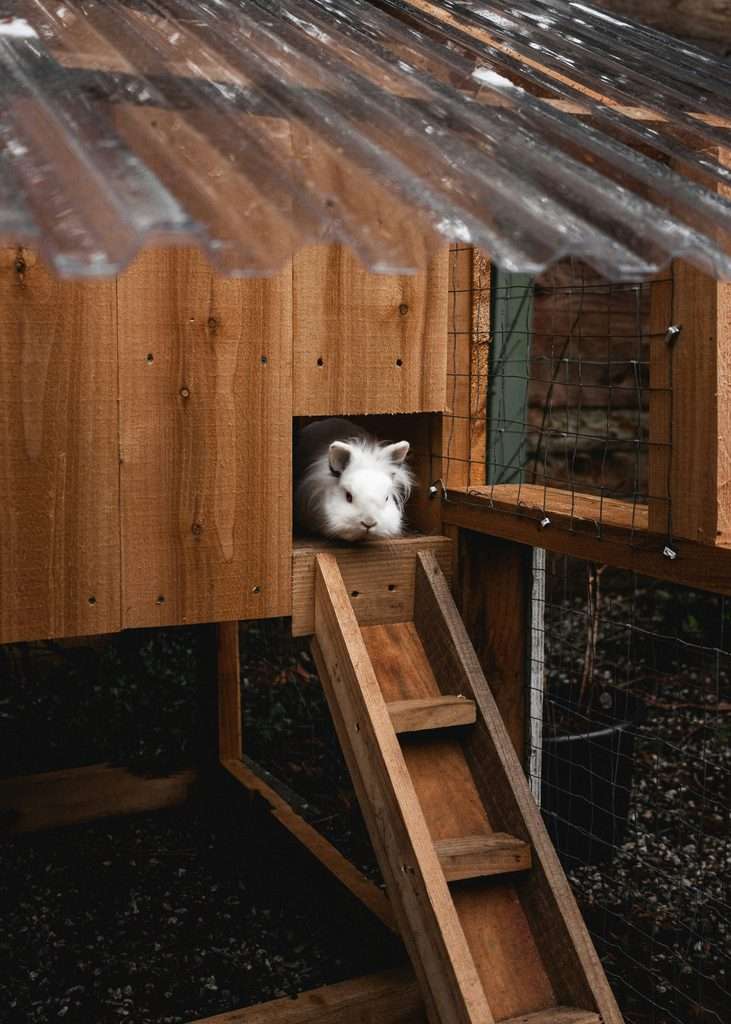
Free roaming can give rabbits more freedom to exercise and explore, but it isn’t automatically better than a well-designed pen or rabbit-proofed room. Free-roam rabbits can choose their favorite napping spots throughout the day, move between safe living areas, and interact with the family on their own terms without enclosure walls.
Benefits of Free Roaming
- Natural Exploration: Rabbits have ongoing opportunities to satisfy their curiosity and stay active throughout the home.
- Family Integration: Free-roam rabbits share everyday spaces and routines with household members.
- Flexible Living: Eliminates the visual barrier of an indoor enclosure in main living areas.
Disadvantages and Household Realities of Free Roaming
Free roaming requires serious prep work and constant awareness:
- Chewing Hazards: Electrical cords, couch corners, baseboards, and carpet fibers can easily cause property damage or health problems if swallowed.
- Litter Slip-Ups: Giving a rabbit too much freedom too fast often leads to territory marking or forgotten bathroom habits on soft rugs and couches.
- Underfoot Hazards: Rabbits moving underfoot can easily be tripped over, and closing interior doors can cause sudden accidents.
Before expanding their boundaries, take the time to rabbit-proof your home. Free roaming shifts the job of keeping your rabbit safe from the walls of an enclosure to the walls of your entire home.
Does Free Roam Mean No Home Base?
No. Even fully free-roaming rabbits need a dedicated home base. A familiar corner holding their main litter pan, hay rack, water bowl, and covered hideout gives them a secure, quiet territory where they always feel safe eating and sleeping.
8. Pen Plus Free Roam: The Hybrid Option
Rather than choosing strictly between a full-time enclosure and total freedom, many rabbit owners use a practical hybrid setup. A hybrid setup also removes the pressure to treat housing as an all-or-nothing decision: the rabbit can have a secure permanent territory while receiving progressively greater access when conditions allow.
We use this hybrid setup with our bonded pair, Mocha and Chino. Their exercise pen serves as a permanent home base with litter boxes, hay, water, and hiding areas. When we’re in the room, the gates open and they can explore the surrounding rabbit-proofed space.
For us, this setup works well for a few reasons:
- Peace of Mind: The pen latches shut at night or when nobody is home, keeping curious rabbits away from unsupervised chewing.
- Reliable Bathroom Habits: Mocha and Chino regularly return to their home pen to graze on hay and use their litter boxes, which helps keep their bathroom habits consistent.
- Flexible Management: It lets you see how your rabbit behaves and what they like to chew before deciding whether to open up more of the house.
9. Can You Transition From a Pen to Free Roam?
Many owners start with an exercise pen with the goal of eventually granting whole-room or whole-house freedom. Making that shift successfully depends on timing, layout management, and observing how your rabbit handles broader boundaries.
Yes. The safest approach is gradual expansion. Start with a secure home base, then allow access to one rabbit-proofed room before opening additional areas.
Give your rabbit more space once their litter habits are reliable and they’re no longer constantly chewing, digging, or getting into places they shouldn’t. If problems appear, reduce the accessible space and try expanding again once those behaviors are under control.
10. Common Mistakes When Choosing a Housing Setup
Even well-intentioned owners can run into daily frustration by choosing an enclosure that looks great on paper but fails in practice. Selecting the right setup means avoiding a few common decision errors:
Assuming Anything Sold as a Rabbit Cage Is Suitable
Retail packaging does not indicate whether an enclosure provides adequate living room. Many products labeled for rabbits provide surprisingly little usable space once basic supplies are installed inside.
Assuming Free Roam Is Automatically Best
Greater freedom only helps when the accessible space is completely secured. Giving a rabbit whole-house run before habits and proofing are verified often causes property damage and safety risks.
Giving Too Much Freedom Too Quickly
Rabbits with unknown chewing tendencies or unproven litter box discipline are far easier to manage when access expands step by step from a secure base, avoiding preventable frustration later.
Choosing a Pen Based Only on Floor Area
Floor area matters, but it isn’t the only consideration when choosing an exercise pen. Athletic rabbits may clear shorter panels, while the pen’s shape, placement, and surrounding layout determine whether a particular setup works safely in your home.
Whatever housing style you choose, remember that slick hardwood or tile can make rabbits slip, so proper ground traction remains essential.
Treating Exercise Time as a Substitute for Permanent Space
A couple of hours of playtime outside a tiny commercial cage cannot compensate for spending the rest of the day confined. A proper living setup must provide enough room around the clock to create a good home.
11. Frequently Asked Questions
Is an exercise pen better than a traditional rabbit cage?
Yes. An exercise pen provides substantially more usable floor area, vertical headroom, and layout flexibility for a comparable price point, easily fitting essential supplies while preserving open floor space for natural hopping.
Is a rabbit room better than an exercise pen?
A dedicated rabbit room is better if you have an available spare room and can thoroughly secure baseboards and outlets, as it completely eliminates wire barrier fences in shared living areas.
Is free roam better than an exercise pen?
Not automatically. Free roaming provides more room to explore, but an exercise pen is often safer and more practical for homes with rental constraints, untested chewers, or other household pets.
Should a first-time rabbit owner start with free roam?
For most first-time owners, an exercise pen is the easier starting point. It allows new owners to establish reliable litter habits, assess chewing behaviors, and rabbit-proof living areas gradually without overwhelming the rabbit or the home.
Can I start with an X-pen and switch to free roam later?
Yes. Many owners use an exercise pen as an initial baseline and gradually expand territory into a hybrid or full free-roam setup as litter habits and household safety are confirmed.
Are free-roam rabbits happier than rabbits in pens?
Rabbits do not need whole-house access to have a good quality of life. A spacious, enriched living area that allows normal movement, exploration, resting, and social behavior can meet their needs without full free roaming. What matters most is whether the available environment is large, safe, stimulating, and consistently accessible.
Do free-roam rabbits still need a home base?
Yes. Even fully free-roaming rabbits need a dedicated, quiet home base with their primary litter box, hay feeder, water bowl, and covered shelter where they feel secure resting and eating.
12. Final Verdict: Cage, Pen, or Free Roam?
An exercise pen offers the most practical balance of space, safety, affordability, and flexibility for most indoor households. A dedicated rabbit room can be the better choice when you have an appropriate spare space, while free roaming works best once the accessible home is thoroughly proofed and your rabbit’s habits are predictable.
You also don’t have to make a permanent choice on day one. Starting with a secure X-pen and gradually expanding into a room or free-roam arrangement lets the housing setup grow with your rabbit’s litter habits, chewing behavior, and the amount of space you can safely provide.
Medical & Veterinary Disclaimer: Bunnyowners.com is an informational resource for rabbit owners and enthusiasts. We are not veterinarians. The content on this website is for educational purposes only and is not a substitute for professional veterinary advice, diagnosis, or treatment. Always consult a qualified veterinarian with any questions or concerns regarding your pet’s health, medical conditions, diet, or overall care. If you have concerns about your rabbit’s health, it’s always best to reach out to a veterinarian rather than relying solely on information found online.