
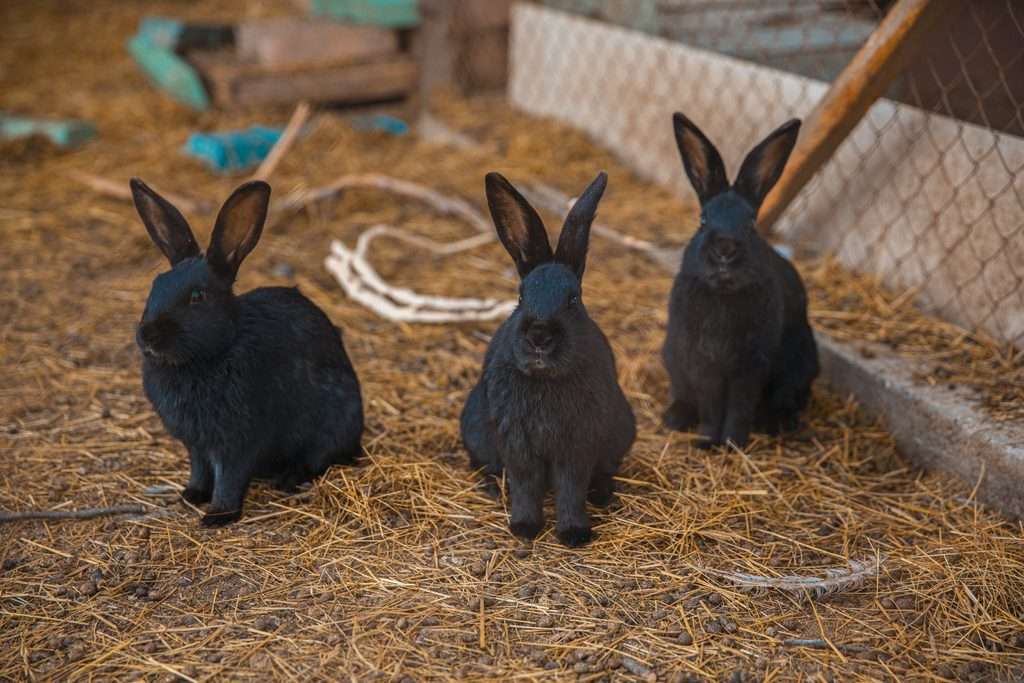
Veterinary & Affiliate Disclaimer: Bunnyowners.com shares educational rabbit care resources, not professional veterinary advice. Always consult a qualified veterinarian regarding your rabbit’s medical, dietary, or behavioral needs. This post may also contain affiliate links; as an Amazon Associate and affiliate partner, we earn from qualifying purchases at zero extra cost to you.
Enclosure dimensions are notoriously confusing for new and experienced rabbit owners alike. Recommendations online often blur the line between a temporary sleeping crate, an indoor exercise pen, a permanent living area, and a free-roam setup, leaving owners unsure how much room rabbits actually need to thrive.
A pet rabbit needs enough permanent living space to run, take several hops in a row, stretch out fully, and stand upright without its ears touching the top of the enclosure. For a compatible pair of average-sized rabbits, a strong minimum target is 10 × 6.5 × 3.3 feet (3 m × 2 m × 1 m), or about 65 square feet (6 m²) of continuous floor space. A single rabbit should not simply get half that amount, because they still need generous room to move, explore, rest, and use litter, food, water, and hiding areas without losing their main running space.
In this guide, we break down true usable floor dimensions, cage conversion tips, and the essential rabbit care guidelines you need to set up a safe, spacious home. Whether you are rabbit-proofing a dedicated room or building a custom indoor pen, getting the layout right makes all the difference for your bunny’s daily health.
1. How Much Space Does a Rabbit Actually Need?
A rabbit’s space needs can’t really be judged by a cage label alone. What matters is what your rabbit can actually do in that space every day:
- Open Floor Space: The flat, open floor your rabbit can cross without bumping into barriers or furniture.
- Room to Run: A straight path long enough for a rabbit to pick up speed and run rather than just take short hops.
- Enough Height to Stand Upright: Enough open height for a rabbit to stand completely upright on its hind legs without its ears brushing the ceiling.
- Room for Litter, Food, Water, and Hiding Spots: Enough space to keep feeding dishes, water bowls, litter trays, and quiet hideouts well spaced from one another.
- Space They Can Use All Day: The actual hours per day your rabbit can use this full footprint rather than being shut away in a smaller section.
Keeping rabbits in restrictive enclosures prevents them from freely performing natural behaviors such as running, jumping, digging, stretching, and standing upright. Providing enough room for these behaviors is just one part of meeting a rabbit’s overall daily care needs.
Minimum Space for One Rabbit
A single rabbit still requires enough permanent space to run, take several consecutive hops in a straight line, turn around without obstruction, stretch out fully on its side, stand upright, and exercise freely at any hour of the day. A small rabbit takes up less room than a large one, but that doesn’t mean it belongs in a small cage. Smaller breeds are often exceptionally energetic and require plenty of room to move.
Most housing guidelines are designed around bonded pairs because rabbits are social animals. However, you should not simply divide the space in half for a solo rabbit. A rabbit living alone still needs the same room to run, hop, stretch, and explore. While one rabbit needs fewer food bowls and litter trays, it still needs a long, continuous running path to stay active and healthy.
Minimum Space for Two Rabbits
Two bonded, average-sized domestic rabbits should have continuous access to a permanent area of at least 3 m × 2 m × 1 m high (about 10 × 6.5 × 3.3 ft), which works out to about 65 square feet (6 m²) of continuous space.
Anyone who has lived with a bonded pair knows they can spend one minute pressed together and the next stretched out at opposite ends of the room.
A well-sized setup gives two rabbits enough room to:
- Pass one another in open corridors without crowding or getting in each other’s way.
- Choose between resting together side-by-side or napping in separate corners.
- Eat, drink, and use the litter tray without competing over tight spots.
- Retreat to separate hiding spaces whenever one needs quiet downtime.
2. Rabbit Space Requirements at a Glance
The spatial needs of domestic rabbits vary depending on their living arrangement, body size, and the number of animals housed together. Here’s a quick look at how those space needs change by setup:
Rabbit Housing Size Requirements by Setup
| Setup Configuration | Practical Space Considerations | Starting Guidance |
|---|---|---|
| Pair of Average-Sized Rabbits | Permanent shared living space with separate resource areas | At least 3 m × 2 m × 1 m high (about 65 sq ft) |
| Single Rabbit | Still needs generous permanent room; don’t simply halve the pair recommendation | Prioritize a long running lane and generous permanent pen space |
| Large Breed Rabbit | Needs more room to stretch, turn, and run comfortably | Increase footprint and height beyond standard guidelines |
| Giant Rabbit Breed | Needs considerably more floor space and height | Allow considerably more room than the standard pair guideline |
| Free-Roam Setup | Entire room or home secured; requires accessible home base | Focus on safe, rabbit-proofed usable floor area |
| Enclosure + Exercise Run | Integrated base opening directly into an expanded run area | Exercise area should be continuously accessible where possible |
3. Why Rabbits Need More Space Than a Traditional Cage Provides
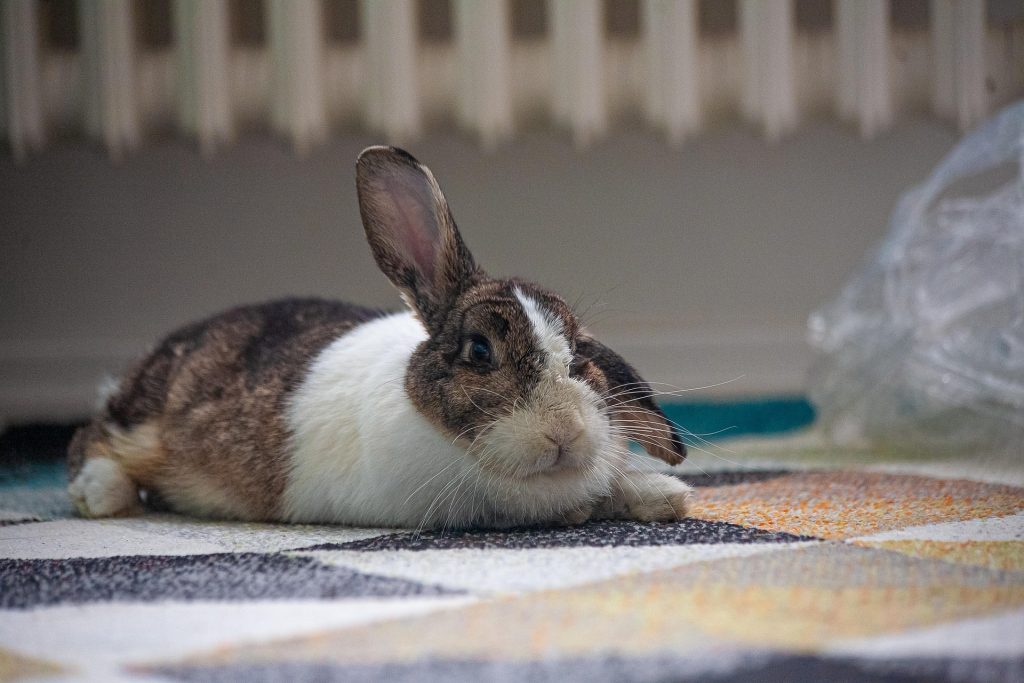
Rabbits do not walk or climb the way many other small pets do. They move by hopping forward with their powerful hind legs, darting suddenly when playing, and standing up tall to inspect their surroundings.
Rabbits Need Room to Hop and Run
In an undersized enclosure, forward movement is cut short after a single hop. To move naturally, a rabbit needs enough continuous floor length to build momentum across a single block of space. This is why it is essential to provide one large, open area instead of several small sections added together.
Rabbits Need Room to Stretch Out
Rabbits rest by stretching their bodies out to their full length. When performing a relaxed side flop, an average-sized rabbit stretches from its front paws all the way to its back toes. If an enclosure forces a rabbit to sleep permanently curled into a tight ball or wedged diagonally against wire panels, the space is too small.
Rabbits Need Enough Height to Stand Upright
Enclosure height is frequently overlooked. Rabbits regularly stand upright on their hind legs to scan their surroundings. For average-sized rabbits, the commonly recommended 3 m × 2 m × 1 m housing benchmark provides about 1 meter (39 inches) of height. Whatever enclosure you use, it should be tall enough for your individual rabbit to stand fully upright on its hind legs without its ears touching the top.
4. Is a Rabbit Cage Big Enough?
Most commercially sold pet-store rabbit cages are far too small to serve as a rabbit’s primary, full-time home. Setting up a proper rabbit living space requires enough open floor space for running, stretching, standing tall, eating, and using the litter box without those supplies taking up the entire floor.
A cage can look surprisingly roomy when it’s empty. Add a litter box, hay, water, and a hide, and that open floor disappears fast. A standard commercial cage measuring 2 ft × 3 ft provides only 6 square feet of total floor space, leaving virtually no open floor left for the rabbit once furnished.
Why Floor Space Matters More Than Cage Labels
Boxes stamped with words like “Extra Large,” “Deluxe Habitat,” or “Mansion Hutch” can make an enclosure sound much roomier than it really is. The only way to know what you’re actually getting is to ignore the name and pull out a tape measure. A cage advertised as “spacious” that only measures 30 × 36 inches gives you a meager 7.5 square feet—which simply isn’t enough room for a bunny to live comfortably.
Can a Cage Be Used as Part of a Larger Setup?
You do not necessarily have to throw out an existing cage or plastic cage base if you can repurpose it safely. While unacceptable as a locked, full-time living space, an open cage base can work well as:
- A dedicated, easy-to-clean litter tray and hay station.
- A sheltered resting spot or hideaway.
- A centralized feeding area.
To use a cage base safely, remove or secure the wire door open permanently and attach the base directly to a spacious exercise pen that provides the full recommended floor area.
5. How to Measure a Rabbit’s Usable Living Space
To work out whether an enclosure is really large enough, look at how much open floor is left once everything is inside rather than relying on the outside measurements.
Measure Length × Width
The basic formula for floor space is straightforward:
Length (ft)×Width (ft)=Total Floor Space (sq ft)
For example, a pen measuring 10 feet long by 6.5 feet wide yields:
10 ft×6.5 ft=65 sq ft
Multi-level cages or narrow intermediate shelves do not simply add together to replace real floor space. A 1-foot-wide shelf offers a nice vantage point for lounging, but it does not provide the continuous, ground-level running path a rabbit needs to sprint.
Don’t Count Unusable Space
Usable rabbit space is the open floor your rabbit can actually run through and explore. Outer measurements can easily overstate how much room your rabbit has once daily supplies are put in place.
In the living setup I have for my own rabbits, Mocha and Chino, their litter tray, wooden hideout, and heavy water bowl take up far more floor space than you might expect. That is why I never evaluate an enclosure based on outside measurements alone—the critical measurement is always how much clear, open running room is left once all their daily essentials are in place.
Total floor space−space taken up by furnishings=usable floor space
Check the Enclosure Width
Square footage alone can be misleading if the enclosure has an awkward shape. A narrow run measuring 2 feet wide by 30 feet long technically provides 60 square feet of floor space, but a 2-foot-wide corridor severely limits turning, diagonal hops, and comfortable navigation for bonded pairs.
A good rabbit setup needs more than the right square footage. It also needs enough width for your rabbit to turn, run, and change direction comfortably. This is why proper housing standards rely on a single continuous footprint—such as 3 m × 2 m—rather than piecing together narrow, disconnected strips of space.
6. Does Exercise Time Make Up for a Smaller Enclosure?
Daily exercise outside the pen is fantastic, but a few hours of supervised floor time does not make up for spending the rest of the day confined to a small cage. Rabbits are crepuscular, meaning they are naturally most active at dawn and dusk. In many homes, these peak activity periods happen while owners are sleeping or busy getting ready for work—times when rabbits are usually kept inside their main enclosure.
To keep your rabbits healthy and active, it helps to understand the difference between their everyday home and a temporary play space. Here is how full-time living space stacks up against extra exercise time:
Permanent Space vs. Exercise Space
| Feature | Permanent Living Space | Extra Exercise Space |
|---|---|---|
| When they can use it | Open to the rabbit 24 hours a day, 7 days a week | Available only during specific owner-supervised hours |
| Resource Placement | Houses litter boxes, bowls, hay, and hiding spots | Primarily wide-open floor for high-speed running and play |
| What it allows | Guarantees room to run, hop, stretch, and stand at will | Adds room for full sprints, binkies, and extra exploration |
| Depends on your schedule? | Unaffected by owner schedule changes or late work days | Depends on your schedule and can be cut short if routines change |
| Why it matters | Supports natural daily movement and prevents boredom | Provides mental enrichment and burns off surplus energy |
7. How Much Free-Roam Space Does a Rabbit Need?
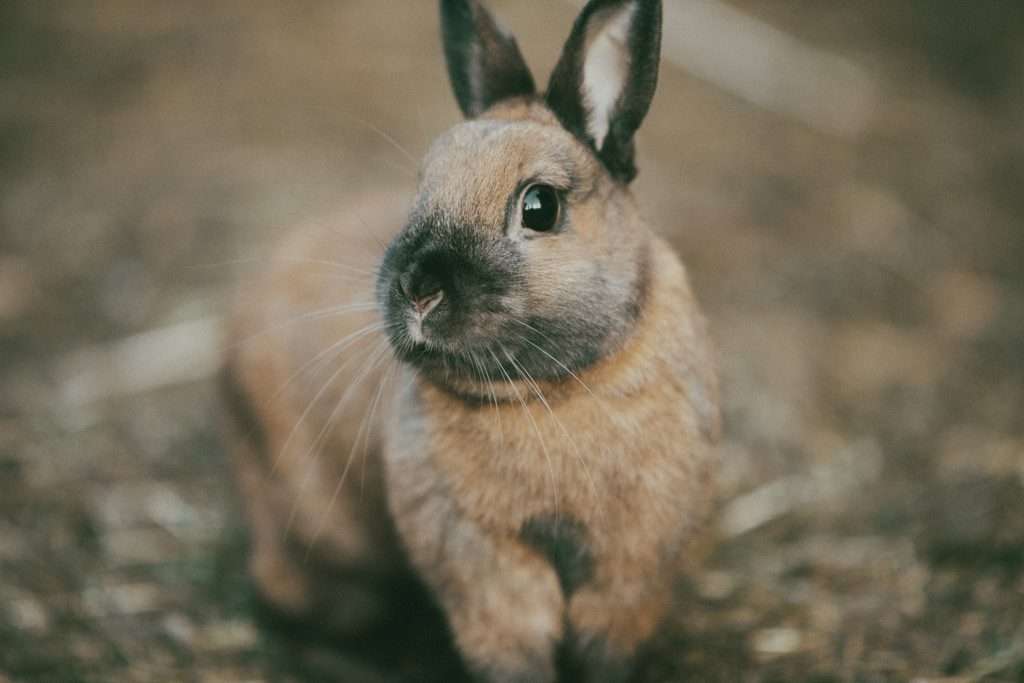
“Free-roaming” means allowing your rabbit to live without a traditional cage, giving them open access to household living areas much like a cat or dog. However, free-roaming does not require opening up an entire house.
A rabbit does not need access to an entire multi-story home to have plenty of space. A single, properly rabbit-proofed bedroom can provide substantially more usable floor area than a conventional enclosure while keeping electrical cords, baseboards, and household hazards much easier to manage.
8. Do Bigger Rabbits Need More Space?
Bigger rabbits need more space. It really is that simple. As adult body size and physical reach grow, an enclosure has to expand to match.
Small and Dwarf Rabbits
Even though a dwarf rabbit takes up less physical volume, it still needs an extended, open running path to hop and play. Dwarf rabbits should never be kept in tiny cages under the assumption that a smaller body equals a low need for exercise.
Medium and Large Rabbits
Medium and large breeds need more room to stretch and turn comfortably. When stretching out for a nap, a larger rabbit can take up far more floor space than you might expect, requiring generous floor width and sturdy enclosure walls that won’t shift when bumped.
Giant Rabbit Breeds
Giant breeds need more room than average-sized rabbits because their bodies, upright reach, and natural strides occupy considerably more space. The standard 3 m × 2 m × 1 m recommendation is intended for average-sized rabbits, so it should be treated as a starting point rather than an automatic target for a giant breed.
9. Do Two Rabbits Need Twice as Much Space?
Housing two bonded rabbits does not mean you must strictly double the square footage, but adding a second rabbit definitely changes how space is used. A bonded pair can share the same open running paths, but they need enough overall floor area so they never feel crowded.
With two rabbits, you also end up using more floor space for litter trays, hay, hides, food, and water. The 3 m × 2 m (about 65 sq ft) guideline provides enough continuous floor area for a bonded pair while still leaving room for essential resources and clear running paths.
10. Indoor vs. Outdoor Rabbit Space Requirements
Whether your rabbits live indoors in a climate-controlled room or outdoors in a sheltered garden setup, they still need the same freedom to run and stretch.
Indoor Rabbits
Indoor setups generally use sturdy exercise pens, custom grid panels, or dedicated rabbit-proofed rooms. Setting up indoors provides flat, reliable flooring and allows the entire enclosed footprint to serve as open running space without weather-related restrictions.
Outdoor Rabbits
A traditional wooden hutch should never serve as a rabbit’s entire living area. When housed outdoors, a weatherproof hutch acts merely as a sleeping quarter and feeding station, and it should form part of a larger secure setup with permanent access to an exercise area. For an outdoor setup to work, rabbits need continuous access to an attached run around the clock, especially during dawn and dusk when they are naturally most active.
11. What Size Exercise Pen Should I Buy for a Rabbit?
Modular exercise pens (often sold as dog x-pens) are one of the easiest, most practical ways to build a spacious indoor rabbit habitat.
This is one of those cases where the measurements on the box matter more than the photo on the packaging. A single exercise pen often creates much less floor space than owners expect when arranged as a closed square, so check the panel measurements before buying. Most owners combine multiple panel sets or configure them along existing room walls to create an open, rectangular footprint that approaches the recommended 65-square-foot area.
Make sure the enclosure walls are tall enough for your bunny to stand fully upright without touching the top. For many average-sized rabbits, choosing an exercise pen that stands 36 to 42 inches tall is a solid starting point, though larger breeds and determined jumpers will likely need an even taller barrier.
12. How to Tell If Your Rabbit Has Enough Space
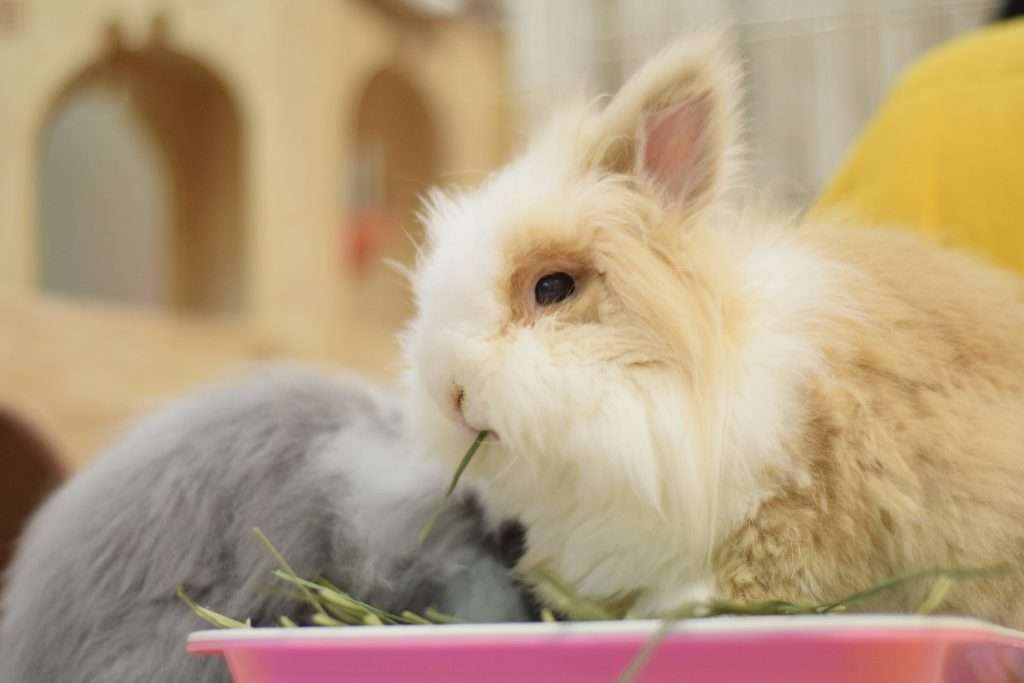
You can assess whether your rabbit’s habitat is large enough by observing what your rabbit can comfortably do inside the space:
- Can your rabbit take several consecutive hops in a straight line without stopping?
- Can your rabbit stand fully upright on its hind legs without its ears touching the top?
- Can your rabbit stretch out completely flat on its side without hitting walls or furniture?
- Are litter trays, feeding areas, and resting hideouts spaced comfortably apart?
- Can two bonded rabbits rest in separate spots without crowding one another?
- Does your rabbit have continuous, 24/7 access to this entire living area?
A practical way to check your setup is to look at the open floor from above. If the litter box, hideout, food dish, and toys leave only a narrow path to squeeze through, the enclosure is too small regardless of its outside dimensions. A suitable habitat always retains an open central area for running and relaxing.
13. Common Rabbit Space Mistakes
Even caring owners often run into a few common pitfalls when planning their rabbit’s living quarters:
Choosing a Cage Based on Sitting Body Length
Selecting a cage simply because a rabbit can turn around inside it is a critical error. Turning in place is a stationary posture, not real movement.
Relying on Multi-Level Shelves Instead of Floor Space
Multi-tier cages often advertise large total surface area, but narrow shelves and steep ramps do not replace ground-level running room. Continuous, flat floor space must always come first.
Assuming Daily Floor Time Makes Up for a Small Cage
Keeping a rabbit locked in a small cage for most of the day while offering evening play restricts them during their natural dawn and dusk activity peaks.
Overfilling the Pen with Accessories
While toys and tunnels provide great enrichment, packing an enclosure with too many items can choke off the running track. Try keeping larger items around the edges so your rabbit still has plenty of open floor through the middle.
14. How Much Space Should You Give Your Rabbit?
Minimum housing sizes give your rabbit the space they actually need to stay healthy and active, but there is no upper limit—bigger is always better.
A good setup gives your rabbits enough room to decide what they want to do—nap, run, eat, explore, or just sprawl out without being confined by restrictive bars. If your living space allows you to go beyond the 3 m × 2 m guideline—by dedicating a spare room or setting up an expanded pen—the extra room gives them more freedom to move, explore, and choose how they spend their day.
15. Frequently Asked Questions
How many square feet does a rabbit need?
A pair of average-sized domestic rabbits should have a permanent living area of at least 3 m × 2 m × 1 m high, which equals about 65 square feet (6 m²) of continuous, usable space. This benchmark is generally given for pairs, but a single rabbit still needs generous permanent room for running, stretching, and normal daily activity rather than simply receiving half the space
Is a 4 × 4 ft exercise pen big enough for a rabbit?
A 4 × 4 ft pen provides only 16 square feet of floor area and should not be treated as a rabbit’s entire permanent living space. However, it can work well as an open base station within a larger, safely rabbit-proofed room or as part of a connected, expanded pen setup.
Is a 4 × 8 ft exercise pen big enough for two rabbits?
A 4 × 8 ft pen provides 32 square feet of floor space. While this is significantly larger than a traditional pet-store cage, it still falls short of the roughly 65-square-foot (3 m × 2 m) continuous living area recommended for a pair of average-sized rabbits.
Can a rabbit live comfortably in a single bedroom?
Yes. A standard bedroom measuring 10 × 10 ft or 10 × 12 ft provides 100 to 120+ square feet of living space. When properly rabbit-proofed—with cords tucked away, baseboards protected, and floor hazards cleared—a single bedroom makes an outstanding, spacious habitat.
How tall should a rabbit pen be?
For many average-sized rabbits, a 36- to 42-inch pen is a practical starting point, although larger rabbits and determined jumpers may need a taller barrier. The enclosure should always be tall enough for your individual rabbit to stand fully upright without its ears touching the top.
Do dwarf rabbits need less space than standard rabbits?
While dwarf rabbits are physically smaller, they are energetic animals with high activity levels. They still need a generous running track to hop, sprint, and explore normally, and they should not be confined to restrictive cages.
Do rabbits need continuous access to enough exercise space?
Yes. Rabbits are crepuscular animals that are naturally most energetic at dawn and dusk. Confining them to a small cage overnight prevents them from being active during their natural movement peaks, making continuous, 24-hour access to adequate space essential.
16. Conclusion: Making the Right Space Decision for Your Rabbit
Giving rabbits enough room is not about finding the smallest enclosure you can get away with. The goal is to provide permanent, usable space where they can run, stretch, stand upright, rest, and move around their everyday resources whenever they choose.
Whatever setup you choose, pay more attention to how much room your rabbits can actually use than to words like “large” or “deluxe” on the box. Prioritizing open floor space helps give your rabbits the room they need to stay active, comfortable, and engaged throughout the day.
Medical & Veterinary Disclaimer: Bunnyowners.com is an informational resource for rabbit owners and enthusiasts. We are not veterinarians. The content on this website is for educational purposes only and is not a substitute for professional veterinary advice, diagnosis, or treatment. Always consult a qualified veterinarian with any questions or concerns regarding your pet’s health, medical conditions, diet, or overall care. If you have concerns about your rabbit’s health, it’s always best to reach out to a veterinarian rather than relying solely on information found online.