
Veterinary & Affiliate Disclaimer: Bunnyowners.com shares educational rabbit care resources, not professional veterinary advice. Always consult a qualified veterinarian regarding your rabbit’s medical, dietary, or behavioral needs. This post may also contain affiliate links; as an Amazon Associate and affiliate partner, we earn from qualifying purchases at zero extra cost to you.
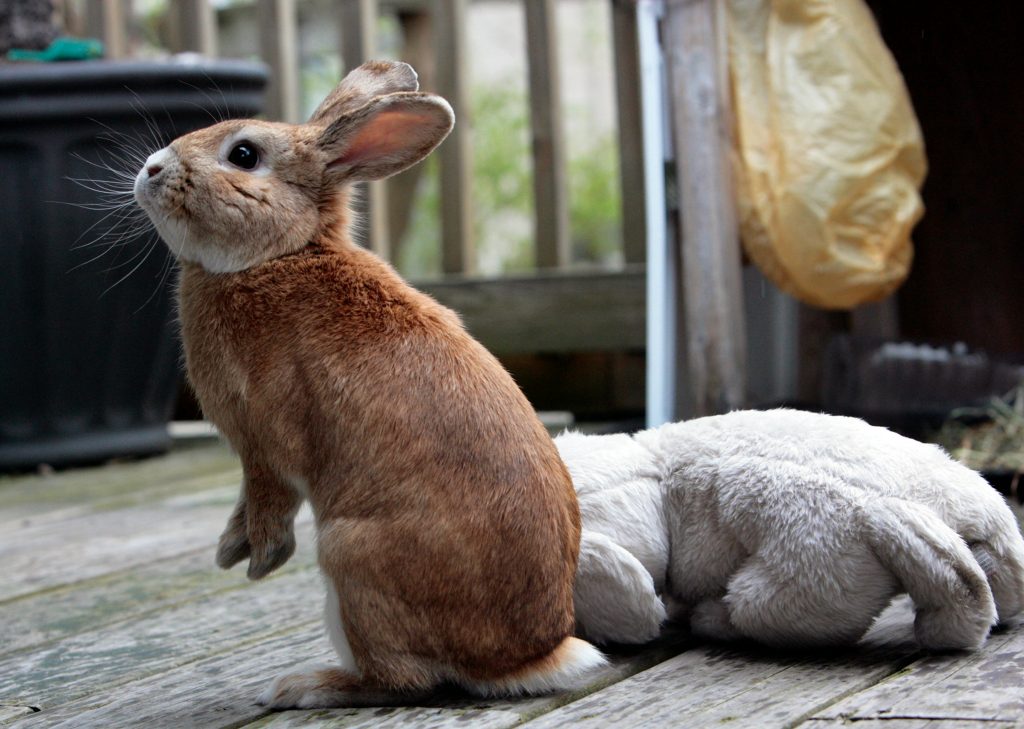
Your rabbit suddenly rises onto its hind legs, stretches its torso upward, and freezes while twitching its nose in the air. Whether they are lounging in the living room or exploring a new corner, seeing your rabbit suddenly stand upright naturally makes you wonder what caught their attention or if they are trying to tell you something.
Rabbits stand up on their hind legs—a behavior commonly called periscoping—to elevate their eyes, ears, and nose so they can better inspect their surroundings. This instinctual behavior is primarily driven by curiosity, allowing rabbits to detect distant scents, pinpoint strange noises, or get a clear view over ground-level obstacles. While periscoping usually reflects curiosity, exploration, or a happy greeting, it can also indicate caution or, if accompanied by wobbling and balance loss, an underlying medical issue.
Understanding why rabbits periscope helps you distinguish playful curiosity from cautious fear—and recognize when this normal stance might actually signal a health concern. Like so many rabbit behaviors, standing upright is a subtle form of communication. Learning to read these small signals makes it much easier to decode your bunny’s body language and understand how they interact with their world. Here is everything you need to know about why rabbits periscope, what their body language reveals, and how to interpret this fascinating behavior.
1. What Rabbit Periscoping Means
Before diving into the individual evolutionary and environmental reasons, use this quick reference guide to interpret what your rabbit’s posture means in real time:
Quick Cheat Sheet: Interpreting Your Rabbit’s Upright Posture
| If Your Rabbit Stands Up While… | It Usually Means… | Primary Sensory Goal |
|---|---|---|
| Sniffing the air rapidly | Investigating a new scent draft | Catching elevated scent molecules |
| Rotating ears toward a sound | Identifying an unfamiliar noise | Better locating the direction of sounds |
| You walk into the room | Greeting you or anticipating food | Making eye contact & requesting attention |
| Exploring during free roam | Mapping out new territory | Expanding panoramic field of view |
| Standing at a window or door | Monitoring outside activity | Checking distant surroundings |
| Pressing against an exercise pen | Requesting attention or playtime | Seeking physical interaction |
| Wobbling, swaying, or falling | Potential neurological/inner ear issue | Loss of motor balance (Requires Vet Care) |
2. What Is Periscoping?
“Periscoping” is the informal term rabbit owners and behaviorists use to describe a rabbit rising onto its hind feet, extending its spine, and holding its front paws off the ground—much like a submarine extending its periscope above the waterline to get a clear view of the surface.
Rabbits are obligate prey animals. In nature, rabbits navigate tall grass and brush that constantly block their line of sight. By shifting their weight over their broad rear feet, a rabbit can elevate its primary sensory organs by several inches in a fraction of a second. Learning to interpret these visual changes in stance is an essential part of reading everyday rabbit body language and subtle daily actions.
This upright stance grants them three immediate advantages:
- Panoramic Vision Elevation: A rabbit’s eyes sit high on the sides of its head, granting nearly 360-degree vision. Rising up lifts them above low furniture, rug edges, or grass blades so their lateral vision can sweep the room unimpeded.
- Improved Scent Sampling: Standing higher allows rabbits to investigate scents carried through air currents that may be difficult to detect from ground level.
- Directional Hearing Realignment: Elevating the head pulls the ears away from sound-reflecting floor surfaces, helping them pinpoint the precise direction of a distant noise.
3. Why Do Rabbits Stand Up? 8 Common Reasons
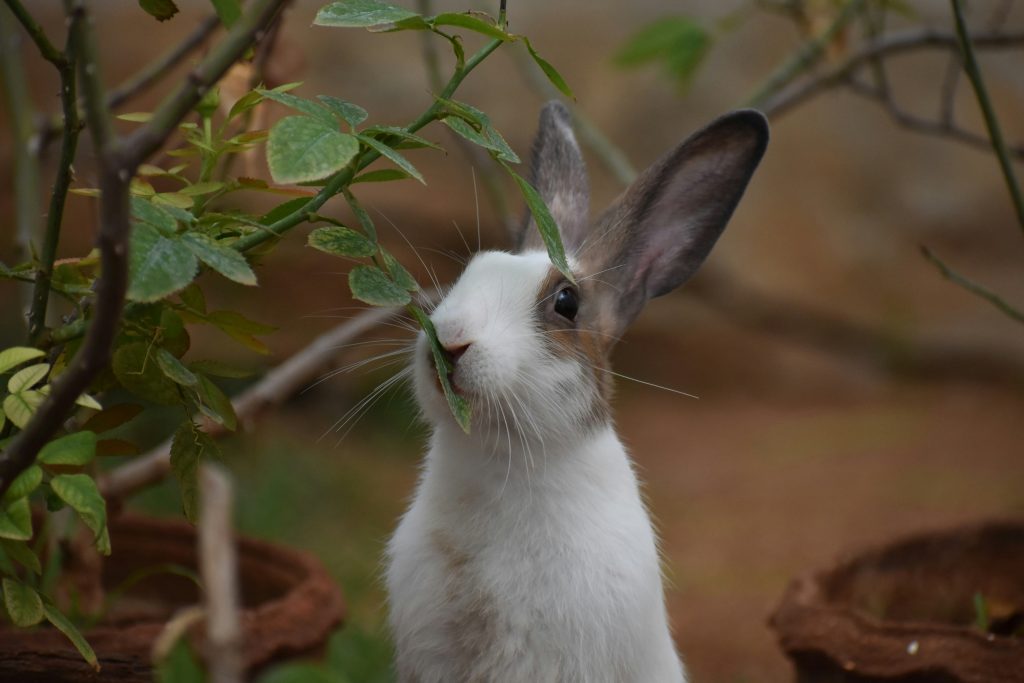
Although it is easy to assume your rabbit stands for just one reason, like begging for a treat, periscoping serves several distinct functions in daily life. When observing my own pair of Lionheads, Mocha and Chino, I often see them switch between these motivations in a matter of seconds.
1. They’re Investigating a New Sound
A rabbit’s hearing is far more sensitive than ours, allowing them to detect faint sounds from greater distances. If a car door slams, a bird chirps outside, or the refrigerator compressor kicks on, your rabbit may instantly pop up into a periscope. Watch their ears closely: if one ear points forward while the other swivels, they are actively locating the source of the noise.
2. They’re Smelling Something Interesting
Rabbits rely heavily on scent. When you open a window, start cooking in the kitchen, or walk in after petting another animal, subtle scent plumes drift across the room. Rising up allows them to sample these elevated drafts by twitching their nose rapidly to process the new smells.
3. They’re Looking for Food
Rabbits quickly associate specific sounds—a rustling hay bag, a treat container opening, or a refrigerator door sealing—with food rewards. When they hear these cues, standing up becomes a learned food-seeking behavior that brings their nose closer to your hands.
4. They’re Greeting You
Domestic rabbits frequently use periscoping as a joyful greeting when their favorite humans enter the room. This greeting periscope is typically relaxed, with a fluid body and soft ears, and is often paired with soft nose nudges, gentle circling around your feet, or quiet honking noises. Some rabbits combine this greeting behavior with following their owners around the home, another common sign of social bonding and trust.
5. They’re Exploring Unfamiliar Objects
During free-roam time, rabbits often periscope after encountering something unfamiliar, such as a new toy, a furniture change, or a novel object in their territory. As detailed in behavioral guidelines by the House Rabbit Society, environmental enrichment and novel items naturally prompt rabbits to stand up and inspect their surroundings before choosing to approach.
6. They’re Watching Something Above Them
Rabbits are highly sensitive to unexpected movement above them because their wild ancestors faced threats from multiple directions. A spinning ceiling fan, a fluttering curtain, a housefly, or passing shadows will cause a rabbit to stretch their neck to its maximum length and tilt their head upward.
7. They’re Checking for Potential Danger
Periscoping can also serve as an early-warning system when a rabbit senses a threat. You can easily spot the difference between curiosity and caution by paying attention to their ears and body language:
- Curious Periscope: Body relaxed; ears upright and soft; normal, rhythmic nose twitching; smooth return to exploring on four paws.
- Alert / Cautionary Periscope: Stiff, frozen posture; ears locked forward or pinned back; wide eyes; body tense and ready to thump or run.
8. They’re Deciding Whether Something Is Safe
When faced with a strange shadow, an unfamiliar scent, or a new sound near the edge of their territory, standing up allows a rabbit to gather extra sensory evidence before acting. Pausing in an elevated stance gives them time to evaluate their surroundings and decide whether it is safe to approach or wiser to retreat to cover.
4. Is Standing Up a Sign Your Rabbit Is Happy?
Standing up is a neutral, functional posture rather than a direct emotional response—it is simply how a rabbit gathers information. Whether that moment leads to excitement, caution, or concern depends entirely on what the rest of their body is doing. To read their true mood, it helps to combine periscoping with other visual cues to see if your rabbit is feeling happy and secure:
Periscoping + Relaxed Ears + Soft Eyes: High curiosity and confidence.
- Periscoping + Soft Tooth Grinding: Contentment and positive anticipation. Soft tooth grinding, sometimes called tooth purring, is another behavior owners often associate with a relaxed rabbit.
- Periscoping + Binky Afterward: Excitement and high energy, often leading to a joyful jump.
- Periscoping + Bulging Eyes + Tense Muscles: Caution or anxiety.
- Periscoping + Floor Thumping: Alarm; alerting you to a perceived threat.
A rabbit standing up is not the same as a binky, flop, or soft tooth purring. Those behaviors directly signal relaxation or joy, whereas periscoping is strictly about gathering environmental information. However, a rabbit that comfortably stands up around you is demonstrating that they feel safe and secure enough in their home to investigate their surroundings.
5. Why Does My Rabbit Stand Up When I Walk Into the Room?
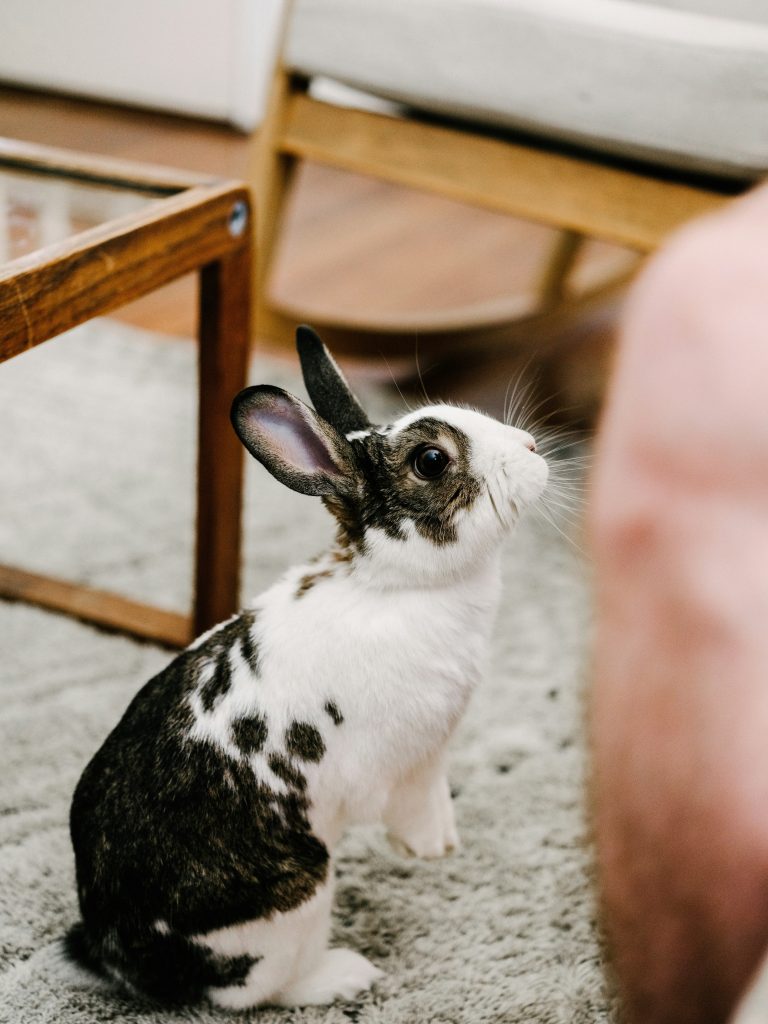
Every morning in my home, the moment Mocha and Chino hear the start of my routine, they pop up onto their hind legs in unison at the edge of their enclosure. Watching them do this every day really highlights how quickly rabbits memorize specific footsteps, door sounds, and daily schedules. When a rabbit rears up like that as you walk into the room, they are usually combining a few core motivations at once—greeting you, looking for attention, and eagerly anticipating breakfast.
Discerning their exact mood comes down to watching their overall posture. A rabbit offering a joyful greeting moves fluidly with soft ears, often trotting toward your ankles or quietly honking. If they freeze rigid with a fast-twitching nose focused strictly on your hands, treat anticipation is usually taking over. Over time, periscoping becomes a learned behavior that reliably earns attention; if standing up routinely results in head scratches or pellets, they will intentionally pop upright whenever you step nearby.
If your rabbit stands upright while staring directly at you, combining periscoping with a stare is usually just their way of identifying you from across the room or checking for treats. When you look at why rabbits stare at their owners, it becomes clear this dual posture is about recognition and curiosity rather than any kind of territorial threat.
6. Why Does My Rabbit Stand Against the Side of the Pen or Cage?
Standing against the wire bars of an exercise pen or cage is another specific application of periscoping, where your rabbit uses a physical boundary to support their stance. When a rabbit rears up against enclosure walls, they are directly interacting with the barrier between themselves and the surrounding room.
Most often, this is a clear request for exercise time. If they hear movement during their regular play hours, leaning up against the edge signals that they are ready for free-roam access. In other cases, it stems from environmental curiosity or territorial monitoring, as elevation allows them to track household activity happening beyond the perimeter.
If standing at the enclosure is paired with chewing, digging, or repeated attempts to escape, it may be a sign your rabbit needs more rabbit enrichment and destructive behaviors solutions to redirect boredom or frustration. Providing fresh forage mats, cardboard tunnels, or expanding their dedicated footprint easily resolves this restless energy.
7. Can Rabbits Safely Stand on Their Hind Legs?
Healthy rabbits can safely stand upright voluntarily during daily playtime for gentle physical stretching and mental engagement. When offering treats by hand, hold food just high enough for your rabbit to extend comfortably without losing their footing. Owners should never force a rabbit onto its hind legs, hold treats excessively high, or repeatedly encourage older rabbits with joint problems to stand.
8. When Standing Up Isn’t Normal (Medical Red Flags)
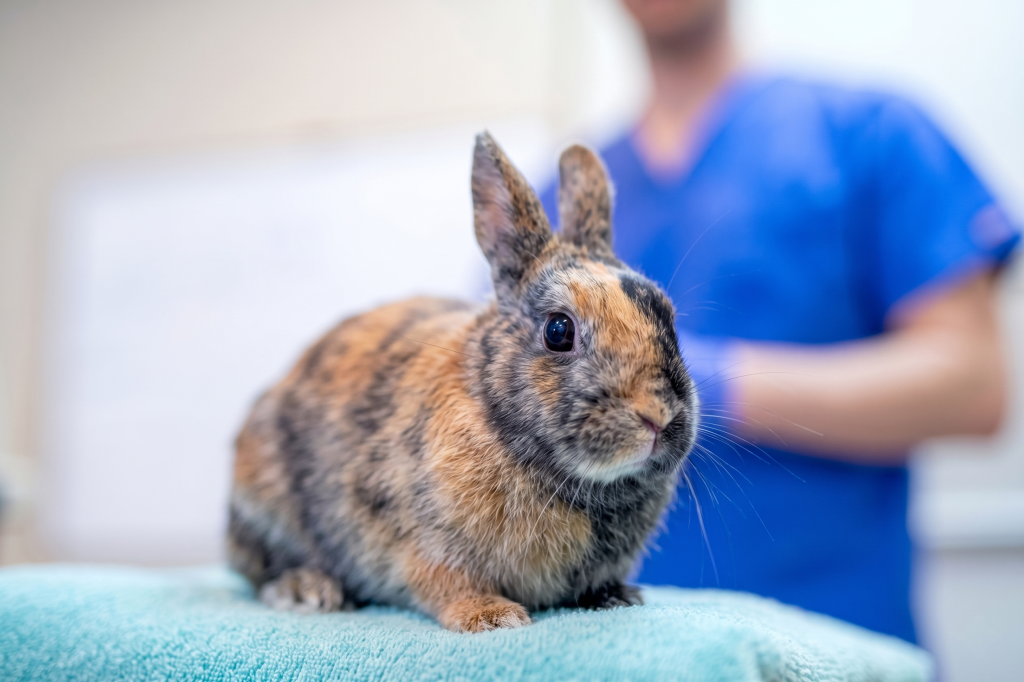
A healthy rabbit periscopes with strong balance and fluid motion, rising smoothly and lowering with control. Changes in posture are often one of the earliest clues owners notice when rabbits experience discomfort. Difficulty standing, repeated falls, or a sudden change in movement should always be evaluated by a qualified veterinarian.
Normal vs. Medical Standing
- Normal Standing: Smooth motion up and down, holds posture effortlessly, balanced on hind feet, bright eye movement, returns immediately to normal hopping.
- Abnormal / Medical Standing: Swaying side to side, falling backward, head tilted to one side, involuntary eye twitching, or weakness in the hind legs.
Potential Health Concerns
If your rabbit sways or loses balance while trying to stand on its hind legs, consult an exotic veterinarian promptly to rule out these conditions:
- Inner Ear Infections: Bacterial infections in the inner ear disrupt the vestibular system, impairing equilibrium and spatial awareness.
- E. Cuniculi: A microsporidian parasite that affects the brain and nervous system. Clinical guides from VCA Animal Hospitals note that this parasite frequently manifests with neurological deficits, loss of coordination, and unsteadiness on the hind legs.
- Arthritis or Spinal Issues: Research into degenerative joint disease shows that joint deterioration significantly impacts mobility. Arthritis in rabbits can make certain movements painful, causing older rabbits to avoid standing upright.
- General Weakness or Severe Illness: A rabbit that is critically unwell may lack the core strength or coordination needed to maintain normal posture.
9. Frequently Asked Questions
Is it normal for rabbits to stand on their hind legs?
Yes, it is completely normal. It is an instinctual behavior that allows rabbits to survey surroundings, catch elevated scents, and listen for sounds.
What is rabbit periscoping?
Periscoping is the common term for a rabbit rising upright on its hind legs with an extended torso, resembling a submarine periscope checking above the water.
Do all rabbit breeds periscope?
Yes, all domestic rabbit breeds periscope. Younger, agile rabbits may do it more frequently than senior or overweight rabbits with stiff joints.
Why does my rabbit stand up and sniff the air?
Air currents naturally carry scent molecules higher off the floor than ground-level air. By standing up and rapidly twitching their nose, your rabbit is actively sampling those elevated breezes to catch faint smells drifting from open windows, fresh food, or other pets. Raising their posture gives their specialized nasal passages direct access to passing drafts, making it much easier to process subtle micro-scents carried across the room.
Why does my rabbit stand up when I get food?
Your rabbit has learned to connect kitchen sounds, refrigerator doors, or treat bags with fresh greens or rewards, standing up in eager anticipation.
Is standing up the same as begging?
In house rabbits, standing up often becomes a functional way to beg for treats or affection once they learn it gets your attention. Rabbits are remarkably quick learners and will readily adapt their natural wild instincts into clever ways of asking their favorite humans for rewards.
Can older rabbits still periscope?
Many older rabbits still periscope comfortably, but if joint stiffness, arthritis, or sore hocks start to develop, standing up on their hind legs can become uncomfortable. Often, small changes in how your rabbit moves—like standing up less frequently or hesitating before stretching—are among the earliest signs that a senior bunny is starting to feel joint discomfort.
Why do wild rabbits stand up?
Wild rabbits periscope to spot predators over tall grass and brush, giving them time to scan their environment before running for cover.
10. Final Thoughts
Seeing your rabbit stand upright on its hind legs is one of the clearest signs of an engaged, observant pet. It reflects their natural instincts and curiosity about the world around them. Understanding these subtle visual cues is an essential part of learning how to interact with your pet. As long as your rabbit moves smoothly, maintains solid balance, and returns to normal hopping, periscoping is simply a healthy sign that your rabbit is actively enjoying their home.
Medical & Veterinary Disclaimer: Bunnyowners.com is an informational resource for rabbit owners and enthusiasts. We are not veterinarians. The content on this website is for educational purposes only and is not a substitute for professional veterinary advice, diagnosis, or treatment. Always consult a qualified veterinarian with any questions or concerns regarding your pet’s health, medical conditions, diet, or overall care. If you have concerns about your rabbit’s health, it’s always best to reach out to a veterinarian rather than relying solely on information found online.