
Veterinary & Affiliate Disclaimer: Bunnyowners.com shares educational rabbit care resources, not professional veterinary advice. Always consult a qualified veterinarian regarding your rabbit’s medical, dietary, or behavioral needs. This post may also contain affiliate links; as an Amazon Associate and affiliate partner, we earn from qualifying purchases at zero extra cost to you.
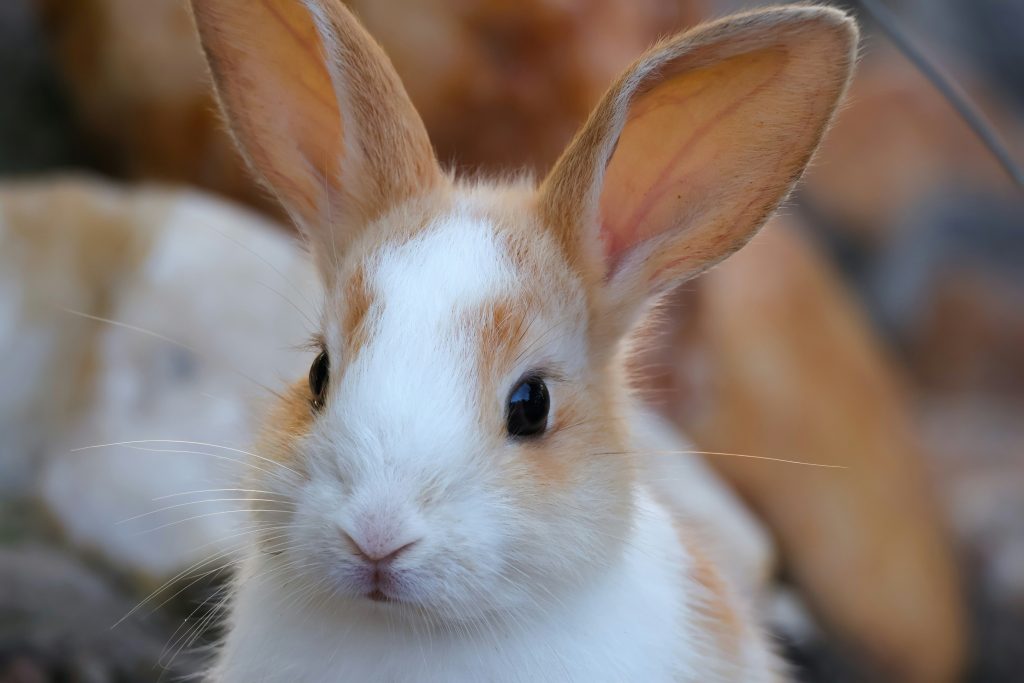
If you catch your rabbit sitting across the room staring directly at you for several seconds, your immediate reaction might be a mix of curiosity and concern: is my rabbit mad at me, asking for a treat, or could something be wrong? Because rabbits use quiet visual signals rather than loud vocalizations to communicate, an unblinking gaze can feel intense and hard to decipher.
A rabbit usually stares at you to observe their surroundings, request treats or attention, anticipate a daily routine, or monitor household safety. As natural prey animals, rabbits rely on broad peripheral vision and keen pattern recognition to track their owners’ movements and assess environmental security. While a staring rabbit with a relaxed posture is simply keeping an eye on you, a tense, hunched stance paired with a fixed gaze can indicate discomfort or illness.
To help you understand what your rabbit is telling you, this guide explores common patterns in rabbit behavior to explain why they watch their owners so closely, how to read the body language that accompanies a prolonged stare, and when the behavior could signal a medical problem.
1. What Your Rabbit’s Stare Means
A rabbit usually stares because they are observing their surroundings, anticipating a daily routine (like feeding time), seeking attention, or evaluating their safety. Because they are prey animals by nature, keeping track of the people and animals around them is a big part of how they make sense of their world.
To quickly identify why your rabbit is watching you, evaluate their posture and environment using the summary below:
Summary of Rabbit Staring Behaviors and Meanings
| Rabbit Posture & Context | Primary Meaning | Recommended Action |
|---|---|---|
| Relaxed, loafing, or flopped out | Comfortable observation | Enjoy the quiet bonding moment. |
| Upright near food bowl or pen door | Expecting food or treats | Check your daily feeding routine. |
| Ears forward, following movement | Curiosity or seeking pet contact | Offer a hand for head scratches. |
| Frozen body, ears fully upright | Alert, cautious, or startled | Pause and check for noises/threats. |
| Hunched posture, squinted eyes | Potential pain or discomfort | Monitor closely; consult a vet. |
2. Eight Reasons Your Rabbit Is Staring at You
While a continuous gaze might feel mysterious, rabbits rarely stare without a reason. Because they rely on visual monitoring to interpret their world, an intense look usually connects to their immediate needs, environmental awareness, or emotional bond with you. Here are the 8 most common reasons your rabbit is watching your every move.
1. Your Rabbit Is Curious About What You’re Doing
Rabbits are naturally inquisitive and love keeping tabs on everything happening in their space. Anything new or active—like folding laundry, shifting furniture, or stretching on the floor—will almost always earn you an extended, unblinking gaze.
Occasionally, a rabbit will stare intently at an activity for several seconds and then suddenly burst into a binky or zoom across the room once they realize everything is safe.
How to tell if they’re just being curious:
- Their ears are turned forward or pivoting toward you.
- Their body stays relaxed, maybe taking a slow hop closer to inspect.
- They return to normal activity once they realize your task isn’t dangerous.
2. They’re Waiting for Food or Treats
Expecting food is easily one of the most common reasons a rabbit stares at their owner. Because rabbits quickly connect certain human movements with breakfast, dinner, or treat time, they’ll plant themselves right in your line of sight to silently remind you it’s time to serve up.
To support healthy digestion, rabbits should have unlimited access to fresh hay alongside a balanced diet of appropriate greens, as outlined in veterinary guidelines for proper rabbit nutrition.
Clues they’re asking for food:
- The stare happens near their food dish, hay rack, or pen door.
- They stand up on their hind legs (periscoping) as you walk over.
- The stare instantly turns into excited circles or soft nudges if you head toward the kitchen.
3. They’re Asking for Attention
Rabbits learn pretty quickly that standing still and staring at their humans often leads to head rubs, sweet talk, or affection. While a dog might whine and a cat might meow, a rabbit’s polite request for love is completely quiet.
What this looks like in practice:
- They sit right at your feet or right beside your chair.
- The gaze leads to them dropping their chin flat to the floor or nudging your hand.
- They follow up the stare with gentle physical contact to ask for pets, such as chasing you around when they want to stay close.
4. Your Rabbit Trusts You
In bonded relationships, rabbits often rest near their favorite companions without needing direct interaction. A rabbit that trusts you will loaf or flop nearby while keeping a soft, relaxed gaze on you, similar to how bonded rabbits rest within sight of one another.
In my own home with my bonded rabbits, Mocha and Chino, I see this all the time—their staring is rarely a demand for food or attention, but simply a way of staying connected. When a rabbit flops or loafs across the room and quietly tracks your movements, they are showing that they consider you a trusted part of their warren, mirroring how bonded rabbits keep tabs on one another throughout the day.
Key indicators of trust and comfort:
- Their body is completely relaxed, flopped on their side, or tucked in a cozy loaf.
- Their gaze is soft, sometimes accompanied by slow blinks or gentle tooth clicking.
- They happily stay in the same spot for a long time as long as you remain nearby.
5. They’re Checking Where You Are
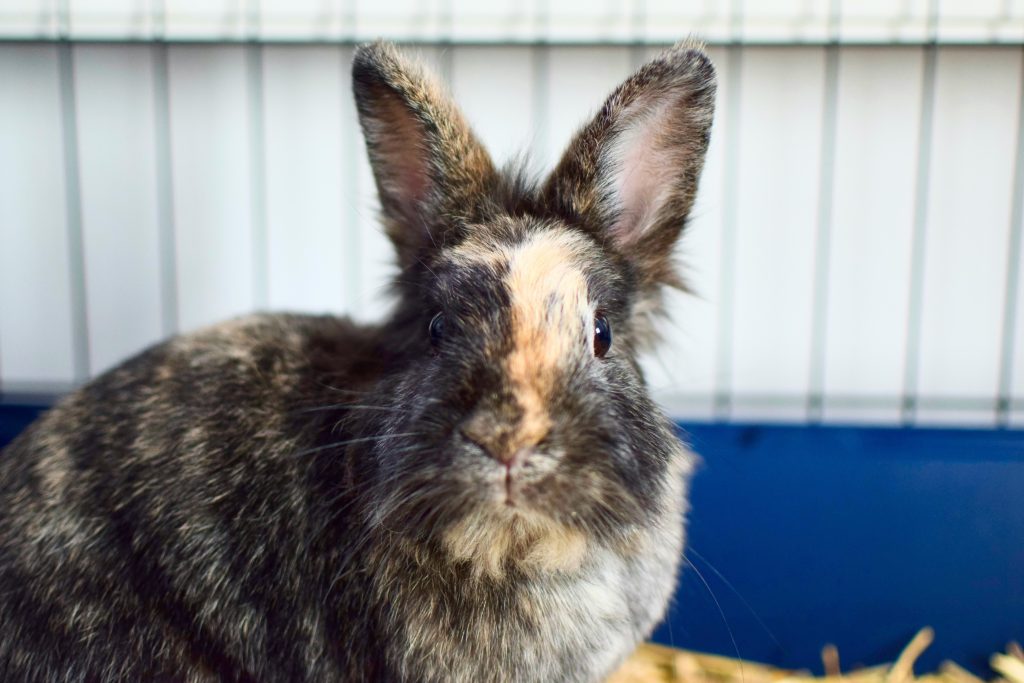
Bonded rabbits naturally monitor human movement to maintain environmental security and predictability. If you’re moving from room to room, cleaning, or walking around, your rabbit might stare simply to track your physical whereabouts.
Knowing where you are gives them a sense of stability. This same instinct is why many rabbits follow their owners from room to room and keep track of their movements throughout the day.
6. They’re Deciding Whether It’s Safe to Approach
If you’ve recently brought a new rabbit home or are working with a shy rescue, prolonged staring often means they’re thinking things over. They are balancing their natural curiosity against a little cautious hesitation.
Pausing and freezing gives them a moment to read the room before deciding whether to come closer or head for shelter. Taking time to move slowly and create a calm environment helps timid pets process surroundings at their own pace, an important principle when building trust with shy rabbits.
How to spot cautious evaluation:
- Their posture looks a bit hesitant, with their weight shifted slightly back.
- Their nose twitches quickly as they sniff the air.
- They take a couple of cautious hops forward, pause to stare again, and see how you react.
7. They’re Anticipating a Familiar Routine
Rabbits thrive on routine and quickly learn when meals, exercise, and playtime usually happen. Understanding their internal clock is a big factor when learning why rabbits are active at dawn and dusk.
If you let them out to roam every evening at 6:00 PM or hand over a bedtime snack, your rabbit will start lining up and staring at you 5 or 10 minutes beforehand. They have simply learned your routine and are reminding you it’s time.
Signs it’s all about timing:
- The stare occurs at the exact same time every day.
- They sit near the pen door, kitchen entrance, or treat container.
- They shift positions eagerly whenever you move or stand up.
8. Your Rabbit May Not Be Feeling Well
If your rabbit is staring without moving, first look at their posture. A relaxed rabbit that is loafing or flopped is usually resting and observing. A rabbit that is rigid, hunched, or refuses food should be monitored closely because the combination can indicate pain or illness.
Because they are prey animals, rabbits work hard to hide when they aren’t feeling well, often sitting completely still for hours when in discomfort. Emergency care guidelines from the House Rabbit Society emphasize that a sudden drop in activity or appetite should be evaluated quickly for conditions like GI stasis or dental disease. You can also listen closely to different rabbit sounds, such as loud tooth grinding, which often signals acute distress.
Red flags to watch out for:
- Hunched, tight posture with weight shifted awkwardly forward.
- Eyes squinted, dull, or half-closed instead of bright and wide.
- Complete refusal of favorite treats, food, or water.
If your rabbit is sitting unusually still while staring, refusing food, sitting hunched, or acting unusually quiet, contact a rabbit-savvy veterinarian promptly. These combinations are much more concerning than staring alone.
3. Why Staring Is Normal Rabbit Behavior
Rabbits gather information about their environment primarily by watching. As prey animals, they constantly monitor their surroundings, predict daily routines, and keep track of everyone in their household. Unlike dogs that bark or cats that meow, rabbits often communicate through subtle visual cues and body language.
In the wild, survival depends on paying constant attention to environmental changes. Their eyes are set high and wide on the sides of their head, providing nearly panoramic vision that makes it easy to track movement across a room. Because their close-up vision is somewhat limited, a rabbit will often tilt or shift their head slightly to get a better look at nearby people—a normal element of overall rabbit body language.
Rabbits also learn household patterns remarkably fast. They memorize footsteps, feeding times, and the specific sounds that predict their favorite activities. Watching you helps them anticipate what will happen next.
4. How to Interpret Your Rabbit’s Stare
Don’t rely on staring alone to guess what your pet is thinking. Interpreting their gaze accurately requires evaluating a few physical and environmental clues together:
- Body Posture: Are they relaxed, loafed, flopped, or tight and hunched?
- Ear Positions: Are their ears relaxed and facing forward, rotating independently toward sounds, or pinned tightly back?
- Location: Where is your rabbit staring from? (Standing near a food bowl or pen door often points to routine or treats, while watching from across the room signals comfortable observation.)
- What Just Happened: What occurred immediately before they started staring? Did you open a food bag, move around the room, or walk in after work?
Putting these clues together usually reveals whether your rabbit is simply keeping tabs on you, waiting for dinner, asking for head rubs, or showing early signs of discomfort.
5. Should You Stare Back at Your Rabbit?
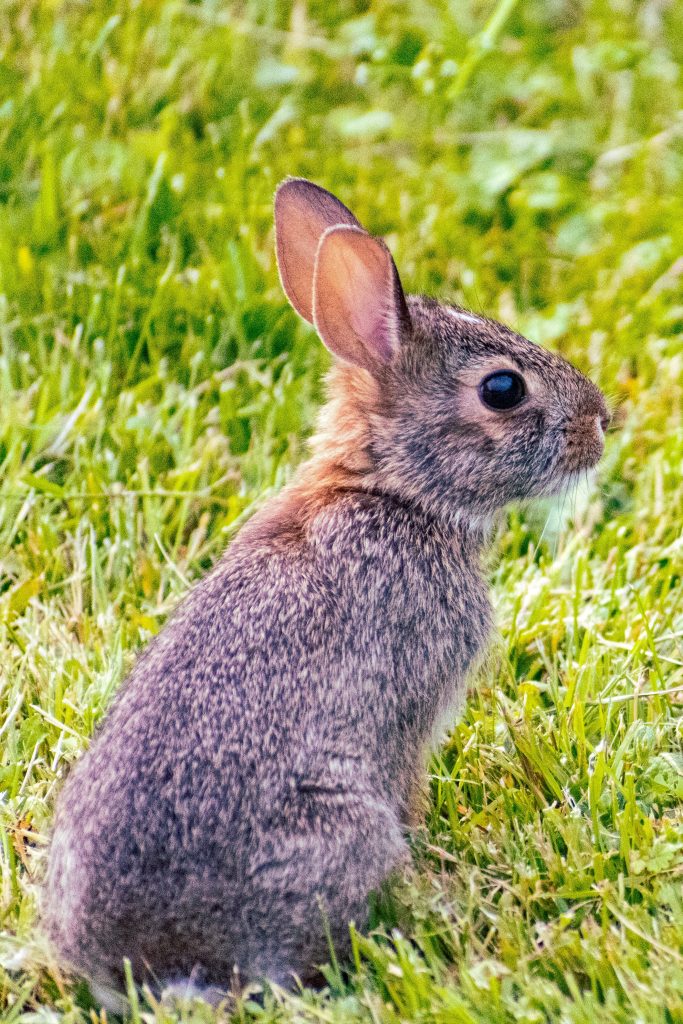
When you catch your rabbit staring at you, it’s completely natural to lock eyes and gaze right back. However, rabbits are sensitive to body language, so a relaxed posture and gentle movements will usually communicate safety better than prolonged direct staring.
If you want to signal that everything is fine and you’re no threat, try these friendly body language cues instead:
- Relax your eyes: Avoid an intense, prolonged gaze. Calm facial expressions and slow movements help your rabbit feel safe.
- Break direct eye contact: Turn your head or shoulders slightly away rather than staring straight down at them.
- Get down on their level: Sit or lie on the floor nearby without reaching out right away. Let them decide when to hop over and say hello.
6. When Staring Is a Reason to Call the Vet
While staring is usually just normal bunny behavior, you should reach out to a rabbit-savvy vet right away if it comes with any warning signs of pain. Recognizing subtle shifts in behavior early is crucial, as highlighted in veterinary advice for detecting pain in rabbits.
The most important warning sign is often a change in appetite. A rabbit that stares but continues eating, drinking, and behaving normally is usually not showing a medical emergency.
However, seek immediate care if staring happens alongside:
- Not eating normally for 8 to 12 hours.
- No droppings or a major decrease in droppings over an 8-hour period.
- Firmly pressing their head into corners or walls (head pressing).
- Loss of balance, rolling, or a tilted head.
- Fast, shallow breathing or feeling cold to the touch.
When in doubt, running through a quick at-home wellness check can help you decide if a trip to the clinic is necessary.
7. Frequently Asked Questions
Why does my rabbit stare at me without blinking?
Rabbits don’t blink anywhere near as often as humans do—sometimes only a few times an hour when they’re totally relaxed—so their gaze naturally looks super steady. They also have a thin, clear third eyelid that keeps their eyes moist without needing a full blink.
Why does my rabbit stare at me and not move?
A rabbit that stares without moving is usually observing something, listening carefully, or deciding whether to approach. However, freezing combined with a hunched posture, loss of appetite, or unusual quietness can indicate stress or illness.
Why does my rabbit stare at me and then run away?
A rabbit that stares and then runs away is often curious but still deciding whether it feels comfortable approaching. This is very common in shy rabbits, young bunnies, or rabbits adjusting to a new environment.
Why does my rabbit stare at me and thump?
A rabbit that stares and thumps is usually alert, frightened, or warning you about something they noticed in their environment. In most cases, rabbits thump to signal potential danger or express frustration when something in their territory feels off.
Why does my rabbit stare at me through their cage or pen bars?
A rabbit looking through pen bars is usually watching for you to come over, waiting for their next meal, or politely asking for you to open the door so they can come out and explore.
Why does my rabbit stare at me while I sleep?
Rabbits are crepuscular, meaning they are naturally most active at dawn and dusk. When you wake up to find your rabbit watching you from across the room, they are usually just awake, checking out their space, or waiting for you to get up and serve breakfast.
Does staring mean my rabbit loves me?
Staring by itself is just neutral observation. But if your rabbit stares while lying in a relaxed flop, or if it turns into head nudges, soft tooth purring, and grooms, it’s a great sign that they feel happy, safe, and bonded with you.
Why does my rabbit stare at a blank wall?
Rabbits have incredible hearing and a sharp sense of smell. A rabbit staring at a wall is almost always listening to or smelling something you can’t pick up—like water humming in the pipes, a tiny bug, or sounds from outside.
8. Conclusion
Most of the time, a rabbit staring at you is simply paying attention—not judging you. Once you learn to read the rest of their body language, that quiet gaze becomes one of the easiest ways to understand what your rabbit wants. To explore the full spectrum of bunny communication and everyday habits, check out my complete guide to rabbit behavior.
Medical & Veterinary Disclaimer: Bunnyowners.com is an informational resource for rabbit owners and enthusiasts. We are not veterinarians. The content on this website is for educational purposes only and is not a substitute for professional veterinary advice, diagnosis, or treatment. Always consult a qualified veterinarian with any questions or concerns regarding your pet’s health, medical conditions, diet, or overall care. If you have concerns about your rabbit’s health, it’s always best to reach out to a veterinarian rather than relying solely on information found online.