
Veterinary & Affiliate Disclaimer: Bunnyowners.com shares educational rabbit care resources, not professional veterinary advice. Always consult a qualified veterinarian regarding your rabbit’s medical, dietary, or behavioral needs. This post may also contain affiliate links; as an Amazon Associate and affiliate partner, we earn from qualifying purchases at zero extra cost to you.
If you have ever felt a soft, vibrating rhythm under your fingers while stroking your rabbit’s forehead, you might wonder if they are purring like a cat. While the mechanism behind the sound is entirely different from a feline’s rumble, owners widely use the word “purring” to describe this subtle, highly rewarding behavior. Understanding this quiet physical signal is the first step toward reading your bunny’s emotional language.
Rabbits do not purr using vocal cords, but they express contentment by gently clicking their teeth together to create a soft vibrating sound. This non-vocal behavior, often called “tooth chittering,” serves as a primary signal that a rabbit feels completely safe, relaxed, and comfortable. Because the sound is extremely quiet, owners usually feel this gentle jaw tremor through their fingers while petting rather than hearing it across the room.
Recognizing this gentle sound and reading it alongside your rabbit’s overall body language gives you a much clearer picture of how your pet is feeling. In this guide, we’ll break down why rabbits purr, what the vibration actually feels like under your hand, how to interpret it alongside posture, and how to cultivate an environment where your bunny feels relaxed enough to purr around you.
1. Do Rabbits Really Purr?
Rabbits do not purr using vocal cords like cats do. Instead, they create a subtle vibrating sensation through gentle tooth chattering when they are relaxed and comfortable. This tooth-clicking behavior is only one part of how rabbits communicate. Rabbits rely on body language, sounds, and posture to express how they feel.
Because rabbits are prey animals, they express emotions through subtle physical cues rather than vocalizations. That soft jaw tremor signals your bunny feels secure enough to drop their guard. Recognizing these subtle cues helps you better interpret signals of a relaxed rabbit when they feel completely safe.
What Does a Rabbit’s Purr Sound Like?
- A happy rabbit’s purr is extremely soft, light, and rhythmic. It often sounds like:
- faint click-click-click
- lightly tapping two fingernails together a tiny mechanical watch ticking
This sound is rarely audible across a busy room; you usually have to be right next to your rabbit to hear it, or you may only feel the subtle vibration through their head while petting them. It is almost always accompanied by a relaxed body posture, like floppy ears or a full body flop.
Good to Know: Rabbit purring is often so quiet that many owners feel the gentle vibration through their fingers long before they ever hear it. That is completely normal and one reason new owners often wonder whether rabbits purr at all.
Rabbit Purring vs. Cat Purring
While the emotional meaning is remarkably similar to feline purring, the way the sound is produced is entirely different:
| Feature | Rabbit “Purr” | Cat Purr |
|---|---|---|
| Volume | Very quiet, barely audible | Easily heard across a room |
| Mechanism | Produced by subtle tooth movements | Produced by vibrating vocal cords |
| Context | Usually during calm petting or resting | Occurs in many situations |
| Detection | Often felt before it is heard | Usually heard immediately |
To explore the full spectrum of noises your bunny makes, check out my guide to rabbit communication sounds.
2. Why Do Rabbits Purr?
To understand why this behavior happens, it helps to view the world from a rabbit’s perspective. Because they are naturally cautious animals, their communication relies heavily on low-key signals rather than loud sounds.
When a rabbit feels comfortable in their environment, that confidence often appears through small, relaxed behaviors. When their basic needs are met, such as being well-fed, warm, and secure in your presence, the gentle chittering of their teeth acts as a quiet reassurance that they are at ease. In fact, pet care advice from RSPCA shows that creating a safe, calm home is really what unlocks these happy behaviors in the first place.
3. What Does Rabbit Purring Feel Like?
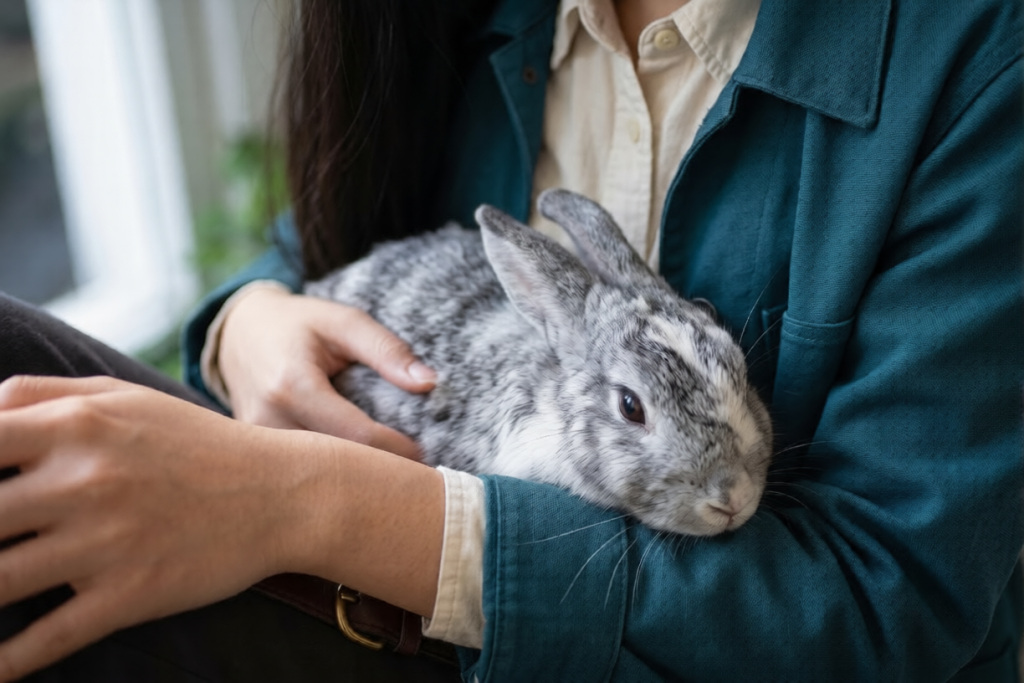
Because a rabbit’s purr is non-vocal, many owners never actually hear the sound the first time it happens—they feel it instead. Some owners even mistake it for their rabbit’s whiskers moving or twitching because the vibration is so subtle. Placing your hand lightly on the crown of a rabbit’s head or along their cheekbones allows you to detect a delicate, paper-thin micro-vibration pulsing through their jaw.
If the room is completely silent, you might catch a faint click-click-click of the incisors meeting. However, volume varies wildly between individuals:
Pro Tip for Owners: If you suspect your rabbit is purring but cannot hear anything, rest your thumb very lightly on the bridge of their nose or the side of their cheek while petting them. The jaw muscle tremors are often much easier to feel than to hear.
Common Situations Where Purring Happens
Rather than happening at random, this behavior typically unfolds during specific, predictable moments of relaxation throughout the day:
- During Evening Petting: After exploring, your rabbit settles beside you. As you stroke the fur between their ears, their head sinks to the floor, and that faint jaw vibration begins.
- During Quiet Co-existence: Simply sharing space while you read or watch television can trigger soft tooth-clicking because your calm presence makes them feel comfortable.
- During Bonded Pair Grooming: When two bonded rabbits sit side-by-side, one will often break into a soft purr while gently licking the ears and eyes of its partner.
4. Is Rabbit Purring the Same as Tooth Grinding?
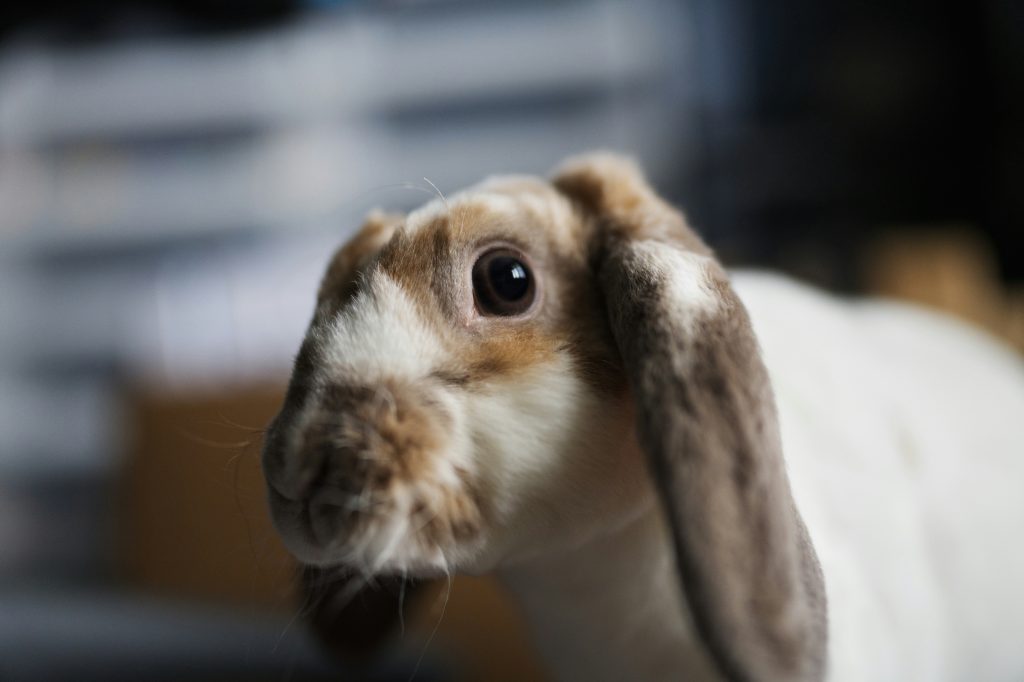
It is easy for new owners to confuse a contented purr with painful tooth grinding because both involve the jaw and teeth. However, the context, sound, and accompanying body language are completely different.
Happy purring (often called tooth chittering) is soft, rhythmic, and light. It happens when your rabbit is visibly relaxed, usually during petting or resting, and is accompanied by a loose body posture, soft eyes, or a flop.
Loud tooth grinding (known medically as bruxism) is much harsher, louder, and sounds like two stones clicking or scraping together. A rabbit grinding their teeth in pain will usually look tense, sit hunched up in a corner with wide eyes, and resist being touched. In fact, noticing loud grinding paired with a stiff posture or loss of appetite is a critical indicator of physical distress rather than a sign of a happy bunny—making it vital to recognize these signs of severe rabbit pain so you can seek prompt care.
5. Reading the Rest of Your Rabbit’s Body Language
Purring is just one piece of the puzzle. Because rabbits communicate with their entire body, reading their subtle cues alongside relaxed rabbit body language gives you the complete picture of how they are truly feeling.
When a rabbit is purring out of genuine contentment, you will typically spot several supporting physical cues:
- Relaxed or half-closed eyes rather than wide, alert pupils.
- A “loaf” or “flop” position, tucking their feet underneath or rolling onto their side.
- Leaning directly into gentle petting or resting their chin flat on the carpet.
- Remaining close to you rather than hopping away to find cover.
- Slow blinking or relaxed ears resting naturally along their back.
You usually see these physical cues happen together whenever a bunny feels completely safe. When those quiet jaw vibrations line up with their everyday body language, you get a quick read on their mood—making it so much easier to tell when your rabbit is truly happy in their space.
6. Why Doesn’t My Rabbit Purr?
If your rabbit rarely or never purrs, it does not mean they are unhappy or that they lack trust in you. Individual personality plays a massive role in how rabbits choose to express affection. Some rabbits are also more private about affection; they may happily relax beside you for years without ever becoming obvious purrers.
Every rabbit communicates differently. While some are frequent, obvious purrers who chitter the moment you stroke their head, others prefer quieter, non-auditory ways of showing comfort. A happy rabbit might choose to show their affection by:
- Flopping down right next to your chair while you work.
- Grooming your clothes, hands, or the rug nearby.
- Following you quietly from room to room.
- Nudging your ankles gently for a treat or a quick pet.
Some rabbits show happiness through more energetic behaviors as well, such as running, jumping, and performing binkies and playful behavior.
In my hands-on observational work with bonded rabbits, these distinct communication styles are obvious. With my bonded pair Mocha and Chino, Mocha’s purr is almost entirely tactile—you feel a distinct, steady pulse right along her lower jawline during forehead rubs, but hear virtually nothing. Chino, on the other hand, produces a clearly audible, high-frequency tooth click that fills a quiet room whenever he settles into a cozy loaf. Both are completely content; they simply express it in their own individual ways.
Can Rabbits Purr Multiple Times a Day?
Yes. Depending on your rabbit’s personality and daily routine, they may purr multiple times a day—especially during recurring quiet windows like morning grooming or evening petting sessions.
7. Can Rabbits Purr for Other Rabbits?
Tooth clicking is not a behavior reserved exclusively for human interaction; it plays a vital role in the social dynamics between bonded rabbits. These quiet interactions are part of the social bonds rabbits develop as they form strong relationships with companions. Observational work on how bonded pairs express mutual affection confirms that grooming and soft tooth clicking reinforce their social bond.
When two rabbits have established a strong bond, purring becomes a shared language of mutual reassurance. During grooming sessions, the rabbit receiving affection will often break into a soft purr as their partner licks their forehead and ears, communicating vulnerability and trust.
Behavior guides on rabbit bonding mention that soft chittering during mutual grooming is one of the clearest signs that two bunnies feel completely comfortable together. Even during quiet moments, such as two rabbits resting shoulder-to-shoulder during an afternoon nap, these faint jaw vibrations help reinforce those close social bonds between paired rabbits.
Mutual grooming behavior remains one of the strongest ways rabbits show affection toward another rabbit or a human they feel completely safe around.
8. How to Build Enough Trust for a Rabbit to Purr Around You
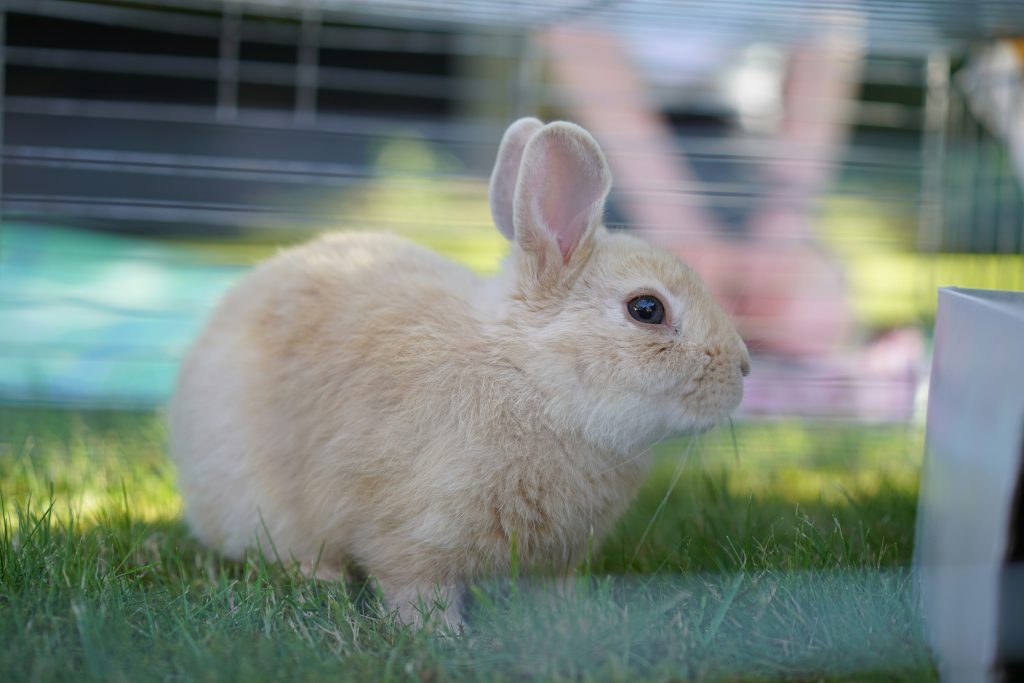
Because purring is a reflection of deep relaxation, it cannot be forced or taught on a schedule. Instead, encouraging a rabbit to purr around you requires creating an environment where they feel comfortable and relaxed.
Here are the most effective ways to build that foundation of trust:
- Let your rabbit approach you on their own terms rather than reaching into their space unexpectedly.
- Keep a predictable daily routine for feeding, cleaning, and free-roam time.
- Pet preferred areas like the forehead, cheekbones, and the space between their ears.
- Avoid sudden movements and loud noises during your quiet bonding sessions.
Developing a consistent routine and learning proper handling and bonding techniques are essential steps toward helping your rabbit feel secure enough to relax and purr in your presence.
9. Frequently Asked Questions
Do rabbits really purr?
Rabbits do not purr vocally, but they produce a soft, rhythmic tooth-clicking vibration when relaxed that serves a similar purpose to a cat’s purr by signaling relaxation and comfort.
Why does my rabbit purr when I pet them?
Petting your rabbit on their head or cheeks mimics natural social grooming. The resulting tooth clicking is generally a sign that they feel safe and comfortable with your touch.
What is the difference between purring and tooth grinding?
Soft, gentle tooth clicking is a sign of contentment and relaxation. By contrast, loud, harsh, or continuous tooth grinding is usually accompanied by a tense posture and can indicate pain or distress.
Can rabbits purr while sleeping?
Yes. Rabbits frequently enter light states of sleep while in a loaf posture, and you may occasionally notice gentle tooth chittering as they settle down or drift off.
Why can’t I hear my rabbit purr?
The sound is faint and rarely travels well through ambient room noise. In many cases, you will feel the micro-vibration through your fingers long before you hear it.
Do bonded rabbits purr together?
Yes. Bonded pairs frequently click their teeth while grooming one another, sharing meals, or napping side-by-side as a way to reinforce their social bond.
10. Final Thoughts
Rabbit purring is one of the quietest, most rewarding compliments a pet owner can receive. It represents a moment where a naturally cautious animal feels comfortable enough to relax in your presence. By looking beyond loud vocalizations and learning to read these subtle physical cues—from soft jaw vibrations to relaxed body postures—you can build a deeper, far more intuitive bond with your rabbit.
For a complete overview of daily care routines, habitat setup, and wellness monitoring, explore our definitive guide to rabbit health.
Medical & Veterinary Disclaimer: Bunnyowners.com is an informational resource for rabbit owners and enthusiasts. We are not veterinarians. The content on this website is for educational purposes only and is not a substitute for professional veterinary advice, diagnosis, or treatment. Always consult a qualified veterinarian with any questions or concerns regarding your pet’s health, medical conditions, diet, or overall care. If you have concerns about your rabbit’s health, it’s always best to reach out to a veterinarian rather than relying solely on information found online.