
Veterinary & Affiliate Disclaimer: Bunnyowners.com shares educational rabbit care resources, not professional veterinary advice. Always consult a qualified veterinarian regarding your rabbit’s medical, dietary, or behavioral needs. This post may also contain affiliate links; as an Amazon Associate and affiliate partner, we earn from qualifying purchases at zero extra cost to you.
Setting up a good home for a rabbit starts with moving past the traditional idea of a small cage. Rabbits need enough permanent living space to run, stretch, stand upright, hide, eat, rest, and explore, so the goal is to build the setup around the way rabbits actually live and move. Most standard pet cages simply do not give rabbits enough room to move naturally or stay active throughout the day.
The best rabbit housing setup provides a large, permanently accessible living area with solid, non-slip flooring, comfortable places to rest, and secure hiding spots. It integrates an accessible litter and hay station alongside fresh water while leaving plenty of clear floor space for running, digging, and exploring. Rather than confining a pet to a small cage, the entire accessible environment serves as the rabbit’s actual home.
Whether you choose a modular exercise pen, a dedicated rabbit-proofed room, or a managed free-roam layout, planning the space properly from the beginning makes caring for your rabbits much easier and keeps them healthier. This guide walks through space requirements, enclosure types, interior layouts, flooring, essential rabbit-proofing, and how to put the entire setup together.
1. Start With Space, Not the Cage
The most common mistake new owners make is shopping for an enclosure before understanding how much room a rabbit actually needs. Traditional store-bought cages are often marketed as complete homes, but most of them restrict a rabbit’s normal movement. The main question to ask isn’t “which cage fits in this corner?” but “how much open space can I actually give my rabbit every day?”
How Much Space Does a Rabbit Need?
A compatible pair of average-sized rabbits should have permanent access to a single continuous living area measuring at least 3 m × 2 m × 1 m (about 10 ft × 6.6 ft × 3.3 ft). Very large rabbits or groups may need more space to comfortably perform the same behaviors.
Rabbits do not just take isolated hops; they sprint, stretch out flat on their sides, pivot quickly, and jump into the air when excited. When an enclosure is too small, rabbits miss out on regular physical activity, which can lead to poor fitness, boredom, or unwanted behaviors.
Usable Space Matters More Than the Number on the Box
An enclosure can look spacious on paper while offering very little practical living room. What matters most is how much of the space your rabbit can actually move around in comfortably.
Common design issues that cut into usable floor space include:
- Narrow hallway layouts: Long, skinny runs that do not leave enough room for easy turning.
- Vertical levels that don’t add real running room: Multi-story cages where steep ramps take up valuable floor space without offering flat running stretches.
- Overcrowded floors: Pens packed with so many toys, boxes, and accessories that there is no open path left to run.
- Slick patches: Bare tile or hardwood sections inside the living area that rabbits avoid because they cannot get a secure grip.
To check whether your setup gives your rabbit enough room for everyday movement, review the basic space checks below.
Usable Space Requirements
| Natural Behavior | What You Are Checking | Setup Evaluation |
|---|---|---|
| Stand Upright | Full vertical periscope without ears touching the top | Adequate vertical height across the setup |
| Full Stretch | Lying completely flat on side without feeling cramped | Wide, unobstructed resting areas |
| Normal Run | Taking several continuous forward strides rather than single hops | A long, uninterrupted floor run |
| Turn and Jump | Pivoting and jumping freely without bumping obstacles | A wide, open square or rectangular footprint |
| Social Space | Moving away from a companion when desired | Multiple resting spots and clear paths |
Housing must allow rabbits to run, jump, dig, rest fully outstretched, and stand upright at all times.
2. What Type of Housing Is Best for Rabbits?
Once you know how much room your rabbit needs, choosing the right type of housing becomes much easier. Indoor setups generally fall into four practical options.
What Is the Best Type of Rabbit Enclosure?
For most indoor rabbits, a large exercise pen, a rabbit-proofed room, or a well-managed free-roam area provides far more usable living space than a standard commercial cage. A cage or crate can sometimes serve as an open resting base, but it should not make up the rabbit’s entire living environment.
Exercise Pens (X-Pens)
Modular exercise pens designed for dogs are one of the most practical and flexible indoor housing options available. They offer several distinct advantages:
- Adaptable shapes: Panels can be arranged as rectangles, L-shapes, or room dividers to fit your room.
- Flexible panel heights: Exercise pens are available in several heights, and taller panels are often preferable for athletic or determined jumpers.
- Good airflow: Open wire walls keep fresh air circulating throughout the living area.
- Easy maintenance: Step-in access makes daily feeding and spot-cleaning simple.
Dedicated Rabbit-Proofed Rooms
Setting aside a spare bedroom, office, or enclosed den gives your rabbit immediate, generous square footage. This setup eliminates pens and gates while keeping all rabbit activity in one easy-to-manage space. It does require thorough proofing along baseboards, closet doors, and low electrical cords.
Free-Roam Arrangements
Free-roaming gives a rabbit shared access to parts of the home, similar to living with a cat or dog. However, free roaming still requires a clear home base. Even a rabbit with whole-room or whole-house access needs a dedicated station for their litter box, hay feeder, water dish, and secure hiding spots.
Traditional Cages and Crates
Standard commercial rabbit cages generally provide far less usable floor space than rabbits need for normal movement. Small cages severely limit opportunities for running, exploring, and moving around normally, while wire flooring can put unnecessary pressure on a rabbit’s feet and should not be used as the main flooring.
For that reason, cages or large dog crates work best as open home bases inside a larger penned area rather than complete living quarters.
Each option works a little differently depending on your room and how much space you can safely give your rabbit:
Rabbit Housing Options Compared
| Housing Setup | Available Space | Flexibility | Proofing Needed | Best Role in Home |
|---|---|---|---|---|
| Exercise Pen (X-Pen) | High | High | Moderate | Primary living area or home base |
| Rabbit-Proofed Room | Very High | Moderate | High | Full independent living room |
| Free Roam | Maximum | High | Very High | Integrated household living |
| Traditional Cage/Crate | Very Low | Low | Low | Open resting base only |
3. What Should Be Inside a Rabbit’s Home?
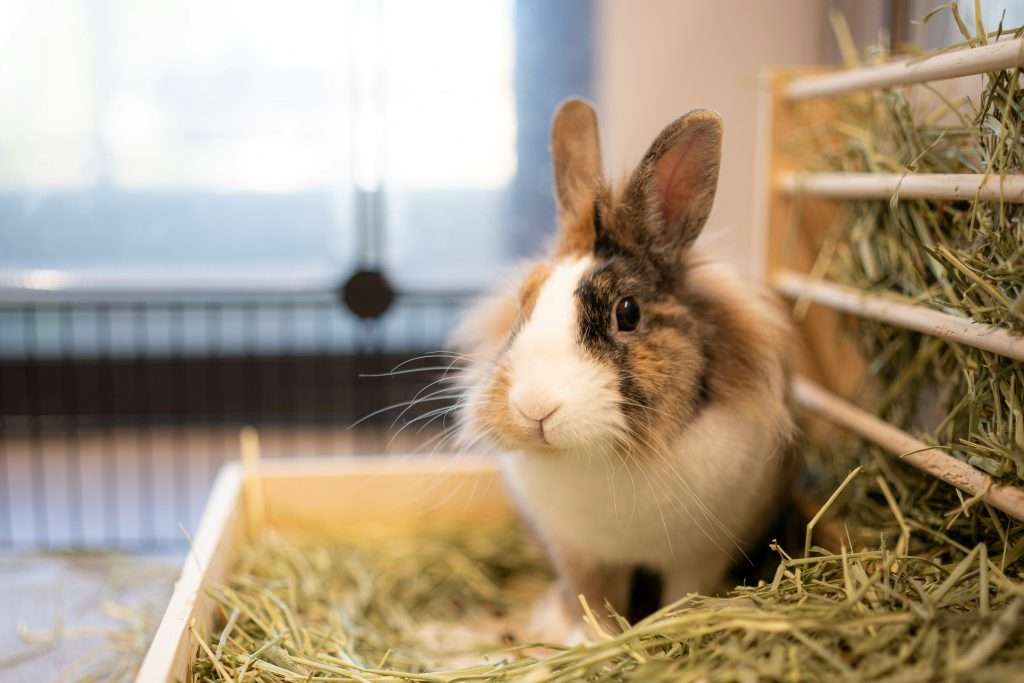
A good rabbit setup is easier to manage when everything has a sensible place. Instead of filling the floor with scattered supplies, place key items around the perimeter so your rabbit has clear paths to eat, drink, rest, and move.
What Does a Rabbit Need in Its Enclosure?
A rabbit’s living area needs a large, open litter tray paired with plenty of clean grass hay, a dependable water station, solid non-slip flooring, at least one safe hiding spot, and good items to chew and explore. These essentials should be arranged along the edges to keep the central floor clear for movement.
Create a Combined Litter and Hay Station
Rabbits commonly eat hay while using their litter box. Setting up a hay feeder directly above or inside a large, high-sided litter pan makes good litter habits much easier to maintain. Keep the hay fresh, loosely packed, and easy to reach in generous amounts every day.
Give Water Its Own Stable Location
Provide fresh water in a stable bowl or other reliable drinking setup that cannot be easily tipped over. If you are deciding between a water bowl or bottle, a heavy ceramic bowl works particularly well for many rabbits because it is easy to drink from, supports natural intake, and is difficult to knock into the litter tray.
Establish Quiet Resting Zones and Clear Corridors
With my own rabbits, Mocha and Chino, I learned pretty quickly that the first setup is almost never the final one. Tucking their hideouts into a quiet back corner instead of near the pen door made an immediate difference in how deeply they slept, and moving the water dish across the room finally stopped Chino from kicking hay into it. Watch how your rabbits actually use the space—it is always easier to rearrange the furniture around their habits than to try to change their minds.
Most importantly, keep the center of the enclosure open. Resist the temptation to crowd the pen with too many tunnels, beds, and toy boxes at once; rotating items every week keeps things interesting while leaving running room open.
Organizing the space with a clear layout ensures all essential needs are met while leaving plenty of room to run.
Rabbit Enclosure Layout Zones
| Zone Type | Core Equipment | Placement Strategy |
|---|---|---|
| Sanitation & Foraging | Large litter box, paper bedding, grass hay | Dedicated corner away from sleeping areas |
| Hydration | Heavy ceramic water bowl | Flat, dry floor area away from litter |
| Rest & Shelter | Wooden hideout, cardboard box, resting mat | Rear or low-traffic perimeter wall |
| Open Movement | Low-pile rug or textured foam runner | Central span connecting all perimeter zones |
| Enrichment | Chew sticks, willow balls, foraging mats | Perimeter edges, rotated on a regular basis |
4. Choose Flooring Your Rabbit Can Actually Grip
Domestic rabbits do not have padded foot pads like cats or dogs; their feet are covered only in fur. Because of this, smooth household floors make it difficult for them to get reliable traction.
What Flooring Is Best for Rabbits?
The best rabbit flooring is solid, non-slip, comfortable underfoot, and easy to keep clean. Surfaces like low-pile cotton rugs, textured play mats, and dense natural grass mats give rabbits the good grip they need to run and jump without slipping. Wire grid floors should never be used as main flooring.
Why Slippery Floors Are a Problem
Rabbits often struggle to move confidently on smooth flooring like hardwood, laminate, or slick tile because their fur-covered feet slide easily. Slipping can make them hesitant to leave their pen, run, or jump, and it increases the risk of awkward falls or joint strains. Providing reliable grip across their main living space helps them stay active and relaxed.
Whatever material you use, make sure it provides good grip, is easy to clean, and isn’t something your rabbit routinely chews or swallows. Solid, cushioned flooring is also a major factor in protecting foot health, particularly for rabbits prone to developing sore hocks.
5. Every Rabbit Needs Somewhere to Hide
As prey animals, rabbits feel most secure when they know they have an accessible shelter nearby. An open enclosure with nowhere to retreat can leave a rabbit feeling exposed.
Do Rabbits Need a Hiding Place?
Yes. Rabbits should always have access to a safe hiding spot where they can rest undisturbed when startled or tired. In setups with multiple rabbits, provide several hiding options so everyone can choose whether to relax together or spend time apart.
What Makes a Good Rabbit Hide?
A safe hideout can be as simple as an untreated wooden shelter, a sturdy cardboard box, or a dense willow tunnel. When choosing or building a hide:
- Include multiple openings when possible: Hides with two doors work especially well because they prevent one rabbit from cornering or blocking another inside.
- Choose stable structures: Rabbits often enjoy jumping on top of flat wooden or cardboard roofs to look around, so ensure the shelter can support their weight.
- Use rabbit-safe materials: Stick to unpainted wood, plain unprinted corrugated cardboard, or safe woven grasses that are harmless if nibbled.
6. Put the Setup in the Right Part of Your Home
Where you place your rabbit’s enclosure affects how calm they feel, their daily routine, and how well they feel like part of everyday household life. The goal is to strike a balance between family interaction and calm retreat.
Where Is the Best Place to Keep an Indoor Rabbit?
An indoor rabbit should live in a comfortable part of the house without strong drafts or big temperature swings. Ideally, they should also be able to see and hear normal household activity without being surrounded by constant noise or foot traffic. Living rooms, home offices, and quiet family dens generally work best; drafty garages, damp basements, and loud utility rooms are unsuitable.
Balancing Family Life and Quiet Time
Rabbits are social animals that thrive when they are part of the household routine. Tucking a pen away in an unused back room can make them feel isolated and makes it harder to notice subtle changes in appetite or behavior. On the other hand, placing the pen right next to a loud television speaker, a slamming door, or a busy kitchen walkway makes it hard for them to truly relax.
Schedules and Noise
Rabbits are crepuscular, meaning they are naturally most active early in the morning and around dusk. If you are a light sleeper, setting up an enclosure right next to your bed might lead to interrupted nights as your rabbit rearranges cardboard and runs laps before dawn. Look for a location with stable room temperatures and protection from sudden loud household noises.
7. Keep the Environment Comfortable

Domestic rabbits generally tolerate cool conditions better than excessive heat, and sustained high temperatures can quickly put them at risk for heat stroke. Because they have thick coats and cannot sweat, keeping their living area comfortable and well-ventilated is an essential part of indoor care.
What Temperature Is Best for Rabbits?
Keeping the living space around 10–20°C (50–68°F) works best for domestic rabbits. Areas should stay within a comfortable, moderate range and be protected from sudden temperature swings or direct heat.
Fresh Air and Good Ventilation
Good ventilation helps keep the living area fresh and prevents moisture, dust, and litter odors from building up. Solid-walled bins or plastic-covered cages restrict airflow, whereas wire-sided exercise pens and open-top runs generally allow good airflow across the living space.
Avoid Common Hot Spots
Always check the area right around the pen throughout the day:
- Moving sunbeams: A pen that sits in comfortable shade in the morning may receive direct, intense sun through a window by mid-afternoon.
- Heating vents: Setting an enclosure directly over a forced-air register or under a heat vent can cause rapid overheating.
- Radiators: Keep pens a safe distance away from baseboard heaters and radiators to prevent hot spots that your rabbit cannot escape.
8. Rabbit-Proof the Space Before Expanding It
Before letting your rabbit explore beyond their main pen into a full room or larger area, take time to check the space for common hazards. Rabbits investigate their surroundings by chewing and squeezing into small gaps, so understanding why rabbits chew everything can make setting up a safe space much easier.
How Do You Rabbit-Proof a Room?
Rabbit-proof a room by covering or elevating electrical cords, protecting exposed baseboards and drywall corners, blocking low furniture crevices, moving toxic indoor plants off the floor, and giving your rabbit safer things to chew instead before opening up access.
- Electrical cords: Cords are the primary indoor hazard because a rabbit can bite through them instantly. Use sturdy plastic cord covers, run wires through elevated channels, or keep them completely out of reach behind blocked furniture.
- Baseboards and trim: Low wooden trim and wall corners invite chewing. Clear corner guards, solid furniture placement, or temporary perimeter grids help protect both the house and your rabbit.
- Furniture gaps and recliners: Block off low gaps under sofas and behind large appliances where a rabbit could get stuck. Mechanical recliner chairs are especially hazardous and should not be operated in areas where rabbits roam.
- Houseplants: Many common household plants are toxic if eaten. Move all potted plants up to high shelves or into rooms your rabbit cannot enter.
9. Give Your Rabbit Plenty to Do
Rabbits naturally spend time chewing, digging, searching for food, and investigating changes in their surroundings. A good housing setup gives them safe ways to do those things without sacrificing open running space. Shifting hiding boxes and cardboard tunnels into new positions occasionally gives your rabbit fresh paths to explore while keeping their daily environment engaging.
Easy Ways to Keep Them Busy
- Chewing: Keep a steady supply of rabbit-safe wood sticks, untreated cardboard tubes, and woven willow toys available so your rabbit can chew safely.
- Digging: Provide an open cardboard box filled with crumpled unprinted paper, clean straw, or seagrass mats to satisfy natural digging instincts without tearing up rugs.
- Foraging: Instead of putting all food in a plain dish, scatter pellets across hay piles or place leafy greens inside cardboard rolls to encourage natural foraging.
10. Housing Two Rabbits Takes More Than Just More Floor Space
Most rabbits enjoy living with a companion. A bonded pair may happily share most things, but it is still smart to give them more than one place to eat, drink, hide, and relax so one rabbit can’t block the other from food, water, or a favorite resting spot.
Give Them More Than One of the Important Things
To keep daily routines calm, make sure both rabbits have easy access to essentials:
- Two large litter and hay areas so both rabbits can graze comfortably side by side or separately.
- Multiple water sources so one rabbit cannot block access to drinking water.
- Several hiding spots, ideally with dual openings so neither rabbit feels trapped.
Give Them Room to Choose
Bonded rabbits spend most of their day grooming, napping, and eating together. However, a well-planned home also gives them the option to rest apart when one rabbit wants quiet time. Adding multiple visual breaks and separate comfortable resting areas keeps daily interactions relaxed.
11. What About Outdoor Rabbit Housing?
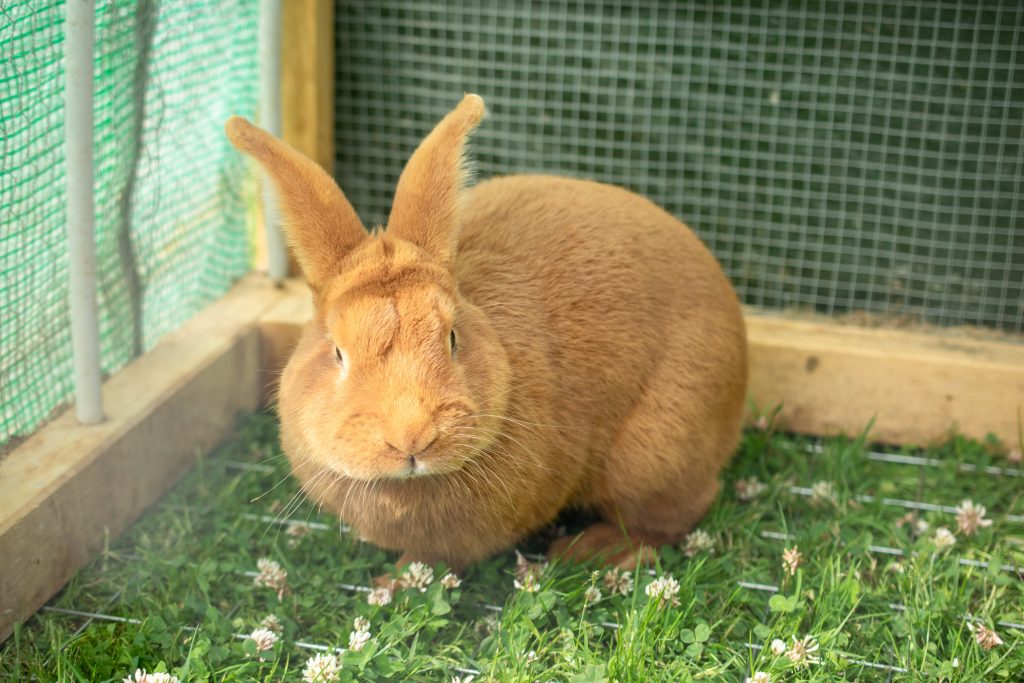
While outdoor hutches were once standard, keeping rabbits outdoors involves extra weather and safety challenges that indoor setups avoid entirely.
Can Rabbits Live Outside?
If rabbits are housed outdoors, the setup must provide thorough protection against predators, escape, dampness, and severe weather while still offering the same permanent, continuous living space expected indoors.
Key Outdoor Considerations
Outdoor enclosures need strong materials that predators can’t easily break through, secure latches, protection against digging and escape, waterproof shelter, good ventilation, shade, and protection from freezing cold and summer heat.
12. Common Rabbit Housing Mistakes
Avoiding early setup mistakes saves time, reduces expense, and keeps your rabbit comfortable from day one.
The table below outlines common housing missteps alongside practical adjustments that create a safer, more functional home:
Common Housing Mistakes and Solutions
| Initial Setup Problem | Recommended Solution | What Improves |
|---|---|---|
| Small commercial cage | Modular exercise pen | Gives more usable room to move |
| Slick flooring surfaces | Low-pile woven cotton runner | Prevents slipping and supports confident movement |
| Wire grid flooring | Solid floor with cushioned matting | Protects feet and prevents sore spots |
| Cluttered floor area | Move supplies toward the edges | Keeps central running paths open |
| Single-door hideout box | Dual-door shelter | Prevents cornering and keeps retreats safe |
| Unstable or awkward water source | Stable, easily accessible water station | Makes reliable drinking easier |
| Single central litter box | Multiple hay and litter stations | Reduces competition in multi-rabbit setups |
| Direct sunlight placement | Wall away from direct sun | Prevents rapid ambient overheating |
13. How to Set Up Your Rabbit’s Home
Assembling an exercise pen or indoor setup is straightforward when done in order:
- Select the location: Pick a quiet, comfortable indoor spot away from drafts, direct sunbeams, and loud household foot traffic.
- Put down base flooring: Lay a protective waterproof layer if needed, topped with textured low-pile cotton rugs or padded mats that provide steady footing.
- Set up the pen perimeter: Arrange the exercise pen panels to fit your space, securing the corners so the walls stay firm.
- Install the litter and hay station: Place a large, high-sided litter box in a back corner, adding absorbent paper bedding topped with a generous mound of fresh hay.
- Add the water station: Set a heavy ceramic water bowl on a flat, clean surface away from kicked hay.
- Place hiding retreats: Position wooden hides or sturdy cardboard boxes along the perimeter walls, keeping the central floor clear.
- Add safe enrichment: Place chew sticks, tunnels, and digging boxes around the edges of the living space.
- Do a quick safety sweep: Check the area for exposed wires within reach of the pen, loose carpet threads, or unstable furniture.
- Introduce your rabbit: Let your rabbit step into the space calmly and explore the new setup at their own pace.
Let Your Rabbit Guide Layout Adjustments
With my rabbit, Chino, I realized early on that a setup only works if it fits his daily habits. He would regularly treat his hideout like a rooftop lookout post rather than sleeping inside it until I rotated the entrance away from the main walkway to give him real privacy. Watching how your rabbit actually interacts with the space tells you everything you need to know—it is always easier to rearrange the pen around their quirks than to force a layout they don’t like.
Pay attention to how your rabbit uses their space. If your rabbit consistently chooses an unassigned corner as their bathroom, moving the litter box to that spot is much easier than trying to change their mind.
14. Rabbit Housing Checklist
Before settling your rabbit into their new home, use this checklist to make sure all basic space, comfort, and safety requirements are in place:
Rabbit Housing Checklist
| Category | Requirement | Verified |
|---|---|---|
| Space | There is enough open, permanent space for your rabbit to move normally | [ ] |
| Height | Enclosure height allows full periscope standing without touching the top | [ ] |
| Flooring | Base provides solid, non-slip traction with no wire mesh underfoot | [ ] |
| Foraging | Large litter box is paired directly with unlimited clean grass hay | [ ] |
| Hydration | Heavy, tip-proof ceramic water dish is clean and filled | [ ] |
| Shelter | Accessible hideouts are available, ideally with two exit openings | [ ] |
| Corridors | Center of the enclosure remains open for running and jumping | [ ] |
| Electrical | All cords within reach are covered by sturdy tubing or elevated | [ ] |
| Surfaces | Baseboards, trim, and low wall corners are protected from chewing | [ ] |
| Climate | The room stays comfortably cool without big temperature swings (around 10–20°C / 50–68°F) | [ ] |
| Placement | Enclosure is clear of direct sunbeams, heating registers, and loud noise | [ ] |
| Enrichment | Safe chew toys, tunnels, and foraging items are arranged along edges | [ ] |
15. Frequently Asked Questions
Can a rabbit live permanently in a traditional commercial cage?
No. Standard commercial cages do not provide enough continuous room for basic natural behaviors like hopping, sprinting, stretching, and periscoping. Confining a rabbit to a small cage severely limits opportunities to run, explore, stretch, hide, and move around normally.
Is an exercise pen better than a rabbit hutch?
For many indoor setups, yes. A modular exercise pen usually provides more usable floor space and greater flexibility than a traditional rabbit hutch, while making it easier to expand or rearrange the living area.
Can rabbits live as fully free-roam pets?
Yes, provided the entire living area is thoroughly rabbit-proofed. Free-roam rabbits still need a designated base station containing their litter box, hay feeder, water bowl, and a quiet hiding box where they feel secure.
Do pet rabbits need a soft fabric bed?
Fabric beds are optional. While some rabbits enjoy plush mats, others may chew the fabric, so monitor soft bedding and remove it if your rabbit begins swallowing pieces. Dense cotton rugs, seagrass mats, or wooden lounging planks are safer choices.
Do rabbits need a hideout box inside their pen?
Yes. As prey animals, rabbits need a secure retreat to manage stress and rest comfortably. Choosing a shelter with two doors helps prevent territorial trapping, especially in shared setups.
Can rabbits live on carpeted flooring safely?
Low-pile carpet can work well if your rabbit does not dig or chew the fibers. Avoid loose, looped carpets, which can snag toenails and cause digestive issues if swallowed.
Can rabbits live on smooth hardwood or laminate floors?
Smooth hardwood and laminate are usually poor primary flooring surfaces for rabbits because their fur-covered feet can struggle for traction. Add rugs or other non-slip surfaces across the areas your rabbit regularly uses.
Should I cover my rabbit’s indoor enclosure with a blanket at night?
Covering the entire pen is not necessary and can restrict airflow. If your rabbit can jump the enclosure, use a taller pen or a sturdy mesh panel across the top rather than relying on a blanket.
Where is the best place for a rabbit to sleep at night?
A quiet, comfortable room away from drafts, loud appliances, and other household pets is best. The sleeping area should have a secure hideout where your rabbit feels sheltered.
Do rabbits need to be locked up inside their pen at night?
If the surrounding room has not been completely rabbit-proofed, keeping your rabbit inside an exercise pen overnight protects them from chewing cords, getting stuck behind furniture, or getting into other household hazards.
16. Conclusion: Build the Home Around Your Rabbit
A well-designed rabbit habitat is never defined by the brand of pen, cage, or room you buy. It is defined by whether your rabbit can naturally use that environment to run, stretch, rest, forage, and feel secure 24 hours a day. Setting up a functional living space is one of the most important foundations of proper rabbit care, directly supporting your pet’s physical health and daily confidence.
Start by prioritizing plenty of open floor space with good footing, set up an easy-to-reach hay, litter, and water area, and keep the center of the enclosure completely open for movement. From there, treat your setup as an evolving space rather than a finished project. Pay attention to the paths your rabbit runs, the corners they claim, and the spots where they choose to sleep—and refine the layout around how they actually live.
Medical & Veterinary Disclaimer: Bunnyowners.com is an informational resource for rabbit owners and enthusiasts. We are not veterinarians. The content on this website is for educational purposes only and is not a substitute for professional veterinary advice, diagnosis, or treatment. Always consult a qualified veterinarian with any questions or concerns regarding your pet’s health, medical conditions, diet, or overall care. If you have concerns about your rabbit’s health, it’s always best to reach out to a veterinarian rather than relying solely on information found online.