
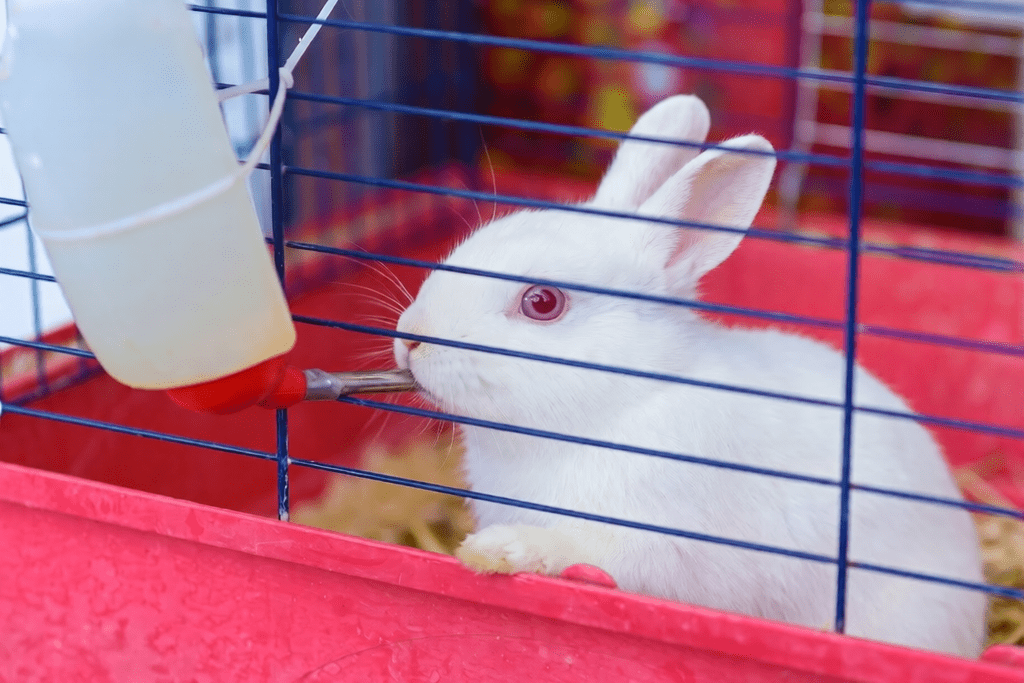
Veterinary & Affiliate Disclaimer: Bunnyowners.com shares educational rabbit care resources, not professional veterinary advice. Always consult a qualified veterinarian regarding your rabbit’s medical, dietary, or behavioral needs. This post may also contain affiliate links; as an Amazon Associate and affiliate partner, we earn from qualifying purchases at zero extra cost to you.
Walk through the rabbit aisle at almost any pet store and you will probably see water bottles hanging from the cages. Spend some time around rabbit rescues or experienced owners, though, and you will notice something different: a lot of rabbits drink from heavy ceramic bowls instead.
For most rabbits, a heavy water bowl works best as the primary water source. Bowls let rabbits drink freely from an open water surface in a natural head-down position, eliminating the risk of a metal spout clogging or jamming. While water bottles avoid floor spills and can work well as a travel backup, open bowls are generally the more reliable and comfortable choice for everyday use.
Getting hydration right goes hand in hand with building a balanced daily rabbit diet. In this guide, I break down what the research says about drinking posture and preference, compare bowl materials, solve bowl-tipping habits, and explain how to switch your rabbit from a bottle to a bowl safely.
1. Rabbit Water Bowl vs. Bottle: Quick Comparison
Both options get the job done, but they work quite differently day to day. Picking between a bowl and a bottle mostly comes down to giving your rabbit an easy, natural way to drink versus keeping the pen floor dry:
Water Bowl vs. Water Bottle Comparison
| Feature | Open Water Bowl | Water Bottle |
|---|---|---|
| Drinking Position | Natural head-down position | Rabbit drinks from a raised spout |
| Water Access | Open and unrestricted | Limited by the spout mechanism |
| Mechanical Risk | No moving parts | Spout can clog, jam, or leak |
| Debris & Mess | Hay, fur, and bedding can fall in | Water reservoir stays enclosed |
| Cleaning | Quick daily wash with warm water and soap | Bottle and spout require narrow brushes |
| Monitoring Water | Easy to inspect at a glance | Measurement lines make tracking volume simple |
| Best Use | Primary water source for most rabbits | Useful backup, travel setup, or specific situations |
For most healthy rabbits, a sturdy ceramic dish is the best everyday option.
2. Why Water Bowls Are Usually Better for Rabbits
Water bottles might be a pet-store staple, but they don’t really match how rabbits are built to drink. An open bowl removes the mechanical hassle and works with your rabbit’s natural instincts instead.
A More Natural Drinking Posture
When drinking from a bowl, a rabbit lowers its head and laps directly from the surface with minimal effort. A bottle requires the rabbit to tilt its head upward and push against a metal roller ball to release water. That does not make bottles inherently harmful, but it is a less natural way for a rabbit to drink.
Do Rabbits Actually Drink More From a Bowl?
You will sometimes hear that rabbits drink nearly twice as much water from bowls, but the real data is a bit more grounded. A 2010 study on rabbit water preferences found little difference in overall daily intake when rabbits had water available 24/7. When access was limited to set windows, though, rabbits took in noticeably more water from open dishes than from bottle nozzles.
That doesn’t mean a bowl magically turns every rabbit into a heavy drinker. Rather, an open surface simply lets them lap comfortably and satisfy their thirst without having to work for every drop. Because every rabbit’s needs shift with their size, diet, room temperature, and daily energy, knowing how much water a rabbit usually drinks makes it much easier to spot when something in the dish looks off.
Why Rabbits May Prefer Drinking From a Bowl
When offered different watering options side by side, rabbits consistently choose open dishes over metal spouts when given the freedom to choose how they drink. Setting out a sturdy crock makes everyday hydration much simpler, because having easy access to an open water surface lets rabbits satisfy their thirst naturally without having to work against a valve.
3. Pros and Cons of Rabbit Water Bowls
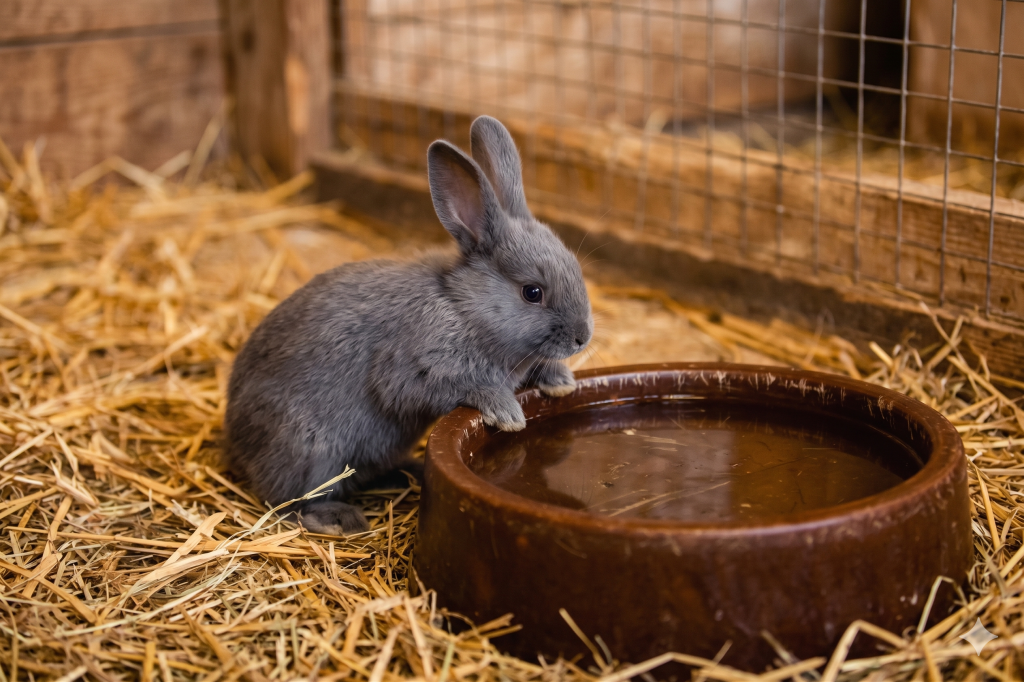
Advantages of Bowls
The biggest advantage of a bowl is simplicity. Rabbits can drink freely without working against a valve, and there are no moving parts to worry about. Ceramic bowls are also easy to scrub thoroughly, and it takes only a quick glance to see whether the water level is low, dirty, or empty.
Disadvantages of Bowls
The main tradeoff is mess. Lightweight bowls can be flipped, while even heavy stoneware crocks collect stray hay, shedding fur, and kicked bedding throughout the day. That means open water usually needs checking and refreshing more often than an enclosed bottle.
Visual Setup Guide: If you are worried about floor crocks getting soiled by kicked bedding or tipped over, an elevated, wire-mounted gravity dish offers an open lapping surface with a secure outside reservoir:
4. Pros and Cons of Rabbit Water Bottles
Water bottles are still a common fixture in many rabbit setups, mainly because they keep pens dry and stop stray hay from fouling the water. But sealing a rabbit’s water supply inside an enclosed dispenser brings its own set of trade-offs and mechanical quirks worth keeping in mind.
Advantages of Bottles
A bottle keeps the water reservoir protected from loose hay, bedding, and fur, and a securely mounted bracket prevents it from being tipped across the floor. Built-in measurement markings also make it easier to estimate how much water disappears over the course of a day.
Disadvantages of Bottles
The single biggest drawback to a water bottle is that seeing water inside the reservoir does not guarantee your rabbit can actually drink it.
Air locks, mineral buildup, or a stray piece of bedding caught behind the roller ball can completely block the flow. An owner might see a full bottle and assume everything is fine, even though little or no water is coming through the spout. A blocked bottle is only one possible explanation, though. If the spout is working normally and your rabbit is drinking noticeably less than usual, the cause may have nothing to do with the container itself.
Daily Flow Check: Never assume a bottle is working just because it contains water. Tap the metal roller ball with your finger every morning and evening to make sure water comes out freely.
5. Choosing the Best Water Bowl for Your Rabbit
Finding the right bowl comes down to stability, safety, and ease of cleaning.
Material Comparison
Water Bowl Material Options
| Material | Main Advantages | Main Drawback |
|---|---|---|
| Heavy Ceramic | Stable, chew-resistant, easy to clean | Can chip or break if dropped |
| Stainless Steel | Durable, chew-resistant, easy to clean | Needs mounting or heavy base to prevent tipping |
| Heavy Glass | Stable and easy to inspect | Breakable if tossed or dropped |
| Plastic | Inexpensive and widely available | Easy to tip, slide, and chew |
Sizing, Weight, and Shape
Look for a thick ceramic crock with a wide base and straight sides so your rabbit cannot easily grip the edge, shove it around, or flip it over. The rim needs to sit low enough that they can drink without pressing their chin or dewlap into the dish. Sticking with a heavy, tip-resistant crock keeps water easily accessible while preventing messy spills from soaking the living area.
6. Where Should You Put Your Rabbit’s Water Bowl?
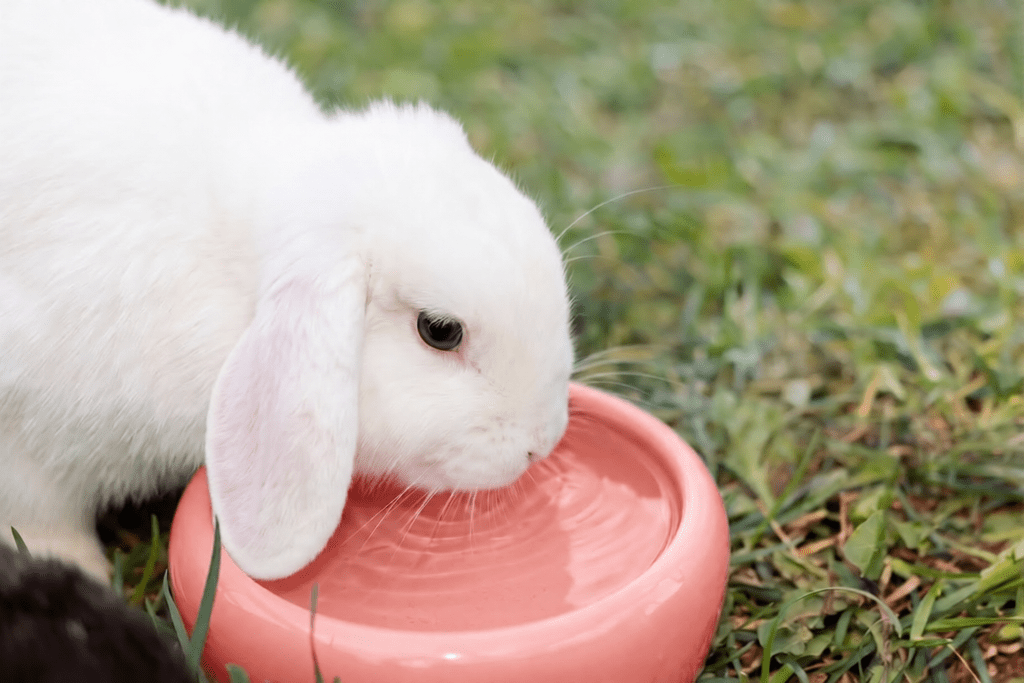
Set the bowl on a flat, non-slip surface well away from the main zoomie tracks. Pick a quiet spot your rabbit can get to easily, but far enough from the litter box that stray hay and kicked bedding won’t constantly land in the dish.
Fresh water needs to be available around the clock, working alongside hay, greens, and pellets to support a healthy daily diet. A quick rinse and refill is easy to fold right into your regular daily feeding routine.
What About Two or More Rabbits?
With bonded rabbits, having more than one water station is a great idea. It is rarely about aggressive fighting—often, one rabbit simply lounges in the way.
I see this regularly with my own bonded pair, Mocha and Chino. Chino has a habit of settling down right beside their main ceramic crock after eating, and his body can make it awkward for Mocha to get around him. Adding a second bowl in another area of their space gave Mocha an easy alternative without having to nudge past him.
You do not necessarily need multiple bowls for every pair, but an extra dish provides a helpful backup and prevents one rabbit from unintentionally blocking the water.
7. What If My Rabbit Keeps Tipping Over the Water Bowl?
Rabbits naturally nudge, chin, and rearrange items in their space. If your rabbit treats its water bowl like a toy, work through these practical fixes:
- Upgrade to Heavy Ceramic: Switch to a thick, heavy dog-sized stoneware crock with a flat bottom.
- Use a Wire-Mounted Crock: Install a stainless steel coop cup that clamps directly to the exercise pen wire, keeping the bowl locked in place while the dish lifts out for washing.
- Set the Dish on a Non-Slip Mat: Placing the bowl on a wide silicone feeding mat stops rabbits from sliding it across smooth flooring.
- Provide More Chews and Toys: Some rabbits also seem to enjoy tossing or rearranging bowls, so adding more appropriate things to toss, chew, and dig can help redirect that behavior.
Chino is a dedicated bowl flipper. Lightweight dishes never lasted long with him; he would grab the lip with his teeth and toss them across the pen, especially when he decided breakfast was late. Switching to heavy, straight-sided stoneware crocks solved the issue completely because he could not get enough traction under the edge to lift them.
8. Should You Give a Rabbit Both a Bowl and a Bottle?
Offering both can be especially useful while switching a rabbit from a bottle to a bowl, since the familiar bottle stays available while they investigate the new dish. It also gives you some redundancy if the bowl gets dirty or tipped while you are away for the day. Just remember that two water sources still mean two things to check: the bowl needs fresh water, and the bottle nozzle still needs to be tested daily for flow.
9. How to Switch a Rabbit From a Bottle to a Bowl
Moving a rabbit from a bottle to a bowl is straightforward and should never be rushed:
- Keep the Bottle in Place: Leave the familiar bottle mounted right where it normally hangs.
- Add the Bowl Directly Below: Placing the bowl near the familiar drinking area makes it easier for your rabbit to notice and investigate.
- Watch for Natural Drinking: Over the next few days, verify that your rabbit is actively drinking from the dish.
- Decide on the Bottle: Once you routinely see your rabbit drinking comfortably from the bowl, you can either remove the bottle or leave it as a secondary backup.
Note: Never remove your rabbit’s familiar water source until you have directly observed them drinking from the new bowl. Keeping an eye on how much water your rabbit actually needs helps ensure they stay properly hydrated while adjusting to the change.
10. How to Keep Bowls and Bottles Clean
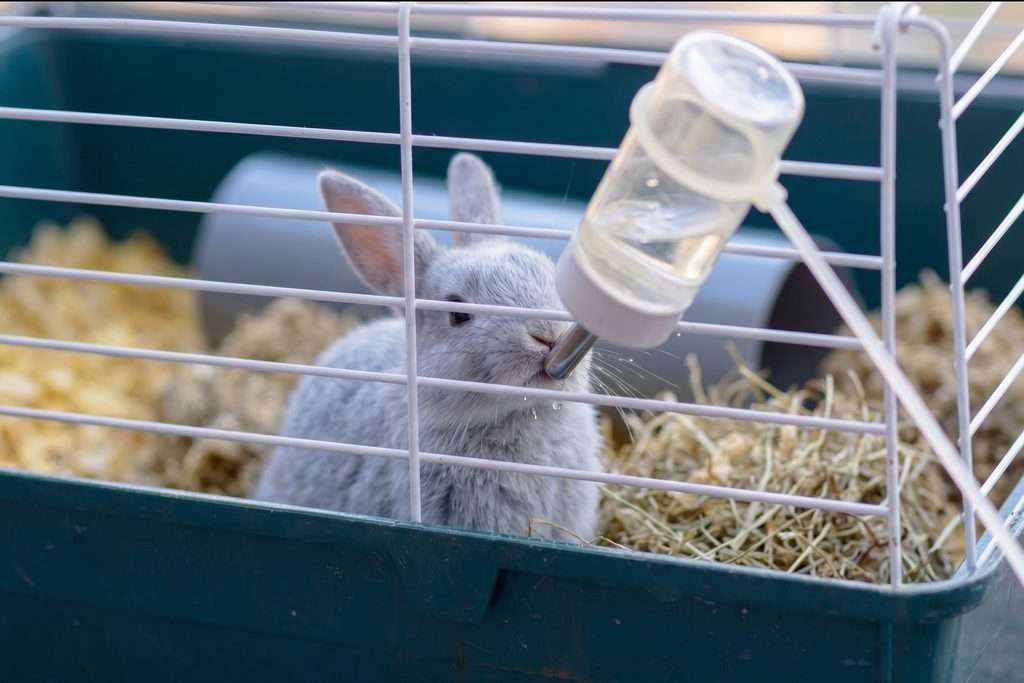
Bowls and bottles both need regular cleaning, but the problem areas are different. Bowls collect debris and develop a slippery film, while bottles can hide buildup inside narrow spouts and valves:
Cleaning Water Bowls
Rabbits leave saliva behind as they drink, which gradually forms a thin, slippery film along the dish surface. Wash the bowl thoroughly each day with warm water and mild dish soap. If hard-water mineral deposits build up over time, a quick soak in diluted white vinegar helps loosen the scale before a final rinse.
Cleaning Water Bottles
Bottles require a bit more attention to keep the narrow parts hygienic. Use a small pipe brush to scrub inside the metal drinking spout where residue can accumulate around the ball bearing, and clean the main reservoir with a standard bottle brush. After putting it back together, tap the metal roller ball to confirm water flows freely without air pockets.
11. When a Water Bottle Might Make More Sense
While an open bowl is my first choice for most rabbits, a bottle can still be the more sensible option in certain situations:
- Travel and Vet Visits: Open bowls spill during transit, making a cage-mounted bottle far more practical on the road.
- Persistent Tippers: If a rabbit continues to tip or flood every secure bowl design you try, a bottle keeps the floor dry.
- Established Habits: Some rabbits are simply used to drinking from bottles and use them without issue. If your rabbit drinks reliably from a bottle, you do not need to panic—simply offer a bowl alongside it and let them choose.
- Backup Supply: Leaving a bottle mounted alongside a main bowl gives you an extra water reserve if the dish gets dirty while you are away.
12. What If Your Rabbit Suddenly Stops Drinking?
If your rabbit normally drinks well and suddenly stops, do not assume they simply decided they dislike their bowl or bottle. A noticeable drop in water intake can sometimes signal a health problem, particularly if your rabbit is also eating less, producing fewer droppings, or behaving differently.
If intake stays low, spotting subtle signs of dehydration helps you catch when the issue goes beyond simple bowl preference—especially since sudden drops in water can quickly trigger a dangerous digestive slowdown.
A drinking change is especially concerning when paired with a sudden loss of appetite or fewer droppings, so contact a veterinarian promptly if you notice multiple warning signs.
Helpful Video Guide: If your rabbit is reluctant to drink from a new setup, simple hydration adjustments—like daily hygiene routines and water freshness—can encourage them to drink more consistently:
13. Frequently Asked Questions
Do rabbits prefer water bowls or bottles?
When given a choice in drinker studies, rabbits generally prefer open-dish drinkers over closed valve or nipple systems. Drinking from an open surface allows them to lap quickly without working against a restrictive spout.
Do rabbits drink more water from a bowl?
Research shows overall daily water intake is similar when rabbits have constant access to water, but rabbits drink significantly more from open dishes during restricted drinking periods. An open bowl makes it easier to drink freely without physical effort.
Are water bottles bad for rabbits?
Water bottles are not inherently bad, but they have practical drawbacks. The roller ball can jam without warning, and the raised spout requires a less natural upward drinking position.
Why does my rabbit keep tipping over its water bowl?
Rabbits enjoy rearranging their space and tossing lightweight objects. Switching to a heavy stoneware crock with a flat base or a wire-clamped coop cup usually makes tipping much more difficult.
Can young rabbits safely drink from a water bowl?
Yes, as long as the dish is shallow and stable. Choose a shallow, stable bowl with sides the young rabbit can comfortably reach over without struggling or falling in.
How often should I change my rabbit’s water?
Water bowls should be rinsed and refilled with fresh water at least once every 24 hours. If hay, bedding, or floating fur lands in the dish during the day, dump and refresh it right away.
14. Final Verdict
For most healthy rabbits, a heavy ceramic water bowl is the best primary choice. It supports a natural head-down drinking position, lets rabbits drink freely from an open surface, and is simple to inspect and clean.
Water bottles still have their place as travel backups or secondary sources, but a sturdy open dish provides the simplest, most reliable everyday setup for a healthy rabbit.
Medical & Veterinary Disclaimer: Bunnyowners.com is an informational resource for rabbit owners and enthusiasts. We are not veterinarians. The content on this website is for educational purposes only and is not a substitute for professional veterinary advice, diagnosis, or treatment. Always consult a qualified veterinarian with any questions or concerns regarding your pet’s health, medical conditions, diet, or overall care. If you have concerns about your rabbit’s health, it’s always best to reach out to a veterinarian rather than relying solely on information found online.