
Veterinary & Affiliate Disclaimer: Bunnyowners.com shares educational rabbit care resources, not professional veterinary advice. Always consult a qualified veterinarian regarding your rabbit’s medical, dietary, or behavioral needs. This post may also contain affiliate links; as an Amazon Associate and affiliate partner, we earn from qualifying purchases at zero extra cost to you.
When setting up a daily rabbit feeding schedule, many new owners wonder how often rabbits need to eat and whether meals should be strictly timed like a dog’s or cat’s routine. Because rabbits are herbivores adapted to consuming a high-fiber diet, organizing their daily food intake is less about enforcing strict mealtimes and more about maintaining continuous access to long-strand fiber. Creating a dependable daily rhythm allows you to manage portion-controlled foods easily while supporting normal gastrointestinal function.
A practical daily rabbit feeding schedule includes fresh greens and measured pellets during morning and evening routines, while hay and fresh water remain available around the clock. The exact portions depend on the rabbit, but hay should not be restricted to scheduled mealtimes. Scheduled morning and evening checks serve as daily anchor points to offer portioned foods, monitor appetite, and replenish primary supplies.
Building a solid routine comes down to knowing which foods need strict portioning and which should always be available. In this guide, I’ll map out a pragmatic morning-to-night schedule, cover step-by-step care for each time of day, and show you how to structure meals safely within a healthy rabbit diet and food routine.
Example Daily Rabbit Feeding Schedule
| Time | Routine |
|---|---|
| Morning | Fresh hay, water, greens, measured pellets |
| Midday | Check hay, water and litter box |
| Evening | Fresh hay, greens, remaining pellets |
| Before bed | Check hay and water for overnight access |
1. What Does a Rabbit Feeding Schedule Look Like?
A sensible routine works with an adult rabbit’s natural habits, not against them. Since rabbits are naturally most active around dawn and dusk, they’ll spend much of the midday hours resting or quietly grazing.
In my own home with my two rabbits, Mocha and Chino, this rhythm is clockwork—around 2:00 PM they are almost always stretched out taking a long nap, but as soon as dusk hits, they’re bouncing around expecting their evening greens. Building your schedule around these natural activity spikes makes mealtime checks seamless.
Overview of a Daily Rabbit Feeding Routine
The table below breaks down a standard daily rhythm, highlighting what actions to take during each period of the day and why those timing windows matter for your care routine.
| Time Block | Primary Feeding Action | Key Care Focus |
|---|---|---|
| Morning | Refresh hay and water; offer scheduled fresh foods | Establish the day’s routine |
| Midday | Check hay and water | Make sure continuous supplies remain available |
| Evening | Refresh hay; offer scheduled fresh foods | Evening routine and overnight preparation |
| Before Bed | Check hay and water | Ensure continuous overnight access |
In my own routine, the schedule is less about hitting an exact minute and more about using the same daily checkpoints. For example, I usually refresh Mocha and Chino’s hay and water in the morning, do a quick supply check around midday, and make their evening greens part of our normal nighttime routine. That consistency makes it much easier for me to notice when one of them suddenly leaves food untouched or the hay level looks different than usual.
A consistent routine makes feeding easier to manage and helps you recognize subtle changes in your rabbit’s normal appetite—such as a rabbit ignoring a morning pellet portion they normally eat with enthusiasm.
2. How Often Should You Feed a Rabbit?
Rather than viewing rabbit food as a single combined meal, think about diet in terms of how frequently each individual category should be offered:
- Hay: Available at all times. Continuous access supports gastrointestinal health and dental wear.
- Fresh Water: Available at all times to support hydration and normal digestion.
- Leafy Greens: Offered 1–2 times daily. Provides essential micronutrients and supplemental water.
- Pellets: Offered 1–2 times daily. Strictly measured daily allocation to support a balanced diet.
- Treats: Occasional or conditional. Used sparingly for bonding, enrichment, or occasional rewards, never as meals.
Hay
Hay isn’t a timed meal; it’s a permanent fixture of your rabbit’s setup. They need to be able to munch on hay whenever they choose, day or night. Check supply levels regularly and top off the rack with fresh, fragrant hay whenever it gets low or trampled so your bunny always gets the right amount of hay each day.
Since every rabbit has its own flavor preferences, offering a few different kinds of hay is a great way to figure out what your rabbit likes best. When you keep a big bundle of fresh grass hay available 24/7, you naturally protect their dental health and keep their stomach happy without overcomplicating your routine.
Water
Fresh water must remain available around the clock. Check water bowls or bottle spouts during every routine visit to ensure they haven’t been tipped over, contaminated with hay, or clogged. Many house rabbits drink readily from open ceramic bowls, though siphon bottles can also work well depending on individual setup and preference. In fact, many owners notice their pet drinks much more eagerly when offered a heavy, open bowl instead of a bottle.
Greens
Fresh leafy greens can be served once per day or divided between your morning and evening routines. Providing greens twice a day gives you two predictable opportunities to interact with your rabbit and gauge their appetite. If you’re unsure which foods belong in the bowl, learning which fresh greens are good choices can help you build a safe rotation. Fresh greens work best when treated as a tasty, hydrating bonus to their daily hay, following a solid everyday routine.
Pellets
Pellets are dense in digestible nutrients and must be offered as a measured daily portion rather than an open, unlimited bowl. You can give the daily pellet allowance all at once in the morning or split it into two servings. To determine how much pellet food is appropriate each day, use your rabbit’s age, size, body condition, and overall health as the starting point.
If you’re still choosing a primary food source, choosing a quality pellet is an important part of getting the overall diet right. Leaving a bowl heaped full of crunchies makes it way too easy for them to pack on extra weight and skip the fiber they really need, which is why keeping portion control tight is key.
Treats
Treats do not require a dedicated slot on the clock. High-sugar foods like fruit and commercial treats should remain limited and occasional. They can be used sparingly for bonding, enrichment, or occasional rewards.
3. Morning Rabbit Feeding Routine
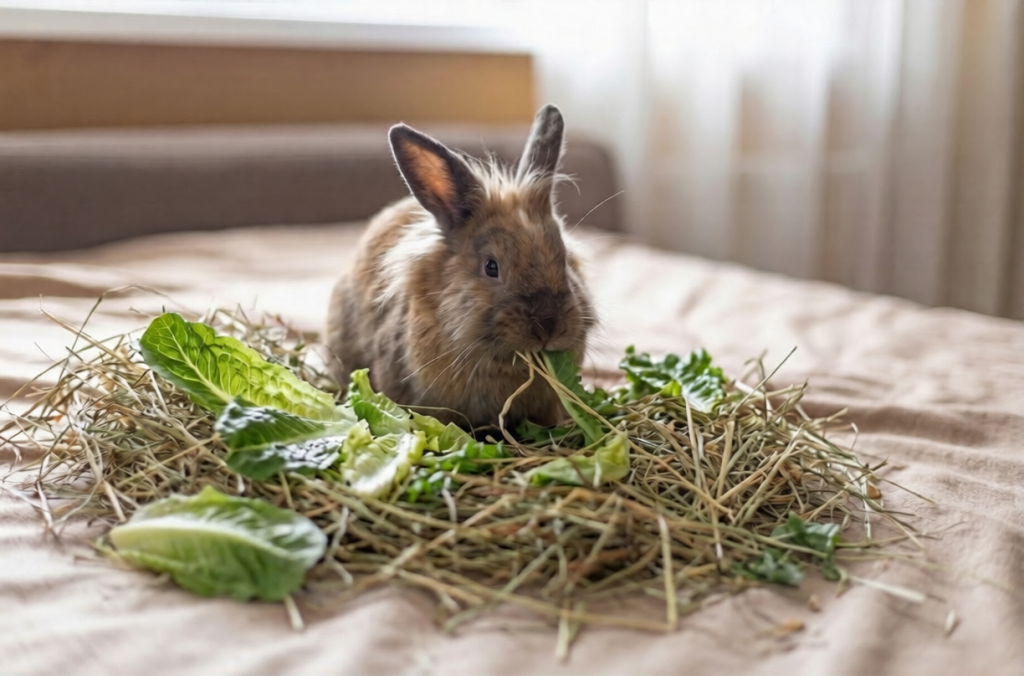
For most owners, the morning routine sets the baseline for the day. Establishing a clear step-by-step checklist ensures nothing gets overlooked before you head out for work or daily tasks:
- Observe Initial Behavior: Before opening the pen or cage, check whether your rabbit is bright, alert, and greeting you normally.
- Clear Yesterday’s Fresh Food: Remove any unconsumed, wilted greens left over from the night before to prevent spoilage.
- Refresh the Hay Supply: Fluff up the existing hay and add a fresh, fragrant handful to stir immediate grazing interest.
- Check and Refresh Water: Empty, rinse, and refill water bowls or bottles with fresh, cool water.
- Offer Morning Greens: Place the morning allocation of washed, leafy greens into their feeding area.
- Provide Measured Pellets: Measure out the morning pellet portion precisely using a standard measuring cup rather than eyeballing it.
4. Midday Rabbit Feeding Check
Midday is rarely a time for a formal meal. Because house rabbits spend much of the middle of the day resting, a midday visit is simply a maintenance check rather than a scheduled feeding window.
During a midday check, evaluate the following:
- Hay Levels: Confirm that the hay rack still holds plenty of accessible fiber.
- Water Access: Ensure the water bowl is clean and hasn’t been knocked over during morning play.
- Gut Activity: Glance at the litter box to check for normal fecal pellet production.
- Overall Comfort: Ensure your rabbit is resting comfortably without signs of distress.
If the hay supply is running low, add more. However, resist the temptation to drop extra pellets into the bowl if your rabbit wakes up and begs. Midday is for hay checks, not extra food rewards.
5. Evening Rabbit Feeding Routine
As dusk approaches, your rabbit will naturally enter another active period of the day. The evening routine mirrors your morning steps and ensures your rabbit is well-prepared for the night ahead:
- Top Off Hay: Add a generous portion of fresh hay to the rack to cover nighttime grazing.
- Refresh Water: Check that water sources are clean and full.
- Provide Evening Greens: Offer the second portion of fresh leafy greens if you split the daily serving.
- Provide Evening Pellets: Give the remaining half of the measured daily pellet allowance.
- Clear Unused Fresh Food: Remove any discarded stems or wilted leaves from earlier in the day.
- Verify Nighttime Setup: Ensure the litter box and hay area are clean, dry, and easily accessible overnight.
6. Should Rabbits Have Food Available Overnight?
Yes. Rabbits should always have continuous access to hay and fresh water throughout the night.
Rabbits are active at various times throughout the day and night, so they should not be intentionally fasted overnight. Hay should remain available so they can continue consuming fiber whenever they choose. The overall goal is maintaining a fiber-focused diet rather than creating a schedule built around large, concentrated meals separated by long fasts.
Topping off their hay rack before bedtime keeps their stomach moving smoothly through the night, making a quick late-night check a simple way to support good digestive care.
Before turning off the lights for the night, verify that:
- The hay rack is generously filled with clean, dry hay.
- The water bowl or bottle is clean, full, and functioning properly.
- There are no obstacles blocking access to their primary litter and feeding area.
7. Should You Feed a Rabbit Once or Twice a Day?
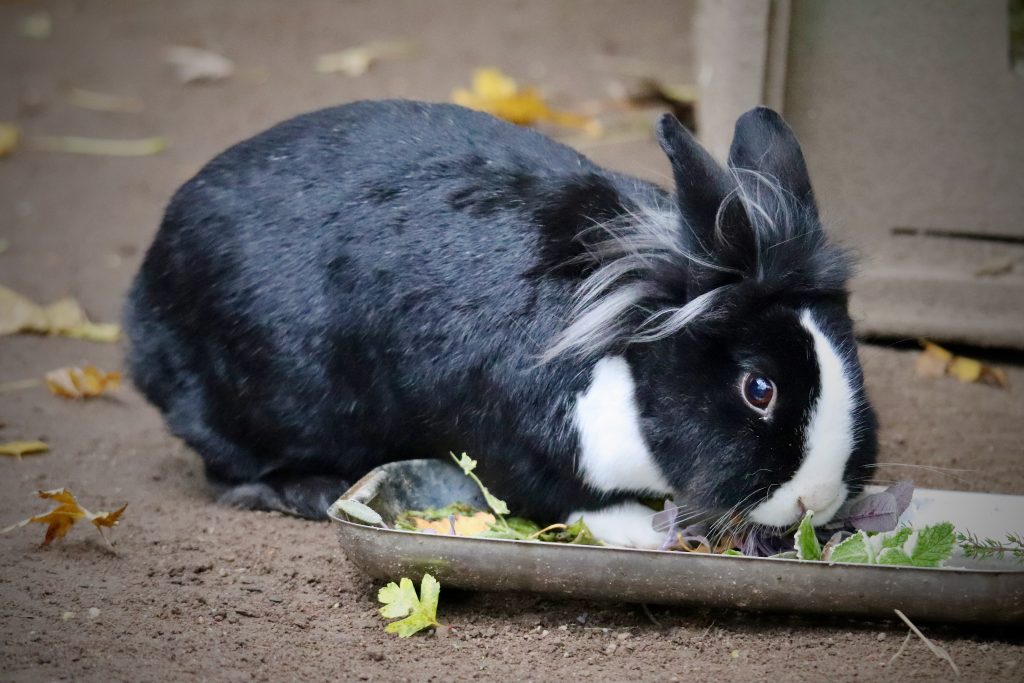
The decision to feed once or twice a day depends entirely on which component of the diet you are serving.
Recommended Feeding Frequency by Food Category
Different types of food require different access rules. Use the summary table below to understand which items need continuous availability and which should be served on a portion-controlled schedule:
| Food Item | Availability Model | Typical Schedule |
|---|---|---|
| Hay | Continuous | Available throughout the day and night |
| Fresh Water | Continuous | Available throughout the day and night |
| Leafy Greens | Measured portion | Once or twice daily |
| Pellets | Measured portion | Once or twice daily |
| Treats | Limited | Occasional |
Serving pellets and greens twice a day (morning and night) does not mean your rabbit is only eating twice a day. They can continue returning to hay throughout the day and night between those scheduled feeding checks.
Splitting measured portions into two routine visits can be a convenient way to evaluate your rabbit’s energy, appetite, and health on a regular basis.
8. What Time Should You Feed a Rabbit?
There is no single magic hour when every rabbit must be fed. A schedule built around your natural household routine—such as 7:00 AM and 6:30 PM—is completely fine.
For example, a standard schedule might run 07:00 AM / 12:30 PM / 06:30 PM / 10:00 PM, while a shift-worker schedule could comfortably run 08:30 AM / 02:00 PM / 07:30 PM / 11:30 PM.
What matters most is choosing times you can maintain reliably as part of a predictable household routine.
9. How Much Should You Feed at Each Time?
A feeding schedule determines when food is offered; it doesn’t determine the exact amount every rabbit needs.
Hay and water should remain continuously available, while pellets and fresh foods should be provided in appropriate measured portions. The right quantities depend on factors such as your rabbit’s age, size, body condition, overall health, and the specific food being offered.
10. Does a Rabbit’s Feeding Schedule Change With Age?
The basic routine of providing hay and water continuously and organizing fresh foods and measured portions into predictable daily feedings can remain consistent throughout a rabbit’s life. What changes with age is which foods are appropriate and how much the rabbit needs.
Baby, adult, and senior rabbits have different nutritional considerations, so don’t use this article to determine age-specific portions or dietary requirements. Remember to look at how feeding needs change as rabbits grow when making decisions for kits or aging seniors.
11. What If My Rabbit Doesn’t Eat at the Scheduled Time?
Rabbits are creatures of habit that often show keen interest when fresh food arrives. However, an individual rabbit may not always eat every morsel immediately upon delivery.
If your rabbit suddenly shows a significant decrease in appetite, particularly a reduced interest in hay, don’t assume it is simply a scheduling preference. A meaningful change in eating behavior can be an early sign of illness or discomfort. If this becomes a repeated refusal rather than an occasional skipped bite, learn more about what to do when a rabbit suddenly refuses food.
12. When a Change in Eating Is Concerning

A sudden reduction in appetite is a medical priority, not a scheduling quirk. GI stasis occurs when normal movement through the gastrointestinal tract slows significantly or stops. Any sudden drop in eating or passing droppings requires quick attention to get things moving again safely.
A rabbit that stops eating or has a significant reduction in appetite needs prompt veterinary attention, particularly if accompanied by warning signs such as:
- Noticeably smaller, misshapen, or completely absent fecal droppings in the litter box.
- Hunched posture, reduced activity, or tooth grinding.
- Sudden disinterest in high-value treats or favorite greens.
- General lethargy or signs of acute discomfort.
Owners should also recognize early warning signs that something is wrong, particularly when appetite and fecal output change together.
13. How to Build a Rabbit Feeding Schedule That Works
Creating a dependable daily system only takes a few practical setup steps:
- Set Morning and Evening Anchors: Choose feeding times that fit your routine and can be maintained consistently.
- Setup a Generous Hay Rack: Choose a hay feeder that holds enough long-strand fiber to keep hay accessible between checks.
- Pre-Measure Daily Pellets: Measure out your rabbit’s total daily pellet allowance into a designated container so portions stay accurate.
- Batch-Prep Fresh Greens: Wash, dry, and refrigerate a few days’ worth of safe leafy greens in an appropriate storage container to make morning and evening prep fast.
- Monitor System Outputs: Use your routine visits to glance at litter box output and verify that droppings remain normal and plentiful.
14. Daily Rabbit Feeding Checklist
Use this quick daily reference checklist to keep care consistent across family members or pet sitters:
- Morning Routine:
- [ ] Check overall alertness and behavior
- [ ] Remove unconsumed greens from yesterday
- [ ] Refresh and fluff hay supply
- [ ] Rinse and refill water bowl or bottle
- [ ] Provide morning portion of greens
- [ ] Serve morning measured pellet allocation
- Midday Check:
- [ ] Top off hay rack if low
- [ ] Verify water source is clean and accessible
- [ ] Confirm normal fecal pellet output in litter box
- Evening Routine:
- [ ] Top off hay rack
- [ ] Provide evening portion of greens
- [ ] Serve remaining measured pellet allocation
- [ ] Clean out any discarded fresh food stems
- Before Bed:
- [ ] Verify hay rack is fully stocked for overnight
- [ ] Confirm water bowl or bottle is full
15. Rabbit Feeding Schedule FAQs
How many times a day should I feed my rabbit?
Portioned foods like greens and pellets are typically offered once or twice daily during morning and evening routines. However, rabbits should have continuous 24/7 access to hay and fresh water.
What time should I feed my rabbit?
There is no required universal hour. Select morning and evening times that fit your personal schedule and can be maintained consistently.
Should I feed my rabbit in the morning or at night?
Splitting portioned foods between morning and night works well. It provides two predictable opportunities daily to evaluate your rabbit’s appetite and overall health.
Should rabbits have food available all day?
Hay and fresh water must be available continuously all day and night. Pellets and fresh greens should be portion-controlled to maintain a healthy body weight.
Can rabbits eat overnight?
Yes. Rabbits require continuous access to hay overnight to maintain healthy gastrointestinal motility.
Should I feed rabbit pellets once or twice a day?
Either approach is fine, provided the total daily volume stays within recommended guidelines. Splitting the daily portion between morning and evening can make it easier to incorporate pellets into a consistent routine.
Should I give my rabbit vegetables every day?
Yes. Appropriate fresh leafy greens can be part of a healthy adult rabbit’s daily diet.
Can I change my rabbit’s feeding schedule?
Yes. If possible, shift feeding times gradually rather than making a sudden change, particularly if your rabbit is sensitive to changes in routine.
Do baby rabbits need a different feeding schedule?
Yes. Young rabbits have different nutritional needs from adults, so their feeding plan should not simply be copied from an adult routine.
What should I do if my rabbit suddenly stops eating?
Treat a sudden loss of appetite as a medical priority. Contact an exotic animal veterinarian promptly, as refusing food is often an early indicator of GI stasis or pain.
16. Conclusion: Keep It Simple & Consistent
A successful rabbit feeding schedule isn’t about forcing your rabbit to wait for meal times. It is about establishing a predictable routine for portioned foods while ensuring unlimited, 24/7 access to appropriate hay and fresh water.
Keep your daily system straightforward: top off the hay rack, measure out the pellets, offer clean leafy greens, and monitor output. A consistent daily rhythm makes it simple to keep your rabbit healthy and spot subtle appetite changes long before they turn into major health concerns.
Medical & Veterinary Disclaimer: Bunnyowners.com is an informational resource for rabbit owners and enthusiasts. We are not veterinarians. The content on this website is for educational purposes only and is not a substitute for professional veterinary advice, diagnosis, or treatment. Always consult a qualified veterinarian with any questions or concerns regarding your pet’s health, medical conditions, diet, or overall care. If you have concerns about your rabbit’s health, it’s always best to reach out to a veterinarian rather than relying solely on information found online.