
Veterinary & Affiliate Disclaimer: Bunnyowners.com shares educational rabbit care resources, not professional veterinary advice. Always consult a qualified veterinarian regarding your rabbit’s medical, dietary, or behavioral needs. This post may also contain affiliate links; as an Amazon Associate and affiliate partner, we earn from qualifying purchases at zero extra cost to you.
Rabbits are master illusionists when it comes to hiding pain. Instead of a sudden hunger strike, a gut slowdown drops subtle behavioral breadcrumbs long before a medical crisis hits. Waiting for your rabbit to politely confess to a stomach ache is a losing strategy. You must play detective with their daily routine to catch the earliest indicators of a digestive emergency.
The earliest signs of GI stasis in rabbits include a noticeably slower eating pace, a selective refusal of coarse hay, and the production of smaller, harder droppings. You should also watch for sudden behavioral changes, such as retreating to dark corners, ignoring favorite treats, or sitting in a tense, hunched posture to relieve belly pain. Spotting these subtle, progressive clues provides a critical window for medical intervention hours before your rabbit’s digestive tract comes to a complete halt.
Because hiding weakness is a rabbit’s biological default, waiting for glaring symptoms leaves you with a dangerously tight recovery window. This guide highlights the specific shifts in appetite, litter box production, and posture that act as your early warning system. By combining these early clues with my other comprehensive rabbit health guides, you can establish a daily baseline and intervene the very moment their digestion begins to stall.
1. What Are the Earliest Signs of GI Stasis in Rabbits?
Early stasis shows up as a combination of tiny behavioral and physical shifts rather than one obvious symptom. Because rabbits are creatures of habit, any slight change in how fast they finish a meal or what is left in the litter box is direct evidence of a slowing digestive tract, a point frequently highlighted in PDSA’s clinical veterinary breakdown of reduced appetite in rabbits.
If you have a bonded pair, a healthy rabbit will often mask a partner’s declining appetite by eating their leftover food for them. To spot a slowdown early in pairs, look closely at their social dynamics and understand how rabbits bond with each other. A rabbit starting to experience a gut slowdown will often pull away from normal grooming sessions. You might also notice the healthy partner intensely licking the ill rabbit’s forehead or staying close by when they refuse to leave a favorite resting spot.
How a Slowdown Manifests Day-by-Day
Catching a gut slowdown early depends on watching for small disruptions in your rabbit’s daily patterns before the system stops entirely, an intervention window the House Rabbit Society considers absolutely critical for recovery. The reference guide below outlines these primary shifts in behavior, appetite, and dropping patterns.
Table 1: Early Behavioral and Physical Indicators of Gut Slowdown
| Early Sign | What You May Notice | Why It Matters |
|---|---|---|
| Eating More Slowly | Takes longer to finish standard meals; walks away mid-bite. | Indicates early appetite suppression from rising cecal pressure. |
| Refusing Hay | Ignores fresh hay piles but still eats treats or pellets. | Coarse fiber requires the most physical effort to chew and digest. |
| Smaller Droppings | Fecal pellets shrink significantly in diameter and become dense. | A sluggish colon absorbs excess moisture, compacting the waste. |
| Fewer Droppings | The overall volume of waste in the litter box drops. | Directly mirrors the literal slowing of intestinal peristalsis. |
| Hiding More Frequently | Retreats to dark corners or boxes outside normal nap times. | Instinctive behavioral isolation due to physical vulnerability. |
| Hunched Posture | Sits with a tightly rounded back and a tucked abdomen. | A universal physical manifestation of internal visceral pain. |
| Loud Tooth Grinding | Audible, harsh, metallic-sounding clicking from the jaw. | A vocalization indicating acute physical distress. |
| Reduced Activity | Skips habitual morning binkies, zoomies, or exploration. | Low energy reserves as systemic discomfort and dehydration mount. |
2. Appetite Changes You Should Never Ignore
A drop in eating speed is one of the most reliable early indicators of a digestive issue. A rabbit entering stasis may approach the food bowl normally but chew at a visibly slower pace, take prolonged breaks, or leave meals half-finished. Rising gas pressure or reduced muscular contractions in the stomach cause a false sense of fullness, a process explained in depth by VCA Animal Hospitals’ veterinary guide to gut motility. Owners frequently mistake this for simple pickiness, assuming their rabbit has suddenly become a harsh culinary critic.
Selective Appetite Loss (Refusing Hay Before Pellets)
When gut motility drops, appetite fades based on how much physical effort it takes to process the food. Long-stem grass hay requires extensive chewing with the back teeth and heavy muscular effort from the cecum to digest. Pellets and greens, on the other hand, take almost no effort.
Because of this, rabbits enter a phase of selective appetite loss. They will abandon their hay entirely while continuing to eat softer options. This creates a false sense of security for owners who assume the rabbit is fine because they cleared their evening pellets with suspicious enthusiasm. If you find yourself wondering why won’t my rabbit eat hay or notice your bunny is suddenly not eating hay but eating pellets, this exact mechanical discrepancy is usually the root cause.
Losing Interest in Favorite Treats
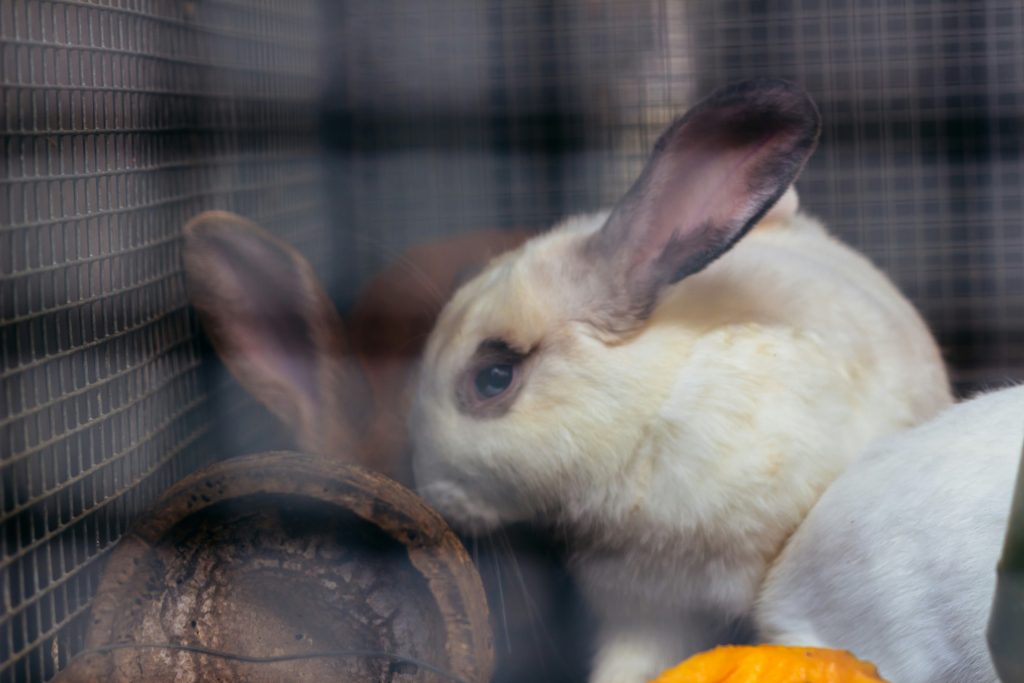
The line between a picky phase and a medical warning sign can be established using the highly scientific “treat test.” If a rabbit fails to respond to high-value rewards they normally rush for, such as a piece of fresh fruit or fragrant herbs, the pain has officially surpassed their drive for snacks. According to the medical database at Veterinary Partner, turning the head away, hopping backward, or dropping a treat from the mouth are significant red flags.
Drinking Less Water
Water consumption during early stasis fluctuates wildly. Some rabbits significantly reduce water intake as nausea builds, which rapidly dehydrates the food mass inside the gut and makes the stasis worse. If you notice your rabbit not drinking water, you must act quickly. Others do the exact opposite: hovering over the water bowl or lapping continuously without swallowing because they are instinctively trying to move the heavy, stagnant mass in their stomach.
Real-World Appetite Comparisons
To build a clear baseline for diagnosis, it helps to contrast normal nutritional behaviors with emerging patterns of appetite loss.
Observational Note: In my ongoing behavioral tracking of my bonded pair, Mocha and Chino, this selective phase is highly visible. During an early stasis episode, Mocha completely ignored fresh Timothy hay but eagerly pushed Chino out of the way to get her morning pellets. This selective appetite is a red flag that is easy to miss if you only measure empty pellet bowls.
Table 2: Comparison of Normal vs. Stasis-Related Appetite Patterns
| Normal Eating Behavior | Possible Early GI Stasis |
|---|---|
| Consumes large quantities of hay throughout the day. | Ignores fresh hay entirely or leaves it trampled. |
| Approaches food eagerly and finishes meals in a single sitting. | Takes a few bites, chews slowly, and walks away. |
| Consumes entire daily pellet ration quickly. | Leaves a portion or the entirety of pellets behind. |
| Shows immediate excitement for high-value treats. | Sniffs treats hesitantly, turns away, or rejects them. |
| Maintains a stable, predictable pattern of consumption. | Appetite appears highly sporadic over a few hours. |
| Visits the water bowl for short, productive drinks. | Ignores water or hovers over the bowl without drinking. |
3. How Your Rabbit’s Droppings Change During the Early Stages
While behavior can be hidden, the litter box provides objective data regarding gut movement. Regular inspection of a rabbit’s fecal output is the most effective way to spot an intestinal slowdown, essentially reading the tea leaves of your rabbit’s digestive tract.
Smaller and Fewer Droppings
As transit time slows, digested material remains inside the cecum and colon for too long. The large intestine reabsorbs excessive moisture from this stagnant waste, causing individual fecal spheres to shrink, harden, and become incredibly dense. Tracking pellet diameter is your best metric here. A 30% reduction in standard size indicates that moisture is being sucked out of the digestive tract. If your rabbit not pooping at their usual rate, the timeline has likely already advanced.
Dry, Misshapen, or Uneven Droppings
Healthy droppings are round, uniform, and easily crushed to reveal compressed particles of hay. In early stasis, droppings lose their round shape, signaling a lack of hydration inside the intestinal pathways. During seasonal molts, this sluggish movement causes swallowed fur to stall, forming dense, matted, fur-clogged chains.
Why “No Droppings” Is a Late Warning
Waiting to take action until a rabbit completely stops producing droppings is a massive mistake. Total fecal cessation indicates that the gastrointestinal tract has already ground to a complete halt, which is exactly why veterinary hubs like PetMD treat a completely empty litter box as a late-stage emergency.
Table 3: Fecal Output Comparison Guide
| Feature | Healthy Droppings | Early GI Stasis Droppings |
|---|---|---|
| Size/Shape | Large, plump, round, and uniform. | Smaller, harder, and variable. |
| Color | Consistent light-to-medium brown. | Dark brown to black (dehydrated). |
| Texture | Slightly moist; easy to crush. | Dry, brittle, crumbly, and dense. |
| Output | Copious, consistent deposits. | Sharp, quantified drop in 6–12 hours. |
4. Behavior and Body Language That Can Signal GI Stasis
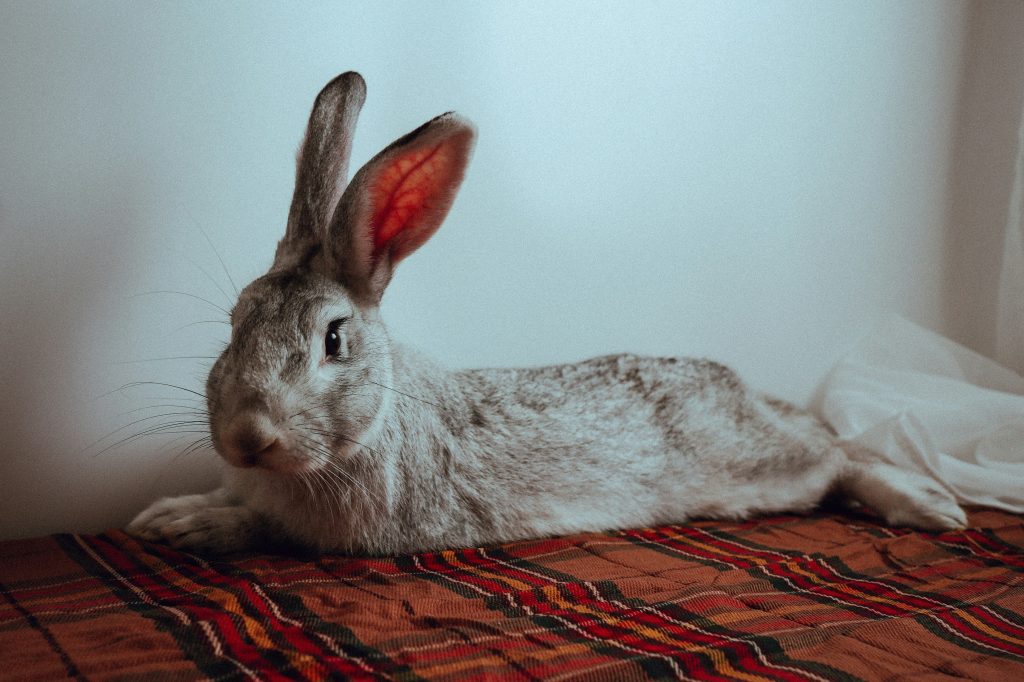
While the litter box provides hard evidence of a digestive issue, your rabbit’s overall demeanor will often broadcast their discomfort before their physical output completely stops. Because rabbits are prey animals, they are masters of medical espionage, evolutionarily designed to hide weakness from anything that might be watching.
Eventually, though, the internal pressure of a stalling gut overrides even the most stoic defense. Catching these tiny deviations in their posture, energy levels, and habits gives you a massive advantage. You can lean on my comprehensive rabbit body language guide to map these shifts before a minor issue becomes a major crisis.
Subtle Shifts in Daily Routine
Rabbits operate on highly predictable daily schedules. The exotic medicine team at the University of Illinois points out that if a rabbit who normally thumps for morning greens suddenly decides to sit quietly in a back corner, the routine disruption indicates physical discomfort, not a sudden desire for meditation.
Lethargy and Defensive Isolation
As a digestive slowdown sets in, physical discomfort causes a noticeable drop in energy. The rabbit will skip binkies, decline to explore, and spend uncharacteristic time tucked away in dark, isolated corners. If your bunny is hiding or acting depressed, look for physical stressors immediately.
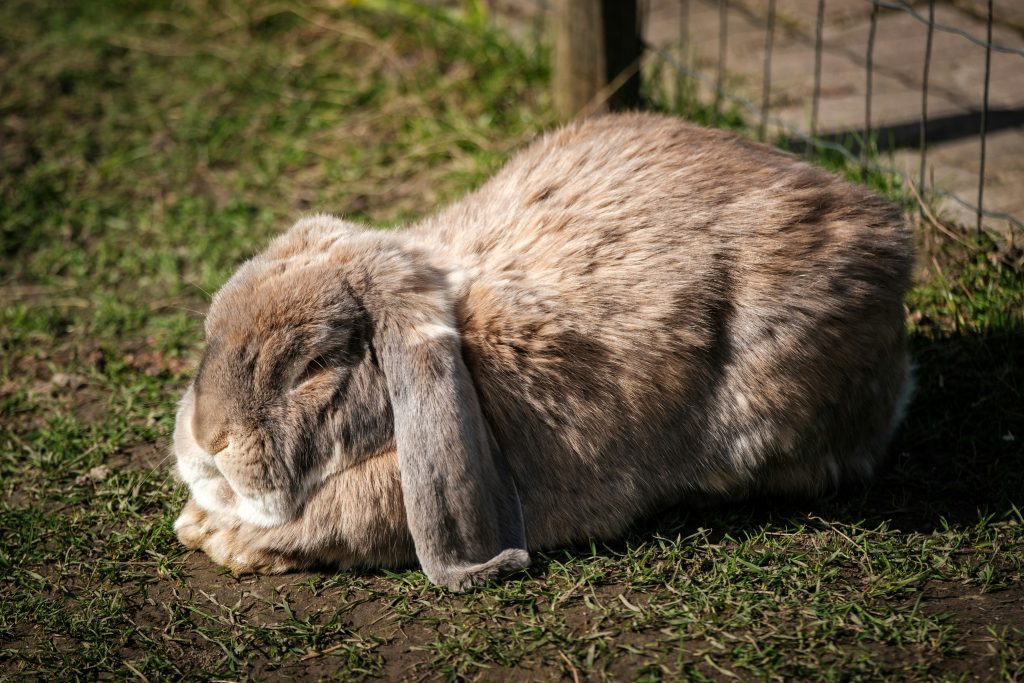
Sitting in a Hunched Position
A hunched stasis posture is characterized by a tense, rigidly rounded back, which Blue Cross notes in their basic rabbit healthcare guide as a universal and clear sign of severe visceral pain and gastrointestinal distress.
Grinding Teeth From Pain
Pain grinding is distinctly loud, harsh, and has a metallic, crunchy cadence—occurring in short, intense bursts while the rabbit sits rigidly hunched. This behavior is entirely distinct from a gentle, contented tooth purr, and hearing it requires an immediate review of standard rabbit grinding teeth signals.
Changes in Grooming Habits
The internal distress of GI stasis quickly disrupts self-care. A rabbit may cease grooming entirely, resulting in a dull coat, or exhibit localized over-grooming in response to sharp belly pain.
5. Could It Be GI Stasis or Something Else?
Because a rabbit’s body reacts to stress and illness in a limited number of ways, many conditions present with overlapping symptoms. The exotic veterinary community actually groups these mimic-conditions under “Rabbit Gastrointestinal Syndrome” (RGIS) because pinning down the exact underlying cause is notoriously difficult—a diagnostic reality heavily explored in LafeberVet’s clinical training for exotic medicine.
Temporary Stress and Acute Gas Pain
Sudden environmental changes can cause temporary, stress-induced appetite loss. True gas pain involves an acute buildup of gas bubbles, which can lead to secondary stasis if not resolved quickly. To differentiate between a simple gassy episode and a true slowdown, look over my breakdown on rabbit bloated stomach: GI stasis vs. gas.
Diagnostic Triage
Isolating a true digestive slowdown from other problems requires careful tracking. For a broader lookup of overall wellness anomalies, you can refer back to the my core bunny health guide to cross-reference overlapping conditions and learn what baseline vital signs look like.
Observational Note: I documented this exact distinction during a baseline shift with Chino. Following loud home renovations, Chino hid and refused his evening treats, mimicking early stasis. However, his abdomen remained completely soft, his ears were warm, and within two hours of the noise stopping, he returned to normal feeding and litter box output alongside Mocha. This confirmed environmental stress rather than a true motility decline.
Table 4: Diagnostic Triage for Common Rabbit Ailments
| Condition | How It Differs from Early GI Stasis |
|---|---|
| Gas Pain | Onset is sudden; behavior fluctuates; audible fluid/gas gurgling. |
| Dental Disease | Rabbit wants to eat but drops food; wet chin/tear staining. |
| Heat Stress | Tied to high temperatures; rapid, heavy panting and hot ears. |
| Temporary Stress | Resolves quickly once the environmental trigger is removed. |
6. When Early Signs Become an Emergency
Because a rabbit’s metabolic rate is so high, an absence of food and water triggers a rapid decline. Toxins, combined with advancing dehydration, drop the core body temperature into a dangerous hypothermic state (101.5∘F to 103∘F down into a state below 100∘F), leading to organ failure within 12 to 24 hours.
Critical Red Flags
Once the condition passes the initial stages, transport the rabbit to an exotic emergency hospital immediately if you observe complete anorexia, or if there is a total cessation of droppings or a visibly distended, rock-hard abdomen. If your pet reaches a state of being completely lethargic or not moving, every single minute counts.
Table 5: Emergency Triage and Action Plan
| What You Notice | Recommended Action |
|---|---|
| Slow eating; still pooping. | Track intake hourly; call vet if it persists >12 hrs. |
| Total hay refusal; smaller feces. | Schedule a priority, same-day veterinary evaluation. |
| Selective anorexia; hiding. | Seek veterinary care immediately; do not wait overnight. |
| Zero output; rigid hunching. | Treat as emergency; transport to exotic clinic. |
| Distended abdomen; cold ears. | Critical emergency. Transport immediately. |
7. Actionable Steps for Early GI Stasis Intervention
Once you have identified the early warning signs of a gut slowdown, your immediate response can drastically alter the recovery timeline. While you are securing a veterinary appointment, there are specific, measured actions you should take at home—and a few catastrophic mistakes you must avoid. The goal during this window is to gather hard data and stabilize your rabbit’s environment, rather than attempting to play emergency room doctor in your living room.
Documenting the Timeline
Start by creating a detailed log of your rabbit’s condition, specifically noting the exact time of the last normal meal and the frequency of fecal droppings. Providing this to your veterinarian allows them to offer priority medical advice without guessing when the slowdown actually started.
Stabilizing the Environment
Relocate your rabbit to a quiet, dimly lit, and temperature-controlled area away from household activity to encourage gut movement. This is not the time for the dog to be investigating the rabbit’s enclosure.
Avoiding Common Pitfalls
Resist the urge to perform aggressive syringe feeding unless a professional has confirmed the absence of a complete gas or fluid blockage, because forcing food into a blocked digestive tract is fatal, a distinction the veterinary team at MSPCA-Angell is incredibly strict about.
8. Frequently Asked Questions (FAQ)
Can a rabbit have GI stasis if it is still eating?
Yes. In the early stages, rabbits frequently continue to nibble on pellets or treats while intestinal motility is actively decelerating.
Is refusing hay one of the first signs of GI stasis?
Yes. Coarse hay requires the most physical effort to chew, so it is often the first thing a rabbit strategically vetoes when they feel unwell.
What changes first: appetite or droppings?
Behavioral appetite shifts are usually visible a few hours before the litter box output drops.
How quickly can GI stasis become serious?
GI stasis can escalate from mild sluggishness to fatal hypothermic shock within 12 to 24 hours.
Can GI stasis start overnight?
Yes. A rabbit may appear perfectly healthy at their evening feeding, only for a sudden bout of gas pain to quietly escalate while the household sleeps. This is exactly why morning litter box inspections are practically a mandatory part of owning a rabbit.
Should I wait to see if my rabbit improves?
No. Visible signs mean the condition is already well underway; waiting overnight frequently allows a treatable slowdown to become a fatal blockage.
9. Conclusion
Gastrointestinal stasis is never a condition where you can afford to “wait and see.” Because rabbits hide pain until they physically can no longer mask it, the earliest clues are your best windows for successful medical intervention. Treating these subtle shifts as active warning signs disrupts the stasis timeline before life-threatening complications take hold. Your daily familiarity with your rabbit’s unique routine is your most powerful tool, document the specifics and contact a rabbit-savvy veterinarian immediately.
Medical & Veterinary Disclaimer: Bunnyowners.com is an informational resource for rabbit owners and enthusiasts. We are not veterinarians. The content on this website is for educational purposes only and is not a substitute for professional veterinary advice, diagnosis, or treatment. Always consult a qualified veterinarian with any questions or concerns regarding your pet’s health, medical conditions, diet, or overall care. If you have concerns about your rabbit’s health, it’s always best to reach out to a veterinarian rather than relying solely on information found online.