
Veterinary & Affiliate Disclaimer: Bunnyowners.com shares educational rabbit care resources, not professional veterinary advice. Always consult a qualified veterinarian regarding your rabbit’s medical, dietary, or behavioral needs. This post may also contain affiliate links; as an Amazon Associate and affiliate partner, we earn from qualifying purchases at zero extra cost to you.
If your rabbit is limping, constantly shifting their weight, or losing hair on their back feet, a hock issue is likely brewing. The tricky part is that the earliest sign—a small, bare spot right on the heel—looks completely harmless at first. It is easy to brush off as simple fur wear, but catching that minor bare patch right when it shows up makes all the difference for keeping your rabbit comfortable and mobile.
Rabbit sore hocks (pododermatitis) are pressure sores that develop on the hind feet when hard surfaces, damp bedding, or excess weight wear down protective foot fur. Early signs include small bald patches, redness, or calluses on the heels, which can progress into painful open ulcers if left unaddressed. Reversing early sore hocks requires immediate environmental changes, such as providing soft, padded flooring and keeping the living area thoroughly clean and dry.
While certain breeds like Rex rabbits are genetically predisposed to this foot injury, any rabbit exposed to wire cages, damp bedding, or long claws can rapidly develop severe ulcerations. Understanding how this condition develops is essential for managing overall rabbit health and keeping your pet comfortable. This guide covers everything you need to spot the symptoms early, correct the underlying environmental triggers, and safely manage your rabbit’s recovery.
🚨 Emergency Warning
Seek veterinary care immediately if your rabbit displays any of the following critical symptoms:
- Open, actively bleeding wounds
- Visible pus or a foul odor emanating from the foot
- Significant swelling or a foot that feels hot to the touch
- Refusal to bear weight on one or more limbs
- Lethargy, fever, or a sudden loss of appetite (which can quickly become life-threatening in rabbits)
- Visible bone or deep tissue exposure
1. What Are Rabbit Sore Hocks?
Unlike dogs and cats, rabbits don’t have protective paw pads. Instead, the bottoms of their feet rely on a thick layer of fur for cushioning to shield the paper-thin skin beneath.
Before analyzing how lifestyle factors impact their health, use this quick reference breakdown to contrast a standard, well-cushioned hind foot against the first signs of structural deterioration:
Healthy Foot vs. Sore Hocks
| Feature | Healthy Heel | Early Sore Hocks |
| Fur Coverage | Thick fur covers the entire heel | Small bald patch appears |
| Skin Visibility | Skin is completely hidden | Pink skin is clearly visible |
| Inflammation | No redness present | Mild redness or a hard callus |
| Mobility | Comfortable, natural movement | Weight shifting or mild discomfort |
Rabbits evolved to move across natural surfaces like soil, grass, and soft terrain rather than continuously standing on hard indoor flooring. When a rabbit sits or stands, the vast majority of their body weight rests squarely on the hocks, the long heel assembly of the hind leg. If that protective fur mat thins out or rubs away, localized friction takes over, causing repeated pressure damage and reducing healthy circulation to the tissues.
How Sore Hocks Progress
Pododermatitis follows a predictable downward trend when the source of pressure isn’t removed. Catching it at Stage 1 makes recovery much simpler.
Sore Hock Stages
| Stage | What You’ll See | Severity Level | Action Required |
|---|---|---|---|
| Stage 1 | Small, clean bald spot on the heel. Skin looks normal or light pink. | Mild | Fix flooring immediately. |
| Stage 2 | Bare skin is bright red, inflamed, or showing hard calluses. | Mild to Moderate | Change bedding; consult a vet. |
| Stage 3 | Open sores, raw splits, or shallow craters with scabs forming. | Moderate | Veterinary care and pain relief needed. |
| Stage 4 | Deep ulcer with swelling, fluid drainage, or thick discharge. | Serious | Urgent vet care; systemic antibiotics. |
| Stage 5 | Infection spreads into deeper tissues and may reach the bone (osteomyelitis). | Emergency | Immediate crisis care; potential surgery. |
2. Rabbit Sore Hocks Symptoms
Recognizing pododermatitis early requires looking past obvious behavioral signs and inspecting the foot itself. Symptoms evolve from minor cosmetic coat thinness into deeply debilitating physical lesions.
Early Symptoms
Early sore hocks usually begin with a small bald patch on the heel. As the coat thins, localized rabbit fur loss on the undersides of the feet leaves delicate skin exposed to constant floor friction. You might also notice your rabbit frequently paddling their feet or shifting their weight from side to side while resting because standing becomes uncomfortable. The goal is simple: check your rabbit’s feet regularly, as they often hide discomfort until pain becomes obvious.
Moderate Symptoms
As the pressure continues, the skin splits open. The bare heel area turns an angry red or purple, and fluid leaking from the tissue mats down the surrounding fur. At this stage, your rabbit will actively alter how they move. Any noticeable shift where a rabbit starts limping or favoring one leg usually indicates that standing on raw, inflamed heels has become too painful.
Severe Symptoms
Advanced sore hocks represent a profound health crisis. Open ulcers bleed steadily onto the floor, and the entire foot can look physically swollen or distorted due to deep abscesses. Advanced sore hocks are not just a skin problem; deep ulcers cause continuous discomfort, making it critical to recognize subtle rabbit pain signals before stress causes them to stop eating.
3. How to Check Your Rabbit’s Feet for Sore Hocks
Because rabbits naturally hide their pain, catching irritation early is the only way to prevent a minor case of thinning fur from turning into a life-threatening medical crisis. Performing a routine weekly physical check allows you to examine their soles before the skin breaks down and catch friction spots early.
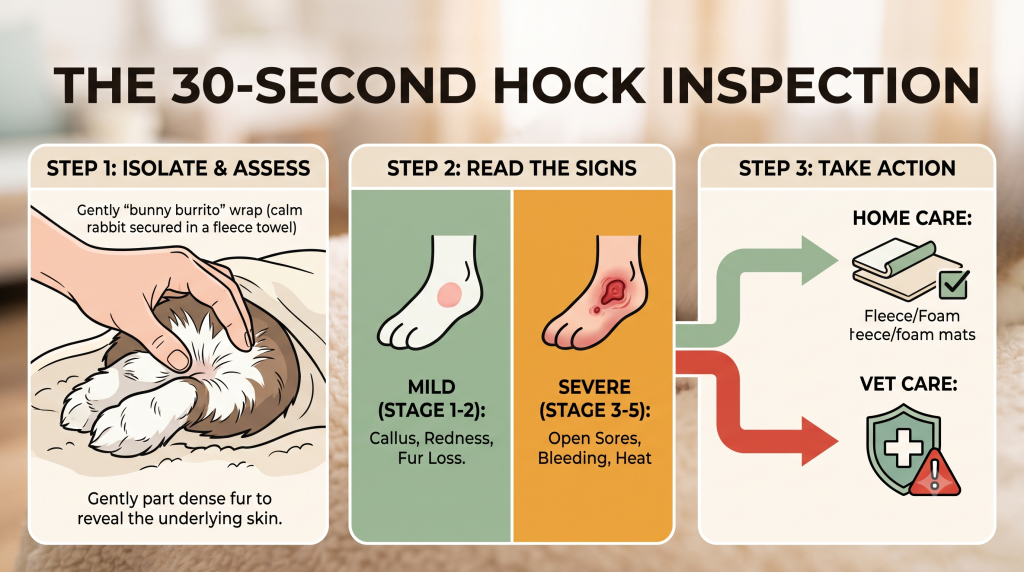
Place your rabbit on a stable, non-slippery surface. If they are anxious, the best approach is to gently secure them in a “bunny burrito” using a soft towel on a low surface or your lap; this secures their limbs safely and protects their spine while giving you clear access to the hind paws. Support their hindquarters, and lift one rear leg. Use your thumbs to gently part the dense, springy fur mat directly under the heel assembly to inspect the skin beneath.
The 30-Second Hock Inspection
Use this simple, step-by-step guide to read the signs and determine exactly how to help your rabbit stay comfortable:
- Step 1: Secure & ExploreThe first step is correctly handling your rabbit to minimize stress. Securing them in a cozy “bunny burrito” wrap protects their limbs and spine while allowing you to gently part the thick fur and reveal the underlying skin.
- Step 2: Read the SignsOnce the heel skin is visible, check for two distinct stages of foot irritation:
- 🟢 Mild Irritation (Stage 1–2): Look for early coat thinning, slightly pink skin, or small, dry calluses.
- 🔴 Deep Sore (Stage 3–5): Look for open skin splits, distinct redness, light bleeding, or discharge.
- Step 3: Take ActionWhat you discover in Step 2 determines your immediate care plan:
- 🟢 Bunny’s Home Care: Mild irritation is managed right away at home by updating your flooring to cozy fleece and soft foam mats, improving enclosure hygiene, and trimming long claws to fix their posture.
- 🔴 Vet’s Care Plan: Deep sores require a professional medical check-up. Do not wait or experiment with household creams. Seek customized wound care from an experienced exotic veterinarian.
4. Causes
Pododermatitis is rarely triggered by an isolated issue; it is almost always caused by a mix of a rigid living environment, systemic physical strains, or genetic structural traits.
Hard Flooring
Hard floors don’t have any “give.” Surfaces like tile, hardwood, linoleum, and tightly woven synthetic rugs offer zero compression, meaning the rabbit’s thin foot skin bears the brunt of every impact. Wire-bottom cages are one of the biggest environmental risk factors because they concentrate pressure on small areas of the foot and prevent normal weight distribution.
Veterinary guidance on rabbit pododermatitis causes and treatment also emphasizes the importance of improving the living surface. Over weeks or months, that repeated pressure wears away the protective fur and eventually damages the skin underneath.
Obesity
Every extra ounce of body weight applies direct, continuous downward force onto the heel bones. Overweight rabbits struggle to move dynamically, leading them to sit motionless for long periods, which keeps the skin under constant, uninterrupted pressure. Extra body weight multiplies the mechanical compression on the hocks every single time your rabbit sits, rests, or attempts to hop.
Arthritis & Mobility Problems
Aging rabbits often alter their posture to accommodate stiff joints. Senior rabbits coping with joint pain and arthritis tend to shift their weight backward onto their heels to relieve pressure on their front legs, accelerating wear on vulnerable hock tissue.
Rex Rabbits
Rex and Mini Rex rabbits have a unique coat that feels incredibly soft but provides much less cushioning than the fur of most rabbit breeds. Unlike standard rabbits that possess a dual coat of soft underfur and coarse, rigid guard hairs, Rex rabbits have a uniform, velvety coat where the guard hairs are short and soft. This leaves their skin highly exposed to friction even on seemingly soft surfaces.
5. Which Rabbits Are Most at Risk?
Knowing these risk factors helps you catch problems before they become painful. Certain profiles make a rabbit significantly more vulnerable to foot injuries, allowing you to take preventative steps early.
- Velvety Breeds: Rex and Mini Rex rabbits lack thick protective guard hairs on their soles, leaving them highly vulnerable.
- Senior and Arthritic Rabbits: Older rabbits with joint stiffness often shift their weight backward onto their heels to relieve painful joints.
- Overweight Rabbits: Carrying excess body fat puts constant, intense downward pressure on the thin skin covering the heel bone.
- Confined Enclosure Inhabitants: Rabbits kept in small cages or spaces with hard flooring lack the space to exercise, leading to prolonged static pressure on their feet.
6. What Do Sore Hocks Look Like?
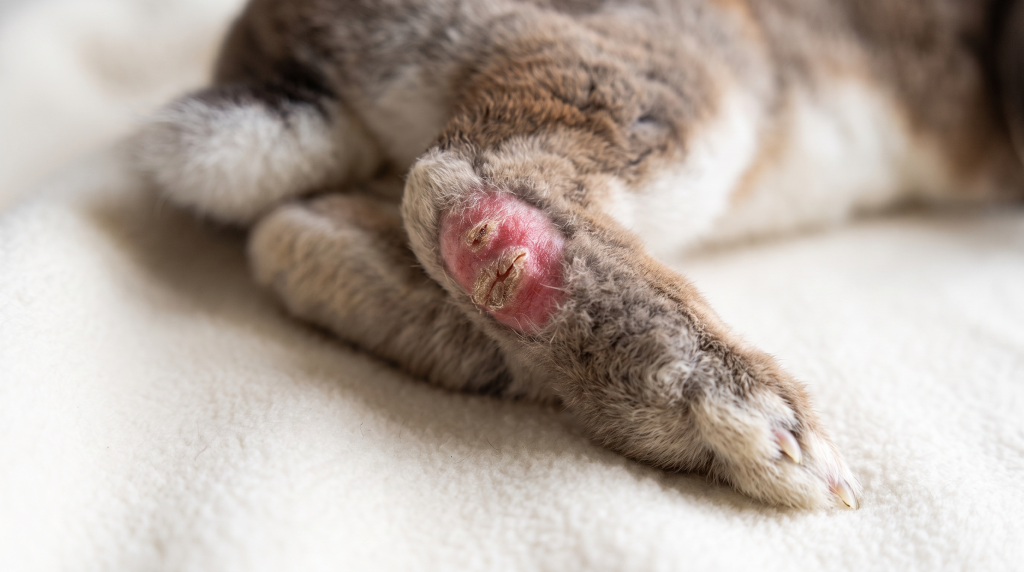
To catch a pressure sore before it breaks the skin barrier, it helps to understand what a healing foot looks like compared to an active ulcer.
Progression Breakdown
- Healthy Foot: A thick, dense fur mat that completely covers the heel skin.
- Mild Sore Hocks: A small circular bald spot where the skin is bare but intact and pink.
- Moderate Sore Hocks: Angry red or purple skin showing surface cracks and light scabbing.
- Severe Sore Hocks: An open crater ulcer accompanied by prominent swelling, oozing, or bleeding.
Sore Hock Symptoms by Stage
| Condition | Visual Presentation | Tissue Texturing |
|---|---|---|
| Healthy Foot | Complete fur coverage; skin hidden. | Soft, highly springy padding. |
| Mild (Stage 1-2) | Bare circular heel patches; pink skin. | Smooth, dry, or hard callus. |
| Moderate (Stage 3) | Open skin splits; red raw surface. | Inflamed, warm to the touch. |
| Severe (Stage 4-5) | Deep ulcers; thick drainage or crusts. | Firm, distorted, severe swelling. |
7. Treatment
Treatment depends on how advanced the sore is. A small bald patch and a deep, infected ulcer require completely different approaches, and mismatching the remedy can stall recovery.
If you catch sore hocks before the skin breaks open, changing the flooring, trimming long nails, and reducing pressure are often enough for the area to heal. Swapping out hard flooring for double-layered fleece over foam puzzle mats gives the rabbit’s feet a softer surface that absorbs pressure instead of forcing the heels against a hard floor. You can also trim overgrown nails to improve posture and reduce pressure on the heels.
Once the skin becomes ulcerated, however, home care alone is no longer sufficient and veterinary treatment becomes necessary. The rabbit’s foot must be cushioned mechanically while the tissue mends. Your veterinarian will clean the wound, remove damaged tissue if necessary, apply medication, and protect the foot with a padded bandage that reduces pressure while it heals.
Advanced cases with deep infections require aggressive systemic medical therapy, heavy prescription pain management, and dedicated long-term wound care.
8. Can You Treat Rabbit Sore Hocks at Home?
Mild sore hocks may improve with environmental changes, but open ulcers should never be treated as a simple skin problem. Home care focuses on removing mechanical pressure while actively supporting professional veterinary treatment.
At-Home Protocols:
- Replace hard flooring: Cover all hard surfaces with thick foam mats and plush anti-pill fleece.
- Keep bedding dry: Clean litter boxes multiple times a day to avoid chemical urine scalding.
- Reduce excess weight: Eliminate high-sugar treats and enforce strict portion control on pellets.
- Monitor eating and behavior: Watch daily food intake to confirm pain is well managed.
- Follow prescribed medications: Give all veterinary antibiotics and pain relievers on schedule.
Practices to Avoid:
- Wrapping the foot tightly at home: Wrapping without expert guidance can cut off essential blood circulation or trap harmful bacteria.
- Applying random human creams: Avoid heavy over-the-counter ointments like Vaseline, which soften the skin and trap moisture.
- Waiting for an open wound to heal naturally: Open sores quickly expose the underlying anatomy to severe structural infection.
9. When Should Rabbit Sore Hocks See a Vet?
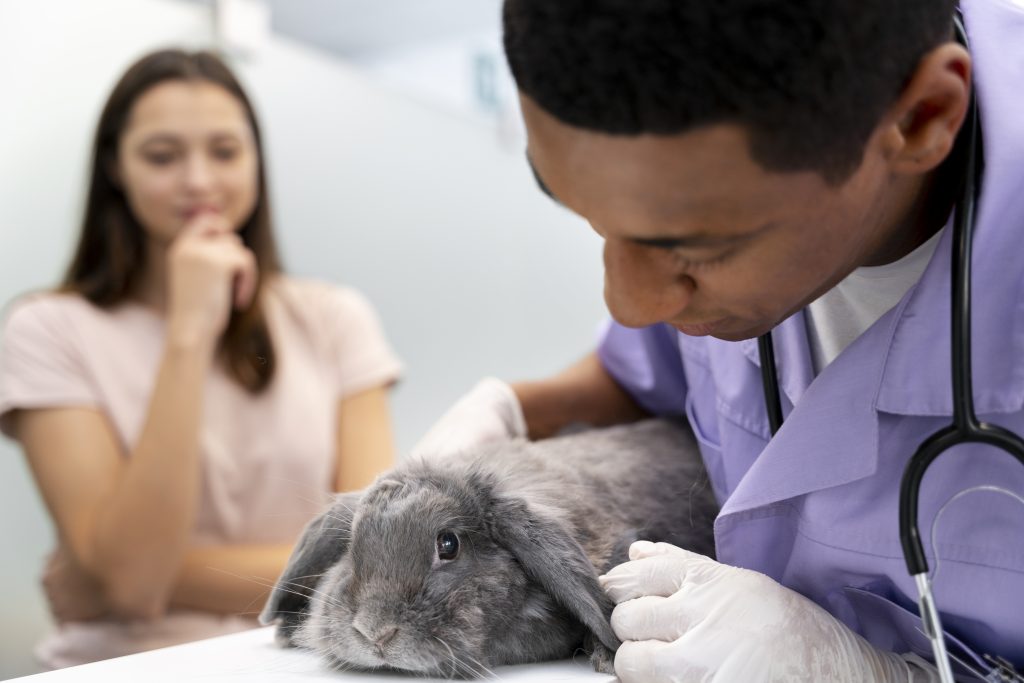
You should schedule a prompt professional evaluation the moment you notice localized hair loss shifting into raw skin or open ulceration. Staying proactive about broader rabbit health concerns ensures early warning signs are caught before foot ulcers become critical.
Contact a rabbit-savvy veterinarian immediately if you notice:
- Bleeding or open wounds on the feet
- Visible swelling around the heel assembly
- Thick discharge or a foul odor from the limb
- Changes in movement, such as a distinct limp or favoring a leg
- A reduced appetite or a complete refusal to eat pellets and hay
- Your rabbit sitting unusually still, hunched, or isolating themselves
10. Veterinary Treatment
When you bring a rabbit with advanced sore hocks to the clinic, the vet will evaluate their comfort and check for deep structural damage. The vet will inspect the ulceration, often taking a bacterial sample and performing digital X-rays to ensure infection hasn’t reached the skeletal structure.
Because rabbits can deteriorate quickly when they are stressed or painful, exotic veterinarians carefully monitor hydration, appetite, and overall stability during wound treatment. Experienced exotic vets rely on trusted medical protocols to safely assess and treat advanced foot ulcers during these delicate procedures.
Clinical Interventions
The veterinarian will gently clip away matted fur flanking the ulcer to prevent it from trapping bacteria. If the wound contains dead tissue or hardened scabs, they will perform a sterile debridement with warm antiseptic flushes.
Pain management is a critical part of treatment because rabbits in discomfort may reduce movement and stop eating. Veterinary resources covering pain assessment and treatment in small mammals explain why controlling pain supports recovery; your vet will prescribe high-dose, rabbit-safe anti-inflammatories (such as meloxicam) to keep the patient moving and eating.
They will select safe systemic antibiotics or use targeted topical agents like silver sulfadiazine cream to eliminate infection. To let the ulcer close, the vet constructs a custom bandage featuring a doughnut-shaped foam ring that suspends the sore in the air, shifting the rabbit’s weight onto the padded outer ring.
11. Home Care
What matters most now is eliminating environmental stressors so the tissue can heal. Keeping the enclosure clean and dry is one of the most important parts of preventing irritation and supporting healing. Practical advice on rabbit housing hygiene and daily care reinforces the importance of a dry living environment.
I’ve noticed with my own rabbits, Mocha and Chino, that footing makes a huge difference in how they act. The moment I replaced hard surfaces with thick padding, they stopped sitting in one spot and started exploring freely again.
Focus your daily care around these core priorities:
- Keep the feet completely clean and dry: Check your rabbit’s enclosure and litter box multiple times a day. Remove wet patches immediately and refresh the area with clean paper bedding and dry timothy hay to lift their hocks away from dampness.
- Give medications exactly as prescribed: Missing a dose of pain medication can cause your rabbit to stop moving or eating, which stalls healing. Give all anti-inflammatories and antibiotics precisely on schedule.
- Check bandages daily: Ensure any medical wraps are dry, clean, and haven’t slipped down the leg. If a bandage gets wet with urine or twists out of place, call your exotic vet right away for a refresh.
- Monitor healing with photos: Take a clear, well-lit photo of the undersides of the heels once a week. This gives you an objective visual record to confirm the ulcer is shrinking and turning a healthy pink.
- Prevent pressure while the skin heals: Restrict your rabbit to single-level living spaces lined with thick foam puzzle mats and high-quality fleece. Avoid any rough, abrasive carpets or hard laminate surfaces during the recovery phase.
12. Recovery
Because rabbits put weight on their heels every time they sit or hop, sore hocks often take weeks or months to fully heal.
The Healing Timeline
At this stage, patience is key. During the initial seven days of treatment, the angry red color of the tissue shifts to a calmer pink as inflammation subsides. The wound may look dry or form a clean scab, and movement should improve within the soft enclosure.
Over the next month, healthy new skin begins replacing the damaged tissue. Veterinary care guidance notes that because pododermatitis alters delicate foot tissue, recovering skin requires extended time. In mild cases, early peach-fuzz fur emerges from the edges of the patch.
For moderate cases, the raw ulcerated crater steadily shrinks, though the new skin remains incredibly delicate and prone to re-injury. Long-term recovery for severe cases requires months of continuous care, as deep ulcers leave behind thin scar tissue that needs permanent soft flooring.
13. Prevention
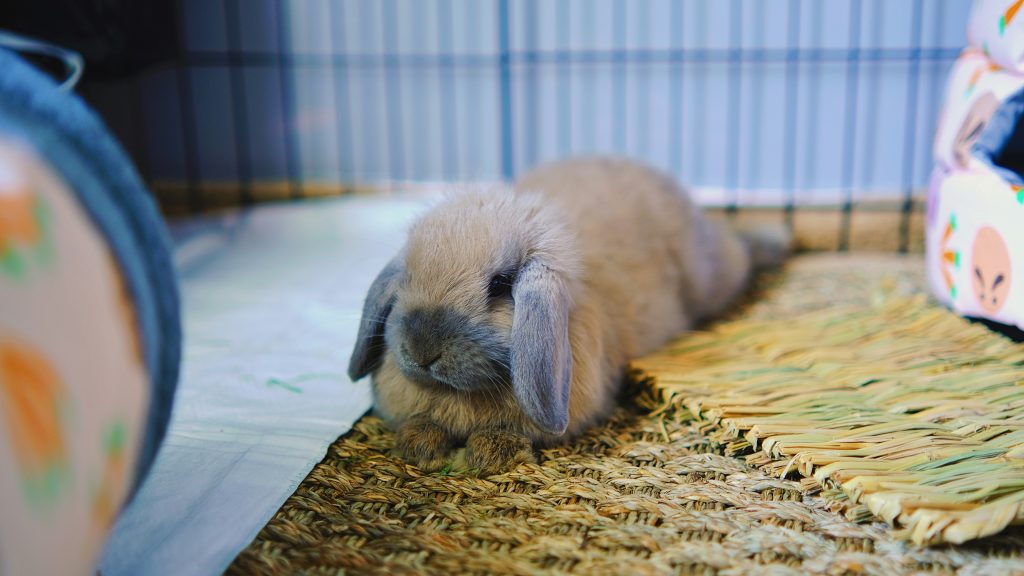
Preventing sore hocks comes down to consistent environmental management. Start by completely covering hard residential flooring in your rabbit’s primary zone with thick, high-density foam puzzle mats, topped with high-quality anti-pill fleece.
Giving your rabbit a soft, cushioned surface prevents hard floors from constantly grinding against their delicate heels. Watching Mocha and Chino around the house made it obvious: when their feet feel comfortable, they are far more confident, active, and playful throughout the day.
Pair this setup with excellent hygiene. Good enclosure hygiene plays a major role in preventing recurring foot problems. Keeping their primary living space thoroughly clean and dry ensures recovering tissue stays free from harmful ambient moisture, providing the foundational environmental defense required to protect their delicate feet over the long term.
Use highly absorbent paper-based bedding in their litter boxes, changing out damp surfaces daily to stop ammonia build-up from scalding the skin. Keep your rabbit light on their feet by feeding a strict, hay-first diet that avoids starchy treats, and encourage daily exploration in a spacious, single-level environment to maintain healthy blood circulation to the limbs.
Finally, incorporate regular nail trims into your routine every 4 to 6 weeks; keeping the claws short stops your rabbit’s center of gravity from rocking backward onto the sensitive heels.
The Prevention Checklist
Not every skin product is safe for rabbit wounds. Guidance on general rabbit health checks and monitoring skin conditions explains why veterinary-directed care is safer than experimenting with household creams. Incorporating these setup steps into regular rabbit health checks ensures long-term protection:
- [ ] Double-layer fleece over high-density foam mats on all hard floors.
- [ ] Change out damp litter box surfaces daily.
- [ ] Maintain a strict hay-first diet to prevent obesity.
- [ ] Trim nails every 4 to 6 weeks without fail.
- [ ] Part the heel fur every week to check the skin beneath.
14. Frequently Asked Questions
Can sore hocks heal on their own?
Mild sore hocks may improve if the source of pressure is removed early, but open sores, swelling, bleeding, or signs of infection require veterinary treatment. Without correcting the underlying cause, sore hocks usually worsen rather than heal on their own.
How to check your rabbit’s feet in 30 seconds?
The safest method is the “bunny burrito” technique. Gently wrap your rabbit in a soft towel to secure their limbs, then lift them safely against your torso while supporting their hindquarters. Gently part the dense fur on the underside of each rear heel with your thumbs to inspect the skin underneath. Look closely for any early hair thinning, dry calluses, or pink spots, then return them gently to the floor.
What are the most common treatment mistakes?
The single most frequent error is applying heavy over-the-counter ointments (like Neosporin or Vaseline) and leaving the foot exposed. Introducing greasy topical barriers without veterinary guidance can isolate excess skin moisture and speed up tissue rot. Another common mistake is attempting to bandage the foot tightly at home without a custom foam doughnut wrap, which can accidentally concentrate pressure directly onto the sore rather than shifting it away.
Can sore hocks cause a rabbit to stop eating?
Yes, advanced pododermatitis causes deep, persistent pain that can easily overwhelm a rabbit. When a rabbit experiences severe discomfort, their immediate response is to stop eating and moving, which can quickly lead to gastrointestinal stasis, a potentially life-threatening condition. Any loss of appetite in a rabbit with foot sores must be treated as a medical emergency.
Will fur grow back after sore hocks heal?
In Stage 1 and Stage 2 cases where the skin barrier remains unbroken, the hair follicles usually recover completely once pressure is removed. However, Stage 3 and higher ulcerations leave behind thin, fibrous scar tissue that permanently damages the underlying follicles, meaning the fur may never fully grow back in the center of the wound.
Are sore hocks painful for rabbits?
Yes. Even early sore hocks can be uncomfortable because the exposed skin loses the protective cushioning normally provided by fur. As ulcers deepen, the pain can become severe enough to change how a rabbit moves, rests, and eats.
15. Conclusion
Most cases of sore hocks begin with something as simple as a small bald patch on the heel. Catching that early, replacing hard flooring with soft surfaces, and keeping your rabbit at a healthy weight can often prevent painful ulcers from developing. If you notice open wounds, swelling, or signs of infection, contact an experienced rabbit veterinarian as soon as possible. Prompt treatment gives your rabbit the best chance of a full recovery.
Medical & Veterinary Disclaimer: Bunnyowners.com is an informational resource for rabbit owners and enthusiasts. We are not veterinarians. The content on this website is for educational purposes only and is not a substitute for professional veterinary advice, diagnosis, or treatment. Always consult a qualified veterinarian with any questions or concerns regarding your pet’s health, medical conditions, diet, or overall care. If you have concerns about your rabbit’s health, it’s always best to reach out to a veterinarian rather than relying solely on information found online.