

Veterinary & Affiliate Disclaimer: Bunnyowners.com shares educational rabbit care resources, not professional veterinary advice. Always consult a qualified veterinarian regarding your rabbit’s medical, dietary, or behavioral needs. This post may also contain affiliate links; as an Amazon Associate and affiliate partner, we earn from qualifying purchases at zero extra cost to you.
Learning how to properly care for a pet rabbit starts with knowing that rabbits are intelligent, active companions rather than low-maintenance cage pets. Whether you are preparing for your first rabbit or improving your current routine, good daily care comes down to a few essential habits you need to get right from day one:
To properly care for a pet rabbit, provide permanent access to a large living area with solid, non-slip flooring—ideally a 3 m × 2 m × 1 m footprint for a pair. Base their daily diet on unlimited good-quality grass hay, supplemented with measured leafy greens, fresh water in a heavy ceramic bowl, and plain high-fiber pellets. Maintain a consistent routine with gentle handling, safe enrichment, regular grooming, and close daily observation paired with ongoing care from an experienced exotic veterinarian.
In this guide, you will learn everything you need to know about everyday rabbit care, covering spacious housing setups, rabbit-proofing techniques, balanced nutrition, daily care schedules, and essential warning signs to help your rabbit live a long, healthy life.
1. Quick Answer: What Does a Pet Rabbit Need?
To stay healthy and active, pet rabbits depend on five basic needs provided consistently throughout their lives:
- Spacious Living & Exercise Area: A secure environment with permanent room to run, hop, stretch out fully, and stand upright on hind legs without ears touching the ceiling.
- Hay-Based Diet & Fresh Water: Constant access to good-quality grass hay or grass, supplemented with measured leafy greens, a small daily portion of plain pellets, and clean water in a heavy ceramic bowl.
- Companionship & Mental Enrichment: Regular social interaction—ideally with a compatible neutered rabbit partner—plus daily opportunities to dig, chew, tunnel, and forage.
- Regular Grooming & Cleaning: Weekly coat brushing (daily during heavy molts), regular nail trims every 4 to 8 weeks, and a clean litter box lined with safe paper or wood pellets.
- Rabbit-Experienced Vet Care & Daily Checks: Routine health exams, spaying or neutering, appropriate vaccinations, and close daily monitoring of appetite, droppings, and behavior.
The table below outlines the main areas of care alongside their basic requirements and common mistakes to avoid:
Rabbit Care at a Glance
| Care Domain | Core Requirement | Common Mistake to Avoid |
|---|---|---|
| Living Space | Large exercise pen, dedicated room, or secure run | Confining to a standard pet store wire cage |
| Flooring | Solid, comfortable, non-slip surfaces | Wire mesh grating or slippery hardwood |
| Diet | Unlimited grass hay/grass, fresh greens, measured pellets | Unlimited muesli mixes, seeds, or pellet-only feeding |
| Hydration | Heavy ceramic bowl washed and refilled daily | Hanging bottles that can clog or restrict water flow |
| Exercise | Permanent access to room to run and stretch | Keeping the rabbit enclosed without movement space |
| Enrichment | Cardboard tunnels, dig boxes, safe chew wood | Leaving an empty enclosure without mental outlets |
| Litter Area | Paper-based pellets topped with fresh feeding hay | Clay, clumping, or scented cat litters |
| Grooming | Routine brushing and periodic nail trimming | Submerging the rabbit in water baths |
| Veterinary | Regular wellness exams with an exotic veterinarian | Assuming general cat and dog clinics treat rabbits |
| Health Monitoring | Daily tracking of droppings and appetite | Ignoring a sudden loss of appetite or reduction in droppings |
2. Before Getting a Rabbit: Understand the Commitment
Before bringing a rabbit home, it helps to know the long-term time, financial, and household commitments involved.
Rabbits Are Long-Term Pets
A common misconception is that domestic rabbits live only a couple of years. In reality, well-cared-for indoor rabbits frequently live between 8 and 12 years, and sometimes longer. Adopting a rabbit is a decade-long commitment similar to welcoming a dog or cat into your home.
Daily Time and Care Demands
Rabbits require daily attention and interaction rather than being left in an enclosure. Every morning and evening involves replenishing fresh hay, washing water dishes, offering measured food, and spot-cleaning the litter tray. Beyond basic feeding, caregivers need to sweep up stray hay, provide a stimulating environment, and pay attention to whether their rabbit is eating normally and producing plenty of normal droppings.
Locating an Exotic Animal Veterinarian Early
Rabbits have very different digestive and medical needs from dogs and cats. Certain medications routinely used in dogs and cats can be dangerous to rabbits, making rabbit-specific veterinary experience essential. Find an experienced exotic animal veterinarian in your area before bringing your rabbit home so you know exactly where to go for wellness visits and emergencies.
Ongoing Costs
The lifetime cost of rabbit ownership extends beyond initial adoption:
- Recurring Supplies: Continuous purchases of good-quality grass hay, safe litter bedding, fresh leafy greens, and chew toys.
- Routine Medical Care: Spay/neuter surgery, wellness exams, and region-appropriate vaccinations.
- Emergency Reserve: Veterinary diagnostics, imaging, and treatment for sudden illnesses can arise quickly and require dedicated savings or pet insurance.
3. Setting Up a Safe, Spacious Living Environment

Modern rabbit care moves away from small cage confinement. Their living area should feel like a safe home base with plenty of room to move around whenever they want.
How Much Space Does a Rabbit Need?
Leading welfare organizations recommend that a compatible pair of average-sized rabbits have permanent access to a large living area of at least 3 meters by 2 meters (roughly 10 ft × 6.6 ft), with a height of at least 1 meter (3.3 ft). This continuous space gives them enough room to move around normally all day—allowing rabbits to hop several times in a row, run, turn around comfortably, and stand up on their hind legs without their ears touching the top.
For many indoor setups, a tall metal exercise pen (36 to 42 inches high) provides a practical home base because it is inexpensive, well ventilated, and easy to expand. A fully rabbit-proofed room or free-roam setup offers even more freedom. In contrast, standard pet-store wire cages are far too restrictive to serve as a rabbit’s primary living space and should not be used.
Flooring, Hiding Spots, and Layout
Rabbits don’t have paw pads like dogs or cats; the bottoms of their hind feet rely on thick fur rather than padded paws. Wire flooring concentrates pressure directly on the heels and can contribute to painful sore hocks (pododermatitis). Choose solid surfaces with good traction, such as low-pile cotton rugs, washable blankets over foam play mats, or non-slip vinyl flooring.
As prey animals, rabbits also need secure retreats where they can rest without feeling exposed. Provide at least one hiding shelter per rabbit (ideally with two separate entry and exit holes so one rabbit can’t trap another), such as wooden boxes, sturdy cardboard huts, or woven willow tunnels.
Organize the space into three simple areas:
- Feeding & Toileting Area: Place the hay rack directly next to or inside the litter box, since rabbits naturally graze while using the bathroom.
- Resting Area: Place hideaways in quiet, low-traffic spots away from drafts and direct heat sources.
- Activity Area: Keep the central runway open so rabbits can run, jump, and stretch freely.
4. Rabbit-Proofing the Living Area
Rabbits have continuously growing teeth and an instinctive drive to chew and explore. Rabbit-proofing protects your home while keeping your pet safe from household hazards.
Electrical Cords and Tight Gaps
Wires are tempting to rabbits because they mimic roots that wild rabbits naturally sever when burrowing. Chewing active cords carries serious risks such as burns, electrical shock, or even fire. Any cable your rabbit can reach should be enclosed in tough split tubing or solid plastic conduit channels, or routed behind heavy furniture and along walls out of reach.
Rabbits can also squeeze into surprisingly small gaps, especially behind appliances, entertainment centers, and low-clearance couches. Block these openings with secure barriers or wire storage grids zip-tied together. Keep closet doors closed, and make sure pet gates have narrow vertical slats that prevent a rabbit from squeezing its head through.
Baseboards, Flooring, and Household Hazards
Baseboard corners and carpet edges often attract chewing and digging. Clear corner guards, untreated wooden boards, ceramic floor tiles, and heavy seagrass mats can protect vulnerable spots while giving your rabbit safe things to chew instead.
Before giving your rabbit access to any room, perform a quick safety sweep: check for exposed cords, poisonous houseplants (such as pothos, lilies, philodendrons, and ivy), loose human medications, dropped cleaning supplies, and chewable carpet corners.
5. What to Feed Your Rabbit
A rabbit’s digestive system relies on a steady supply of dietary fiber to keep things moving smoothly and support healthy digestion.
Unlimited Grass Hay
Unlimited good-quality grass hay—such as Timothy, Orchard Grass, Meadow Hay, or Brome—or fresh grass should make up most of a healthy adult rabbit’s diet. Rabbits need access to it around the clock, not simply at scheduled mealtimes.
Hay does two especially important jobs. Its long fibers provide the physical bulk needed to keep food moving through the digestive tract, while repeated chewing helps wear down continuously growing teeth. Alfalfa is different from grass hays because it is a legume containing more protein, calories, and calcium; while useful during growth before transitioning to an adult diet, it is generally unsuitable as the unlimited staple forage for healthy adult rabbits.
Leafy Greens and Fresh Vegetables
Feeding fresh leafy greens every day provides extra moisture, nutrients, and variety. Different greens have different nutritional profiles, so variety is better than relying heavily on one food. Great daily staples include romaine lettuce, red and green leaf lettuce, cilantro, parsley, dill, bok choy, mint, and basil. Darker leafy lettuces offer far better nutritional value than light iceberg lettuce, which is nutritionally less useful than many leafy alternatives.
Measured Pellets and Water Bowls
Pellets add some extra vitamins and minerals, but they should only make up a small fraction of the total diet (roughly 5%). Choose a plain, uniform, high-fiber pellet appropriate for your rabbit’s age and health, avoiding mixes with added seeds, corn, or colorful cereal pieces. For average adult rabbits, feed roughly 1/8 to 1/4 cup of pellets per 5 pounds of body weight daily.
Rabbits drink a generous volume of water daily to maintain normal digestion and kidney function. Provide water in a wide, heavy ceramic bowl that cannot easily tip over. Heavy ceramic bowls allow a more natural drinking posture and easy access to water, whereas water bottles can clog, leak, or limit how quickly some rabbits drink.
6. Litter Box Setup and Management
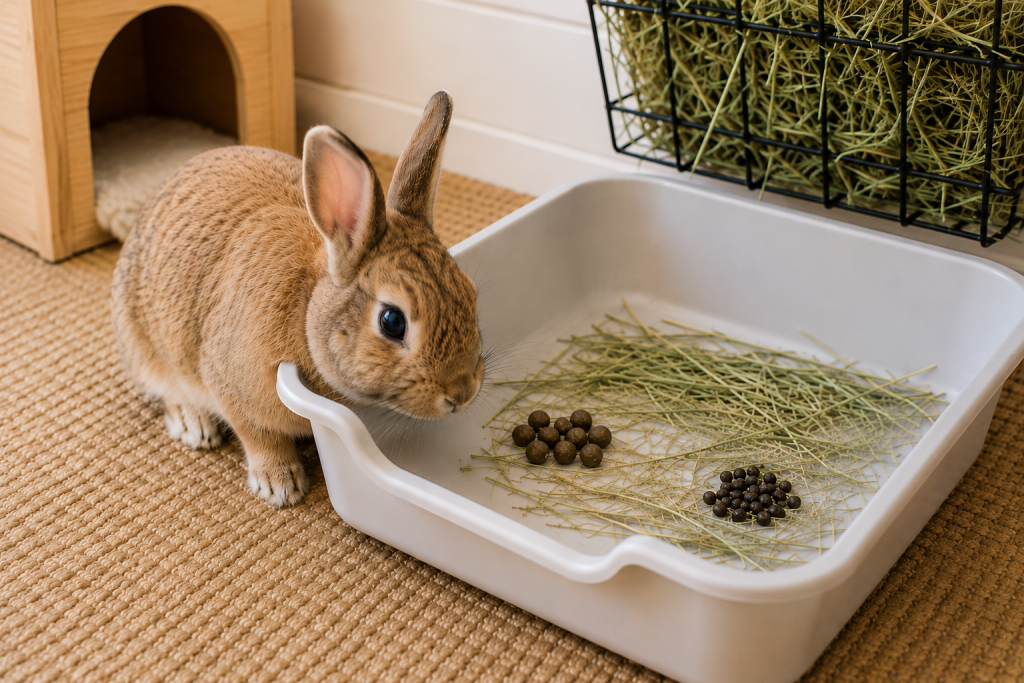
Litter box training is usually straightforward because rabbits naturally prefer to use the bathroom in specific, designated spots.
Choosing the Box and Litter
Choose a wide, low-entry litter pan or shallow storage container large enough for your rabbit to hop into, turn around, and lie down comfortably. Set the tray in the corner your rabbit naturally chooses, or place it in a quiet section of their living area away from high household traffic.
Dust-free paper pellets, aspen shavings, and kiln-dried wood pellets make safe, absorbent litter choices. Clumping cat litter can create problems if it is swallowed and may also produce irritating dust, so it should not be used for rabbits. Avoid cedar or unkilned softwood shavings, which contain strong aromatic oils that can irritate the respiratory system.
The Hay-in-Litter Method
Rabbits naturally like to eat hay while using their litter box, so placing fresh hay inside or directly beside the box can make litter training much easier. Layer clean litter pellets at the bottom of the tray and place a generous mound of clean grass hay at one end (or in a hopper directly overhead).
Cleaning Routine
Spot-clean the litter box once daily by removing heavily soiled patches and wet hay, topping it off with fresh eating hay. Once a week, empty the box completely and scrub the basin with a warm water and white vinegar solution to dissolve white calcium deposits, then dry thoroughly before refilling.
7. Why Rabbits Need Daily Exercise
Regular movement supports digestion, strengthens bones and muscles, prevents obesity, and relieves stress.
Room to Run and Binky
Rabbits are built for running, quick turns, and joyful leaps called binkies. Providing permanent access to a large, secure space ensures they can run, stretch out fully, and play whenever they feel energized rather than waiting for scheduled release times. They shouldn’t spend most of the day confined.
Dawn and Dusk Activity
Because rabbits naturally wake up and explore at dawn and dusk, they are often most active during early morning and evening hours. Ensure they have plenty of room to run and stretch when their energy peaks, while giving them a quiet, sheltered space to rest through the middle of the day.
8. Keeping Your Rabbit Busy
Bored rabbits will create their own entertainment. Give those natural instincts somewhere appropriate to go, or your carpet and baseboards may become the project.
To keep your rabbit active and engaged, pair each natural instinct with safe household items, as detailed in the table below:
Enrichment Ideas by Natural Behavior
| Natural Behavior | Easy Enrichment Outlet | Practical Setup |
|---|---|---|
| Chewing | Willow branches, apple wood twigs, seagrass mats | Offer clean, untreated branches and woven palm plates to protect furniture |
| Digging | Dedicated cardboard dig boxes, straw boxes | Fill a shallow storage bin with shredded brown kraft paper or clean fleece strips |
| Foraging | Snuffle mats, rolling treat balls, hay-stuffed rolls | Scatter daily pellet rations in textured mats or stuff pellets inside a hay tube |
| Exploring | Cardboard tunnels, wooden castles, rearranged hides | Reconfigure boxes and tunnels weekly to create new pathways and sightlines |
Rabbits quickly lose interest in toys that sit in the exact same spot every day. Rotate through different chew sticks, tunnels, and puzzle boxes every week or two to keep their living environment fresh, interesting, and engaging.
9. Meeting Your Rabbit’s Social Needs

Rabbits are deeply social animals that thrive on regular company and attention.
The Benefits of a Bonded Pair
Welfare organizations generally recommend keeping compatible rabbits in bonded pairs or small groups whenever possible. A bonded partner provides mutual grooming, warmth, companionship, and emotional comfort that humans cannot completely duplicate. The most common successful pairing is a neutered male and a spayed female of similar temperament.
Companionship for Single Rabbits
Compatible rabbit companionship is preferred. Keeping a single rabbit happy requires plenty of daily interaction, floor-level companionship, and enrichment from human caregivers to help prevent loneliness, boredom, and stress-related behavior.
Safe Bonding Introductions
Never put two unfamiliar rabbits into a shared enclosure right away, as territorial fights can result in serious injuries. Bonding requires patient, gradual introductions in a neutral area that neither rabbit claims as its own.
10. Handling and Interacting Safely
Rabbits have delicate skeletons paired with strong hind legs. Handling them gently helps keep them calm and prevents injuries.
Interacting at Floor Level
Because predators hunt rabbits from above, hands reaching down from overhead can be frightening. Sit or lie down flat on the floor and let your rabbit come over to explore you on its own terms. Pet gently along the forehead, cheeks, and behind the ears, avoiding the feet, belly, and tail where handling often triggers defensive reactions.
Safe Lifting Technique
When you need to lift your rabbit for grooming or health checks, use a secure two-handed hold:
- Slide one hand gently under the chest, supporting the body behind the front legs.
- Cup the entire hindquarters firmly with your other hand to support their full weight.
- Bring the rabbit close against your chest so its spine stays straight and secure.
- Important: Never pick up a rabbit by its ears, scruff, or single limbs.
Children should be taught to sit quietly on the floor with a gentle treat, allowing the rabbit to hop into their lap voluntarily rather than attempting to pick up or carry the animal.
11. Grooming Your Rabbit
Rabbits groom themselves frequently, but they cannot cough up hairballs. Brushing removes loose fur so they do not swallow excess hair while grooming.
Brushing and Shedding
Short-haired rabbits generally benefit from brushing about once a week, while heavier seasonal molts require daily grooming to remove loose undercoat. Long-haired breeds such as Angoras and Lionheads need frequent attention because mats and tangles can develop quickly, particularly around the rear end. A gentle slicker brush, rubber grooming tool, or specialized shedding comb helps remove loose fur before your rabbit ingests it.
Nails, Scent Glands, and Spot Cleaning
Inspect your rabbit’s claws every 4 to 8 weeks. Overgrown nails can catch on fabrics, twist toes, and put painful pressure on the heels. Trim the sharp tips with small animal nail clippers, staying clear of the pink blood vessel (the quick) inside each claw, and keep styptic powder on hand to stop minor bleeding if a nail is trimmed slightly short.
Check the scent glands on either side of the tail from time to time; clean away dark, waxy buildup with a warm, damp cotton swab if needed. Full-body bathing can cause severe stress and chilling and is generally unnecessary for healthy rabbits. If the rear end becomes soiled, perform a gentle, shallow spot-wash using lukewarm water only on the soiled fur, towel-drying completely afterward.
12. Keeping the Living Area Clean

A clean living area helps prevent strong urine smells, irritation, and problems with the eyes or respiratory tract.
Daily and Weekly Cleaning Routine
Spend 5 to 10 minutes each day removing wet litter clumps and soiled hay from the litter box, topping it off with fresh litter and clean hay. Rinse and refill the water bowl, remove leftover fresh greens before they spoil, and sweep up stray hay or loose droppings around the living area.
Once a week, empty the litter box completely and scrub it with warm water and white vinegar to clear away white mineral buildup. Wash fleece bedding, blankets, and fabric tunnels in fragrance-free detergent, and wipe down hard pen surfaces with a rabbit-safe cleaning solution.
Keeping Familiar Scents Around
Rabbits rely on familiar scents to feel secure. While thorough hygiene is important, keeping some familiar smells around—like leaving a dry, familiar blanket or toy in their resting area during cleanings—helps prevent stress and territorial marking.
13. Keeping Rabbits Comfortable in Hot and Cold Weather
Rabbits tolerate cool temperatures far better than heat because their dense fur coats make it difficult to cool down.
Protecting Against Heatstroke
Temperatures rising above 80°F to 85°F (27°C–29°C) can quickly become dangerous for rabbits. Watch for warning signs of heat stress, including rapid shallow breathing, lethargy, weakness, wetness around the mouth or nose, and uncoordinated movement. On warm days, provide air conditioning, good air circulation, cool ceramic floor tiles, and frozen water bottles wrapped in towels for your rabbit to lean against.
Cool Weather Comfort
Keep indoor living areas comfortable, dry, and away from cold drafts. Stable room temperatures between 55°F and 72°F (13°C–22°C) are ideal for indoor rabbits.
14. Indoor vs. Outdoor Rabbit Housing
Rabbits can live comfortably indoors or outdoors as long as all their space, safety, social, and welfare needs are met.
Why Indoor Housing Is Often Easier
Many owners find indoor housing the most practical way to meet modern welfare standards. Stable indoor room temperatures protect rabbits from summer heatwaves and winter freezes, while secure interior walls eliminate predator risks from urban wildlife and neighborhood dogs. Living indoors also makes daily social interaction effortless and allows caregivers to notice subtle changes in appetite or behavior immediately.
Meeting Outdoor Housing Standards
If housing rabbits outdoors, ensure the setup provides a large, predator-proof run with permanent, sheltered access to a well-insulated, weatherproof home. The area must offer continuous protection against rain, dampness, direct sun, and drafts, and requires several visits daily to keep a close eye on appetite, droppings, and behavior.
15. Daily Health Checks and Early Signs of Illness
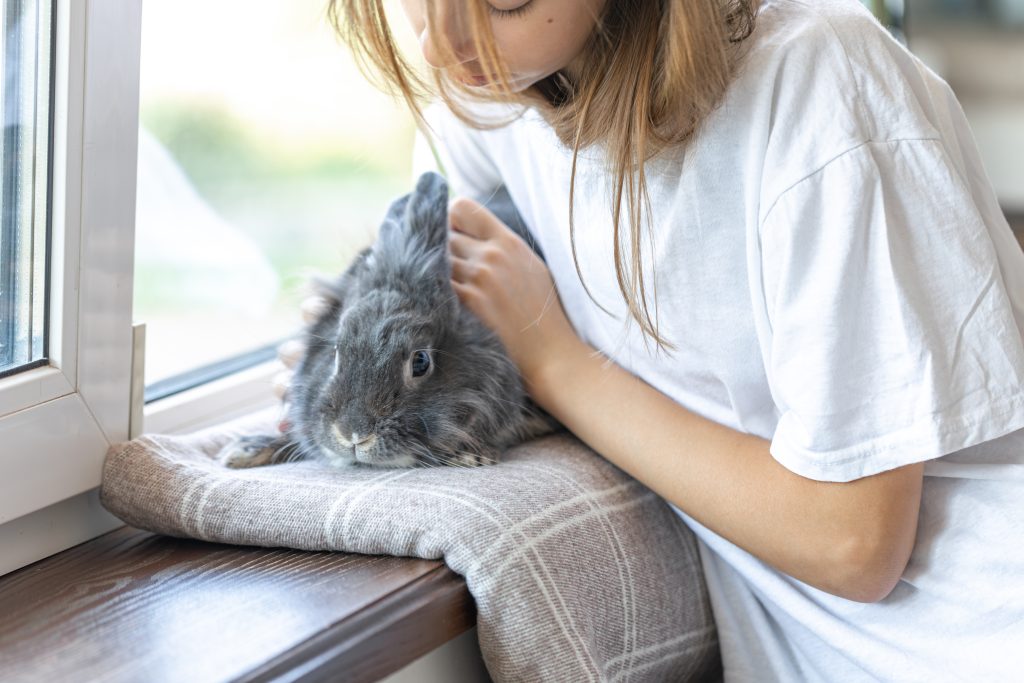
Because rabbits are prey animals, they naturally hide signs of illness or pain. Knowing how to spot subtle illness signs early is the best way to catch health problems before they escalate.
Use the quick reference table below during your morning and evening checkups to check how your rabbit is doing and identify early warning signs:
Daily Health Monitoring
| Daily Check | Normal Baseline | Warning Sign |
|---|---|---|
| Appetite | Eagerly eats hay, greens, and daily pellets | Refusing favorite foods, hesitating, or stopping eating |
| Droppings | Plenty of round, firm, fibrous droppings throughout the day | Small, deformed, strung-together, or completely absent droppings |
| Activity | Alert, curious, and active during dawn/dusk | Uncharacteristic hiding, severe lethargy, or weakness |
| Posture | Relaxed loaf, stretched out, or floppy side-sleep | Tightly hunched, pressing abdomen hard against floor |
| Breathing | Quiet, steady, and effortless nose breathing | Rapid flaring nostrils, wheezing, or open-mouth breathing |
| Rear End | Clean, dry fur around the tail and rear end | Fecal accumulation, dampness, or urine scalding |
Observing your rabbits’ daily routine makes subtle changes stand out quickly.
In my own routine with my two rabbits, Mocha and Chino, the earliest warning signs are rarely dramatic. It is usually something small—like Mocha hesitating at morning greens, chewing a piece of cilantro awkwardly, or Chino leaving a few pellets behind. Catching those minor shifts right away gives me a reason to watch their hay intake, droppings, posture, and behavior more closely before a bigger problem develops.
16. Regular Vet Care
Regular vet visits help catch dental and other health problems before they become serious.
Regular Wellness Exams
As a general starting point, many rabbit-experienced veterinarians recommend scheduling a wellness checkup once a year for young adult rabbits, and every six months for senior rabbits over 6 years old. A typical exam involves checking the back cheek teeth with an otoscope for sharp dental spurs, listening to heart and lung sounds, feeling the abdomen for anything unusual, and inspecting the eyes, ears, and skin.
Spaying, Neutering, and Vaccinations
Spaying and neutering are important parts of rabbit care. Spaying female rabbits prevents uterine adenocarcinoma (uterine cancer), a common and life-threatening condition in older intact females. In both males and females, spaying or neutering can also reduce hormonal behaviors such as urine spraying, territorial aggression, mounting, and excessive marking.
Vaccination recommendations vary by country, region, disease prevalence, and available vaccines. Ask your exotic veterinarian which vaccines (such as those for RHDV2 or Myxomatosis) are recommended in your area.
17. Daily, Weekly, and Monthly Care Routines
A simple, structured care schedule ensures your rabbit gets everything it needs every day.
The schedule below shows the main jobs to handle daily, weekly, and as needed to keep everyday care organized:
Daily, Weekly, and Monthly Care Schedule
| Frequency | Main Jobs | Why It Matters |
|---|---|---|
| Daily | Refill grass hay, wash water bowl, feed greens/pellets, spot-clean litter tray, check appetite and droppings | Keep them eating, drinking, clean, and healthy |
| Weekly | Deep-clean litter box with vinegar, launder fleece bedding, rotate chew toys and cardboard tunnels | Keep the area clean, remove built-up fur, and keep the environment interesting |
| Monthly / As Needed | Inspect claws and trim nails, periodically check body weight, inspect hocks, ears, and scent glands | Keep nails from becoming uncomfortable or affecting how they stand, catch subtle weight trends, spot changes in the skin, coat, feet, or body condition |
18. Essential Rabbit Supplies
Gather these core supplies before bringing your rabbit home:
- Housing & Safety: Tall metal exercise pen (36″ to 42″ height), non-slip floor rugs or fleece-covered mats, heavy-duty split-tubing cord protectors, and two wooden or cardboard hideaways with dual exits.
- Feeding & Hygiene: Large low-entry cat litter box, supply of high-quality grass hay, unscented paper or wood litter pellets, two heavy ceramic bowls, and plain high-fiber pellets.
- Grooming & Health: Gentle slicker brush or shedding comb, small animal nail clippers, styptic powder, top-loading travel carrier, and local exotic veterinary emergency contact details.
19. Common Rabbit Care Mistakes

Avoiding subtle, overlooked care mistakes helps you protect your rabbit’s physical health, digestive balance, and trust from day one:
Relying on gravity water bottles: Hanging sipper bottles frequently clog, leak, or restrict how much water a rabbit can comfortably drink in one sitting. Rabbits drink a surprising volume of water, comparable to a small dog, and drinking from an open, heavy ceramic crock matches their natural posture and encourages healthier daily hydration.
Trancing or flipping rabbits onto their backs: Placing a rabbit on its back induces tonic immobility, an involuntary prey-defense mechanism triggered by extreme fear, not a relaxed, hypnotic trance. While the rabbit appears calm and still, its heart rate and stress hormone levels spike drastically. Always keep all four feet supported or rest the rabbit securely against your body during grooming and health checks.
Assuming bonded rabbits will always act normally after a vet visit: Veterinary visits can temporarily change a rabbit’s scent or behavior, which may occasionally cause tension between bonded partners when they return home. Taking bonded rabbits to appointments together when practical can help maintain familiarity. After returning home, supervise the pair for any unusual chasing, mounting, or aggression rather than assuming their normal bond will immediately continue unchanged.
Using harness leashes outdoors without predator awareness: Walking a rabbit outdoors on a leash exposes them to overhead raptors, loose neighborhood dogs, parasitic mites, and flystrike. Because a panicked rabbit’s instinctive defense is an explosive sprint and twist, tethering them to a harness carries a serious risk of spinal fractures or sudden panic injuries. Enclosed, predator-proof runs on safe ground are far safer for outdoor fresh air.
Tolerating “poopy butt” as normal messiness: Soft cecotropes stuck to the rear end can occur when diet, obesity, dental problems, pain, arthritis, or other health issues interfere with normal cecotrope production or consumption. Persistent soiling deserves attention because damp, dirty fur also increases the risk of skin irritation and flystrike..
Ignoring missed meals: If you notice your rabbit suddenly stops eating or stops producing droppings, it is a clear sign that something is wrong rather than your rabbit simply being picky. Address skipped meals right away with veterinary guidance.
20. When to Seek Emergency Veterinary Care
Because rabbits rely on continuous digestion, a sudden loss of appetite, major reduction or absence of droppings, severe lethargy, breathing difficulty, collapse, or obvious pain requires prompt veterinary attention.
Seek immediate emergency veterinary care if you observe:
- Complete refusal to eat or total absence of droppings.
- Severe lethargy, weakness, collapse, or inability to stand.
- Pale or bluish gums, or cold ears accompanied by low body temperature.
- Loud, painful tooth grinding while sitting tightly hunched.
- A hard, visibly bloated abdomen.
- Open-mouth breathing, loud wheezing, or thick nasal discharge.
- A tilted head, loss of balance, or involuntary rolling.
- Watery, profuse diarrhea.
Never give a rabbit human medication unless an experienced exotic veterinarian has specifically instructed you to do so. Keep your rabbit warm and quiet, and transport them immediately to an exotic emergency clinic in a secure carrier.
21. Frequently Asked Questions
Are rabbits easy starter pets for children?
No. Rabbits are sensitive animals that dislike being picked up and carried around. They require careful handling, daily dietary management, and consistent health monitoring, making them best suited for homes where adults manage their primary care.
How much space does a pet rabbit really need?
Welfare standards recommend a continuous footprint of at least 3 m × 2 m (about 10 ft × 6.6 ft) for a pair of rabbits, with a height of at least 1 meter. This allows them to run, hop, and stretch out at all times.
Can a rabbit live happily indoors without a cage?
Yes. Many rabbits live comfortably in puppy exercise pens or as free-roaming house pets in rabbit-proofed rooms, provided they have reliable litter box habits and safe boundaries.
Do pet rabbits smell bad?
Healthy, neutered rabbits are clean animals with virtually odorless fur. Noticeable odors usually mean the litter box needs more frequent cleaning, the diet needs adjustment, or an unneutered rabbit is marking territory.
Can one rabbit live alone without a companion?
Compatible rabbit companionship from another neutered rabbit is preferred. When a rabbit lives singly, its caregiver must provide significant daily interaction, floor-level companionship, and enrichment to keep it happy and engaged.
How often do rabbit nails need trimming?
Rabbits living on indoor flooring typically need nail trims every 4 to 8 weeks to keep their paws comfortable and prevent toe strain.
How long do pet rabbits live?
With a high-fiber grass hay diet, spacious indoor housing, and regular exotic veterinary care, domestic rabbits routinely live between 8 and 12 years.
22. Final Thoughts: Building a Consistent Daily Care System
Proper rabbit care comes down to a practical, consistent daily system rather than complicated equipment. By providing plenty of room to move, unlimited grass hay, things to chew, explore, and play with, and paying attention to small daily changes, you give your rabbit what it needs to live a long, happy life. Respect their natural instincts, watch their daily habits, and enjoy building a trusting bond with your pet.
Medical & Veterinary Disclaimer: Bunnyowners.com is an informational resource for rabbit owners and enthusiasts. We are not veterinarians. The content on this website is for educational purposes only and is not a substitute for professional veterinary advice, diagnosis, or treatment. Always consult a qualified veterinarian with any questions or concerns regarding your pet’s health, medical conditions, diet, or overall care. If you have concerns about your rabbit’s health, it’s always best to reach out to a veterinarian rather than relying solely on information found online.