
Veterinary & Affiliate Disclaimer: Bunnyowners.com shares educational rabbit care resources, not professional veterinary advice. Always consult a qualified veterinarian regarding your rabbit’s medical, dietary, or behavioral needs. This post may also contain affiliate links; as an Amazon Associate and affiliate partner, we earn from qualifying purchases at zero extra cost to you.
We are always told that rabbits need plenty of fiber, but standard feeding advice rarely explains what all that roughage actually does. If you have ever wondered why a rabbit needs piles of grass hay instead of just a bowl of nutrient-rich food, the answer comes down to how their digestive system is built.
Rabbits need a high-fiber diet to keep food moving steadily through the gut, support the beneficial microbes living in the cecum, and maintain normal production of fecal pellets and cecotropes. Coarse grass hay supplies the indigestible fiber that helps keep the gut moving while encouraging the long, side-to-side chewing needed for normal tooth wear. Without enough fibrous forage, rabbits become more vulnerable to digestive slowdowns, abnormal cecotropes, and diet-related dental problems.
In this guide, we will break down how a rabbit’s digestive system actually works, compare fermentable versus coarse fiber, explore why pellets cannot replace hay, and show where roughage fits into a healthy daily feeding routine to keep your rabbit thriving. Understanding these simple biological basics makes it much easier to build a diet that supports steady digestion and long-term vitality.
1. What Is Dietary Fiber for a Rabbit?
Dietary fiber is simply the tough, structural parts of plant cell walls—mainly cellulose, hemicellulose, and lignin—that cannot be broken down by stomach acid or basic digestive enzymes. While dogs, cats, and humans get most of their energy from fats, proteins, and simple carbohydrates, rabbits evolved to thrive on the kind of fibrous vegetation other animals leave behind.
That heavy reliance on forage isn’t just a feeding preference; a rabbit’s digestive system is adapted to a steady supply of high-fiber forage to keep food moving smoothly and digestion on track.
A rabbit’s digestive system handles fibrous plant material in two main ways:
- Indigestible (Non-Fermentable) Fiber: Coarse, larger plant particles that pass through the digestive tract rapidly with minimal breakdown, providing the physical stimulus that prompts the intestinal walls to contract and push contents forward.
- Fermentable (Digestible) Fiber: Smaller, fine plant fragments and soluble fractions selectively redirected into the cecum, where microorganisms ferment these components, producing volatile fatty acids and contributing to the nutrient-rich contents later formed into cecotropes.
Here is how these two types of fiber share the workload inside your rabbit’s digestive tract:
Indigestible vs. Fermentable Fiber Functions
| Fiber Type | What It Does | Where It Mainly Acts |
|---|---|---|
| Indigestible / Coarse Fiber | Adds bulk, supports normal gut movement, and passes relatively quickly through the colon | Colon and fecal pellet formation |
| Fermentable Fiber | Feeds cecal microorganisms and is broken down into useful fermentation products | Cecum and cecotrope production |
A healthy rabbit diet relies on a continuous supply of both components. Insufficient indigestible fiber can impair normal gut movement, while fermentable fiber provides the necessary fuel for beneficial bacteria within the cecum.
2. How Fiber Keeps the Digestive System Moving
Rabbits are built to eat frequently, and normal gut movement depends heavily on a steady supply of fibrous food. This movement through the digestive tract is known as gastrointestinal motility. Coarse forage provides the physical bulk needed for maintaining healthy gut movement, which is one reason rabbits naturally nibble throughout the day.
As fibrous food reaches the colon, specialized contractions sort larger and smaller particles in different directions:
- Larger, coarse particles are moved relatively rapidly through the central colon and expelled as hard, dry fecal pellets.
- Smaller particles and fluid are selectively moved back toward the cecum for fermentation.
- Peristaltic waves maintain a steady transit rhythm, helping maintain normal digestive transit.
This sorting system helps coarse, low-nutrient material move through efficiently while finer material is retained for fermentation. Without frequent intake of fibrous forage, intestinal contractions weaken, transit times drag, and the risk of digestive slowdowns rises.
3. Cecal Fermentation and Cecotrope Production
Rabbits are hindgut fermenters, meaning they rely on a specialized digestive pouch called the cecum, located right where the small and large intestines meet. This pouch acts like an internal fermentation tank, holding about ten times the volume of the stomach, where beneficial bacteria go to work breaking down fibrous plant matter.
Inside the cecum, a thriving community of healthy bacteria gets busy breaking down that fine, fermentable fiber:
- Volatile Fatty Acids (VFAs): As microbes ferment fiber, they produce compounds called acetate, butyrate, and propionate. These are absorbed through the cecal wall and provide the rabbit with usable energy.
- Microbial Proteins and B-Vitamins: These beneficial bacteria produce essential amino acids, vitamin K, and B vitamins that your rabbit’s stomach can’t get from food alone.
Every so often, the cecum packages up this nutrient-rich, fermented material and passes it as glossy, berry-like clusters called cecotropes. Rabbits eat these special droppings straight from the source, giving their digestive system a second chance to absorb all those newly created vitamins and proteins.
These soft clusters look and smell completely different from dry round fecal droppings because cecotropes serve a unique purpose in rabbit digestion, and keeping an eye on them is one of the easiest ways to monitor your bunny’s daily health. A steady supply of daily fiber is what keeps this entire bacterial workforce balanced and running smoothly.
4. Fiber and Mechanical Dental Wear
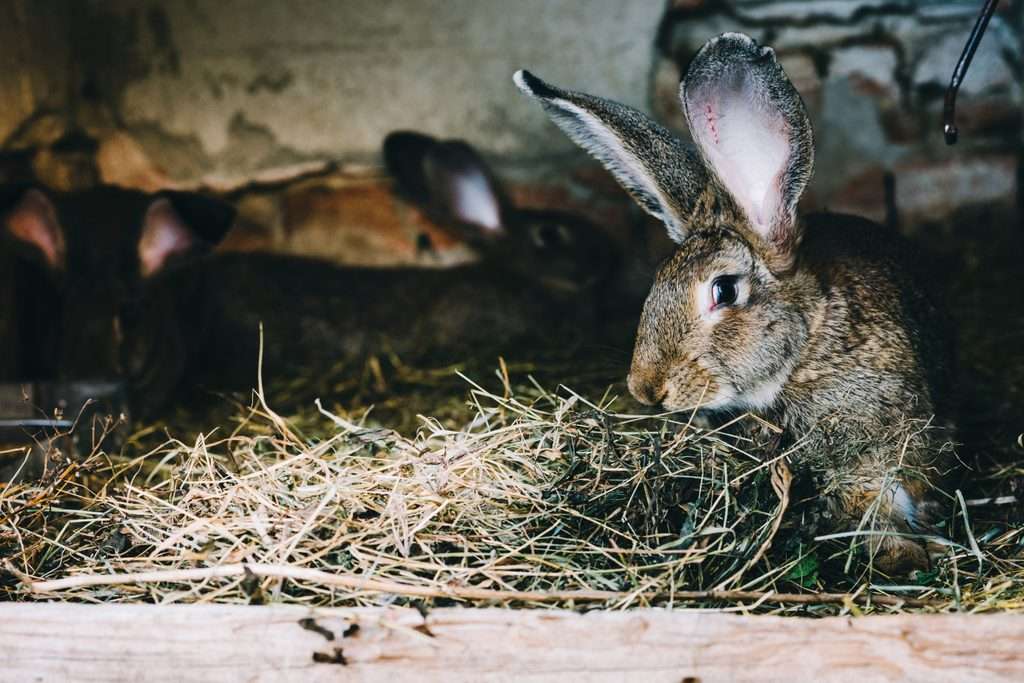
A rabbit’s dietary need for fiber is inseparable from its dental anatomy. All 28 rabbit teeth are elodont, meaning they continue growing throughout life and therefore need continual wear. Constant access to roughage encourages the prolonged side-to-side grinding that helps wear the cheek teeth normally.
Rabbits don’t wear down their back teeth just by chewing on hard wooden toys or treats; normal cheek-tooth wear depends heavily on the constant, side-to-side grinding motion they use to chew long strands of hay.
- Pellets and concentrated foods promote a vertical, crushing jaw motion with rapid consumption and minimal tooth-on-tooth friction.
- Chewing long strands of grass hay encourages a wide, side-to-side jaw motion that takes hundreds of repetitive chewing cycles, naturally grinding down the enamel crowns evenly across every tooth.
When rabbits eat too little hay, they spend far less time chewing and lose that natural grinding pattern, leaving their back teeth unchecked. Over time, uneven wear can contribute to sharp points and painful spurs, increasing the risk of acquired dental problems.
5. Why Crude Fiber Labels Do Not Tell the Whole Story
Bagged rabbit foods always list a “Crude Fiber” percentage—usually somewhere between 18% and 25%. While that number gives you a decent starting point, crude fiber is an older testing method that misses a lot of the nuance in what a rabbit actually eats.
Animal nutritionists often use measurements such as NDF and ADF to get a more detailed picture of plant cell-wall fiber than crude fiber alone can provide, because a single number on a pet food label never tells the whole story:
- Neutral Detergent Fiber (NDF): Estimates much of the total plant cell-wall material, including cellulose, hemicellulose, and lignin.
- Acid Detergent Fiber (ADF): Measures the less digestible portions of the plant cell wall, primarily cellulose and lignin.
- Lignin: A largely indigestible part of plant cell walls that contributes to the coarse physical bulk moving through the digestive tract.
Crude fiber is only part of the story when comparing commercial feeds. Instead of chasing a single percentage, look at the first ingredients, protein levels, fat, and calcium balance. Knowing how to read rabbit pellet labels puts those guaranteed analysis numbers into real, practical context for your bunny’s daily diet.
6. Why Pellets Cannot Replace Long-Strand Hay
A common question among rabbit owners is why an unlimited feeding of high-fiber pellets cannot replace grass hay. The answer lies in physical structure and chewing behavior.
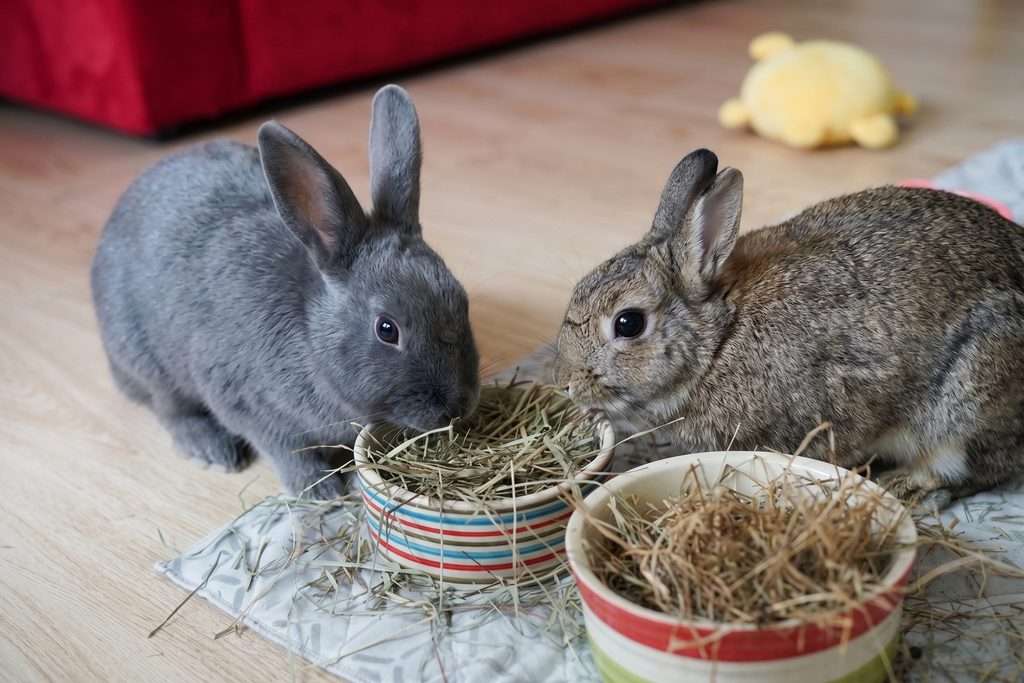
At home with my bonded pair, Mocha and Chino, this difference is obvious every day. When they get their measured morning pellets, they inhale them in minutes with quick, up-and-down bites. But once they head over to their hay rack, their chewing immediately shifts into a slow, steady, side-to-side grind that keeps their jaws busy for hours.
Pelleted food simply cannot replace loose grass hay, mainly because of how differently each one is built and processed:
Grass Hay vs. Pelleted Feed Comparison
| Feature | Grass Hay | Pelleted Feed |
|---|---|---|
| Physical Structure | Long, coarse physical stems | Finely milled, compressed particles |
| Chewing Mechanics | Wide, lateral grinding action | Quick, vertical crushing motion |
| Feeding Duration | Prolonged, continuous grazing | Eaten rapidly in short bursts |
| Role in Diet | Primary everyday forage foundation | Concentrated nutritional supplement |
| Label vs. Function | Natural structure stimulates gut motility | High crude-fiber % cannot replicate loose forage |
Even when pellets contain plenty of fiber on paper, their finely processed form and rapid consumption make them very different from loose forage. That distinction also explains why some healthy adult rabbits can thrive on a pellet-free diet under careful nutritional management.
The goal isn’t just picking a bag with a high fiber number, it’s making sure loose forage remains the true foundation of their daily diet. If you are not sure where to start, looking at different types of grass hay makes it much easier to match the right texture, aroma, and cut to your rabbit’s tastes.
7. Evaluating Dietary Fiber Sources
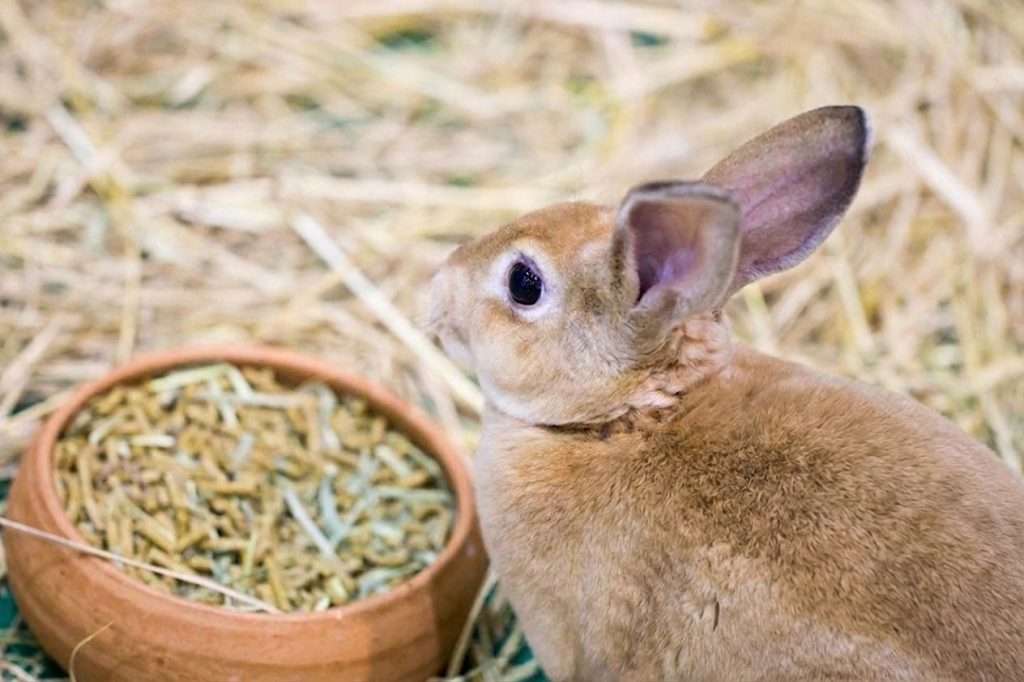
Keeping your rabbit’s digestive tract moving and cheek teeth worn down comes down to a simple, consistent feeding structure. Loose grass hay should always be the undeniable foundation of the daily bowl, driving both non-stop jaw movement and steady gut motility. Every food group you offer brings a distinct balance of physical roughage, fermentable nutrients, and hydration to the mix:
Dietary Fiber Sources for Rabbits
| Fiber Source | Primary Fiber Role | How It Fits the Diet |
|---|---|---|
| Grass Hay (Timothy, Orchard, Meadow) | Coarse forage and prolonged chewing | Primary everyday forage; available freely 24/7 |
| Fresh Grass | Natural fibrous forage with high moisture | Useful forage when safely harvested and introduced |
| Leafy Greens | Hydration and some fermentable plant material | Complements, but does not replace, grass hay |
| High-Quality Pellets | Concentrated nutrition and processed fiber | Supplemental for most healthy adult rabbits |
| Fruit / Treats | Limited useful fiber relative to sugar and calories | Occasional enrichment rather than a primary fiber source |
Fresh lawn grass offers fantastic natural roughage, but chemical treatments, mower clipping fermentation, and gradual transitions all require caution. Following best practices for feeding fresh grass to rabbits ensures you introduce fresh yard greens without triggering digestive upset.
Even so, cured grass hay remains the most reliable, year-round foundation for daily fiber intake. If you are ever unsure whether your bunny is getting enough roughage, reviewing how much hay a rabbit should eat daily
makes it easy to calibrate your routine.
8. Consequences of Fiber Deficiency
When a rabbit regularly skips out on coarse hay, the fallout quickly hits both its gut and teeth. Veterinary guidance on rabbit digestive and dental health shows how missing out on long-strand roughage slows down digestion and lets sharp molar points form unchecked:
- Gastrointestinal Hypomotility: This is a slow-moving digestive tract. Without enough coarse forage to support normal intestinal movement, swallowed grooming hair and food can accumulate as digestive transit slows, paving the way for life-threatening gut stasis. Spotting the early warning signs of rabbit GI stasis lets you catch this slowdown before it becomes a veterinary emergency.
- Cecal Dysbiosis: An unhealthy disruption in the cecum’s delicate microbiome. Skimping on fiber while overfeeding carbohydrate-rich foods can disrupt normal fermentation and shift the microbial balance toward potentially harmful organisms.
- Abnormal Cecotropes: Fiber imbalances frequently cause mushy, malformed, or unconsumed night feces that stick to fur and inflame delicate skin. If you are dealing with frequent mess, checking the common causes of soft cecotropes in rabbits helps pin down the dietary culprits.
- Cheek-Tooth Elongation: Without hours spent grinding long-strand hay, continuously growing molars fail to wear down naturally, leading to painful spurs and misalignment.
When to Seek Veterinary Care
If your rabbit suddenly stops eating, stops pooping, becomes noticeably lethargic, or shows clear signs of pain—like loud tooth grinding or sitting in a tight, hunched ball—get to a rabbit-savvy vet immediately. Digestive slowdowns deteriorate quickly, and waiting for things to clear up on their own is never worth the risk.
9. Can a Rabbit Consume Too Much Fiber?
Because a rabbit’s digestive tract is built to flush coarse roughage quickly while directing fermentable bits to the cecum, most healthy adult rabbits can be offered appropriate grass hay freely.
Issues usually only crop up when a rabbit has elevated energy or nutritional needs:
- Higher Calorie and Protein Demands: Growing young kits, pregnant or nursing does, and frail senior rabbits need far more energy and protein than standard maintenance requires. Relying only on mature, low-protein forage without enough additional nutrition may lead to weight loss if their higher energy and protein needs are not met.
- Straw as a Primary Forage: Straw might pack plenty of fiber, but it is made almost entirely of indigestible lignin and offers next to no usable protein or calories. It works fine for bedding, but it is never a substitute for real, nourishing grass hay.
For a healthy adult pet rabbit, unrestricted grass hay stays the undisputed foundation of every single day’s diet.
10. Practical Rules for Maintaining Optimal Daily Fiber
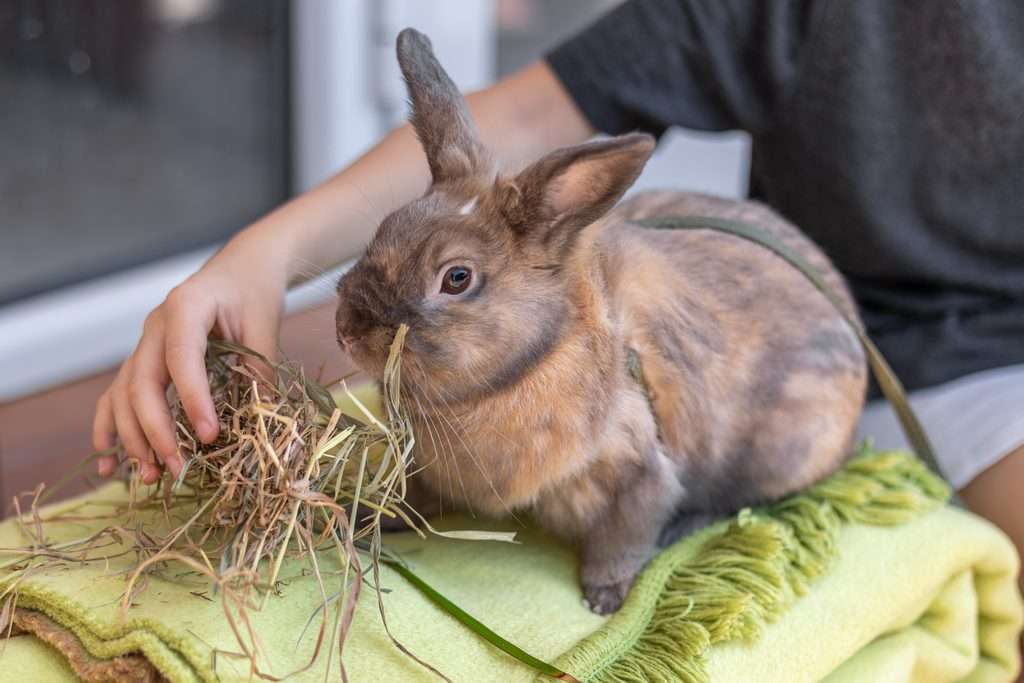
Keeping your rabbit’s digestive system operating smoothly requires simple daily feeding habits:
- Keep Grass Hay Continuously Available: Ensure your rabbit has unrestricted access to clean, appealing grass hay at all times.
- Monitor Actual Consumption: A full hay feeder does not necessarily mean your rabbit is eating. Track how quickly hay is consumed to catch subtle appetite drops early.
- Keep Pellets and Treats in Proportion: Overfeeding concentrated feeds can satisfy a rabbit’s appetite quickly, reducing their motivation to chew fibrous hay.
- Make Dietary Changes Gradually: Abrupt diet changes can easily throw off the cecum’s delicate fermentation balance, so it is best to introduce new foods slowly by phasing in new hays, fresh greens, or pellets slowly over several days.
- Inspect Daily Droppings: Healthy fecal pellets should be relatively uniform, dry, and composed of visible, finely ground plant material.
11. Common Rabbit Fiber Myths
Myth 1: High-fiber pellets can replace grass hay.
The Reality: Even top-tier pellets are ground too fine. They lack the long, coarse strands required to keep gut muscles contracting steadily and drive the hours of side-to-side molar grinding needed to wear down teeth.
Myth 2: All plant fiber does the same job in the gut.
The Reality: Coarse, indigestible fiber provides the bulk that supports normal digestive movement, while fine, fermentable fiber feeds the friendly bacteria inside the cecum. A healthy rabbit relies on both.
Myth 3: Rabbits need commercial hairball pastes during a heavy shed.
The Reality: Rabbits do not normally need commercial hairball remedies. Ingested fur usually passes through the digestive tract along with food, and adequate forage intake and hydration help support normal gut movement.
Myth 4: A big bowl of fresh greens covers all daily fiber needs.
The Reality: Fresh greens are fantastic for hydration and micronutrients, but their high water content means they cannot match the dry-matter density or prolonged chewing that cured grass hay provides.
12. Frequently Asked Questions
How much fiber does a pet rabbit need each day?
You do not need to pull out a calculator to balance a daily fiber percentage. For a healthy adult rabbit, the gold standard is simply offering unlimited grass hay around the clock, with measured pellets and fresh greens serving as small, supporting sides. The crude-fiber percentage on a feed bag helps evaluate pellet quality, but it does not account for the structural, long-strand roughage of the whole diet.
What is the best source of fiber for rabbits?
Long-strand grass hay—such as timothy, orchard grass, meadow hay, or brome—is generally the best everyday fiber source for healthy adult rabbits. These hays provide the coarse structure and mixed fiber fractions that support normal chewing, gut movement, and cecal fermentation.
Is alfalfa hay suitable as a primary fiber source for adult rabbits?
While alfalfa packs plenty of fiber, it is a rich legume rather than a true grass. It contains significantly higher levels of protein and calcium, making it a great choice for growing baby bunnies or nursing mothers, but far too rich to serve as everyday roughage for healthy adults.
Does feeding enough fiber prevent GI stasis in rabbits?
A high-fiber diet is one of the most important dietary protections for maintaining normal gut motility, but it cannot eliminate every possible cause. GI stasis can also be triggered by underlying dental pain, environmental stress, systemic illness, or dehydration. Coarse hay is essential, but it cannot rule out every possible cause of a digestive slowdown.
Can rabbits get all their fiber from vegetables alone?
No. Leafy greens are fantastic for hydration, vitamins, and enrichment, but their high moisture content means they simply cannot deliver the dry-matter density or the prolonged chewing workout that cured grass hay provides.
13. Conclusion: Supporting Your Rabbit’s Digestive Engine
A rabbit’s digestive health relies entirely on a continuous, uninterrupted stream of coarse forage. Fiber is not merely a nutrient to check off on a feed label; it helps keep the gut moving, feeds the microbial community inside the cecum, and encourages the prolonged chewing rabbits need for normal tooth wear.
By building your rabbit’s daily routine around unlimited grass hay and treating concentrated pellets and greens as measured supplements rather than the main course, you provide the structural foundation their unique biology requires for a long, healthy life.
Medical & Veterinary Disclaimer: Bunnyowners.com is an informational resource for rabbit owners and enthusiasts. We are not veterinarians. The content on this website is for educational purposes only and is not a substitute for professional veterinary advice, diagnosis, or treatment. Always consult a qualified veterinarian with any questions or concerns regarding your pet’s health, medical conditions, diet, or overall care. If you have concerns about your rabbit’s health, it’s always best to reach out to a veterinarian rather than relying solely on information found online.