
Veterinary & Affiliate Disclaimer: Bunnyowners.com shares educational rabbit care resources, not professional veterinary advice. Always consult a qualified veterinarian regarding your rabbit’s medical, dietary, or behavioral needs. This post may also contain affiliate links; as an Amazon Associate and affiliate partner, we earn from qualifying purchases at zero extra cost to you.
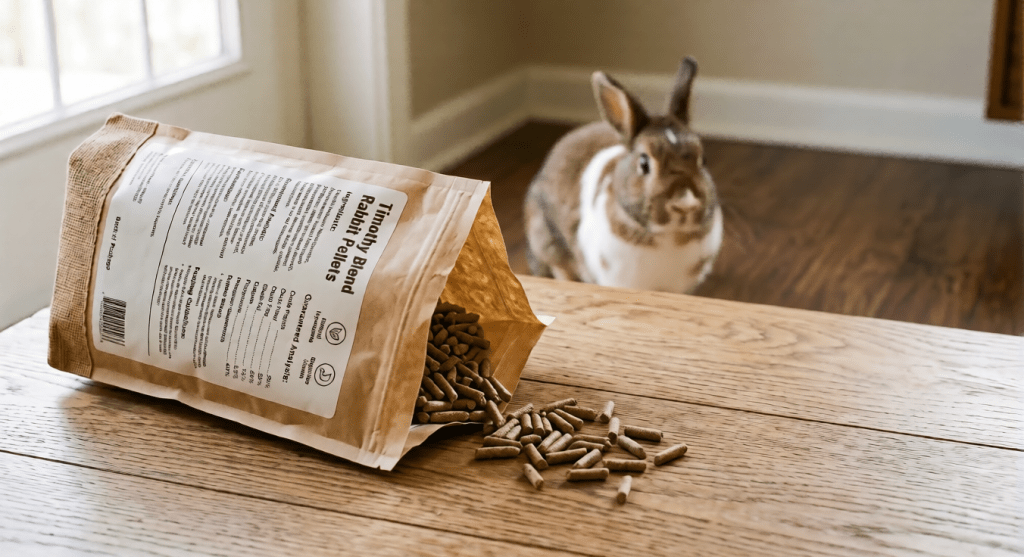
Most rabbit pellet bags make big promises on the front: high fiber, garden-fresh ingredients, natural nutrition, or a recipe specially crafted for happy bunnies. But as any seasoned rabbit owner knows, the real story is printed on the back. Learning how to read the ingredient list and guaranteed analysis lets you see past marketing claims and figure out what is actually going into your rabbit’s bowl.
For most healthy adult rabbits, look for a plain, uniform pellet with a grass-hay base such as timothy meal and a relatively high-fiber profile, with 18% crude fiber serving as a useful benchmark. Avoid muesli-style mixes containing seeds, nuts, dried fruit, or colorful pieces that encourage selective feeding. Protein, fat, calcium, and phosphorus should also suit adult maintenance rather than the higher nutritional demands of growth or reproduction.
Below, I break down what those percentages and unfamiliar ingredient names mean within a healthy rabbit diet—and what actually deserves your attention when comparing two bags on the shelf.
1. How to Read a Rabbit Pellet Label
When you turn a bag around, focus on three main areas:
- Ingredient List: Tells you what raw plants, grains, milling co-products, and vitamin supplements went into making the pellet.
- Guaranteed Analysis: Shows the guaranteed minimums and maximums for key nutrients like fiber, protein, and fat.
- Life-Stage / Feeding Statement: Clarifies whether the recipe is meant for everyday adult maintenance, growth, or breeding.
Commercial feed labels follow regulatory labeling requirements where ingredients must be declared in descending order by weight, as set by established feed labeling rules. That means the first two or three items do the heavy lifting in defining the food, while vitamins and trace minerals hang out near the very bottom.
Decoding “Minimums” and “Maximums”
Keep an eye on the words “minimum” and “maximum” on the guaranteed analysis panel. Crude protein and crude fat are generally guaranteed as minimums, while moisture is typically guaranteed as a maximum. Rabbit feeds may list both minimum and maximum crude-fiber guarantees, depending on the label and applicable regulations.
This distinction matters when comparing general feeding guidelines with package labels. A care guide might suggest looking for a pellet with at least 18% fiber, but a package might declare an 18% minimum, a 22% maximum, or a range between the two. These numbers are regulatory baselines rather than exact batch measurements, but they give you a dependable snapshot of the recipe.
Ingredients are not nutrients. The ingredient list tells you what went into the pellet; the guaranteed analysis tells you what the finished pellet is guaranteed to provide. A bag can feature great raw ingredients that aren’t balanced quite right, or lower-grade ingredients engineered to hit specific numbers. You need to look at both panels to see the full picture.
2. What Should the First Ingredient in Rabbit Pellets Be?
For most healthy adult rabbits, you want to see a grass forage right at the top—think timothy hay, timothy meal, orchard grass, or meadow grass meal.
Alfalfa-based foods play a very different role:
Comparing Timothy and Alfalfa Pellet Bases
| Pellet Base | What It Offers | Who It’s Usually Best For |
| Timothy / Grass Hay | Higher fiber, moderate protein, lower calcium, modest calories | Healthy adult maintenance |
| Alfalfa Meal | Lower fiber, richer protein, dense calcium, higher calorie density | Growing rabbits and rabbits needing extra nutritional support |
Alfalfa doesn’t make a pellet poor quality. It simply produces a richer feed, which can make sense for a growing rabbit but less sense for routine adult maintenance. In practice, richer pellets can also become more appealing than loose forage when portions are generous. That is one reason adult pellets should remain measured rather than continually topped off—the goal is to supplement a hay-centered diet, not compete with it.
Match the forage base to your rabbit’s life stage, body condition, and overall diet rather than labeling any single crop as universally good or bad, keeping in mind how feeding needs change from baby bunnies to seniors.
3. What Nutrients Should You Look for in Rabbit Pellets?
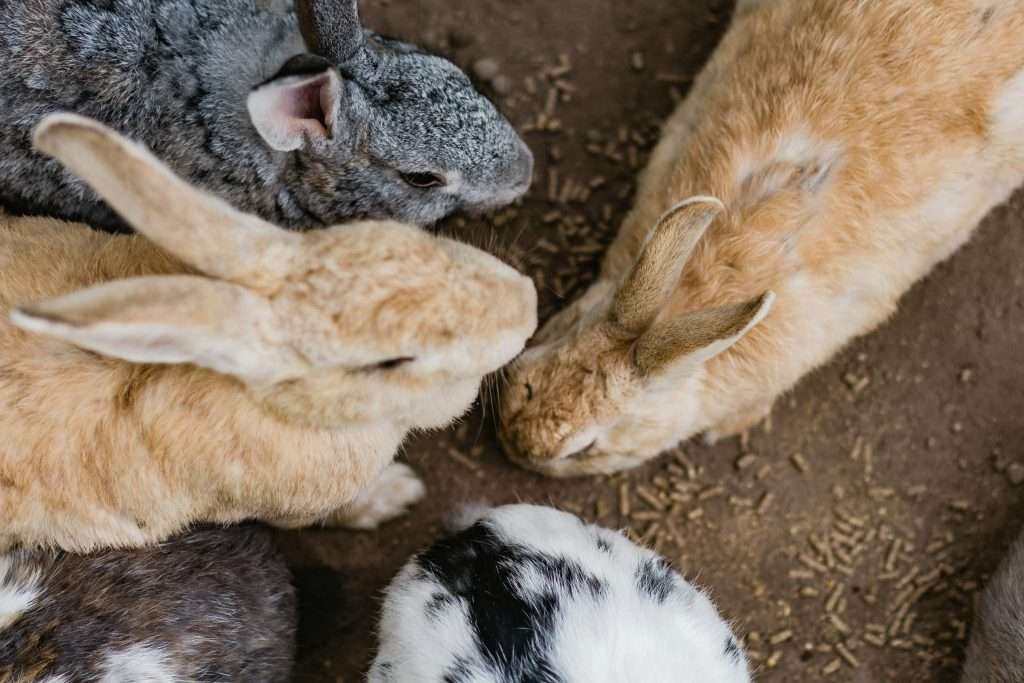
The guaranteed analysis gives you a quick snapshot of the food’s nutritional makeup. Don’t reject a pellet because one percentage is a little different from another brand. Read the numbers together and ask whether the formula makes sense for the rabbit eating it:
Essential Nutrient Benchmarks for Adult Pellets
| Nutrient | Reference Benchmark | Why It Matters |
| Crude Fiber | 18% minimum is a standard benchmark | Helps maintain a fiber-rich diet and supports normal gastrointestinal function. |
| Crude Protein | Modest for adults (typically 12%–14%) | Meets maintenance amino acid needs; growing rabbits require higher levels. |
| Crude Fat | Kept modest (generally 1.0%–2.5%) | Helps regulate overall calorie density in companion animals. |
| Calcium | Appropriate for adult maintenance and complete diet | Supports skeletal and dental health; requirements should be considered alongside life stage and the complete diet. |
| Phosphorus | Balanced with calcium | Partners with calcium to support everyday skeletal health. |
Crude Fiber: Aim for 18% Minimum
A solid starting point for any adult pellet is finding at least 18% crude fiber, which aligns with established rabbit nutrition guidance. Keep in mind, though, that pellet fiber doesn’t replace the physical structure of loose, stemmy hay. Chewing long strands of hay provides the natural grinding action rabbits need for normal tooth wear, while supplying coarse, indigestible fiber that ground pellets cannot fully duplicate.
Long-strand grass hay remains the non-negotiable foundation of the daily diet, which is why keeping an eye on how much hay your rabbit eats matters far more than trying to maximize the fiber percentage of pellets alone. Pellets make the most sense when viewed as one concentrated component of a well-rounded bunny diet rather than the main meal.
Protein and Fat: Keep Levels Modest
When it comes to protein and fat, more isn’t automatically better for an adult maintenance routine. Adult house rabbits generally have modest energy needs, so higher-fat pellets can make excessive calorie intake easier when portions are generous. Even an excellent formula can crowd hay out of the diet when the bowl is continually overfilled, making proper daily pellet portions just as important as the ingredient list.
Calcium: Balance the Complete Diet
Calcium needs a balanced perspective as well. Rabbits handle dietary calcium differently than dogs, cats, or humans, excreting substantial excess amounts directly through the urinary system. While calcium is vital for continuously growing teeth and sturdy bones, an adult rabbit does not need an overload.
Getting mineral levels right means looking at the complete diet—factoring in daily fresh greens, hay, water intake, age, and urinary health instead of judging pellet calcium in isolation.
4. Common Rabbit Pellet Ingredients Explained
When you check the ingredients, you will likely see a few plant and grain byproducts mixed in with the main hay base. These ingredients help supply fiber, protein, and energy, while also helping hold the pellets together and balance the overall recipe:
Common Ingredient Glossary and Their Functions
| Ingredient | What It Is | What It Does in the Bag |
| Timothy / Grass Meal | Ground grass hay | The primary fiber-rich foundation of an adult pellet. |
| Alfalfa Meal | Ground legume forage | A nutrient-dense base best suited for growth or higher energy requirements. |
| Soybean Hulls | Fibrous outer seed coats | A fiber-rich feed ingredient made from the outer covering of soybeans. |
| Wheat Middlings | Wheat milling co-product | Contributes fiber, protein, starch, and energy to the finished formula. |
| Soybean Meal | Defatted protein flakes | A concentrated plant protein used to balance essential amino acids. |
| Cane Molasses | Sugar refining co-product | Used in small amounts to reduce dust, bind ingredients, and add palatability. |
| Beet Pulp | Sugar beet fiber fraction | A fermentable fiber source commonly used in formulated feeds. |
| Flaxseed / Linseed | Ground oilseed | Supplies fat and plant-based fatty acids in modest quantities. |
| Calcium Carbonate | Ground mineral supplement | A routine source of supplemental calcium to balance dietary levels. |
| Vitamin / Mineral Premix | Essential micronutrients | Fortifies the finished ration with bioavailable vitamins (like D3 and E) and trace minerals. |
An unfamiliar ingredient isn’t automatically filler. Instead of judging the name alone, look at what role it plays and whether the finished pellet’s nutrient profile makes sense for your rabbit.
Similarly, those chemical-sounding names near the bottom, like zinc oxide or pyridoxine hydrochloride, are simply bioavailable vitamins and minerals ensuring the food stays nutritionally complete throughout its shelf life.
5. Are Grains, Soy, and Molasses Bad in Rabbit Pellets?
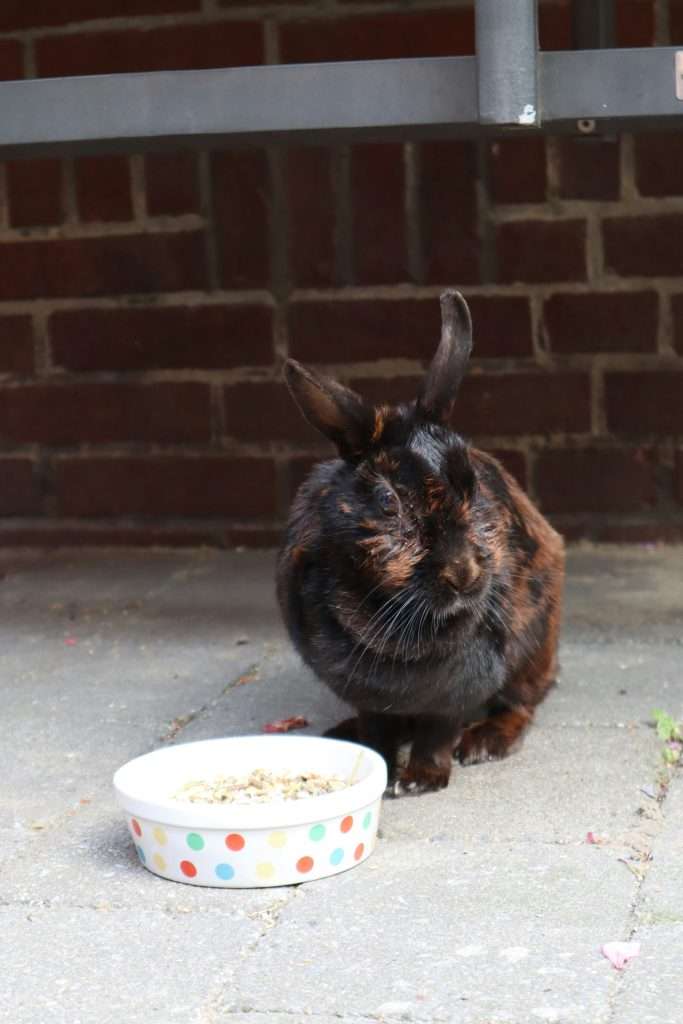
Seeing grains, soy, or molasses on a label can set off alarm bells if you’re used to the golden rule of “hay, hay, and more hay.” But there’s a big difference between feeding whole raw pantry staples and using refined ingredients in a carefully formulated pellet.
Grains and Milling Co-Products
Rabbits do not handle large amounts of starch well, and too much grain can easily upset their digestion if it takes the place of hay. That said, grain-derived ingredients like wheat middlings are not the same as feeding whole grains. They are simply milling byproducts that add a bit of fiber, protein, and structure to help keep the pellets from crumbling.
As long as the overall starch content stays low in a plain pellet, their presence is rarely an issue. The real problem comes from muesli mixes loaded with visible, whole grains.
Soy: Hulls vs. Meal
Soy isn’t something wild rabbits forage for, but commercial diets use two distinct parts of the plant for very different jobs:
- Soybean Hulls: The fibrous outer covering of the seed, used as a fiber-rich feed ingredient.
- Soybean Meal: The concentrated, defatted protein flake left behind after oil extraction, used in small amounts to meet specific amino acid targets.
Neither ingredient automatically makes a pellet poor quality; judge it alongside the forage base and overall nutrient profile.
Molasses and Sweeteners
Manufacturers sometimes add a touch of cane molasses to help bind pellets, keep dust down, or make the food taste better. When it appears near the bottom of the ingredient list, it contributes less by weight than the ingredients listed above it. But if a sweetener shows up near the top, it is usually a sign to look for a brand with less added sugar.
6. Ingredients and Pellet Types to Avoid
When shopping for everyday pellets, the golden rule is simplicity. Steer clear of loose, mixed formulas containing obvious treat pieces:
- Muesli & “Trail Mix” Blends: Formulas featuring dried corn kernels, whole seeds, colorful cereal shapes, and dried peas.
- Sugary Add-Ins: Dried fruit chunks (papaya, banana chips, raisins) or yogurt-coated drops mixed right into the food.
- Animal Fats or Proteins: Animal-derived rendering byproducts, which are unnecessary and inappropriate in a food formulated as a rabbit’s plant-based ration.
Anyone who has spent time around rabbits knows how quickly they will hunt down the sweet pieces and leave the plain pellets behind, a behavior clearly shown in research on selective feeding. Selective feeding leads to an unbalanced diet and often reduces hay eating, which makes feeding a plain pellet diet a much safer choice than muesli blends.
Over time, eating less hay can lead to abnormal tooth wear and painful dental problems since rabbit teeth need steady, coarse grinding to stay healthy.
Don’t Fall for Front-of-Bag Claims
Front-of-package marketing terms like Veterinarian Recommended, All-Natural, Garden Blend, or Gourmet Feast are unregulated promotional phrases. Turn the bag over and let the ingredient list and guaranteed analysis tell you what you’re actually buying. Once you know how to look past fancy marketing buzzwords, finding the right pellet brand simply comes down to checking the real recipe on the back.
7. How to Compare Two Rabbit Pellet Labels
To see how this works in real life, let’s compare two sample labels evaluated for a healthy adult house rabbit:
Side-by-Side Label Comparison of Maintenance vs. Growth Pellets
| Label Panel | Pellet A (Grass-Based Maintenance) | Pellet B (Rich Growth Recipe) |
| First 4 Ingredients | Timothy Meal, Soybean Hulls, Wheat Middlings, Soybean Meal | Alfalfa Meal, Wheat Middlings, Soybean Meal, Cane Molasses |
| Crude Fiber | 25.0% minimum | 17.0% minimum |
| Crude Protein | 13.0% minimum | 16.0% minimum |
| Crude Fat | 1.5% minimum | 3.5% minimum |
| Calcium | 0.40% min / 0.70% max | 0.80% min / 1.20% max |
| Appearance | Plain, uniform brown pellets | Uniform dark-green pellets |
Here’s how to walk through the choice:
- Check the Life Stage: The rabbit is a healthy adult, meaning they need steady fiber and modest calories.
- Look at the Base: Pellet A leads with timothy grass; Pellet B leads with richer alfalfa.
- Compare Energy vs. Fiber: Pellet A offers 25% fiber with low fat; Pellet B provides more protein and a higher energy density.
- Scan the Minerals: Pellet A keeps calcium under 0.7%, while Pellet B pushes up to 1.2%.
The Verdict: Pellet A provides the higher-fiber adult maintenance profile. Pellet B is a richer, energy-dense formula better suited for a growing rabbit or an animal requiring extra calories under veterinary guidance.
When shopping for my two rabbits, Mocha and Chino, I always take this label-first approach: forage base first, then fiber, protein, fat, and calcium. It keeps me from getting distracted by unfamiliar ingredient names or flashy claims on the front of the bag.
8. Quick Rabbit Pellet Label Checklist
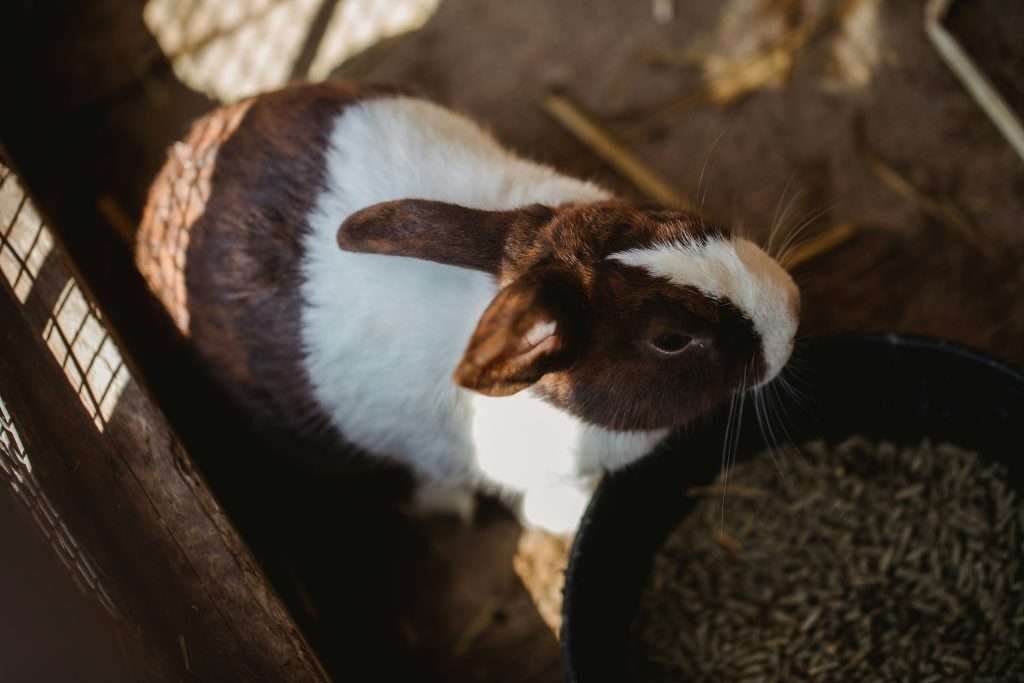
When comparing pellets in a store, check these seven things:
- [ ] Forage Base: Look for a grass-hay-based formula such as timothy for most healthy adults; alfalfa-based formulas are more nutrient-dense and commonly used for growth or higher nutritional needs.
- [ ] Crude Fiber: High-fiber profile, with 18% serving as a dependable baseline.
- [ ] Crude Protein: Modest for adults (typically 12%–14%); higher for growth.
- [ ] Crude Fat: Modest percentage appropriate for maintenance (generally low).
- [ ] Calcium: Sensible levels suited to your rabbit’s life stage and complete diet.
- [ ] Pellet Structure: 100% plain, uniform pellets—no seeds, nuts, colorful rings, or dried fruit.
- [ ] Sweeteners: Molasses and flavorings sit near the bottom of the list rather than near the top.
9. Frequently Asked Questions
What should the first ingredient in rabbit pellets be?
For healthy adult rabbits, you want to see a grass hay like timothy meal or orchard grass right at the top of the list. If you have a young, growing baby bunny, alfalfa meal is a completely normal first ingredient to help support their growth and strong bones.
How much fiber should be in the pellets?
Look for a high-fiber recipe with at least 18% crude fiber as a solid benchmark for adult house rabbits. Just keep in mind that pellets are only a supplement—the ground fiber in pellets can never replace the natural roughage your rabbit gets from munching on fresh piles of loose hay.
Is alfalfa bad for rabbits?
Not on its own—it is simply a richer, more nutrient-dense plant packed with extra calories, protein, and calcium. That makes it great for growing kits or rabbits needing extra energy under a vet’s care. For routine adult maintenance, however, its higher calorie, protein, and calcium content may be unnecessary, particularly when weight or urinary health needs to be managed carefully.
Are grains or soy bad in rabbit pellets?
Not necessarily. In plain, uniform pellets, ingredients like soybean hulls add clean dietary fiber, while wheat middlings help hold the pellet together and round out the recipe. The real problem is “trail mix” muesli bags that contain whole loose grains, corn, and seeds that encourage picky eating.
Why are colorful pieces and seeds a problem?
Rabbits can preferentially select the more palatable pieces in mixed feeds while leaving other components behind. Over time, filling up on junk food reduces their appetite for hay, which can lead to painful dental issues and digestive trouble.
10. Conclusion
The best pellet isn’t the one with the shortest ingredient list or the most impressive marketing claims on the front. It’s the one whose forage base, nutrient numbers, and simple shape match what your rabbit’s body actually needs.
Read the entire label in context, choose a plain, uniform formula, and remember that even an excellent pellet remains a supporting supplement to a hay-centered diet. When the rest of the diet is thoughtfully planned, pellets serve their proper role as a targeted nutritional safety net rather than the foundation of the feeding dish.
Medical & Veterinary Disclaimer: Bunnyowners.com is an informational resource for rabbit owners and enthusiasts. We are not veterinarians. The content on this website is for educational purposes only and is not a substitute for professional veterinary advice, diagnosis, or treatment. Always consult a qualified veterinarian with any questions or concerns regarding your pet’s health, medical conditions, diet, or overall care. If you have concerns about your rabbit’s health, it’s always best to reach out to a veterinarian rather than relying solely on information found online.