
Veterinary & Affiliate Disclaimer: Bunnyowners.com shares educational rabbit care resources, not professional veterinary advice. Always consult a qualified veterinarian regarding your rabbit’s medical, dietary, or behavioral needs. This post may also contain affiliate links; as an Amazon Associate and affiliate partner, we earn from qualifying purchases at zero extra cost to you.
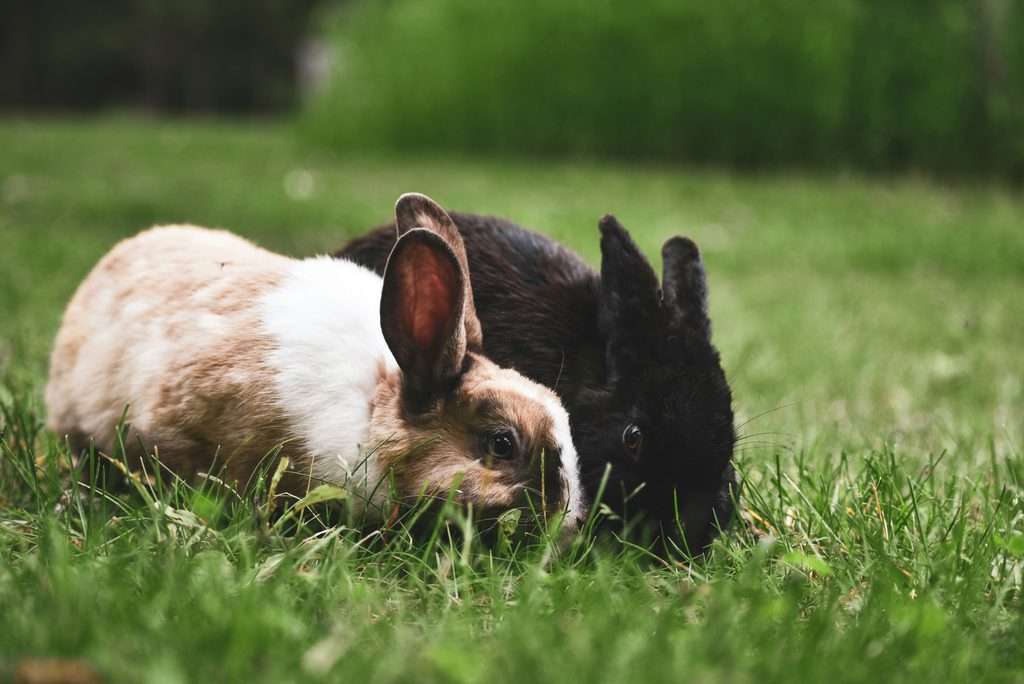
If you have a yard full of green grass, it is completely natural to wonder whether you can let your rabbit out to graze or bring a handful inside. Because wild rabbits spend all day eating grass, offering fresh greens feels like second nature, but pet rabbits need a few common-sense safety checks first.
Yes, rabbits can eat fresh grass, and it provides great fiber, natural hydration, and healthy dental wear. However, any yard grass you offer must be clean, free from weed killers and fertilizers, kept away from other pets, and introduced slowly to keep your rabbit’s stomach settled. Never feed lawnmower clippings, which heat up and ferment quickly.
Before letting your rabbit loose on the lawn, it helps to know how to spot clean grass from potential backyard trouble. Below, we cover safe grass types, why mower clippings are so different from fresh blades, how to introduce greens smoothly, and how fresh grass fits into a balanced rabbit food and diet plan with their daily hay.
1. Is Grass Good for Rabbits?
Rabbits are built from the ground up for grazing. In the wild, growing pasture grass makes up most of what they eat, giving them both essential roughage and everyday nutrients. Chewing fresh blades requires plenty of side-to-side jaw work, which naturally wears down a rabbit’s continuously growing teeth.
Fresh grass packs two key types of fiber: rough strands that keep digestion running smoothly, and softer fiber that nourishes the good bacteria in your rabbit’s tummy. Since fresh blades are mostly water, grazing also gives your bunny a great natural hydration boost—which is why water taken in through fresh foods usually means they visit their water bowl a little less often.
Offering clean, fresh pasture grasses closely replicates natural feeding behavior, provided you build up slowly so your bunny’s gut bacteria can adjust to the rich, tender greens.
Fresh Grass vs. Hay
If hay is just dried grass, does an indoor rabbit actually need lawn grass to stay healthy?
Not necessarily. Hay is simply grass that has been cut and dried so it stays fresh in storage all year. While fresh grass delivers extra water, good-quality hay gives your rabbit all the tough, long-stem fiber they need. If your bunny already eats piles of fresh hay every day, lawn grass is a fun, healthy extra rather than a must-have.
Once grass is dried into hay, details like harvest timing, stem thickness, and texture start to matter, which is why timothy, orchard, meadow, and other hay types each offer slightly different textures and feeding characteristics.
2. What Types of Grass Can Rabbits Eat?
You don’t need to be a lawn expert to check your yard, but it helps to know what common grasses look like.
Common Lawn Grasses
Most standard, untreated yard grasses are completely fine for rabbits to nibble:
- Kentucky bluegrass
- Perennial and annual ryegrass
- Turf-type fescues
- Bermuda grass
For most owners, figuring out the exact turf variety is far less important than making sure nobody has sprayed weed killer on it.
Pasture and Forage Grasses
The grasses grown for livestock feed also make fantastic fresh snacks:
- Timothy grass
- Orchard grass
- Meadow fescue
- Young oat, wheat, and barley grasses
Grass Mixed with Lawn Weeds
Lawns are rarely just pure grass; they are usually mixed with backyard weeds and wild greens. Common lawn visitors like dandelions, plantain, and white clover are great for rabbits. However, garden flowers, buttercups, and mystery weeds should stay off the menu.
If you can’t identify a plant with 100% confidence, keep it well out of reach. Double-checking which common backyard plants are actually safe to pick takes the guesswork out of yard time before you turn your bunny loose to graze.
3. Can Rabbits Eat Lawn Grass From the Yard?
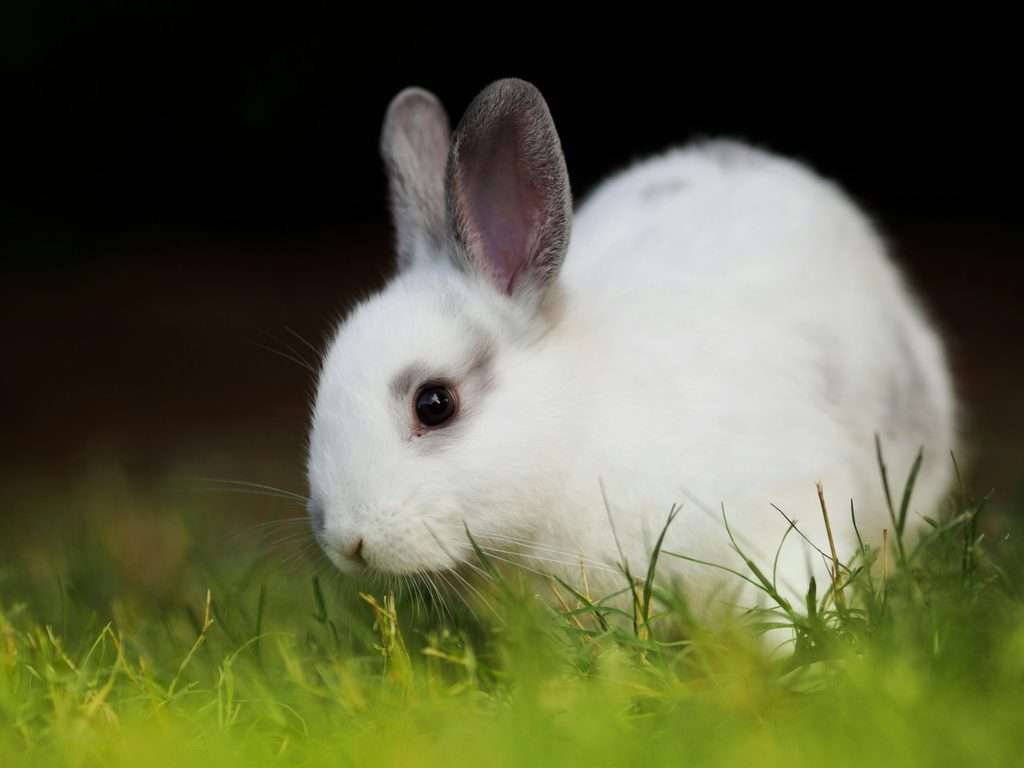
Yes, rabbits can eat backyard grass, but yard safety comes down to what has touched the lawn and what animals use the space. Use this quick breakdown to see which grass sources are fine to feed and which ones to avoid:
Grass Safety by Source
| Grass Source | Safe? | Main Concern |
| Untreated growing yard grass | Yes | Great option when clean and identified |
| Fresh hand-cut grass | Yes | Safe when fed right after cutting |
| Lawnmower clippings | No | Heats up and spoils quickly |
| Weed-killer or pesticide-treated lawn | Avoid | Chemical residue risk |
| Recently fertilized grass | Avoid | Unknown safety when eaten |
| Roadside or public park grass | Avoid | Road runoff and unknown sprays |
| Pet bathroom areas | Avoid | Waste and contamination risk |
| Moldy or yellowing grass piles | No | Mold and decay |
4. Why Rabbits Shouldn’t Eat Lawnmower Clippings
Lawnmower clippings should never go into your rabbit’s bowl. Even if your rabbit could safely nibble that exact patch of lawn outside, running a mower over it turns it into a real hazard. When a mower cuts and collects grass, the damaged blades are packed into a warm, moist mass that can heat, ferment, and spoil quickly.
Mowers can also mix grass with weeds, garden debris, and other material that would be easier to spot when harvesting by hand. Because fresh lawnmower clippings should not be fed to rabbits, whatever comes out of the mower bag should stay far away from your bunny.
What About Grass Cut with Scissors?
Grass cut with clean kitchen scissors or pulled by hand is completely fine. Unlike mower clippings, hand-cut blades aren’t crushed into a dense, hot pile. As long as you snip clean grass and offer it right away, it is just like your rabbit grazing outside.
5. How to Introduce Fresh Grass to Your Rabbit
A rabbit’s digestive tract depends on a stable gut microbiome, so introducing fresh spring growth takes patience. When fresh spring grass returns, I start my own rabbits, Mocha and Chino, with a small amount of hand-picked grass rather than immediately giving them unrestricted lawn access.
- Start Small: Offer a small amount of clean, hand-picked grass or allow a short, supervised grazing session.
- Monitor the Litter Box: Check their droppings over the next 24 hours. Fecal pellets should stay uniform, round, and dry—not soft, clumped, or watery.
- Build Up Gradually: If appetite and droppings remain normal, slowly increase the amount over the following days or weeks.
- Keep Hay Front and Center: Never reduce their unlimited grass hay supply; fresh lawn forage complements their dry fiber intake rather than replacing it.
Signs of Intolerance During Transition
If fresh grass is added too quickly, you might notice softer, uneaten cecotropes in the litter box, slightly smaller droppings, or a rabbit that seems less interested in their hay rack. If those changes appear, stop offering the new grass and return to your rabbit’s usual, well-tolerated diet while monitoring appetite and droppings.
If your rabbit stops eating, hunches up in pain, or stops passing droppings entirely, contact an exotics vet immediately. A stalled digestive tract needs urgent care, and stepping in when your rabbit’s digestion slows down is critical because getting prompt veterinary support gives your bunny the best chance at a fast, safe recovery.
6. How Much Grass Can a Rabbit Eat?
Grass is natural roughage rather than a sugary treat, so an adult rabbit used to the yard can spend plenty of time grazing without strict tablespoon limits. The key is how well their stomach is adapted to it.
If your bunny normally eats only dry hay, jumping straight into big lawn sessions is a quick way to cause soft droppings because of all the extra moisture. Lawn grass works best as just a small piece of what your rabbit eats each day so you stay within a healthy daily feeding routine.
7. Can Rabbits Eat Grass Instead of Hay?
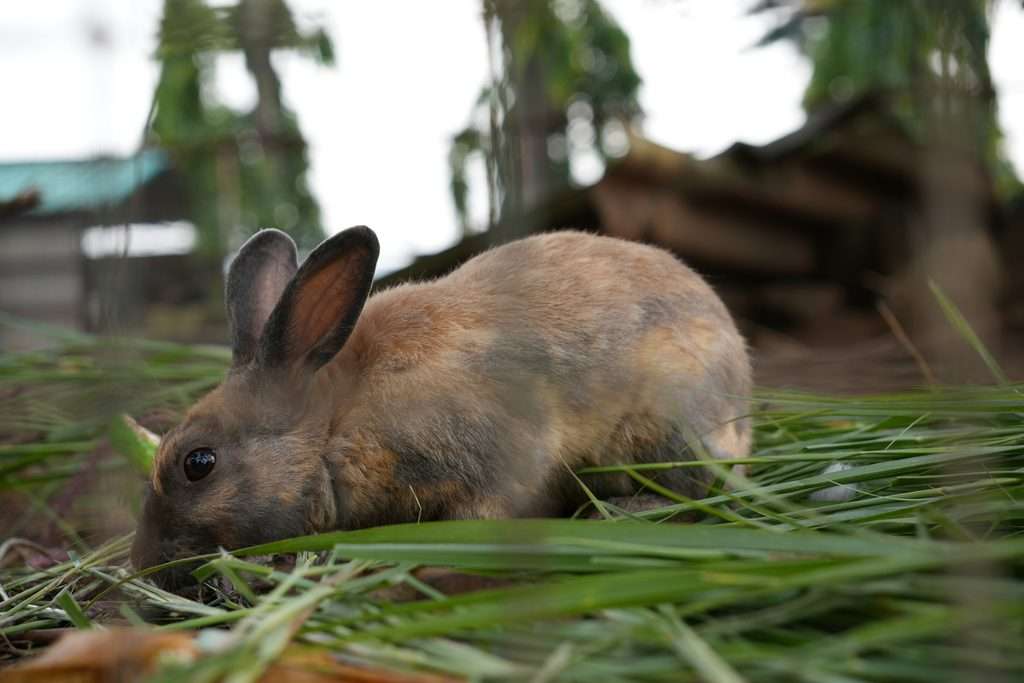
Fresh grass provides the fibrous roughage rabbits are made to eat, but hay is still the most reliable year-round staple for house rabbits.
Backyard grass changes with every season—lush in spring, dried out in summer, and dormant in winter. Hay gives your rabbit a clean, consistent supply of roughage every single day of the year. There is no reason to pull hay away just because your rabbit gets outside time. For rabbits that eat mostly dried food, hay should remain freely available throughout the day rather than being rationed out in small servings.
8. Can Rabbits Eat Wet Grass?
A bit of rain or morning dew does not make grass dangerous. For a rabbit already accustomed to fresh forage, damp blades are not usually a concern.
The real trouble is harvested wet grass left sitting around. When wet cut grass sits in a bowl, container, or bag, the trapped moisture makes it heat up and turn moldy fast. If you cut wet grass for an indoor rabbit, feed it right away instead of storing it for later.
9. Can Rabbits Eat Grass From Parks, Roadsides, or Public Areas?
Picking grass from roadsides, public parks, or apartment complexes is never a great idea.
Roadside grass picks up car exhaust, grime, and road salt that won’t easily rinse off with water. Public parks are also a gamble because you never know when they were last sprayed with weed killers or fertilizers, plus they see lots of traffic from neighborhood dogs and wildlife.
If wild rabbits live in your area, outside foraging can even expose your bunny to serious illnesses like RHDV2, which is why veterinary resources on contagious rabbit viruses advise keeping pets away from shared outdoor grazing spots. Gathering grass from a familiar, spray-free yard with little to no animal traffic is simply the safer way to go.
10. Can Baby Rabbits Eat Grass?
Young rabbits have more sensitive digestive systems than established adults, so fresh grass shouldn’t be added to their diet all at once. What works depends on the kit’s age, whether they are fully weaned, and what foods they are used to eating.
If a young bunny has only ever eaten hay and pellets, take things very slowly instead of giving them free run of the lawn. What works best changes quite a bit as a rabbit grows, so diet adjustments should always be matched to the rabbit’s life stage.
11. Can Indoor Rabbits Eat Grass?
Indoor rabbits can enjoy fresh grass without ever setting foot in the backyard.
- Scissor Snipping: Snip a clean handful of untreated grass from your yard, offer it while fresh, and toss it in with their morning greens.
- Indoor Grass Trays: Grow cat grass, wheatgrass, barley grass, or timothy seeds in shallow plant saucers using clean, chemical-free soil.
I grow shallow trays of wheatgrass indoors for Mocha and Chino, and they love it. It gives them a safe spot to dig and forage naturally, without us having to stress about neighborhood cats, wandering wildlife, or lawn chemicals.
12. Safety Checklist: Safe vs. Unsafe Grass
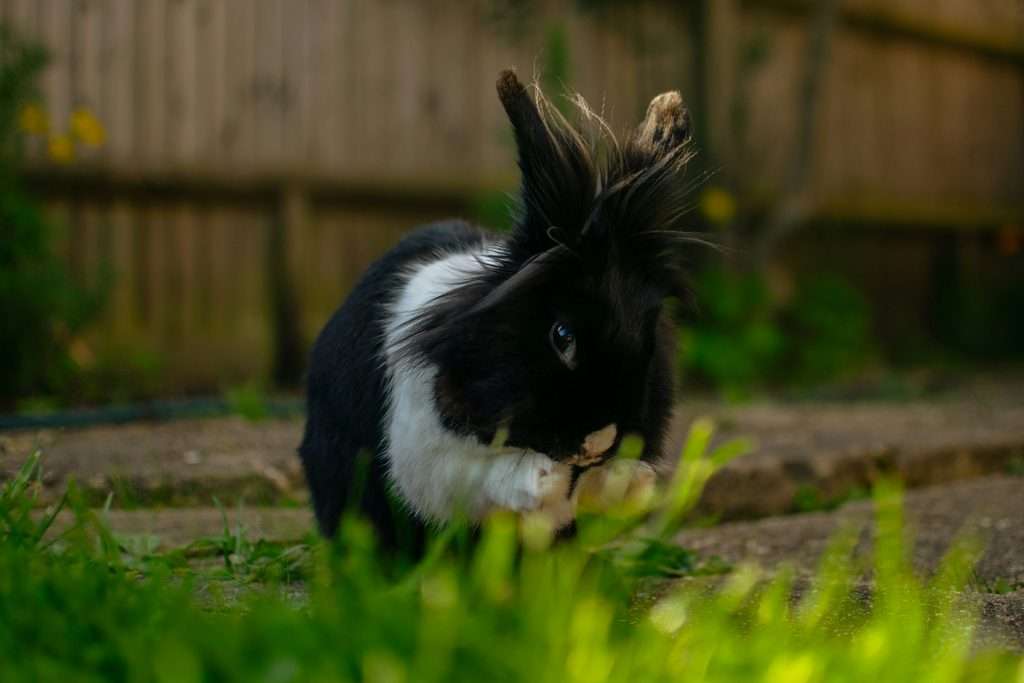
Safe to Feed:
- Fresh grass grazed directly from a clean, untreated yard
- Clean grass cut by hand with scissors and fed right away
- Homegrown indoor wheatgrass or barley trays
- Lawns completely free from weed killers, pesticides, and chemical fertilizers
- Grass kept away from neighborhood dogs, outdoor cats, and wild rabbits
Do Not Feed:
- Lawnmower clippings of any kind
- Grass treated with weed killers, pest sprays, or lawn fertilizers
- Piles of warm, damp, or wilting cut grass
- Roadside edges, public parks, or shared apartment lawns
- Grass mixed with unknown weeds or ornamental garden flowers
13. Frequently Asked Questions
Can rabbits eat grass every day?
Yes. Once an adult rabbit is accustomed to fresh grass over a couple of weeks, clean grass can be offered or grazed daily along with unlimited hay.
Can rabbits eat grass seed heads?
Naturally growing seed heads on tall grass stalks are fine for grazing rabbits to nibble. However, commercial lawn seed may be treated or coated with repellents, fungicides, fertilizers, or other products not intended for rabbit consumption, and should never be fed to pets.
Is lawn grass the same as timothy hay?
Both provide healthy fiber, but lawn grass is usually made of bluegrass, ryegrass, or fescue. Hay is mature grass that has been harvested and dried down so it stores safely indoors without spoiling.
How soon after spraying fertilizer can rabbits eat the grass?
Avoid grazing on treated lawns unless the specific product is clearly labeled as safe for grazing animals after the stated withholding period. Even if a product label says it is safe for walking pets once dry, chemical residues can linger on the blades. Keep a dedicated, untreated patch of grass for your rabbits.
Does fresh grass cause soft poop?
Fresh grass can cause soft droppings if it is introduced too fast or fed in large heaps to a rabbit that isn’t used to it. If droppings get soft, stop the grass until digestion gets back to normal, then try again much more slowly.
14. Summary & Key Takeaways
Fresh grass delivers a great mix of natural water, healthy tooth wear, and gentle fiber that mimics what wild rabbits eat every day. For most house rabbits, it works best as an enjoyable extra alongside a dependable supply of clean grass hay. As long as your grass comes from clean, chemical-free ground, gets introduced slowly, and stays far away from lawnmower clippings, letting your rabbit nibble on fresh lawn is one of the simplest, most rewarding ways to enrich their day.
Ultimately, what your rabbit eats each day matters more than any single food, with plenty of quality hay forming the foundation of a balanced diet.
Medical & Veterinary Disclaimer: Bunnyowners.com is an informational resource for rabbit owners and enthusiasts. We are not veterinarians. The content on this website is for educational purposes only and is not a substitute for professional veterinary advice, diagnosis, or treatment. Always consult a qualified veterinarian with any questions or concerns regarding your pet’s health, medical conditions, diet, or overall care. If you have concerns about your rabbit’s health, it’s always best to reach out to a veterinarian rather than relying solely on information found online.