

Veterinary & Affiliate Disclaimer: Bunnyowners.com shares educational rabbit care resources, not professional veterinary advice. Always consult a qualified veterinarian regarding your rabbit’s medical, dietary, or behavioral needs. This post may also contain affiliate links; as an Amazon Associate and affiliate partner, we earn from qualifying purchases at zero extra cost to you.
Anyone who shares a home with rabbits quickly learns that standard living rooms aren’t built with long ears and sharp teeth in mind. Between trailing phone chargers, bare wood trim, and tight gaps behind the couch, an unprepared room offers plenty of ways for a rabbit to get into mischief. Securing the space beforehand keeps your rabbit safe while sparing your furniture and walls.
To rabbit-proof your home, elevate or cover exposed electrical cords, block the dark gaps under and behind furniture, and move toxic plants and cleaners well out of reach. You can protect vulnerable baseboards and carpet corners with simple acrylic guards, raw wood strips, and woven seagrass mats while keeping small floor clutter swept up. Starting with a single room for supervised floor time lets you spot and fix any overlooked weak spots before opening up the rest of the house.
In this guide, we’ll walk through room by room to spot the trouble areas that are easy to miss from standing height. You’ll learn how to handle exposed wiring, keep baseboards and carpets safe, offer better digging outlets, and make indoor safety a natural part of your rabbit care routine.
1. What Does Rabbit-Proofing Actually Involve?
Rabbit-proofing means adapting your living space so your rabbit can roam without endangering themselves or damaging your property. It also becomes part of your rabbit’s overall care setup once they start spending more time outside their enclosure. The goal isn’t to train these normal behaviors out of your rabbit. It’s to make sure there is nothing dangerous or valuable within reach when those instincts kick in.
The Two Goals: Safety vs. Property Protection
Every change you make serves one of two basic purposes:
- Rabbit Safety: Keep your rabbit away from electrical cords, toxic plants, small objects they could swallow, carpet or other synthetic materials they might eat, and moving furniture that could injure them.
- Property Protection: Cover the places rabbits commonly chew or dig to prevent damage to baseboards, walls, furniture, and flooring.
Why Rabbits Chew, Dig, and Explore
A rabbit’s teeth grow continuously throughout life, so chewing is a normal, daily necessity to keep those teeth worn down. Add in their natural urge to dig, explore, and clear things out of the way, and suddenly your baseboards, furniture edges, and dangling wires become very interesting. If the chewing seems constant even after you’ve provided plenty of appropriate outlets, it can help to understand what may be driving the chewing before changing your setup.
The Limits of Supervision
Supervision is helpful, but it is never a substitute for solid guards and blockers. A rabbit can damage a cord or grab something dangerous surprisingly quickly—often while you are sitting right beside them. Proper rabbit-proofing keeps them safe even when your attention is elsewhere.
2. Priority Hazard Overview
Before walking through individual rooms, it helps to understand the most common household dangers and the practical steps needed to neutralize them.
Common Rabbit Hazards and Fixes
| Household Hazard | Main Concern | Practical Solution |
|---|---|---|
| Exposed Electrical Cords | Electrical shock, burns, fire hazard | Encase in heavy tubing, run through channels, or elevate out of reach |
| Baseboards & Wood Trim | Chewing damage, swallowed splinters | Fit clear plastic guards, protective wood strips, or wire grid panels |
| Carpeting & Area Rugs | Property damage, fiber ingestion | Secure corners with untreated seagrass mats or ceramic tiles |
| Recliners & Sofa Beds | Severe crushing injury in moving joints | Restrict room access or block access beneath the base entirely |
| Houseplants & Chemicals | Poisoning, upset stomach | Move plants completely out of reach; store cleaners in closed cabinets |
| Gaps Under Furniture | Entrapment, chewed upholstery, hidden wires | Block the perimeter with firm under-bed or under-couch barriers |
| Small Floor Items | Risk of swallowing | Pick up small clutter like rubber bands, foam, toys, and dropped pills |
| Exterior Doors & Gates | Escape, access to other household pets | Use sturdy, narrow-slatted gates and double-check exterior entryways |
3. Inspecting the Room from a Rabbit’s Perspective
It is easy to miss hazards when you only look at a room from standing height. Getting down to floor level reveals a completely different picture.
The Floor-Level Walkthrough
Lie down or sit on the floor in any area your rabbit will use. From this perspective, hidden trouble spots stand out immediately: phone chargers resting along the wall, loose fabric backing underneath the sofa that could easily be torn open, and tight gaps behind bookshelves where a rabbit could wedge themselves. You will also spot dropped pens, coins, and small clutter resting beneath low tables that are entirely invisible from standing height.
The Five-Question Check
As you scan each piece of furniture or fixture, use the Chew → Eat → Squeeze → Crush → Escape framework:
- Can they chew it? (Soft trim, exposed wires, wall corners, upholstery)
- Can they eat it? (Fibers, dropped crumbs, rubber pieces, plant leaves)
- Can they squeeze into it? (Gaps behind entertainment units, spaces beneath low beds)
- Can it move or crush them? (Rocking chairs, footrests, heavy doors that swing shut)
- Can they escape through it? (Baluster gaps on stairs, loose window screens, open doorways)
Checking Again After Rearranging
Moving a side table, shifting a desk, or plugging in a seasonal appliance changes the safety landscape. Whenever you rearrange furniture, do a quick floor-level check before letting your rabbit loose again.
4. Securing Electrical Cords and Cables
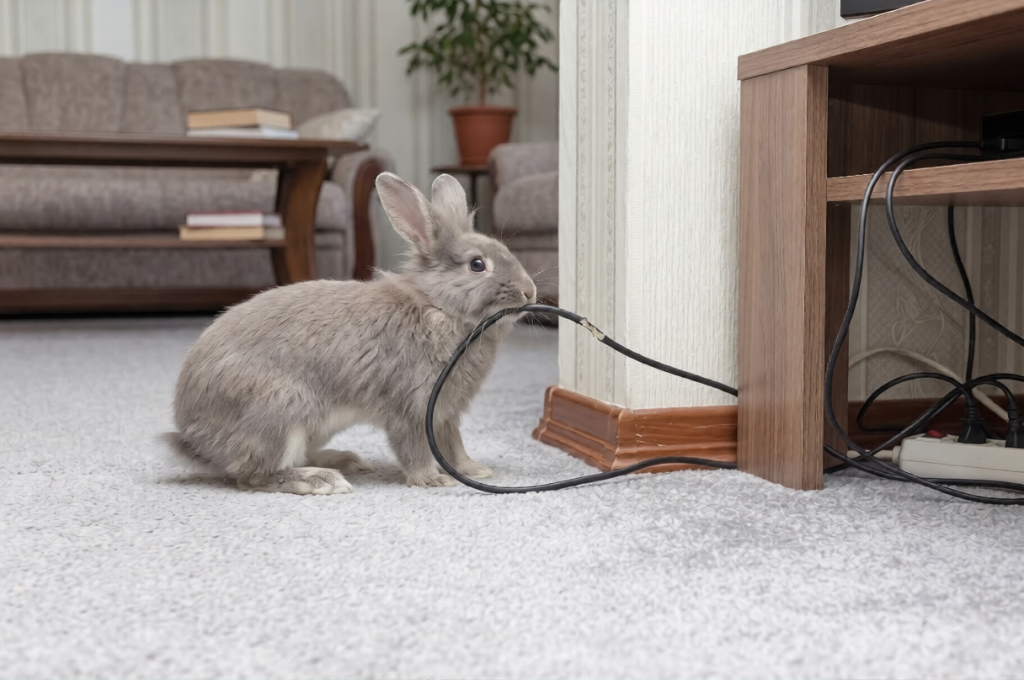
Wiring is usually the biggest safety priority in any indoor space. Thin cables also happen to be exactly the sort of narrow object many rabbits instinctively investigate and snip with their teeth, which can quickly lead to burns in the mouth or serious electrical shock.
Getting Cords Out of Reach
The cleanest fix is moving cords so your rabbit cannot reach them at all. Mount power strips beneath desks or tables, route permanent cables through wall-mounted raceways, and remember to account for nearby furniture your rabbit could jump onto. For larger clusters of electronics, a purpose-designed ventilated cable box or a barrier around the entire area is often far easier than trying to protect every individual wire.
Protective Tubing and Channels
Heavy-duty split loom tubing works well for individual cords, while rigid plastic channels or metal raceways are better for permanent wiring along a wall. Just remember that a cord cover is still a protective outer layer, not something your rabbit should be allowed to sit and chew.
Power Strips and Entertainment Units
Entertainment centers and television consoles often have dozens of wires grouped in one place. Instead of wrapping every single cable individually, it is usually much simpler to block off the entire zone. Connecting a few modular wire storage grids together creates a clean, sturdy fence that keeps your rabbit away from the entire electronics cluster.
Everyday Chargers and Temporary Cords
Phone cords, laptop chargers, and vacuum cleaner wires are easy to overlook because they move around constantly. Make it a household habit never to leave charging cables trailing down across the floor. Charge your devices on elevated counters or in rooms your rabbit cannot enter.
5. Protecting Baseboards, Walls, and Door Trim
Baseboards are a frequent chewing target because the clean outer corners give rabbits an easy grip for their front teeth.
Baseboard Protectors
You can protect wood trim and keep rental deposits intact with a few practical approaches:
- Clear Plastic Strips: Fit clear acrylic or polycarbonate guards over baseboard faces using removable, non-damaging adhesive strips. This protects the wood without hiding the trim.
- Untreated Wood Strips: Place inexpensive strips of untreated, kiln-dried pine directly along the baseboards. This provides an acceptable chewing surface while sparing your actual walls.
- Wire Storage Grids: Place modular wire grids flat along wall sections where chewing is most persistent. I’ve learned with Mocha and Chino that a loose barrier usually isn’t much of a barrier at all—if they can nudge it aside, eventually they probably will, so make sure any floor-level guards are weighted or firmly secured.
Wall Corners and Drywall
Outside drywall corners take the brunt of chewing. Clear plastic corner guards attached with small finish nails or light adhesive keep the drywall intact. If your rabbit starts digging into flat drywall, set a heavy ceramic tile against the spot or rearrange a piece of furniture to cover it.
Wallpaper Edges
Loose wallpaper seams are an easy target for curious teeth. Glue down peeling edges with a plain, nontoxic paste, or place a tall piece of furniture directly over exposed seams.
Why Deterrent Sprays Aren’t Enough
Bitter apple and citrus sprays rarely solve the problem on their own. Many rabbits simply ignore bitter tastes, and some will even lick the spray right off the wood. Solid blockers work far more reliably than taste deterrents.
6. Managing Carpet, Rugs, and Flooring
Digging at carpet is mostly a property problem until your rabbit begins swallowing the fibers. Swallowing threads and fabric can turn into a dangerous stomach or gut blockage that needs veterinary care right away, so persistent floor chewing shouldn’t be ignored.
Securing Carpet Edges and Corners
Rabbits tend to dig at the edges of a room, inside closet corners, and right at doorway transitions. Install solid metal transition strips over exposed edges, cap vulnerable corners with smooth ceramic tiles, or lay down tightly woven, untreated seagrass mats directly over problem spots to absorb the scratching.
Watching for Ingestion
If you notice missing carpet fibers or actually see your rabbit swallowing them, block access to the area immediately. If you also notice less eating or fewer droppings, contact your veterinarian promptly. In rooms with high-pile carpet, consider laying down smooth, non-looped area rugs or placing a large sheet of linoleum topped with washable cotton runners.
Offering a Place to Dig
Digging is an instinct you cannot turn off, but understanding what is behind all that digging can make it much easier to redirect the behavior toward a better target. A simple cardboard box packed with shredded plain paper, hay, or untreated chew sticks can give them a more appropriate place to dig.
7. Securing Furniture and Moving Parts
Furniture can take a beating from rabbit teeth, but moving furniture can be dangerous too.
Furniture Legs
If your rabbit repeatedly targets table or chair legs, block access with a sturdy guard or place an appropriate untreated chew item directly beside the problem area. Valuable furniture may be easiest to protect by rearranging barriers or temporarily excluding your rabbit from that section of the room. Giving your rabbit their own safe chew items nearby also makes it less likely they’ll keep returning to the furniture.
Sealing the Space Under Couches and Beds
Rabbits often pull open the thin fabric backing under couches and box springs, climbing right up inside the furniture where they can be difficult to reach and may start chewing foam, fabric, or other hidden materials. Fasten thin plywood panels or wire storage grids directly to the underside of the frame, or install dedicated under-bed blockers flush against the floor around the perimeter.
Being Careful with Moving Furniture
Recliners, glider chairs, and sleeper sofas require serious caution in a home with rabbits. Never open or close a mechanical recliner or fold-out couch without visually confirming where your rabbit is first. A rabbit can crawl underneath or even inside the mechanism without you realizing it, creating a severe crushing hazard when the footrest moves. Rolling office chairs should also be used with care, as the casters can easily bump into paws and ears during active roaming time.
8. Plants, Household Cleaners, and Chemicals
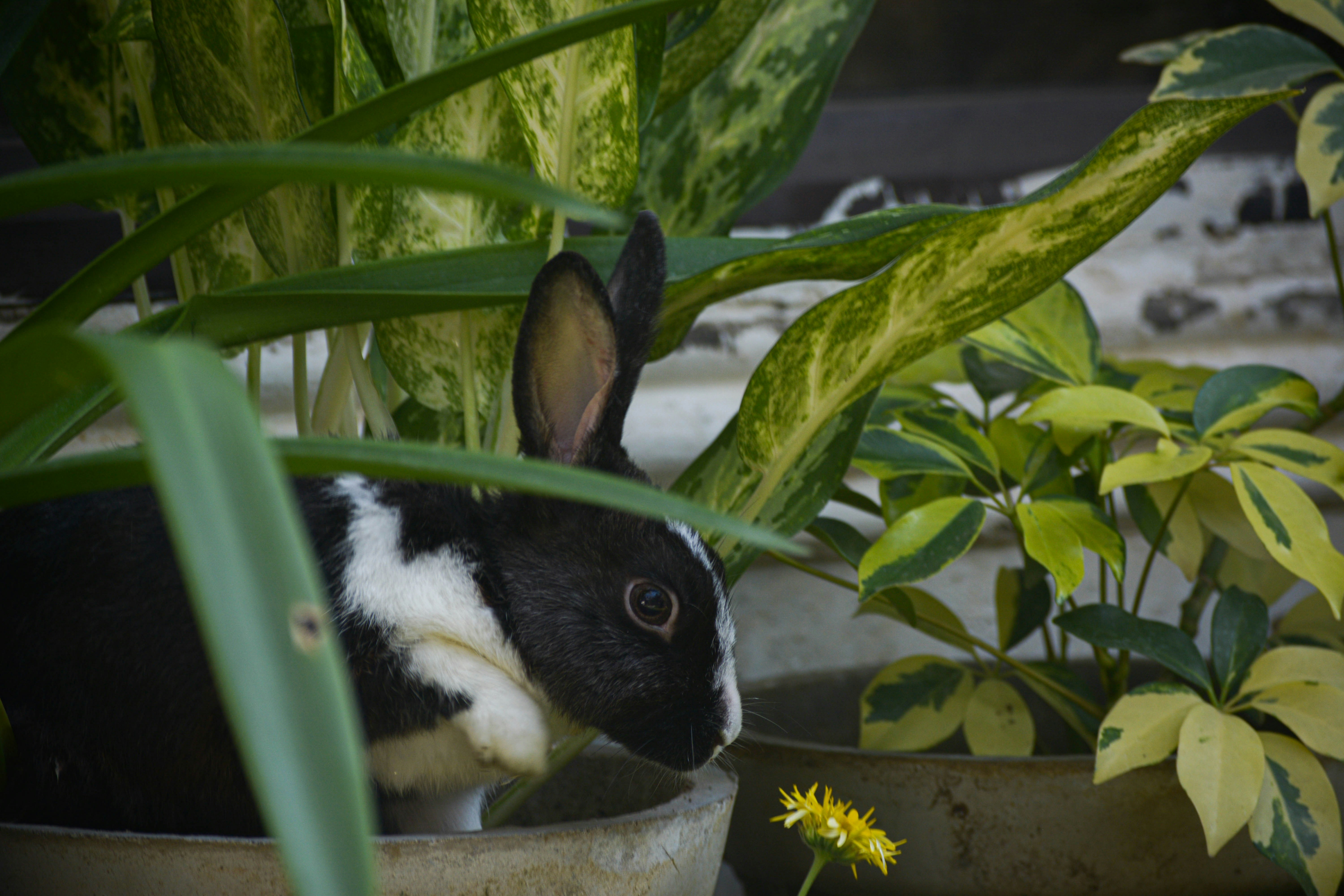
If a leafy houseplant is within reach, there is a good chance a curious rabbit will eventually investigate it with their teeth.
Plant Placement
Houseplants that are toxic or of unknown safety should be removed entirely from rooms your rabbit uses. If you aren’t completely sure about a specific variety, check whether that plant is safe around rabbits before leaving it anywhere they can reach. Do not rely on coffee tables, low plant stands, or shelving units; rabbits can jump surprisingly high from a standstill, and drooping vines or dropped dry leaves will quickly end up on the floor.
Storing Cleaners Safely
Keep floor cleaners, laundry detergents, pest products, and other household chemicals inside closed cabinets. Curious pets can get sick surprisingly fast from everyday sprays and disinfectants, so it helps to check what household cleaning products can be dangerous to pets to make sure you’re keeping bottles well out of reach. After cleaning a rabbit-accessible floor or surface, follow the product’s directions and keep your rabbit away until the area is dry.
9. Floor Clutter and Small Objects
Because rabbits investigate new objects with their teeth, everyday items that roll under furniture or get left on the rug can easily be chewed and swallowed before you notice them:
High-Risk Floor Objects
| Item | Why It Matters | What to Do |
|---|---|---|
| Rubber Bands & Hair Ties | Easy to swallow; obstruction risk | Keep stored inside closed drawers |
| Foam & Packing Peanuts | Soft texture encourages chewing | Sweep packing areas before opening rabbit pens |
| Human & Pet Medications | Accidental poisoning | Never leave open pill bottles or organizers on low tables |
| Pencil Erasers & Soft Plastics | Easily bitten into small, swallowable chunks | Keep home offices and desks clear of floor clutter |
| Wired Earbuds | Combines thin wiring with soft rubber tips | Hang headphones on wall hooks or store in bags |
| Dropped Cat or Dog Food | High protein and fat can upset a rabbit’s stomach | Keep dog and cat dishes behind closed doors or gates |
10. Blocking Gaps and Escape Routes
Rabbits can squeeze through openings that look surprisingly narrow beneath all that fur, so don’t judge a gap by appearance alone. If you’re unsure whether your rabbit can fit through an opening, block it rather than testing the assumption.
Gaps Behind Kitchen and Laundry Appliances
The spaces around refrigerators, ovens, washing machines, and dryers hide open wiring, moving parts, and insulation. Fit firm plastic panels or wire grids across the gaps between appliances and surrounding cabinetry, and check that baseboard toe-kicks beneath kitchen counters are securely attached so your rabbit cannot slip into spaces inside the wall.
Staircase Balusters and Railings
Stair banisters often have spaces wide enough for a small or young rabbit to slip through. Fasten clear plastic sheets or fine wire mesh along the inner side of the railings to keep the stairway secure.
Windows and Outer Doors
Rabbits can easily bite through standard fiberglass insect screens on low windows. If windows are opened near floor level, back them with a firm metal wire guard. At exterior entryways, use tall, sturdy pet gates with narrow vertical slats to prevent accidental escapes when people come and go.
11. Room-by-Room Proofing Plan
Every room comes with a slightly different set of rabbit-proofing problems.
The Living Room
Living rooms usually combine several of the biggest rabbit-proofing challenges in one place. Block access beneath couches using firm barrier boards or grids, consolidate television and media cords inside rigid channels or behind an exercise pen, and pay particular attention to baseboards hidden behind armchairs. Those concealed corners are easy to overlook because your rabbit can chew there without being immediately visible.
The Home Office
Home offices can be tricky because so many cords, power strips, and rolling furniture end up packed into one small area. Block off the entire desk setup using an exercise pen or solid panels, mount power strips up under the desk surface, and replace rolling chair casters with stationary glide feet to avoid rolling over paws or ears.
The Bedroom
Bedrooms have plenty of low hiding spots and small items that are easy to overlook. Close off the bottom of the bed frame using wire storage grids so your rabbit cannot climb into the mattress foundation, keep nightstands clear of charging cords and medications, and ensure closet doors stay latched to protect clothing and shoes.
The Kitchen and Bathroom
Kitchens are often easier to keep off-limits, especially when they have slippery tile floors, exposed appliances, and dropped food. In bathrooms, keep toilet lids firmly closed to eliminate drowning hazards, and verify that plumbing cutouts under the sink vanity are sealed tight against the drywall.
12. Providing Safe Chewing and Digging Alternatives

Physical guards keep your rabbit out of trouble, but offering appropriate chewing outlets keeps them happy. A rabbit with plenty of their own things to chew will spend far less time testing your defenses.
Unlimited Hay and Safe Chew Items
Keep unlimited grass hay available. Besides being essential for digestion, hay gives rabbits something appropriate to chew throughout the day and helps wear their continuously growing teeth. In addition to plenty of fresh hay, provide a regular rotation of safe items:
- Plain, untreated branches from apple, willow, or pear trees.
- Compressed timothy hay blocks and woven grass balls.
- Plain, unprinted cardboard boxes with all tape and staples removed.
Smart Placement
Put approved chew toys right where the trouble usually happens. If your rabbit repeatedly targets a specific baseboard corner, place an untreated seagrass mat and a handful of safe wood sticks directly in front of that spot.
13. Expanding Roaming Space Gradually
Setting up a free-roam rabbit works best when done in stages rather than all at once.
Stage 1: The Secure Home Base
Before opening up the whole room, start with a secure indoor home base using an exercise pen on non-slip flooring. Keep their litter box, food dishes, hay rack, and hide house right there so they have a familiar area to return to.
Stage 2: Supervised Single-Room Floor Time
Open the pen door and let your rabbit check out one thoroughly proofed room while you watch closely. This first exploration shows you whatever small weak spots you might have missed—a forgotten lamp wire or an unsecured corner. Note any problems, return your rabbit to their pen, and adjust your barriers.
Stage 3: Opening Up More Space
Once your rabbit consistently uses the room without finding new hazards, you can start opening access to other areas. Just make sure the setup still gives them enough room to move and exercise comfortably as you expand their roaming area. Some spaces—like laundry rooms, unfinished basements, and utility closets—are best kept permanently off-limits.
14. Mistakes to Avoid
- Trusting Taste Sprays Alone: Relying on sprays without setting up actual physical guards.
- Forgetting About Jumping Ability: Leaving plants or items on low tables thinking they are safely out of reach.
- Leaving Temporary Cords Out: Tossing a phone charger onto the rug during floor time.
- Moving Furniture Unchecked: Adjusting a recliner footrest without knowing where your rabbit is sitting.
- Using Loose Barriers: Leaning light boards against baseboards that a rabbit can simply pull away with their teeth.
- Proofing Only Once: Forgetting to recheck the room after bringing in new electronics or shifting furniture.
15. What to Do in an Emergency
If your rabbit gets past a barrier and gets into something dangerous, acting calmly and quickly makes all the difference:
- Electrical Shock: Unplug the appliance or turn off the power at the breaker before handling your rabbit if they are still near the wire. Check their mouth for burns and contact an exotic animal veterinarian right away, as internal lung complications from an electrical shock can develop hours later.
- Poisonous Plants or Household Chemicals: Grab a sample or clear picture of the plant, cleaner, or medication involved. Do not try to make a rabbit vomit. Rabbits are anatomically unable to vomit, and trying to force it is dangerous. Call your exotic vet or an animal poison control center immediately for instructions. If your rabbit has eaten or chewed something questionable, knowing what signs to watch for after a possible exposure can help you respond quickly while you contact your veterinarian.
- Swallowed Carpet or Plastic: Clear away the remaining material to see roughly how much was chewed. Watch their eating habits and droppings closely. If your rabbit stops eating, stops passing droppings, or sits hunched and uncomfortable, get them to a vet promptly for evaluation.
16. Final Room Safety Checklist
Run through this quick check before opening up the room for floor time:
- [ ] Electrical cords are moved well out of reach or wrapped in heavy tubing.
- [ ] Power strips are elevated or enclosed inside ventilated cable boxes.
- [ ] Baseboard corners are covered by plastic guards, plain wood strips, or wire grids.
- [ ] Carpet problem areas are anchored beneath seagrass mats or ceramic tiles.
- [ ] Houseplants and cleaning supplies are removed from the area completely.
- [ ] Gaps under the couch and bed are closed off with sturdy perimeter blockers.
- [ ] Recliner mechanisms are checked, and everyone knows not to operate them during play time.
- [ ] Small floor clutter like rubber bands, pens, foam, and pills is swept up.
- [ ] Spaces around kitchen and laundry appliances are blocked off firmly.
- [ ] Banister posts on stairs are lined with solid plastic or mesh.
- [ ] Fresh grass hay and safe chew sticks are placed around the room.
- [ ] Outer doors and windows are latched and secure.
17. Frequently Asked Questions
Do I have to rabbit-proof my entire home?
No. You only need to secure the rooms your rabbit actually uses. Keeping your rabbit in a central, well-proofed family room or an enclosed bedroom using sturdy pet gates is much safer and easier to manage than proofing an entire house.
Can I use bitter apple spray to stop baseboard chewing?
Bitter sprays rarely work as a complete fix. Many rabbits simply ignore the taste or move an inch to the side to keep chewing. Sturdy physical barriers like clear plastic guards or raw pine strips work far more dependably.
What size opening can a rabbit fit through?
Rabbits can fit through spaces that look surprisingly small, especially when their fur is compressed. Rather than trying to guess based on an exact measurement, it is always safer to block any opening that looks large enough to test.
How do I stop my rabbit from digging the carpet?
You cannot stop the urge to dig, but you can change what they dig. Set heavy ceramic tiles, woven seagrass mats, or a cardboard dig box directly over the problem spot so your rabbit has an approved place to scratch without ruining the carpet.
Are infant baby gates safe for rabbits?
Standard plastic baby gates often have wide gaps that a curious rabbit can squeeze through, or horizontal rungs that make climbing easy. Look for tall metal gates with narrow vertical bars, or use gates with solid clear plastic panels.
What should I do if my rabbit bites an electrical wire?
Move your rabbit away from the electrical source safely and contact your veterinarian promptly. Check for obvious burns or breathing difficulty, but don’t assume your rabbit is unharmed just because they initially appear normal.
18. Conclusion
Rabbit-proofing isn’t about turning your home into a fortress or trying to stop your rabbit from acting like a rabbit. They are going to chew, dig, squeeze behind things, and investigate anything new, so the easiest solution is to make those normal behaviors safe. Cover the cords, block the dangerous gaps, protect the parts of your home they like to chew, and give them plenty of better things to investigate instead. Start with one well-proofed room, see what your rabbit manages to find that you missed, and expand their freedom once you’re confident the space is secure.
Medical & Veterinary Disclaimer: Bunnyowners.com is an informational resource for rabbit owners and enthusiasts. We are not veterinarians. The content on this website is for educational purposes only and is not a substitute for professional veterinary advice, diagnosis, or treatment. Always consult a qualified veterinarian with any questions or concerns regarding your pet’s health, medical conditions, diet, or overall care. If you have concerns about your rabbit’s health, it’s always best to reach out to a veterinarian rather than relying solely on information found online.