
Veterinary & Affiliate Disclaimer: Bunnyowners.com shares educational rabbit care resources, not professional veterinary advice. Always consult a qualified veterinarian regarding your rabbit’s medical, dietary, or behavioral needs. This post may also contain affiliate links; as an Amazon Associate and affiliate partner, we earn from qualifying purchases at zero extra cost to you.
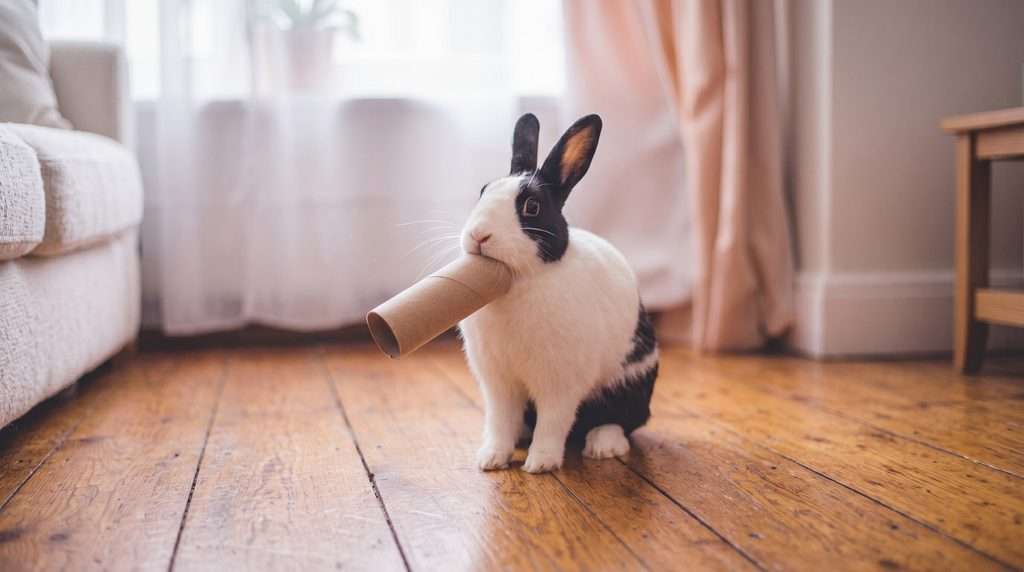
Anyone who has bought an elaborate wooden activity center only to watch their rabbit gleefully dismantle the shipping box knows an undeniable truth: rabbits do not care about price tags. You don’t need specialized tools or expensive pet supplies, either. A cardboard box, a few empty paper tubes, some packing paper, and a handful of hay can keep a rabbit surprisingly busy—and most of the toys in this guide take only a few minutes to make.
Easy DIY rabbit toys include hay-stuffed cardboard tubes, folded treat rolls, toilet roll puzzle boxes, egg carton foragers, toss rings, and cardboard hideaways. The best homemade rabbit toys use plain, untreated household materials to encourage natural behaviors like foraging, chewing, tossing, and exploring. Most projects take under five minutes to assemble using materials you already have at home.
In this guide, we’ll walk through 10 easy step-by-step projects to add to your daily rabbit care routine, starting with quick two-minute boredom busters and working up to a fun multi-room foraging fort. You won’t need any special crafting skills or fancy tools—just a few clean recyclables and a handful of fresh hay.
1. What Can You Use to Make DIY Rabbit Toys?
Before you start cutting up boxes and paper rolls, take a minute to make sure everything is safe for your rabbit to chew and shred. Stick to clean, unprinted or minimally printed corrugated cardboard, plain kraft paper, fresh hay, and rabbit-safe foods.
Before you start raiding your recycling bin, use this quick checklist to see what household staples work best and what to strip off before handing them over:
Household Materials for DIY Rabbit Toys
| Material | Best For | Check First |
|---|---|---|
| Plain Cardboard Boxes | Hideaways, tunnels, foraging forts, shredding boxes | Strip off all plastic tape, mailing labels, and metal staples. |
| Toilet Paper & Towel Tubes | Hay rolls, toss toys, tube puzzle boards | Make sure the tubes are clean, dry, and don’t have thick glue residue. |
| Brown Kraft Packing Paper | Crinkle digging layers, parcel wraps, foraging nests | Must be plain, unbleached, unscented, and wax-free. |
| Plain Paper Grocery Bags | Forage sacks, rustle tunnels | Cut off all handles completely to prevent head entrapment. |
| Cardboard Egg Cartons | Lifting puzzles, nose-work foraging trays | Use clean, dry paper cartons; discard any with egg stains or residue. |
| Grass Hay (Timothy, Orchard) | Stuffing toys, foraging, and chewing | Inspect for mold or excessive dust; keep it fresh and sweet-smelling. |
| Rabbit Pellets & Dried Herbs | Foraging puzzles | Deduct from the rabbit’s measured daily feeding ration. |
| Untreated Tree Branches (Apple, Willow) | Chewing and tossing | Confirm rabbit-safe wood species; ensure pesticide-free harvesting. |
A Quick Rule Before You Start
If you wouldn’t feel comfortable with your rabbit accidentally chewing the material, don’t build a toy out of it. Always strip off plastic tape, shipping labels, strings, and staples before repurposing cardboard as chew toys. Avoid string, twine, and yarn, too, because long strands can lead to a serious intestinal blockage if eaten. When assembling your projects, rely on interlocking folds and tabs instead of adhesives.
2. Easy DIY Rabbit Toys You Can Make at Home
Most of these toys take just a few minutes to make. For each one, I’ll show you what you need, how to put it together, and what to watch for once your rabbit gets hold of it.
1. Hay-Stuffed Toilet Paper Roll
- Best for: Foraging, tossing, and chewing
- Difficulty: Easy
- Time: 2 minutes
- What you’ll need:
- 1 clean cardboard toilet paper roll
- Handful of long-strand Timothy or orchard grass hay
- 5–8 pellets from your rabbit’s daily measured ration (optional)
How to make it:
- Compress the cardboard roll slightly with your thumb to create an oval opening.
- Insert a small wad of hay firmly into one end of the roll.
- Drop the pellets into the center cavity so they sit nestled inside the fiber.
- Stuff the remaining end with another wad of hay, leaving strands protruding from both sides.
Why rabbits like it: Rabbits can pull at the hay strands, toss the tube around, and nudge it across the floor to work for any pellets hidden inside.
Watch for: Cardboard consumption. Watching my own rabbit, Mocha, shred an entire roll down to bare pulp while leaving a neat perimeter of paper confetti on the rug is completely normal. However, if your rabbit actively eats and swallows the dense cardboard rather than spitting out the fibers, skip the tubes and stick to loose hay piles.
2. Folded Cardboard Treat Roll
- Best for: Foraging and figuring things out
- Difficulty: Easy
- Time: 3 minutes
- What you’ll need:
- 1 clean cardboard toilet paper roll
- Scissors
- 1 teaspoon of daily pellets or safe dried herbs
How to make it:
- Using scissors, make four half-inch vertical cuts spaced evenly around one rim of the tube.
- Fold the four tabs inward, overlapping them to seal the bottom shut.
- Pour the measured pellets or dried herbs into the open tube.
- Cut matching half-inch slits on the other end and fold those tabs flat to close the roll completely.
Why rabbits like it: The pellets rattling inside encourage your rabbit to toss, chew, and pull at the folded ends until they break through to the food.
Watch for: Frustration. If the tabs are folded too tightly, a timid rabbit might give up. Ensure the flaps yield under a firm nudge or bite.
3. Toilet Roll Puzzle Box
- Best for: Foraging and exploring
- Difficulty: Easy
- Time: 8 minutes
- What you’ll need:
- 1 shallow cardboard box or shoe box lid (trimmed to 2–3 inches high)
- 8–15 empty toilet paper rolls
- Handful of grass hay
- A pinch of pellets or dried forage
How to make it:
- Stand the empty paper tubes vertically inside the shallow box until packed tightly together. Friction will keep them upright without glue.
- Drop a couple of pellets into 3 or 4 random tubes.
- Stuff hay down into every tube to conceal the rewards, making the baited tubes look identical to the empty ones.
- Place the tray flat on a non-slip floor mat.
Why rabbits like it: The fun is figuring out which tubes are hiding something good. Your rabbit can sniff around, yank tubes out, tip them over, and generally make a mess of your carefully arranged puzzle to find the treats.
Watch for: Box depth. Never use a deep box where a small rabbit could get their head stuck while reaching for the bottom. Keep the perimeter wall at or below your rabbit’s shoulder height.
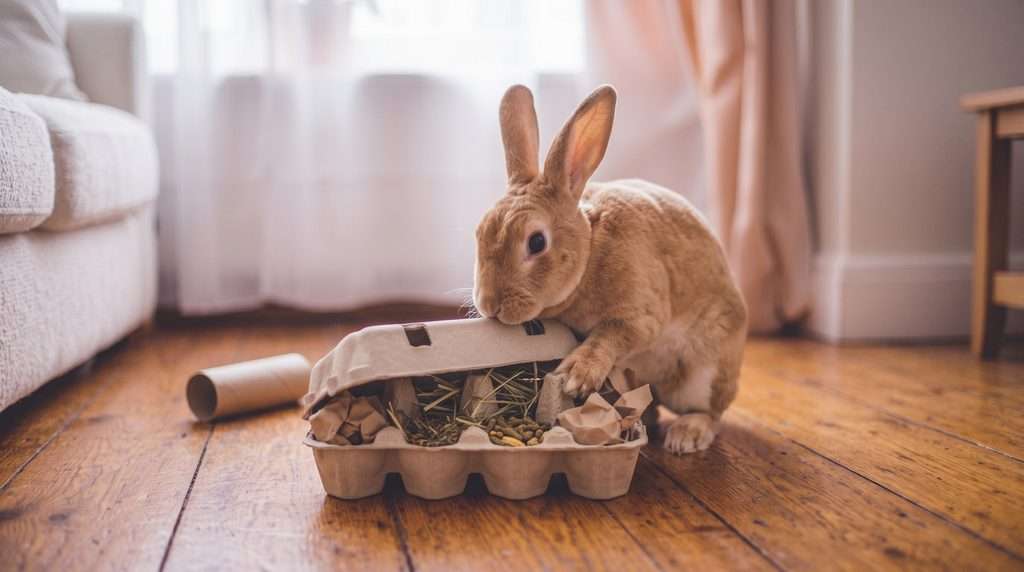
4. Egg Carton Foraging Puzzle
- Best for: Foraging and figuring things out
- Difficulty: Easy
- Time: 3 minutes
- What you’ll need:
- 1 clean paper-pulp egg carton (clean, dry, and free of egg residue)
- Handful of Timothy hay
- Measured daily pellets
How to make it:
- Inspect the carton to make sure it is completely clean and dry.
- Scatter a few pellets across 3 or 4 of the cups.
- Pack a loose tuft of hay over every individual cup to hide the treats.
- Set the lid to your rabbit’s experience level:
- Level 1 (Beginner): Prop the lid fully open against a wall.
- Level 2 (Intermediate): Rest the lid loosely closed without latching the front tabs.
- Level 3 (Advanced): Lightly tuck the front tabs in, requiring the rabbit to pry the lid open.
Why rabbits like it: Every little compartment becomes somewhere to investigate. Your rabbit has to nose open the lid, pull out the hay, and check underneath for the pellets you’ve hidden.
Watch for: Stained cartons. Never reuse egg cartons that have visible stains or cracked egg residue. Discard the carton if it gets damp or dirty.
5. Paper Bag Foraging Toy
- Best for: Shredding, rustling, and digging
- Difficulty: Easy
- Time: 3 minutes
- What you’ll need:
- 1 small brown paper lunch sack
- Handfuls of grass hay
- 2 sheets of plain brown packing paper
- Daily pellets
How to make it:
- Cut off and discard any paper handles flush with the rim of the bag.
- Crumple the packing paper into loose, fist-sized balls.
- Drop your rabbit’s pellet allowance into the bottom of the sack.
- Layer the crinkled paper balls and loose hay inside until the bag is two-thirds full.
- Loosely fold the top opening over once or twice.
Why rabbits like it: Rabbits enjoy the rustling sound of paper under their paws. They will dig into the bag, fling the crumpled balls, and tear through the sides to reach the food.
Watch for: Bag size. Only use small lunch sacks. Large grocery bags can present a trapping hazard if a rabbit crawls inside and gets disoriented.
6. Cardboard Pellet Puzzle Board
- Best for: Foraging and problem-solving
- Difficulty: Moderate
- Time: 10 minutes
- What you’ll need:
- 1 flat square piece of sturdy corrugated cardboard (roughly 12×12 inches)
- 3–4 clean toilet paper rolls
- Utility knife or scissors
- Daily pellets
How to make it:
- Cut each toilet paper roll in half crosswise to create short 2-inch rings.
- Place the flat cardboard base on your workspace and trace the rings across the board.
- Cut shallow star-shaped “X” slits along your markings.
- Press the bottom rims of the rings into these slits so they stand upright under tension without glue.
- Drop two pellets into each ring.
- Cut small square cardboard caps and balance them over each opening.
Why rabbits like it: Your rabbit has to nose aside the loose cardboard caps and knock over the rings to claim the pellets hiding underneath.
Watch for: Small cardboard caps. If your rabbit starts eating and swallowing the small square covers rather than nudging them away, remove the caps and let them interact with the open rings.
7. DIY Rabbit Toss Toy
- Best for: Tossing, flinging, and non-food play
- Difficulty: Easy
- Time: 4 minutes
- What you’ll need:
- 1 toilet paper roll
- Scissors
How to make it:
- Flatten the toilet paper roll slightly with your hand.
- Cut the flattened tube into five equal rings, each about half an inch wide.
- Slide one cardboard ring through the center of a second ring perpendicularly.
- Slide a third ring over the assembly to lock the shape into an open sphere.
- Thread the remaining two rings diagonally across the openings to complete a lightweight geometric ball.
Why rabbits like it: Many rabbits love tossing lightweight items out of their path. my other Lionhead, Chino, will systematically clear his personal walkways by picking up lightweight rings in his teeth and throwing them aside with a sharp flick of his head. This cardboard ball catches easily on teeth and bounces unpredictably.
Watch for: Flattened rings. Over several play sessions, the rings will soften and pull apart. When they lose tension, recycle them and make a fresh one.
If a video helps, this short clip walks through the exact interlocking folds step-by-step. The guinea pigs are testing it here, but the build is identical for rabbits:
8. Cardboard Shredding Box
- Best for: Shredding and digging
- Difficulty: Easy
- Time: 5 minutes
- What you’ll need:
- 1 wide, shallow shipping carton (sides trimmed down to 4–6 inches)
- 2–3 toilet paper rolls cut into spirals
- Strips of torn brown kraft paper
- Handful of Timothy hay
How to make it:
- Cut the flaps off a shallow box and remove all tape and staples.
- Cut the paper tubes down one side at an angle to create springy ribbons.
- Tear kraft paper into irregular strips and crumple them loosely.
- Layer the box with the cardboard ribbons, paper strips, and loose hay.
- Mix the textures together by hand.
Why rabbits like it: Some rabbits just want something they can rip apart. This gives them a box full of paper, cardboard, and hay they’re actually allowed to destroy instead of working on your rugs or baseboards.
Watch for: Litter box confusion. Because the box is shallow and packed with absorbent materials, some rabbits may mistake it for an auxiliary litter tray. If your rabbit begins urinating inside, remove it, empty the contents, and redirect them to their regular litter box.
9. Two-Door Cardboard Hideout
- Best for: Hiding and exploring
- Difficulty: Moderate
- Time: 10 minutes
- What you’ll need:
- 1 medium-to-large clean shipping box
- Box cutter or heavy utility knife
How to make it:
- Cut the bottom flaps off the box entirely so it rests directly on your floor.
- Cut a smooth arched doorway on one side, ensuring it is at least 2 inches wider and taller than your rabbit’s seated frame.
- Cut a matching escape exit on the opposite or adjacent wall.
- Smooth down the cut edges with your fingers so there are no sharp cardboard burrs.
- (Optional) Cut a high 2-inch peephole for light and ventilation.
Why rabbits like it: Wild rabbits rely on burrows with multiple bolt holes to feel secure. A box with two distinct exits lets your rabbit slip through easily during play, rest out of sight, or jump onto the flat roof to survey the room.
Turn It Into a Cardboard Maze
To expand this setup, place two or three boxes end-to-end. Cut matching doorways between the adjoining walls to create a series of interconnected hallways. Rabbits love exploring new turns and chin-marking interior walls.
Watch for: Tight doorways. Never cut narrow openings. A startled rabbit bolting through an undersized entrance can scrape their hips or damage delicate ears.
10. Cardboard Foraging Fort
- Best for: Hiding and exploring
- Difficulty: Moderate
- Time: 20 minutes
- What you’ll need:
- 2 clean shipping boxes of similar size
- 4 empty toilet paper rolls
- Box cutter
- Grass hay and daily pellets
How to make it:
- Cut matching arched openings in one side of each box so they can sit side-by-side like a two-room building.
- Cut an exterior doorway into the outside wall of each box so your rabbit has multiple paths in and out.
- Punch four 1.5-inch holes along the exterior walls at your rabbit’s eye level.
- Stuff the toilet paper rolls with hay and a few pellets, then press them halfway through the wall holes like feeding racks.
- Scatter a small layer of crinkled kraft paper on the floor of one room to create a foraging zone.
Why rabbits like it: This setup combines several natural activities: running through connected rooms, chewing cardboard doors, resting in quiet chambers, and plucking hay from wall racks. Keeping everything on a single level avoids stability or collapse issues.
Watch for: A sagging roof. If your rabbit likes to jump onto the roof, make sure the boxes are sturdy enough to support their weight without collapsing inward.
3. DIY Rabbit Toys by Difficulty
To help you choose a project based on the time and materials you have on hand, the table below arranges all ten builds from the quickest two-minute activities to our most involved foraging setup:
Toy Projects Sorted by Build Time
| Time | Project | Best For |
|---|---|---|
| 2 Minutes | Hay-Stuffed Tube | Chewing and foraging |
| 3 Minutes | Folded Treat Roll | Foraging and problem-solving |
| 3 Minutes | Egg Carton Puzzle | Foraging and exploring |
| 3 Minutes | Paper Bag Forager | Shredding and digging |
| 4 Minutes | Toss Toy | Tossing and playing |
| 5 Minutes | Shredding Box | Shredding and digging |
| 8 Minutes | Puzzle Box | Foraging and exploring |
| 10 Minutes | Pellet Puzzle Board | Foraging and problem-solving |
| 10 Minutes | Two-Door Hideout | Hiding and exploring |
| 20 Minutes | Cardboard Foraging Fort | Hiding and exploring |
4. Which DIY Toy Should You Make for Your Rabbit?
The best homemade toy is the one that channels whatever your rabbit is already trying to do to your baseboards, rugs, or furniture. Use the reference table below to pair your rabbit’s everyday habits directly with the most effective build from this guide:
Matching Rabbit Behaviors to DIY Projects
| If your rabbit… | Try this build: |
|---|---|
| Shreds rugs and baseboards | Cardboard Shredding Box or Paper Bag Forager |
| Flings food bowls and water dishes | DIY Rabbit Toss Toy or Hay-Stuffed Tube |
| Naps in quiet, secluded corners | Two-Door Cardboard Hideout |
| Inhales pellets within seconds | Egg Carton Puzzle or Pellet Puzzle Board |
| Investigates grocery bags and boxes | Toilet Roll Puzzle Box |
Start with the behaviors your rabbit naturally shows each day, and tailor your builds around what they already enjoy destroying or investigating.
5. How to Make DIY Rabbit Toys More Challenging
When your rabbit figures out a puzzle quickly, modify the design to keep them thinking:
Start Easy
Let your rabbit succeed right away. If a puzzle is too difficult at first, rabbits often lose interest. Leave flaps loose, openings wide, and pellets partially visible so they understand there is a reward inside.
Increase One Thing at a Time
Once your rabbit gets the hang of a toy, adjust one element to make it more challenging:
- Step 1: Pellets left visible in an open cardboard ring.
- Step 2: Pellets covered by a loose tuft of hay.
- Step 3: Pellets covered by a light cardboard cap.
- Step 4: Pellets wrapped inside a plain paper twist placed under the cap.
Don’t Turn Dinner into a Frustration Test
Enrichment should encourage calm foraging, not cause stress. Any food used during puzzle play should come out of their measured daily pellet allowance rather than being added as extra calories. Always keep plenty of fresh grass hay freely available in their regular feeder; never force a rabbit to work through difficult puzzles just to get their basic daily fiber.
6. Can You Make Rabbit Toys Without Treats?
Yes. While food puzzles are great for quick engagement, rabbits don’t need a food reward for every activity.
Plenty of rabbit activities are fun without food. Tossing things, shredding cardboard, running through boxes, and settling into a hideout all give your rabbit something to do without adding another treat:
- The DIY Rabbit Toss Toy gives them lightweight objects to pick up and throw.
- The Two-Door Cardboard Hideout provides a sheltered place to nap with more than one way out.
- The Cardboard Shredding Box satisfies natural chewing and digging urges without adding treats to their diet.
7. When Should You Throw Away a Homemade Rabbit Toy?
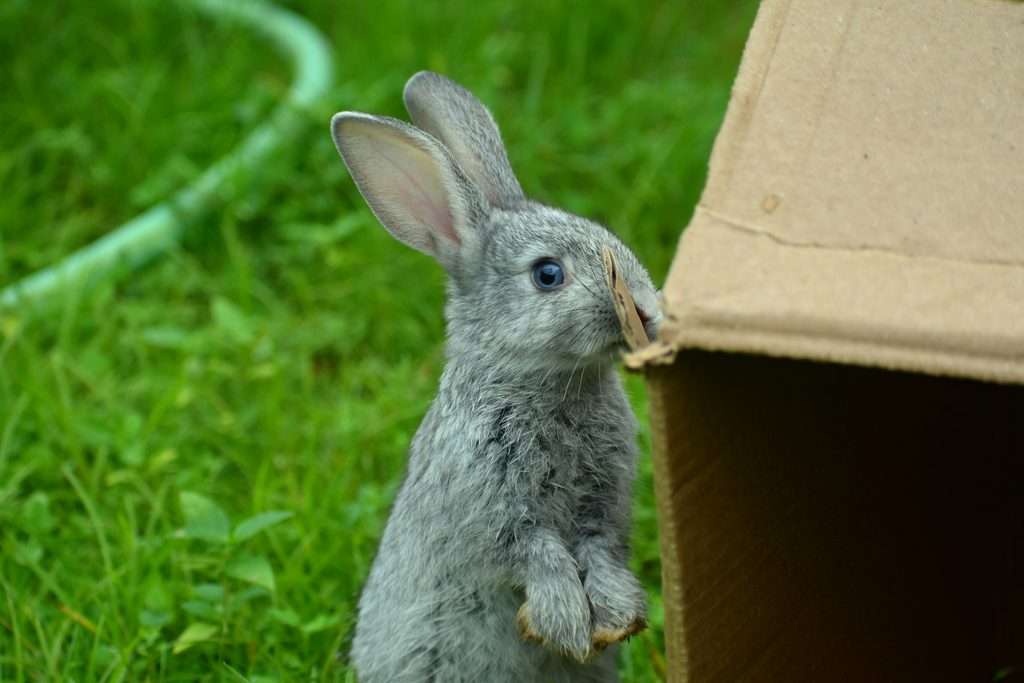
Cardboard toys are meant to be temporary. Inspect your homemade toys regularly and recycle them if you notice any of the following:
- Moisture or urine staining: Cardboard absorbs liquid quickly; discard soiled pieces to prevent mold and bacterial growth.
- Sharp or jagged edges: Heavy gnawing can leave sharp edges or expose hidden staples.
- Deliberate cardboard consumption: Normal play produces shredded paper confetti on the floor, but if your rabbit switches from tearing cardboard to actively swallowing it in noticeable quantities, take the toy away.
- Structural collapse: Replace hideouts or boxes when the walls become too soft to stand securely.
8. Common DIY Rabbit Toy Mistakes
Avoid these frequent design issues to keep your homemade toys safe and practical:
| Common Mistake | Better Approach |
|---|---|
| Leaving packing tape on boxes | Strip away all tape, shipping labels, and adhesive glue strips before building. |
| Using hot glue or craft adhesives | Fasten pieces using slotted cardboard tabs, folds, or untreated willow twigs instead. |
| Cutting small, narrow doorways | Cut doorways at least 2 inches wider and taller than your rabbit’s seated frame. |
| Hanging toys with jute or twine | Avoid strings; hanging loops can become entanglement or ingestion hazards. |
| Overfilling puzzles with inappropriate snacks | Use their normal daily pellet allowance, fresh hay, or safe dried herbs rather than seeds, nuts, or sugary fruits. |
| Making puzzles too hard right away | Start with open flaps and visible rewards, then increase difficulty over time. |
| Keeping soiled cardboard too long | Treat paper toys as disposable; recycle them as soon as they become damp or dirty. |
Relying on simple interlocking folds rather than glue keeps your homemade rabbit toys completely safe and easy to recycle. If your rabbit needs a sturdier chewing outlet that holds up longer than paper, understanding natural rabbit chewing habits will help you choose safe branches like apple or willow to satisfy heavy gnawing.
9. Frequently Asked Questions
Are toilet paper rolls safe for DIY rabbit toys?
Yes, plain cardboard toilet paper and paper towel cores are safe for supervised play. Peel away any thick residual glue seams, and discard any tubes that have been soiled.
Can rabbits play with cardboard every day?
Yes, as long as they are tearing and shredding it rather than actually swallowing it. Keep an eye on your rabbit’s chewing habits; if your rabbit deliberately eats and swallows large amounts of cardboard, replace paper toys with safe apple or willow wood chews.
Can I use glue or tape when making rabbit toys?
Avoid exposed glue and tape anywhere your rabbit can reach or chew. Commercial adhesives can irritate a rabbit’s sensitive digestive tract. Folded cardboard tabs, friction fits, and interlocking slots work well without any adhesives.
What can I put inside homemade rabbit toys?
Stick to components of their normal healthy diet: long-strand grass hay (Timothy, orchard, or oat), their regular measured pellets, and rabbit-safe dried herbs like dandelion or chamomile. Skip seeds, nuts, sugary dried fruit, and other foods that aren’t appropriate for your rabbit’s normal diet.
Why does my rabbit destroy homemade toys so quickly?
Because that is the entire point! For a rabbit, ripping, tossing, and destroying an object is playing. When your rabbit dismantles a cardboard build in ten minutes, it means the toy successfully engaged their natural chewing and foraging instincts.
10. Conclusion
A great rabbit toy doesn’t need to look pretty on your floor. In fact, an ugly cardboard tube stuffed with fresh green hay is usually far more exciting to a rabbit than an expensive boutique toy. Pick one simple project to start—like a hay-stuffed roll or an egg carton puzzle—and see what your bunny does with it.
If they spend ten minutes tossing it around, tearing it open, and reducing your handiwork to a pile of cardboard confetti, that’s a total win. Once you see whether they prefer tossing, chewing, or exploring, picking the next project gets even easier.
Medical & Veterinary Disclaimer: Bunnyowners.com is an informational resource for rabbit owners and enthusiasts. We are not veterinarians. The content on this website is for educational purposes only and is not a substitute for professional veterinary advice, diagnosis, or treatment. Always consult a qualified veterinarian with any questions or concerns regarding your pet’s health, medical conditions, diet, or overall care. If you have concerns about your rabbit’s health, it’s always best to reach out to a veterinarian rather than relying solely on information found online.