
Veterinary & Affiliate Disclaimer: Bunnyowners.com shares educational rabbit care resources, not professional veterinary advice. Always consult a qualified veterinarian regarding your rabbit’s medical, dietary, or behavioral needs. This post may also contain affiliate links; as an Amazon Associate and affiliate partner, we earn from qualifying purchases at zero extra cost to you.
Learning how to play with a rabbit can feel surprisingly tricky if you expect them to fetch like a dog or chase string like a cat. A rabbit might enthusiastically shove a toy back across the rug one evening, only to completely ignore you the next and retreat under an armchair. Knowing how to initiate games that align with their natural instincts is the key to building trust and having fun together on the floor.
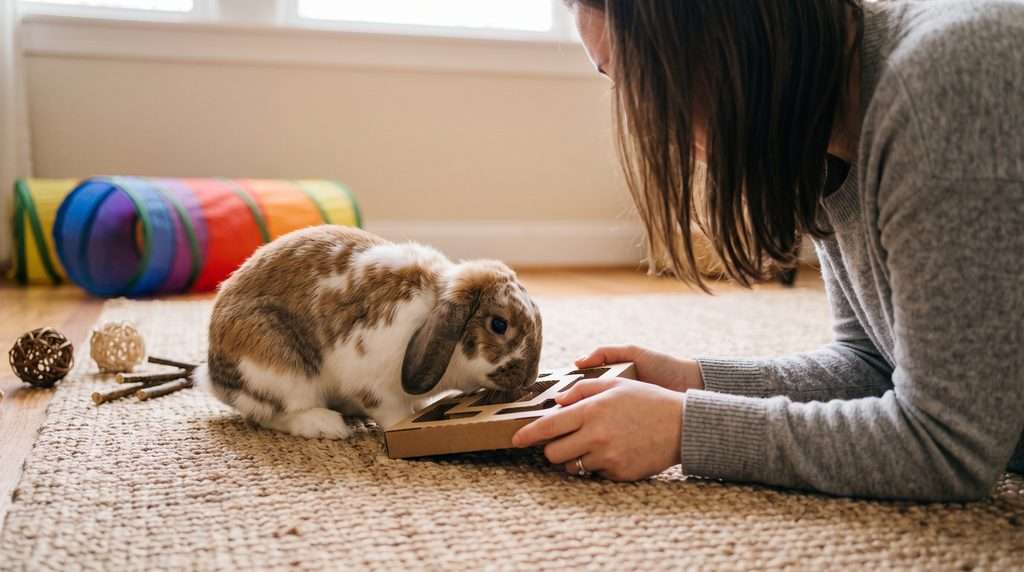
To play with a rabbit, get down on their eye level and let them approach you before introducing simple interactive games. Focus on activities built around natural behaviors they already enjoy, such as nudging lightweight objects, tossing items with their teeth, following you across the room, or solving simple scent-based games. Always keep playtime optional so your rabbit can wander off whenever they want, picking up the game again only when they choose to come back on their own.
Play is often the most overlooked part of day-to-day rabbit care, but it doesn’t have to be complicated. In this guide, you’ll learn how to identify what your rabbit actually likes to do, pick from 10 easy interactive games, read their body language as you go, and know when to call it quits.
1. What Does Rabbit Play Actually Look Like?
Rabbits tend to enjoy games that let them explore, push things around, toss objects, search for something interesting, and decide for themselves when to join in. But every rabbit has their own idea of fun. One might spend ten minutes throwing a cup around the room while another would rather follow you across the carpet and investigate whatever you’re doing.
When you take the pressure off and let your rabbit make the first move, play starts to feel more like a back-and-forth conversation.
Rabbit Play Can Be Easy to Miss
If you’re used to dogs or cats, rabbit play can be easy to miss. There may be no dramatic game of fetch or frantic attack on a feather wand. Your rabbit might simply shove a cup two inches across the rug, stare at you for a second, and hop away.
Common ways rabbits join in on interactive play include:
- Repeatedly pushing or nosing a lightweight object toward or away from you
- Grabbing an item with their teeth and tossing it sideways
- Approaching your outstretched hand, backing away, and immediately returning
- Following your footsteps or circling your feet as you walk
- Nudging your ankles, knees, or elbows to prompt an interaction
- Checking in by sniffing your fingers before darting off to do a quick sprint
A subtle response does not mean your rabbit is bored or indifferent; it is often their version of testing the waters and inviting a gentle reply.
Let Your Rabbit Call the Shots
Rabbits generally have more fun when they know they can leave whenever they want. If you suddenly reach toward them, corner them in an enclosure, or block the way out, what felt like a game a second ago can quickly become something they want to escape from.
Giving your rabbit choice and some control over their surroundings is an important part of their comfort and well-being. During play, the rule is pretty simple: invite rather than insist.
2. Start With What Your Rabbit Already Likes
Before choosing a game, spend a little time watching what your rabbit does when nobody is trying to entertain them. Do they fling cups out of the way? Follow you from room to room? Investigate every new smell? Those everyday habits are often the easiest way to figure out what kind of game they’ll actually enjoy.
A rabbit that loves tossing things is a natural candidate for reverse fetch, while one that trails behind your heels may love a following game. Starting with something they already do for fun gives you a much better chance of getting a response.
Good environmental enrichment gives rabbits a chance to do the things that already come naturally—exploring, foraging, nudging, tossing, and figuring things out—without putting them under pressure.
A Simple Way to Find Your Rabbit’s Favorite Games
A simple way to figure out what clicks without stressing your rabbit out is to follow five easy steps:
- WATCH: Spend a few minutes watching your rabbit when they’re up and active. Are they throwing things, nudging objects around the carpet, following you, or sniffing every corner they can reach?
- MATCH: Start with a game that feels like something they already enjoy doing.
- INVITE: Offer the game once, preferably while you’re sitting down at their level. Then give them a chance to decide what happens next.
- READ: Watch what they do. Do they come closer, repeat the action, stare at you like you’ve lost your mind, or simply walk away?
- ADJUST: If they come back for more, keep going. If they seem unsure, make the game easier or slow things down. If they leave, that’s your answer for now.
To help select an activity that fits your rabbit’s natural habits, match their everyday behaviors to the games in the table below:
Matching Natural Behaviors to Interactive Games
| Your Rabbit Naturally… | Start With This Game |
|---|---|
| Tosses objects with teeth | Reverse Fetch |
| Pushes and nudges items | Bunny Bowling or Ball Roll |
| Follows you room to room | Follow the Leader |
| Runs toward you playfully | Rabbit-Chases-You |
| Sniffs and explores everything | “Which Hand?” Game |
| Searches for stray food scraps | “Where Did It Go?” Hide-and-Seek |
| Watches your movements closely | Human Hide-and-Seek |
| Arranges and moves personal items | The “Move It Back” Game |
| Approaches cautiously but retreats | Quiet Floor Interaction |
3. Ten Games to Play With Your Rabbit
Every game listed below is designed for direct owner-rabbit interaction. They require no specialized construction, complex training, or expensive gear—just your presence, patience, and a willingness to let your rabbit call the shots.
1. Roll a Ball Back and Forth
- How to play: Sit flat on the floor several feet away from your rabbit. Gently roll a lightweight, rabbit-safe ball across the rug toward their front paws. If your rabbit noses, pushes, or bats the ball back toward you, roll it gently back into their space.
- Best for: Rabbits that naturally push food bowls, nudge baseboards, or investigate rolling objects.
- Watch for: Purposeful little nudges forward. Never roll an object directly at a rabbit that is turned away or hopping in the opposite direction.
2. Play Reverse Fetch
- How to play: Sit comfortably near your rabbit while they are holding or inspecting a tossable toy. When your rabbit picks up the object and flings it across the floor, calmly retrieve it and set it gently back within their reach.
- Best for: Energetic tossers who love clearing obstacles out of their way.
- Watch for: Immediate re-tossing. If your rabbit waits for you to return the item only to fling it again, they have successfully trained you to fetch.
3. Play Bunny Bowling
- How to play: Stand three or four lightweight, rabbit-safe objects upright on the rug a few inches apart. Allow your rabbit to approach and nudge them over. Once they knock the pins down, reset the pieces and step back.
- Best for: Rabbits that enjoy shoving obstacles out of their runway or clearing a path.
- Watch for: Deliberate nudging, pushing, or knocking the pieces over and hanging around waiting for you to reset them.
4. Play “Which Hand?”
- How to play: Place a single pellet or a fragrant fresh herb leaf inside one hand, then loosely close both fists. Present both hands flat on the floor at your rabbit’s eye level, roughly six inches apart. Let your rabbit sniff both hands. When they touch or nudge the correct hand with their nose, open your palm and let them eat the reward.
- Best for: Rabbits that will follow their nose anywhere, especially if food is involved.
- Watch for: A clear nose nudge directed at the scented hand. Keep portions small to avoid overfeeding.
5. Play Follow the Leader
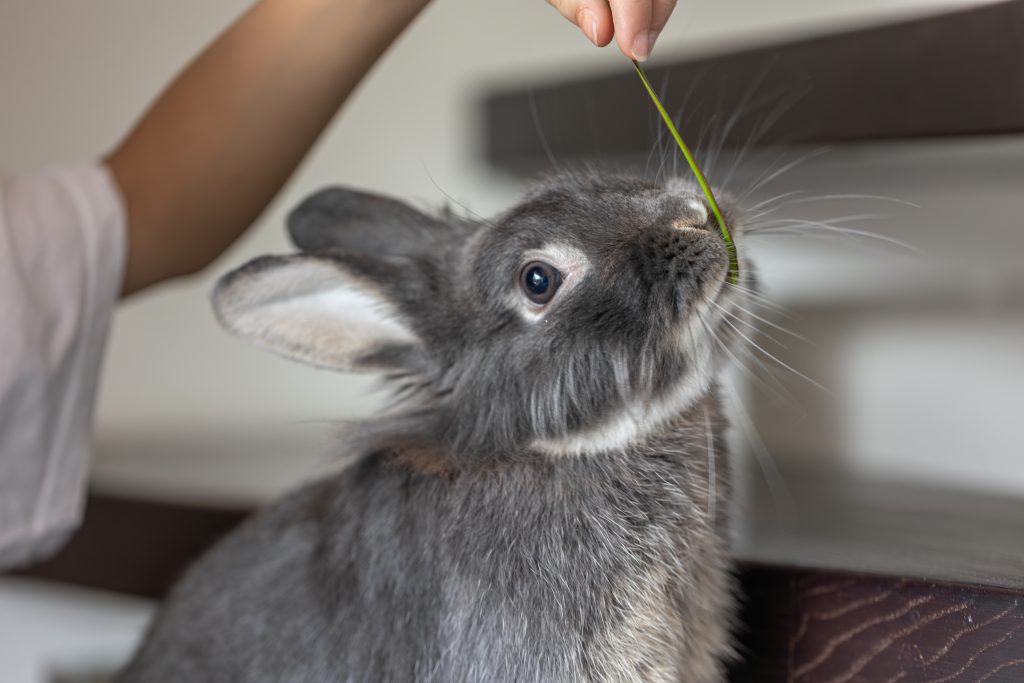
- How to play: Wait until your rabbit is awake and active. Take several slow, audible steps across the room, pause, turn around, and crouch down. Call their name in a soft voice or offer a quiet verbal cue. When your rabbit hops over to catch up, offer a gentle head stroke or a small piece of green before walking in another direction.
- Best for: Friendly, outgoing rabbits that naturally trail behind you during your normal routine.
- Watch for: Relaxed, purposeful hopping behind you and repeated voluntary approaches. Never turn suddenly or walk directly toward the rabbit.
6. Play Human Hide-and-Seek
- How to play: Position yourself partially behind a doorway, sofa corner, or armchair where your rabbit can see part of your body. Softly call your rabbit’s name or make a gentle kissing noise. When they investigate and locate you, reward them with immediate affection or a favorite fresh herb.
- Best for: Social rabbits that always seem to know where you are and what you’re doing.
- Watch for: Relaxed posture and a rabbit that is actively looking for you. Start with an obvious hiding spot and make the game more challenging only if your rabbit continues to seek you out.
7. Play “Where Did It Go?”
- How to play: Hide a tiny food reward beneath or behind a familiar, lightweight rabbit-safe object while your rabbit watches. Allow your rabbit to figure out how to push, lift, or knock over the cover to retrieve the green.
- Best for: Curious rabbits that can’t resist figuring out what’s underneath something.
- Watch for: Your rabbit lifting, tossing, or flipping the object with their nose and then coming back to try again. If they lose interest immediately, leave the treat partially exposed to make the solution obvious.
8. Let Your Rabbit Chase You
- How to play: Get your rabbit’s attention while standing or kneeling a few feet away. Slowly move backwards or shuffle across the rug at an easy pace, encouraging your rabbit to pursue you. Stop periodically to let them catch up and nudge your legs before moving away again.
- Best for: Confident, energetic rabbits that love tearing around the room.
- Watch for: Binkies, quick footwork, and an eager approach. Remember the core rule of prey animals: your rabbit chasing you is a game; you chasing your rabbit is frightening.
9. Play the “Move It Back” Game
- How to play: When your rabbit methodically moves an object to a specific spot on the rug, reach out slowly and place it back where it started. Many rabbits will immediately march over, grip the item, and put it right back in their preferred position.
- Best for: Meticulous arrangers that have strong opinions about their room layout.
- Watch for: Immediate repositioning of the object without backing away or trying to escape.
10. Let Your Rabbit Invent the Game
- How to play: Lie completely flat on your stomach on the floor with your arms resting at your sides. Do not initiate any contact, offer toys, or speak loudly. Allow your rabbit to explore your body entirely on their terms—hopping onto your back, investigating your shoelaces, or nudging your forearm. Respond gently only when they ask for attention.
- Best for: Every rabbit, particularly timid or newly adopted pets that need to build trust.
- Watch for: Relaxed exploratory sniffing, chin-marking your clothing, or flopping down right next to your side.
4. How Do You Know If Your Rabbit Is Having Fun?
One of the easiest ways to tell whether your rabbit is having fun is to give them the chance to stop. If they wander off, turn around, and come right back for another round, you have a pretty good answer.
Don’t rely on a single body language cue, either. Look at the whole rabbit. Are they loose and relaxed? Do they keep wandering back over? Are they sniffing, exploring, and generally acting comfortable around you? Those clues tell you much more than one particular ear position.
Rabbit ears move constantly as they listen to what’s happening around them, and breed makes a difference too. What matters more is whether your rabbit keeps choosing to be part of the game.
The Best Sign? They Come Back for More
The clearest sign that a rabbit is enjoying themselves isn’t what happens while you’re holding an item—it’s what they do when you pause and step back.
If your rabbit hops three feet away, turns around, and comes straight back to nudge your fingers or resume the same interaction, that is a strong sign they are choosing another round. If you must corner, follow, or continually place items in front of them to keep the game going, the fun is one-sided.
5. How to Know When Playtime Is Over
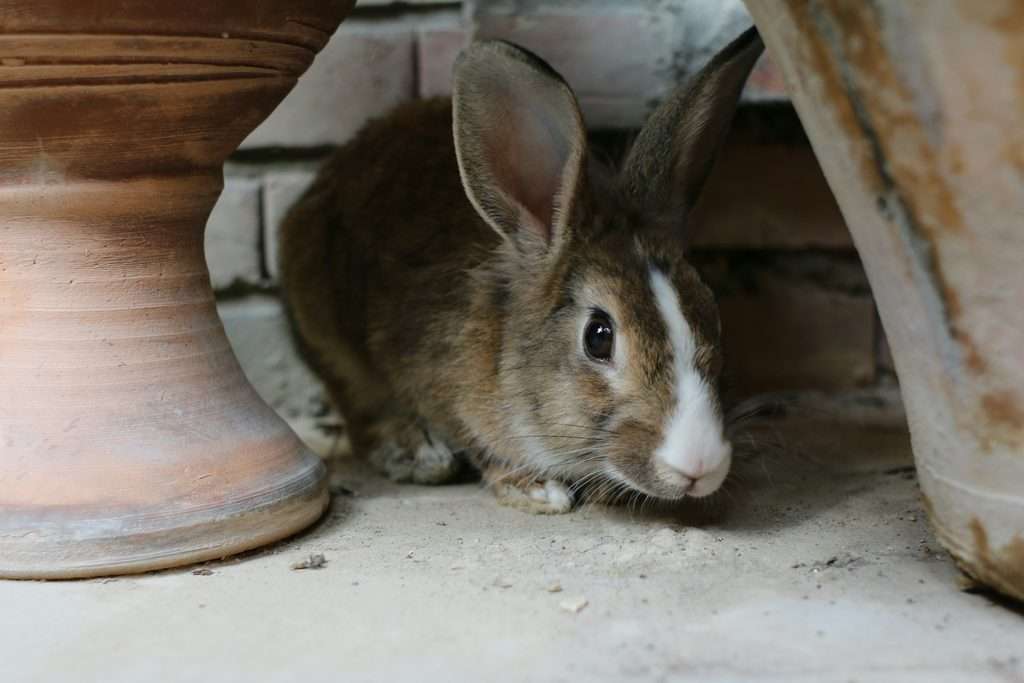
Sometimes your rabbit will make it very obvious that playtime is over. They may walk away and stay away, disappear into a hideout, freeze, thump, or suddenly look stiff and uncomfortable. When that happens, don’t try to win them back for one more round. Just let the game end.
Other endings are much less dramatic. Your rabbit may simply wander over to the litter box, settle into a loaf on the rug, or start washing their face as though you were never there.
Preventing boredom doesn’t mean keeping your rabbit busy every second they’re awake. Play should still feel safe and optional, and once your rabbit has had enough, that’s the end of the game. If an activity becomes startling or overwhelming, give them space immediately without pursuing them.
6. Should You Keep Playing or Call It a Day?
Rabbits don’t always give you a clear yes or no. Sometimes you’ll get something closer to a “maybe.” This quick table can help you decide whether to keep going, slow things down, or call it a day:
Real-Time Playtime Decision Guide
| What Your Rabbit Does | What It May Tell You | Your Next Move |
|---|---|---|
| Approaches and repeats the behavior | Interested in continuing | Keep playing the current game |
| Leaves briefly, then hops straight back | Still interested and wants another round | Continue at their pace |
| Watches closely from a short distance | Interested, but not quite ready to join in | Slow down and let them approach you |
| Approaches, sniffs, then backs away | Curious about the smell but unsure about your hands | Simplify the game and stay still |
| Completely ignores the setup | Not in the mood for this activity | Try a different game or try later |
| Walks away and begins eating or resting | Session finished naturally | Stop playing and let them rest |
| Freezes, bolts, hides, or thumps | Startled, defensive, or frightened | Stop immediately and give space |
7. Playtime Mistakes That Can Spoil the Fun
A lot of rabbit play goes wrong for one simple reason: we expect rabbits to play like tiny dogs. They don’t. Chasing, picking them up, repeatedly putting a toy in front of their face, or trying too hard to keep the game going can quickly take the fun out of it.
Enrichment activities shouldn’t turn your rabbit’s room into an obstacle course they can barely move through. Leave plenty of open space for running, hopping, flopping, and simply getting away from the action.
Common Playtime Mistakes and Better Approaches
| Common Mistake | A Better Approach |
|---|---|
| Chasing your rabbit across the room | Let your rabbit choose to follow or chase you |
| Picking them up to bring them to toys | Sit flat on the floor and let them walk over |
| Assuming every rabbit plays the same way | Match activities to their individual play style |
| Moving hands quickly or abruptly | Use slow, calm, predictable movements |
| Repeatedly presenting an ignored object | Switch to a different activity or end the session |
| Blocking their exit path | Always leave an open escape route to a hideout |
| Treating hesitation as stubbornness | Give them time to sniff and investigate safely |
| Using high-calorie sugary treats | Use small fragments of daily pellets or fresh herbs |
| Overcomplicating the rules | Stick to one simple, repeatable interaction |
| Continuing after the rabbit leaves | End the game the moment they lose interest |
8. Why Rabbit Play Can Feel a Little Strange at First
Rabbits experience play on their own unique terms. Something as simple as moving too fast, reaching over their head, or blocking an exit can quickly turn a fun game into a stressful moment.
Chasing Isn’t the Same Game for a Rabbit
A game of chase might be great fun for a dog. For a rabbit, having a much larger person coming up behind them can be a very different experience. That’s why the direction matters: letting your rabbit chase or follow you is very different from chasing them when they’re trying to get away.
Sometimes Just Sitting Together Is Enough
Sitting quietly on the floor while your rabbit hops around you, climbs across your shins, or loafs two feet away might not feel like much of a game. Your rabbit may disagree.
Simple playthings can add some fun, but you don’t always need to be doing something. For a cautious rabbit, quietly sharing the floor while they explore on their own can be the best place to start.
Your Rabbit Might Change the Rules
You might roll a ball hoping for a return nudge, only to have your rabbit grab it with their teeth and heave it sideways. Accept their edits. As long as the activity is safe and voluntary, following their revised version keeps the interaction rabbit-led rather than forcing your original script.
Don’t Be Surprised If Tomorrow Is Different
A game your rabbit loved on Tuesday evening might be completely ignored on Wednesday morning. Daily energy levels fluctuate based on feeding times, ambient room temperature, and natural resting cycles. Never treat an ignored game as a problem; simply match your interaction to what they feel like doing that day.
9. What If My Rabbit Doesn’t Want to Play With Me?
If your rabbit wants absolutely nothing to do with your games, stop trying so hard for a while. Put the toys aside, lie down on the rug, read a book, scroll through your phone, and let your rabbit decide whether you’re worth investigating.
Timing also matters. Rabbits often spend much of the middle of the day resting and may be far less interested in interaction then. Try again around dusk or early morning when their natural energy peaks. If they remain timid, stick to passive floor time until they feel secure enough to initiate contact on their own.
10. Do You Need Toys to Play With a Rabbit?
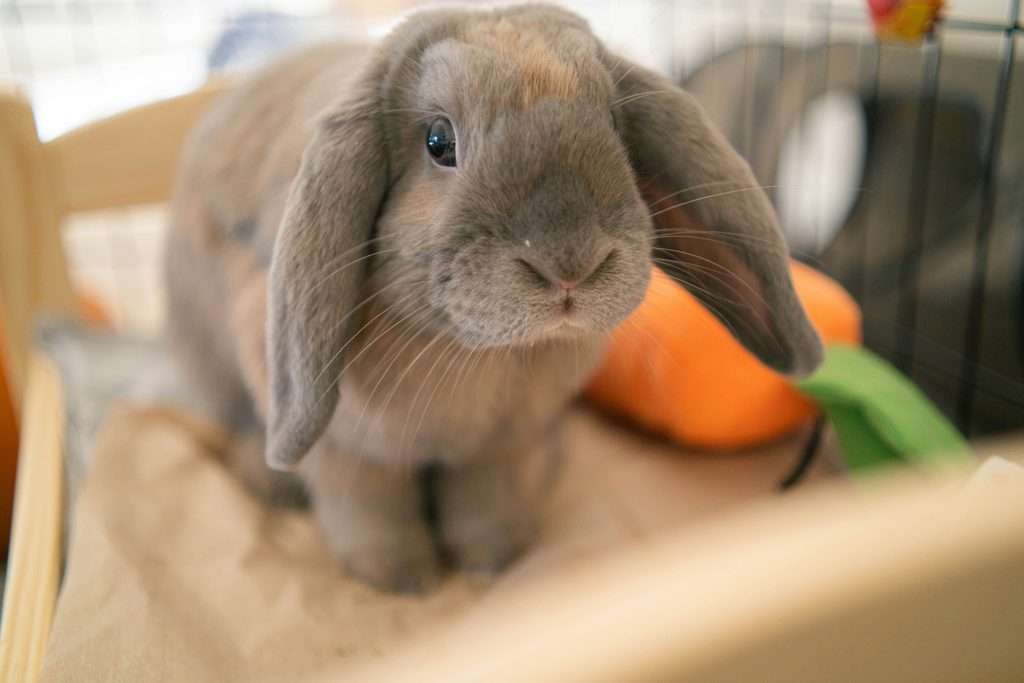
You can have a perfectly good play session without buying anything at all. Hide-and-seek, follow the leader, simple nose-touch games, and letting your rabbit climb around you on the floor require little more than time and patience.
While store-bought rabbit toys provide fun mental challenges, everyday household items often work just as well to keep them engaged.
Safe objects can certainly make play more interesting, especially for rabbits that love tossing and pushing things around. But the most important part of the game is still the interaction between you and your rabbit.
To see how this looks in practice, check out this video of easy enrichment tricks—most of which only require everyday household cardboard and your rabbit’s usual meals:
11. How Long Should You Play With Your Rabbit?
There is no mandatory daily playtime quota you must hit with a stopwatch. Some rabbits will happily keep a game going for a while; others may give you two minutes of enthusiastic participation and then wander off to eat hay. Both are fine. A short game your rabbit genuinely chooses is more valuable than stretching playtime after they’ve clearly had enough.
Playing together is separate from your rabbit’s overall exercise needs.
Interactive games can be short check-ins throughout the day within the larger blocks of time when your rabbit has room to move and explore freely.
12. What If You Have Two Rabbits?
Playing with a bonded pair means paying attention to two different personalities at once.
My own rabbits, Mocha and Chino, show just how different play styles can be between bonded partners. Chino loves movement; roll a plastic stacking cup across the rug and he will charge after it, pick it up, and toss it across the room. Mocha couldn’t care less about chasing things. She would much rather sit beside you on the floor, quietly checking out whatever is in your hands at her own pace. Watching how your specific rabbit responds tells you far more about what they enjoy than starting with a fixed plan.
If treats are part of the game, positive training works best when both rabbits get a fair chance at the reward. Otherwise, one enthusiastic rabbit can quickly turn the game into a one-bunny show.
When playing with a bonded pair, keep a few practical guidelines in mind:
- Never assume both rabbits want the same game: One rabbit may participate eagerly while the other prefers to watch from inside a tunnel. Let the observer spectate without forcing them to join.
- Avoid resource competition: If playing food-based games like “Which Hand?”, make sure both rabbits have access to rewards so the more assertive partner does not monopolize the game or chase the other away.
- Keep them together: Do not separate a bonded pair into different rooms simply to get one-on-one playtime, as separation can cause territorial anxiety and stress.
13. Frequently Asked Questions
Can you play with a rabbit when they are in a pen or cage?
Yes, but it is usually best to keep things quiet and let your rabbit come to you. Sit right beside the pen at floor level rather than reaching down over their head, then offer a safe chew object or simply rest your hand flat near the mesh where they can sniff or nudge your fingers. If your rabbit hops over to investigate, you can easily turn that into a low-key game without making them feel crowded or cornered.
What should you do if your rabbit grunts or thumps during play?
If your rabbit suddenly grunts or thumps during a game, stop moving and give them some room. They are letting you know that something about the interaction is not sitting right with them—they might be annoyed, startled, or simply ready for you to back off. Leave the toys where they are, step back a bit, and let your rabbit decide when they feel comfortable hopping back over.
Are laser pointers safe to use with rabbits?
Laser pointers are not a great choice for rabbit play. A rabbit cannot actually nudge, toss, chew, dig at, or physically interact with a beam of light, so chasing a glowing dot doesn’t give them much to actually do once they reach it. Rabbit play works much better with safe, tangible items they can actually explore and move around, such as plain cardboard tubes, willow balls, or lightweight plastic stacking cups.
Why does my rabbit run away when I try to start a game?
If your rabbit runs away every time you try to initiate play, you might simply be coming on a little too strong. Walking straight toward a rabbit with a toy in hand, leaning over them, or reaching directly into their space can easily send a cautious rabbit darting for cover. Try setting the object down on the rug instead, sitting down quietly a few feet away, and letting their natural curiosity bring them over to investigate on their own timeline.
14. Final Thoughts
Playing with a rabbit gets much easier once you stop expecting them to play like another pet. Your rabbit may never fetch a ball or chase a toy across the room on command—and that’s part of the fun.
By watching their natural habits, choosing games that match their play style, and letting them walk away when they’ve had enough, playtime becomes less about teaching your rabbit the rules and more about learning the games they already want to play.
Medical & Veterinary Disclaimer: Bunnyowners.com is an informational resource for rabbit owners and enthusiasts. We are not veterinarians. The content on this website is for educational purposes only and is not a substitute for professional veterinary advice, diagnosis, or treatment. Always consult a qualified veterinarian with any questions or concerns regarding your pet’s health, medical conditions, diet, or overall care. If you have concerns about your rabbit’s health, it’s always best to reach out to a veterinarian rather than relying solely on information found online.