
Veterinary & Affiliate Disclaimer: Bunnyowners.com shares educational rabbit care resources, not professional veterinary advice. Always consult a qualified veterinarian regarding your rabbit’s medical, dietary, or behavioral needs. This post may also contain affiliate links; as an Amazon Associate and affiliate partner, we earn from qualifying purchases at zero extra cost to you.
Trying to figure out how much exercise a rabbit needs each day can be confusing. A rabbit will happily spend all afternoon flat out on the carpet without twitching an ear, only to scramble up out of nowhere, tear across the room, and bounce off an armchair. Because their energy arrives in sudden bursts rather than steady routines, it is easy to wonder how much floor time they actually need to stay healthy.
A healthy adult rabbit needs at least 3 to 4 hours of exercise outside their enclosure each day, though giving them round-the-clock access to a large pen or room is always best. Rabbits do not run laps; they naturally move in short, fast dashes between long stretches of snacking, grooming, and lounging. Opening up their space in the early morning or evening lets them burn off energy when they naturally feel like moving.
In this guide, we’ll look at how much space rabbits actually use, when they prefer to run, and how daily movement fits into your rabbit care routine. I’ll also share a practical checklist to help you see whether your rabbit really has enough room to stretch out.
1. What Counts as Exercise for a Rabbit?
Rabbit exercise includes running, hopping, exploring, standing upright, and other voluntary movement around a large, safe space. Unlike people, rabbits usually exercise in short bursts rather than continuously, with quick sprints and sudden darting separated by eating, grooming, exploring, and resting.
Day-to-day, healthy rabbit exercise really comes down to four things:
- Natural Bursts of Activity: Running at full tilt, making sharp turns, flicking their heels, standing upright on hind legs, and exploring territory.
- Self-Regulated Cycles: A rabbit given several hours in a room may spend forty minutes lounging against a skirting board before suddenly darting down the hallway.
- Daily Opportunity: Movement cannot be postponed until the weekend. Confinement across several days cannot be offset by a long turnout session on a Saturday.
- Clear Runway: True exercise requires enough unbroken length to take several consecutive leaps at full stride, which small pens or cages simply cannot provide.
Does a Rabbit Really Need Several Hours of Exercise?
Yes, rabbits need several hours in which they are free to exercise, but they do not need to spend those hours constantly running. When experts recommend plenty of exercise space, the goal is to give rabbits enough time and room to run, explore, eat, rest, and move whenever they choose.
Short outings often miss the windows when a rabbit actually wants to run. A rabbit let out for only thirty minutes may spend the entire time sniffing the perimeter, eating a few strands of hay, and settling in before ever feeling comfortable enough to sprint. Giving them several hours lets them explore, run when the mood strikes, and settle down again without being rushed.
2. Exercise Time vs. Access to Exercise Space
It’s easy to treat exercise time as totally separate from your rabbit’s living setup, but they really go hand in hand. How much floor time your rabbit actually needs comes down to how much room they have to move around the clock.
The Rabbit in a Restricted Enclosure
A rabbit living in a standard cage or hutch has to rely entirely on scheduled floor time to stretch their legs. Spending most of the day cooped up leaves very little room for basic hopping, let alone running. Giving them a few hours in a bigger room is essential, but daily turnout alone won’t turn an undersized pen into appropriate permanent housing.
The Rabbit in a Large Exercise Pen
A rabbit living in an expansive exercise pen already has room to hop, flop out flat, and sit upright whenever they want. Because their day-to-day setup handles those everyday stretches, you do not have to stress over strict schedules.
That said, opening up a hallway or an adjoining room gives them what a pen cannot: a clear runway to build up speed and take several full-stride leaps in a row.
The Free-Roam Rabbit
A free-roam rabbit doesn’t need dedicated exercise time because their living space and play area are the same thing. For them, it really just comes down to whether the home is rabbit-safe, has good carpet or rugs for traction, and gives them enough open floor to really cut loose.
3. How Long Should a Rabbit Be Out of Its Cage?
Plan on letting your rabbit out for at least three to four hours each day, though that target depends heavily on how much space they have when the door is shut. If their everyday enclosure is on the smaller side, that daily running time is non-negotiable to keep them healthy. A generous exercise pen, on the other hand, covers their basic hops and stretches around the clock and takes the pressure off counting every minute.
What that daily routine looks like in practice depends on the setup:
Exercise Turnout Needs by Housing Type
| Living Setup | Dedicated Turnout Needed | Main Consideration |
| Small Cage or Hutch | Substantial daily access required; upgrade baseline housing | Cannot accommodate normal, unrestricted movement on its own |
| Large Exercise Pen | Beneficial for sprinting and wider exploration | Baseline pen already permits routine hops and stretching |
| Rabbit-Proofed Room | Usually no separate session required | Rabbit already chooses when to move and rest |
| Free-Roam | No formal schedule needed | Ensure living environment invites exploration |
Rather than obsessing over a timer, just watch how your rabbit actually moves. Can they string three or four fast leaps together in a straight line? Can they stretch up tall without their ears brushing the ceiling? Can they pivot and take off at a run? If their everyday setup doesn’t let them do those basic things, they definitely need more time in an open room.
4. Do Rabbits Need Exercise Every Day?
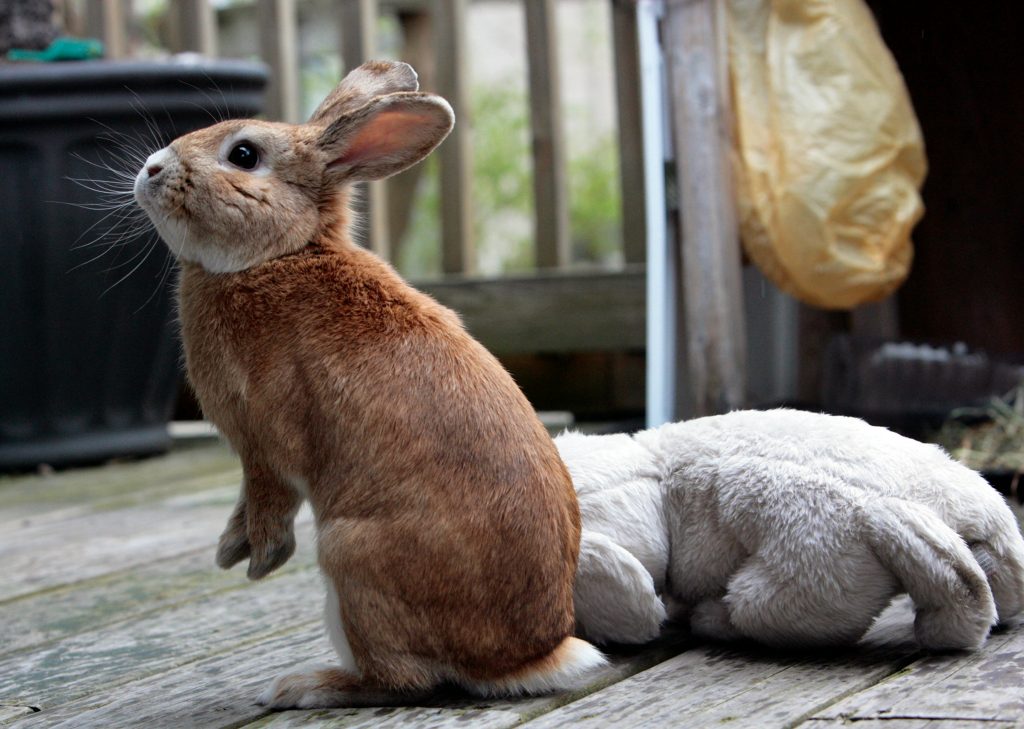
Regular movement supports healthy digestion and joint function while giving rabbits the freedom to run, explore, stretch, and behave naturally. Because rabbits use their energy in small bursts throughout the day and night, they need the freedom to move whenever they naturally feel like being active. Skipping days can leave a rabbit restless and frustrated, especially when they’re stuck in a space that doesn’t give them much room to move.
Do Rabbits Need Rest Days?
Healthy rabbits do not require scheduled rest days. Because they regulate their own effort—resting as soon as they feel tired—they manage their energy naturally. The only real exceptions involve rabbits recovering from surgery, injury, or illness, where physical restriction should be directed by an exotic animal veterinarian.
5. What Time of Day Should Rabbits Exercise?
The best time to open the pen is early morning or around dusk, when rabbits are naturally most active. They run on a dawn-and-dusk schedule, though plenty of rabbits will still catch a sudden burst of energy in the middle of the night:
- Dawn and Early Morning: A natural surge for active foraging, exploring, and running.
- Midday: Quiet resting, grooming, and sleeping. Movement is minimal.
- Late Afternoon and Evening: A common high-energy period marked by sprints, vertical leaps, and social curiosity.
- Overnight: Many rabbits continue to hop, explore, and forage in short bouts while the house is dark and quiet.
Opening the pen at noon usually falls flat. Your rabbit will probably sniff around a corner, tuck themselves under an armchair, and take a nap. Offering running room right in the middle of their downtime makes them look lazy or uninterested, when really, their internal clock is just set to a different rhythm.
Why Does My Rabbit Sleep During Exercise Time?
A rabbit sleeping during exercise time usually comes down to two simple things: bad timing or bad traction. If you open the pen around midday, you are offering running room right when their internal clock says it is time for a nap—rabbits save their real energy spikes for the early morning and evening.
The other big culprit is your flooring. Because rabbits have furry paws without fleshy pads, slick hardwood, vinyl, or tile feels like an ice rink. A rabbit that curls up and refuses to move is often just conserving energy or genuinely afraid of slipping.
In my own home with my two Lionheads, Mocha and Chino, I learned pretty quickly that an early afternoon release is a waste of time. They will wander out, tuck themselves behind a chair, and immediately flop out side by side for a nap. Opening that exact same door around dusk, however, turns the carpet into a high-speed racetrack.
Simply shifting floor time to match their natural rhythm makes an immediate difference.
6. How Much Exercise Do Indoor Rabbits Need?
Indoor rabbits have the same basic exercise needs as other rabbits: plenty of room to move every day, ideally with continuous access to a large exercise area. If their larger exercise space is separate from their enclosure, aim for at least 3 to 4 hours of access each day.
How much formal floor time an indoor bunny needs really comes down to their everyday territory. A rabbit living in a properly rabbit-proofed room with non-slip flooring can hit their daily exercise targets on their own schedule without you ever setting a timer. On the other hand, if their home base is an exercise pen, opening the gate so they can safely explore adjoining hallways or living spaces gives them the room they need to stretch their legs.
For ideas on keeping an indoor environment engaging and active, see my comprehensive rabbit exercise & enrichment guide.
7. How Much Exercise Do Rabbits Need by Age?
Exercise changes a little as rabbits get older. Young rabbits tend to race around in energetic bursts, while seniors often take things at a much slower pace:
Rabbit Exercise Needs Across Life Stages
| Life Stage | Daily Movement Profile | Main Housing Consideration |
|---|---|---|
| Young Rabbit | High energy, frequent bursts of running, curious exploration | Secure traction and reliable rabbit-proofing |
| Healthy Adult | Regular morning and evening active periods | Consistent daily access to open running space |
| Senior Rabbit | Slower pace, gentler hops, longer resting periods | Accessible single-level setup; extra traction |
| Mobility-Limited | Gentle movement at their own pace | Low-entry areas; close proximity to food and litter |
Young Rabbits
Young rabbits generally need plenty of daily exercise because they are especially energetic and curious. Give them enough safe floor space for sudden sprints, sharp turns, and exploring. Ample room to move helps them build healthy muscle tone and gives an outlet for youthful curiosity.
Adult Rabbits
Healthy adult rabbits should have daily access to enough space to run, hop, explore, and stretch comfortably. Adults often settle into predictable routines, with their most active periods occurring in the morning and evening. Consistent daily access to open running space allows them to maintain healthy muscle tone without forced activity.
Senior Rabbits
Senior rabbits still need daily exercise, but they often prefer slower, gentler movement with longer periods of rest. They should be allowed to potter around at their own pace on comfortable flooring with good traction that protects stiffening joints.
Rabbits With Mobility Problems
Rabbits with mobility problems should still be encouraged to move voluntarily, but exercise should remain gentle and comfortable. Rabbits with stiff, aching joints or weakness may not move as much as they once did, and that’s okay. Let them move at their own pace, with flat, clear paths, good footing, and easy access to their litter box.
8. Does Rabbit Size or Breed Change How Much Exercise They Need?

A rabbit’s size or breed doesn’t determine exactly how many hours of exercise they need. A small breed does not automatically need less exercise time than a giant breed.
Size is what really dictates how much physical space you need to clear. Giant breeds have a massive stride, so a room that feels like a full sprint track to a dwarf rabbit might only give a Flemish Giant room for two hops before hitting a wall. On the flip side, smaller breeds are often little dynamos—they will use every single square foot of floor you give them once zoomie hour hits.
9. How Can I Tell If My Rabbit Is Getting Enough Exercise?
A rabbit is getting enough exercise when they have daily opportunities to run, take several hops in a row, explore, stretch fully, and rest whenever they choose. You don’t need to count laps or watch the clock; look at the space your rabbit has and what they’re actually able to do with it.
Use this quick checklist to see if their setup covers the essentials:
Daily Exercise Assessment Checklist
| Check | What You Are Evaluating | What to Look For |
|---|---|---|
| Running Room | Usable space | Enough clear distance for several fast, consecutive hops |
| Footing | Traction and safety | Non-slip rugs, carpet, or runners over slick floors |
| Timing | Daily schedule | Free access during active morning and evening hours |
| Posture | Room dimensions | Full room to stretch out flat and rear up upright |
| Choice | Freedom to choose | Rabbit decides when to run, explore, eat, or rest |
When the setup works, you’ll usually see your rabbit use it on their own—running across open carpet, wandering off to explore, and eventually stretching out somewhere comfortable to rest.
Does a Rabbit Have to Binky to Get Enough Exercise?
A rabbit does not have to binky to be getting enough exercise. Binkies are a fun sign of excitement, but older, heavier, or naturally laid-back rabbits may rarely binky even when they have plenty of room to move. Calm, steady exploring and comfortable hopping provide plenty of healthy movement on their own.
10. Can a Rabbit Get Too Much Exercise?
A healthy rabbit is unlikely to get too much exercise when movement is voluntary and they can stop whenever they want. Rabbits with enough space are usually very good at deciding when to run and when to rest.
Problems are more likely when exercise is forced:
- Never Chase a Rabbit: Chasing or herding a rabbit across a room to make them move causes fear, panic, and potential injury from collisions or slips.
- Avoid Harness Walking: Rabbits startle easily, and a sudden, panicked bolt while clipped to a lead or harness can cause serious physical injury.
- Watch Flooring: Running on slippery floors can lead to muscle strains as the rabbit struggles to maintain balance.
If your rabbit suddenly seems weak, unusually lethargic, or hesitant to hop—especially if their appetite drops or their droppings look small or irregular—treat that as a medical issue, not an exercise slump, and contact an exotic animal veterinarian right away.
11. What If My Rabbit Doesn’t Exercise Much?
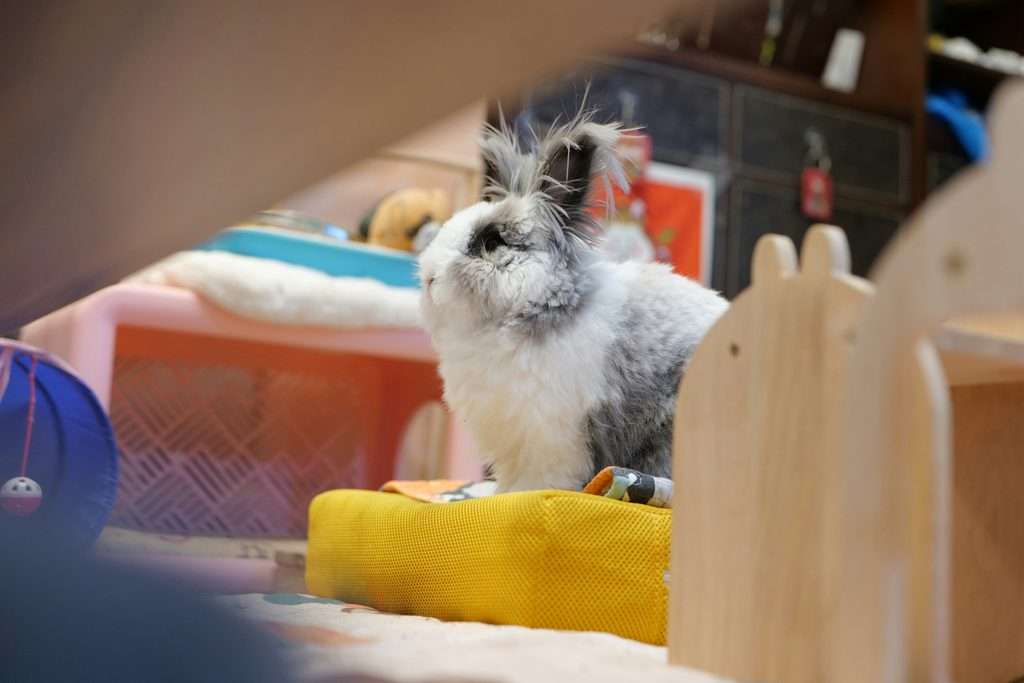
If your rabbit doesn’t exercise much, first check the time of day, flooring, available hiding places, and whether their activity level has suddenly changed. Some rabbits are naturally quieter than others, but reluctance to move can also come from slippery floors, fear, or physical discomfort.
- Check the Time: Avoid scheduling exercise sessions in the middle of the day. Shift turnout to early morning or late evening when your rabbit naturally wants to be awake and active.
- Check the Traction: If your floor is hardwood, laminate, vinyl, or tile, lay down secure rugs or runner carpets. Adequate traction often turns a hesitant rabbit into a confident mover overnight.
- Check for Fear: Rabbits easily get spooked in wide-open spaces. Placing a few boxes or covered spots gives them secure waypoints so they feel safe exploring.
- Check for Health Changes: A sudden drop in activity, an altered hopping posture, or reluctance to leave a pen often points to physical discomfort, such as dental issues, arthritis, or an upset digestive system.
12. Frequently Asked Questions
Can you force a rabbit to exercise?
Rabbit exercise should be voluntary. Never chase your rabbit or force them to run, and avoid exercise wheels or other equipment that restricts natural movement. Instead, encourage activity with plenty of open space, good footing, scattered forage, and things to explore.
Do senior rabbits still need floor time?
Yes, but they will take things at their own speed. Senior rabbits still benefit from gentle daily movement, even when arthritis or stiffness has slowed them down. Keep their area flat, provide good traction, and avoid high-entry litter boxes or steep ramps.
Can a rabbit get enough exercise living in a cage?
Most standard pet-store cages are too small to provide enough exercise on their own. A rabbit needs enough room to take several hops, stretch out fully, stand upright, and build up some speed, so rabbits housed in smaller enclosures need substantial daily access to a larger exercise area.
Is outdoor running better than indoor exercise?
No. Rabbits can get plenty of exercise indoors as long as they have enough room to run, explore, and move naturally. Outdoor exercise can provide additional stimulation, but the area must be secure and protected from predators, extreme temperatures, toxic plants, parasites, and escape.
13. Conclusion
At the end of the day, exercise is about access and opportunity, not watching the clock. Rabbits don’t see floor time as a scheduled workout, and they certainly won’t put on a show just because the pen door opened on your lunch break.
Give them solid traction, enough runway to hop and turn without hitting a wall, and freedom to move during the dawn and dusk hours they naturally prefer. Set the room up right, work with their natural clock, and your rabbit will take care of the rest on their own terms.
Medical & Veterinary Disclaimer: Bunnyowners.com is an informational resource for rabbit owners and enthusiasts. We are not veterinarians. The content on this website is for educational purposes only and is not a substitute for professional veterinary advice, diagnosis, or treatment. Always consult a qualified veterinarian with any questions or concerns regarding your pet’s health, medical conditions, diet, or overall care. If you have concerns about your rabbit’s health, it’s always best to reach out to a veterinarian rather than relying solely on information found online.