
Veterinary & Affiliate Disclaimer: Bunnyowners.com shares educational rabbit care resources, not professional veterinary advice. Always consult a qualified veterinarian regarding your rabbit’s medical, dietary, or behavioral needs. This post may also contain affiliate links; as an Amazon Associate and affiliate partner, we earn from qualifying purchases at zero extra cost to you.
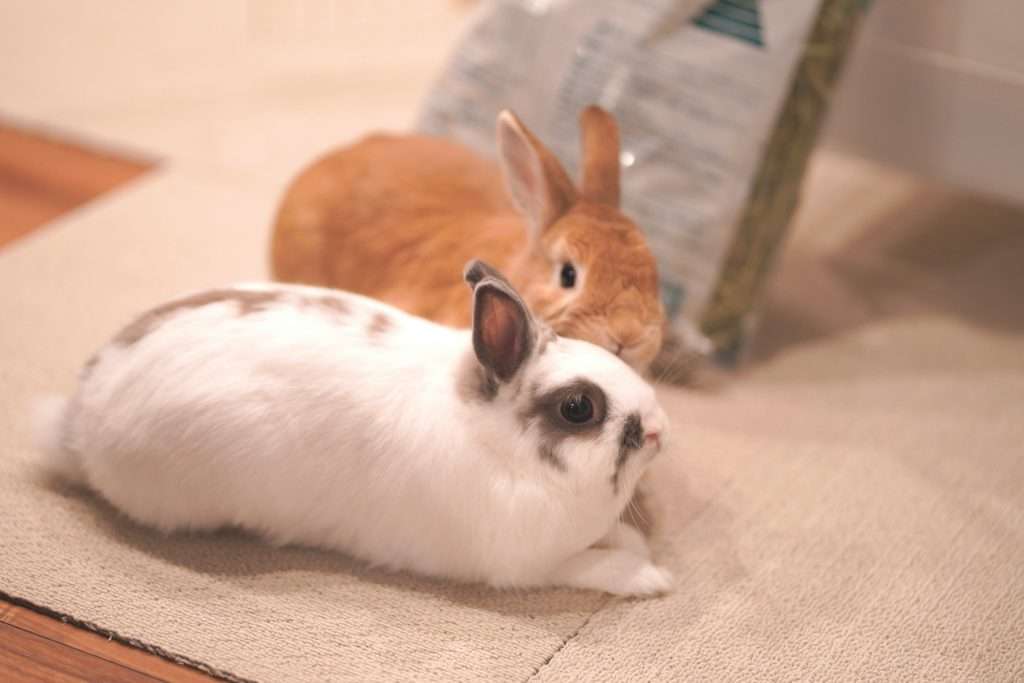
Flooring is one of those parts of rabbit housing that seems simple until you watch a bunny try to sprint across a polished hardwood floor. Rabbits have fur-covered feet rather than grippy paw pads, so surfaces that feel perfectly normal to us can be surprisingly slippery under four fuzzy feet. Whether you are outfitting an exercise pen or setting up a free-roam room, the wrong surface can leave your rabbit slipping around and make everyday cleanup more difficult than it needs to be.
For most indoor rabbits, the best flooring is solid, non-slip, comfortable underfoot, and difficult to pull apart and swallow. Washable low-pile cotton rugs and tightly woven runners are among the easiest options to live with because they provide good traction and can handle regular cleaning. If you also need to protect carpet or hardwood underneath, a sheet of waterproof vinyl topped with a washable rug works especially well.
Finding a safe, functional floor means balancing your bunny’s need for traction and comfort with everyday household durability. In this guide, I evaluate the most common flooring materials, point out the surfaces to avoid, and break down practical setups that make day-to-day rabbit care and cleanup much easier.
1. What Makes Flooring Safe for Rabbits?
Before comparing specific materials, it helps to understand what a rabbit needs underfoot. Flooring is just one part of caring for a pet rabbit, but it affects how comfortably and confidently they move around every day. In the wild, rabbits rely on dirt, turf, and textured ground that give their claws something to grip.
Inside our homes, the challenge is finding something that gives rabbits that same secure footing without being impossible to clean or easy to destroy. It is one of the basic details to get right when setting up your rabbit’s home.
Traction and Comfort
A rabbit should be able to take off, turn, and stop without their back feet sliding out from underneath them. At the same time, the floor should be comfortable enough for all the lounging, stretching, and flopping that happens between zoomies. Very hard or slick floors are less comfortable for everyday living, especially when your rabbit has to be careful with every hop.
Dryness, Chewing, and Stability
Good flooring also needs to survive everyday rabbit life. Wet or damp bedding sitting against their feet can cause real skin irritation over time, while loose threads, carpet loops, and chunks of foam become dangerous when curious bunnies nibble and swallow them. Whatever covering you choose should stay flat during running and binkying rather than sliding, bunching, or flipping at the edges.
2. Best Flooring for Rabbits Compared
To help narrow down your options, the following comparison evaluates how common household and pet-specific flooring materials perform across traction, comfort, cleaning, and chewing risk:
Rabbit Flooring Materials Comparison
| Flooring Material | Traction | Cushioning | Ease of Cleaning | Chewing Risk | Overall Verdict |
|---|---|---|---|---|---|
| Washable Low-Pile Rugs | Excellent | Excellent | Good | Moderate | Best Overall |
| Rubber-Backed Runner Mats | Excellent | Excellent | Good | Moderate | Excellent |
| Fleece Liners | Good | Excellent | Excellent | Moderate | Good (Needs Secure Base) |
| Interlocking Foam Mats | Excellent | Excellent | Excellent | High | Conditional — Monitor Chewing |
| Sheet Vinyl / Linoleum | Fair–Poor | Fair | Excellent | Low–Moderate | Best as Protective Base |
| Natural Grass / Seagrass Mats | Good | Fair | Poor | Low | Best Supplemental Surface |
| Fitted Household Carpet | Excellent | Good | Poor–Fair | Moderate–High | Good with Limits |
| Bare Hardwood & Laminate | Poor | Fair | Excellent | Negligible | Avoid as Primary Floor |
| Bare Ceramic / Stone Tile | Poor | Poor | Excellent | Negligible | Cover Main Travel Zones |
| Wire / Slotted Mesh | Poor | Extremely Poor | Good | Negligible | Avoid |
3. Washable Low-Pile Rugs and Mats — Best Overall
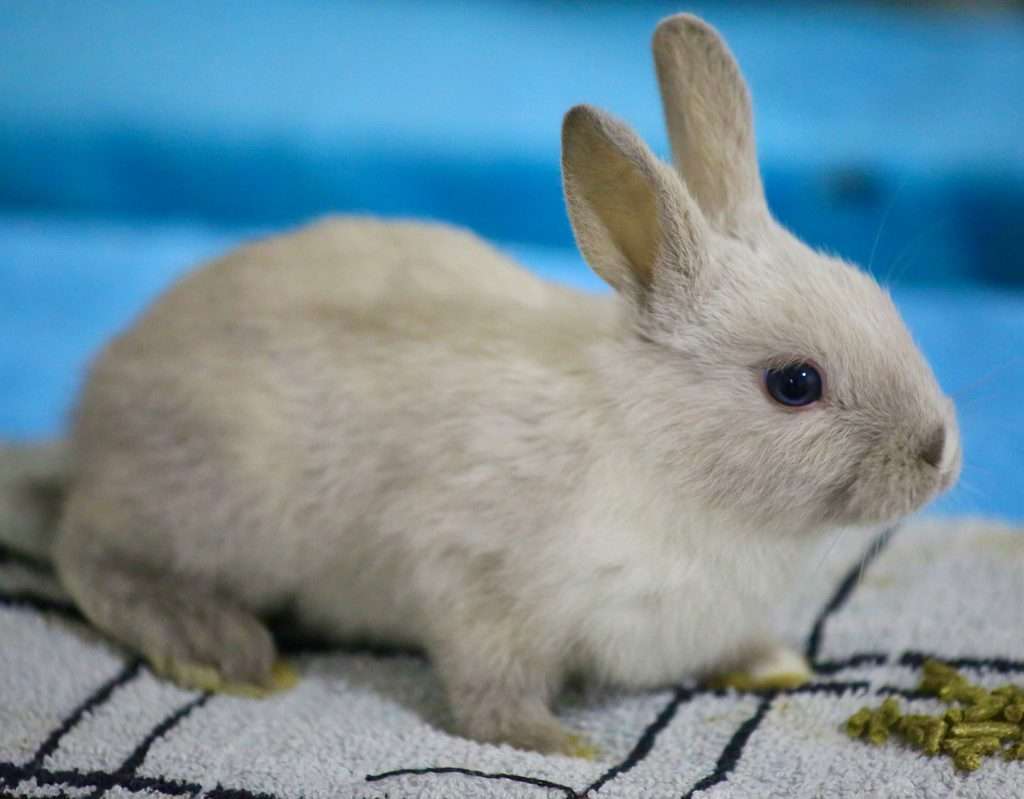
For most homes, a good washable rug is hard to beat. It gives rabbits something their claws can grip, feels comfortable enough for lounging, and can be rolled up and washed when hay, fur, or the occasional litter box miss gets the better of it.
Why Rugs Excel
A tightly woven rug provides reliable grip, letting a rabbit sprint and binky without losing balance. Unlike wall-to-wall carpeting, modular flat-weave rugs can be shaken out in the yard to remove stubborn hay and thrown straight into the washing machine.
What to Look For
Choose a low-pile rug with a tight, flat weave such as woven cotton, canvas, or tight chenille. Avoid loose loops that can catch toenails and deep piles that collect fur, hay, and debris. The rug should also stay firmly in place; a non-skid backing or secure rug pad can prevent the entire surface from shifting when your rabbit suddenly takes off.
When to Reconsider
If an individual rabbit persistently chews the edges or pulls loose threads, replace the rug with a tightly woven material they are less likely to damage.
See It in Action: If you want to see how this works in a full room, check out this walkthrough from Training Through Life demonstrating how budget-friendly flat outdoor rugs and plastic under-box mats hold up in an indoor bunny space:
4. Is Carpet Safe for Rabbits?
Standard wall-to-wall household carpet offers great traction and insulation against chilly floors, but how well it works depends on its weave and your rabbit’s personality.
Low-Pile vs. Looped Carpet
Low-pile cut carpet is generally the more practical option because its sheared yarn ends are less likely to catch a rabbit’s claws. Looped carpet deserves more caution, particularly for rabbits that dig, because raised loops can snag toenails.
The bigger issue is what your rabbit actually does with the carpet. If they leave it alone, a low-pile carpet can provide excellent traction. If they spend every evening excavating the corner and swallowing the fibers they pull loose, however, it is time for a different surface. Synthetic carpet fibers cannot be digested, which is why repeated carpet eating is something to take seriously.
Very rough carpet can also wear away the fur on the bottoms of the back feet, especially in rabbits that are already prone to foot problems.
5. Is Fleece Good Flooring for Rabbits?
Fleece is a favorite in the rabbit community because it is soft, affordable, and easy to wash, but it works best as a soft top layer rather than a complete flooring solution.
Advantages
Fleece can allow moisture to pass toward an absorbent layer underneath, which helps keep the walking surface drier when the system is set up properly. It also gives your bunny a soft, gentle surface to stretch out and snooze on.
Limitations
Loose fleece can provide poor stability when placed directly over a slick floor because the entire blanket may slide or bunch underneath the rabbit.
In my own setups with my rabbits, Mocha and Chino, an unsecured fleece blanket rarely survives twenty minutes without being bulldozed into a crumpled heap in the corner. Fleece works best when it is clamped down, tucked securely under pen panels, or weighed down with heavy litter pans so it stays put.
6. Are Foam Mats Safe for Rabbits?
Foam puzzle mats can work surprisingly well for rabbits that leave them alone. They are soft, grippy, inexpensive, and much more comfortable than a bare hard floor. The problem is that some rabbits take one look at a foam edge and immediately decide it belongs on the menu.
Pros and Cons
Foam tiles add some welcome padding over hard floors and can make a cold floor more comfortable. However, because foam cannot be digested, if your rabbit keeps tearing off and swallowing pieces, exposed foam is not a good choice.
Safe Application
For persistent foam chewers, use foam only as a base layer completely hidden beneath a secure, tightly woven rug—or skip it entirely. Keep in mind, too, that the interlocking puzzle seams are not waterproof; urine accidents will readily seep through the cracks onto the floor below.
7. Is Vinyl or Linoleum Flooring Safe for Rabbits?
Vinyl is fantastic at protecting the floor underneath your rabbit, but that does not necessarily make it a good surface for your rabbit to walk on.
Why Vinyl Works as an Underlayment
A sheet of vinyl under a pen can catch spills and litter box misses before they reach carpet or hardwood. It is easy to wipe clean, and a continuous sheet provides much better moisture protection than puzzle mats or other flooring with seams.
The Traction Problem
The catch is traction: smoother vinyl can still be slippery under fuzzy feet. When rabbits try to hop or accelerate across bare vinyl, their back legs can slip out to the sides. The easiest solution is to use vinyl as the waterproof layer underneath, then roll out washable rugs or runners across all the main paths to give your rabbit a grippy surface to run on.
8. Are Hardwood and Laminate Floors Safe for Rabbits?
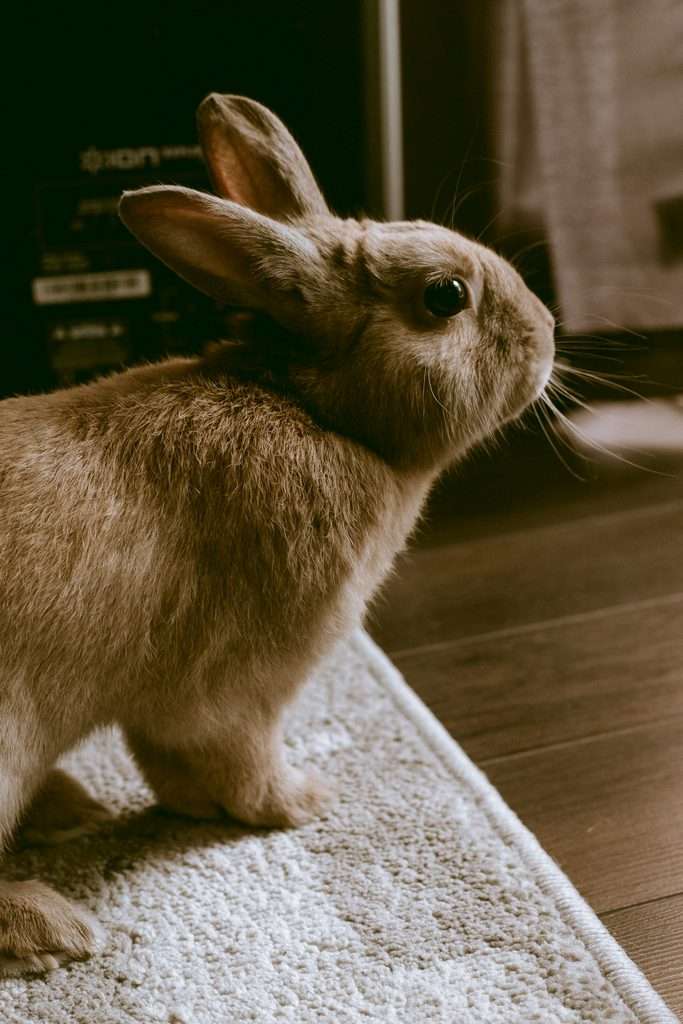
Hardwood and laminate look great, but to an indoor rabbit, a polished floor can feel like a skating rink.
If you have ever watched a rabbit approach the edge of a rug, stretch forward as far as physically possible, and refuse to put that last back foot onto the hardwood, you have seen the problem. Smooth wood and laminate can feel incredibly slippery and stressful under furry feet, and rabbits may become hesitant to cross them at all.
Do You Have to Cover the Entire Room?
You do not need to carpet your entire home. Instead, map out your rabbit’s regular routes and lay down “traction highways”—series of runner rugs connecting their pen, litter box, water station, and favorite lounging spots.
This works especially well when you already know how much room your rabbit has to move around. If your rabbit chooses to stretch out along a strip of cool wood on a warm afternoon, that is fine, provided they have secure runways for actual hopping and running.
9. Is Tile Flooring Safe for Rabbits?
Tile is a bit of a mixed bag. It is easy to clean, impossible for most rabbits to destroy, and some bunnies love stretching out on a cool tile during warm weather. As an everyday running surface, though, smooth tile can be hard and slippery.
Hard tile provides very little cushioning underfoot, and glossy finishes offer almost no grip when a bunny tries to turn or stop. Use washable rugs or runners across the main living zone to provide traction, leaving small sections of bare tile exposed for lounging on warm days.
10. Are Natural Grass Mats Good Rabbit Flooring?
Grass mats solve one problem that rugs and foam never completely can: chewing is part of the point. A rabbit-safe untreated seagrass mat gives your bunny a textured surface they can stand on, dig at, and gradually destroy without you panicking every time a corner disappears.
The rough woven texture also gives fuzzy feet plenty to grip, making them great landing zones. Just be sure to verify that any mat you buy uses untreated, rabbit-safe plant fiber without hidden plastic mesh, wire, or toxic glues.
Keep in mind that grass mats are highly absorbent; urine accidents can quickly make them difficult to reuse or sanitize, making them better as small supplemental dig-pads rather than full-enclosure flooring.
11. Flooring Rabbits Should Avoid
Some flooring simply isn’t worth the risk:
- Wire Mesh or Metal Slats: Bare wire puts a lot of pressure on small areas of a rabbit’s feet and can eventually wear away the protective fur and contribute to sore hocks. Wire flooring should not be used.
- High-Gloss Polished Laminate: Can provide too little traction for confident running and turning.
- Shag, Faux Fur, or Deep-Pile Rugs: Deep pile collects stray hay and debris while tempting digging instincts, presenting an ingestion hazard if swallowed.
- Exposed EVA Foam: While foam provides great padding, exposed edges present a risk if pieces are swallowed.
- Loose, Unsecured Towels: Lightweight terry towels bunch instantly, creating uneven lumps that slide along hard subfloors while loosening long fiber loops when dug into.
12. Best Flooring Setups for a Rabbit Pen
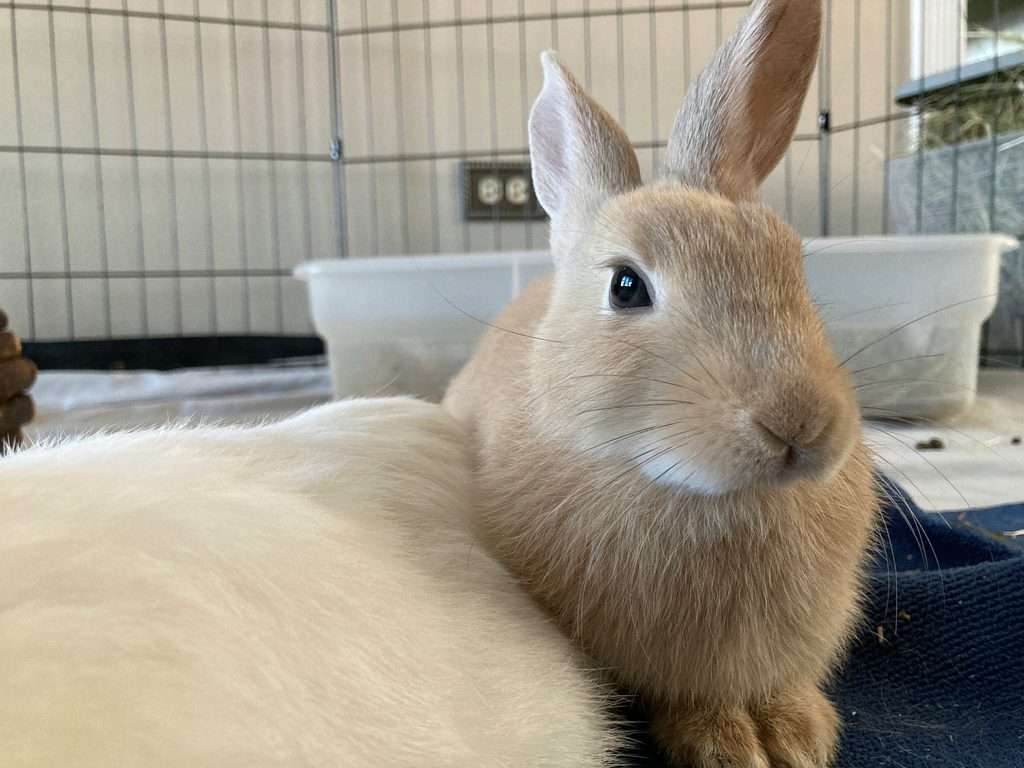
The best floor under a rabbit pen depends largely on the household flooring underneath it and whether your rabbit lives in a pen or free-roams. A simple two-layer setup usually works well: protect the household floor underneath, then give your rabbit something grippy and comfortable to stand on.
Pen Over Carpet
If the pen sits over household carpet, place a waterproof sheet-vinyl layer underneath and cover it with a flat-woven washable rug or non-slip mat. Position the pen over the layers so everything stays flat and inaccessible edges are kept away from persistent chewers.
Pen Over Hardwood or Laminate
Over hardwood or laminate, use a stable waterproof base topped with a washable rug or dense runner. The important part is ensuring that the finished surface does not slide across the smooth floor when your rabbit runs or jumps.
13. What Flooring Is Best for Rabbits That Chew?
If your rabbit targets soft furnishings, flooring is only one part of protecting your home from chewing and digging. Focus on materials that minimize temptation and resist wear:
- Minimize Accessible Edges: Many rabbits are especially attracted to exposed corners, fringes, and seams, so minimizing accessible edges can make a floor covering harder to destroy. Keep borders flat and tucked under heavy barriers where possible.
- Avoid Looped Textiles: Woven loop rugs allow teeth and claws to catch easily. Select tightly compacted canvas, smooth flat weaves, or dense cotton surfaces.
- Avoid Exposed Foam: If your rabbit chews or samples foam puzzle mats, do not use exposed foam anywhere in their setup.
- Replace Damaged Coverings: If your rabbit begins repeatedly tearing off and ingesting fibers from any floor covering, swap it out for tightly woven alternatives or rabbit-safe natural grass mats.
14. How to Choose the Best Flooring
If you’re still not sure what to put down, here’s a quick starting point based on the floor you already have:
Flooring Setup Decision Guide
| Your Current Situation / Challenge | Recommended Base Layer | Recommended Top Surface | Key Installation Tip |
|---|---|---|---|
| Slick Hardwood or Laminate | Non-slip rubber mesh pad | Large flat-weave cotton area rug | Cover high-speed runways between key areas. |
| Existing Wall-to-Wall Carpet | Waterproof sheet vinyl | Washable non-slip rug or mat | Keep waterproof edges inaccessible to chewing. |
| Cold Tile Floor | Existing tile | Washable low-pile runner rugs | Leave a small section uncovered for warm-weather cooling. |
| Rabbit Ingests Rug Fibers | Smooth sheet vinyl base | Secure flat canvas drop cloth or natural mats | Ensure the canvas remains taut and unbunched. |
| Frequent Spills / Incontinence | Continuous sheet vinyl | Heavy absorbent pad with secure fleece topper | Fleece draws surface moisture down into the pad. |
| Rabbit That Digs at Flooring | Hardwood or vinyl base | Tightly woven flat rug | Avoid loose pile and keep outer seams flat. |
15. Frequently Asked Questions
What is the best flooring for indoor rabbits?
The best flooring is a flat, solid, non-slip surface that provides reliable traction without shedding loose fibers. Washable flat-weave cotton rugs or low-pile runners over a waterproof base represent the most versatile, safe choice for most homes.
Can rabbits run safely on hardwood floors?
Rabbits can walk across hardwood, but slick, polished planks may not give rabbits enough grip for running, jumping, or sudden stops. Without carpet runners or rugs, navigating slippery floors can cause rabbits to slide and make them hesitant to explore.
Are foam puzzle mats safe inside a rabbit pen?
Foam mats provide good cushioning, but they are only safe if the rabbit does not chew them. Because foam is not digestible, foam tiles should not be left exposed if your rabbit bites or pulls at the material.
Can carpets cause sore hocks in rabbits?
Very rough carpet can wear against the fur on a rabbit’s back feet and may contribute to sore hocks, although flooring is only one part of the picture. Body condition, mobility, moisture, foot-fur density, and time spent on hard or abrasive surfaces all play important roles.
Why does my rabbit avoid stepping onto bare tile or laminate?
Rabbits don’t have the grippy paw pads that dogs and cats do, so their furry feet can slide across polished surfaces. If a floor feels slippery under their toes, they often feel unstable and become hesitant to leave their rugs.
Does rabbit flooring need to cover the whole room?
No. You do not necessarily need to cover every square foot, but your rabbit should have secure footing throughout the areas they regularly use for running, turning, jumping, and traveling between resources. Rugs and runners can create continuous non-slip routes across otherwise slick floors.
16. Conclusion
You don’t need to turn your living room into a padded rabbit gym. For most homes, a good washable rug is the simplest place to start. If you need to protect carpet or hardwood underneath, add a waterproof vinyl layer below it.
The goal is simple: your rabbit should be able to run, turn, binky, flop, and wander around without their feet slipping out from underneath them—and you should still be able to clean up the inevitable mess.
Medical & Veterinary Disclaimer: Bunnyowners.com is an informational resource for rabbit owners and enthusiasts. We are not veterinarians. The content on this website is for educational purposes only and is not a substitute for professional veterinary advice, diagnosis, or treatment. Always consult a qualified veterinarian with any questions or concerns regarding your pet’s health, medical conditions, diet, or overall care. If you have concerns about your rabbit’s health, it’s always best to reach out to a veterinarian rather than relying solely on information found online.