
Veterinary & Affiliate Disclaimer: Bunnyowners.com shares educational rabbit care resources, not professional veterinary advice. Always consult a qualified veterinarian regarding your rabbit’s medical, dietary, or behavioral needs. This post may also contain affiliate links; as an Amazon Associate and affiliate partner, we earn from qualifying purchases at zero extra cost to you.
A healthy, happy house rabbit needs a lot more than just fresh hay and a quiet corner. Rabbits are wired to run, dig, and explore, and when they’re left with nothing to do, that pent-up energy quickly turns into chewed baseboards, torn carpets, and bar rattling. Giving your rabbit the right mix of exercise space and mental enrichment channels those natural instincts into safe, active fun instead of household destruction.
Pet rabbits need daily opportunities to run, explore, forage, dig, chew, and play, ideally with access to enough space to move whenever they are naturally active. Open floor space lets them run, jump, and binky, while enrichment such as digging boxes, tunnels, chew toys, and foraging puzzles keeps their minds busy. Combining room to move with varied enrichment helps indoor rabbits stay active and engaged.
This guide covers how to set up a safe indoor play area, make simple DIY toys, and build a routine around your bunny’s natural habits. We’ll explore what healthy exercise looks like, how enrichment fits into everyday rabbit care, and quick safety checks to keep your rabbit active and out of trouble.
1. Why Exercise and Enrichment Matter for Rabbits
Rabbits aren’t built to spend the day sitting around in a small enclosure. Wild rabbits spend a lot of their time on the move—grazing, exploring, digging, and keeping track of what’s happening around them. Pet rabbits need plenty of movement too.
Running, hopping, stretching, and exploring keep their bodies strong, support a healthy weight, and give them something fun to do all day. Regular movement also boosts overall wellness, working right with a high-fiber hay diet to keep their digestion moving smoothly.
Mental stimulation is just as important. Enrichment is really just about giving rabbits safe ways to do the things that come naturally to them—digging, chewing, foraging, exploring, and figuring things out. When rabbits don’t have safe ways to dig, chew, and forage, that pent-up energy can get redirected into annoying or destructive habits—like tearing up carpets, chewing furniture legs, or rattling enclosure wire.
Exercise vs. Enrichment: What Is the Difference?
Exercise and enrichment overlap, but they aren’t quite the same thing. Exercise gets your rabbit moving, while enrichment gives them something interesting to do or figure out.
Here’s the simplest way to look at the difference:
Rabbit Exercise vs. Mental Enrichment Comparison
| Category | Primary Focus | Natural Behaviors Encouraged | Practical Examples |
| Exercise | Moving the body | Running, long hops, upright standing, quick turns | Open, non-slip hallway runs, exercise pens, rabbit-safe living rooms |
| Enrichment | Using the brain and instincts | Foraging, digging, gnawing, investigating, solving puzzles | Cardboard rolls stuffed with hay, paper dig boxes, willow twigs, puzzle feeders |
| Combined | Moving and thinking together | Exploring new layouts, searching, and moving between areas | Multi-room tunnel setups, tiered cardboard boxes, safe obstacle paths |
2. How Much Exercise Does a Rabbit Need Each Day?
Rabbits need opportunities to exercise every day, ideally with continuous access to a large enough exercise area whenever possible. This allows them to run, hop, explore, and rest according to their own schedule. Rabbits are especially active during the early morning, late afternoon, and overnight.
Exercise sessions should never be treated as an excuse for an undersized cage. Letting a rabbit out for an hour or two in the evening cannot undo the lack of movement and frustration that can come from sitting in a cramped cage all day. A good setup gives your rabbit room to move whenever they’re ready to get up and explore—not just during scheduled exercise time.
3. What Does Good Rabbit Exercise Actually Look Like?
Good rabbit exercise includes running, hopping, stretching, standing upright, exploring, and occasionally jumping onto low platforms. Rabbits need non-slip footing, enough open space to move freely, and the choice to exercise at their own pace.
Taking a rabbit out of an enclosure and dropping them onto a slippery floor doesn’t count as quality exercise. A good exercise area should make your rabbit want to move, not leave them cautiously tiptoeing around.
Running, Hopping, and the Binky
A rabbit’s natural movement ranges from quiet hops to full-speed sprints. When rabbits have enough open room and feel secure in their space, they frequently show their playful energy through “binkies“—leaping into the air, twisting their head and body mid-flight, and landing into an enthusiastic sprint.
Binkies and sudden sprints are simply part of the way many happy, energetic rabbits play. To let your rabbit really stretch their legs, leave plenty of open running space instead of packing the floor wall-to-wall with clutter.
Jumping and Low Platforms
Rabbits are ground-dwelling animals, but they naturally enjoy checking out their surroundings from slightly raised spots. Hopping onto a sturdy box or standing up on their hind legs to look around encourages more stretching and movement through the back and hind legs.
Platforms should be low enough for the individual rabbit to hop on and off comfortably without stumbling, and both the platform surface and the floor below must have reliable grip to prevent slipping on landing.
Exploring on Their Own Terms
Good exercise is voluntary. Chasing a rabbit or trying to herd them around a room only causes panic and stress. The best way to encourage natural movement is to give them something safe and interesting to investigate.
Opening a gate into a newly rabbit-proofed space, rearranging a couple of cardboard boxes, or laying out a fresh pathway of tunnels naturally invites them to hop over, sniff around, and map out the area.
4. What Is Rabbit Enrichment?
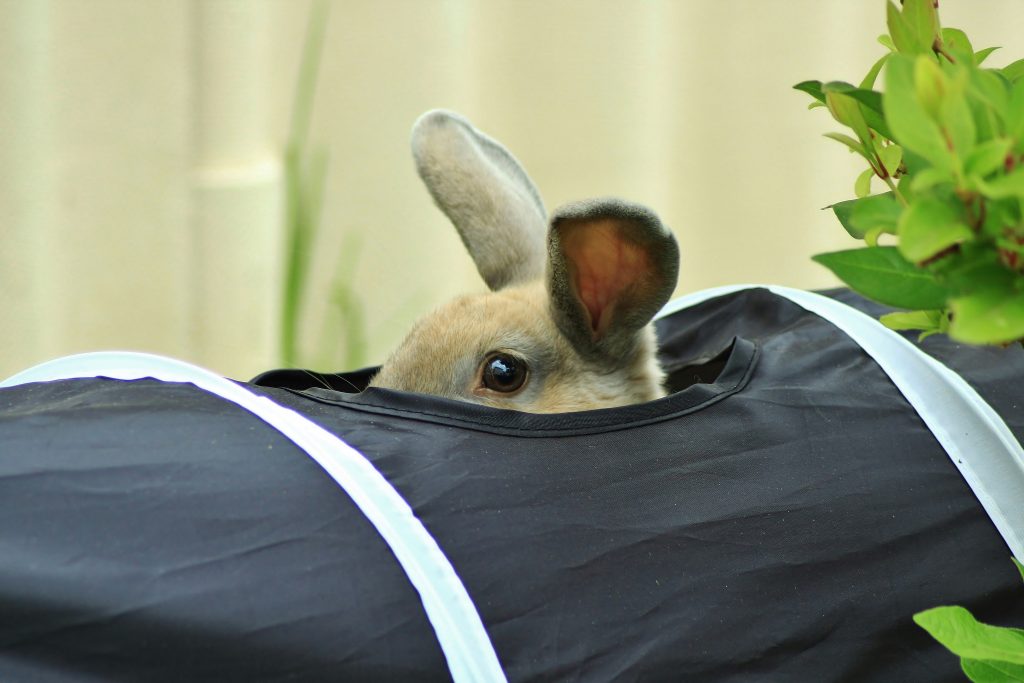
Rabbit enrichment means giving rabbits safe ways to forage, dig, chew, explore, play, hide, and interact with others. In practical terms, it’s simply about giving your rabbit interesting things to do that let them behave like a rabbit.
5. The 7 Types of Enrichment Rabbits Need
The seven main types of rabbit enrichment are foraging, digging, chewing, tunnels and sheltered spaces, climbing and lookout spots, object play, and social enrichment. Each gives rabbits a different way to use behaviors that come naturally to them.
Foraging Enrichment
Wild rabbits spend much of their active time searching for food, picking through grasses, and grazing on weeds. Serving a pet rabbit their daily pellets in an open dish can remove that challenge almost immediately.
Skip the food bowl and scatter their daily pellets over a clean rug, stuff them inside a toilet paper tube packed with hay, or let them roll a treat ball around the floor. Tucking fragrant sprigs of parsley, cilantro, or mint deep into the hay rack works just as well to get them sniffing and digging for their food.
Digging Enrichment
Digging is a deep-seated rabbit behavior. If you don’t give a house rabbit an approved place to dig, they may choose your rugs, baseboards, or couch cushions instead.
A homemade digging box is an easy, clean solution. Grab a wide cardboard box or a shallow plastic bin and fill it with shredded plain paper, crumpled brown packing paper, or other rabbit-safe digging materials. Tossing a handful of hay or a few pellets into the paper gives them an immediate reason to jump in and start digging away.
Chewing and Gnawing Enrichment
Rabbit teeth grow continuously throughout their lives. Eating plenty of coarse hay does the heavy lifting for grinding down molars, but rabbits still love biting, peeling, and gnawing on safe branches and other chewable plant materials.
Offer a steady supply of safe chew options:
- Clean, untreated apple, pear, or willow branches
- Kiln-dried, untreated pine blocks
- Compressed hay blocks and woven timothy grass toys
- Plain cardboard tubes and shipping boxes with tape removed
Avoid painted, stained, pressure-treated, or unidentified wood, and only offer branches from tree species you have confirmed are rabbit-safe and free from pesticides.
Tunnels and Sheltered Runs
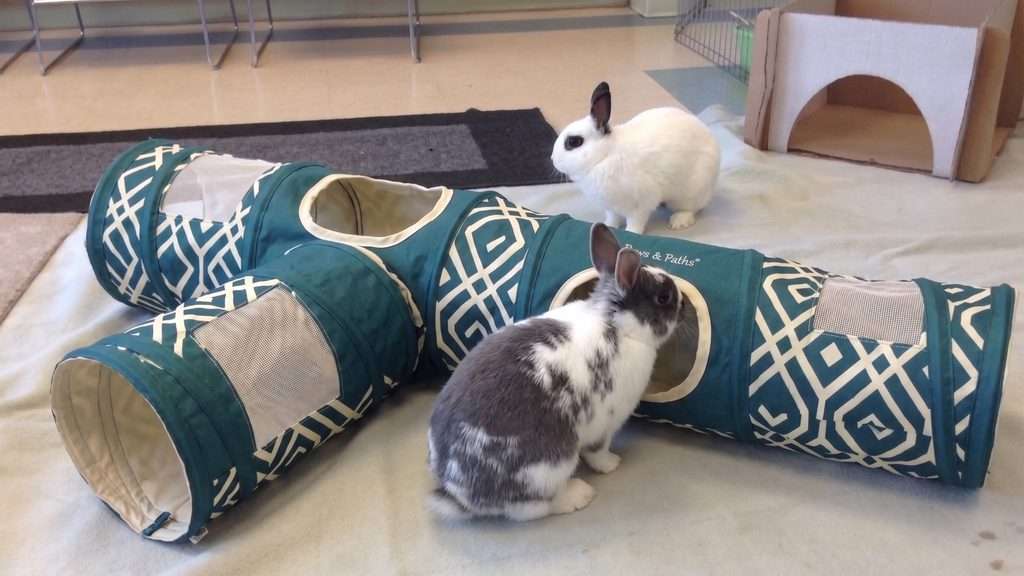
Because rabbits are natural prey animals, wide-open floors can feel intimidating and exposed. If you’ve ever watched a rabbit hug the baseboards instead of crossing the room, that’s why. Setting out a few tunnels, cardboard tubes, or linked boxes gives them covered “safe zones” to duck into, making them feel secure enough to venture out and actually explore the space.
Climbing and Lookout Spots
For a rabbit, “climbing” means getting a slightly elevated view, not scaling tall towers. A low, stable wooden box or step stool gives them a comfortable perch to sit and keep watch over the room. Always prioritize stability—a lookout spot that wobbles or tips when a rabbit lands on it will quickly scare them away from using it.
Tossing and Manipulating Objects
Many rabbits have a distinctly playful streak when it comes to lightweight items. They pick things up with their teeth, fling them sideways, or deliberately knock down stacks.
Inexpensive plastic baby stacking cups are fantastic for this—stacking them up with a pellet hidden between the layers lets your rabbit gleefully knock the tower apart. Untreated willow balls, small woven rings, and empty cardboard tubes can be batted around the floor and tossed across the pen.
Social Enrichment
Rabbits are social creatures that naturally live in close-knit family groups. For most rabbits, nothing beats having a compatible, desexed rabbit companion to groom, eat, explore, and relax with.
For a rabbit living alone, regular interaction with people becomes especially important, although human companionship is not considered a complete substitute for a compatible rabbit companion. Spending quiet time on the floor, doing gentle clicker training, or offering calm petting sessions helps keep single rabbits engaged and comfortable around their family.
6. Best Enrichment Ideas for Indoor Rabbits
Here are a few easy enrichment ideas you can make at home, along with what rabbits get out of them and what to check before handing them over:
DIY Indoor Rabbit Enrichment Ideas
| Enrichment Category | Natural Behavior | Quick DIY Setup | Key Safety Check |
| Foraging Puzzles | Searching, sniffing, grazing | Plain cardboard roll packed with hay and a few dried herbs | Pull off any glue strips left on the cardboard tube. |
| Digging Outlets | Burrowing, claw wear | Cardboard box filled with shredded plain packing paper | Strip away all clear plastic tape and shipping labels. |
| Covered Pathways | Sheltered movement | Connected cardboard boxes with doorways cut out | Cut two exits per box so rabbits don’t feel trapped. |
| Bark Chewing | Gnawing, tooth maintenance | Clean, untreated apple or willow twigs | Make sure branches are pesticide-free and clean. |
| Lookout Spots | Surveying territory | Low, sturdy wooden box topped with a textured bath mat | Make sure the platform cannot wobble or tip over. |
| Toss Toys | Manipulating objects | Stacked plastic baby cups with a hidden pellet inside | Use thick plastic that won’t crack if chewed. |
At home with my two rabbits, Mocha and Chino, I’ve noticed that spreading their favorite spots around the room gets them moving a lot more than keeping everything in one corner. Placing their hay, digging box, and tunnels in separate areas gives them a reason to keep hopping back and forth throughout their active hours.
To see what these setups look like in a real home, here’s a great breakdown of simple ways to keep your rabbit moving and occupied:
7. How to Set Up an Engaging Rabbit Exercise Area
Setting up an exercise space requires finding a balance: you want plenty of interesting things for your rabbit to explore, without turning the floor into an obstacle course where they can’t run.
Keep Running Pathways Clear
Don’t cover the entire floor with toys. Leave clear stretches where your rabbit can build up speed, hop freely, and stretch out without running into a wall of boxes and dishes.
Create Activity Zones
Try breaking your setup into sensible zones:
- The Foraging Spot: Hay racks, foraging mats, and puzzle feeders.
- The Transit Zone: A couple of tunnels connecting different parts of the space.
- The Digging & Chewing Area: A digging box and safe wooden branches for chewing.
- The Safe Rest Area: A quiet hideout with two exits where your rabbit can sleep undisturbed.
Provide Non-Slip Flooring
Rabbits have fur-covered paws without rubbery pads for traction. Placing a rabbit on slick hardwood, tile, or laminate is like asking someone in wool socks to run on an ice rink. Slippery footing can make rabbits hesitant to move around, and some will avoid leaving a rug or other grippy surface.
Cover exercise runways with dense, low-pile rugs, cotton runners, or foam mats topped with fleece so your rabbit has the traction they need to run safely.
Rabbit-Proof the Perimeter
Before letting your rabbit out into a larger space, check for common hazards. Encase electrical cords in hard-plastic split tubing, block off tight gaps behind heavy appliances, protect accessible wooden baseboards, and move any houseplants well out of reach.
8. How to Keep a Rabbit Mentally Stimulated
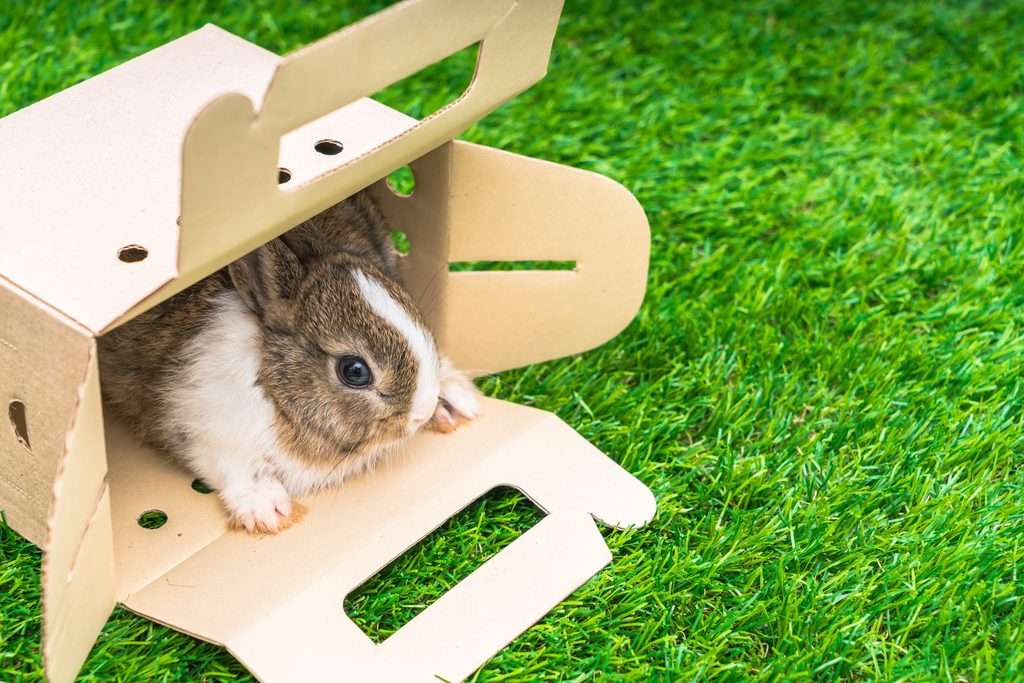
To keep a rabbit mentally stimulated, give them different opportunities to forage, dig, chew, explore, solve simple food puzzles, and choose where they spend their time. Rotating familiar toys and occasionally changing the setup can also keep their environment interesting.
Mental stimulation doesn’t require playing games with your rabbit all day. It’s mostly about giving your rabbit different things to investigate and letting them choose what they feel like doing.
Rotate Toys Instead of Adding Clutter
Rabbits often lose interest in objects that never change. Instead of filling the floor with every toy you own, keep a smaller selection available and occasionally rotate familiar toys, tunnels, boxes, or puzzles back into the space. Taking a cardboard tunnel out for a week and bringing it back later makes it feel brand new all over again.
Turn Some Meals Into Foraging Opportunities
Turn part of the daily food ration into a search by scattering pellets across a mat, hiding greens in a cardboard box, or using a simple food puzzle. This gives your rabbit a fun mental challenge without adding extra calories.
Let Your Rabbit Make Choices
A good environment gives your rabbit choices. They should be able to decide whether they want to hang out in the open or nap in a dark tunnel, chew on wood, dig in a box, or sit quietly with you. Giving your rabbit those choices can help them feel more comfortable and confident in their space.
9. How to Play With Your Rabbit
To play with a rabbit, sit on the floor and let them approach you rather than chasing or picking them up. Follow their preferred play style with activities such as tossing toys, exploring boxes, gentle petting, foraging games, or simple training.
Playing with a rabbit is completely different from playing with a dog or cat. Towering over a rabbit, picking them up, or waving toys right in their face triggers prey-animal alarm bells.
Get Down to Their Level
The best way to interact with a rabbit is simple: sit or lie flat on the floor. Read a book, scroll on your phone, and let the rabbit decide when to approach. Once they realize you aren’t trying to grab them, curiosity takes over. They will hop over, sniff your clothes, nudge your arm, or even hop into your lap.
Follow Your Rabbit’s Preferred Play Style
Every rabbit plays differently. Some like nudging lightweight balls, others love tearing into cardboard boxes, and some just want to sit nearby and be gently petted on their forehead. Watch what your rabbit enjoys doing when left alone, and shape your interactions around those habits.
Respect the “No” Signals
Always let your rabbit set the pace. If your rabbit thumps their back foot, hops away, turns their back to you, or heads inside their hideout, let them be. Respecting their space builds trust, making future playtime much more relaxed and enjoyable.
10. Signs Your Rabbit Needs More Exercise or Enrichment
Possible signs that a rabbit needs more exercise or enrichment include persistent bar chewing, repetitive digging, destructive chewing, restless pacing, and unusually little interest in exploring. These behaviors can have other causes, so sudden changes in activity or behavior should not automatically be blamed on boredom.
A bored rabbit often finds their own ways to stay busy—and you may not like the activities they choose:
- Persistent Bar Chewing: A rabbit that constantly bites or pulls at enclosure wire may be bored, frustrated, or simply trying to get somewhere on the other side.
- Repetitive Corner Digging: If your rabbit keeps attacking the same carpet corner, a digging box may give them a much better place to put that energy.
- Chewing Walls and Furniture: Rabbits naturally chew, and without better options nearby, baseboards and furniture can become convenient targets.
- Restless Pacing: Repeatedly moving back and forth along a barrier may mean your rabbit wants more space or access to somewhere beyond it.
- Little Interest in Exploring: Sitting in a corner day after day with little interest in their surroundings can point to an unstimulating setup.
When Low Activity May Be More Than Boredom
Sudden lethargy should never be assumed to be boredom. If your rabbit suddenly becomes less active and you also notice changes in eating, posture, or droppings, don’t assume they’re just bored.
If your rabbit suddenly stops eating their hay, refuses treats, stops leaving droppings, or sits hunched up with half-closed eyes, don’t try to entertain them. These are red flags for gastrointestinal trouble or other urgent health problems. Contact a veterinarian immediately.
11. Adjusting Enrichment as Your Rabbit Gets Older
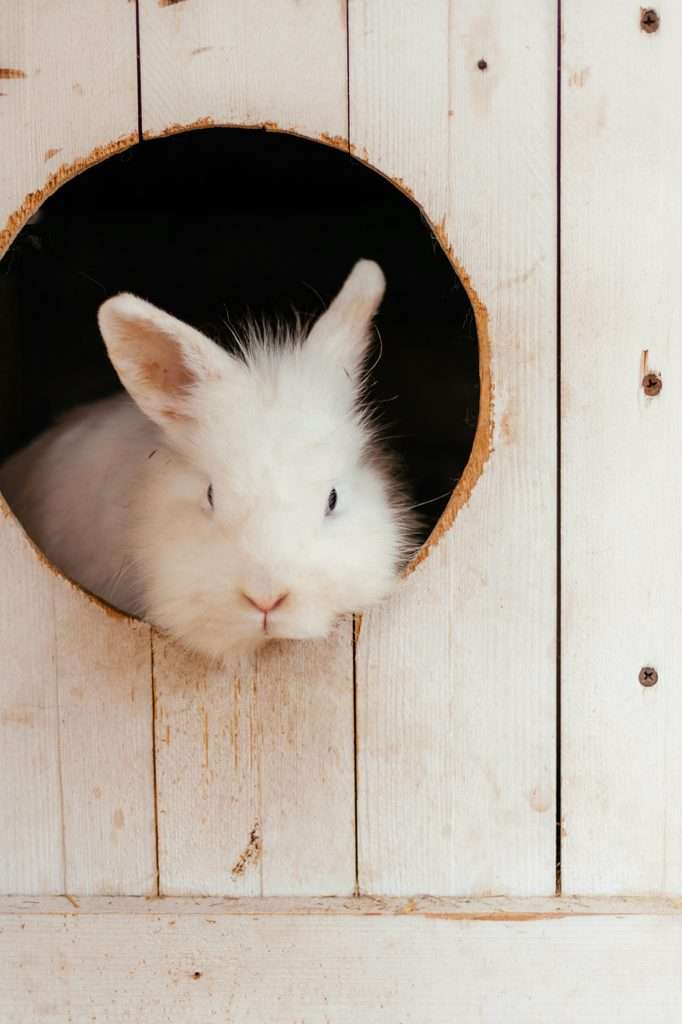
Enrichment should change as your rabbit ages:
- Young and Highly Active Rabbits: Younger rabbits often have endless energy and gravitate toward running, digging, chewing, and more challenging exploration.
- Healthy Adult Rabbits: Adult rabbits benefit from maintaining variety through foraging, tunnels, toy rotation, and predictable opportunities to explore.
- Senior and Mobility-Limited Rabbits: Older rabbits still need enrichment, but activities should match what they can comfortably manage. Keep food puzzles, hay, water, and favorite activities easy to reach and avoid requiring unnecessary jumping or climbing.
12. Common Rabbit Enrichment Mistakes to Avoid
Even with the best intentions, it’s easy to end up with a setup that gets in your rabbit’s way or leaves them bored. Fixing a few common mistakes will make playtime safer, less frustrating, and a lot more fun for your rabbit:
Common Rabbit Enrichment Mistakes & Corrections
| Common Mistake | Why It Backfires | Better Alternative |
| Overfilling the Floor with Toys | Cuts into open movement space and blocks sprints. | Keep a clear central running path; place toys around edges and corners. |
| Using Treats for Every Activity | Can upset the digestive balance and cause weight gain. | Use part of their normal daily pellets and fresh leafy herbs for puzzles. |
| Leaving the Same Toys Out Permanently | Can cause rabbits to lose interest. | Keep a small selection active and rotate items periodically as interest fades. |
| Buying Flimsy Plastic Toys | Risk of swallowing plastic shards or chewing sharp edges. | Stick to untreated safe woods, plain cardboard, and natural grass items. |
| Using Exercise Balls or Wheels | Not built for rabbit anatomy; risks panic, trapped feet, and injury. | Never use wheels or balls; provide flat, non-slip floor space instead. |
| Forcing Play on a Reluctant Rabbit | Scares a timid prey animal and damages trust. | Sit quietly on the floor and let your rabbit come to you voluntarily. |
13. How to Keep Rabbit Exercise and Enrichment Safe
Rabbits have a talent for using toys in ways you never expected, so anything new deserves a quick safety check.
Check Toys for Anything Your Rabbit Could Swallow
Rabbits chew things apart with sharp teeth. Inspect cardboard boxes daily to strip off clear packing tape, adhesive labels, and metal staples. If you use fabric tunnels, check the seams regularly—loose threads can tangle around toes or cause dangerous digestive blockages if swallowed.
Avoid Exercise Balls and Running Wheels
Exercise wheels and balls aren’t designed for normal rabbit movement and can create risks of injury, panic, overheating, or trapped feet. Rabbits should exercise on a flat, secure surface where they can move, hop, and stop voluntarily.
Supervise New Items
Watch closely when you first introduce a new item. Make sure your rabbit is chewing and dropping the material safely rather than actually swallowing things like fabric, carpet, or treated paper.
14. A Simple Daily Exercise & Enrichment Routine
You don’t need a complicated exercise schedule. A simple daily flow built around their natural rhythm works well:
- Morning: Refresh hay, scatter part of the pellet ration across a runner mat, and make sure the exercise area is open and safe.
- Daytime: Leave quiet chew sticks and foraging options available while your rabbit rests.
- Evening: Refresh tunnels, digging activities, or food puzzles and spend some quiet time interacting on the floor.
- Overnight: Remove damaged items and make sure hay, water, shelter, and safe movement space remain available.
15. How to Tell Whether Your Enrichment Is Working
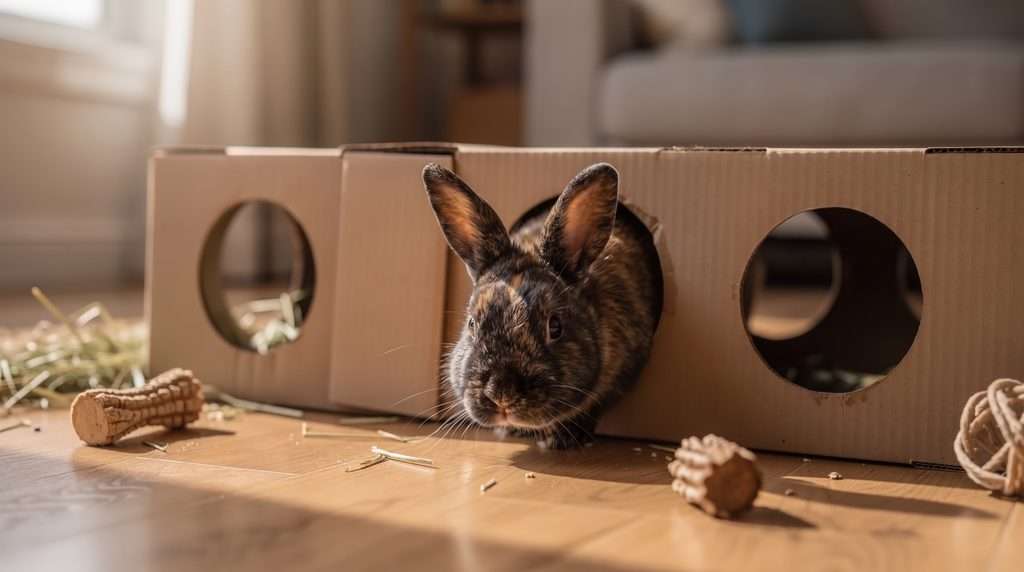
The real test of any enrichment item is simple: does your rabbit actually use it? An expensive, store-bought castle that your rabbit ignores is useless, while a free cardboard box with two holes cut into it that keeps them busy all afternoon is a massive win.
Look for these positive signs:
- Active Exploring: Sniffing around new setups, rubbing their chin on objects, and hopping over to investigate changes.
- Focused Foraging: Working patiently at a cardboard roll or puzzle feeder to retrieve food.
- Playful Energy: Quick hops, binkies, tossing toys, or sudden sprints.
- Comfortable Resting: A rabbit that explores when active and settles comfortably afterward is probably getting a good mix of activity and rest.
My rabbits, Mocha and Chino, are living proof that out of sight really is out of mind.
A willow ball or chew stick they couldn’t care less about after a few days suddenly becomes fascinating all over again once it has been packed away for a bit. Tucking their old toys into a bin with some fragrant timothy hay and bringing them back out a week or two later completely resets their curiosity—which keeps them busy and saves you from buying new toys constantly.
16. Frequently Asked Questions (FAQ)
How can I tell if my rabbit is getting enough exercise?
A rabbit with good opportunities for exercise should be able to run, hop, stretch fully, stand upright, explore, and choose when to rest. Binkies, short sprints, exploring, and relaxed resting can all be encouraging signs, but no single behavior proves a rabbit is getting enough exercise. The more important question is whether your rabbit has enough safe space and regular opportunities to move naturally.
Why is my rabbit only energetic early in the morning and late at night?
That is just their internal clock at work. Rabbits are crepuscular, meaning they naturally have the most energy at dawn and dusk. Lounging or snoozing away most of the afternoon isn’t laziness—it’s how they’re wired. You’ll get much better results if you plan floor time and foraging games around their natural morning and evening bursts.
What should I do if my rabbit completely ignores a new toy?
Rabbits are naturally suspicious of anything unfamiliar in their space. Dropping three or four new toys in all at once often makes them steer clear entirely. Try setting out just one toy along their regular hop path, or rub a little fresh cilantro or mint onto it to catch their interest. Stuffing a pinch of favorite hay inside also works wonders to get them investigating.
How can I keep an older or stiff rabbit active safely?
Senior and arthritic rabbits still benefit from comfortable opportunities to move around, but their setup may need to be easier to navigate. Lay down extra fleece or foam mats for secure footing, keep walking paths flat, and use low-entry litter boxes so they can get in and out more comfortably.
17. Conclusion: Space, Choice, and Natural Behavior
A good rabbit setup isn’t about how many toys you can squeeze into the room. Good enrichment really comes down to three things: room to move, different things to explore, and the freedom to choose what they want to do.
When you give rabbits good footing, room to run, and safe ways to forage, dig, and chew, you’re giving them more chances to spend the day doing what rabbits naturally want to do. Pay attention to how your rabbit interacts with their surroundings, rotate items regularly to keep curiosity alive, and allow them to explore on their own terms. When rabbits have enough room, variety, and choice to behave like rabbits, staying active becomes a natural part of their day.
Medical & Veterinary Disclaimer: Bunnyowners.com is an informational resource for rabbit owners and enthusiasts. We are not veterinarians. The content on this website is for educational purposes only and is not a substitute for professional veterinary advice, diagnosis, or treatment. Always consult a qualified veterinarian with any questions or concerns regarding your pet’s health, medical conditions, diet, or overall care. If you have concerns about your rabbit’s health, it’s always best to reach out to a veterinarian rather than relying solely on information found online.