
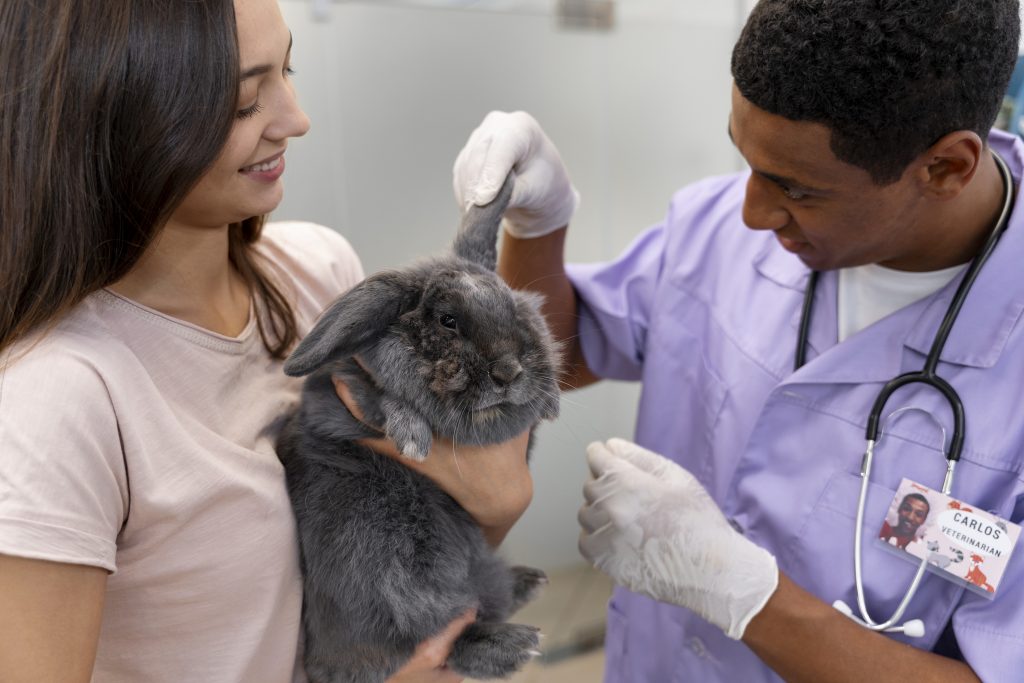
If you have ever cleaned a rabbit’s litter box or fleece bedding and discovered a stubborn, chalky white residue, you have witnessed the first clue in a complex biological mystery. To the uninitiated, this looks like a simple cleaning nuisance; to a researcher-minded owner, this is a critical diagnostic data point representing the physical manifestation of a precarious mineral balance.
Rabbit urinary problems occur because rabbits absorb almost all dietary calcium, which their kidneys must then filter and excrete as calcium carbonate via the urine. While a cloudy appearance is often normal, a lack of hydration can cause these minerals to settle into thick, sandy bladder sludge or crystallize into solid stones. Effective management requires a low-calcium diet and increased water intake to ensure the urinary tract remains clear of pathological sediment.
Daily observations of my resident rabbits, Mocha and Chino, confirm the litter box is an essential medical chart. Identifying normal cloudiness versus pathological sludge is critical for expert rabbit health monitoring. This guide provides a technical framework for managing the “Calcium Paradox,” ensuring your rabbit’s specialized urinary system doesn’t become a biological bottleneck. For a broader overview of clinical signs to watch for, the RSPCA provides a helpful baseline for general rabbit wellness.
1. Differences Between Bladder Sludge and Bladder Stones
Understanding the pathology of rabbit urinary issues requires a clear distinction between two related but distinct conditions: bladder sludge and bladder stones. While they often exist on the same spectrum, their management and prognosis differ significantly.
Understanding Bladder Sludge (Hypercalciuria)
Bladder sludge is a thick, sandy accumulation of calcium carbonate crystals that settles at the base of the bladder. Clinically known as hypercalciuria, it occurs when the urine becomes overly concentrated, and the minerals precipitate out of the liquid. The consistency can range from a light “grit” to a thick, toothpaste-like paste.
The primary danger of sludge is its ability to irritate the bladder lining (cystitis) and its potential to consolidate into something much worse. However, sludge is often reversible. Through mechanical flushing (aggressive hydration) and dietary oversight, an owner can often return the system to homeostasis without invasive procedures. Technical details on how these crystals form can be found in the MediRabbit guide to urolithiasis.
Understanding Bladder Stones (Uroliths)
Bladder stones, or uroliths, are the advanced, solidified versions of sludge. When minerals continue to accumulate and bond together, they form solid masses that can range from the size of a grain of sand to a large pebble. Unlike sludge, these stones cannot be “flushed” out of the body through hydration alone.
Because of the rabbit’s downward-angled urethra, these stones can create life-threatening obstructions. Once a stone forms, the clinical path usually shifts from dietary management to surgical intervention.
Comparison: Sludge vs. Stones
| Feature | Bladder Sludge | Bladder Stones |
| Clinical Name | Hypercalciuria | Uroliths |
| Physical Form | Sandy, paste-like sediment | Solid, calcified “rocks” |
| Reversibility | High (via diet & fluids) | Low (usually requires surgery) |
| Detection Method | Palpation & Urine observation | Radiograph (X-ray) |
| Primary Danger | Inflammation & Pain | Obstruction & Organ failure |
2. How Rabbit Calcium Metabolism Works
To manage these issues, we must analyze the “why.” Rabbits evolved to survive in environments where calcium-rich forage was scarce. Consequently, their bodies developed a “luxury” absorption model: they take in every milligram of calcium they find, assuming they might not find more for days.
The Passive Calcium Absorption Model
According to the Merck Veterinary Manual on Rabbit Disorders, rabbits maintain blood calcium levels that are directly proportional to their dietary intake. This is a radical departure from the “active” absorption seen in other mammals, where Vitamin D3 and parathyroid hormones tightly regulate how much calcium enters the bloodstream. In a rabbit, if the calcium is in the gut, it’s going into the blood.
Why Calcium Sediment Collects in the Bladder
Because the rabbit’s bladder is located low in the pelvic cavity, gravity works against the rabbit. If the urine is not sufficiently diluted with water, these crystals “settle” into a layer of sediment. This is why hydration is not just a health tip; it is a mechanical requirement to keep the bladder contents suspended in a liquid state for easy voiding.
3. Common Dietary Causes of Urinary Issues
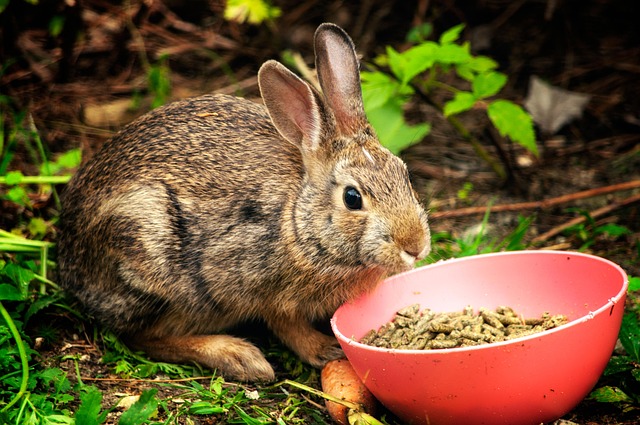
Diet is the single most influential variable in the formation of urinary sludge. A researcher views every leaf and pellet as a chemical input that either supports or compromises the urinary system.
Risks of High-Calcium Hay and Greens
The most common mistake owners make is the prolonged feeding of alfalfa hay. Alfalfa is a legume, not a grass, and its calcium content is nearly three times higher than Timothy or Orchard grass. While essential for growing kits (under 6 months) or nursing mothers, alfalfa is “rocket fuel” for sludge in adult rabbits.
Beyond alfalfa, certain greens carry high mineral loads. Spinach, parsley, and dandelion greens are often touted as healthy, but their high calcium-to-phosphorus ratios and oxalate content can accelerate crystal formation if fed in excess. As outlined in the House Rabbit Society on Diet, the goal is a “diluted” mineral intake, emphasizing low-calcium grass hays.
Risks of Overfeeding Pellets
Many commercial pellets are fortified with calcium carbonate. When a rabbit is overfed pellets, they receive a concentrated dose of minerals without the mechanical “flushing” benefit of water-heavy greens. A “pellet-heavy” diet is a high-risk factor for chronic urolithiasis.
Diet Risk Chart: Low vs. High Calcium Forage
| Risk Level | Recommended Frequency | Examples |
| 🔴 HIGH | Avoid for adult rabbits | Alfalfa, Spinach, Parsley, Pellets |
| 🟡 MEDIUM | Feed in small rotation | Kale, Dandelion, Broccoli, Chard |
| 🟢 LOW | Primary daily staples | Timothy Hay, Orchard Hay, Romaine |
Calcium-to-Phosphorus Ratios in Rabbit Forage
I do not just look at calcium in a vacuum; I look at the Calcium-to-Phosphorus (Ca:P) ratio. In the lagomorph renal system, an ideal ratio is approximately 1.5:1 to 2:1. When this ratio is skewed significantly higher—as seen in alfalfa—the excess calcium becomes a biological liability.
| Forage/Vegetable | Calcium (mg/100g) | Phosphorus (mg/100g) | Ca:P Ratio | Researcher’s Verdict |
| Timothy Hay | 400 | 200 | 2.0:1 | The ideal physiological baseline. |
| Alfalfa Hay | 1,300 | 220 | 5.9:1 | High Risk: A primary driver of sludge. |
| Romaine Lettuce | 33 | 30 | 1.1:1 | Safe and hydrating staple. |
| Spinach | 99 | 49 | 2.0:1 | Caution: High oxalates complicate binding. |
| Dandelion Greens | 187 | 66 | 2.8:1 | Use sparingly as a topper. |
| Cilantro | 67 | 48 | 1.4:1 | Excellent for daily rotation. |
4. Recognizing Symptoms and Emergency Signs
Rabbits are masters of concealing pain. By the time a rabbit stops eating, the urinary problem has likely progressed into a clinical crisis. We must rely on “micro-symptoms” to catch issues before they require a surgical suite.
Early Signs of Bladder Sludge
- The “Sand” Test: If you notice urine that feels gritty or abrasive when dry, your rabbit is in the early stages of sludge.
- White Residue: While some cloudiness is normal, a “pasty” white discharge that looks like wet cement is a red flag.
- Frequency: Frequent trips to the litter box with only a few drops of output.
Serious Symptoms Requiring Medical Review
- Hematuria: Blood in the urine. Note: Rabbit urine can experience natural color changes to orange or red due to plant pigments (porphyrins). Actual blood will look like distinct clots or dark, separate swirls and will test positive for hemoglobin.
- Urine Scald: The fur around the hocks and tail remains wet and the skin becomes red and inflamed. This happens when thick sludge makes it difficult for the rabbit to fully empty the bladder, causing “leaking.”
- Weight Alterations: Chronic discomfort from passing gritty urine can lower a rabbit’s baseline energy and willingness to hop to the food dish, slowly manifesting as a trend where your rabbit is dropping weight.
Life-Threatening Emergency Signs
If a rabbit is hunched over, experiencing uncharacteristic full-body lethargy, and exhibits loud, rhythmic tooth grinding indicative of severe pain, they are in trouble. If they have not passed urine in 12 hours, they likely have a stone blockage. According to VCA Animal Hospitals, an obstruction can lead to bladder rupture or kidney failure within a very short window.
5. How Sludge Progresses Into Bladder Stones
- Hydrated Homeostasis: Calcium is suspended in liquid and voided easily.
- Concentration: Low water intake causes the calcium to precipitate.
- Sedimentation (Sludge): The “sand” begins to collect at the base of the bladder.
- Crystallization: Continued mineral accumulation causes crystals to “bond” together.
- Urolith Formation (Stones): A solid mass forms that can no longer pass through the urethra.
6. Clinical Diagnosis and Veterinary Procedures
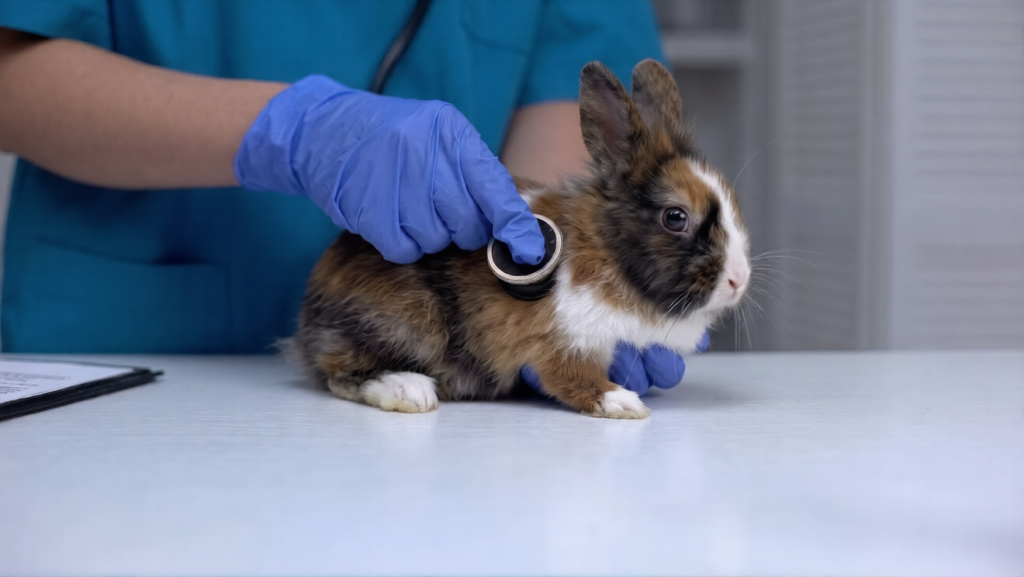
When you suspect a urinary issue, a vet will utilize several clinical tools to map the damage.
Using X-Rays to Detect Stones
Because rabbit bladder stones are almost entirely composed of calcium, they are “radiopaque.” This means they glow bright white on an X-ray, making them very easy to spot. This is the gold standard for distinguishing between a bladder full of “sand” (sludge) and a bladder containing distinct “rocks” (stones).
Veterinary Palpation and Urine Testing
A vet may perform a “bladder expression” to get a sample for urinalysis, checking for pH levels, protein, and the presence of blood. They will also palpate the abdomen; a bladder filled with sludge often feels like a “doughy” or “firm” balloon rather than a soft, liquid one.
7. Strategies for Preventing Urinary Problems
Prevention is 90% mechanical and 10% chemical. We must use water to fight minerals.
The Ideal 80/15/5 Diet Structure
To maintain a low-calcium baseline, follow this structural framework:
- 80% Grass Hay: Unlimited Timothy, Orchard, or Oat hay. This provides the fiber needed for gut motility, which indirectly supports urinary health. You can find out more by cross-referencing my protective nutritional guidelines to prevent stasis.
- 15% Fresh Greens: Specifically low-calcium greens like Romaine, bell peppers, and cilantro.
- 5% Pellets: Treated as a multivitamin, not a meal.
Improving Hydration with Bowls and Wet Greens
A clinical study highlighted by the RWAF on Water Consumption proves that rabbits drink significantly more water from an open bowl than from a nipple bottle. Lapping from a flat surface allows for a more natural, efficient drinking posture. To further sneak water into the system, serve all leafy greens dripping wet. This hydro-forage technique ensures that every calorie consumed comes with a side of hydration to help any rabbit that has stopped drinking water normally.
How Water Hardness Affects Mineral Buildup
If you have optimized the diet and the “white spots” persist, the variable may be your home’s infrastructure. In many regions, tap water is “hard,” meaning it contains high levels of dissolved calcium carbonate and magnesium.
researchers measure this as Total Dissolved Solids (TDS). If your rabbit drinks 100ml of hard water daily, they are receiving a hidden “supplement” of minerals. In chronic cases, I recommend utilizing a simple carbon-block filter or a Reverse Osmosis (RO) system. This lowers the baseline mineral load, ensuring the water acts as a solvent for the bladder rather than a contributor to the sediment.
8. Common Management Mistakes by Rabbit Owners
Even the most well-meaning owners fall into these three clinical traps:
- The “Adult Alfalfa” Error: Continuing to feed alfalfa hay to adult rabbits because “they love it.” This is equivalent to feeding a human a diet of pure cheese—it is nutritionally dense but physiologically destructive to the kidneys.
- Ignoring the “Chalk”: Assuming that because rabbits naturally excrete calcium, any amount of white residue is fine. A researcher knows that “cloudy” is normal, but “thick” is a warning.
- The Lack of “Bladder Agitation”: How a sedentary life in a cage prevents the “shaking up” of bladder contents. As noted by the AVMA on Pet Care, physical exercise helps stir the bladder contents, preventing crystals from settling into rock-hard bricks that leave a rabbit constipated, straining, and unable to pass stool.
9. Daily and Weekly Prevention Checklist
- [ ] Hay Swap: Ensure 80% of diet is low-calcium grass hay (Timothy/Orchard).
- [ ] Water Audit: Switch to heavy ceramic bowls and change twice daily.
- [ ] Daily “Feel” Check: Palpate the abdomen (gently!) and check litter for grit.
- [ ] Movement: Ensure 4+ hours of exercise to keep the bladder “moving.”
How to Perform a Weekly Litter Box Audit
To catch a “sludge spike” before it becomes a stone, implement a weekly observation protocol. Use this data to track trends in your rabbit’s output:
- The “Finger-Rub” Test: Once a week, allow a urine spot to dry on a non-absorbent surface (or a fleece liner). Rub the residue between your gloved fingers. If it feels like fine flour, the system is balanced. If it feels like wet sand or grit, increase hydration immediately.
- The Porphyrin vs. Hematuria Check: If you see red urine, do not panic. Porphyrins (plant pigments) create a uniform rusty orange. Actual blood (hematuria) often appears as distinct “clots” or swirls. If in doubt, a simple OTC occult blood dipstick can confirm.
- The Posture Audit: Observe the rabbit for 5 minutes during their peak activity. A rabbit that “strains” (lifts the tail high for more than 5-10 seconds without significant output) requires a clinical palpation.
10. Post-Surgical Care After Stone Removal (Cystotomy)

If the progression model reaches the urolith (stone) stage, surgery is often the only mechanical solution. Be prepared for the Critical 48-Hour Window following a cystotomy:
- GI Stasis Mitigation: Anesthesia slows gut motility. Ensure your vet provides a prokinetic and that you are prepared to step in if your bunny completely stops eating post-surgery.
- Analgesic Support: Bladder surgery is painful. A multi-modal pain approach—usually involving Meloxicam—is non-negotiable to ensure the rabbit continues to eat and urinate.
- Incisional Audit: Check the surgical site twice daily for “seromas” (fluid buildup) or redness. A researcher monitors the site for symmetry; any localized swelling requires a return to the clinic.
11. Frequently Asked Questions
Is cloudy urine normal in rabbits?
Mild cloudiness is perfectly normal; thick, sandy paste is not. Rabbits excrete excess calcium this way, but it should remain liquid enough to pass easily without causing the rabbit to stand motionless, hunched, or lethargic.
Can rabbits recover from bladder sludge?
Yes, most cases are reversible with aggressive hydration and dietary shifts. By increasing water and lowering calcium, you can “flush” the sediment out.
Do all bladder stones require surgery?
Most solid stones that cause blockage or pain will require surgical removal, as they are too large to be voided naturally.
Can urinary issues cause breathing changes?
Yes. The extreme visceral pain from an obstructive bladder stone can cause a rabbit to go into cardiovascular shock, manifesting as rapid, heavy pumping of the flanks.
12. Final Recommendations for Long-Term Urinary Health
Managing a rabbit’s urinary health is not a one-time fix but a lifestyle commitment. Through my daily observations of Mocha and Chino, I’ve come to view the litter box as a laboratory—monitoring the color, consistency, and frequency of output as the primary data points for their systemic health.
Managing a rabbit’s urinary health is not a one-time fix but a lifestyle commitment. A researcher views the litter box as a daily laboratory—monitoring the color, consistency, and frequency of output as the primary data points for systemic health. For ongoing health monitoring tips, the PDSA Rabbit Health hub is an excellent supplementary resource. Additionally, my rabbit health guide provides further context on maintaining systemic wellness in your home laboratory.
Final Summary:
- Sludge is a warning that the system is saturated; Stones are the physical manifestation of a system that has failed.
- Hydration is the most effective mechanical tool in your arsenal.
- Observation is your early-warning shield.
Medical & Veterinary Disclaimer: Bunnyowners.com is an informational resource for rabbit owners and enthusiasts. We are not veterinarians. The content on this website is for educational purposes only and is not a substitute for professional veterinary advice, diagnosis, or treatment. Always consult a qualified veterinarian with any questions or concerns regarding your pet’s health, medical conditions, diet, or overall care. If you have concerns about your rabbit’s health, it’s always best to reach out to a veterinarian rather than relying solely on information found online.