
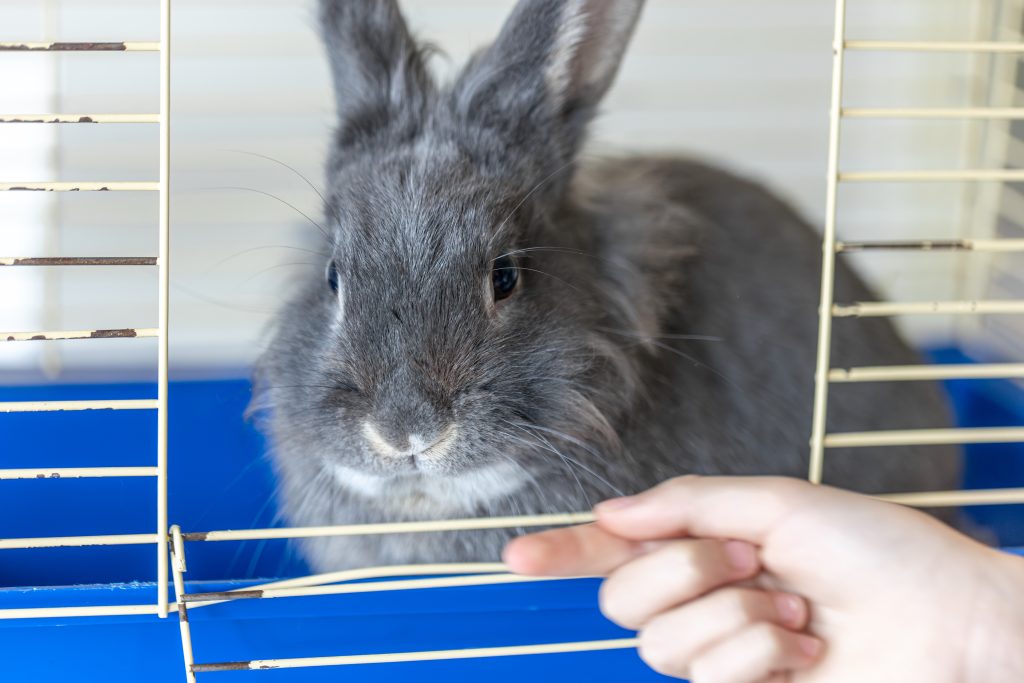
Veterinary & Affiliate Disclaimer: Bunnyowners.com shares educational rabbit care resources, not professional veterinary advice. Always consult a qualified veterinarian regarding your rabbit’s medical, dietary, or behavioral needs. This post may also contain affiliate links; as an Amazon Associate and affiliate partner, we earn from qualifying purchases at zero extra cost to you.
You brought home a sweet, nose-twitching companion, expecting peaceful evenings of petting and shared leafy greens. Instead, you’ve recently found yourself dealing with a furry little boxer who lunges, nips, or outright bites when you walk by. It’s a jarring, slightly heartbreaking shift when your rabbit seemingly changes personalities overnight, leading to the inevitable question: Why is my rabbit suddenly aggressive?
A rabbit may suddenly become aggressive due to the onset of puberty hormones, hidden pain from an underlying medical issue, or a strong territorial defense of their living space. Environmental stressors, such as new loud noises, rough handling, or a disrupted routine, can also trigger instinctual, fear-based lunging and biting. The most effective way to resolve this sudden hostility is to have a veterinarian rule out illness, ensure the rabbit is spayed or neutered, and interact with them calmly at ground level to rebuild their trust.
First, take a deep breath: sudden aggression in rabbits is common and highly explainable. As my own pet rabbits, Mocha and Chino, have taught me, a stressed bunny will quickly use their teeth to communicate. Your rabbit hasn’t developed a “bad personality”—they are simply trying to tell you something urgent about their health, hormones, or habitat. Let’s decode this behavior, uncover the real reasons behind the biting, and learn exactly how to fix it.
1. What Counts as “Aggression” in Rabbits?
Rabbits don’t have a broad vocabulary to express frustration, so they rely on a specific set of physical actions. This includes lunging, biting, growling, boxing, and chasing.
It is crucial to differentiate between territorial circling (which is often hormonal) and true aggression. Furthermore, a massive amount of what we perceive as “anger” is actually sheer panic.
👉 Insight: Many owners mislabel fear or pain as “aggression.” A terrified rabbit will often fight if it feels cornered.
Behavior vs Meaning Table
| Behavior | What It Looks Like | What It Usually Means |
| Lunging | Quick forward jump with front feet | Territorial defense or fear response |
| Boxing | Standing on hind legs, striking forward | Defensive fear; telling you to back off |
| Biting | Hard bite (vs. a gentle grooming nip) | Escalated warning or true aggression |
| Growling | Low, guttural vocal sound | Strong discomfort or annoyance |
| Chasing | Following aggressively, often nipping heels | Hormonal drive or dominance behavior |
Aggression is rarely a standalone quirk; it is typically one piece of a larger psychological puzzle. To see how these defensive maneuvers fit into a rabbit’s broader daily life, you can explore my full research archive on rabbit behavior. Understanding the full spectrum of their communication—from a subtle tail twitch to the intensity of a “binky”—helps you distinguish between a temporary bad mood and a deep-seated behavioral habit.
2. The Big Picture: Why Rabbits “Flip a Switch”
To understand your rabbit, you have to remember their evolutionary baggage. They are quintessential prey animals. Their default operating system prioritizes survival-first reactions. When a rabbit “flips a switch” from docile to dangerous, it’s rarely out of malice. It is almost always a reaction to stress, pain, hormones, or an environmental trigger. I generally see these triggers fall into four main categories:
- Hormonal
- Medical
- Environmental
- Behavioral/learned
3. Hormonal Changes (The #1 Overlooked Cause)
If your sweet baby bunny turned into a tiny terror right around the 3 to 6-month mark, you are likely dealing with puberty. Intact (unneutered/unspayed) rabbits experience a massive surge of hormones that drives them to mount, spray, and fiercely defend their territory with their teeth. Intact rabbits escalate quickly because their biological imperative is telling them to secure a mate and defend their space at all costs.
The Fix: Altering your rabbit is the most effective solution. As detailed by the House Rabbit Society’s spay and neuter guidelines, spaying and neutering dramatically reduces hormonal aggression and prevents reproductive cancers. You can expect a notable improvement in their temperament within a few weeks to a couple of months post-surgery.
4. Pain or Illness: The Hidden Trigger
Because they are the ultimate prey animals, rabbits are absolute masters at hiding their physical ailments. In the wild, showing weakness, illness, or limping makes you an immediate, flashing target for predators. In your home, this ancient instinct remains entirely intact. This means a sudden, aggressive nip might be the very first clue you get that your rabbit is quietly suffering from a serious medical condition.
While a cat or a dog might whine, limp, or actively solicit sympathy when they feel bad, a rabbit will just sit quietly in a “meatloaf” position and endure the discomfort until they simply can’t handle it anymore. If you reach down to pet a rabbit with an arthritic spine or a painful belly, their immediate response to the sudden spike in pain will often be a sharp bite.
The Rabbit Grimace Scale (RGS)
As a researcher, I find that one of the most effective ways to “read” a rabbit is through the Rabbit Grimace Scale (RGS). This is a scientifically validated tool researchers use to identify pain by observing specific facial action units. By paying attention to these five key areas, you can often catch pain-induced aggression before it results in a bite.
- Orbital Tightening: Look at the eyes. A rabbit in pain will narrow their eyes or squint.
- Cheek Flattening: The cheeks may appear “sucked in” or tightened against the face.
- Nostril Shape: Instead of a relaxed “U” shape, the nostrils will pinch into a tight “V” shape.
- Whisker Position: The whiskers will lose their relaxed droop and become stiff, sometimes pulling backward or standing straight out.
- Ear Position: While ear position varies by breed, ears that are drawn back and flattened or significantly held apart can indicate distress.
Detailed studies on the Rabbit Grimace Scale have shown that these subtle shifts are highly accurate indicators of internal discomfort.
Common Medical Culprits Behind Aggression:
- Dental Disease: Rabbits have continuously growing teeth. Sharp spurs can develop, cutting into the tongue. The constant, throbbing pain makes them incredibly irritable.
- Gastrointestinal (GI) Stasis: A deadly, silent condition where the gut stops. Gas builds up rapidly, causing excruciating abdominal pain. Learn more about GI Stasis in rabbits from VCA Animal Hospitals.
- Arthritis: Older rabbits often have spinal or joint pain. Downward pressure during petting causes shooting pain and a defensive snap.
Watch for:
- Refusing hay or favorite treats.
- Hiding in dark spots.
- Loud, harsh teeth grinding.
- Extreme lethargy.
👉 Key Insight: Aggression is frequently a red flag for a medical issue. If the aggression is sudden and entirely out of character, consult with the vet first.
5. Territorial Behavior (You Entered Their Kingdom)
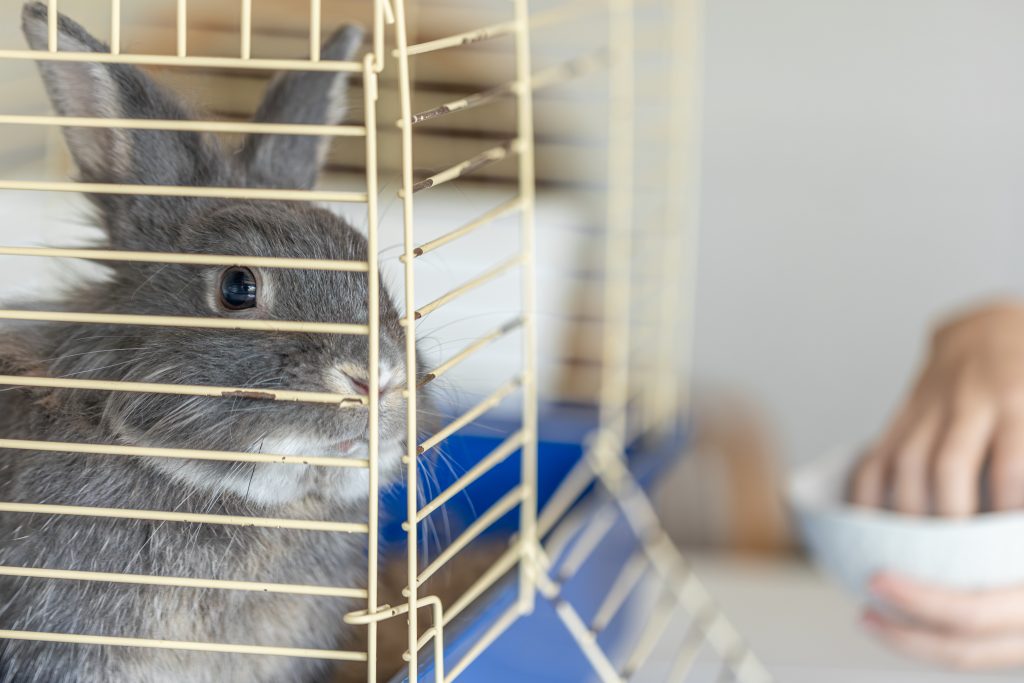
Your rabbit views their enclosure as their safe sanctuary. Cage aggression happens when a normally sweet, free-roaming rabbit suddenly lunges when you reach into their pen to change a litter box or fill a food bowl. To a rabbit, a giant hand descending from the sky into their space triggers intense ownership instincts. If this behavior shifts outside the cage to your everyday interactions, you should evaluate why your rabbit is territorial to properly recalibrate your approach to their boundaries.
The Fix: Avoid reaching into their space when they are occupying it. Interact in neutral areas instead. Open the enclosure door and let the rabbit approach you. You may also need to adjust their enclosure setup; the Rabbit Welfare Association & Fund (RWAF) notes that cramped spaces significantly increase territorial friction.
6. Fear-Based Aggression (You Look Like a Predator)
Loud noises, unfamiliar guests, or the scent of a new pet can trigger profound fear. However, the absolute top trigger for fear-based aggression is being picked up.
Rabbits do not naturally enjoy being lifted. In the wild, the only time a rabbit leaves the ground is when they are caught by a hawk or a fox. If a rabbit lacks early socialization, their fear response to being handled will be severe.
The Fix:
- Practice ground-level bonding (sit on the floor with them).
- Learn their subtle body language cues.
- Use gradual desensitization to help them tolerate handling only when necessary.
7. Changes in Environment or Routine
Rabbits are creatures of strict habit. They thrive on predictable routines. If you recently moved, rearranged their living space, introduced new strong smells, or altered their feeding schedule, their resulting stress can manifest as aggression.
👉 Insight: Rabbits depend heavily on consistency to feel safe. Even minor disruptions can put them on edge until they readjust.
8. Bonding Issues (Multi-Rabbit Homes)
If you have a multi-rabbit household, aggression might be stemming from social friction. Hierarchy conflicts are common, especially if a bond breaks or a new rabbit is introduced too hastily. Sometimes, a frustrated rabbit will exhibit “redirected aggression”—meaning they are irritated by their cage-mate, but they take it out on your ankles when you walk by.
9. Learned Behavior (Yes, You Might’ve Taught It)
One of the most fascinating aspects of animal behavior is how quickly they train us. It is a fundamental behavioral principle across species: if an action yields a desired result, the animal will repeat it.
Rabbits are no different. If your rabbit lunges at you and you immediately flinch and pull your hand away, your rabbit just learned a valuable lesson: lunging makes the scary hand disappear. Similarly, if you offer treats to distract a biting rabbit, you are accidentally rewarding the bite.
👉 Insight: Rabbits quickly learn what works. Mixed signals from owners can unintentionally reinforce the exact behaviors we want to stop, as highlighted by RSPCA behavioral guidelines.
10. How to Calm an Aggressive Rabbit (Step-by-Step Plan)
Addressing the behavior requires patience and a systematic approach:
- Rule out medical causes with your vet.
- Identify the trigger (e.g., does it only happen when you touch their food bowl?).
- Adjust the environment to minimize that trigger.
- Rebuild trust slowly at their level.
Rebuilding a bond after a series of bites isn’t just about stopping a specific outburst; it’s about mastering the entire operating system of your companion. For owners ready to move from confused bystander to skilled behavioral detective, I recommend studying my Definitive Guide to Rabbit Behavior. This serves as my primary framework for decoding the nuances of their social world and creating a home environment where trust eventually replaces teeth.
Do:
- Sit quietly on the floor and let them investigate you.
- Use food rewards wisely (reward calm behavior, not aggressive outbursts).
- Respect their boundaries when they retreat.
Don’t:
- Punish or strike them (this will irreparably destroy trust).
- Force interaction by cornering them.
- Chase them back into their enclosure.
Trigger → Fix Table
| Trigger | Why It Happens | Immediate Fix |
| Reaching into cage | Territorial defense | Open the door, let the rabbit come out first |
| Picking up rabbit | Prey instinct fear | Avoid lifting; interact entirely at ground level |
| Sudden noise | Startle response | Create a quiet, enclosed safe space for them |
| Hormones | Puberty-driven behavior | Schedule a spay/neuter |
| Pain | Defensive reaction | Veterinary check-up |
11. Signs It’s More Than Just a Phase

While a grumpy teenager phase is normal, certain red flags mean it’s time to seek professional help. If the aggression represents a sudden, extreme personality change, is paired with physical symptoms (like lethargy or a messy bottom), or results in deep bites that break the skin, do not wait it out.
👉 Clear takeaway: Rapid escalation in aggressive behavior usually requires veterinary attention. Locate an exotic specialist through resources like the Association of Exotic Mammal Veterinarians (AEMV) to ensure they get proper care.
12. Mistakes That Make Rabbit Aggression Worse
Trying to dominate a rabbit will always backfire. Common mistakes that exacerbate the issue include:
- Picking up a fearful rabbit to “comfort” them.
- Continuing to reach into their enclosure when they are boxing.
- Punishing, shouting, or flicking their nose.
- Ignoring early warning signs (like flattened ears or a stiff posture).
- Forcing a bonding session with another rabbit too quickly.
👉 Insight: Many “aggression problems” are unintentionally reinforced by humans forcing interactions that the rabbit isn’t ready for.
13. Quick Diagnosis Chart
| Symptom | Likely Cause | What to Do |
| Biting only in cage | Territorial | Change interaction method; let them exit first |
| Sudden aggression + lethargy | Illness | See an exotic vet immediately |
| Aggression starting at puberty | Hormones | Schedule a spay/neuter |
| Aggression when picked up | Fear | Stop lifting them; build trust on the floor |
14. FAQ Section
Why is my rabbit aggressive all of a sudden? Sudden aggression is usually triggered by a specific catalyst: the onset of puberty, an underlying medical issue causing pain, a stressful change in their environment, or a perceived threat to their territory.
Do rabbits grow out of aggression?If the aggression is solely hormonal, neutering or spaying will usually resolve it. However, if the aggression is learned or fear-based, they will not simply “grow out of it”—it requires active trust-building and a change in how you interact with them.
Can aggressive rabbits be trained? Absolutely. By identifying their triggers, respecting their space, and using positive reinforcement, even the most defensive rabbits can learn that humans are safe.
Why does my rabbit bite me but not others? Rabbits are highly perceptive. They may associate you with a specific stressor (like being the person who trims their nails or picks them up), or they may actually feel more comfortable expressing their boundaries with you than with a stranger who terrifies them into freezing.
15. Conclusion: Your Rabbit Isn’t “Mean”
When you are nursing a bitten finger, it is easy to hold a grudge against your pet. But it is vital to reframe how you look at the situation: behavior is communication, not a personality flaw.
Your rabbit is not acting out of malice. Most aggression has a clear, definable cause, whether it’s an aching tooth, raging hormones, or a simple misunderstanding of boundaries. With patience, a bit of detective work, and the right bonding techniques and patience, sudden aggression is highly fixable. Meet them where they are—usually right there on the living room floor.
Medical & Veterinary Disclaimer: Bunnyowners.com is an informational resource for rabbit owners and enthusiasts. We are not veterinarians. The content on this website is for educational purposes only and is not a substitute for professional veterinary advice, diagnosis, or treatment. Always consult a qualified veterinarian with any questions or concerns regarding your pet’s health, medical conditions, diet, or overall care. If you have concerns about your rabbit’s health, it’s always best to reach out to a veterinarian rather than relying solely on information found online.