
Veterinary & Affiliate Disclaimer: Bunnyowners.com shares educational rabbit care resources, not professional veterinary advice. Always consult a qualified veterinarian regarding your rabbit’s medical, dietary, or behavioral needs. This post may also contain affiliate links; as an Amazon Associate and affiliate partner, we earn from qualifying purchases at zero extra cost to you.
Discovering a pool of strangely colored or unusually thick urine in your rabbit’s litter box can trigger immediate panic. For most companion animals, red or cloudy urine is a definitive sign of disease. In lagomorphs, however, the urinary system operates under vastly different biological rules. A bright crimson puddle can be completely harmless, while an innocent-looking patch of thick, creamy wetness might signal an impending medical issue, raising a vital question for caretakers: how can you accurately tell the difference between a simple dietary shift and a dangerous crisis?
Healthy rabbit urine can naturally turn red, orange, or brown due to harmless plant pigments or concentrated dehydration. However, thick bladder sludge or a complete lack of urination indicates a critical health issue like an emergency urinary blockage. Recognizing these distinct shifts in texture and output patterns is vital for your pet’s safe recovery.
Distinguishing between a benign dietary shift, dehydration, chronic urinary tract disease, or a life-threatening urethral obstruction is one of the most critical skills a rabbit caretaker can develop. As part of my comprehensive library of rabbit health guides, this resource breaks down the visual spectrum of healthy rabbit urine, details how to separate food pigments from real blood, tracks the warning signs of bladder sludge, and maps out the emergency indicators and preventative habits needed to keep your pet’s system moving safely.
1. What Normal Rabbit Urine Looks Like
The Baseline Palette
Unlike humans, dogs, or cats, whose normal urine remains consistently translucent and light yellow, healthy rabbit urine exhibits an incredibly wide spectrum of normal colors. On any given day, a healthy rabbit may produce urine that is pale yellow, bright orange, deep amber, or dark rust-brown. These variations can happen rapidly, shifting from morning to evening based on hydration levels, activity, and recent meals.
Table 1: Types of Rabbit Urine Changes and What They Mean
| Urinary Change | Severity Level | Common Primary Cause | Immediate Action Required |
| Red, Orange, or Brown Tint | Usually Low | Plant pigments (porphyrins) or mild concentration | Monitor hydration and behavioral baselines |
| Thick, Creamy Sludge | Moderate | Calcium carbonate crystallization from excess minerals | Re-evaluate daily diet and increase fluids |
| Straining / Zero Output | Critical | Urethral obstruction from solid uroliths or mucus | Immediate emergency veterinary transport |
The Calcium Quirk
Healthy adult rabbit urine is also naturally cloudy or turbid. In most mammals, the absorption of dietary calcium is strictly regulated at the intestinal level by vitamin D; the body only takes in what it needs, and the rest passes safely through the feces.
Rabbits bypass this regulatory step entirely. They absorb calcium with high efficiency, independent of their immediate systemic needs, resulting in high blood-calcium levels. To maintain internal balance, the kidneys must work overtime to filter out this massive surplus, excreting it directly through the urinary tract as calcium carbonate crystals. It is this suspended particulate matter that gives normal rabbit urine its signature milky or cloudy appearance.
Table 2: Calcium Absorption: Rabbits vs. Other Mammals
| Mammalian Group | Intestinal Absorption Policy | Regulatory Control | Primary Route of Excess Excretion | Urine Appearance |
| Standard Mammals | Strict; limits intake based on metabolic demand | Regulated directly by Vitamin D | Passed safely out through the feces | Clear, transparent yellow |
| Lagomorphs (Rabbits) | Passive; highly efficient absorption regardless of need | Independent of immediate physical limits | Filtered by kidneys into the urinary tract | Clouded, turbid milky yellow to amber |
Individual Metabolism and Observations
Because calcium excretion and pigment processing rely so heavily on individual metabolic rates, rabbits living in the exact same environment and eating the identical diet can produce completely different looking urine.
For instance, when monitoring my own bonded pair, Mocha and Chino, a shared morning plate of fresh dandelion greens will often result in Chino passing a striking, bright orange puddle by the afternoon, while Mocha’s urine remains a standard cloudy amber. This divergence underscores why establishing an individual baseline for each rabbit is so vital; what is structurally normal for one bunny may indicate a metabolic shift in another.
Biological Documentation
According to established veterinary research, this unique evolutionary mechanism allows wild rabbits to rapidly process the highly variable mineral content found in tough forage. For those interested in digging deeper into the exact clinical values of lagomorph renal function, the House Rabbit Society provides excellent, peer-reviewed breakdowns of standard rabbit physiology and urinary baselines.
2. Red or Orange Urine (Dietary Pigments vs. Real Blood)
Diet-Related Pigmentation (Porphyrinuria)
The overwhelming majority of red urine scares are entirely benign and stem from a condition known as pigmenturia, or the excretion of plant-derived porphyrins. When a rabbit digests specific vegetables, beta-carotenes, or secondary plant compounds, their liver metabolizes these pigments and flushes them out via the kidneys.
Common dietary triggers include:
- Carrots and carrot tops
- Spinach, kale, and dandelion greens
- Broccoli and cabbage
- Certain alfalfa-based pellets or treats
This coloration can manifest as anything from a bright, vibrant orange to a deep, dark brick red. A key clinical characteristic of porphyrinuria is its intermittent nature—it may appear for a day or two and then vanish entirely without any changes to the rabbit’s baseline behavior.
Concentrated Urine & Mild Dehydration
When a rabbit fails to consume enough water—either due to a dirty water bowl, an unappealing dripper bottle, or a low intake of fresh, moisture-rich greens—their urine becomes highly concentrated. This concentration intensifies both the natural cloudiness and the baseline pigments, turning standard yellow urine into a dark, syrupy amber or brownish-red hue. Increasing fluid intake typically resolves this darkening within 24 to 48 hours.
True Hematuria (Blood in the Urine)
True hematuria, or the actual presence of blood cells in the urinary tract, is far less common but highly serious. When blood enters the urine, it is rarely a uniform, perfectly blended orange-red fluid. Instead, it often manifests as distinct, bright red drops, streaks, or small clots settled within an otherwise normally colored puddle.
The primary pathologies driving true hematuria include:
- Urinary Tract Infections (UTIs): Bacterial colonies ascending the urethra, causing inflammation and bleeding of the bladder wall.
- Bladder Stones (Uroliths): Solid mineral stones rubbing against the delicate tissue of the bladder, scraping the lining.
- Uterine Disease: In unspayed female rabbits, uterine adenocarcinoma, polyps, or severe endometrial hyperplasia frequently present as intermittent bleeding. Because the urinary and reproductive tracts exit through a common vestibule, this blood is easily mistaken for red urine.
Rabbits displaying true hematuria will almost always present with concurrent clinical signs, such as lethargy, a sudden drop in appetite, weight loss, or vocalizations of discomfort.
The Home Detection Test
If you are looking at a strange red spot in the litter box and trying to determine if it is food pigment or a medical emergency, you can perform a quick preliminary evaluation using the paper towel or peroxide test.
Porphyrin-based plant pigments are chemically unstable when exposed to light and oxygen; if you blot the spot with a white paper towel and leave it in a well-lit room, dietary pigment will often fade, turn a dull brown, or change color entirely over 24 hours.
Alternatively, applying a drop of standard household hydrogen peroxide to the wet spot can help identify blood—true blood will typically foam vigorously due to the catalase enzyme present in red blood cells, whereas plant pigments will not. For a definitive answer at home, you can purchase standard over-the-counter urinalysis reagent strips (such as those used for humans or dogs) to check for occult blood.
Table 3: How to Tell the Difference Between Plant Pigment and Real Blood
| Evaluation Parameter | Benign Pigmenturia (Plant Pigments) | True Hematuria (Urinary Blood) |
| Visual Fluid Distribution | Perfectly uniform, blended orange-red tint | Distinct red drops, red streaks, or solid tiny clots |
| Paper Towel Exposure (24 Hrs) | Fades significantly, changes shade, or turns brown | Retains consistent coloration over time |
| Hydrogen Peroxide Reaction | Completely non-reactive (no surface change) | Foams up vigorously upon surface contact |
| Urinalysis Reagent Strip Test | Registers negative for occult blood indicators | Registers positive for intact or hemolyzed red cells |
| Concurrent Behavioral Signs | Rabbit acts energetic, bright, and alert | Lethargy, hidden posture, or loss of appetite |
Clinical Differentiation
In a clinical setting, veterinarians rely on a microscopic examination of a spun urine sample (centrifugation) to separate pigment from cellular matter. As detailed in the comprehensive MSD Veterinary Manual, if the red color settles into a solid pellet of red blood cells at the bottom of the test tube, hematuria is confirmed; if the fluid remains uniformly red throughout, it is classified as benign pigmenturia.
3. Sludge or Thick “Sand-Like” Urine (Hypercalciuria)
Defining Bladder Sludge
While normal rabbit urine contains a healthy amount of suspended calcium carbonate, a breakdown in normal elimination can cause these crystals to precipitate out of suspension. When this occurs, the sediment collects at the bottom of the bladder, forming a thick, paste-like material known clinically as bladder sludge or hypercalciuria.
When passed, this material looks remarkably like gray, beige, or white toothpaste, wet plaster, or fine, gritty sand. It frequently cakes onto the fur around the rabbit’s hindquarters or leaves a chalky, hard white crust on the floor of the litter box when it dries.
Primary Catalysts
Bladder sludge is rarely triggered by a single factor; rather, it is a multifactorial condition driven by a combination of diet, hydration, and lifestyle:
- Dietary Overabundance: Feeding excessive high-calcium foods to adult rabbits whose skeletal growth has finished. The chief offender here is alfalfa hay, alongside heavy, uncontrolled portions of dark leafy greens like spinach or collard greens.
- Chronic Dehydration: A lack of consistent fluid intake prevents the kidneys from maintaining a high enough liquid volume to safely float the calcium crystals out of the body.
- Sedentary Lifestyles: Gravity is a major player in bladder dynamics. Rabbits that are confined to small cages or lack daily opportunities to run, binky, and jump spend most of their time sitting flat. Without physical movement to constantly agitate the bladder contents, the heavy calcium crystals naturally sink to the bottom, compounding over time into a dense, stagnant layer of silt.
The Progression of Risks
Left unmanaged, bladder sludge acts like sandpaper against the delicate, highly sensitive inner lining of the bladder wall. This chronic irritation causes severe inflammation (sterile cystitis), which makes the rabbit highly susceptible to secondary bacterial infections. Over time, the densely packed crystals can compress and concrete, transforming from a soft, sandy paste into solid, jagged bladder stones (uroliths) that can completely block the flow of urine.
Table 4: Three Stages of Bladder Sludge and Stone Build-Up
| Severity Tier | Physical State of Crystals | Impact on Bladder Tissue | Long-Term Compounding Risks |
| Tier 1: Normal Turbidity | Microscopic, completely suspended particles | None; flows smoothly through the urethra | Zero risk if hydration is sustained |
| Tier 2: Active Sludge | Settled paste, sandy texture, resembles wet plaster | Abrasive rubbing against mucosal lining (cystitis) | Chronic UTIs and secondary bacterial ascension |
| Tier 3: Formed Uroliths | Hardened, solid calcified stones or dense plugs | Severe localized trauma and wall thickening | Total urinary blockage and renal backup |
Research on Hypercalciuria
Clinical studies emphasize that early dietary and environmental interventions are incredibly effective at reversing early-stage hypercalciuria before structural damage occurs. Detailed research updates on the management of exotic mammal urinary crystallization can be regularly reviewed through clinical resources hosted by publishers like Elsevier Science or summarized via specialized updates on ScienceDirect.
4. No Urination (The Absolute Emergency)
Complete Urinary Obstruction
A complete absence of urination—known as anuria—is one of the single most dangerous, time-sensitive medical emergencies a rabbit owner can face. This condition occurs when a solid piece of calcified debris, a dense mucus plug, or a formed bladder stone exits the main bladder body and becomes tightly wedged inside the narrow lumen of the urethra. Once blocked, the exit route for liquid waste is completely severed.
The 8-to-12-Hour Countdown
Rabbits possess a rapid metabolic rate and a highly sensitive fluid balance; their kidneys continuously filter and produce urine at a steady pace. Unlike many larger mammals, a rabbit cannot safely store or voluntarily suppress urine production for extended periods without experiencing systemic shock.
Within mere hours of a complete blockage, urine backs up into the ureters and forces immense pressure back into the kidneys. This rapidly induces acute renal failure. Because the body can no longer excrete metabolic waste, toxic levels of potassium and urea build up in the bloodstream (uremia), triggering cardiac arrhythmias, severe hypothermia, neurological seizures, and death—often within a tight 12 to 24-hour window from the onset of the obstruction.
Identifying the Emergency Posture
Recognizing a urinary blockage requires careful observation of your rabbit’s physical posture and behavioral cues. A rabbit attempting to urinate normally will briefly back into a corner, slightly raise their tail, and relax their body for a few moments before moving on.
In sharp contrast, a blocked rabbit will repeatedly visit their elimination spot and assume a highly strained, unnatural posture. They will crane their back upward into a stiff arch, press their lower abdomen firmly against the floor, and tremble or shake their tail in a desperate, painful attempt to force fluid past the obstruction. This straining yields absolutely zero liquid output.
As the pain intensifies, the rabbit will exhibit signs of acute distress: loud, rhythmic teeth grinding (bruxism) that sounds distinctly different from a gentle contentment purr, a complete refusal to move or eat, a rapid drop in body temperature, and eventual collapse into a sideways, lethargic position.
Table 5: Normal Urination Posture vs. Blocked Posture
| Behavioral Arena | Healthy Elimination Posture | Blocked Emergency Posture |
| Spinal Alignment | Normal, slight backward shift into corner | Stiffly craned upward into an exaggerated arch |
| Abdominal Pressing | Held off the ground comfortably | Pressed firmly and flatly down against the floor |
| Tail Movement | Briefly elevated, remains steady | Trembling, shivering, or clamped tightly down |
| Accompanying Sounds | Silent relaxation | Loud, continuous, sharp teeth grinding (bruxism) |
| Litter Box Success | Clear wet spot produced within seconds | Repeated visits with absolutely zero liquid output |
5. How Veterinarians Diagnose Urinary Disorders
Clinical Palpation
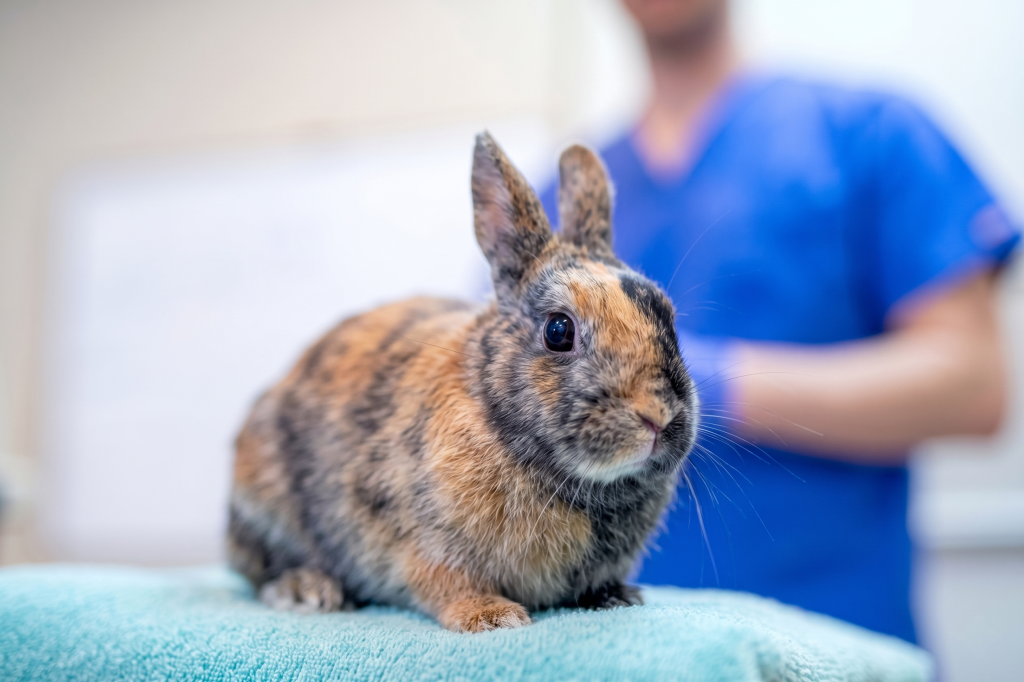
Upon arrival at an emergency or exotic veterinary clinic, the practitioner’s first step is a physical evaluation. An experienced veterinarian will carefully slide their hands under the rabbit’s abdomen to palpate the bladder. A normal, functioning bladder feels like a soft, pliable, easily compressible water balloon. A blocked bladder, however, will feel incredibly tense, hard, enlarged, and distinct—often resembling a solid, painful orange or baseball that cannot be safely massaged without risking a fatal rupture.
Diagnostic Imaging
Because calcium carbonate is highly dense and radiopaque, it acts as a natural contrast agent on diagnostic machinery. This makes imaging highly accurate for diagnosing rabbit urinary issues.
An abdominal X-ray (radiograph) will instantly illuminate the urinary tract; bladder sludge appears on the film as a distinct, bright white crescent pool settled at the bottom of the bladder, while bladder stones look like stark, solid white marbles or stones lodged in the kidneys, ureters, or urethra. If the vet needs to evaluate the thickness of the bladder wall or check for tissue tumors, a secondary abdominal ultrasound will be utilized.
Urinalysis & Bloodwork
If the rabbit is stable enough to pass urine or allow a sterile sample collection via cystocentesis (using a fine needle directly into the bladder), a urinalysis will be performed. This test measures urine specific gravity to assess hydration, checks pH levels (rabbit urine is naturally alkaline, typically hovering between 8.0 and 8.5), and screens for the presence of white blood cells, protein, or cast cells.
Concurrently, blood work will be drawn to evaluate systemic health—specifically looking at blood urea nitrogen (BUN) and creatinine levels to determine if the kidneys have sustained acute or chronic structural damage.
Table 6: Vet Tests and What They Show
| Diagnostic Modality | Targeted Internal Objective | Clinical Manifestation of Disease |
| Abdominal Palpation | Initial structural mapping of the lower abdomen | Hard, enlarged, non-compressible bladder tissue |
| Digital X-Ray (Radiograph) | Maps radiopaque mineral densities across organs | Bright white crescent pools (sludge) or white marbles (stones) |
| Ultrasound Scan | Soft tissue examination of bladder walls | Reveals chronic tissue thickening or polyps |
| Microscopic Urinalysis | Screens pH and identifies cellular waste products | High WBC counts, protein casting, or heavy crystal chains |
| Serum Blood Panel | Gauges systemic toxicity and kidney filtration rates | Elevated blood urea nitrogen (BUN) and high creatinine |
6. Treatment Options and Interventions
If a rabbit presents with a complete urethral obstruction, immediate medical intervention is required. The veterinary team will place an intravenous catheter to administer aggressive, warm fluid therapy to stabilize blood pressure and support failing kidneys. Simultaneously, potent analgesics (typically opioid-class pain medications like buprenorphine) are administered to alleviate the blinding pain associated with urinary stretching.
Once sedated, a veterinarian will attempt to pass a specialized, lubricated urinary catheter up the urethra to gently flush the obstructing stone or sludge plug back into the main bladder body, instantly relieving the pressure.
Surgical and Advanced Solutions
If a bladder stone is discovered, it cannot be dissolved via dietary adjustments or medications; surgical removal is required. A cystotomy is performed under general anesthesia, wherein the surgeon makes an incision through the lower abdomen, opens the bladder wall, physically removes all solid uroliths, and meticulously flushes the entire tract with sterile saline to remove remaining microscopic grit before suturing the tissues closed. For cases involving severe, unmanageable sludge accumulations that have not yet hardened into stones, a vet may perform a thorough bladder flushing while the rabbit is under deep sedation or light anesthesia.
Once the immediate crisis has passed, long-term maintenance shifts toward preventing recurrence. This includes the implementation of daily anti-inflammatory support (such as meloxicam) to reduce chronic bladder wall swelling, alongside targeted supplements designed to support the mucosal lining of the bladder.
If a rabbit suffers from permanent, sluggish bladder motility or neurological weakness, owners may be trained by their veterinarian to perform gentle, daily manual bladder expressions at home to physically squeeze out accumulating sediment before it settles. For a complete clinical review of pharmacology dosages and long-term lagomorph therapeutic protocols, practitioners can reference treatment guidelines found within the VCA Animal Hospitals medical library.
7. At-Home Monitoring Protocols
Litter Box Auditing
Active prevention starts directly inside the litter box. To accurately monitor a rabbit’s urinary output, transition away from dark wood shavings or colored clay litters. Instead, utilize light-colored or pure white recycled paper bedding pellets covered with a fresh layer of grass hay. White bedding acts as a perfect diagnostic canvas, allowing you to easily spot the exact shade of urine passed, identify distinct red blood drops, or see if the urine is leaving a thick, pasty, or gritty residue behind as it absorbs.
Monitoring Bonded Pairs
Managing a bonded pair introduces a distinct diagnostic challenge: when you discover an abnormal urine spot or an area of thick sludge in a shared enclosure, how do you determine which rabbit passed it?
When managing a bonded pair like Mocha and Chino, tracking individual output requires strategic observation. Spend dedicated time observing your rabbits during their peak active hours (typically early morning and late evening). Look for who is visiting the box, how long they stay, and what their posture looks like.
If you suspect one specific rabbit is struggling but cannot confirm it, temporarily separate the pair using a split-habitat setup—placing a secure, transparent wire mesh barrier down the center of their primary living space. This keeps them visually and physically close to prevent breaking their social bond, while giving you 6 to 12 hours of isolated litter boxes to accurately audit individual food intake, fecal output, and urine production.
Behavioral Baseline Checks
Urinary health is deeply intertwined with overall gastrointestinal motility. For more context on tracking systemic conditions, navigating chronic digestive slowdowns, and handling minor baseline shifts, you can refer to my complete rabbit health guide. Always cross-reference a change in urine with your rabbit’s appetite and fecal production.
A healthy rabbit should continuously graze on grass hay throughout the day and produce abundant, large, round, dry fecal pellets. If a shift in urine color or consistency happens at the exact same time your rabbit stops eating their hay or starts producing small, misshapen, or sparse droppings, it indicates that systemic pain is beginning to stall their digestive tract, requiring immediate veterinary assessment.
8: When to Seek Urgent Veterinary Care
Rabbits are a prey species, meaning they instinctively hide severe pain and physical vulnerability until they are completely overwhelmed. Because their biological clock moves incredibly fast during a crisis, waiting to see if symptoms improve on their own can be a fatal mistake.
If your rabbit exhibits any of the signs on the following non-negotiable emergency checklist, do not wait for an appointment the next day. Transport them immediately to an exotic animal hospital or an emergency clinic with a rabbit-savvy veterinarian on duty:
- Zero Urine Production: Zero Urine Production: A complete absence of urine output over a continuous 6 to 8-hour window, particularly if they are repeatedly visiting the litter box. If the condition persists, it can lead to acute physical distress and a total rabbit not eating medical crisis.
- Straining or Vocalizing: Assuming a rigid, arched posture and lifting the tail for extended periods without producing liquid, or emitting soft whimpering or clicking sounds while trying to eliminate.
- Visible Pools of Fresh Blood: The discovery of vibrant, deep red pools of blood, distinct mucous strands, or solid tissue clots within the litter box.
- Severe Lethargy or Collapse: A rabbit lying flat or completely on their side who does not react, lift their head, or attempt to move away when you approach or gently touch them.
- Hypothermia (Cold Body Temperature): Ear bases, feet, and nose that feel icy to the touch, which frequently signals that the rabbit’s body is shifting into systemic shock.
- Anorexia paired with GI Stasis Signs: A total refusal to eat any hay or accept a favorite treat for more than 6 to 8 hours, which indicates severe, systemic pain is actively stalling their digestive tract.
9. Prevention: Keeping the Urinary System Moving
Long-term management of your rabbit’s urinary tract focuses heavily on consistent, daily environmental and dietary adjustments. Because their bodies are engineered to continuously process high levels of minerals, preventing crystals from precipitating out of fluid suspension is far easier than trying to break down dense, established sediment later on. By establishing stable husbandry foundations, you can actively optimize their metabolic filtration and keep the entire system clear.
To help you seamlessly integrate these daily habits into your care routine, the breakdown below outlines the core preventative measures, practical adjustments, and exact biological benefits required to protect your rabbit’s health:
Table 7: Four Steps to Prevent Bladder Issues
| Prevention Pillar | Action Item | Biological Purpose |
| Dietary Base | Feed 80-85% Grass Hay (Timothy, Orchard) | Minimizes calcium intake while maximizing GI fiber. |
| Moisture Intake | Provide wide ceramic water bowls | Encourages higher volume drinking compared to bottles. |
| Physical Activity | Allow 4+ hours of free-roam daily | Uses gravity and motion to keep calcium suspended. |
| Dietary Restrictions | Eliminate alfalfa and spinach for adults | Prevents excess mineral overloading in the kidneys. |
The Hay Foundation
The baseline of rabbit urinary health is an unlimited supply of high-quality grass hay, such as Timothy, Orchard grass, or Meadow hay. Using the best hay for rabbits provides the exact mineral balance an adult rabbit requires, offering plenty of indigestible fiber to keep the teeth and GI tract moving while keeping overall dietary calcium levels relatively low.
Alfalfa hay, which is a legume rather than a grass, should be strictly phased out by the time a rabbit reaches 10 to 12 months of age. Alfalfa contains more than double the calcium content of Timothy hay, making it a primary driver of chronic bladder sludge in mature rabbits.
Moisture Maximization
To keep calcium crystals safely suspended in the urine so they can be flushed out smoothly, maximize your rabbit’s daily water consumption. The most effective way to do this is to ditch plastic water bottles entirely and transition to large, heavy, wide-rimmed ceramic bowls. Rabbits drink by lapping fluid rather than sucking, and studies show they consume significantly higher volumes of water from an open bowl. Additionally, when serving daily leafy greens (such as romaine lettuce, cilantro, and parsley), thoroughly rinse them under cold water and serve them dripping wet to sneak extra hydration directly into their digestive tract.
Exercise and Gravity
To keep calcium crystals safely suspended in the urine so they can be flushed out smoothly, maximize your rabbit’s daily water consumption. The most effective way to do this is to resolve any underlying rabbit not drinking water
environmental flaws by ditching plastic water bottles entirely and transitioning to large, heavy, wide-rimmed ceramic bowls. Rabbits drink by lapping fluid rather than sucking, and studies show they consume significantly higher volumes of water from an open bowl. Additionally, when serving the best vegetables for rabbits (such as romaine lettuce, cilantro, and parsley), thoroughly rinse them under cold water and serve them dripping wet to sneak extra hydration directly into their digestive tract.
Nutritional Guidelines
When selecting fresh greens for your daily vegetable rotation, choose low-calcium options like green leaf lettuce, Belgian endive, escarole, and bell peppers. Reserve high-calcium items like spinach, kale, and turnip greens for infrequent, small treats. If you are tracking macro food metrics across your husbandry routine, reviewing our foundational manual on managing a complete rabbit diet guide ensures you aren’t overloading their micro-nutrient baseline. For comprehensive listings of safe, nutritionally verified rabbit diets, consult established care manuals via the Association of Exotic Mammal Veterinarians (AEMV) or general systemic insights provided by the American Veterinary Medical Association (AVMA).
10. Key Takeaways
Reviewing a long-form medical guide can sometimes feel overwhelming when you are actively trying to evaluate a change in your pet’s litter box. To help you synthesize this data rapidly, the following scannable bullet points isolate the core clinical metrics discussed throughout this resource. These high-yield points summarize how to confidently triage your rabbit’s condition at a single glance, mapping out exactly when you can safely monitor them at home versus when you must drop everything to head to an exotic animal hospital.
- Color Shifts Are Usually Safe: Bright red, orange, or brown urine is most frequently caused by benign plant pigments (porphyrins) and will resolve on its own without medical intervention if the rabbit is otherwise acting normally.
- Texture Signals a Structural Risk: Thick, white, or sandy urine indicates that excess calcium is actively settling out of suspension. Frequent sludge requires a prompt re-evaluation of diet, hydration, and exercise to prevent stone formation.
- No Output Is an Instant Emergency: A rabbit that is straining without producing urine, or has passed no urine for over 8 hours, is facing a life-threatening urethral blockage and needs immediate emergency veterinary care.
- Hydration Drives Prevention: Maximizing fluid intake through wide water bowls and soaking fresh greens is the most effective defense against urinary tract crystallization.
- Movement Clears the Bladder: Daily free-roam exercise uses gravity and physical motion to keep internal minerals suspended so they can be safely excreted.
11. Rabbit Urinary Health Questions Answered
Q: How do I tell if my rabbit’s urine is blood or just food pigment?
A: Diet-induced pigment changes the color of the urine uniformly (creating an even orange, rust, or red liquid) and will often fade or turn brown when blotted on a paper towel and exposed to air. True blood often appears as uneven streaks, pools, or distinct dark red clots within normal urine. You can definitively test this at home by placing a drop of household hydrogen peroxide onto the wet spot; true blood will foam up vigorously due to cellular enzymes, while food pigments will remain unreactive.
Q: Is red urine in rabbits normal?
A: Yes, intermittent red, orange, amber, or brown urine is entirely normal for rabbits. It is typically a condition called pigmenturia, which occurs when the kidneys safely excrete harmless plant pigments (porphyrins) absorbed from common foods like carrots, broccoli, spinach, or specific hays. If your rabbit is energetic, eating well, and producing normal feces, red urine is not a medical emergency.
Q: What causes thick, white urine sludge in rabbits?
A: Bladder sludge is caused by an accumulation of calcium carbonate crystals that have precipitated out of fluid suspension and settled at the bottom of the bladder. This is primarily driven by a lack of access to the best plain rabbit pellets, diets too rich in calcium (such as alfalfa hay), chronic low-level dehydration, or a sedentary lifestyle that lacks the physical activity necessary to shake up and suspend the heavy mineral crystals.
Q: Is bladder sludge dangerous for rabbits if left untreated?
A: Yes. While a tiny amount of mild cloudiness is normal, persistent or thick, paste-like bladder sludge acts as a severe internal irritant. It scratches and inflames the delicate bladder lining, leading to chronic pain, sterile cystitis, and an elevated risk of bacterial urinary tract infections. If left completely unmanaged, the dense sediment can concrete into solid, jagged bladder stones that require major surgical removal.
Q: Can rabbit urine sludge go away naturally on its own?
A: Very mild cases of calcium sediment can clear up naturally if the rabbit increases their daily water consumption and engages in vigorous physical exercise to help flush out the bladder. However, thick, gritty, paste-like sludge that cakes the fur or hardens into a thick white crust in the litter box will not resolve on its own and requires targeted dietary changes, environmental adjustments, and potential veterinary flushing.
Q: How long can a rabbit safely go without peeing?
A: A rabbit cannot safely go more than several hours without urinating. Because their kidneys continuously filter wastes and produce fluids at a very rapid rate, any halt in elimination causes rapid, severe pressure to build up within the internal organs. Overfeeding toxic foods to your rabbit or a complete absence of urine output for 8 to 12 hours constitutes a major medical emergency that can trigger acute kidney failure and systemic toxicity.
Q: What should I do if my rabbit is straining but nothing comes out?
A: This is a life-threatening medical emergency. Straining without any liquid output indicates a complete urinary blockage—usually caused by a bladder stone or dense plug of sediment tightly wedged inside the urethra. You must immediately transport your rabbit to an exotic animal hospital or emergency veterinary clinic for emergency catheterization, pain relief, and stabilization. If pain escalates to a full structural shutdown, a rabbit may experience acute distress like a rabbit grinding teeth pain response. Do not attempt to treat this condition at home.
Q: Where can I find a qualified veterinarian who specializes in rabbits?
A: Because rabbits are classified as exotic companion animals, their unique anatomy requires specialized veterinary training. To find a licensed, rabbit-savvy practitioner capable of safely managing advanced urinary disorders or performing delicate surgeries, you can utilize the international database directories provided directly by the Association of Exotic Mammal Veterinarians (AEMV).
12. Conclusion: Proactive Care for Peace of Mind
Understanding rabbit urinary health comes down to separating daily dietary quirks from critical warning signs. While vivid red or cloudy amber urine can look alarming, it is usually just a harmless reflection of recent meals or normal calcium processing. Real concern belongs to shifts in physical texture or a sudden drops in fluid production.
Protecting your rabbit’s urinary tract relies on simple, consistent habits: unlimited grass hay, ample hydration from open water bowls, and plenty of room to run and jump. By closely tracking their baseline behaviors and keeping a white paper lining in the litter box, you can confidently distinguish a benign color shift from a true emergency—keeping your companions safe, comfortable, and healthy.
Medical & Veterinary Disclaimer: Bunnyowners.com is an informational resource for rabbit owners and enthusiasts. We are not veterinarians. The content on this website is for educational purposes only and is not a substitute for professional veterinary advice, diagnosis, or treatment. Always consult a qualified veterinarian with any questions or concerns regarding your pet’s health, medical conditions, diet, or overall care. If you have concerns about your rabbit’s health, it’s always best to reach out to a veterinarian rather than relying solely on information found online.