
Veterinary & Affiliate Disclaimer: Bunnyowners.com shares educational rabbit care resources, not professional veterinary advice. Always consult a qualified veterinarian regarding your rabbit’s medical, dietary, or behavioral needs. This post may also contain affiliate links; as an Amazon Associate and affiliate partner, we earn from qualifying purchases at zero extra cost to you.
If you are staring at your rabbit right now trying to figure out exactly what those twitching, shifting ears mean, you are likely wondering if they are feeling happy, scared, or just listening to the refrigerator. Interpreting these fast, nuanced movements is often frustrating, especially knowing that as prey animals, rabbits rely almost exclusively on silent communication to express their true emotional state.
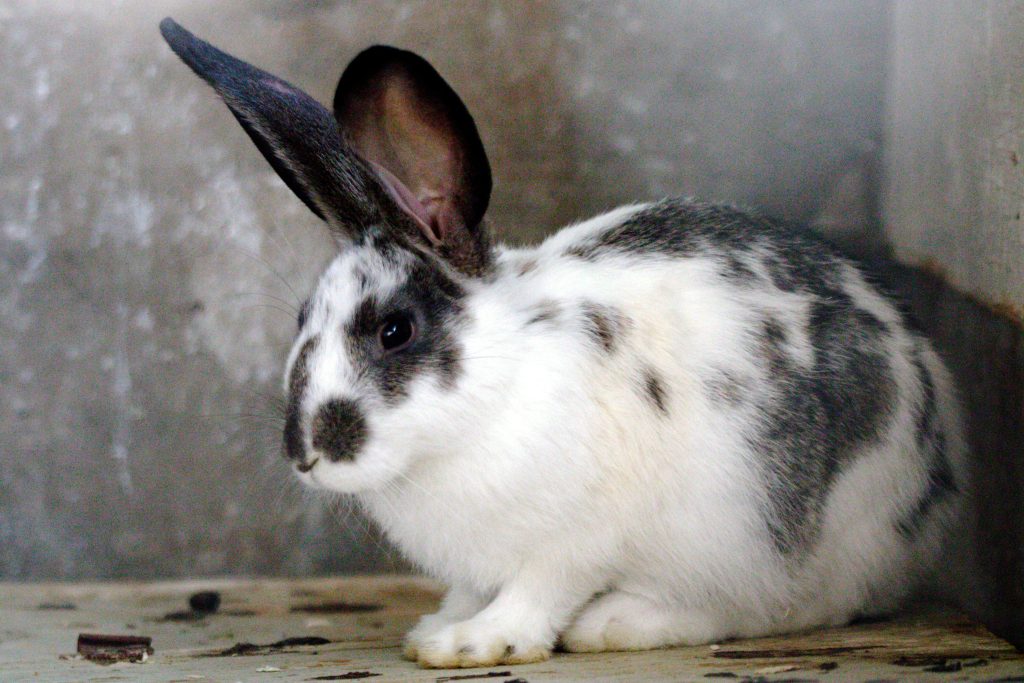
Rabbit ear positions reveal a wide range of emotions, from forward-facing ears indicating intense curiosity to flattened ears signaling either deep relaxation or extreme fear. Upright but relaxed ears show calm awareness, while “airplane ears” extending to the sides mean your rabbit is comfortably listening to their environment. To accurately read your rabbit’s body language, you must always look at these ear angles in combination with their overall posture.
However, judging your rabbit solely by their ear position is the fastest way to misinterpret their message. As I advise in my other rabbit behavior guides, true understanding requires evaluating the total picture. In this guide, we’ll look at the specific meanings behind individual ear positions, how to decode tricky combinations, and how to interpret the subtle, unique shifts of lop-eared rabbits.
1. Why Rabbit Ear Position Matters
Rabbits are a classic prey species, meaning they are basically nature’s ultimate snacks. In the wild, survival depends entirely on an animal’s ability to detect threats long before those threats detect them. That evolutionary pressure is why domestic rabbits, descendants of the European wild rabbit, possess such uniquely designed and sensitive ears. Their ears are not just for hearing; they are sophisticated survival tools that pull double duty as a complex visual language.
- Acoustic Engineering: According to the RSPCA’s rabbit behavior and anatomy guide, a rabbit’s ears are physically curved like satellite dishes to catch and amplify microscopic sound frequencies while pinpointing their exact geographic origin. This allows them to hear predators from miles away.
- Independent Swiveling: A rabbit can rotate each ear independently up to 270 degrees thanks to a complex network of internal muscles. This allows them to monitor a sound to their left while simultaneously tracking a noise behind them without ever moving their head. It is a genuine acoustic marvel wrapped in fluff.
- Silent Communication: Because making vocal noise actively attracts predators, leaning on visual cues is how rabbits communicate intentions and emotional states to their companions, using their ears as the primary flagpoles for these silent broadcasts.
These biological adaptations explain why a rabbit’s ears are in constant motion. They are effectively processing the entire soundscape of your home, filtering out familiar noises like your fan or refrigerator while remaining locked onto the sudden sound of a bag opening or a door creaking. Understanding that their ears are active tools for survival helps you realize that ear movement is rarely random; it is almost always a calculated reaction to their environment.
2. Rabbit Ear Positions and Their Meanings
Before diving into the behavioral nuances of rabbit body language, check the summary chart below. Keep in mind that a rabbit’s emotional state can shift in milliseconds, so you will often see them cycle through several of these positions in a matter of minutes as their environment changes.
Quick Summary Chart
Table 1: Quick Reference Guide to Rabbit Ear Positions
| Ear Position | Primary Emotional State | Common Scenario |
| Pointing Forward | Curious / Highly Alert | Hearing a new sound or spotting a treat |
| Relaxed Upright | Calm / Aware | Resting safely in a familiar environment |
| Airplane | Relaxed / Monitoring | Resting comfortably |
| Ears Turned Sideways | Deep Relaxation / Sleepy | Transitioning to nap or flop |
| Held Back Slightly | Caution / Submission / Mild Irritation | Assessing change or polite request to stop handling |
| Flattened | Extreme Fear OR Duality (Relaxation/Pets) | Hiding from noise OR enjoying head rubs |
| One Up, One Down | Split-Focus Monitoring | Tracking a minor sound while resting |
| Constant Rotation | Active Acoustic Mapping | Processing complex or new soundscape |
While this table provides a fast and convenient way to identify common moods, it’s important to remember that a single snapshot of an ear position doesn’t tell the entire story. Rabbits are subtle communicators, and their intent often lies in the context of their entire body posture and surrounding circumstances.
In the detailed breakdown below, we will explore the nuances of each angle, from active acoustic mapping to the duality of flattened ears, helping you to move beyond simple identification toward a genuine, context-rich translation of your rabbit’s silent dialogue.
Ears Pointing Forward

When a rabbit’s ears are pitched sharply forward, it indicates a state of focused attention, with the openings facing directly toward the source of interest. This posture signals intense curiosity, alertness, or the active evaluation of a new sound or object.
According to The House Rabbit Society’s behavior breakdown, iconic upright ears are vital for communication and sound tracking. You will typically notice that their nose twitching speeds up significantly when their ears are in this position, as they are trying to gather olfactory and auditory data simultaneously. You will see this when your rabbit hears the refrigerator door open, encounters a new toy, or spots a stranger entering the room.
Relaxed Upright Ears

This is the standard baseline position for most upright-eared rabbits. The ears point upward but remain wide apart, facing slightly outward rather than rigidly forward. The muscles at the base of the ears are untensed.
This indicates a calm awareness, meaning the rabbit is paying attention to the room but does not feel threatened or overly excited. This is the ideal default state you want to see in a happy house rabbit as they casually explore their territory or hang out near your feet.
Airplane Ears
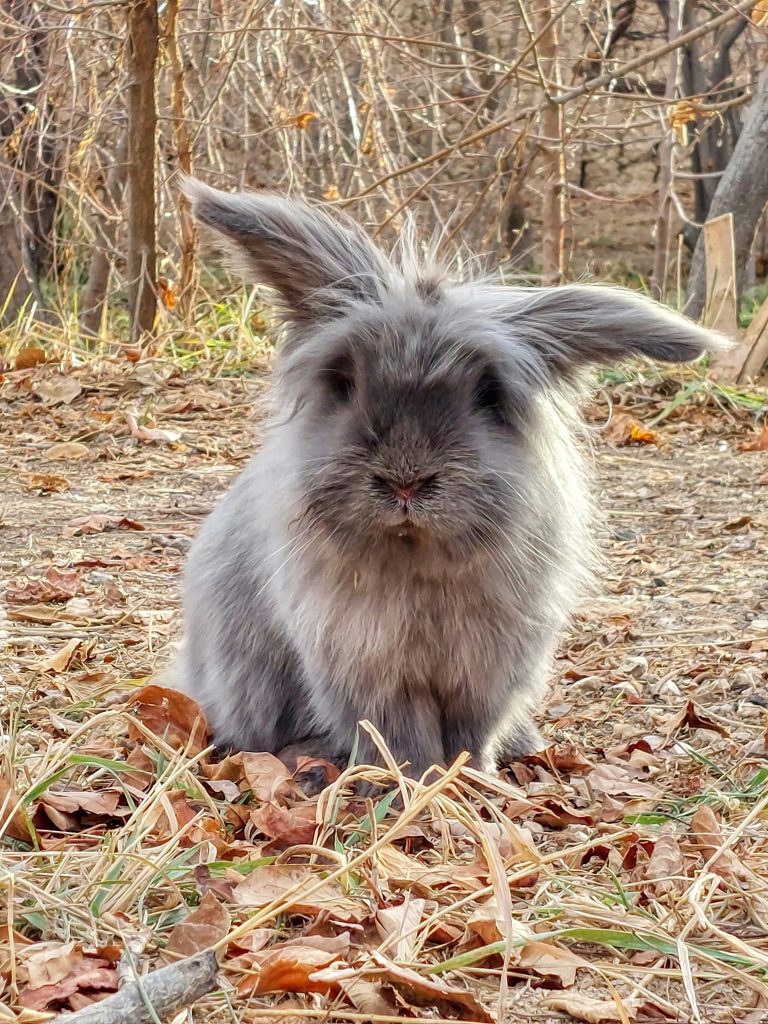
In this position, the ears extend outward to the sides of the head, mimicking the wings of an airplane or a low-flying glider. This indicates relaxed, multi-directional listening where the rabbit is comfortably monitoring the surroundings.
I see this exact posture constantly with my rabbit Mocha; she will rest in her favorite sunny spot,mostly asleep, while her “wings” drift outward to catch ambient house noises without spending any real energy. The PDSA’s rabbit body language guide outlines that relaxed rabbits often show their comfort when lying down or when their bodies do not look tense.
Ears Turned Sideways
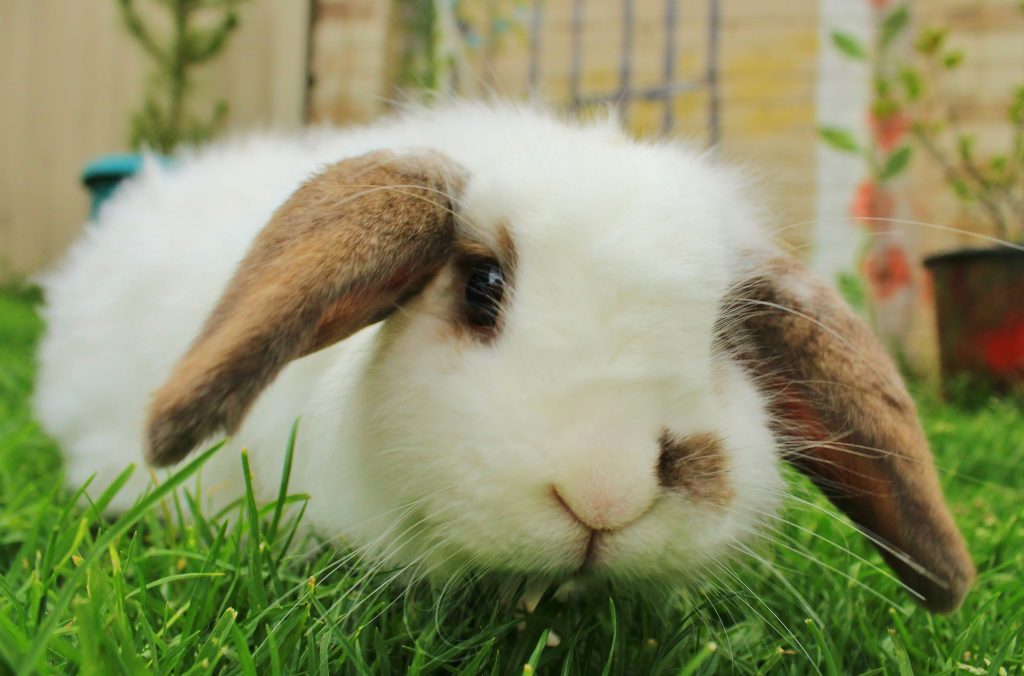
This position is similar to airplane ears, but the ear openings are turned explicitly outward or even slightly downward toward the floor. This points to deep relaxation, heavily reduced alertness, or a rabbit actively transitioning into a deep REM nap.
The rabbit feels entirely secure in their territory and has temporarily “turned off” their active predator radar. Often, a rabbit will transition directly from this ear position into a dramatic, fully stretched-out side flop.
Ears Held Back Slightly

When the ears are positioned vertically but angled back at roughly a 45-degree angle toward the tail, it usually points to a shift in mood. Because they are not pinned hard against the fur, this gentle backward angle indicates caution, mild irritation, uncertainty, or polite submission.
It is a transitional state, they are deciding whether to relax or flee. You may notice this right before a rabbit decides to politely walk away from you if they are tired of being handled, or when they are assessing an unfamiliar but non-threatening change in their environment.
Ears Flattened Against the Back
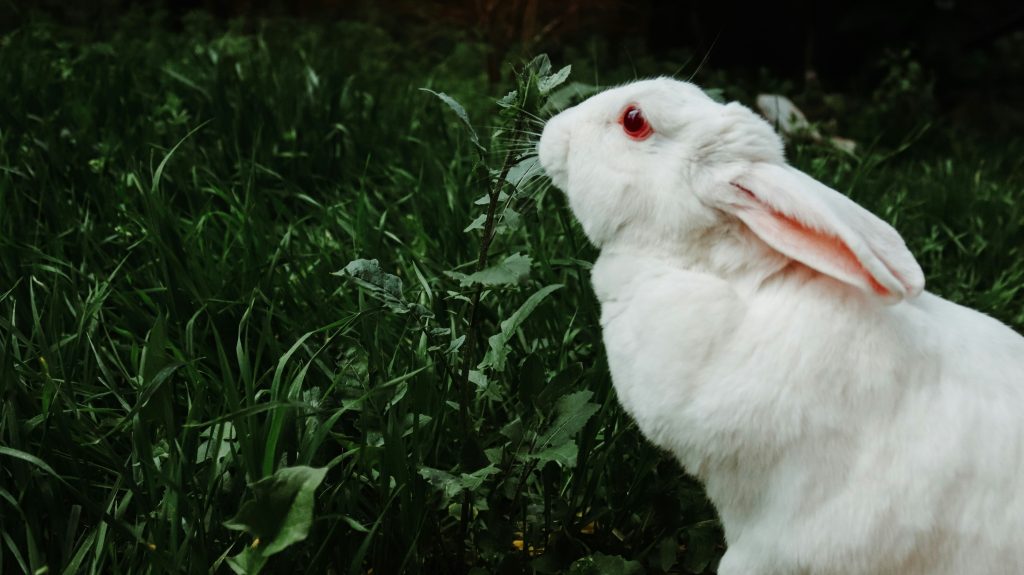
This is the most complex position to interpret because it represents two completely opposite emotional extremes: complete safety versus severe distress. A behavioral study published in Frontiers in Veterinary Science established that rabbits hold their ears tightly pressed back during periods of high acute stress, correlating directly with spikes in fear and defensive aggression.
However, it can also mean contentment or a desire for grooming. To tell the difference, you must look at the body. A terrified or angry rabbit will have a rigid, compressed body with wide, unblinking eyes, while a relaxed rabbit will feature soft eyes, a melted “meatloaf” body shape, and may even be grinding their teeth in pleasure.
One Ear Up, One Ear Down
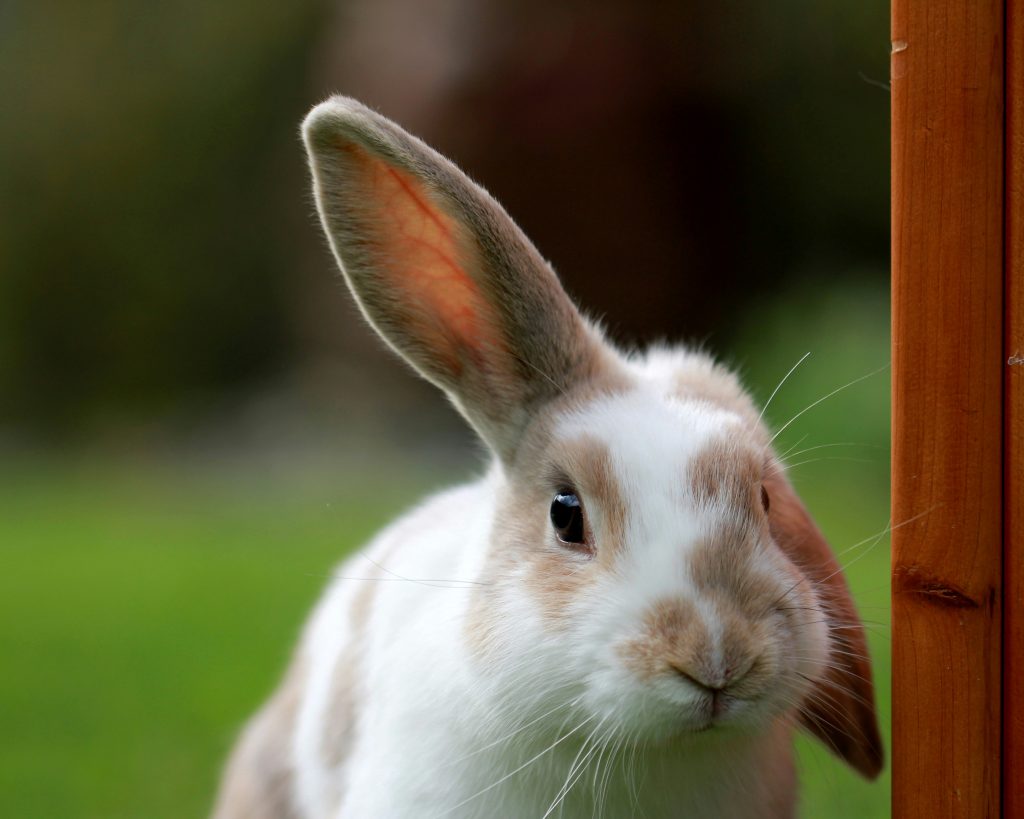
When one ear stands vertically alert while the other ear is dropped, tilted sideways, or completely relaxed, the rabbit is engaging in split-focus monitoring. They are enjoying a relaxed state but have cleverly committed one single radar dish to track a specific, minor background noise while letting the rest of their body rest.
It is a brilliant display of selective attention. This is incredibly common in semi-noisy households, during a lazy afternoon, or in mixed-breed rabbits that only have partial muscle control over their ear cartilage.
Constant Ear Rotation
If the ears are in perpetual, rhythmic motion, twitching and swiveling independently like frantic radio antennas, the rabbit is engaging in active acoustic mapping. They are trying to process a complex, overlapping, or unfamiliar soundscape.
It takes plenty of mental energy for a rabbit to decipher multiple sound waves at once. You will see this frequently when a rabbit is brought into a new room, when windows are open to busy outside noises, or when multiple people are talking at once in the same space.
3. How to Read Ear Position Correctly
To avoid completely misreading your bunny, you should stop trying to memorize standalone ear positions. Because rabbits naturally freeze when they are unsure of a situation, their ears might be the only part of their body actively moving. Therefore, you must evaluate the Ear + Body Formula.
Decoding Combined Signals
The behavioral guidelines provided by Oxbow Animal Health’s aggression guide highlight how critical this broader context is when deciphering combined signals. Looking at the tail, the tension in the spine, and the shape of the eyes will give you the answers the ears alone cannot.
Table 2: The Rabbit Body Language Decoding Formula
| Ear Position | Accompanying Posture | True Meaning |
|---|---|---|
| Forward Ears | Loose, hopping movement | Happy, confident curiosity |
| Forward Ears | Low, frozen crouch | Tense uncertainty; analyzing a threat |
| Flattened Ears | Rigidity, lunging, tail up | Angry, territorial warning; ready to bite |
| Flattened Ears | Loose “loaf” shape, soft eyes | Utter comfort; feeling safe and sleepy |
| Ears Back | Chin thrust forward on ground | Requesting head rubs (“Groom me now”) |
4. Ear Positions in Lop Rabbits
If you own a lop-eared rabbit, standard behavioral charts can feel frustrating. Because their ears naturally hang down due to a selective structural variation in their ear cartilage, they physically cannot hold their ears vertically upright.
However, as noted by PetMD’s rabbit body language guide, lops still communicate clearly with their ears—they just do it with a unique, subtle accent that requires a sharper eye from the owner.
Understanding the Lop “Crown”
To read a lop rabbit’s ears, you have to look closely at the “crown”, the firm, cartilaginous ear base on the very top of the head, and the overall head angle. When curious or alert, a lop cannot raise their ears skyward, but they will actively swing the entire ear forward so the openings face front, bunching the crown up tightly. In contrast, an angry or fearful lop will pin the length of their heavy ears tightly against their neck and spine, locking their jaw and flattening their facial muscles.
The “Half-Lop Radar” Technique
Because of their anatomical limitations, lops have developed creative workarounds to monitor their environment. My rabbit Chino is a great example of a unique lop mechanism I call the “half-lop radar.”
When he hears a sudden noise while resting, he cannot lift his ears up, so he sharply pivots his head sideways and flairs the lower edge of his ear canal outward to catch the sound waves. This head-tilt combined with an outward flair is their equivalent of an upright rabbit’s “one ear up” monitoring posture.
5. When Ear Position Could Signal a Health Problem

Not every ear shift is behavioral. Because rabbits instinctively hide illness to protect themselves from appearing vulnerable to predators, prolonged changes in how they hold their ears can be your earliest warning sign of a severe medical issue. By the time a rabbit stops eating, the problem is already critical, so monitoring their ear mechanics is a great preventative health habit.
According to veterinary insights from VCA Animal Hospitals’ rabbit disease resource, severe ear pain, root elongation from dental disease, or internal infections are primary drivers for sudden, unexplained postural shifts. Watch out for these three major red flags:
- Persistent Head Tilt: If a rabbit’s ears are pulled to one side along with a persistent head tilt (often called “wry neck”), this can indicate a serious inner ear infection or the dangerous neurological parasite E. cuniculi, both of which require aggressive treatment. The RWAF essential care guide emphasizes that a head tilt is a major clinical indicator that a rabbit requires immediate veterinary evaluation. You can also cross-reference my breakdown of rabbit ear infection symptoms if you spot this posture.
- Sudden Unilateral Droop: If a normally upright-eared rabbit suddenly loses the ability to lift one ear and it droops constantly, they may have suffered a painful ear base injury, torn cartilage, or an internal abscess pushing against the ear canal.
- Constant Scratching and Shaking: Frequent, violent head shaking followed by frantic, constant ear scratching usually points directly to ear mites or an overgrowth of yeast or bacteria. The MSD Veterinary Manual on parasitic diseases documents how ear mite infestations lead to significant inflammation and scratching behaviors.
Health Checklist Matrix
This quick-reference matrix is designed to help you differentiate between common, benign behavioral variations and genuine medical emergencies that require immediate intervention. Since rabbits are naturally inclined to hide their pain, you must use this guide to sharpen your observational skills and catch subtle, early-stage symptoms before they escalate into critical health crises.
Table 3: Behavioral Ear Quirks vs. Medical Red Flags
| Ear Observation | Potential Health Issue | Required Action |
|---|---|---|
| Persistent Head Tilt | Inner ear infection or E. cuniculi | Immediate veterinary care |
| Sudden Droop (One Ear) | Ear base trauma or internal abscess | Prompt veterinary exam |
| Frantic Shaking & Scratching | Ear mites or bacterial overgrowth | Requires medical treatment |
| Rotational Twitching | None (Normal acoustic mapping) | Monitor; no action needed |
Catching these changes early makes a massive difference in your rabbit’s recovery. You know your bunny’s normal baseline better than anyone else, so trust your gut if their ear posture suddenly looks “off” for more than a few hours. When in doubt, a quick call to an exotic vet is always the smartest move to ensure those radar dishes stay healthy and finely tuned.
6. Common Myths About Rabbit Ear Positions

There are several persistent myths surrounding rabbit ear communication that often lead well-meaning owners astray, causing them to accidentally stress out their pets. Because rabbits are so unique compared to cats and dogs, cross-species assumptions rarely work. Let’s clear up the confusion:
- Myth 1: Flattened ears always mean a rabbit is angry. This is the most common mistake new owners make. As we explored in the formula section, and dive into further in my definitive guide to rabbit behavior, flattened ears frequently accompany a state of blissful relaxation or a submissive demand for pets. If their eyes are half-closed, they are happy, not mad.
- Myth 2: Forward ears always mean a rabbit is happy. While you might be reading up on how to tell if your rabbit is happy, assuming forward ears equal a good mood is a mistake. Forward ears simply mean focused attention and data gathering. If the rabbit is frozen in a low crouch, they are terrified and trying to identify a threat.
- Myth 3: Lop rabbits cannot communicate with their ears. Lops absolutely use subtle ear-base shifting and head angling to achieve the exact same communicative goals as their upright-eared cousins. It simply requires the owner to pay closer attention to the crown of the head rather than the tips of the ears.
Misinterpreting these behaviors often stems from applying canine or feline standards to a prey species. By learning these nuances, you avoid projecting human assumptions onto your pet, which builds trust and prevents unnecessary stress. Patience is key; as you better understand your rabbit’s silent language, these myths fade, replaced by a deeper, more rewarding connection.
7. Frequently Asked Questions
Why does my rabbit put its ears back when I pet it?
If your rabbit drops their ears back while you pet them, lowers their chin flat to the floor, and closes their eyes, it is a sign of immense pleasure and submission. This low-lying posture indicates complete safety and a direct request for head grooming.
Why does my rabbit have one ear up?
This is standard “lazy monitoring.” Your rabbit feels perfectly safe, but they keep one ear engaged to track normal household movements without having to fully wake up. This split focus allows resting bunnies to maintain ambient environmental awareness.
Why are my rabbit’s ears always moving?
Rabbits live in an auditory world. Their ears move constantly to track ambient sounds—clocks ticking, air conditioners running, or footsteps outside. This constant acoustic mapping is completely normal behavior for a healthy, alert prey animal.
Can ear position tell if my rabbit is happy?
Yes, but only when paired with a relaxed body posture. A truly relaxed, happy rabbit will display loose, untense ears that rest gently close together, alongside a soft, un-rigid body alignment.
Should I worry if one ear suddenly droops?
Yes. If an upright-eared rabbit experiences a sudden, persistent droop in one ear that does not return to normal, it warrants a prompt checkup with a rabbit-savvy veterinarian to rule out trauma or infection.
8. Conclusion
Learning to decode your rabbit’s ear positions is an ongoing process of observation. While those fuzzy radar dishes offer fantastic real-time clues about what is going on inside your bunny’s head, always remember to look at the whole picture. Combine the ear position with their body stiffness, eye openness, and tail position to unlock a truly accurate understanding of your pet’s emotional world. Soon enough, you will be reading their silent broadcasts like a seasoned pro—no translator required.
Medical & Veterinary Disclaimer: Bunnyowners.com is an informational resource for rabbit owners and enthusiasts. We are not veterinarians. The content on this website is for educational purposes only and is not a substitute for professional veterinary advice, diagnosis, or treatment. Always consult a qualified veterinarian with any questions or concerns regarding your pet’s health, medical conditions, diet, or overall care. If you have concerns about your rabbit’s health, it’s always best to reach out to a veterinarian rather than relying solely on information found online.