
Veterinary & Affiliate Disclaimer: Bunnyowners.com shares educational rabbit care resources, not professional veterinary advice. Always consult a qualified veterinarian regarding your rabbit’s medical, dietary, or behavioral needs. This post may also contain affiliate links; as an Amazon Associate and affiliate partner, we earn from qualifying purchases at zero extra cost to you.
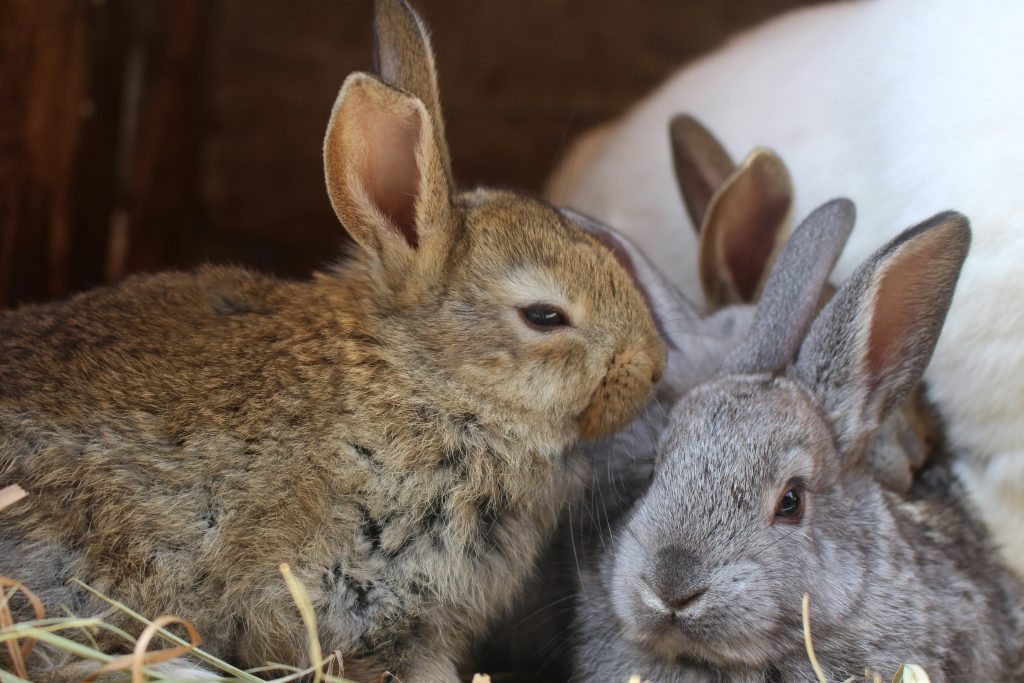
If you have ever stopped to watch your rabbits intently washing each other’s face, ears, or forehead, it is natural to wonder what that behavior actually signifies. Many owners worry whether one-sided licking means bullying, or if mutual grooming is guaranteed proof that two rabbits are fully bonded. Understanding why rabbits groom each other helps you interpret your pets’ daily social interactions with confidence.
Social grooming between rabbits is called allogrooming. While it helps clean hard-to-reach areas like the eyes and forehead, its primary purpose is reinforcing social hierarchy, reducing stress, and strengthening emotional bonds. One-sided grooming is completely normal in established pairs, though excessive fur-pulling, bald patches, or skin rawing signals a behavioral or medical problem.
Seeing your bunnies wash each other is usually a great sign, but making sense of their social cues takes a deeper look at how they interact. From the hidden dynamic of one-sided licking to the classic “head-lowering” request, diving into rabbit behavior helps put those subtle signals into perspective. Here is what your pets are really telling each other through allogrooming.
1. What Rabbit Grooming Usually Means
Before exploring the details of allogrooming, it helps to understand what the most common grooming behaviors typically indicate. While every bonded pair has its own social dynamics, the behaviors below are considered normal in healthy rabbit relationships and can help you quickly interpret what you’re seeing:
| If you see… | It usually means… |
| Two rabbits grooming each other | A strong social bond built on trust and mutual comfort |
| One rabbit doing most of the grooming | A normal dominance hierarchy within many bonded pairs |
| A rabbit lowering its head toward another | A request to be groomed |
| Gentle licking around the face and ears | Affection, trust, and relationship maintenance |
| Fur pulling, bald patches, or irritated skin | Possible barbering, stress, or an underlying medical problem |
2. What Is Allogrooming?
If you have ever caught your rabbits meticulously cleaning one another’s ears or forehead, you have witnessed one of the most vital social interactions in rabbit social groups. This behavior is called allogrooming, the act of one rabbit grooming another rabbit.
How Allogrooming Differs From Self-Grooming
Rabbits are famously fastidious creatures, spending up to 10% of their waking hours washing themselves. Self-grooming is purely functional: it removes loose fur, keeps the coat clean, and regulates body temperature.
Allogrooming, however, serves a dual function. While it does assist with hygiene, its true power lies in social maintenance. A rabbit self-grooming is maintaining its physical body; two rabbits allogrooming are maintaining their relationship.
Why Rabbits Naturally Groom Each Other
In the wild, rabbits live in complex underground warrens. Survival depends heavily on group cohesion and social stability. Grooming reduces group tension, resolves minor friction, and establishes a shared colony scent profile that helps rabbits identify trusted warren mates.
Domestic rabbits still retain many of these inherited social instincts, which is why understanding natural rabbit behavior helps owners interpret what they see at home.
3. Why Rabbits Groom Each Other
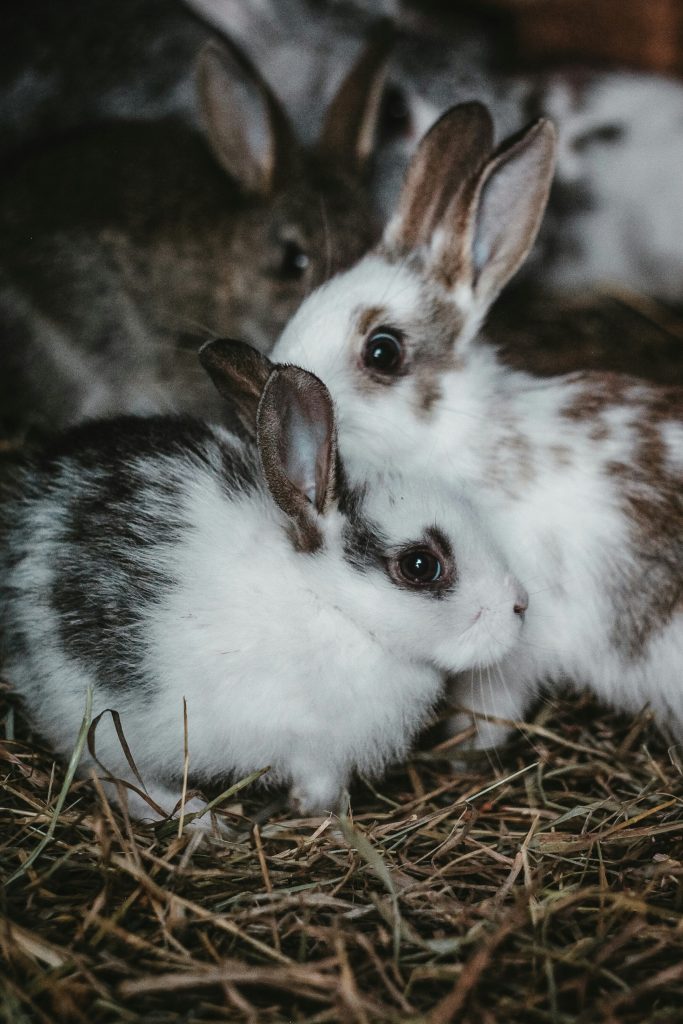
While it is easy to assume rabbits groom each other simply to keep clean, hygiene is actually a secondary benefit. The primary motivations are emotional, relational, and structural.
To Strengthen Their Bond
Grooming is the ultimate currency of trust. When a rabbit allows another to lick around its sensitive eyes and ears, it is placing itself in a vulnerable position. Regular allogrooming sessions serve as long-term relationship maintenance, occurring most often when the rabbits are relaxed and feel secure.
To Show Affection and Trust
In the immediate moment, allogrooming actively communicates affection and safety. It is frequently accompanied by soft, relaxed body language, flopping side-by-side, or tooth purring (softly grinding teeth in contentment).
To Reinforce Social Hierarchy
Contrary to human assumptions, the rabbit receiving the grooming is often the dominant partner in the relationship. In rabbit social structures, demanding grooming is an assertion of status, while providing grooming shows deference.
That said, giving more grooming doesn’t mean the submissive rabbit is being picked on. These roles are usually stable, mutually accepted, and comforting to both animals—even when grooming occurs in tandem with mounting as they sort out rank and territory.
To Groom Hard-to-Reach Areas
From a purely physical standpoint, rabbits cannot easily lick their own foreheads, the backs of their necks, inside their ears, or around their eyes. Allogrooming provides a vital practical service, keeping these delicate facial zones clean and clear of debris.
To Reduce Stress
Grooming has a calming effect that helps lower stress after mildly unsettling events. Following a sudden loud noise, a startling household event, or a routine cage cleaning, bonded pairs will often huddle together and initiate grooming to soothe one another and bring collective stress levels back down.
To Reconnect After Temporary Separation
Temporary separations—such as a trip to the vet or a brief stay in separate enclosures—can disrupt a pair’s shared scent profile. Since rabbits rely heavily on olfactory cues to recognize their companions, reunited pairs often dive straight into intense grooming to re-establish familiar scents.
4. What Does It Mean When One Rabbit Grooms the Other?
One of the most frequent points of confusion for rabbit owners is asymmetric grooming: why does one rabbit do 90% of the work while the other just sits there receiving royal treatment?
Why One-Sided Grooming Is Common
In many bonded pairs, grooming responsibilities are far from 50/50. A dominant rabbit may demand extensive grooming while rarely returning the favor. Alternatively, an anxious or submissive rabbit may proactively offer grooming to appease a partner and keep the peace.
In my own home with my bonded Lionheads, Mocha and Chino, this hierarchy plays out daily. Chino will routinely lie with his chin pressed flat against the rug, waiting patiently for Mocha to lick his forehead. Mocha willingly obliges for five or ten minutes straight, while Chino rarely returns more than a brief, polite lick or two before closing his eyes in total bliss.
Does the Other Rabbit Have to Groom Back?
No. A rabbit does not need to return grooming in equal measure for the bond to be healthy. As long as both rabbits display relaxed body language and neither shows signs of stress, resentment, or fear, a one-sided arrangement is completely normal and stable.
When One-Sided Grooming Becomes a Concern
Unequal grooming becomes a problem only if it shifts into compulsive behavior or dynamic breakdown. Watch for:
- One rabbit constantly chasing or cornering the other to demand grooming.
- The receiving rabbit growling, nipping, or box-pawing when asked to groom.
- Sudden changes where a rabbit that previously groomed its partner suddenly stops entirely.
5. Why Does My Rabbit Lower Its Head?
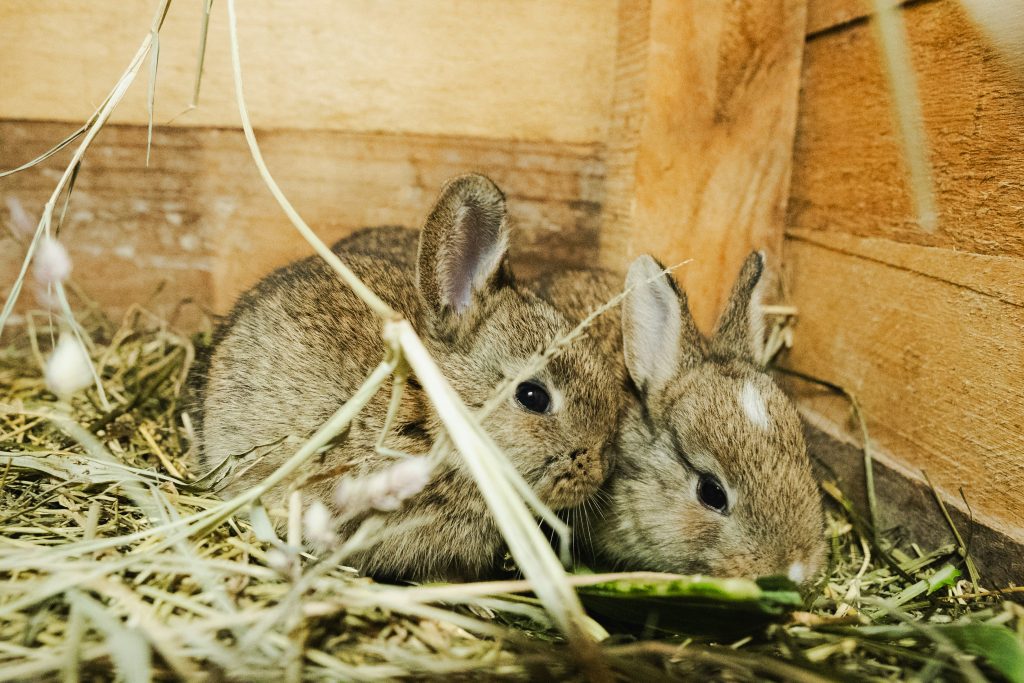
If you see a rabbit nudge its nose under another rabbit’s chin or press its head flat to the ground, you are looking at the universal rabbit request: “Groom me now.”
They’re Asking to Be Groomed
When a bunny presses its head flat against the rug, it’s offering up its forehead in a submissive posture that practically begs for licks—one of the most unmistakable signals in rabbit body language.
What If the Other Rabbit Refuses?
Grooming requests are not always granted immediately. When a request is ignored, a few classic behaviors unfold:
- The Grooming Standoff: Both rabbits may press their heads flat against the floor side-by-side, each waiting for the other to groom first. They may remain frozen in this silent battle of wills for minutes until one gives in or walks away.
- Gentle Nudging: The requesting rabbit may firmly shove its nose under the other’s chin to demand attention.
- Walking Away: If the partner simply isn’t in the mood, the requester will eventually give up and hop off without incident. Occasional refusals are a completely normal part of daily rabbit interaction.
6. Is Grooming a Sign That Rabbits Are Bonded?
Yes, allogrooming is one of the strongest indicators of an established rabbit bond. However, context matters significantly.
Signs Grooming Reflects a Healthy Bond
When grooming is paired with the following behaviors, you can be confident the bond is strong and genuine:
- Flopping and Loafing: Resting closely alongside one another in relaxed postures.
- Shared Meals: Eating hay side-by-side without guard behavior or food aggression.
- Tooth Purring: Soft vibration of the jaw while being groomed, signaling deep relaxation.
These behaviors align with recommended care practices from the House Rabbit Society’s bonding guide, especially when introducing pairs in neutral territory and allowing trust to build gradually over time.
When Grooming Doesn’t Necessarily Mean the Bond Is Complete
In newly introduced rabbits, grooming can sometimes be ambiguous. A submissive rabbit may groom a dominant partner out of stress or fear to prevent an attack, rather than out of genuine comfort. If grooming is interspersed with chasing, nipping, or tense, upright postures, the bond is still developing and requires careful supervision.
7. When Grooming Is Normal—and When It Isn’t
While social grooming is overwhelmingly positive, excessive or aggressive grooming can cause serious physical issues.
Normal Grooming
- Soft, gentle licking concentrated on the face, ears, and neck.
- Brief to moderate sessions lasting anywhere from a few seconds to 15 minutes.
- Fur remains smooth, dry, and healthy with no sign of hair loss.
Grooming That Indicates a Problem (Barbering)
Overgrooming—known clinically as barbering—occurs when one rabbit compulsively licks, nips, or pulls fur from its companion. To help you quickly evaluate whether your rabbits’ grooming habits have crossed from healthy affection into harmful behavior, the chart below outlines common symptoms, their typical causes, and what steps you should take:
Overgrooming and Barbering Symptoms
| Symptom | Underlying Cause | Action Required |
| Thinning Fur / Bald Patches | Compulsive barbering, boredom, or dominance stress | Increase environmental enrichment; evaluate pair dynamics |
| Raw, Red, or Broken Skin | Aggressive fur pulling or companion biting | Separate pair temporarily; seek veterinary care |
| Compulsive Licking of One Spot | Localized skin parasite, fungal infection, or joint pain | Schedule a full veterinary health exam |
Getting a professional evaluation for hair loss and skin irritations is recommended if sudden fur loss occurs. Additionally, when a rabbit licks its owner, it represents affection distinct from rabbit-to-rabbit grooming.
8. Why Aren’t My Rabbits Grooming Each Other?
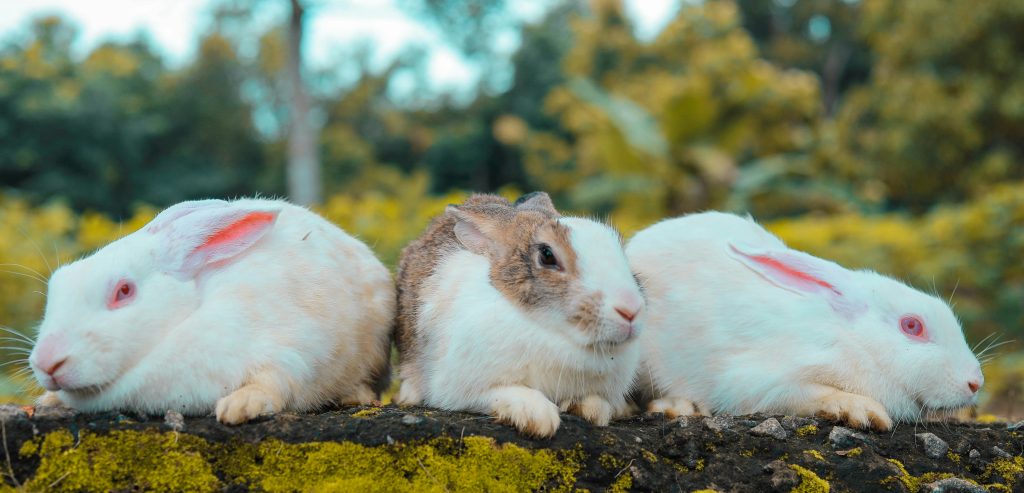
If your rabbits live together peacefully but rarely or never groom each other, it is natural to wonder if something is wrong.
They’re Still Building Trust
Reaching the level of comfort required for mutual grooming takes time. Newly paired rabbits may take weeks or even months of peaceful cohabitation before taking the final step of licking one another.
They Simply Show Affection Differently
Just like humans, individual rabbits have unique personalities. Some pairs express their bond through constant grooming, while others prefer simply sitting side-by-side, sharing meals, or sleeping back-to-back without much physical licking.
Stress or Illness May Reduce Grooming
If a pair that used to be super affectionate suddenly stops grooming, it is worth checking in on their physical health and surroundings. Underlying pain, dental trouble, arthritis, or even a sudden change in the house—like a recent move or a new pet—can cause a rabbit to pull back socially and disrupt normal grooming habits.
Can Rabbits Groom Each Other Too Much?
While frequent washing is usually a great sign, non-stop licking isn’t ideal. If one rabbit obsessively grooms the other without taking breaks—or if the receiving partner ends up with wet, matted fur, bare patches, or red skin—it has crossed into compulsive barbering. As detailed in Rabbit.org’s research guide on overgrooming, repetitive stress habits often ease up once you introduce new environmental enrichment, adjust their daily space, or work with your vet to address physical health factors.
9. Frequently Asked Questions
Do rabbits groom each other to show love?
Yes. In rabbit body language, grooming is one of the highest expressions of affection, trust, and social closeness.
Why does only one rabbit do all the grooming?
Asymmetric grooming is completely normal and usually reflects the social hierarchy of the pair. The dominant rabbit often receives far more grooming than it gives.
Does the dominant rabbit always receive more grooming?
In the vast majority of cases, yes. Requesting and receiving grooming is a primary privilege of dominance in rabbit social groups.
Can rabbits groom each other before they’re bonded?
Rabbits may offer brief grooming licks during the bonding process as a gesture of appeasement or submission, but sustained, relaxed allogrooming typically signals that the bond is fully established.
Why do rabbits groom each other before sleeping?
Grooming has a calming effect and often becomes part of a rabbit’s routine before resting together.
Is rabbit grooming the same as licking?
Yes. Rabbits groom using their tongues. Unlike cats, whose rough tongues rasp away loose fur, a rabbit’s smooth tongue gently cleans the coat and licks the skin.
Why do rabbits groom each other’s eyes?
Rabbits often groom around each other’s eyes because this area is difficult for them to clean alone. Face grooming also carries social meaning because allowing another rabbit near such a vulnerable area shows trust and comfort.
10. Final Thoughts
Allogrooming is one of the most rewarding behaviors to observe in pet rabbits. It offers a direct window into their social hierarchy, trust levels, and emotional state. As long as the grooming is gentle, mutually accepted, and free of fur pulling or skin irritation, sit back and enjoy watching your bonded pair reinforce their unique partnership.
Medical & Veterinary Disclaimer: Bunnyowners.com is an informational resource for rabbit owners and enthusiasts. We are not veterinarians. The content on this website is for educational purposes only and is not a substitute for professional veterinary advice, diagnosis, or treatment. Always consult a qualified veterinarian with any questions or concerns regarding your pet’s health, medical conditions, diet, or overall care. If you have concerns about your rabbit’s health, it’s always best to reach out to a veterinarian rather than relying solely on information found online.