
Veterinary & Affiliate Disclaimer: Bunnyowners.com shares educational rabbit care resources, not professional veterinary advice. Always consult a qualified veterinarian regarding your rabbit’s medical, dietary, or behavioral needs. This post may also contain affiliate links; as an Amazon Associate and affiliate partner, we earn from qualifying purchases at zero extra cost to you.
If your rabbit has suddenly started mounting your arm, their favorite blanket, or a bonded partner, it is completely natural to worry. Many owners immediately wonder whether their rabbit is becoming aggressive, overly hormonal, or trying to show dominance. However, in the world of rabbit communication, this intense physical display is rarely just about mating—and understanding the trigger is the key to managing it.
Mounting is a natural rabbit behavior driven by hormones, social communication, excitement, stress, or learned habits. Both male and female rabbits mount to express reproductive instincts, establish relationship status within a bond, respond to excitement, or redirect frustration. While spaying or neutering significantly reduces hormone-driven mounting, fixed rabbits may still mount occasionally to maintain their social balance or react to environmental stress.
Determining whether your rabbit’s behavior is a temporary phase, a normal social exchange, or a sign of hidden frustration comes down to reading the surrounding context. By evaluating their fixed status, their target, and their overall body language, you can easily pinpoint the root cause and restore calm to your home. Here is a complete look at why rabbits mount, how to handle it safely, and when it requires your intervention.
1. How to Tell Why Your Rabbit Is Mounting
Mounting behavior can look identical on the surface, but the reason behind it depends heavily on your rabbit’s age, reproductive status, target, and overall body language. A young rabbit mounting everything in sight is usually experiencing a hormonal change, while a bonded pair may simply be communicating social rank. Although mounting is usually normal, sudden obsessive mounting—especially in older rabbits—can sometimes signal stress, pain, or another underlying medical issue.
Use the guide below to compare your rabbit’s situation with the most common mounting triggers. This quick reference can help you decide whether the behavior is a normal part of rabbit communication or something that needs closer attention:
Quick Guide to Common Mounting Situations
| If your rabbit is… | Most likely reason | Usually normal? |
|---|---|---|
| 3–6 months old | Puberty and surging hormones | Yes |
| Recently spayed or neutered | Hormones are still declining (4–8 weeks) | Yes |
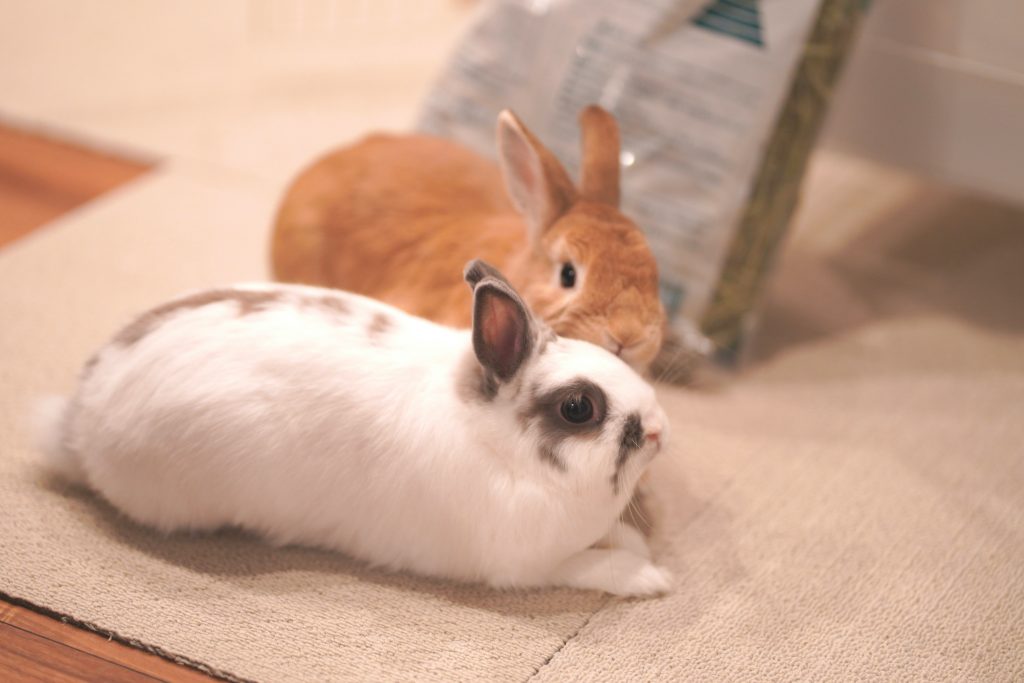
| Mounting a bonded rabbit | Establishing or maintaining social rank | Yes |
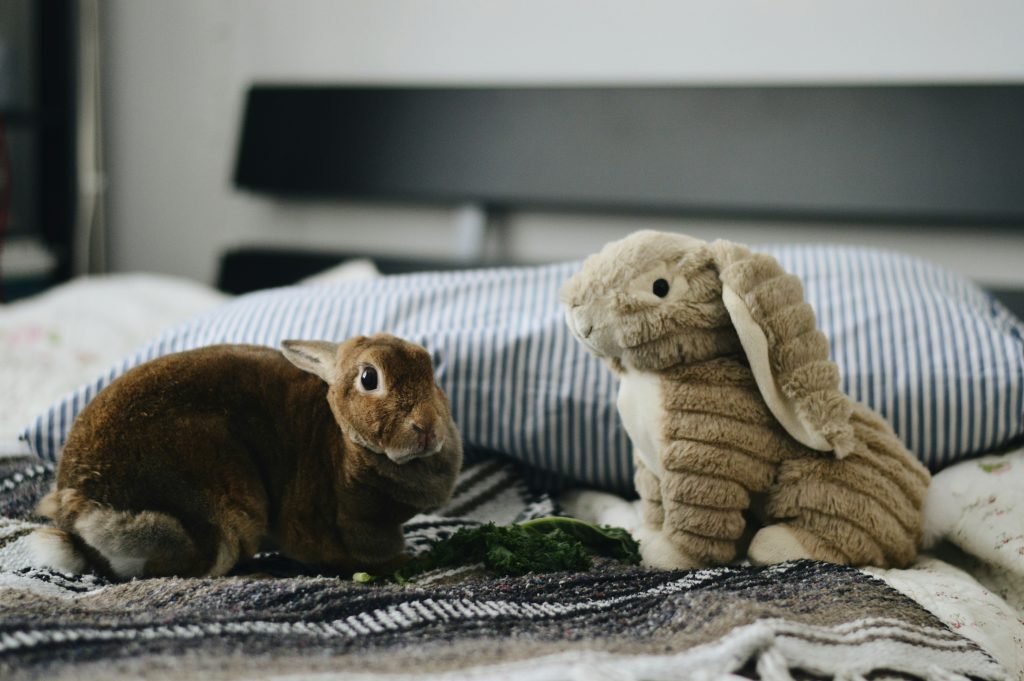
| Mounting blankets or stuffed animals | Redirected hormones, boredom, or scent-marking | Yes |
| Mounting your leg or foot | Excitement, attention-seeking, or social status | Yes |
| Mounting constantly and not eating | High stress or potential medical issue | No (Needs attention) |
The same mounting behavior can mean completely different things depending on who—or what—your rabbit is mounting. A young rabbit mounting everything has a very different explanation than a bonded pair briefly establishing their relationship.
2. Why Do Rabbits Mount Things?
While human owners usually associate mounting with reproduction, rabbits use it as a versatile form of non-verbal communication. Mounting is just one part of how rabbits express social boundaries, emotional excitement, or reproductive drives through complex physical gestures and postures. Intact rabbits may also spray urine, chin objects, circle your feet, or honk while mounting as part of a complete suite of territorial behaviors.
The most common triggers fall into five categories: puberty, social rank, excitement, boredom, and lingering hormones after spaying or neutering. The reason your rabbit mounts depends largely on age, whether they are fixed, and what they are mounting.
Sexual Hormones & Puberty
When a rabbit reaches sexual maturity (typically between 3 to 6 months of age, depending on the breed), surging testosterone and estrogen trigger instinctual mating drives. According to guidance on behavioral welfare from Rabbit Welfare Association and Fund, sexual maturity alters social demeanor, making intact males (bucks) and intact females (does) mount other rabbits, inanimate objects, or their owners’ limbs to satisfy reproductive urges.
Establishing Hierarchy & Social Rank
Rabbits naturally establish and maintain a social hierarchy within bonded pairs and groups. Many rabbits tolerate brief mounting as part of status communication and relationship negotiation, though some will move away or object if it becomes excessive. During the early stages of pairing bunnies together, brief mounting is one way rabbits negotiate their relationship before settling into a stable pair. If status negotiations turn hostile, it can sometimes escalate into confrontational behavior and biting, which requires immediate owner separation.
Excitement, Overstimulation & Boredom
Rabbits often express excitement or stress through physical behaviors like mounting. Sudden bursts of environmental excitement—such as pre-dinner anticipation, post-zoomie energy spikes, entering a fresh free-roam area, or meeting new visitors—can trigger overstimulation. These energetic bursts are often accompanied by joyful displays like aerial twists and leaps. Conversely, severe boredom or lack of space can cause a rabbit to obsessively mount toys or blankets to expend built-up, unused energy.
Learned Habit After Neutering
If a rabbit undergoes surgery later in life, mounting often transitions from an amorous urge into an ingrained behavior. As highlighted in PetMD’s medical guide on rabbit spaying and neutering, lingering hormones take four to six weeks to completely dissipate post-op. Continued mounting throughout this transitional phase is a normal part of their body settling down.
Redirected Behavior & Scent Marking
Some rabbits redirect mounting toward blankets, pillows, stuffed animals, or shoes because these soft objects retain scent and provide a safe outlet for hormonal or social behaviors. When an unbonded or territorial rabbit feels a strong urge to mark space but lacks a partner, targeting plush household items helps them release built-up tension.
3. Is Rabbit Mounting Always About Dominance?
Many owners assume mounting means their rabbit is trying to be the “boss,” but dominance is only one possible explanation. Rabbits mount for hormonal reasons, excitement, communication, and social adjustment.
Thinking of mounting as a purely aggressive power move misses the wider picture. A rabbit mounting a pillow is usually not attempting to control territory; it is more often responding to scent, excitement, hormones, or redirected energy. Looking at the entire interaction—ear positions, chasing, grooming, and whether the other rabbit accepts the behavior—gives you a much clearer answer than focusing on dominance alone.
4. Why Did My Rabbit Suddenly Start Mounting?
If your rabbit was previously calm and has abruptly started mounting everything in sight, several distinct triggers may be at play:
- Puberty: This is the single most common reason for sudden behavioral shifts in young rabbits. Sexual maturity typically hits between 3 and 6 months of age, causing hormone levels to surge rapidly and triggering overnight habits like spraying, chinning, and persistent humping.
- Environmental Changes & Stress: Moving to a new home, rearranging their pen, or bringing unfamiliar scents into the house can make a rabbit feel insecure. During periods of territorial uncertainty, many rabbits increase marking habits like scent-marking with their chin to reclaim their space.
- Seasonal Shifts: Seasonal increases in daylight can temporarily heighten hormonal behavior, even in indoor rabbits. As daylight hours lengthen in early spring, indoor rabbits often experience mild biological drives that elevate excitement and territorial displays.
- Shifts in Warren Dynamics: Changes in bonded routines can instantly reopen relationship negotiations. Introducing a new pet, temporary separation between a pair, or even minor changes to daily exercise schedules can lead to a sudden spike in rank-testing mounting.
- Boredom & Limited Exercise: A sudden lack of physical outlets forces rabbits to redirect pent-up energy. If bad weather or schedule changes reduce your rabbit’s free-roam time, they may channel that frustration into compulsive mounting of pillows, toys, or human feet.
5. Why Does My Female Rabbit Mount?
A widespread misconception among pet owners is that mounting is exclusively male behavior. Female rabbits mount as well, and the behavior is often related to social boundaries, territorial feelings, or hormonal changes.
Social Dynamics in Does
Female rabbits can display strong territorial and social behaviors within a household. A spayed female may mount another rabbit—male or female—as part of normal relationship negotiation or to defend high-value territory like feeding areas or preferred sleeping spots. Some female rabbits can display strong territorial behaviors, especially around nesting areas, food, or preferred spaces, so mounting may appear alongside digging, lunging, or guarding favorite areas.
Hormonal Cycles & False Pregnancies
Intact female rabbits experience intense hormonal surges and can undergo false pregnancies (pseudopregnancies). During false pregnancies, hormonal changes can increase territorial behavior, nesting behavior, and mounting toward toys or companion rabbits as if driven by maternal or reproductive instincts.
6. Why Does My Neutered Rabbit Still Mount?
It can be surprising to see a rabbit continue mounting long after being fixed. Understanding the distinction between physical hormones and learned social behavior explains why this occurs.
The Hormone Clearance Window
Spaying or neutering removes the source of sex hormones, but existing hormones in the bloodstream take time to dissipate. Owners may continue to see hormonal behaviors—including mounting, spraying, and chinning—for several weeks after surgery while hormone levels decline.
Non-Hormonal Motivation
Once reproductive hormones have largely dissipated, any remaining mounting is driven purely by communication, personality, or habits. Neutered rabbits may still mount as part of normal social interaction, excitement, or learned behavior.
7. Why Does My Rabbit Mount Me?
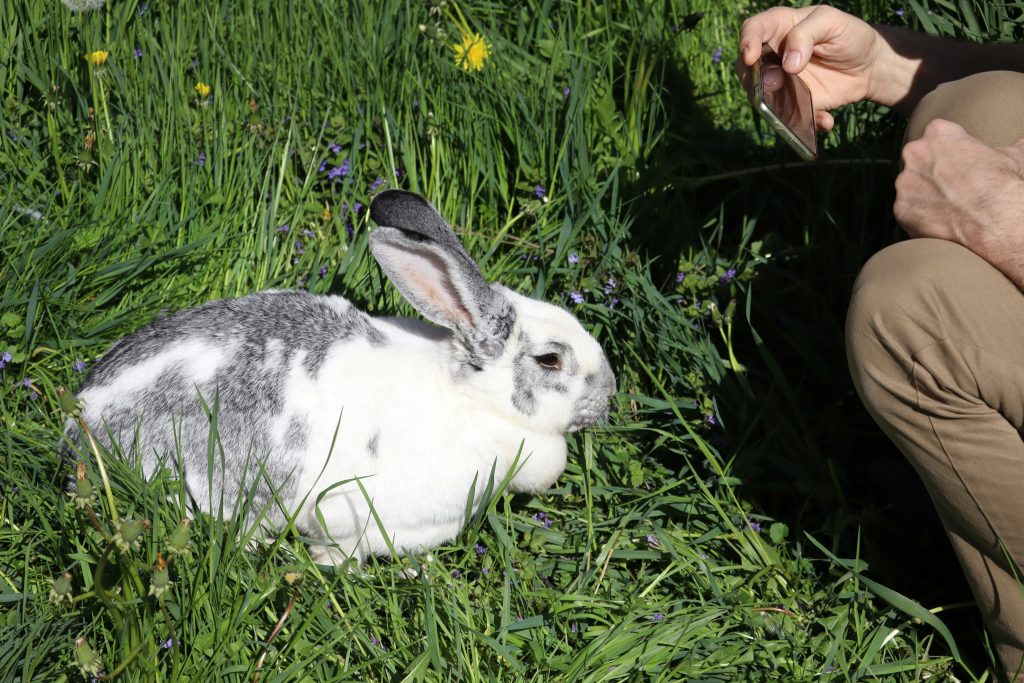
When a rabbit targets an owner’s feet, legs, or arms, the behavior usually stems from social perception, attention-seeking, or intense excitement. Human-directed mounting is especially common in rabbits that have formed a strong bond with their owner, because they may view you as part of their social group. Understanding this behavior becomes easier when viewed alongside other interactive habits, such as looping around your ankles.
Status Communication vs. Seeking Attention
If a free-roaming rabbit is weaving around your ankles and attempts to mount your leg, they may view you as part of their group and attempt to establish rank. Alternatively, if mounting consistently happens right before feeding time, it may be a learned, energetic display aimed at getting your immediate attention.
Why Rabbits Nibble or Bite Clothing Afterward
It is common for a rabbit to lightly nip or tug at your pants, socks, or shirt after mounting. A gentle nip or tug afterward may be related to excitement, attention-seeking, grooming requests, or mild frustration. During mating or status displays, grabbing fur with their teeth helps the mounting rabbit anchor themselves in place. When excitement boils over during these displays, it can also lead to soft vocal buzzes or auditory cues, such as soft grunting or buzzing sounds.
8. Is Mounting Normal Between Bonded Rabbits?
Mounting is a common behavior during bonding and relationship adjustment throughout a pair’s life, but owners must distinguish between healthy social displays and dangerous fighting.
Normal Bonded Mounting vs. Signs of Trouble
| Normal Behavior | Behavior That Needs Intervention |
|---|---|
| Brief mounting that ends quickly | Continuous mounting without breaks |
| One rabbit moves away calmly | Persistent chasing and harassment |
| Rabbits groom each other afterward | Fur pulling or biting |
| Both rabbits relax together | Boxing, lunging, or full fighting |
| Occasional rank reminders | Face-mounting that risks severe eye or facial injury |
Healthy Relationship Negotiation
In a stable bond, mounting should be brief, mutually accepted, and occasional. Some chasing immediately after mounting is normal during bonding as the pair settles their hierarchy, but continuous chasing that prevents the other rabbit from resting should be interrupted.
In my day-to-day observations of my lionheads, Mocha and Chino, seasonal changes often bring out brief status checks. A quick mounting attempt from Chino during these transitions isn’t about aggression—it’s just a momentary pause to confirm their dynamic. Once that brief interaction plays out, any potential tension dissolves, and they go right back to grooming each other side-by-side.
Healthy indicators include:
- Role switching: Both rabbits take turns mounting each other over time.
- Calm submission: The mounted rabbit stays still for a few seconds without panicking or fleeing.
- Grooming follow-up: Mounting is quickly followed by mutual grooming or resting together.
Warning Signs: When Mounting Becomes Dangerous
Mounting becomes dangerous when it creates severe stress or physical risk. Watch for these red flags:
- Face Mounting (Mounting the Head): Face mounting (mounting another rabbit’s head) is especially risky because it exposes eyes, nose, and ears to defensive bites, which can cause severe facial injuries or genital trauma if the bottom rabbit snaps back. Always interrupt head-mounting immediately.
- Persistent chasing and fur-pulling: Continuous harassment without breaks.
- Boxing or lunging: The mounted rabbit turns around, raises their front paws, or lunges aggressively.
9. What Should You Do If Your Rabbit Keeps Mounting?
When mounting becomes excessive or disruptive, practical management strategies can redirect their energy safely without causing stress. Quick actions to consider based on your rabbit’s situation include:
- Young rabbit (under 6 months): Puberty is the likely trigger; consult a rabbit-savvy vet about spaying or neutering when appropriate.
- Recently fixed (within 8 weeks): Hormones are still fading; continue redirecting gently and give them time.
- Occasional mounting of a partner: Allow brief interactions as long as both stay calm and no fighting occurs.
- Repeatedly mounting you: Calmly set them on the floor and redirect their focus to a toy or treat.
- Relentless mounting accompanied by food refusal: Contact your veterinarian immediately.
Spay or Neuter
According to health resources from RSPCA Knowledgebase, surgical desexing is usually the most effective way to eliminate hormonal mounting, reduce territorial frustration, and prevent reproductive health issues.
Provide Environmental Enrichment & Redirects
When an altered rabbit mounts out of pent-up energy, adding fresh mental stimulation is usually the best fix. Simple upgrades like hidden-treat puzzles, chewable cardboard tubes, and dedicated dig sites give them a healthy way to burn off steam. If they get attached to a particular couch pillow or your foot, redirection works wonders—just place a soft stuffed animal in their way. Taking time to better understand their social cues and daily activity needs makes it much easier to keep them happily occupied.
Avoid Punishment
Rabbits do not understand physical discipline, shouting, or spray bottles. Punishing a rabbit for mounting increases their stress levels, damages your bond, and often leads to defensive biting or territorial aggression.
How to Interrupt Excessive Mounting Calmly
If you need to stop a mounting session to prevent a fight or rest an exhausted rabbit:
- Gently place a cardboard barrier or towel between the two rabbits.
- Clapping your hands softly or making a calm sound can distract them without causing panic.
- Redirect the rabbit toward a high-value treat or a chew toy in a separate area of the room.
10. When Mounting Signals an Underlying Issue
Excessive or sudden shifts in mounting habits can point to physical pain, stress, or medical illness.
Veterinary Alert: Consult an experienced rabbit veterinarian promptly if mounting is accompanied by:
- Loss of appetite or refusal to eat hay
- Extreme lethargy or low energy
- Persistent face-mounting resulting in injuries
- Continuous, compulsive mounting that prevents resting or eating
- Sudden, unprovoked behavioral shifts in an older, fixed rabbit
Behavioral Obsession Leading to Exhaustion
If a rabbit mounts objects or partners continuously without stopping to eat, drink, or sleep, the behavior may indicate excessive stress, frustration, or an unmet environmental need. As outlined in veterinary literature from PetMD, this level of extreme physical exertion and stress can contribute to stress-related digestive slowdown and increase the risk of gastrointestinal stasis in vulnerable animals.
Sudden Behavior Changes & Underlying Illness
A sudden spike in mounting in an older, fixed rabbit can signal underlying discomfort. Clinical references from the Merck Veterinary Manual’s overview on recognizing and assessing pain in animals emphasize that acute behavior changes often stem from systemic pain.
A sudden surge in mounting in an older, neutered rabbit is often a sign of physical discomfort. Insights from the Merck Veterinary Manual highlight that sudden behavioral shifts frequently point to underlying pain rather than a shift in attitude. If excessive mounting is accompanied by lethargy, reduced appetite, strange posture, or changes in litter box habits, review common physical indicators of illness or injury and schedule a complete checkup with a rabbit-savvy veterinarian to rule out medical issues.
11. Frequently Asked Questions
Why is my rabbit mounting stuffed animals or blankets?
Inanimate objects like stuffed toys and soft blankets absorb scents and provide a soft, non-defensive target for redirected energy, status practice, or hormone-driven urges.
Do female rabbits hump other rabbits?
Yes. Female rabbits mount other rabbits to establish social rank, claim prime territory, or express excitement. Intact females also mount during hormonal surges or false pregnancies.
Why does my rabbit mount my foot or leg?
Rabbits mount human feet or legs to express status within the household, request attention, or express overstimulation when their owners return home or prepare food.
Why does my rabbit mount my hand?
Rabbits may mount hands because they are close, familiar, and carry their owner’s scent. It may reflect excitement, attention-seeking, hormonal behavior, or an attempt to interact socially.
Why is my rabbit mounting me all of a sudden?
Sudden mounting directed toward people is often caused by puberty, changes in routine, increased excitement, boredom, or a new environmental trigger. If the behavior appears suddenly in an older fixed rabbit, watch for other signs of stress or illness.
Why is my rabbit mounting everything suddenly?
A sudden, widespread surge in mounting behavior is usually triggered by the onset of puberty in young rabbits, seasonal daylight shifts, environmental changes, or sudden changes in a bonded pair’s routine.
Why is my rabbit mounting my other rabbit nonstop?
Occasional mounting between bonded rabbits is normal, but nonstop mounting can create severe stress, prevent eating or resting, and indicate that the relationship needs active monitoring or a brief cooling-off separation.
Why does my rabbit honk while mounting?
Honking is a vocal expression of excitement, courtship, or intense emotional energy. When accompanied by mounting, soft honking or buzzing usually signals hormonal excitement or intense enthusiasm during social interaction.
Will neutering completely stop my rabbit from mounting?
Neutering eliminates hormone-driven mounting, but it will not completely stop mounting motivated by social hierarchy, excitement, or habit.
Can two neutered rabbits still mount each other?
Yes. Neutered rabbits maintain a social order and will occasionally mount to reaffirm their relationship status, especially during seasonal changes, environment moves, or minor household disruptions.
12. Summary & Final Thoughts
Mounting is one of the most frequently misunderstood rabbit behaviors. While often assumed to be purely reproductive, it serves as a core communication method for expressing rank, excitement, and energy. Every rabbit has an individual personality, so the same mounting behavior can mean different things depending on age, environment, bond status, and body language.
By evaluating the surrounding context—such as your rabbit’s fixed status, the target of the mounting, and their overall body language—you can easily determine whether the behavior is a normal social display or a signal that your pet needs extra enrichment or veterinary attention.
Medical & Veterinary Disclaimer: Bunnyowners.com is an informational resource for rabbit owners and enthusiasts. We are not veterinarians. The content on this website is for educational purposes only and is not a substitute for professional veterinary advice, diagnosis, or treatment. Always consult a qualified veterinarian with any questions or concerns regarding your pet’s health, medical conditions, diet, or overall care. If you have concerns about your rabbit’s health, it’s always best to reach out to a veterinarian rather than relying solely on information found online.