

Veterinary & Affiliate Disclaimer: Bunnyowners.com shares educational rabbit care resources, not professional veterinary advice. Always consult a qualified veterinarian regarding your rabbit’s medical, dietary, or behavioral needs. This post may also contain affiliate links; as an Amazon Associate and affiliate partner, we earn from qualifying purchases at zero extra cost to you.
Finding an unexpected bald spot on your rabbit can stop you in your tracks, especially if their coat looked thick and healthy just yesterday. Whether you parted their fur during daily head scratches or noticed bare skin around their neck, head, or hindquarters, it is natural to wonder whether you are looking at an awkward molt or the start of a real health problem.
Rabbit hair loss is usually normal during seasonal molting or nesting, leaving exposed skin smooth, calm, and showing rapid signs of new fur growth. However, true bald spots caused by mites, fungal infections, urine scald, barbering, or pain often feature visible redness, flaking dandruff, scabs, or constant wetness. Any bare patch that expands, stays bald without new fuzz, or occurs alongside persistent scratching and behavioral changes warrants a veterinary examination.
In this guide, we’ll look at what the exposed skin is actually telling you, what different bald spots mean depending on where they show up, and how thoughtful rabbit care helps you distinguish harmless shedding from something that needs a vet.
1. Is It Normal for Rabbits to Lose Fur?
Some rabbit fur loss is completely normal, particularly during a molt or when a female pulls fur for nesting. Normal shedding usually leaves healthy-looking skin or new fur underneath, while persistent bald patches accompanied by redness, flakes, crusts, wetness, sores, or itching are more concerning.
The key difference comes down to what is happening beneath the fur. During normal shedding, old fur drops away while a healthy new coat quietly works its way in. A heavy seasonal shed can certainly leave a rabbit looking scruffy or stepped for a few days, but the skin itself stays calm and healthy-looking, often showing a shadow of soft new growth almost immediately.
I see this firsthand with my own rabbits, Mocha and Chino, whenever the seasons change—Mocha can drop whole tufts from her mane overnight, leaving an alarming little bare spot that already has velvet fuzz coming in by the next morning. If that bare patch stays bald without any new fuzz coming in, or starts looking red and flaky, it’s time to look beyond routine shedding.
2. Why Does My Rabbit Have a Bald Spot?
A bald spot can come from something harmless like molting or nesting, but mites, skin problems, overgrooming, damp fur, pressure, or pain can also leave patches of fur missing. Where the bald spot appears and what the skin underneath looks like can tell you a lot about what is going on.
Heavy Molting
Heavy molting can make a rabbit’s coat look patchy or uneven, but the skin underneath should generally look healthy and new fur may already be coming through. Persistent bare skin, irritation, crusting, or obvious discomfort shouldn’t automatically be blamed on a normal molt.
During an intense seasonal shed, whole clumps of loose hair can let go all at once. That can leave a temporary bare patch for a couple of days before the new fuzz peeks through. As long as the skin looks smooth and normal in color and your rabbit is happily eating and hopping around without scratching, it is usually just an awkward stage of coat turnover.
Fur Mites, Fleas, and Other Parasites
Mites can leave the coat thin or patchy, especially when you also see dandruff, itching, or crusty skin. The tricky part is that mites can look a lot like other skin problems, so dandruff alone does not tell you exactly what is going on.
Fur mites often show up around the neck, shoulders, and back, where you may notice a lot of white, dandruff-like flakes caught near the roots of the fur. It is why owners sometimes hear the term “walking dandruff“. Fleas or other mites can also make a rabbit scratch, nibble, or dig at their skin enough to leave the coat noticeably thinner or missing in patches.
Ringworm and Other Skin Infections
Ringworm and other skin infections can leave behind patchy hair loss along with dry, flaky, crusty, or irritated skin. Ringworm often shows up around the face, ears, or head, and because it can spread to other animals and people, suspicious patches are worth getting checked.
Despite the name, ringworm is actually a fungal issue rather than a worm. While it can produce round bare spots, it often just looks like patchy hair loss with dry, flaky, or crusty skin, most commonly starting around the nose, eyelids, or base of the ears. Bacterial infections can also crop up if tiny scrapes or irritated areas become contaminated, leaving spots that look raw, moist, or slightly puffy.
Barbering by Another Rabbit
Another rabbit can create bald or thin patches by repeatedly pulling, nibbling, or chewing its companion’s fur. Barbered areas may contain short or broken hairs while the underlying skin looks relatively normal, although irritation can develop if the behavior continues.
In bonded pairs, one rabbit’s enthusiastic grooming can easily cross the line into fur-plucking. If you sit back and watch them interact, the mystery often solves itself: the rabbit with the missing fur usually sits completely still and content while their partner grooms their head, face, or neck a little too rough, leaving behind patches of chewed, blunt hair stubs over calm, healthy skin.
Mocha and Chino pull this routine all the time; Chino will flatten out on the floor in absolute bliss while Mocha trims the fur between his ears right down to short, tidy stubble.
Overgrooming and Self-Barbering
A rabbit may create its own bald patch by repeatedly licking, chewing, or pulling at one area. Overgrooming can be behavioral, but irritation, discomfort, pain, or another underlying problem may also trigger excessive grooming, so repeated fur removal shouldn’t automatically be dismissed as stress.
Boredom or changes in the home can certainly lead to nervous overgrooming, but sometimes the rabbit is licking because something hurts. A rabbit dealing with a sore joint, belly discomfort, or an itchy patch of skin will often lick and chew that single spot over and over until the fur breaks away completely.
Pregnancy and False Pregnancy
Female rabbits may pull fur from the chest, belly, or dewlap when building a nest during pregnancy or false pregnancy. When sudden fur pulling occurs alongside nest-building or gathering bedding, the missing fur may simply be part of nesting rather than a skin problem.
Both pregnant females and unspayed females going through a false pregnancy may pluck mouthfuls of fur from their dewlap, chest, flanks, or belly to line a nest. This fur-pulling usually happens quite suddenly and goes hand-in-hand with gathering hay or bedding in their mouth, leaving behind clean, unblemished skin in areas the rabbit can easily reach.
Urine Scald and Moisture Around the Hindquarters
Fur loss around a rabbit’s bottom can occur when the skin and coat remain wet with urine or fecal contamination. Damp or stained fur, redness, odor, irritated skin, crusting, or baldness around the hindquarters usually means something is keeping the area wet or making it harder for the rabbit to stay clean.
Repeated contact with urine can leave the skin red, raw, and sore as the fur falls away. Bladder trouble, arthritis, reduced mobility, or a litter area that stays too wet are common reasons a rabbit may struggle to keep the area clean.
Drooling and Wet Fur Under the Chin
Hair loss under a rabbit’s chin or around the dewlap can develop when the fur remains chronically wet, including from persistent drooling. Damp fur, irritated skin, odor, or recurring baldness in this area deserves attention because recurring wetness under the chin often means the rabbit is drooling more than they should.
When fur stays constantly soaked, the skin underneath gets irritated, smelly, and easily loses its hair. While messy drinking from a bowl can sometimes contribute, dental problems are one common reason for drooling, especially when chewing or swallowing has become uncomfortable.
Sore Hocks and Fur Loss on the Feet
Thinning or missing fur over a rabbit’s heels is different from a typical bald patch elsewhere on the body. Loss of the protective fur over pressure areas, particularly when accompanied by redness, callusing, swelling, or sores, can be an early sign of sore hocks.
Rabbits do not have fleshy paw pads like dogs or cats; they rely on a thick layer of fur over their heels to cushion the skin from hard surfaces. A small, smooth callused area on the heel can be fairly common, but a heel that has turned red, swollen, cracked, or sore needs veterinary attention before the skin breaks down further.
Mats, Skin Damage, and Previous Injuries
Tight mats can tug hard against the skin as your rabbit moves, causing irritation and occasionally pulling out in thick clumps that leave bare skin behind. Old scratches, scuffles with a companion, surgical sites, or healed injuries can also leave small patches where fur takes a long time to return or grows back with a slightly different texture.
Other Underlying Medical Causes
If a bald spot keeps spreading without an obvious cause, or if the skin simply will not regrow its fur, a less common health issue could be at work under the surface. In those situations, it is best to have a veterinarian take a closer look rather than trying to guess at home.
3. What the Location of Your Rabbit’s Hair Loss Can Tell You

Where the fur is missing can tell you quite a bit. Fur loss under the chin may accompany chronic wetness or drooling, hindquarter hair loss can occur with urine or fecal soiling, and thinning over the heels can signal pressure or sore hocks. However, location alone cannot identify the problem.
The guide below maps the most common areas of missing fur to their typical causes and key physical signs:
Hair Loss by Body Location
| Where Fur Is Missing | Possible Explanations | What to Look For |
|---|---|---|
| Behind ears / base of neck | Naturally thin fur, fur mites, companion barbering | Symmetrical thinness, fine dandruff, persistent scratching, chewed hair stubs |
| Head / face / nose | Ringworm, mites, skin infections, scuffle with a companion | Scaly circular patches, crusting, facial discharge, minor scab lines |
| Chin / dewlap | Drooling from dental issues, wet water bowls, skin irritation | Matted damp fur, foul odor, chin rubbing, difficulty chewing |
| Chest / underside of belly | Nesting behavior (false pregnancy), pain-related overgrooming | Sudden fur pulling, nest-building activity, focused licking |
| Back / along the spine | Seasonal molting, fur mites, barbering | Loose tufts, walking dandruff, flaky skin along the spine |
| Hindquarters / inner thighs | Urine scald, poor litter hygiene, arthritis, urinary issues | Wet, stained yellow fur, ammonia smell, raw pink skin |
| Heels / back of hind feet | Friction from flooring, weight pressure, sore hocks | Flattened fur, smooth calluses, open sores, reluctance to hop |
| Single isolated spot | Old injury, scar, localized irritation, healed scrape | Smooth scar tissue, clean edges, normal skin elsewhere |
Use location as a clue, not a diagnosis. Always evaluate the pattern alongside the condition of the exposed skin and your rabbit’s daily habits.
4. Why Is My Rabbit Bald Behind the Ears?
Thin fur behind a rabbit’s ears can sometimes be normal, especially when the skin is smooth and healthy and both sides look similar. A bald area is more concerning when it is spreading or accompanied by itching, redness, dandruff, crusts, wounds, or additional patches of hair loss elsewhere.
Many rabbits have naturally sparse fur right at the base of their ears, and on short-coated or smaller breeds, this spot can look surprisingly bare when their ears are turned forward. If the area looks about the same on both sides, the skin looks calm and normal in color, and your rabbit is not scratching or shaking their head, it is usually just a naturally thin patch of fur that shifts slightly with the seasons.
However, if that bare spot starts creeping down the neck, looks uneven, or shows signs of flaky dandruff, mites or another skin problem move higher up the list. Frequent ear-scratching, head-shaking, or visible scabs mean the area is irritated and should be checked by a veterinarian.
5. What Does the Skin Under a Bald Spot Mean?
Once you find a bald spot, take a close look at the skin underneath. Smooth, healthy-looking skin is usually more reassuring than skin that is red, flaky, crusty, wet, swollen, or sore, although calm-looking skin does not completely rule out an underlying issue.
Smooth, Healthy-Looking Skin
If the bald patch is clean, smooth, and normal in color, that is usually reassuring. You often see this with normal shedding, nesting fur-pulling, gentle barbering from a companion, or an old healed scrape. Even so, keep an eye on the area to make sure the patch does not keep spreading or stay completely bare indefinitely.
Flaky or Dandruff-Like Skin
Dandruff or flaky skin alongside rabbit hair loss can occur with mites and other skin disorders. Flaking alone isn’t enough to diagnose the cause, particularly when itching, crusting, redness, or additional bald patches are also present.
When you see a dusting of white flakes caught around the roots of the fur, mites are one possible cause to consider. However, dry indoor air during winter or difficulty grooming can sometimes cause minor flaking as well.
Red or Inflamed Skin
If the skin looks red, angry, or raw, something is irritating it. Healthy skin usually looks calm rather than flushed. Visible redness usually means your rabbit has been scratching or chewing at the spot, or that wet urine or a skin issue is irritating the surface.
Crusts, Scabs, or Open Sores
Crusts, thick scabs, or cracked skin mean the area is actively irritated or damaged and should be evaluated by a veterinarian. Never pick, peel, or scrape scabs off at home, as this hurts the rabbit and can make the area more painful and easier to infect.
Wet, Stained, or Smelly Skin
When skin stays damp for long periods, the fur can thin out or fall away. Wet, stained, or foul-smelling skin is a clear signal that something needs fixing. Around the chin and chest, it suggests drooling or a dental issue; around the bottom and back legs, it may be urine scald, trouble moving around comfortably, or simply a litter area that is staying too wet.
6. Is My Rabbit Molting or Actually Going Bald?

Normal molting usually causes loose fur, tufts, and an uneven coat while leaving healthy skin and new fur underneath. Hair loss is more concerning when it leaves behind a bald patch that does not fill back in, especially if the skin is red, flaky, crusty, wet, sore, or itchy.
You can easily distinguish normal seasonal shedding from a developing skin issue by comparing five key physical and behavioral markers:
Normal Molting vs Concerning Hair Loss
| Sign | Normal Molting | More Concerning Hair Loss |
|---|---|---|
| Coat Pattern | Loose clumps and uneven lines across the coat | Defined, localized, or asymmetrical bald spots |
| New Regrowth | Visible fuzz or fine new growth appearing | Completely bare skin that persists over time |
| Skin Condition | Calm, smooth, and healthy-looking | Red, scaly, crusty, weeping, or raw |
| Itching & Discomfort | Occasional normal grooming | Frequent scratching, nibbling, or biting at the skin |
| Overall Behavior | Eating, active, and behaving normally | Lethargy, reduced appetite, or signs of pain |
If your rabbit is dropping large amounts of fur but the skin looks calm and new growth is visible, they are cycling through a normal molt. If the bare patches linger, expand, or show irritation, it is time to look deeper.
7. What Should You Do If You Find a Bald Spot on Your Rabbit?
If you find a bald spot on your rabbit, examine the exposed skin and surrounding coat without picking, scraping, or aggressively brushing the area.
A quick head-to-toe check can tell you a lot:
- Inspect the skin: Is it smooth and healthy, or red, flaky, crusted, wet, or sore?
- Check the surrounding fur: Look for loose shedding fur, broken hairs, tight mats, or dandruff.
- Watch your rabbit: Observe whether your rabbit is scratching, chewing, or overgrooming, or if a bonded companion is pulling fur.
- Check appetite, droppings, and behavior: Confirm your rabbit is eating their usual hay and pellets and producing normal droppings.
- Photograph the patch: Take a clear reference photo next to a ruler or coin to compare over the next few days, and contact a vet if it grows or develops abnormal skin.
Note: Avoid applying human lotions, antibiotic creams, tea tree oils, or over-the-counter dog and cat flea products. Rabbits groom themselves frequently and can swallow anything you put on their fur or skin, and certain standard pet products can be dangerous or fatal to them.
8. When Should You Worry About Rabbit Hair Loss?
Rabbit hair loss is more concerning when bald areas spread, repeatedly return, or occur with itching, redness, dandruff, crusts, sores, wet skin, or excessive licking and chewing. Loss of appetite, reduced droppings, lethargy, significant pain, open wounds, or suspected flystrike make veterinary attention more urgent.
Some bald spots can wait for a regular vet appointment; others need attention much sooner:
Make a Veterinary Appointment If:
- The bald spot is steadily growing larger over several days.
- Multiple new bald patches appear on different parts of the body.
- The skin develops persistent dandruff, dry flaking, or raised crusts.
- Your rabbit is frequently scratching, biting, or shaking their head.
- The bald spot persists or continues expanding without obvious regrowth.
- Fur on the heels is thinning and the skin looks red, tight, or callused.
Seek Prompt Veterinary Care If Hair Loss Comes With:
- A noticeable drop in appetite or a sudden decrease in fecal droppings.
- Open, bleeding, oozing, or clearly infected skin sores.
- Severe urine scald leaving the skin raw, inflamed, and painful.
- Suspected flystrike (fly eggs or maggots visible on damp or soiled fur), which is an immediate life-threatening emergency.
- Clear signs of pain, including persistent or obvious tooth grinding associated with pain, a hunched posture, or reluctance to move.
9. How Does a Vet Find the Cause of Rabbit Hair Loss?
If the cause is not obvious, your vet will usually start by looking closely at the skin, the pattern of hair loss, and what else has been happening with your rabbit. Depending on what they find, they may take skin samples or look for an underlying problem making grooming difficult.
They may check hair or skin flakes under a microscope for mites, test for ringworm, look at the teeth if the chin stays wet, or investigate urinary and mobility problems when the hindquarters stay damp.
Before heading in, take note of when the spot first appeared, whether it seems to be growing, and if you have seen any unusual scratching or fur-pulling. Snapping a couple of clear photos on your phone over a few days gives your vet a very helpful record of how quickly the coat has changed.
10. Will My Rabbit’s Fur Grow Back?
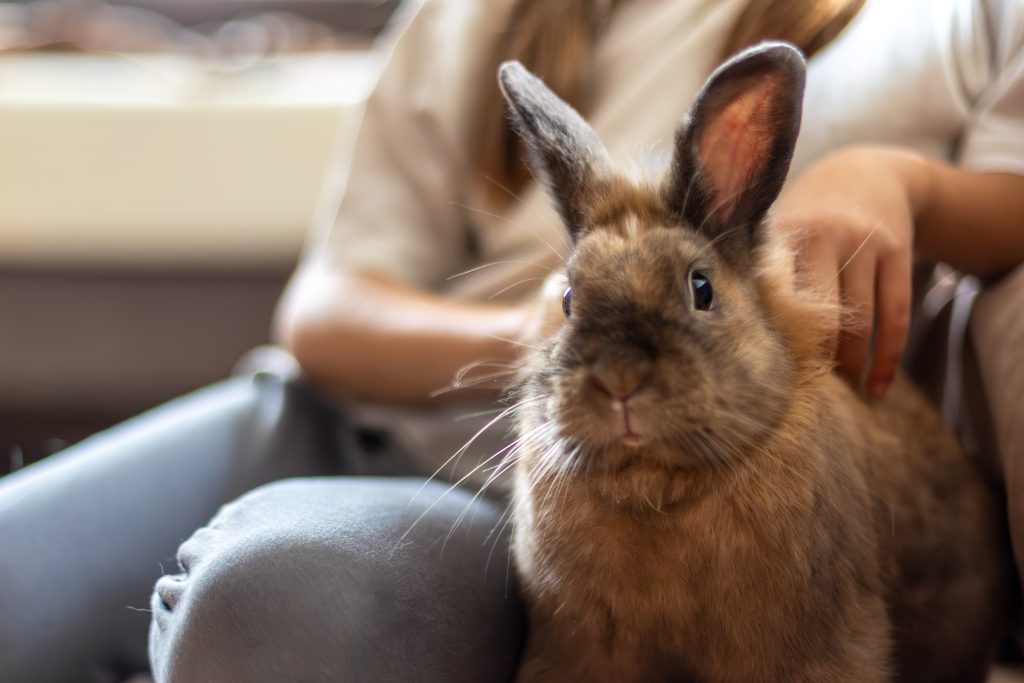
Rabbit fur usually grows back after normal molting and often returns once whatever caused the hair loss has been treated. Regrowth can take time and may initially look uneven or different from the surrounding coat, while significant skin damage or scarring can sometimes interfere with complete regrowth.
New fur may initially look darker, lighter, shorter, or softer than the surrounding coat. That is usually temporary; as the coat continues growing and cycling normally, the patch should gradually blend back in.
11. Frequently Asked Questions
Can mites cause bald spots in rabbits?
Yes. Fur mites can leave the skin flaky and itchy, causing enough scratching or chewing to create bald patches. Thinning is often most noticeable around the neck, shoulders, and back.
Can stress cause rabbits to lose fur?
Stress usually does not make fur simply fall out, but some rabbits lick or chew themselves excessively when they are anxious or bored, which can lead to thinning fur and barbering. However, pain, skin irritation, and parasites should always be ruled out by a veterinarian before assuming fur pulling is purely behavioral.
How long does rabbit fur take to grow back?
How quickly the fur grows back depends on why it disappeared in the first place and the condition of the skin. For simple issues like nesting or an uneven molt, fine new growth is often visible within a couple of weeks. If the skin was irritated by mites, infection, or urine scald, full regrowth can take longer once the underlying cause has been resolved.
12. Conclusion
A bald spot isn’t automatically a sign that something is wrong. Normal molting, nesting, or overenthusiastic grooming can all temporarily expose healthy skin. The details matter most: look at where the fur is missing, what the skin underneath looks like, and whether your rabbit is itching, uncomfortable, eating normally, and behaving like themselves.
Smooth skin with new growth is reassuring; redness, flakes, crusts, persistent wetness, sores, or expanding hair loss deserve closer attention and may require a veterinarian.
Medical & Veterinary Disclaimer: Bunnyowners.com is an informational resource for rabbit owners and enthusiasts. We are not veterinarians. The content on this website is for educational purposes only and is not a substitute for professional veterinary advice, diagnosis, or treatment. Always consult a qualified veterinarian with any questions or concerns regarding your pet’s health, medical conditions, diet, or overall care. If you have concerns about your rabbit’s health, it’s always best to reach out to a veterinarian rather than relying solely on information found online.