

Veterinary & Affiliate Disclaimer: Bunnyowners.com shares educational rabbit care resources, not professional veterinary advice. Always consult a qualified veterinarian regarding your rabbit’s medical, dietary, or behavioral needs. This post may also contain affiliate links; as an Amazon Associate and affiliate partner, we earn from qualifying purchases at zero extra cost to you.
Brushing a rabbit properly requires a delicate touch, specialized tools, and an understanding of how they prefer to be handled. Standard grooming habits that work on cats or dogs are often too rough for a bunny, making a calm, step-by-step approach essential for keeping them comfortable and cooperative.
To brush a rabbit, settle them on a secure, non-slip spot on the floor and keep a gentle, steadying hand over their shoulders. Using a soft comb or rubber mitt, take short, easy glides that follow the grain of their coat from head to tail, steering clear of sensitive areas. Keep sessions short, stop if your rabbit becomes restless, never pull against resistance, and wrap up with a favorite treat so grooming stays a positive routine.
In this guide, you will learn which brushes work best for your rabbit’s coat, a gentle step-by-step technique, how to navigate sensitive spots, and simple ways to make grooming a calm part of your everyday rabbit care routine.
1. What Do You Need to Brush a Rabbit?
Good coat care comes down to choosing a brush that works with your rabbit’s fur rather than hunting for a single magic tool. Rabbit skin is delicate, so sharp de-shedding blades or stiff wire tools can easily nick or scratch if used carelessly. Different coats respond better to different brushes, so the tool that works well for one rabbit may barely pick up anything on another.
The table below breaks down the most common rabbit grooming tools, what they work best for, and where they fall short:
Rabbit Grooming Tools
| Tool | Best For | Limitation |
|---|---|---|
| Soft Bristle Brush | Routine short-coat maintenance and smoothing | Misses dense loose undercoat |
| Rubber Grooming Tool / Mitt | Lifting loose surface fur | Can drag or pull if pressed too firmly |
| Metal Grooming Comb | Thick undercoats and long wool coats | Requires careful angle and light pressure |
| Fine-Toothed Flea Comb | Catching loose undercoat during heavy sheds | Easily catches on minor tangles |
| Grooming Glove | Sensitive or brush-averse rabbits | Removes less total volume of fur |
For short-haired rabbits, a soft-bristle brush works great for routine touch-ups, especially when paired with a rubber mitt or fine-toothed comb to pull out shedding undercoat. Long-haired or wooled breeds like Lionheads and Angoras need something with more reach—a soft brush tends to just skate over the surface fluff, leaving tight tangles brewing underneath.
Skip heavy rakes or sharp de-shedding blades built for dogs, and never, ever take scissors to a mat. Bunny skin has an unnerving habit of bunching right up into knotted fur, meaning what looks like a harmless snip can easily turn into an accidental cut and a panic trip to the vet.
2. How to Brush a Rabbit Step by Step
Getting your technique down early keeps grooming safe, clears out loose undercoat quickly, and saves you from an exhausting wrestling match on the living room rug.
Step 1: Choose a Secure Surface
Set your rabbit on a non-slip surface like a fleece blanket, folded bath towel, or rubber-backed rug. Rabbits get antsy the moment their footing starts sliding around, and grooming up on high countertops only adds unnecessary jitters. Sitting down on the floor right beside them is almost always the easiest setup.
Make sure your bunny stays comfortably planted on all four paws. Never flip a rabbit onto its back—that frozen, trance-like state is a panic-induced survival reflex called tonic immobility, not a sign they’ve relaxed.
Step 2: Check the Coat With Your Hands
Before reaching for any grooming tools, spend a minute smoothing your flat hands down your rabbit’s back from head to tail. This helps them settle into the touch while giving you a chance to feel for hidden knots, burrs, or sensitive spots before a brush catches them by surprise. You will also get an immediate read on which areas are shedding the heaviest loose undercoat.
Step 3: Start at the Back and Shoulders
Begin grooming right at the nape of the neck, working across the shoulder blades and down along the upper spine. Many rabbits are more comfortable being touched around their forehead and shoulders than around their flanks or hindquarters. Keep your wrist loose and stick to short, gentle glides of two to three inches, letting the teeth or bristles do the work without pressing down.
Step 4: Work in Small Sections
Skip the long, sweeping passes from ears all the way to the tail. You will get far more loose hair out by focusing on a palm-sized patch at a time. Make three or four easy passes over a single spot, pull the gathered tufts out of the brush, and move along to the next section. Clearing out the bristles as you go stops compacted fur from building up and pulling on thin skin.
Step 5: Brush the Sides and Hindquarters
Work your way down the ribs toward the hips and rump, which is usually where molting fur clumps together first. Rabbit skin along the flanks is surprisingly loose and will shift right along with your stroke, so keep your free hand resting gently on the opposite side to steady their body.
If you have a wooled or long-haired rabbit, part the coat with your fingers so you can work down to the base instead of just skimming the fluff on top.
Step 6: Check Sensitive Areas
Take extra care around the armpits, belly, dewlap, groin, and right behind the ears. The skin in these folds is paper-thin, and everyday motion turns them into prime hiding spots for tight mats.
With my two Lionheads, Mocha and Chino, the woolly ruff around the chest tends to felt up surprisingly fast—especially when water droplets or chin-scenting leave the fibers slightly damp. Their rear “skirts” knot just as quickly from shuffling through hay, so I always work through those high-friction zones with my fingertips first to loosen any debris before bringing in a comb.
Never dig a stiff brush into these sensitive folds. Instead, slip one hand gently under your rabbit’s chest to steady them while their hind feet stay planted on the floor, and feel through the area with your fingers first. If everything feels clean and tangle-free, a light pass with a comb is plenty. If you discover damp or soiled fur around the tail, put the brush away—messy spots need a gentle damp cleanup, not the tug of dry bristles.
Step 7: Finish With Your Hands
Wrap up the session by lightly dampening your hands with water and running them from front to back over your bunny’s coat. This effortlessly scoops up that fine cloud of floating static fur the brush left behind. Offer a crisp sprig of fresh herbs as an instant reward, and let them hop away on their own terms.
3. Which Direction Should You Brush a Rabbit?

Brush a rabbit primarily in the direction the fur naturally grows, using short, gentle strokes. Avoid repeatedly dragging a brush backward against the coat, especially with tools that reach into the undercoat. If the brush catches, stop and check what’s underneath instead of pulling harder.
Rabbit fur naturally lies in one direction, so brushing against it can feel rough and uncomfortable. While you can gently part the fur with your fingers to check underneath, most of the time, just follow the way the fur naturally lies: moving back from the shoulders, downward along the ribs, and smoothly over the hips toward the tail.
See it in action
If you’re unsure how much pressure to use, watching the stroke in real time helps. Notice how quick, shallow glides lift out the loose fur without dragging across delicate skin:
4. How Hard Should You Brush a Rabbit?
You shouldn’t need much pressure to brush a rabbit. The brush should move easily through the coat without dragging the skin along with it. If you have to pull harder to get through a spot, stop and check for a tangle.
Rabbit skin is delicate, so heavy brushing pressure can cause painful irritation or injury. Pay close attention to how the tool moves and how your rabbit behaves to make sure you are being gentle enough:
- Just Right: The brush glides smoothly without snagging, shedding fur lifts away effortlessly, and your bunny stays settled—or melts flat into a contented loaf.
- Too Heavy: The skin hitches and pulls with your stroke, bristles audibly scrape, or your rabbit flinches, thumps, and scrambles to get away.
5. How Often Should You Brush a Rabbit?
Short-haired rabbits generally benefit from brushing about once a week when they aren’t heavily shedding, with more frequent brushing during a molt. Long-haired rabbits usually need much more frequent brushing because tangles and mats can develop underneath the outer coat. Use these as rough starting points and adjust based on how much fur your rabbit is actually losing.
A simple routine based on your rabbit’s fur type keeps grooming predictable and low-stress:
Brushing Schedules by Coat Type
| Coat Type | Normal Schedule | Molting Schedule |
|---|---|---|
| Short Coat | Once weekly | Daily to every other day |
| Long or Wooled Coat | Frequent—often daily or every other day | Usually daily during a heavy shed |
| Senior or Limited-Mobility | Check coat frequently | Brush as needed where self-grooming is reduced |
6. How Long Should You Brush a Rabbit?
You don’t need to brush your rabbit for a set amount of time. Brush until you’ve removed most of the easy-to-reach loose fur, and stop sooner if your rabbit is getting restless. Coat length and whether the rabbit is actively shedding matter more than following an exact number of minutes.
For many rabbits, a short session of several minutes is plenty for routine brushing. You don’t have to chase down every loose hair in one sitting. Once you notice far less fur coming off in the brush, or if your rabbit starts fidgeting and wants to leave, call it done for the day. A few short, easy sessions throughout the week work much better than a single long standoff.
7. Brushing During a Heavy Shed
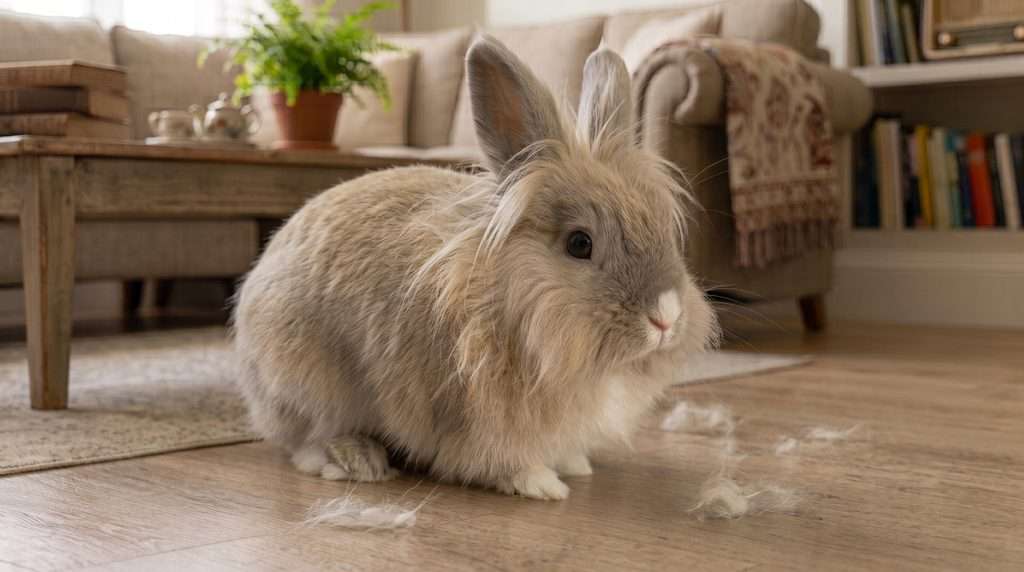
When your rabbit is shedding heavily, brush a little more often and focus on fur that’s already coming loose. Work through one small area at a time and clean the hair out of your brush as it fills. If a tuft doesn’t come away easily, leave it rather than pulling harder.
A heavy shed calls for brushing more often—never pressing down harder. Tufts that are completely loose can easily be plucked with your fingertips before you run the comb, but leave anything that offers even slight resistance. When you run into uneven tide lines, weird bald spots, or flying tufts, recognizing typical heavy shedding patterns helps you separate a dramatic coat blow from a true skin issue.
8. What If the Brush Hits a Tangle or Mat?
If your rabbit’s brush catches on a mat, stop pulling. Small loose tangles can sometimes be teased apart gently, but tight mats shouldn’t be forced through with a brush because pulling hurts delicate skin. If you’ve found a tight mat, you’re dealing with something brushing alone won’t fix.
If the brush suddenly stops, don’t muscle it through. Lift it away and check the spot with your fingers. When a knot is tight or sitting right against the skin, focus on safely removing matted rabbit fur with your fingertips rather than forcing a brush to do the job.
9. How to Brush a Rabbit That Hates Being Brushed
If your rabbit hates being brushed, don’t try to finish the whole coat at once. Start with a minute or two on a secure surface, brush an area they already tolerate being touched, and stop while they’re still calm. A few calm minutes that end well are much better than forcing your rabbit through one long brushing session.
Start With Short Sessions
Keep early sessions to just a minute or two. Spend the first minute petting your rabbit gently around their head and cheeks, then make three or four easy passes with the brush along their upper back. Offer a small treat and end things while your rabbit is still relaxed so they learn that brushing isn’t something to fear.
Try a Different Brush
Many rabbits aren’t upset by grooming itself—they just hate the tool you’re using. Some rabbits dislike the sensation of firmer combs or slicker-style tools. If your rabbit runs as soon as the brush comes out, try switching to a soft rubber grooming mitt or even a damp hand. The light friction picks up loose fur while feeling just like regular petting.
Keep Your Rabbit on Secure Footing
Avoid putting a nervous rabbit up on a slippery table or pinning them in your lap. Sit on the floor together on a soft rug so your bunny has plenty of grip. Keeping all four feet supported can make a reluctant rabbit feel more secure and reduce the urge to bolt.
10. Common Rabbit Brushing Mistakes
Avoiding simple handling slip-ups makes grooming safer for your rabbit and far less stressful for both of you. Most grooming hiccups come from pushing too hard, picking the wrong brush, or trying to rush through the coat.
Here are the most common brushing mistakes and what to do instead:
Common Brushing Mistakes to Avoid
| Mistake | Risk | Better Approach |
|---|---|---|
| Pressing the brush down hard | Scrapes or irritates delicate skin | Use light, floating strokes across the coat |
| Pulling through resistance | Tugs thin skin and causes pain | Stop immediately, lift the brush, and check with your hands |
| Only brushing the surface of wool | Leaves mats to form underneath | Part the fur gently and comb through in layers |
| Flipping the rabbit on its back | Triggers a fear-based immobility response | Keep all four paws supported |
| Using dog de-shedding blades | Sharp metal edges can easily scratch skin | Stick to rounded-pin combs and soft rubber tools |
| Dragging out long sessions | Stresses the rabbit and creates grooming fear | Keep sessions short and spread them out over the week |
11. When Brushing Isn’t Enough
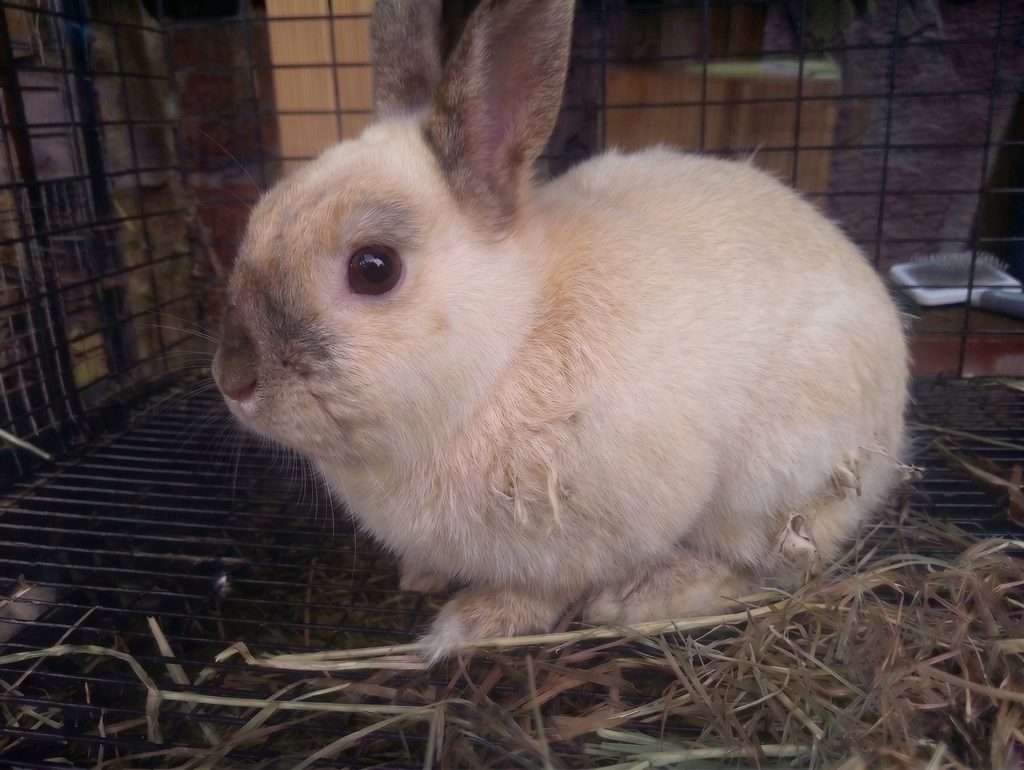
Sometimes the best thing you can do is put the brush away. If you run into raw skin, heavy flakes, messy fur, a tight knot, or a spot that clearly hurts to the touch, another pass with the bristles will only make things worse.
Here is what to watch for:
- Flakes and Scabs: White flecks that look like heavy dandruff, sudden bald spots, or crusty patches can point to mites or another skin problem. Brushing an irritated area may only make it more uncomfortable.
- Messy or Wet Rear Ends: Stained fur around the tail means your rabbit is struggling to clean themselves—often due to an upset stomach, bladder trouble, or stiff joints. Tugging at wet fur pulls on tender skin; what they need is a gentle cleanup, not a comb.
- Tight, Flat Mats: When fur felts into a solid clump right against the body, tugging at it can injure the delicate skin underneath. Leave stubborn mats alone; tight mats close to the skin may need to be clipped by a rabbit-experienced veterinarian or groomer.
- Sudden Flinching or Grunting: If your usually calm bunny suddenly jumps, grinds their teeth, or swats at you when you touch a specific spot, stop grooming. Sudden sensitivity in one area can be a sign of pain or injury that deserves a closer look.
When you spot any of these red flags, stop grooming and check in with your vet to get it sorted out safely.
12. Frequently Asked Questions
Can I brush my rabbit every day?
For long-haired or wooled breeds, a quick daily run-through is practically essential to keep tiny snags from felting into solid mats. For short-haired bunnies, stick to weekly touch-ups unless they’re blowing their coat; brushing short fur every single day outside of a heavy molt can easily irritate delicate skin.
Can I use a human hairbrush on my rabbit?
A baby brush with ultra-soft bristles can work for gentle smoothing, but regular human brushes have bristles that are spaced too far apart to catch fine undercoat—or stiff enough to scrape the skin. You want tools with densely packed, flexible bristles or rounded teeth designed to lift rabbit-fine hair without tugging.
Can I use a cat brush on a rabbit?
Some work brilliantly, while others can be too harsh for rabbit skin. Standard metal flea combs made for cats can work well for lifting loose fur, and soft rubber grooming tools are another useful option. Skip stiff wire slickers and bladed de-shedding tools; rabbit skin is delicate, and stiff wires or blades can cause scratches or cuts if they catch the skin.
Why does my rabbit bite the brush?
A nip, lunging swat, or aggressive chin-butt is pure rabbit communication for “back off.” The bristles are likely digging in too deep, catching on a tangle, or moving across a tender spot like the haunches or belly. Take the hint immediately: set the brush down, smooth their forehead with your hand to help them reset, and ease back in with a much lighter touch.
13. Final Thoughts
Safe grooming always comes down to patience over pressure. When you provide secure footing, choose the right tool for their coat type, stroke with the natural grain, and keep your hands light, brushing turns into a calm routine rather than a wrestling match. Watch their body language, pause the second you feel tension or resistance, and wrap up on a positive note while they’re still relaxed.
Veterinary & Affiliate Disclaimer: Bunnyowners.com shares educational rabbit care resources, not professional veterinary advice. Always consult a qualified veterinarian regarding your rabbit’s medical, dietary, or behavioral needs. This post may also contain affiliate links; as an Amazon Associate and affiliate partner, we earn from qualifying purchases at zero extra cost to you.