
Veterinary & Affiliate Disclaimer: Bunnyowners.com shares educational rabbit care resources, not professional veterinary advice. Always consult a qualified veterinarian regarding your rabbit’s medical, dietary, or behavioral needs. This post may also contain affiliate links; as an Amazon Associate and affiliate partner, we earn from qualifying purchases at zero extra cost to you.
When you find dried poop, sticky residue, or urine worked deep into your bunny’s fur, your first thought is probably to head straight for the sink. If you’re used to dogs or cats, turning on the warm water feels like the obvious fix, but handling a messy rabbit requires a completely different playbook. But can you actually bathe a rabbit?
No, rabbits generally should not be given traditional full-body baths. Being placed in water can cause intense stress and struggling, while a soaked coat can take a long time to dry and leave your rabbit chilled. Instead of dunking your bunny, use the gentlest cleaning method that will handle the mess—usually dry brushing, a damp cloth, or a shallow “butt bath” reserved for a heavily soiled rear end.
Safe cleaning without dunking your rabbit in water is an essential part of good rabbit care. In this guide, we’ll look at how to match the right cleaning method to whatever mess your bunny got into, walk through step-by-step techniques for spot cleaning and messy bottoms, and cover the warning signs that mean repeated dirtiness is actually an underlying health problem.
1. Do Rabbits Need to Be Bathed?
The short answer is simply no. Healthy rabbits spend up to a third of their day grooming themselves and their partners, using specialized tongues that act like built-in combs. Between their natural fastidiousness and regular shedding, they handle everyday dust and loose hair without any help from us.
Routine upkeep is very different from dealing with an actual mess, though. While dunking and lathering a rabbit should never be part of their normal schedule, wiping down an isolated dirty spot with a damp cloth is completely fine. Even a heavily soiled rear might occasionally call for a quick, shallow bottom wash—as long as the rest of your bunny stays warm and dry.
Why Full-Body Baths Are Dangerous
Rabbits and standing water just don’t mix. Lower a bunny into a filled sink, and they may kick, scramble, or twist trying to get away. Pair that kind of stress with a dense coat that holds onto water, and what started as a simple cleanup can quickly create problems:
- Extreme Stress and Struggling: Being placed in water can be extremely stressful for a rabbit. A frightened rabbit may kick, scramble, or twist trying to escape, making the situation harder and less safe for both of you.
- Injuries From Struggling: Rabbits have powerful hind legs but relatively delicate skeletons. Sudden kicking or slipping on a wet surface can result in serious back or limb injuries, especially when the body is not properly supported.
- A Soaked Coat Takes a Long Time to Dry: A rabbit’s coat has outer guard hairs over a dense undercoat that can hold a surprising amount of water. Once soaked down to the skin, the coat can be difficult to dry completely, leaving your rabbit vulnerable to becoming chilled.
- Wet Fur Can Irritate the Skin: Rabbit skin is delicate, and prolonged dampness or repeated rubbing can cause irritation—especially when urine, feces, or an existing sore area is involved.
Can Rabbits Ever Get Wet?
A little water on a specific spot is completely fine when needed. If an ear dips into a water dish or wet greens leave sticky juice on their chin, gently dabbing it clean with a damp cloth won’t hurt a bit. The golden rule is simple: keep the dampness isolated to the surface and never soak down into the dense undercoat.
2. My Rabbit Is Dirty—Should I Clean Them?
Before grabbing any cleaning supplies, take a moment to look at what is actually on your rabbit’s fur. Healthy rabbits can usually handle everyday dust or loose hay on their own. You usually only need to help when something is stuck in the coat, could be harmful if licked off, is irritating the skin, or has made a real mess around your rabbit’s bottom.
The best cleaning method depends on what your rabbit got into:
Rabbit Cleaning Method Decision Guide
| What Got on the Fur | Best Way to Clean It | What You’ll Need | How Much Water |
| Loose dust or dried garden dirt | Dry brush or comb | Wide-tooth comb or soft bristle brush | None (Dry) |
| Small isolated sticky patch | Targeted damp wipe | Microfiber cloth, warm water (wrung nearly dry) | Minimal (Surface only) |
| Dried feces / mild cecotrope clump | Dry cleaning or gradual softening | Fine-tooth comb; optional cornstarch or damp cotton ball | Minimal to None |
| Urine-soaked rear or hocks | Shallow “butt bath” or damp blot | Non-slip basin, 1–2 inches warm water, towels | Moderate (Rear only) |
| Muddy paws | Damp towel blot | Damp cloth wrapped around paws, dry towel | Low (Paws only) |
| Chemicals, essential oils, or toxins | Prevent licking; call your vet or poison control | Towel wrap, vet-directed instructions | Directed by a vet |
The guiding principle for any mess: Start dry, and add moisture only when strictly necessary.
3. How to Spot Clean a Rabbit Safely
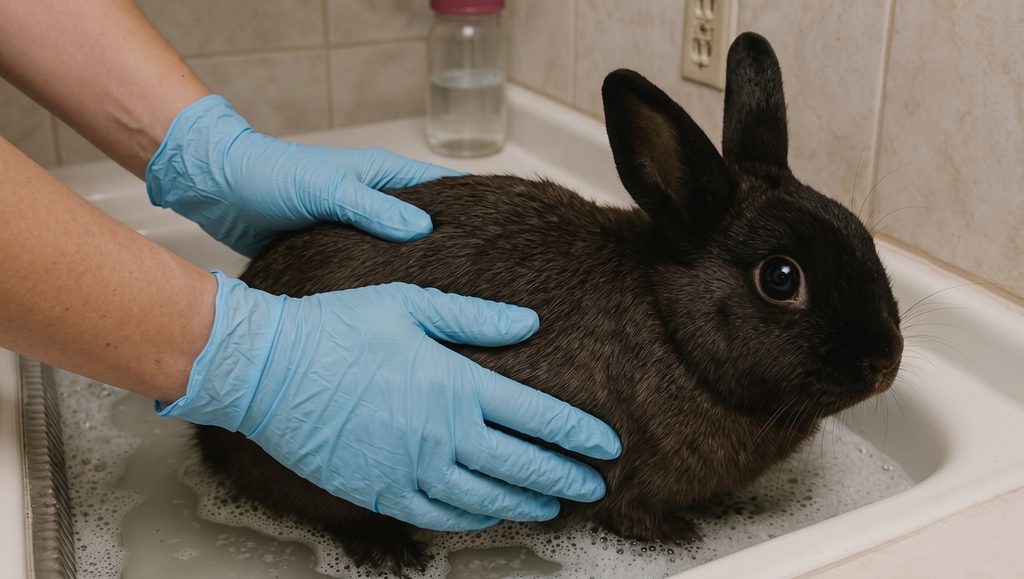
If brushing alone isn’t getting the mess out, a little careful spot cleaning is usually the next step.
Before you start, gather two or three dry towels, a soft washcloth, a small bowl of lukewarm water that feels neither hot nor cold on your wrist, and a flea comb or fine-toothed rabbit comb. You can also keep a small pinch of pure, talc-free cornstarch nearby if you use it for loosening a stubborn dry clump.
Step 1: Get Your Rabbit Comfortable and Secure
Never try to clean a rabbit on an elevated, slippery countertop or bare porcelain sink. Sit on the floor with a folded towel across your lap, or place the towel directly on the carpet. Keep all four paws supported against a solid, non-slip surface so your rabbit does not feel insecure and try to jump.
Step 2: Clean Only the Dirty Area
Dip a corner of your washcloth into lukewarm water and wring it out until it is barely damp. Part the fur to find the dirty spot, then gently dab or blot the mess away. Avoid hard scrubbing, which knots the wet hair and pulls at fragile skin.
Step 3: Remove Stubborn Debris
If you are dealing with tree sap or hardened dirt, hold a damp cotton ball against the clump for a minute or two to soften it up, then gently tease it apart with a wide-toothed comb. If a clump cannot be loosened without pulling on the skin, leave it alone and have your vet shave it out safely. Never use scissors on rabbit fur—their skin is very loose and thin, making it dangerously easy to cut them by mistake.
Step 4: Dry the Fur Completely
Press a dry towel firmly over the damp spot to soak up any remaining moisture. Gently ruffle the fur with your fingers so air can reach the skin and help it dry out fast.
Video Guide: How to Clean a Rabbit Safely
If you’d rather watch how it’s done first, this quick video walks through how to support your rabbit securely during dry grooming, spot cleaning, and shallow bottom washes:
4. How to Clean a Rabbit’s Dirty Bottom
A dirty bottom is more than a grooming problem. Poop, uneaten cecotropes, and urine stuck around your rabbit’s bottom can quickly irritate the skin and attract flies.
The Dry Cleaning Method (For Light Soiling)
If the mess is mostly dry or just a bit tacky, you can usually skip water altogether. Settle on the floor with your rabbit resting securely on a towel, then gently work through the clump with a flea comb, supporting the base of the fur with your fingers so you don’t tug on their skin.
For stubborn, sticky spots, work a pinch of pure, talc-free cornstarch right into the clump. It absorbs the moisture and makes the mess much easier to slide out with the comb. Once you’re done, brush away any leftover powder and take a quick look at the skin underneath to make sure it isn’t red or irritated.
The Shallow “Butt Bath” (For Heavy Soiling)
When thick, pasty cecotropes or urine-soaked fur won’t budge dry, a targeted wash is usually your best bet. This is definitely a two-person job:
- 1. Prepare the Basin: Lay a non-slip rubber mat or folded hand towel in the bottom of a shallow basin or sink, then add just 1 to 2 inches of lukewarm water.
- 2. Support Your Rabbit: Have your partner securely support your rabbit under the chest and front shoulders, keeping their front feet, chest, and head elevated, completely dry, and tucked close.
- 3. Lower the Hindquarters Only: Dip just the soiled rear end into the shallow water. Keep the waterline low and well below the base of their tail.
- 4. Loosen the Mess: Gently swirl the water through the dirty fur with your fingertips, letting the stuck droppings soften and rinse away naturally without tugging on the skin.
- 5. Skip the Soap: Plain lukewarm water does the trick almost every time. Unless your vet specifically prescribed a medicinal wash for skin irritation, skip soaps and shampoos entirely to protect their skin barrier.
- 6. Swaddle and Dry Immediately: Lift your rabbit straight out and bundle their back end into a warm, dry towel, blotting away as much moisture as you can right away.
5. How to Clean a Rabbit’s Feet
Unlike cats and dogs, rabbits don’t have fleshy paw pads to cushion their step—their feet are protected entirely by dense mats of fur.
Mud and Garden Dirt
If your rabbit hopped through damp soil or tracked into a houseplant, let the mud dry completely before trying to clean it. Once it’s dry, most of the dirt combs right out with a soft-bristle brush or wide-tooth comb. Any leftover dust on the surface can be wiped away with a lightly dampened cloth.
Urine-Stained Hocks
Resist the urge to scrub stained fur just to get it back to pristine white. Aggressive scrubbing thins out the dense fur protecting their heels, paving the way for painful sore hocks.
Focus on whether the fur is clean and dry, not what color it is. As long as there isn’t fresh urine sitting against the skin and the heel isn’t red or inflamed, an old yellow stain won’t hurt them—it will shed out naturally during their next molt.
6. What If My Rabbit Gets Completely Wet?
Accidents happen. A rabbit might jump into an open toilet, knock over an entire heavy water bowl, or get caught in an outdoor downpour. If your rabbit gets completely soaked, drying them quickly is the main priority.
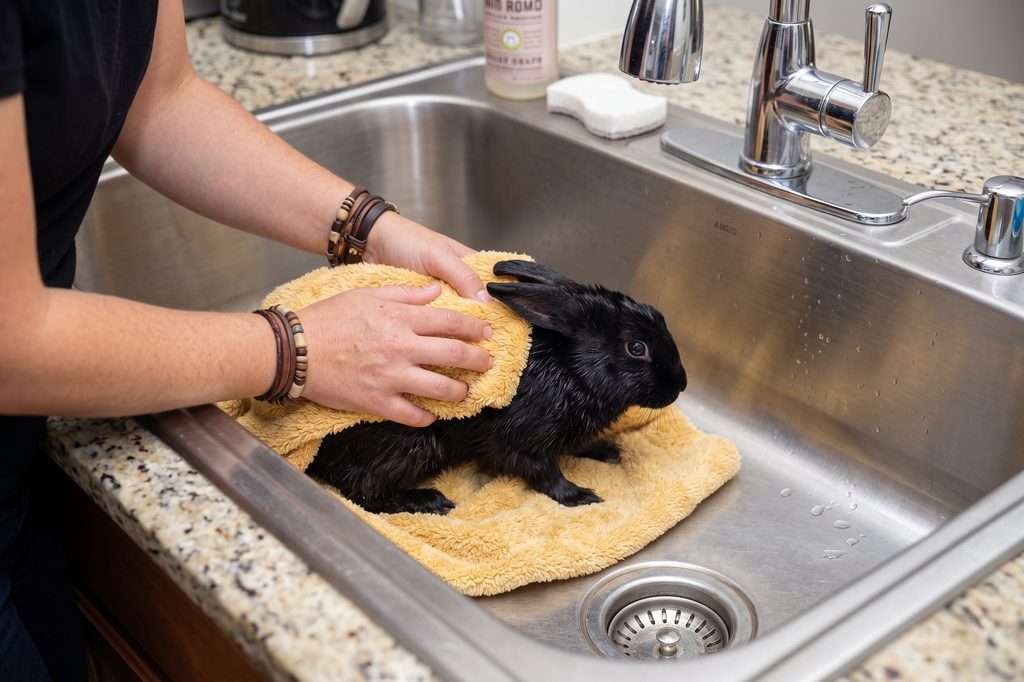
Towel-Dry Immediately
Wrap your rabbit in a dry bath towel right away and move to a quiet, warm room. Blot and press the towel against their coat to soak up the water. Avoid rough back-and-forth rubbing, which mats the wet undercoat and stresses the rabbit. Switch to a fresh, dry towel as soon as the first one gets damp.
Keep Your Rabbit Warm While Drying
Keep the room comfortably warm and free of drafts. Gently part the damp fur with your fingers so body heat can circulate and help the undercoat dry out. Keep your rabbit swaddled until the base of their fur feels mostly dry and warm to the touch.
Can You Use a Hair Dryer on a Rabbit?
Hair dryers aren’t my first choice because the noise can frighten rabbits and hot airflow can burn their delicate skin. Start with several dry towels in a comfortably warm, draft-free room.
If you’ve gone through several towels and the fur close to the skin is still very wet, call your veterinarian for advice. If your rabbit keeps shivering, seems weak or unusually quiet, or still feels cold after drying, they need veterinary attention rather than increasingly aggressive home drying.
Signs of Trouble After Getting Soaked
Keep a close eye on your rabbit for several hours after any major soaking. Call your veterinarian right away if their ears feel cold to the touch, their gums look pale, they seem weak or unusually quiet, or they refuse to eat hay.
7. Can You Use Shampoo or Soap on a Rabbit?
Rabbit skin is thin and delicate, and soaps or shampoos can strip away the natural oils that help protect it. That can contribute to dryness and irritation, while any residue left behind may also be swallowed the next time your bunny grooms.
Because of that sensitivity, standard off-the-shelf pet products simply aren’t formulated for a rabbit’s unique skin:
- Human Shampoos (Even Baby Shampoo): Never use human products. Rabbit skin is delicate, and human shampoos can dry or irritate it.
- Dog and Cat Shampoos: Don’t assume products formulated for another species are safe for rabbits. Flea treatments, medicated shampoos, and fragranced products may contain inappropriate ingredients, so use a cleanser only when your veterinarian recommends one.
- Rabbit Shampoos: Be skeptical of products sold as “rabbit safe.” Just because a bottle shows a rabbit on the label does not mean regular soap washes are necessary or helpful.
- Can You Use Baby Wipes? Avoid standard household baby wipes. Many contain added fragrances, alcohol, or moisturizing ingredients that can leave residues a rabbit may ingest while grooming. If you need a wipe for a quick touch-up, use an unscented, plain water-based pet wipe—or simply use a soft washcloth dampened with warm tap water.
8. What If Something Dangerous Gets on My Rabbit’s Fur?
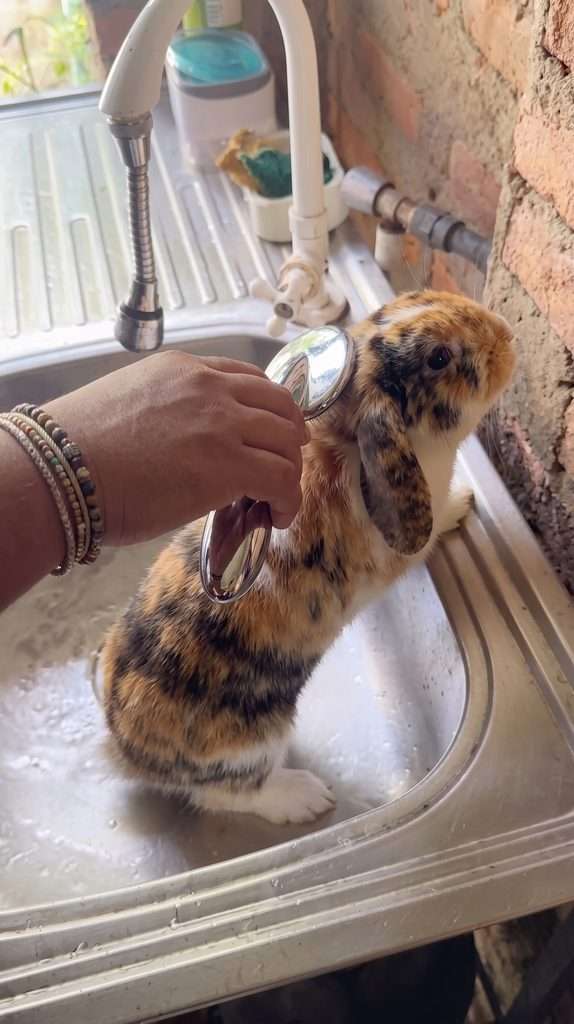
Some messes go beyond regular backyard dirt. If your rabbit brushes against wet paint, fresh glue, motor oil, or household chemicals, step back before grabbing cleaners from under the sink.
Solvents like rubbing alcohol, paint thinner, or heavy degreasers can irritate or damage delicate rabbit skin and may be dangerous if swallowed while your bunny grooms. Concentrated essential oils can also be harmful, so if your rabbit gets a potentially toxic substance on their coat, prevent them from licking it and contact your veterinarian or animal poison control for guidance.
If something toxic touches their fur, keep it simple and move fast:
- Get professional guidance: Call your vet clinic or the ASPCA Animal Poison Control Center immediately to find out how to safely remove the substance or whether you should bring them straight in.
- Blot the surface: Gently dab the spot with a dry paper towel to lift what you can without driving the substance deeper into their undercoat.
- Stop them from licking: Wrap your rabbit in a soft towel or hold them securely so they cannot ingest the chemicals while trying to clean themselves.
9. Why a Rabbit Might Keep Getting a Dirty Bottom
Healthy rabbits usually do a good job keeping themselves clean, so a bottom that keeps getting messy is worth paying attention to. Cleaning is only handling the mess in the moment; recurring dirt usually means something else is going on.
Some of the most common reasons include:
Common Causes of a Dirty Rabbit Bottom
| Possible Reason | Why It Causes a Messy Bottom | What You Might Notice |
| Soft or Uneaten Cecotropes | Soft or uneaten cecotropes can stick around the tail, especially when diet or digestion is off | Pasty, squished cecotropes around the tail |
| Trouble Reaching the Bottom | Arthritis, stiffness, or extra weight makes it hard for the rabbit to bend and groom | Reluctance to hop, stiffness, or a messy tail area |
| Dental Pain | Sore teeth or spurs make grooming uncomfortable | General coat neglect, drooling, or picking at food |
| Urine Leakage | Urinary problems can cause leaks that repeatedly wet the fur around the rear | Rear fur that stays persistently wet with urine |
| A Wet Litter Area | The litter box is soaked through or bedding needs changing | Yellowed, damp back feet and hocks |
If the fur around your rabbit’s rear stays wet from urine, or if they keep producing soft, messy cecotropes despite a clean enclosure, it’s worth having your rabbit checked by an exotic vet to find out what keeps causing the mess.
10. How to Keep Your Rabbit Clean Without Bathing
Keeping the litter area clean and dry does much of the work for you. Absorbent, dust-free paper pellets can help control moisture, while regularly removing wet spots keeps your rabbit from sitting in damp litter. Rugs, playpens, and favorite resting areas should also be checked for spilled water, urine, or other messes that can transfer straight back onto the coat.
Regular grooming takes care of most of the rest. Brush away loose fur more frequently during heavy molts, and get into the habit of taking a quick look beneath the tail each day. A small smear of soft stool is much easier to deal with when you notice it early than after it has dried or become tangled into the surrounding fur.
With my own two rabbits, Mocha and Chino, I hardly ever have to step in beyond flicking away a piece of stray hay or loose fur. Their feet stay surprisingly clean as long as their litter box and pen floors stay dry. On the rare day one of them picks up a sticky spot or a bit of dirt, taking care of it immediately with a comb or a damp cloth is plenty. It’s living proof that healthy rabbits don’t need regular baths—just a clean living space and a quick spot check now and then.
11. When a Dirty Rabbit Needs Veterinary Help
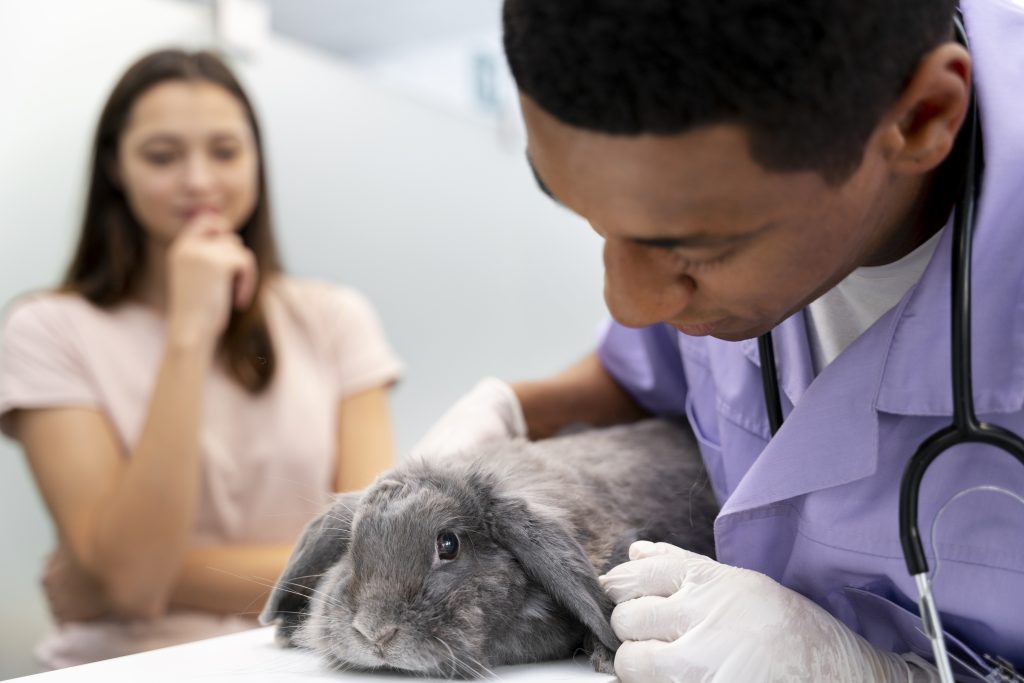
Sometimes a dirty coat is a sign that your rabbit needs more than a cleanup. Contact a veterinarian if you notice any of the following:
- Fly Eggs or Maggots: Small white specks or visible maggots around the fur mean flystrike. This is an immediate, life-threatening emergency. Do not attempt to bathe your rabbit—take them to an emergency vet clinic right away.
- Raw or Bleeding Skin: Red, inflamed, broken, or bleeding skin beneath soiled fur needs veterinary attention. Avoid repeatedly washing already-damaged skin unless your veterinarian instructs you to.
- Watery Diarrhea: Pasty cecotropes are messy, but true liquid diarrhea is a critical emergency in rabbits that requires immediate medical care.
- Not Eating or Passing Droppings: If your rabbit stops eating their hay, becomes unusually quiet, or stops producing droppings, they may be dealing with gut stasis or severe pain. Contact a vet promptly.
12. Frequently Asked Questions
How long does it take for rabbit fur to dry after cleaning?
There isn’t one reliable drying time because it depends on how much fur got wet, how dense your rabbit’s coat is, and how warm and dry the room is. A lightly dampened surface spot may dry fairly quickly, while a soaked undercoat can take much longer. Keep blotting with fresh, dry towels and gently part the fur with your fingers until the skin and base of the coat feel dry.
Can I use a blow dryer on the cool setting to speed things up?
It’s best to stick to towels. Even without heat, the whir of the motor and the force of rushing air tend to send rabbits into a panic, which can lead to violent kicking and back injuries. Towel blotting in a warm, draft-free room is much safer. If your vet ever advises using airflow, keep it on the lowest fan setting, hold it at least a foot away, and keep your hand directly in the airstream so you can feel the pressure and temperature the whole time.
Will my rabbit hold a grudge after a butt bath?
Expect a little attitude. It’s totally normal for your bunny to thump, dart away, or flick their back feet at you once you put them down. Being held still and washed around their back end is stressful for a prey animal. Give them some space in their pen, offer a handful of fresh hay or a favorite treat, and they’ll usually forgive you within a few hours.
When is it safe to put my rabbit back in their regular pen once wet?
Wait until the fur and the skin underneath feel completely dry. If you put a damp bunny back into a regular setup, loose litter, paper pellets, and hay dust will stick right to the moist skin. That creates a stubborn, crusty mess, irritates the skin, and traps bacteria right where you just cleaned.
13. Conclusion
When you’re dealing with a dirty rabbit, swap the question from “How do I give my bunny a bath?” to “What’s the gentlest way to clean up this specific mess?”
Healthy rabbits handle their own grooming just fine. When an accidental mess calls for backup, start completely dry, use water only where you absolutely have to, and make sure the fur is fully dry before letting your bunny hop off. If you find yourself cleaning up the exact same mess every couple of days, set the grooming supplies aside and give your vet a call to track down what’s actually going on.
Medical & Veterinary Disclaimer: Bunnyowners.com is an informational resource for rabbit owners and enthusiasts. We are not veterinarians. The content on this website is for educational purposes only and is not a substitute for professional veterinary advice, diagnosis, or treatment. Always consult a qualified veterinarian with any questions or concerns regarding your pet’s health, medical conditions, diet, or overall care. If you have concerns about your rabbit’s health, it’s always best to reach out to a veterinarian rather than relying solely on information found online.