
Veterinary & Affiliate Disclaimer: Bunnyowners.com shares educational rabbit care resources, not professional veterinary advice. Always consult a qualified veterinarian regarding your rabbit’s medical, dietary, or behavioral needs. This post may also contain affiliate links; as an Amazon Associate and affiliate partner, we earn from qualifying purchases at zero extra cost to you.
Finding matted fur on your rabbit can be worrying, but removing it requires extreme care because rabbit skin is paper-thin and easily injured. While small, dry tangles can be teased apart at home, tight knots sitting close to the skin require a very gentle touch and the right technique.
To safely remove matted rabbit fur, gently tease small, dry tangles apart from the outer tips using your fingers before passing a fine comb through the loosened hair. Never blindly cut underneath a mat with scissors or yank on tight clumps, as delicate rabbit skin easily bunches up inside dense fur and tears. If a mat is tight against the skin, damp, or soiled, leave it alone and let an experienced veterinarian or professional rabbit groomer remove it safely.
In the rest of this guide, I’ll break down how hands-on rabbit care helps you gauge whether a knot is safe to touch, how to work it loose without hurting your bunny, and what hidden issues keep mats coming back.
1. What Is Matted Fur on a Rabbit?
Matted fur happens when shed undercoat and loose guard hairs get trapped instead of falling away cleanly. As your rabbit moves, that loose fur twists around living hairs and tightens into a knot. Seasonal molting, thick or woolly coats, dampness, and trouble self-grooming only speed up the process.
What starts as a little loose undercoat can gradually tighten into a tangle, then a knot, and eventually a dense mat.
First, determine how tightly the fur is tangled and whether the skin underneath is clearly visible:
Rabbit Coat Problem Classification
| Coat Problem | What It Feels Like | Risk Level | Manageable at Home? |
|---|---|---|---|
| Loose Fur | Clumpy strands that pull away with zero resistance | None | Yes (gentle brushing or hand removal) |
| Small Tangle | Lightly intertwined hairs; skin beneath is easily seen | Very Low | Yes (fingers and wide-tooth comb) |
| Loose Mat | Distinct, hardened clump, but moves freely above skin | Moderate | Sometimes (teasing apart from edges) |
| Tight Mat | Hard knot anchored directly against skin; no gap | High | No (professional removal recommended) |
| Felted Sheet | Solid, dense armor of compacted fur over a wide area | Severe | No (professional removal recommended) |
2. Are Mats Dangerous for Rabbits?
Tight mats tug at the skin whenever your rabbit moves, which can quickly make the area sore. They can also hold moisture, urine, loose fur, and other debris against the body while hiding irritated or damaged skin underneath.
The tighter and dirtier a mat becomes, the more uncomfortable it is likely to be. Damp fur sitting against the body can also lead to sore, irritated skin, especially in areas that are already rubbing or soiled.
Mats Around the Bottom Need Extra Attention
Mats near the rear, inner thighs, or underneath the tail deserve extra attention because they can become contaminated with urine or cecotropes and may hide irritated skin. When fur remains soiled, the skin underneath can rapidly develop painful urine scald.
Soiled, damp fur can also attract flies and put a rabbit at risk of flystrike, an acute condition where fly eggs hatch directly in wet or soiled coats.
Emergency Note: If you discover eggs or maggots in your rabbit’s fur, this is an immediate medical emergency. Contact a veterinary professional experienced with rabbits immediately.
3. Where Do Rabbits Commonly Get Matted Fur?
Mats most often develop in areas where fine fur rubs together or where rabbits have difficulty grooming themselves. Behind the ears, under the chin and dewlap, beneath the front legs, and around the groin are common trouble spots because these areas experience frequent friction.
Keep a close eye on the belly, tail, vent, and hindquarters, too. Older, heavier, or less mobile bunnies often struggle to reach these spots to groom, and any lingering dampness from drooling, urine, or messy water bowls will mat fur down fast.
4. Can You Remove Matted Rabbit Fur at Home?
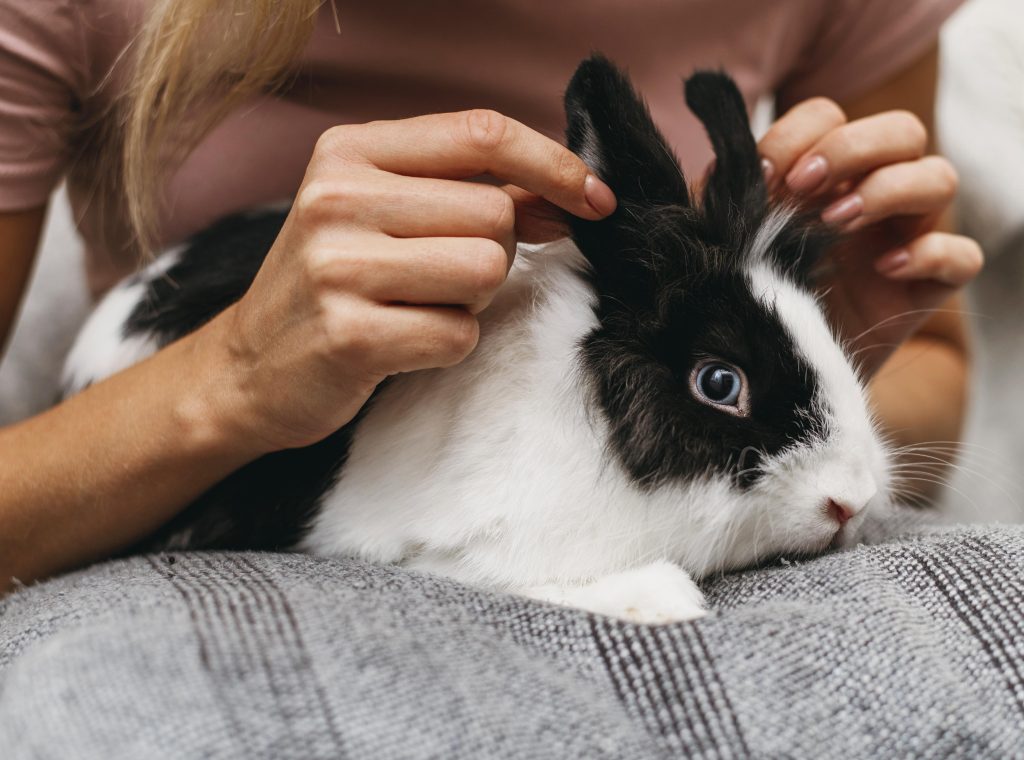
Not all mats can or should be tackled on your living room rug. Trying to force out a tight knot can easily injure the fragile skin underneath.
Here’s how to tell whether a mat is safe to deal with at home or better left to a professional:
Home Removal Safety Decision Guide
| What You Observe | What to Do | Safe for DIY? |
| Feathery clump moving freely off the skin | Okay to remove gently | Yes |
| Knot sitting flush against the skin | Leave it alone | No |
| Mat around genitals or anus | Get professional help | Caution / No |
| Skin is red, broken, or oozing | Contact your vet | No |
| Mat is damp, foul-smelling, or soiled | Contact your vet | No |
| Rabbit struggles or kicks when touched | Stop and reassess | No |
5. What You Need to Remove a Small Rabbit Mat
If the mat is small, dry, and distinctly separated from the skin base, gather a few straightforward supplies:
- Your Fingers: Clean hands are your safest and most sensitive tool for feeling where the skin ends.
- Fine Grooming Comb: A rabbit-safe comb with smooth, rounded teeth.
- Non-Slip Surface: A yoga mat or heavy bath towel placed directly on the floor to prevent slipping.
- Good Lighting: A clear lamp or headlamp so you can plainly see the boundary between hair and skin.
Tools to Avoid
Put the scissors away. They are by far the biggest risk, because thin rabbit skin easily tents up inside a tight knot where you can’t see it, making accidental cuts frighteningly easy.
Skip the bladed de-matting rakes made for dogs and cats, too—they are far too harsh for delicate rabbit skin. Human detangling sprays should also stay on the shelf, as rabbits will lick and swallow that chemical residue when they groom.
Finally, never soak a dry knot with water. Wetting tangled fur makes it bind tightly together like felt, leaving you with an even denser mess once it dries.
6. How to Remove a Small Mat From Rabbit Fur
If you have confirmed the knot is small, completely dry, and elevated away from the skin, follow this gentle, step-by-step process.
Step 1: Secure Your Rabbit on a Low, Non-Slip Surface
Set up on the floor with your rabbit on a secure towel rather than a high table where an unexpected leap could cause injury. Having a partner offer a favorite green or fragrant hay can help keep your rabbit calm and still.
Step 2: Thoroughly Inspect the Knot
Gently part the surrounding coat to locate the base of the knot. Confirm that you can clearly see healthy skin separate from the tangled hair. If the knot is tight against the skin and you cannot see underneath it, stop.
Step 3: Anchor the Fur at the Skin Base
Firmly hold the clean fur between the mat and the skin with your thumb and forefinger. Holding the fur here keeps most of the tugging away from your rabbit’s skin while you work on the knot.
Step 4: Tease Apart the Outer Edges With Your Fingers
With your other hand, work slowly around the very outside edges of the clump. Gently tease the tangle apart with your fingers a few strands at a time, pulling gently outward rather than straight up away from the body.
Working with my own rabbits, Mocha and Chino, has taught me that going straight for the middle of a knot makes a bunny scramble immediately. Picking out just three or four loose hairs along the outside edge softens the clump without that sudden, sharp pinch that makes a rabbit bolt.
See the fingertip technique in action: This quick demonstration shows how to support your bunny safely and work out tangles using gentle finger pressure rather than a comb:
Step 5: Work From Tips to Roots
Never pull through the center of a mat. Always work on the outer ends of the fur first, freeing loose hairs gradually before working closer to the base.
Step 6: Introduce the Comb Only After the Knot Loosens
Once the clump has softened into loose, separated strands, run the rounded tips of a fine comb through the fur. Move slowly. If the comb catches on any resistance, put it down and return to finger-teasing.
Step 7: Stop If Your Rabbit Becomes Distressed
Rabbits show stress through thumping, harsh tooth grinding, or frantic attempts to scramble away. If your rabbit becomes distressed, stop the session and give them time to settle rather than holding them more firmly or trying to push through it.
Step 8: Check the Skin Underneath
Once the knot is gone, part the fur and take a good look at the skin underneath. A little irritation may be visible where the mat was pulling, but raw skin, scabs, swelling, moisture, or an open sore is a reason to contact your vet.
7. What If the Mat Won’t Come Out?
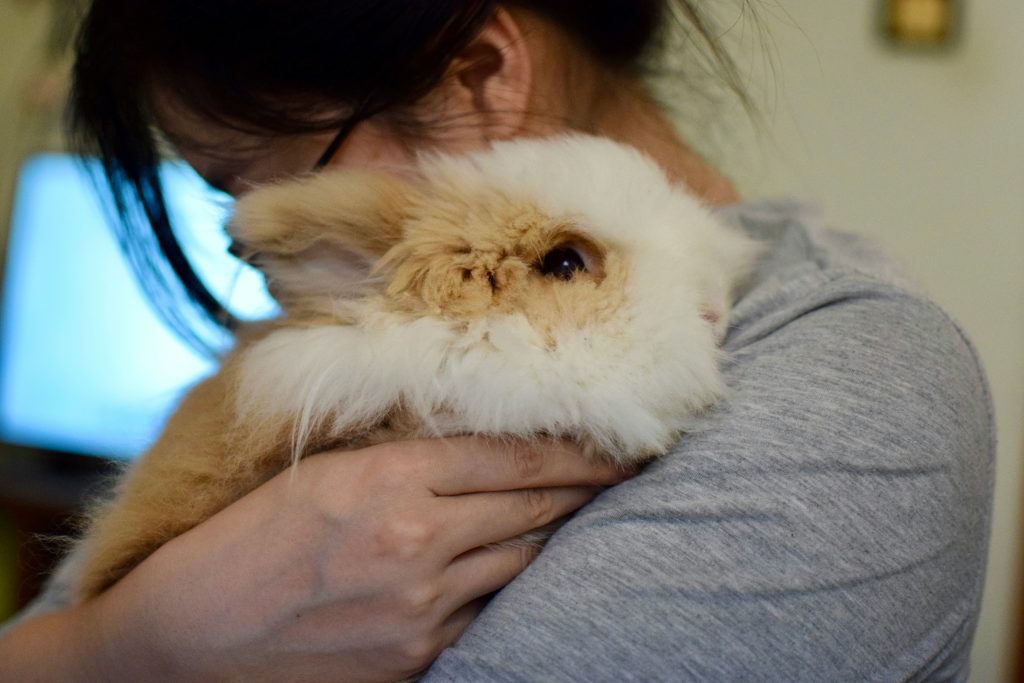
If a mat feels dense or stays stuck after gentle manipulation, stop trying to pull it apart. Repeated tugging irritates delicate skin and causes unnecessary pain.
If the mat is sitting right against the skin, don’t keep pulling at it or try to work underneath it blindly. Removing tight mats with clippers takes extra care around loose rabbit skin, so stubborn mats this close to the body are usually safer in experienced hands.
A veterinary professional experienced with rabbits is the best choice when the mat sits tightly against the skin, contains urine or feces, covers irritated skin, or your rabbit becomes highly stressed during handling. Veterinary staff can remove the fur while also checking whether a medical problem contributed to the matting.
An experienced rabbit groomer may be appropriate for uncomplicated coat maintenance when the rabbit is otherwise healthy. Look for someone with specific rabbit-handling experience rather than a general dog-and-cat groomer.
8. Why Does My Rabbit Keep Getting Matted Fur?
Recurring mats are often a sign that normal self-grooming has been disrupted or that loose hair is building up faster than it can be shed.
Heavy Shedding and Dense Coats
Heavy molts release large amounts of loose undercoat that can become trapped in surrounding fur. Long-haired and woolly coats are especially prone to holding shed hair rather than letting it fall away cleanly.
Difficulty Grooming
Overweight, senior, or arthritic rabbits may have difficulty bending far enough to groom the hindquarters, flanks, and dewlap. Mats that repeatedly form in these areas can be a sign that normal self-grooming has become uncomfortable or physically difficult.
Dental Problems and Moisture
Dental pain can interfere with normal grooming, making it harder for a rabbit to keep its coat in good condition.
Dental problems can also cause ongoing drooling, leaving the fur around the mouth, chin, and chest damp enough to tangle more easily. Urine, spilled water, and damp resting areas can create the same problem elsewhere on the coat.
9. Matted Fur in Long-Haired Rabbits
Breeds like Lionheads, Angoras, and Jersey Woolies are mat magnets simply because shed undercoat gets trapped inside their flowing outer wool. Make a habit of checking behind their ears, around the mane, between the back legs, and along the rump so tiny snags don’t turn into felted sheets.
Should You Keep Long Rabbit Fur Shorter?
For companion rabbits that repeatedly develop mats, keeping the coat somewhat shorter can make everyday grooming much easier. This can be especially helpful around problem areas where long fur repeatedly tangles or becomes soiled.
Keeping long-haired rabbits comfortable in warm weather can also mean paying extra attention to an overgrown coat, especially when the fur repeatedly tangles or traps moisture.
10. How to Prevent Mats in Rabbit Fur
Regular coat checks are a simple part of routine rabbit care and one of the best ways to catch tangles before they tighten. Run your fingers through the fur behind the ears, under the front legs, around the tail, and along the hindquarters, paying extra attention during a heavy shed.
Long-haired rabbits and rabbits that have trouble reaching certain areas may need more help keeping loose fur under control. Keeping bedding and favorite resting spots dry can also keep damp fur from sticking together.
If mats keep coming back despite regular grooming, don’t assume the coat itself is the whole problem. Dental pain, arthritis, excess weight, or repeated urine or stool contamination can all make it harder for a rabbit to keep itself clean.
11. When Matted Fur Means Your Rabbit Should See a Vet
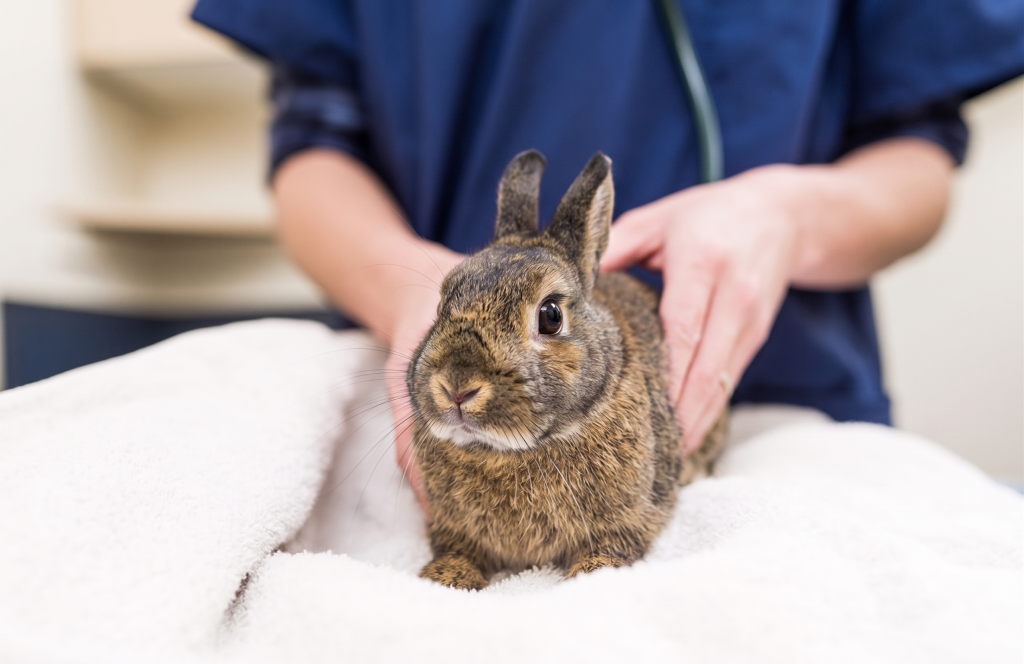
A loose surface tangle usually doesn’t require veterinary care, but severe or recurring matting can signal a problem beyond the coat.
Contact a veterinarian if:
- The mat is tight against the skin and cannot be safely separated.
- The skin underneath is raw, wet, swollen, foul-smelling, or broken.
- Urine or feces repeatedly contaminates the hindquarters.
- Touching the area appears painful.
- A rabbit that normally keeps itself clean suddenly stops grooming, eats less, becomes lethargic, or develops repeated mats.
In these situations, removing the mat is only part of the job. A veterinarian can also investigate problems such as dental pain, arthritis, urinary issues, or reduced mobility.
12. Common Mistakes When Removing Rabbit Mats
When you are staring down a stubborn knot, it is easy to reach for the wrong tool or rush the process. A small adjustment in technique can prevent injuries, save you time, and make the whole process less stressful for your rabbit:
Grooming Mistakes and Safer Alternatives
| Common Mistake | Why It Causes Problems | Safer Alternative |
|---|---|---|
| Cutting blindly with scissors | Can snip tented skin folds caught in the mat | Tease by hand or have a vet clip it |
| Pulling hard on the knot | Stretches and tears delicate skin | Anchor fur at the base; tease gently |
| Forcing a comb through | Causes immediate pulling pain | Only comb loose, separated fibers |
| Wetting the mat first | Can make tangled fur harder to separate | Work with the coat dry |
| Rushing through long sessions | Increases rabbit stress and risk of injury | Keep sessions short and take breaks |
| Ignoring recurring mats | Overlooks mobility or dental issues | Investigate teeth, weight, and joint health |
13. Frequently Asked Questions
Can I cut mats out of my rabbit’s fur with scissors?
Cutting underneath a mat with ordinary scissors is risky because loose rabbit skin can be pulled up into the tangled fur and may be difficult to see. If a mat cannot be gently separated or requires cutting close to the skin, having an experienced rabbit groomer or veterinary professional remove it is safer.
Can I shave my matted rabbit with pet clippers at home?
Clipping close to rabbit skin requires considerable care because loose skin can be difficult to distinguish from the coat beneath a tight mat. If the mat sits against the skin, professional removal is much safer.
Should I wet matted rabbit fur to loosen it?
No. Wetting already tangled fur can make it clump together and become harder to separate as it dries. Work with the coat dry unless cleaning is medically necessary.
Why does my rabbit have mats behind its ears?
The fur behind a rabbit’s ears is exceptionally fine and soft. Normal friction from head-shaking, scratching, and grooming easily rubs loose undercoat hairs together into small knots.
Why is my rabbit’s fur matted around its bottom?
While shedding fur can tangle naturally near the tail, recurring mats around the rear usually suggest the rabbit cannot groom the area properly. Arthritis, obesity, or soft stools sticking to the fur are common culprits that require attention.
14. Final Takeaway
Small, loose tangles that sit clearly away from the skin can often be teased apart patiently with your fingers and then gently combed once they loosen. If a mat is dense, felted, painful, or sitting flush against the skin, however, trying harder at home isn’t worth the risk of injuring the skin.
Wet or soiled mats deserve additional attention, especially when they occur around the hindquarters or suddenly appear in a rabbit that previously groomed normally. In those cases, removing the knot is only part of the solution—the underlying reason for the matting may need attention too.
Regular hands-on coat checks make the biggest difference. Catching a tangle while it is still small and loose is far easier than dealing with a tight mat later.
Medical & Veterinary Disclaimer: Bunnyowners.com is an informational resource for rabbit owners and enthusiasts. We are not veterinarians. The content on this website is for educational purposes only and is not a substitute for professional veterinary advice, diagnosis, or treatment. Always consult a qualified veterinarian with any questions or concerns regarding your pet’s health, medical conditions, diet, or overall care. If you have concerns about your rabbit’s health, it’s always best to reach out to a veterinarian rather than relying solely on information found online.