
Veterinary & Affiliate Disclaimer: Bunnyowners.com shares educational rabbit care resources, not professional veterinary advice. Always consult a qualified veterinarian regarding your rabbit’s medical, dietary, or behavioral needs. This post may also contain affiliate links; as an Amazon Associate and affiliate partner, we earn from qualifying purchases at zero extra cost to you.
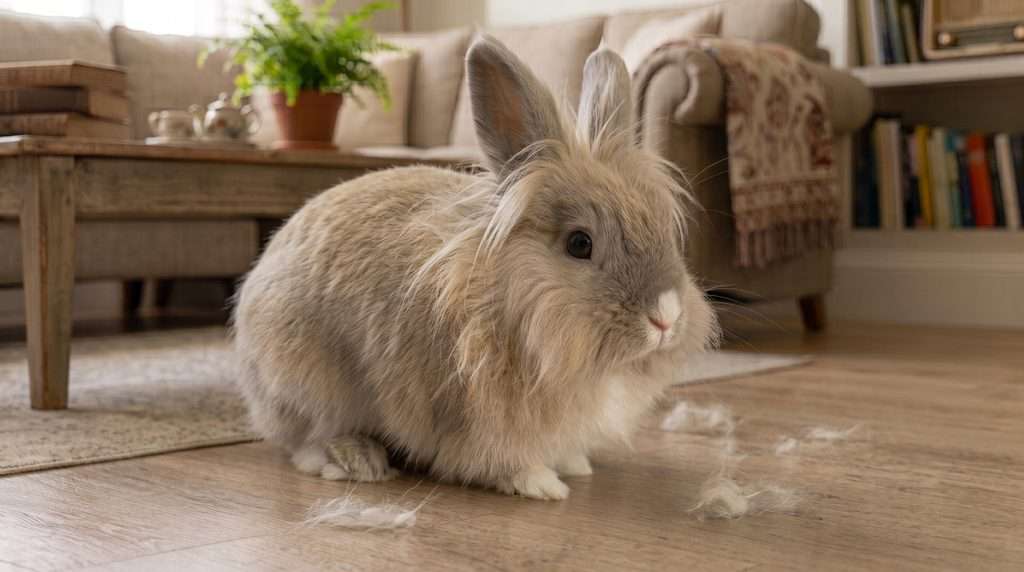
If you are wondering why your rabbit is suddenly shedding huge amounts of fur, you are definitely not alone. Waking up to tufts of hair drifting across the floor, an uneven coat, or spiky patches sticking out along your rabbit’s back can look startling, leaving many owners wondering whether this is just a heavy seasonal molt or a sign of an underlying problem.
Heavy shedding in rabbits is usually just a natural seasonal molt, where the old undercoat drops away to make room for fresh fur. While loose tufts, scruffy patches, and sharp molt lines can look alarming, healthy skin underneath remains smooth, calm, and free of irritation. However, if the fur loss comes with redness, constant scratching, stubborn bald spots, or a drop in appetite and droppings, check with your veterinarian to rule out skin parasites or digestive issues.
In this guide, you’ll learn how to tell the difference between normal seasonal molting and heavy shedding, why the fur starts flying so fast, and how basic rabbit care can help you catch warning signs—like bare patches, irritated skin, or tummy trouble—before they turn into a bigger issue.
2. Shedding vs. Molting: Is There Really a Difference?
Rabbits shed fur throughout the year, but the heavier periods when much of the coat is being replaced are commonly called molts. During a major molt, you may suddenly find loose tufts everywhere, see uneven patches across the coat, or notice a visible line where new fur is coming in.
You’ll also see shedding and molting used interchangeably in everyday care, so don’t get too hung up on the terminology. For this guide, shedding refers broadly to fur coming out, while a molt refers to those more noticeable periods of coat replacement. Losing fur isn’t just something that happens when a rabbit is stressed or sick; it is simply how they ditch old coat and adjust to changing conditions.
Why Do Rabbits Molt?
Rabbits tend to change coats as the seasons change. Wild rabbits naturally drop their heavy winter coats before summer heat sets in, reversing the process in autumn to prepare for colder weather. House rabbits still follow those same basic seasonal cues, even if indoor living makes their schedule much less predictable.
3. How Often Do Rabbits Molt?
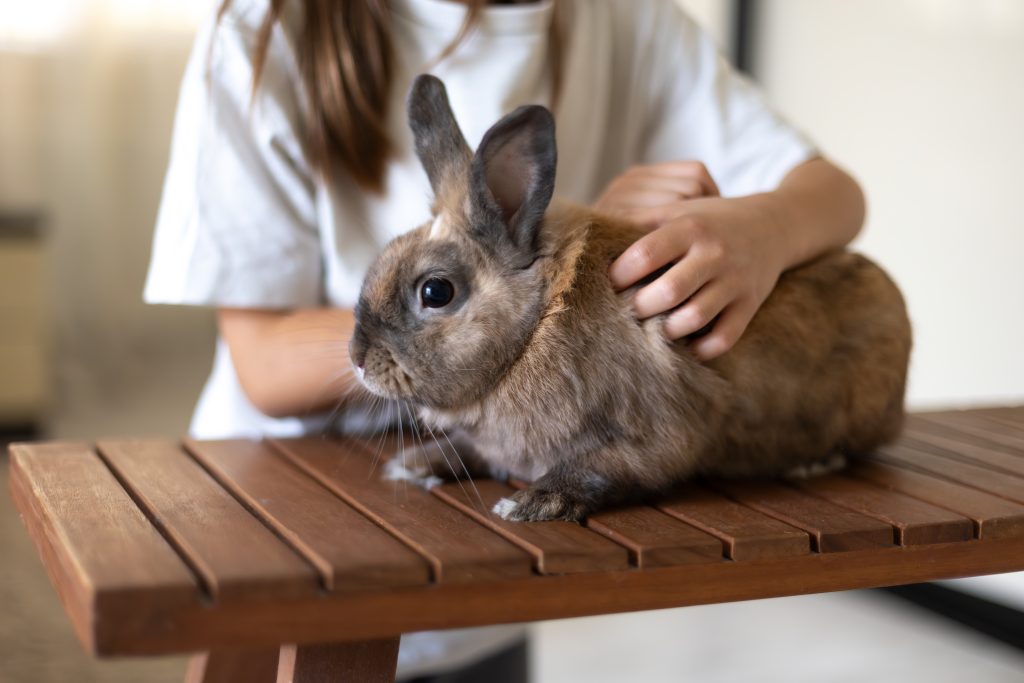
Most rabbits don’t shed at the same intensity all year. You’ll usually get a few noticeably hairy stretches, with lighter shedding in between.
Here is a rough picture of how coat changes tend to line up across the year:
Rabbit Shedding by Season
| Time of Year | What You May Notice |
|---|---|
| Spring | Often one of the heaviest coat changes as the thick winter undercoat lets go |
| Summer | Lighter, routine shedding often continues |
| Autumn | Another noticeable coat change is common as cooler weather approaches |
| Winter | Some rabbits shed very little, though indoor rabbits may keep shedding steadily |
When Is Rabbit Shedding Season?
Many rabbits go through their messiest coat changes as daylight and weather shift, especially around spring and autumn. That said, individual rabbits rarely follow a strict calendar, and living indoors softens those seasonal boundaries even more.
Do Indoor Rabbits Shed Year-Round?
Yes. Indoor rabbits don’t always stick to a neat seasonal shedding schedule. Heating, air conditioning, and artificial lighting can blur natural seasonal changes, so plenty of house rabbits seem to shed almost year-round, punctuated by occasional heavier molts.
How Long Does a Rabbit Molt Last?
A noticeable molt might wrap up in a couple of weeks or drag out much longer, depending on the rabbit. Some dump large clouds of fluff over a short stretch, while others work through a slow, rolling coat change that seems to drift from one part of the body to another over a month or more.
4. What Does Normal Shedding Look Like During a Molt?
Because rabbit fur tends to let go in patches or waves, a heavy molt can look downright ragged. Use this quick guide to check whether what you are seeing matches an ordinary shed:
Normal Molting vs. Skin Problems
| What You’re Seeing | Usually Okay? | What I’d Check |
|---|---|---|
| Loose fur when petting | Yes | Skin beneath should look smooth, clean, and calm. |
| Tufts sticking out from the coat | Yes | Fur should slide out easily without pulling on the skin. |
| Uneven, stepped, or patchy coat | Yes | Make sure there are no scabs or sores hiding under the steps. |
| Sharp visible molt lines | Yes | A clear boundary where fresh coat is replacing the old fur. |
| Small bare-looking spots | Sometimes | Skin should stay calm and fresh fur should start coming back soon. |
| Red, raw, or crusty skin | No | Time to call your vet. |
| Heavy dandruff with scratching | No | Look beyond a normal molt; parasites or skin issues need checking. |
Fur Coming Out in Tufts or Clumps
During a heavy molt, loose undercoat can get caught in the rest of the coat instead of falling straight out. That’s what creates those funny little tufts and spikes sticking out around the back and hips.
Whenever my two rabbits, Mocha and Chino, hit a heavy molt, it’s impossible to miss. Just running my fingers through their coat easily pulls away thick clumps of cottony fuzz sitting loose over fresh fur underneath. If a tuft slides right out with zero effort, it’s just shed undercoat caught in the fur. But if you feel any tug or the skin lifts at all, it’s still attached—leave it alone and let it drop on its own.
Patchy or Uneven-Looking Fur
Rabbits rarely shed evenly all over their bodies at the exact same time. Fur often lets go in irregular sections, leaving one hip smooth and neat while the other looks puffy and scruffy. That patchy, moth-eaten look can be perfectly normal during a molt as long as the skin underneath looks clean and unbothered.
Rabbit Molt Lines
Molt lines show up as distinct ridges or borders between the older coat and the newer incoming hair. In some rabbits, this transition works its way backward from the head toward the rump, though the pattern often looks wavy or irregular as it moves.
Coat Color Changes After Molting
Older fur can fade with wear and light exposure, sometimes picking up a rusty or duller tint. When a fresh coat breaks through, the new fur has its full, rich color back, making newly shed sections look noticeably darker or more vibrant.
5. Why Is My Rabbit Shedding So Much?
When a rabbit suddenly drops what feels like half their body weight in fur, it’s usually just their body swapping out an old, tired coat for a fresh one. Seasonal shifts kick this process into overdrive, but indoor heating, lighting, age, and genetics all play a part in how much fluff ends up drifting across your floors.
Seasonal Shifts
The most common trigger is simply the change of seasons. Wild rabbits rely on daylight changes and temperature swings to trade heavy winter undercoats for breezy summer coats, and house rabbits carry those exact same instincts. A sudden warm spell in spring or a cool snap in autumn acts like a switch, prompting their coat to let go in huge waves.
Indoor Living
Living inside can confuse a rabbit’s natural shedding clock. Central heat, air conditioning, and indoor lighting soften the contrast between seasons. Because their bodies aren’t getting sharp environmental cues, many house rabbits shed steadily year-round, punctuated by sudden, heavy molts that seem to hit out of nowhere.
Coat Density and Length
Genetics dictate just how dramatic a shed looks. A rabbit with a dense undercoat—or a long-haired breed—simply has far more fiber to lose than a sleek, short-haired rabbit. That dead undercoat often gets trapped beneath the outer guard hairs, building up invisibly until routine petting or a quick hop sends clumps drifting into the air.
Young Rabbits Shed Their Baby Coat Too
If your rabbit is around four to five months old, you’re likely watching them lose their baby coat. Young bunnies trade their soft, downy juvenile fluff for a denser adult coat. It’s an awkward phase that often leaves them looking patchy, stepped, and scruffy until the adult fur settles in.
6. When Fur Loss Isn’t Just Normal Shedding
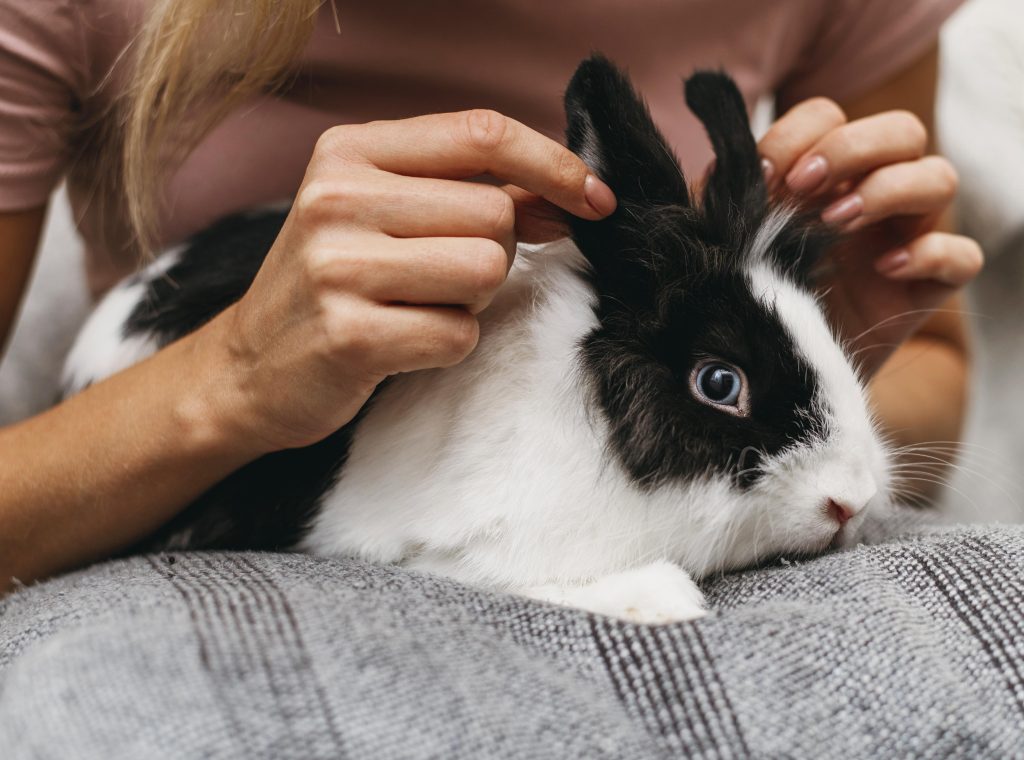
I’ve seen a rabbit look perfectly normal one evening and like somebody attacked him with a bad pair of clippers the next morning. Heavy molts can really be that dramatic. The trick is looking past the messy coat and checking what’s happening underneath. Healthy skin, loose tufts, and fresh fur coming in usually point to a normal shed. Red skin, scabs, constant scratching, or a bald area that keeps getting bigger are a different story.
Normal Shedding vs. Warning Signs
| What You’re Seeing | Usually Normal During a Molt? | When I’d Be Concerned |
|---|---|---|
| Loose tufts | Yes | If pulling them exposes red, sore skin |
| Patchy-looking coat | Often | If an area stays completely bald without new fuzz |
| Skin underneath | Clean and calm | If you spot red, raw, crusty, or weeping skin |
| Scratching | A little normal grooming | Constant scratching, biting, or head shaking |
| Eating and pooping | Normal and steady | Eating less or producing noticeably smaller or fewer droppings |
Bald Spots That Refuse to Fill In
A heavy molt can occasionally leave a rabbit looking surprisingly thin or even bare in a small spot. That doesn’t automatically mean something is wrong. The skin underneath should still look healthy, though, and you should start seeing new coat coming through. If the bald area keeps spreading, looks irritated, or simply isn’t filling back in, it’s time to have your vet take a look.
Flakes, Crusty Patches, and Itchy Skin
Heavy dandruff, scabs, redness, or persistent scratching aren’t typical features of an ordinary molt. Fur mites and some skin infections can look similar, so it’s worth having your vet check.
Deliberate Plucking Instead of Loose Hair
If a female rabbit intentionally plucks mouthfuls of wool from her chest, dewlap, or belly to line a nest, this is maternal or false-pregnancy fur pulling. That’s nesting behavior, not normal seasonal shedding.
Warning Signs That Mean It’s Time for the Vet
Call a rabbit-savvy vet promptly if coat changes come with any of these warning signs:
- Skin that looks raw, red, crusty, or sore.
- Bald patches that stay bare or keep spreading.
- Constant scratching or heavy dandruff flakes along the back.
- A sudden drop in appetite.
- Droppings that become noticeably smaller, fewer, or stop entirely.
- A rabbit that seems lethargic, sits hunched, or hides away.
7. How to Help a Rabbit During a Heavy Molt
Stepping in with a little extra grooming keeps your rabbit comfortable and helps cut down on how much loose fur they swallow.
Keep Brushing Sessions Short and Gentle
During a heavy molt, step up grooming to short, frequent sessions. Keeping these sessions calm and low-stress helps lift out loose undercoat before your rabbit can swallow it, without turning coat care into a daily battle.
Plucking Only the Tufts That Slide Right Out
When undercoat tufts have completely let go from the skin, you can gently slide them away with your fingers. Never yank or force fur out. If your rabbit pulls away or the skin lifts, the hair is still anchored—leave it alone until it lets go naturally.
Keeping Floor Fluff Under Control
Vacuum pen rugs, wipe down fleece blankets, and clean out litter boxes regularly during peak shedding. Keeping loose fur off the floor prevents your rabbit from swallowing stray hair while munching on hay or greens.
8. Swallowed Fur and Gut Trouble: What to Watch For
Rabbits inevitably swallow some loose fur while grooming. Since they can’t vomit it back up, that fur has to pass through the gut along with everything else they eat. Keeping digestion running smoothly is an essential part of managing a heavy molt.
Can Swallowed Hair Cause Blockages?
Swallowed fur is often blamed as the primary cause of rabbit digestive problems, but that picture is too simple. Hair is normally present in a rabbit’s stomach and usually passes with food. More commonly, a rabbit may stop eating normally or digestion may slow for another reason, allowing food and fur to accumulate together.
Why Hay and Water Matter During a Molt
All that swallowed fur still has to make its way through your rabbit’s digestive system. Plenty of grass hay and easy access to fresh water help support normal digestion during a heavy shed, so keep unlimited hay and clean water available as usual.
Checking the Litter Box for “Strung-Together” Poops
You may occasionally see normal-sized droppings connected by strands of swallowed fur during a molt. That shows some fur is passing through, but the bigger picture still matters too: are the droppings normal-sized and plentiful, and is your rabbit eating and acting normally?
Very small or fewer droppings can accompany reduced food intake or a digestive slowdown. If droppings become noticeably smaller, misshapen, dry, or stop altogether, or if your rabbit turns away from regular meals, reach out to a veterinarian right away.
9. How Fur Type Changes the Shedding Experience
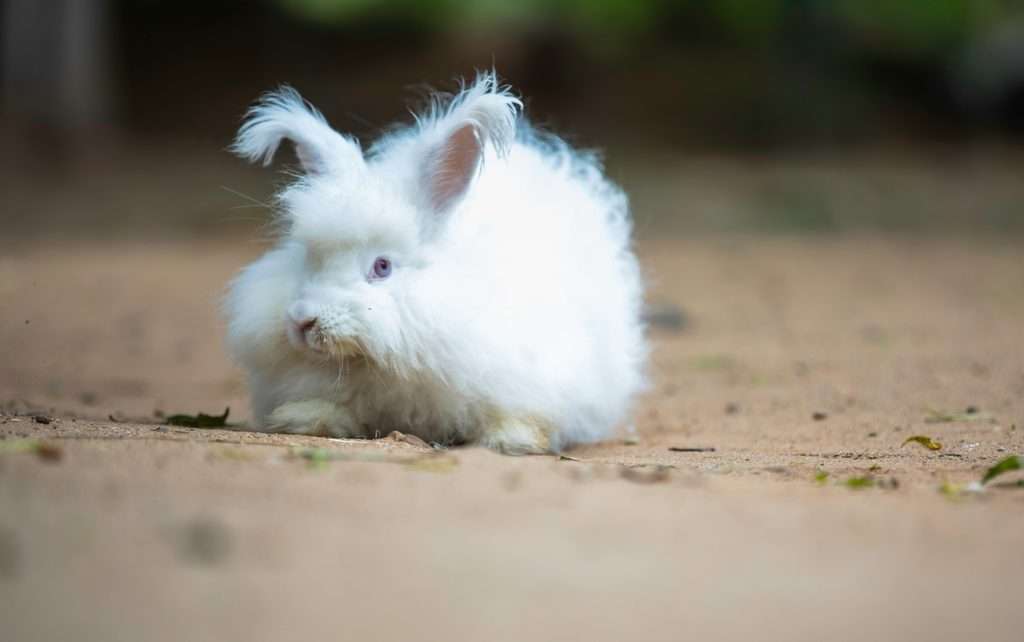
No two rabbits seem to shed quite the same way. Coat length, coat density, age, and even indoor living can change how dramatic a molt looks.
Short-Haired Rabbits
Molt lines can be particularly easy to see on some short-haired rabbits because changes in coat length, texture, and color aren’t hidden by longer fur. When their coat changes, the boundary between old and new fur is often clearly visible.
Long-Haired Rabbits
Long coats trap shed fibers more easily, so they usually require more frequent grooming during molts. Loose undercoat that isn’t lifted out can quickly twist with active hairs to form dense mats, which pull on the skin and hide underlying skin problems.
Bonded Rabbits and Mutual Grooming
Bonded rabbits also groom one another, so one rabbit’s heavy molt can mean its partner is swallowing some of that loose fur too. I’ve noticed this with Mocha and Chino when one starts shedding heavily—the other inevitably ends up grooming through the loose coat. It’s another reason I stay on top of brushing both rabbits during a big molt.
10. Common Shedding and Molting Mistakes to Avoid
A few common missteps can turn a straightforward molt into a stressful or painful experience:
Common Molting Mistakes and Corrections
| Common Mistake | Why It’s a Problem | What to Do Instead |
|---|---|---|
| Pulling firmly anchored fur | Hurts the rabbit and can damage delicate skin. | Pluck only completely loose, sliding tufts; brush the rest. |
| Bathing to remove loose fur | Routine bathing can be stressful, and a soaked coat is difficult to dry thoroughly. | Remove loose fur with appropriate grooming instead. |
| Letting water run out | Adequate hydration is important for normal digestion. | Keep clean water available at all times. |
| Using sugary malt pastes | Does not dissolve hair and can upset delicate gut bacteria. | Skip hairball remedies unless your vet specifically recommends one; maintain normal hay and water instead. |
| Ignoring shrinking droppings | Very small or fewer droppings can accompany reduced food intake or digestive slowdown. | Contact a exotic veterinarian promptly if appetite or droppings decline. |
11. Rabbit Shedding FAQs
Do baby rabbits shed their baby fur?
Yes. Young rabbits shed their baby coat as their adult fur comes in. This transition often looks uneven or scruffy as the softer juvenile fluff drops away in irregular patches.
Why does my rabbit’s fur come out in clumps when I pet them?
When dead undercoat lets go from the skin, simple hand friction from petting is often enough to pull the loose layer out. This is typical during a heavy molt; switching to a gentle brush or damp-hand sweep helps collect the hair cleanly.
Should I pull loose tufts of fur out of my rabbit?
Only if the tufts slide away without any resistance. If you feel even a slight tug on the skin, the base of the hair is still anchored. Never force fur out.
Why does my rabbit look so patchy while molting?
Different parts of the coat can shed and regrow at different times rather than all at once. One area may shed and regrow well before the surrounding coat catches up, leaving temporary ridges, steps, and uneven textures.
Does rabbit fur change color after shedding?
Yes. Older fur can fade with wear and light exposure. When fresh fur grows in, it may look darker or more vibrant than the older coat around it.
Do rabbits shed more when stressed?
Yes. A frightened or highly stressed rabbit can suddenly release a surprising amount of loose fur. But ongoing bald spots, repeated fur loss, or constant overgrooming aren’t something I’d dismiss as normal stress shedding.
12. Heavy Shedding Can Look Ridiculous, But It’s Usually Normal
A heavy molt can transform a sleek rabbit into an unkempt, tufted ball of fluff within a matter of days. While the amount of flying fur can look ridiculous, a healthy molt is simply part of growing a new coat.
If the loose fur is being replaced by healthy coat, the skin looks normal, and your rabbit continues eating, behaving, and producing droppings normally, a dramatic-looking shed is usually just that—a dramatic molt. Baldness that persists, irritated skin, heavy dandruff, itching, or changes in appetite and droppings are reasons to look beyond ordinary shedding and contact your vet.
Medical & Veterinary Disclaimer: Bunnyowners.com is an informational resource for rabbit owners and enthusiasts. We are not veterinarians. The content on this website is for educational purposes only and is not a substitute for professional veterinary advice, diagnosis, or treatment. Always consult a qualified veterinarian with any questions or concerns regarding your pet’s health, medical conditions, diet, or overall care. If you have concerns about your rabbit’s health, it’s always best to reach out to a veterinarian rather than relying solely on information found online.