
Veterinary & Affiliate Disclaimer: Bunnyowners.com shares educational rabbit care resources, not professional veterinary advice. Always consult a qualified veterinarian regarding your rabbit’s medical, dietary, or behavioral needs. This post may also contain affiliate links; as an Amazon Associate and affiliate partner, we earn from qualifying purchases at zero extra cost to you.
Rabbits spend hours keeping themselves clean every day, but they still need a hand with routine coat and nail care. They can’t clip their own claws, work out stubborn tangles, or stop themselves from swallowing mouthfuls of loose fur during a heavy shed. If you’re wondering how to groom your rabbit safely at home, getting a good routine down is a lot easier than it sounds.
To groom a rabbit, gently brush away loose fur in the direction of hair growth, inspect the skin for tangles or irritation, and trim overgrown nails back from the quick. Most rabbits require brushing once or twice a week, with sessions increasing during heavy seasonal shedding or for long-haired breeds. Routine care also includes checking the eyes, ears, feet, and rear end, while avoiding stressful full-body baths.
A good grooming routine does more than keep shedding under control; it’s one of the easiest parts of everyday rabbit care
for catching small health issues early. In this guide, I’ll walk through simple schedules, safe tools, and how to work around tricky spots without turning it into a wrestling match.
1. Do Rabbits Need to Be Groomed?
Although rabbits clean their own coats, they still need regular grooming to remove loose fur, prevent mats, maintain their nails, and check for skin, foot, ear, eye, or rear-end problems. Long-haired rabbits and rabbits going through a heavy molt usually need more grooming than short-haired rabbits.
Indoor rabbits live in very different conditions from wild rabbits. Climate-controlled rooms, artificial lighting, and soft indoor flooring can affect shedding patterns and provide less natural nail wear. Domestic rabbits rely on their owners for tasks they cannot manage alone.
Routine grooming mainly comes down to removing loose fur, preventing mats, keeping nails at a comfortable length, and taking a close look at spots your rabbit cannot easily show you—especially the skin, feet, ears, eyes, and underneath the tail.
Why Grooming Matters
Regular grooming does more than keep loose fur off your clothes:
- Coat maintenance: Brushing pulls out dead fur before it clumps together, keeps tangles from becoming mats, and gives you a clear look at the skin underneath.
- Nail care: Claws grow continuously throughout a rabbit’s life. When they get too long, they can change how a rabbit places its feet and make normal movement less comfortable.
- Spotting problems early: A weekly grooming session also means you get used to how your rabbit normally feels. That makes a new bump, flaky patch, wet eye, or messy bottom much harder to miss.
Note: While grooming is a great way to catch early changes, it is an everyday habit for pet owners, not a substitute for a visit to a veterinarian.
Do Indoor Rabbits Need Grooming?
Indoor rabbits still need regular grooming because living inside does not stop shedding, nail growth, matting, or skin problems. In fact, house rabbits often need their claws trimmed more regularly because carpets, rugs, and blankets do almost nothing to wear them down naturally.
Warm rooms and artificial lighting can also make shedding less predictable. Some indoor rabbits do not stick to a clean seasonal schedule and simply drop a light dusting of fur for much of the year.
2. How Often Should You Groom a Rabbit?
Most short-haired rabbits do well with a gentle brushing once or twice a week, stepping up to daily sessions during a heavy molt. Long-haired rabbits need more regular upkeep, often several times a week or even daily, to stop small tangles from turning into mats. Nails should be checked every few weeks and clipped whenever they start getting long.
There is no single schedule that fits every rabbit. Coat type, age, shedding habits, and how easily your rabbit can clean themselves all make a difference. Older rabbits and rabbits that do not move around as easily often need extra help, especially around the feet and rear end. As joints stiffen with age, those hard-to-reach spots simply become harder for them to keep clean.
Start with this basic schedule, then tweak it whenever your rabbit needs a little extra help:
Recommended Rabbit Grooming Schedule
| Grooming Task | General Frequency | Increase Frequency When… |
| Brushing | 1–2 times weekly | Rabbit is heavily shedding or dropping loose tufts |
| Long-haired coat care | Several times weekly to daily | Coat tangles easily or picks up loose hay and bedding |
| Nail check | Every 2–3 weeks | Nails grow quickly or natural wear is minimal |
| Nail trimming | Every 4–8 weeks | Nails become noticeably long, curved, or begin affecting normal foot position |
| Skin check | Weekly (during brushing) | You notice scratching, thinning hair, or scabs |
| Rear-end check | Weekly (daily for seniors) | Rabbit is older, overweight, or moves stiffly |
| Ear and eye check | Weekly (during grooming) | You spot wetness, crusting, or discharge |
Use these timeframes as a starting point, and adjust whenever your rabbit is shedding heavily or slowing down.
3. What Do You Need to Groom a Rabbit?
Rabbit skin is much more delicate than it looks, so gentler tools are usually the safest choice. You do not need an elaborate grooming kit—just a brush or comb that works with your rabbit’s coat, a good pair of small nail clippers, some styptic powder for peace of mind, and a non-slip mat for secure footing.
Before you begin, gather the basic tools that match your rabbit’s coat and grooming needs.
Essential Rabbit Grooming Tools
| Grooming Tool | Primary Purpose | Best For |
| Soft bristle brush | Smoothing the coat and gentle surface brushing | Sensitive rabbits, routine sessions, face |
| Rubber grooming tool | Lifting loose hair with gentle friction | Short coats and light shedding |
| Fine-toothed metal comb | Teasing apart small tangles down to the skin | Medium-to-long coats and thicker spots |
| Grooming comb | Removing loose fur from denser coats | Heavy shedding and thick coats |
| Scissor-style nail clippers | Neat, controlled claw trimming | All breeds and nail sizes |
| Styptic powder | Stopping minor bleeding if a claw is nicked | Essential emergency backup |
| Non-slip mat or towel | Providing steady, secure footing | Every grooming session |
Be wary of any de-shedding tool that grabs hard at the coat or drags across the skin. If your rabbit flinches, pulls away, or the tool seems to tug rather than glide, switch to something gentler. Never reach for household scissors to snip out a mat near the skin.
For claws, sharp scissor-style pet clippers give you much better control than heavy dog clippers. Avoid human soaps and shampoos altogether; they dry out rabbit skin, and your rabbit will end up licking off whatever residue stays behind.
4. How to Groom a Rabbit Step by Step
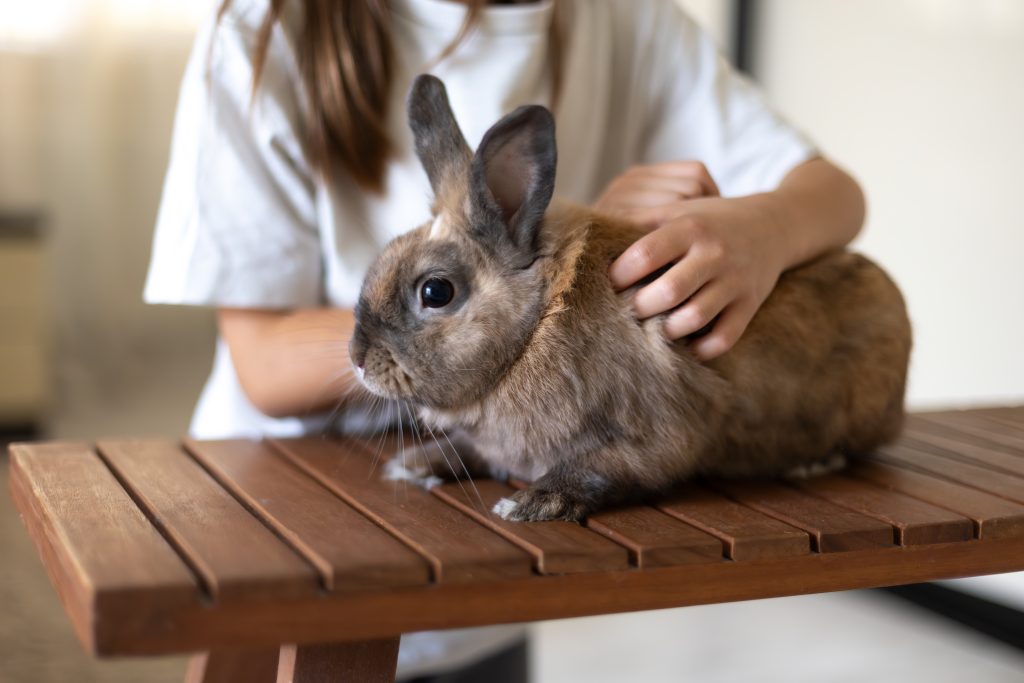
Set your rabbit up on a secure, non-slip surface and take a quick look over their body before you pick up a brush. Work smoothly from the shoulders down toward the tail, following the direction the fur lies. Ease out loose hair and small knots gently, then look over the skin, eyes, ears, feet, claws, and rear end. Keep these sessions brief and quiet, especially while your rabbit is still learning that grooming is not something to worry about.
Following a familiar routine helps your rabbit relax and ensures you do not miss any easy-to-overlook spots:
- Set up a non-slip station: Lay a bath towel or rubber yoga mat flat on the floor so your rabbit feels steady, and keep all your tools within easy reach.
- Let your rabbit settle: Spend a minute or two offering forehead strokes to help your rabbit settle before bringing in any tools.
- Run your hands over the body: Feel along the spine, sides, and belly for unexpected bumps, crusty spots, tenderness, or anything that feels different.
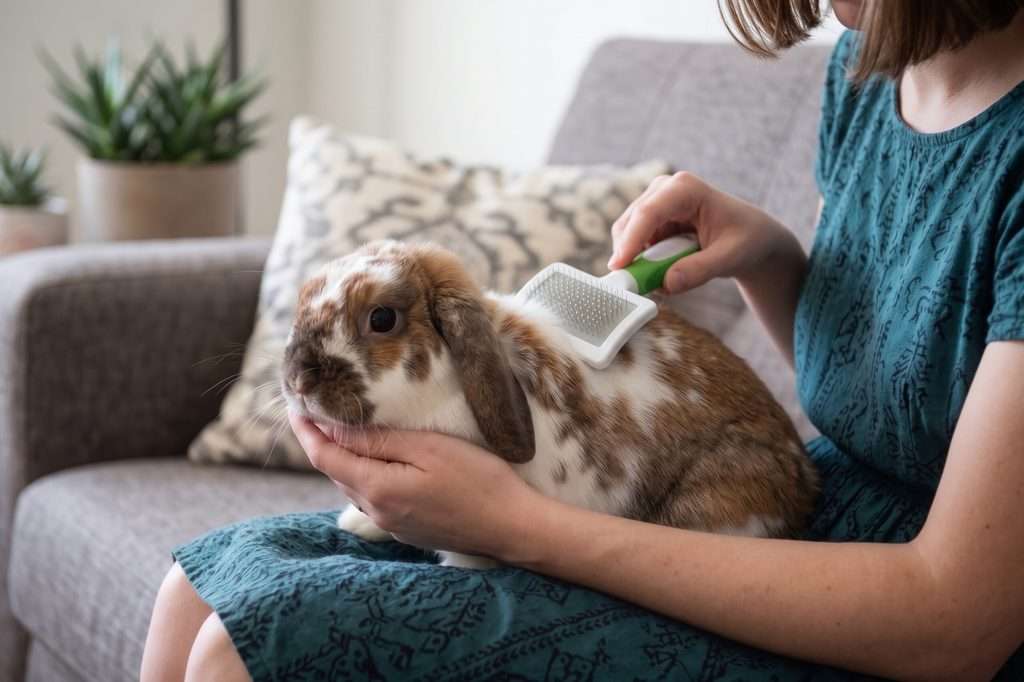
- Brush the coat and lift loose fur: Work from the neck down toward the tail, brushing the way the hair grows. Clean the brush regularly and pick away tufts of fur that are already sitting loose.
- Check for small tangles: Run a comb through the friction spots behind the ears and around the hind legs, gently teasing small knots apart with your fingers.
- Look at the eyes and ears: Make sure the eyes are dry and bright, and check that the inside of the ear flaps looks clean and free of crusts, discharge, or irritation.
- Check the feet and claws: Part the paw fur to see how long the claws are, look at the heel area for redness or thinning hair, and clip the claw tips if needed.
- Check underneath the tail: Gently lift the tail to confirm the fur is dry and clean of stuck droppings or dampness.
- End on a good note: Wrap up every session with a favorite fresh herb, a small healthy treat, and quiet petting so your rabbit walks away happy.
5. How to Brush a Rabbit
Brush a rabbit gently in the direction the fur grows, working from the shoulders along the back and sides toward the hindquarters. Use light pressure because rabbit skin is delicate, and remove loose tufts gradually rather than pulling firmly. During a heavy molt, several short brushing sessions are far easier on the rabbit than one long, exhausting session.
Work across the back, shoulders, sides, and rump using light, rhythmic strokes that glide with the coat. Avoid pressing combs firmly against the spine or hip bones.
In my own routine with my rabbits, Mocha and Chino, I find that five minutes of long, quiet forehead rubs on the floor beforehand sets a relaxed tone, making them far more willing to sit still once the comb comes out. Take extra care around sensitive spots like the throat, belly, and inner thighs, and stop before your rabbit gets fed up or starts pulling away.
A standard brushing session only needs to take five to ten minutes. The goal is simply steady coat upkeep and keeping your rabbit comfortable.
6. Grooming During Shedding
A rabbit going through a heavy molt may need brushing every day or even several short grooming sessions daily when large amounts of fur are coming loose. The goal is to remove loose undercoat before your rabbit swallows too much of it while self-grooming, without irritating the skin through aggressive brushing.
During a heavy shed, fur often comes out in uneven waves, leaving messy ridges or scruffy patches across the coat. This patchy, slightly scruffy look is usually normal as long as the skin underneath looks clean, smooth, and unbroken.
Keep two priorities in mind when shedding peaks:
- Brush more often: Quick daily brushings clear out dead undercoat before your rabbit ends up licking it all down.
- Keep an eye on the litter box: If your rabbit starts eating less, produces noticeably smaller or fewer droppings, or stops passing stool altogether, contact a veterinarian promptly. Fecal pellets linked by strands of hair can show up during a molt, but your rabbit’s appetite and overall droppings tell you far more about gut health than a little hair alone.
7. How to Remove Mats and Tangles From Rabbit Fur
Small tangles can usually be teased apart gently with your fingers and worked out with a fine comb, starting at the fur tips rather than pulling from the skin. Never yank on a knot because rabbit skin is paper-thin and tears easily. If a mat is packed tightly against the skin, don’t fight with it. That is one of those jobs best handed over to a veterinarian or an experienced groomer.
Friction areas—like behind the ears, beneath the chin, and along the thighs—are common places for tangles to form. Checking these spots weekly lets you work out small knots with your fingers before they tighten up.
Resist the urge to cut mats out with scissors. Rabbit skin is remarkably stretchy and can get pulled right up inside the mat, making it surprisingly easy to cut the skin when you think you are only trimming fur. If a tangle will not loosen with your fingers and a gentle comb, leave it alone and let someone with the right clippers and experience take care of it safely.
8. How to Trim a Rabbit’s Nails
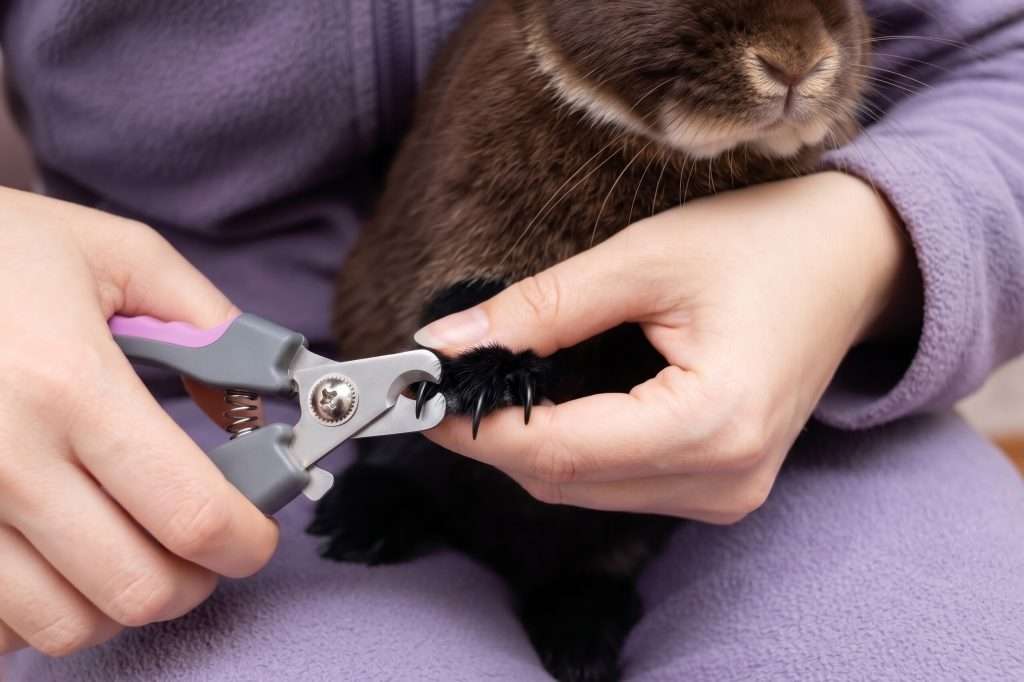
Rabbit nails commonly need trimming every 4–8 weeks, although growth rates vary between individuals. Check the nails every few weeks rather than relying solely on a fixed schedule.
Each claw has a small blood vessel inside called the quick, so trim only the sharp tip and stay well clear of the pink center. Pale nails make the quick easy to see, while darker nails call for a little extra care and conservative trims. Keep styptic powder within reach; plain cornstarch can be used as a temporary backup for a minor nick.
9. Should You Bathe a Rabbit?
Most rabbits never need a full bath. Many panic when placed in water, and getting that dense coat completely dry can take far longer than you might expect. If only one area is dirty, cleaning that spot is usually much easier on the rabbit than soaking the whole body.
If your rabbit’s bottom keeps getting dirty with urine or droppings, repeated washing is not really solving the problem. Something is usually making it difficult for them to stay clean—such as uneaten cecotropes, urinary problems, or stiffness that makes reaching the hindquarters difficult—so that is worth discussing with a veterinarian.
Keeping that area clean and dry is especially important in warm weather because damp, soiled fur can attract flies and increase the risk of flystrike.
10. How to Check Ears and Scent Glands
Healthy ears and scent glands rarely need regular cleaning. A quick look during grooming is usually all that is needed, stepping in only when you notice real buildup or an unusual smell.
- Ear checks: Look inside the ear flaps under good lighting. A healthy ear looks clean and smooth. Never poke cotton swabs down the ear canal or pour liquid cleaners inside. If you see thick, honeycomb-like crusts, white discharge, or notice your rabbit shaking their head often, have a vet take a look for ear mites or an infection.
- Scent gland checks: Rabbits have two small scent pockets tucked into the skin folds on either side of their genitals. They naturally have a musky smell, but occasionally—especially in older or less flexible rabbits—dark, waxy material can collect inside. If you spot noticeable buildup, the folds can be wiped clean very gently. If you have not done this before, ask your vet to show you how, especially if the buildup is hard, the skin looks irritated, or your rabbit resists being handled.
11. Check the Eyes, Skin, Feet, and Rear End
While you already have your hands on your rabbit, take another minute to look over the places that are easy to miss. A quick check can help you notice small changes that might otherwise be easy to miss:
- Eyes: If one eye keeps getting wet or crusty, don’t just wipe it clean every day and forget about it. Repeated discharge is worth having checked because eye and dental problems can both cause it.
- Skin and coat: Part the fur here and there while you brush. A little dry skin is one thing, but obvious bald spots, heavy flakes, redness, or scabs can signal a skin or parasite problem and are worth having checked.
- Feet and hocks: Look at the underside of all four paws, paying close attention to the heel bone on the back legs (the hock). If the fur is thinning or the skin underneath looks red, hard, or sore, take a closer look at the flooring and ask your vet for advice before it gets worse.
- Underneath the tail: Lift the tail to make sure the fur is dry and clean, with no urine staining, stuck droppings, or wet litter. In warm weather, check the skin folds closely for any signs of flystrike.
If anything looks raw, sore, or produces an unusual odor, put your tools aside and call your vet.
12. How to Groom a Long-Haired Rabbit
Long-haired rabbits are where grooming becomes much less optional. A small tangle behind the ears or around the hindquarters can turn into a tight mat surprisingly quickly, so these coats usually need attention several times a week—and some woolly rabbits need it every day.
Keep a close eye on the friction spots: behind the ears, under the chin, around the legs, and beneath the tail. Many owners choose to keep long coats trimmed to a practical, manageable length to keep fur out of their rabbit’s eyes and prevent messes around the rear. How much maintenance a long coat takes depends heavily on the breed and coat texture, but regular, gentle combing is always the foundation.
13. How to Groom a Rabbit That Hates Being Groomed
If your rabbit hates being groomed, begin with very short sessions on a secure, non-slip surface and reward calm behavior with a small favorite food. Gradually increase the length of grooming sessions instead of restraining the rabbit through a long struggle, which can make future grooming even more difficult.
To a nervous rabbit, being held in place feels uncomfortably close to being caught by a predator. Keep early sessions to two or three minutes: brush a few easy strokes down the back, offer a treat, and stop before your rabbit gets annoyed.
When Chino gets particularly restless or skittish during a heavy molt, placing a shallow saucer of fresh cilantro or dill right in front of his nose keeps him occupied and grounded while I gently work loose fur off his back. If your rabbit thumps, scrambles, or breathes hard with wide eyes, let them go and try again later.
14. How to Hold a Rabbit for Grooming
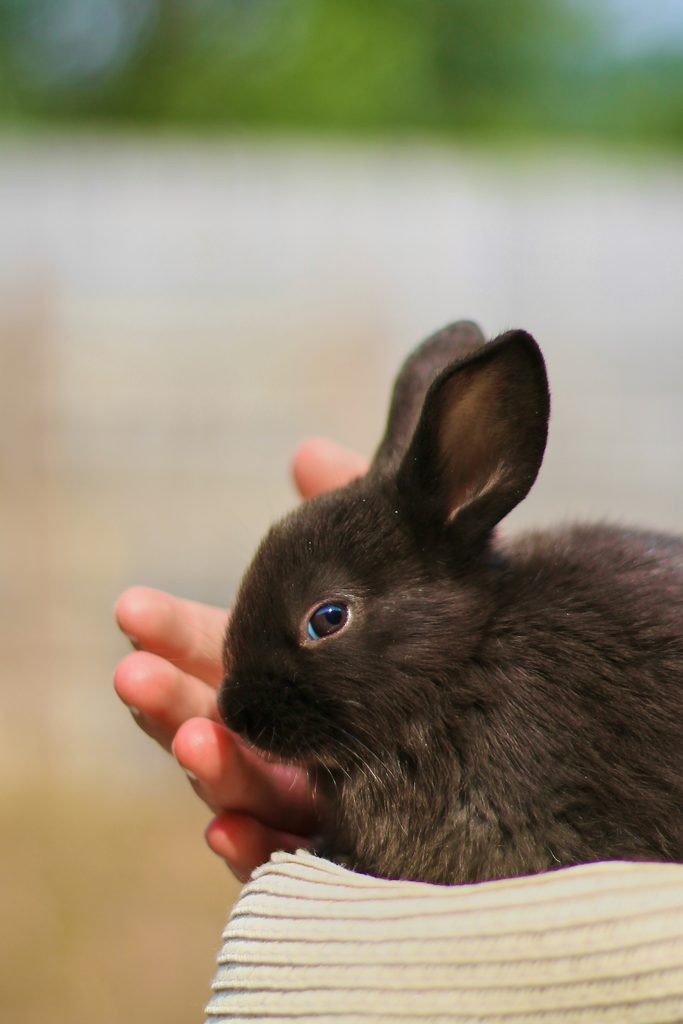
Whenever possible, groom your rabbit with all four feet on a non-slip surface. Most brushing can be done without picking them up at all. If you do need to lift or reposition them, keep the back end well supported and work close to the floor so a sudden kick does not turn into a fall.
Rabbits can kick surprisingly hard when they panic, which is why supporting the back end matters so much. If they twist or kick out forcefully while unsupported, they can injure their back.
- Work on the floor: Grooming on a non-slip floor mat removes the danger of a sudden jump or fall, helping your rabbit feel much more grounded.
- Support the hindquarters: Whenever you need to lift your rabbit to check their paws or belly, keep one hand firmly under the chest and cup your other hand securely beneath the rump and back feet. Never lift a rabbit by their ears or the scruff of their neck.
- Avoid turning them on their back: Avoid turning your rabbit onto their back for grooming. It is a fear response, not relaxation, and some rabbits may kick suddenly when moved out of that position.
15. Common Rabbit Grooming Mistakes
Well-intentioned rabbit owners often fall into common handling traps that cause accidental injury or stress. Understanding what to avoid helps keep routine grooming safe, calm, and productive.
The following overview highlights frequent grooming mistakes, the problems they cause, and easier approaches to try instead:
Common Rabbit Grooming Mistakes and Solutions
| Grooming Mistake | Why It Causes Problems | Better Alternative |
| Routine full baths | Can be very stressful, and the dense coat may stay wet for a long time | Spot-clean with a damp cloth or address chronic soiling with a vet |
| Pulling stuck fur | Can tug painfully at the skin or cause a small tear | Pluck only loose tufts that slide away with zero resistance |
| Cutting mats with scissors | Can easily cut skin hidden within or beneath the mat | Loosen with fingers and a comb, or seek professional clipping |
| Skipping shed-season brushing | Leaves more loose fur for the rabbit to swallow while grooming | Switch to short, daily brushings during heavy molts |
| Cutting too close to the quick | Causes bleeding, pain, and lasting fear of clippers | Trim only the sharp tip and stay well clear of the quick; keep styptic powder nearby |
| Deep-cleaning healthy ears | Can push wax and debris farther into the ear or irritate the canal | Inspect ears visually; leave canal cleaning to your vet |
| Forcing marathon sessions | Stresses the rabbit and damages handling trust | Break grooming into calm, 5-minute sessions |
| Working on slippery surfaces | Poor footing causes panic, scrambling, and fall injuries | Always use a textured rubber mat or an old bath towel |
| Placing a rabbit on its back | Can trigger tonic immobility and makes safe handling harder | Keep the rabbit upright with all four feet or the rump supported |
16. When Does a Grooming Problem Need a Veterinarian?
Sometimes grooming turns up something that is better left to your vet. Open sores, large bald patches, badly irritated skin, ongoing eye or ear discharge, painful feet, tight mats, unexplained lumps, or repeated messes around the rear all deserve a closer look. Also pay attention when a rabbit that normally keeps itself spotless suddenly starts looking scruffy or dirty, since discomfort from dental problems, arthritis, urinary issues, or digestive trouble can make normal grooming harder.
If you suspect mites or fleas, have a professional confirm the issue rather than guessing with store treatments. Avoid using over-the-counter human creams or parasite treatments meant for dogs and cats without veterinary guidance; some products, including treatments containing fipronil, can be dangerously toxic to rabbits.
17. A Quick Nose-to-Tail Check
Once grooming is finished, take another minute or two for a quick nose-to-tail check. Long-haired rabbits and seniors may need these checks more often, but the same four areas are worth watching in every rabbit:
- Head: Eyes are bright, clear, and dry; inner ears look clean, with no crusting, unusual discharge, or odd odor.
- Body: Coat is smooth and tangle-free; skin feels supple and clear of flakes, scabs, or unusual lumps.
- Paws: Claws are clipped to a comfortable length; the fur cushioning the underside of the hocks is intact and healthy.
- Rear: The area beneath the tail is dry, clean of droppings, and free of urine staining or irritated skin.
18. Rabbit Grooming FAQs
How often should a rabbit be groomed?
Most short-haired rabbits need a thorough brushing once or twice a week to remove loose fur. During seasonal shedding cycles, brushing should increase to daily or every other day. Long-haired rabbits generally require combing several times a week or daily to prevent painful mats.
Do rabbits like being brushed?
Tolerance varies by rabbit, tool choice, and handling history. Some rabbits tolerate or enjoy gentle brushing, especially over the forehead and back, while others dislike it no matter how gentle the tool. Firm pressure, stiff wire tools, or touching sensitive areas like the feet and belly often trigger resistance.
Can you use a human hairbrush on a rabbit?
Standard human hairbrushes with stiff plastic bristles or ball-tipped metal pins often do not remove loose rabbit undercoat very well and can scratch delicate skin. An ultra-soft infant brush can work for gentle surface brushing, although it may not remove much loose undercoat.
Can you use human shampoo on rabbits?
No, human shampoo should never be used on a rabbit. Rabbits have delicate skin, and human shampoos are usually too harsh or heavily fragranced for them. Any residue left in the coat is also likely to be licked off later.
Do rabbits need haircuts?
Short-haired rabbits generally do not need routine clipping because their coats protect the skin and help with temperature regulation. Long-haired companion rabbits may benefit from regular trimming around the rear end or from keeping the coat trimmed to a manageable length to prevent mats.
Can I shave my rabbit?
You should not shave a rabbit down to bare skin unless specifically directed by a veterinarian for medical treatment. Rabbit skin is exceptionally thin and easily caught in clipper blades. If trimming a long coat is necessary, always leave a protective buffer of fur.
Why does my rabbit lick itself after I pet or brush it?
When a rabbit grooms itself after being petted or brushed, it may simply be smoothing and rearranging its coat after handling. This is a normal self-grooming behavior and does not necessarily mean the rabbit disliked being touched.
How do you groom a rabbit that won’t sit still?
Groom restless rabbits directly on the floor on a non-slip mat to remove the fear of heights. Keep sessions brief—lasting only two to three minutes—and offer a continuous distraction, like a small pile of fresh herbs, while using gentle strokes.
19. Final Thoughts
Grooming a rabbit does not require an elaborate setup or a kit packed with specialty gear. For most rabbits, consistent weekly brushing, regular nail trims, and a quick nose-to-tail check are far more valuable than occasional intensive overhauls.
Keep grooming short, calm, and predictable, and it soon becomes just another comfortable part of life together. You will remove loose fur before it ends up all over the rabbit—and your furniture—keep nails from becoming overgrown, and get familiar enough with your rabbit’s normal coat and body condition to notice when something changes. Treat grooming as quiet, intentional bonding time—a practical investment in your rabbit’s everyday comfort, health, and well-being.
Medical & Veterinary Disclaimer: Bunnyowners.com is an informational resource for rabbit owners and enthusiasts. We are not veterinarians. The content on this website is for educational purposes only and is not a substitute for professional veterinary advice, diagnosis, or treatment. Always consult a qualified veterinarian with any questions or concerns regarding your pet’s health, medical conditions, diet, or overall care. If you have concerns about your rabbit’s health, it’s always best to reach out to a veterinarian rather than relying solely on information found online.