
Veterinary & Affiliate Disclaimer: Bunnyowners.com shares educational rabbit care resources, not professional veterinary advice. Always consult a qualified veterinarian regarding your rabbit’s medical, dietary, or behavioral needs. This post may also contain affiliate links; as an Amazon Associate and affiliate partner, we earn from qualifying purchases at zero extra cost to you.
When a domestic rabbit starts frantically scratching its ears, twitching, or shaking its head, it is rarely just a routine itch. These behavioral clues are often the first warnings of ear mites settling deep inside the ear canal. Left unchecked, the continuous irritation sets off a defensive chain reaction that quickly transforms smooth, pink skin into layers of uncomfortable brown scabs. Identifying the exact nature of this infestation is critical before attempting any cleanup.
Rabbit ear mites are highly contagious parasites that cause intense irritation, head shaking, and thick, brown crusts inside the ear canal. Never pull these crusts off manually, as they are firmly attached to swollen skin; peeling them off tears the tissue, causing extreme pain, raw bleeding, and serious infection risks. Eradication requires weight-appropriate prescription antiparasitics (such as selamectin or ivermectin) from a veterinarian to safely break the lifecycle, as home remedies like olive oil or hydrogen peroxide are completely ineffective and hazardous.
Navigating your rabbit’s recovery requires understanding how these pests behave while completely avoiding dangerous DIY treatments. To help you build a safe roadmap back to full health, this article breaks down the three clear phases of symptom progression alongside the deep-cleaning steps required to protect multi-rabbit households, building on the foundational care principles found in my domestic rabbit health and wellness guides.
2. What Are Rabbit Ear Mites?
Rabbit ear mites are tiny external parasites known scientifically as Psoroptes cuniculi. Unlike some skin mites, ear mites live right on the surface of the ear canal rather than burrowing deep into the skin. As detailed in the Vetlexicon Profile, these oval-bodied pests are the primary cause of ear irritation in rabbits.
Once they move in, the mites feed on dead skin cells and fluids inside the ear. Their movement and waste trigger an inflammatory response. The rabbit’s body tries to protect itself by producing extra fluid, which dries out, layers up, and hardens into thick crusts made of dried skin.
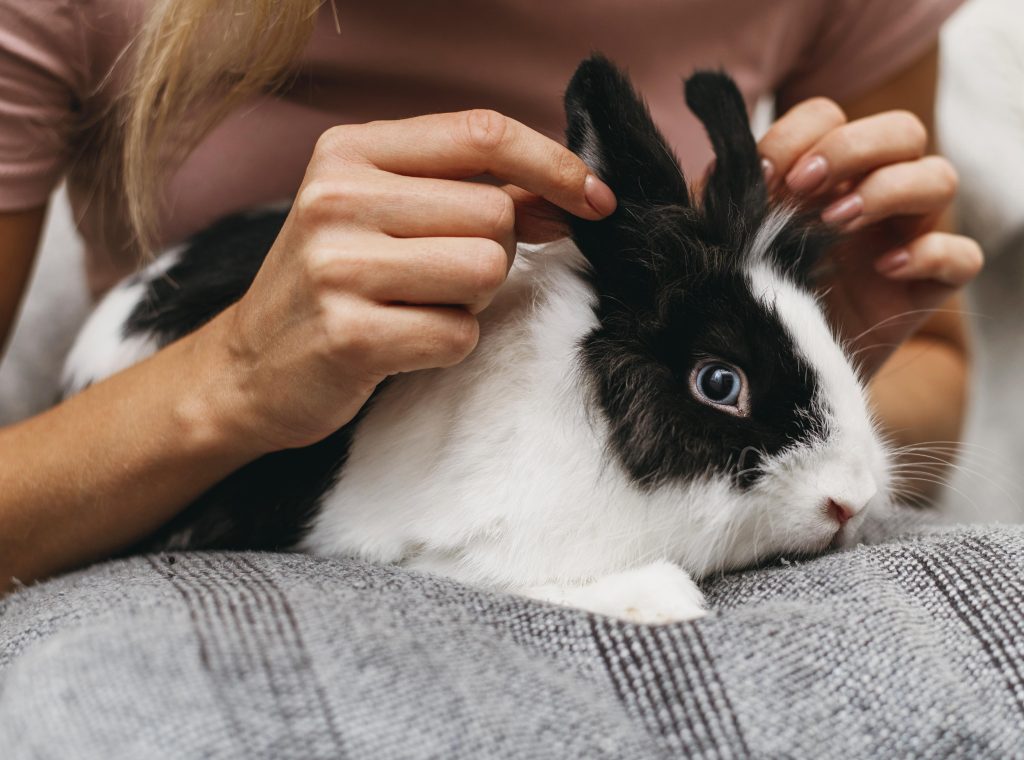
During a routine rabbit health check at home, a healthy ear canal should look smooth, clean, and perfectly pink. While monitoring my own rabbits, Mocha and Chino, I make it a point to verify that their inner ears remain completely clear of any wax buildup or stray flakes, as a clean canal is your best defense against noticing early parasite changes.
3. Rabbit Ear Mite Symptoms
Ear mite infestations do not appear as large crusts overnight. They progress through three clear phases. Catching the infestation early reduces your rabbit’s pain levels and recovery time.
Table 1: Symptom Progression Framework by Infestation Phase
| Clinical Stage | Physical Presentation | Primary Behavioral Signs |
|---|---|---|
| Phase 1: Early | Mild canal redness, invisible parasite activity | Frequent scratching, rapid head shaking, ear twitching |
| Phase 2: Moderate | Loose tan flakes, initial dried-oatmeal crusting | Hair loss around ears, guarded ear carriage, sensitivity |
| Phase 3: Severe | Thick brown crusts, skin cracks, raw bleeding | Anorexia, severe lethargy, weight loss, secondary infection |
Early Symptoms
In the first few weeks, the mites are invisible to the naked eye. The constant crawling inside the ear canal triggers a relentless itch. Watch for:
- Frequent scratching: Your rabbit uses their hind legs to aggressively claw at the base of their ears.
- Head shaking and ear twitching: A sudden, rapid shaking of the head as if trying to dislodge an object.
- Mild redness: The inside of the ear flap may look flushed or irritated.
- Increased sensitivity: Your rabbit may flinch or pull away when you gently touch their head.
Moderate Symptoms
As the parasites multiply, the dried fluid and dead skin build up:
- Flaky, tan debris: Small, dandruff-like flakes accumulate at the bottom of the ear canal.
- Early crusting: Debris thickens into tan or light-brown layered patches resembling dried oatmeal.
- Hair loss: Bald patches develop around the edges and base of the ears from constant scratching.
- Abnormal ear carriage: A rabbit who normally has erect ears may hold one or both slightly outward or pinned down due to internal pressure.
Severe Symptoms
If left untreated, the condition escalates into a major welfare concern. According to the NCBI Review, an unchecked infestation can eventually migrate out of the ear canal, spreading past the ear flaps to involve the face, neck, and torso.
- Heavy crust buildup: Large, thick brown scabs completely fill the ear canal and spill out onto the outer ear flap.
- Fissures and bleeding: The skin beneath the crusts cracks open, leading to raw bleeding and open sores.
- Systemic signs of pain: The severe discomfort can cause a complete loss of appetite, lethargy, and weight loss.
When Symptoms Become an Emergency
If your rabbit stops eating entirely, looks deeply lethargic, or displays a dramatic tilt where they hold their head completely sideways, they are in a critical state. A lack of food intake can trigger a life-threatening digestive shutdown, or GI stasis
, within 12 to 24 hours. If your rabbit exhibits these clear signs of rabbit pain, skip home monitoring and seek an emergency veterinarian immediately.
4. What Causes Ear Mites in Rabbits?

A common misconception among house rabbit owners is that indoor pets are completely insulated from parasites. While outdoor rabbits face higher encounter rates, indoor rabbits can absolutely catch ear mites through several hidden vectors:
- Direct Rabbit-to-Rabbit Contact: This is the most common route. Mites spread effortlessly in rescue shelters, breeding facilities, or during temporary playdates with asymptomatic carriers.
- Contaminated Bedding and Forage: Mites can survive off a host for several days under favorable conditions. This means they can hitchhike into your home on low-quality bedding, fresh forage picked from wild fields, or shared grooming tools.
- Outdoor Exposure: Wild rabbits grazing near your home can drop parasitic fur mites (Cheyletiella parasitovorax) onto your lawn. According to the University of Missouri College of Veterinary Medicine, this environmental shedding from wild populations is a major source of indirect transmission. When you walk through that grass, these microscopic mites or their eggs can hitch a ride on your shoes or clothing, sneaking an infestation right into your home.
5. How Veterinarians Diagnose Ear Mites
A definitive diagnosis should always be performed by a professional before any medication is administered. Veterinarians utilize a multi-step approach to ensure your rabbit receives the correct treatment plan:
Physical and Otoscope Examination
The vet inserts a lighted otoscope down into the ear canal. Under magnification, they can often see the tiny, white, oval-shaped mites actively moving around the edges of the debris.
Microscopic Examination
If the ears are too sore for a deep otoscope probe, the vet will gently sample a small piece of loose flake using clear tape or a soft swab. Diagnostic steps outlined in the Merck Veterinary Manual emphasize that microscopic isolation is crucial for protecting fragile skin folds from inaccurate treatments. This process clearly identifies Psoroptes cuniculi adults, nymphs, or eggs.
Ruling Out Other Ear Problems
Your vet will rule out other conditions that mimic mite crusts. It is vital to differentiate a parasitic issue from a deep bacterial ear infection, a localized ear abscess, physical ear canal trauma, or a simple, benign buildup of excess earwax.
6. Rabbit Ear Mite Treatment
Early treatment leads to a much faster recovery and prevents painful complications.
Prescription Antiparasitic Medication
The only safe way to eradicate an ear mite infestation is through targeted medications prescribed by a veterinarian. Clinical studies hosted in the NCBI Case Report demonstrate that weight-specific therapies effectively drop the parasite burden without causing system stress.
- Selamectin (e.g., Revolution): Typically applied topically to the skin between the shoulder blades. It absorbs through the skin to safely kill the feeding mites.
- Ivermectin: Administered via precise oral dosing or subcutaneous injection. Rabbit-focused field studies archived by Rutgers University NJAES emphasize that because standard ivermectin cannot penetrate unhatched egg walls, a secondary follow-up treatment precisely 10 to 14 days later is critical to catching the next generation as they hatch.
Pain Relief
Vets will often prescribe a safe anti-inflammatory liquid like Meloxicam to soothe the ears and keep the rabbit comfortable while the parasites die off.
Treating Secondary Infections
If bacteria have invaded the raw skin under the scabs, your veterinarian will prescribe targeted antibiotics alongside the antiparasitic therapy.
Why Crusts Should NOT Be Pulled Off
It is incredibly tempting for an owner to want to clean out the ear by picking or pulling off the large brown crusts. Do not do this. The crusts are firmly attached to highly sensitive, intensely inflamed skin tissue. Peeling them off tears the living skin beneath, causing extreme pain, open bleeding, and a high risk of introducing a secondary bacterial infection.
Once the medication eliminates the live mites, the inflammation will subside, and these crusts will naturally fall away on their own over 7 to 14 days.
Table 4: Mite Treatment and Recovery Timeline
| Timeframe | Physical Expectations | Behavioral Observations |
|---|---|---|
| Days 1–2 | Live adult mites die off; ear inflammation begins to drop | Ear scratching and head shaking decrease significantly |
| Days 3–7 | Ear canal swelling goes down; edges of crusts lift | Reluctance to eat resolves; appetite improves |
| Week 2 | Thick brown crusts loosen and naturally slough away | Rabbit tolerates head pets; ear sensitivity disappears |
| Weeks 3–4 | Sensitive skin beneath the crusts fully heals and regrows fur | Normal ear carriage returns; full clinical recovery |
7. Can You Treat Rabbit Ear Mites at Home?
The short answer is no. Attempting to bypass a veterinary visit with DIY options is counterproductive and often hazardous to the animal.
Table 2: Safety Risks of Unverified DIY Home Mite Remedies
| Popular DIY Remedy | Purported Function | Actual Medical Risk to Rabbit |
|---|---|---|
| Olive or Mineral Oil | Supposedly suffocates live mites | Traps bacteria, fosters infection, creates toxic canal sludge |
| Hydrogen Peroxide | Disinfects raw wounds | Causes acute chemical burns, cellular damage, severe pain |
| Rubbing Alcohol | Kills surface parasites | Intense chemical irritation on broken tissues, rapid cooling |
| Tea Tree / Essential Oils | Natural repellent | Severe ingestion toxicity during grooming, neurological harm |
| Cotton Swabs (Q-Tips) | Cleans internal debris | Risk of eardrum rupture, impacts scabs deeper |
Safe Practices
- Applying only weight-appropriate medications prescribed directly by your veterinarian.
- Keeping the external areas of the fur clean without touching the inner ear canal.
- Closely monitoring your rabbit’s daily hay intake and fecal output.
8. Caring for a Rabbit During Recovery
Supporting your rabbit through recovery means looking beyond the ears to address their overall physical and mental state. Because stress or ongoing discomfort can cause a rabbit to hide symptoms or stop eating completely, setting up a specialized, supportive care environment is a vital element of their healing process.
Keep the Rabbit Eating
Pain can cause rabbits to go off their food. Ensure your rabbit has continuous access to fresh Timothy hay. If your rabbit won’t eat hay due to severe discomfort, be ready to supplement with critical care syringe feeding immediately if their appetite drops. Setting up a predictable environment can make a massive difference; combining dietary stability with low-stress handling methods serves as an excellent foundation for any comprehensive rabbit care plan.
Reduce Environmental Stress
Keep your recovering rabbit in a quiet, low-traffic area of the home. Stress slows down the immune system’s capacity to repair skin tissue. Learning how to safely handle your rabbit calmly during medication times will prevent sudden movements that can cause raw ear tissues to bleed.
Monitor Healing
Check the baseline behavior daily during your routine grooming sessions. You should see a steady decline in head shaking and scratching within the first 72 hours of treatment.
Follow All Medication Doses
Never stop treatment early just because the ears look clean. Skipping the secondary follow-up dose or stopping oral medication early allows unhatched eggs to restart the entire infestation cycle.
9. Cleaning the Rabbit’s Environment
Because ear mites can survive off their host for several days under favorable conditions, a thorough environmental deep-clean is mandatory on the day your rabbit receives their first treatment. This prevents immediate re-infestation.
- Replace Bedding: Discard all paper bedding, cardboard boxes, and porous wooden toys inside the enclosure.
- Wash Fabrics: Wash all blankets, fleece liners, and soft toys in hot water (at least 140°F / 60°C) and dry them on high heat.
- Sanitize Hard Surfaces: Scrub down plastic litter boxes, ceramic bowls, and grooming tools using a rabbit-safe disinfectant or a diluted bleach solution, rinsing thoroughly afterward.
- Vacuum Enclosures: Thoroughly vacuum the carpets and baseboards surrounding the rabbit’s living area to remove any shed flakes that may hold live mites or unhatched eggs.
10. Can Humans or Other Pets Catch Rabbit Ear Mites?

Understanding how parasites move between hosts is essential for protecting everyone under your roof. Because multi-pet homes share common spaces, clarifying the boundaries of transmission prevents unnecessary quarantine mistakes and shields vulnerable animals from cross-contamination.
Humans
Rabbit ear mites are highly host-specific. They cannot establish a breeding colony or survive long-term on human skin. If you handle an infested rabbit, you might experience mild, temporary skin irritation or a transient itch, but the mites will quickly die off without any medical intervention.
Dogs and Cats
While dogs and cats have their own specific ear mite species (Otodectes cynotis), cross-contamination from rabbit ear mites is very rare. Guidelines established by the CAPC Guidelines indicate that while household pets harbor different primary ectoparasites, tracking unusual ear scratching across all household animals remains an important diagnostic safety measure.
Other Rabbits
Psoroptes cuniculi is incredibly contagious among lagomorphs. If one rabbit in a bonded pair or multi-rabbit household is diagnosed, all exposed rabbits must be evaluated and treated simultaneously, even if they are not currently showing symptoms. Asymptomatic carriers will simply pass the mites back to the recovering rabbit once the medication wears off.
In my home, keeping a closely bonded pair like Mocha and Chino together during veterinary recovery cycles ensures that their emotional bond prevents immune-weakening stress, though it means managing identical prescription routines for both rabbits.
11. Rabbit Ear Mites vs. Ear Infection
Because both conditions involve the ears and cause head shaking, owners often confuse them. Use this structural comparison matrix to understand the core differences:
Table 3: Differential Comparison Framework for Ear Mites vs. Bacterial Infection
| Clinical Feature | Rabbit Ear Mites | Bacterial Ear Infection |
|---|---|---|
| Primary Cause | External parasite (Psoroptes cuniculi) | Bacteria (Pasteurella, Staphylococcus) or yeast |
| Primary Visual Sign | Dry, layered, tan-to-brown flaky crusts | Creamy, white, foul-smelling fluid discharge |
| Itch Intensity | Extremely high; constant scratching | Low to moderate; driven more by internal pressure |
| Neurological Signs | Head tilt is very rare (only if eardrum ruptures) | Head tilt, nystagmus (eye rolling), and balance loss are common |
| Core Treatment | Prescription antiparasitics (Selamectin/Ivermectin) | Long-term systemic antibiotics; deep flushing |
12. Frequently Asked Questions (FAQ)
Can rabbit ear mites go away on their own?
No. An ear mite infestation will progressively worsen over time. The parasites will continue to breed and feed inside the canal, leading to deep crusting, severe discomfort, and secondary infections that can ultimately prove fatal if the rabbit stops eating.
How long does treatment take?
While the live mites are typically killed within 24 to 48 hours of the first correct antiparasitic dose, the complete healing process—including the time it takes for the heavy crusts to naturally loosen, detach, and peel away without manual intervention—takes between 2 to 4 weeks.
Can indoor rabbits get ear mites?
Yes. Mites can be introduced into an indoor environment via contaminated batches of hay or bedding, direct contact with tracking footwear, or temporary exposure to other infected pets.
Should I clean the crusts off?
No. Never manually peel or scrape the crusts out of the ear. Doing so tears the highly inflamed skin tissue underneath, causing severe pain, bleeding, and potential secondary bacterial complications.
Can ear mites cause head tilt?
Yes, but only in advanced, neglected cases. If the infestation is left untreated, the massive inflammation or a secondary bacterial infection can rupture the eardrum, allowing pathogens to invade the inner ear and trigger severe head tilt by destroying their internal balance mechanisms.
Will my rabbit lose hearing?
In typical cases caught in the early or moderate stages, there is no hearing loss. If the condition becomes severe and destroys the internal mechanisms of the middle or inner ear, partial or total localized deafness can occur.
Can baby rabbits get ear mites?
Yes. Baby rabbits (kits) have highly sensitive skin and vulnerable immune systems, making them incredibly susceptible to rapid mite transmission if their mother is an asymptomatic carrier.
Can rabbits get ear mites from hay?
It may occur, though it is not the most common vector. If a batch of hay or straw is stored or processed in an outdoor facility accessible to infected wild lagomorphs, the mites can hitchhike on the material and survive long enough to expose an indoor pet upon opening.
Can rabbits get ear mites from cats?
No, rabbits generally do not get ear mites from cats. Cats are primarily affected by Otodectes cynotis, while rabbits are targeted by Psoroptes cuniculi. While they are separate parasite species that prefer their specific hosts, you should still consult a vet if multiple types of pets in your home are scratching their ears.
Should bonded rabbits be separated during mite treatment?
No, you should not separate bonded rabbits during ear mite treatment. Separation causes intense emotional stress, which can weaken their immune systems and trigger digestive slowdowns. Since ear mites are highly contagious, both rabbits have already been exposed and should be treated simultaneously while remaining together.
Can rabbits die from ear mites?
Yes, rabbits can die from ear mites if the infestation is completely neglected. The severe discomfort often causes rabbits to stop eating entirely, which leads to life-threatening GI stasis. Additionally, untreated infestations can cause secondary infections that travel to the inner ear and brain.
Can ear mites come back after treatment?
Yes, ear mites can come back if the entire lifecycle wasn’t broken. This happens if you skip the follow-up vet dose, fail to treat all rabbits in the home simultaneously, or skip deep-cleaning the environment, allowing unhatched eggs in the bedding to restart the infestation.
13. Conclusion
Eradicating rabbit ear mites is a straightforward scientific task that requires weight-appropriate veterinary medication rather than well-meaning but hazardous home remedies. Because Psoroptes cuniculi is highly adapted to the ear canal, using pantry oils or harsh alcohols only delays recovery and risks secondary infection.
The most effective approach is patience: let prescription antiparasitics eliminate the parasites and allow the painful crusts to shed naturally on their own. By pairing professional medical treatment with a thorough environmental deep-clean, you can permanently disrupt the parasite’s life cycle and safely restore your rabbit’s ears to a clean, healthy baseline.
Medical & Veterinary Disclaimer: Bunnyowners.com is an informational resource for rabbit owners and enthusiasts. We are not veterinarians. The content on this website is for educational purposes only and is not a substitute for professional veterinary advice, diagnosis, or treatment. Always consult a qualified veterinarian with any questions or concerns regarding your pet’s health, medical conditions, diet, or overall care. If you have concerns about your rabbit’s health, it’s always best to reach out to a veterinarian rather than relying solely on information found online.