
Disclaimer: The information provided on bunnyowners.com is for educational purposes only and does not constitute veterinary medical advice; always consult your vet before changing your rabbit’s diet. Additionally, this post contains affiliate links. As an Amazon Associate, and other affiliate advertising programs, I earn from qualifying purchases at no extra cost to you
Behind that endlessly twitching nose lies a highly specialized, open-rooted dental system built for relentless, calculated wear. Operating like tiny, fluffy woodchippers, rabbits stubbornly refuse to file a maintenance report until their internal machinery completely seizes up. When this delicate biological engine finally stalls, owners are often caught off guard, leaving them to urgently ask: what exactly is dental disease in rabbits?
Dental disease in rabbits is a painful condition that occurs when their continuously growing teeth fail to wear down properly, most often due to a lack of abrasive grass hay in their diet. This uneven wear leads to overgrown front teeth and razor-sharp molar spurs that lacerate the tongue and cheeks, causing drooling, weight loss, and severe eating difficulties. Treating these overgrown teeth requires professional veterinary dental burring under sedation, while long-term prevention relies entirely on maintaining a strict, high-fiber diet.
Dental disease remains one of the most common, yet chronically misunderstood, reasons these animals end up on a veterinary exam table. Built to spend hours pulverizing tough pasture grasses, a rabbit’s mouth operates like a self-sharpening biological conveyor belt. When a soft modern diet removes that vital friction, the entire system derails. In this addition to my comprehensive rabbit health guides, we break down the hidden mechanics of this failure, highlight the subtle warning signs owners often miss, and outline the exact prevention strategies needed to keep your rabbit’s machinery running smoothly.
1. What Is Dental Disease in Rabbits?
To understand why rabbit teeth fail, we have to look at how they are built to succeed in the wild. Rabbits possess an open-rooted, or elodont, dentition. This means their teeth completely lack a true anatomical crown and root structure; instead, they grow continuously throughout the animal’s entire lifespan.
Continuous Tooth Growth and Wear Mechanics
A healthy adult rabbit’s incisors (front teeth) can grow up to 2 to 2.5 mm per week, while their molars (back teeth) push upward at a similarly relentless pace. Under normal circumstances, this rapid growth is perfectly countered by the extreme attrition caused by daily chewing. If you think about it, it is a brilliant evolutionary strategy for an animal that survives by eating dirt-covered forage, though it leaves no room for dietary slacking.
Rabbits do not chew with a simple up-and-down crushing motion like humans or dogs do. Instead, they utilize a complex, lateral (side-to-side) grinding motion. When a rabbit consumes coarse, fibrous plants, the upper and lower dental arcades grind against each other, perfectly wearing down the enamel tips at the exact rate new tooth structure emerges from the jawline. You can read more about standard lagomorph anatomy via resources like the House Rabbit Society.
Defining Dental Pathology
Dental disease occurs whenever this precise equilibrium of growth and wear is broken. When teeth fail to meet perfectly, the natural attrition process stops entirely. The teeth keep growing, but they no longer have an opposing surface to wear them down. This leads to a cascade of painful anatomical structural failures:
- Malocclusion: The misalignment of the upper and lower teeth so they do not meet correctly.
- Sharp Molar Spurs: Elongated edges of the back teeth that shape into razor-sharp spikes.
- Root Elongation: When teeth cannot grow upward into the mouth, the pressure forces them to grow backward into the jawbone and skull cavities.
- Infections and Abscesses: Pierced soft tissue that allows bacteria to enter the bone structure.
Incisors vs. Molars
It is a common misconception that rabbit dental health is all about the front teeth. In reality, a rabbit’s mouth is divided into two distinct zones: the visible incisors at the front and the hidden cheek teeth (molars and premolars) at the back, separated by a toothless gap called the diastema.
While overgrown front teeth are easy to see, molar disease is statistically far more common, significantly harder to detect without specialized equipment, and generally more dangerous to the rabbit’s systemic health. It is the dental equivalent of a stealth submarine—underwater, out of sight, and highly destructive.
Table 1: Incisor Problems vs. Molar Problems Overview
| Feature | Incisor Issues (Front Teeth) | Molar Issues (Back Teeth) |
|---|---|---|
| Visibility | Easily seen by gently parting the lips. | Hidden; requires a vet’s speculum, endoscopy, or anesthesia to view. |
| Common Signs | Curled teeth, inability to pick up or slice food. | Drooling (“slobbers”), dropping food, eye discharge, selective appetite. |
| Primary Cause | Often congenital genetics (jaw structure) or physical trauma. | Primarily poor diet (lack of long-stem abrasive fiber). |
| Risk Level | High (prevents food prehension), but highly visible to track. | Critical (causes hidden tongue/cheek lacerations and GI stasis). |
2. Why Do Rabbits Get Overgrown Teeth?
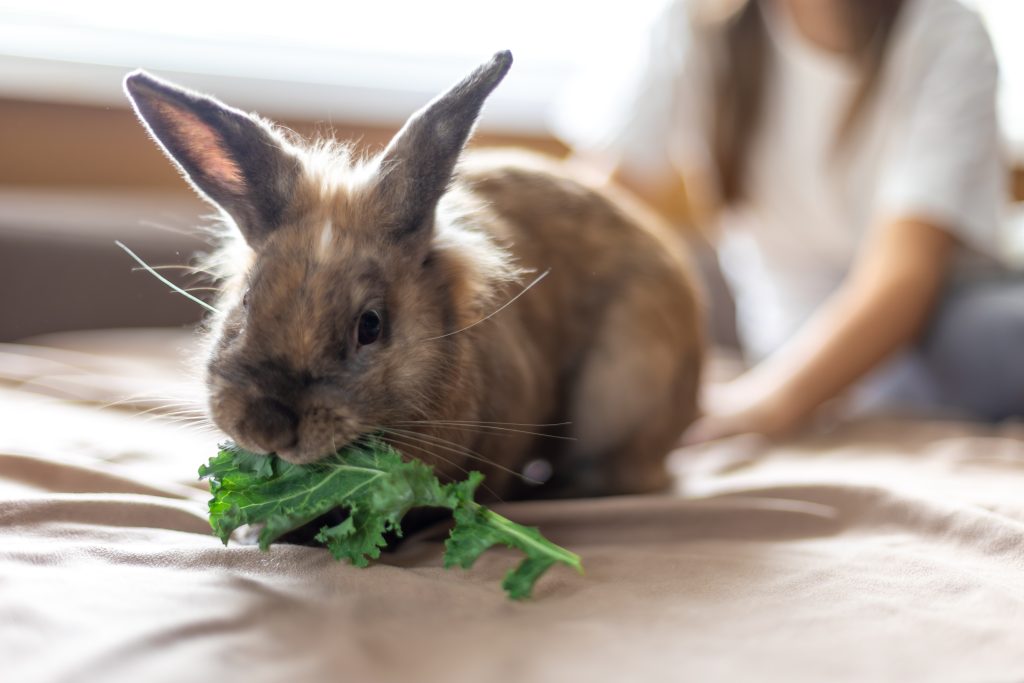
Dental disease rarely happens in a vacuum. It is typically driven by a combination of environmental factors, genetic predispositions, mechanical injuries, or age-related degeneration.
Poor Diet: The Primary Culprit
By far, the most common contributing factor to acquired dental disease is a diet lacking sufficient long-stem fiber. The Merck Veterinary Manual notes that dietary composition is a foundational element of lagomorph oral health.
Rabbits require the physical action of chewing coarse grass hay to keep their teeth trimmed. Commercial pellets, while nutritionally dense, do not require the side-to-side grinding motion. Pellets are basically the fast food of the lagomorph world; they are easily crushed using a vertical, up-and-down jaw movement and quickly dissolve into a paste upon contact with saliva.
When a rabbit is overfed pellets or treats, they fill up on easy calories. Consequently, their voluntary consumption of hay drops significantly. Over months and years, this lack of lateral grinding allows the enamel edges of the cheek teeth to grow unchecked, quickly turning into sharp, problematic protrusions.
Table 2: The Dietary Pathway to Molar Spurs
| Step | Phase | What Happens Inside the Mouth |
|---|---|---|
| 1 | Excessive Pellet Intake | The rabbit fills up on easy, calorie-dense food. |
| 2 | Satiety / Full Stomach | Metabolic satisfaction sets in quickly. |
| 3 | Reduced Hay Consumption | The rabbit stops chewing on long-stem grass hay. |
| 4 | Minimal Tooth Attrition | Natural wear stops; teeth continue to grow unchecked. |
| 5 | Lack of Lateral Grinding | The vital side-to-side chewing motion is completely missed. |
| 🚨 | Inward/Outward Molar Spurs | Sharp enamel spikes form, cutting into the tongue and cheeks. |
Genetic Malocclusion
Not all dental issues are the owner’s fault. Some rabbits are born with congenital jaw misalignments. If the maxilla (upper jaw) and mandible (lower jaw) are not perfectly proportioned, the teeth will never align, no matter how much hay the rabbit chews.
This is particularly prevalent in dwarf and brachycephalic (flat-faced) rabbit breeds, such as the Netherland Dwarf and the Holland Lop. Selective breeding for shorter, rounder, “cuter” skull shapes has compressed their dental anatomy, leaving inadequate room for normal tooth alignment. In these genetic cases, preventative diet changes can support the rabbit, but they cannot fully correct the underlying anatomical mismatch.
Trauma and Structural Injury
Physical trauma can permanently alter a rabbit’s dental alignment. If a rabbit drops from a significant height, pulls aggressively on the metal bars of its enclosure, or suffers an impact to the face, the delicate germinal tissue at the base of the tooth can become damaged.
A broken tooth may regrow at an abnormal angle, disrupting the alignment of the entire dental arcade and initiating a lifelong cycle of uneven wear and mandatory trims.
Age-Related Changes
As rabbits cross into their senior years, their muscle tone decreases, and subtle shifts can occur within the jawbone matrix. Metabolic changes can alter the density of the alveolar bone that anchors the teeth. This can cause previously straight teeth to slightly tilt or shift, creating new, late-onset wear abnormalities that require veterinary monitoring.
3. Signs of Dental Disease in Rabbits
Because rabbits instinctively mask illness to avoid looking like easy targets for predators, owners must become skilled clinical observers. Waiting for a rabbit to completely stop eating is waiting too long.
Early Signs Owners Often Miss
Long before a rabbit completely collapses into a health crisis, they will exhibit subtle shifts in behavior and eating patterns. In my observational work with my resident rabbits, Mocha and Chino, I have noted that even minor changes in how a rabbit approaches their daily food bowl can be the earliest indicator of physical discomfort. For example, if Mocha suddenly begins sorting through her herbs with unusual deliberation, or if Chino takes noticeably longer to finish a standard piece of leafy green, it warrants immediate close monitoring of their chewing dynamics.
Keep a sharp eye out for these early warning signs:
- Slower Eating Speed: The rabbit still finishes their food, but it takes them twice as long as usual.
- Selective Appetite: A sudden refusal to eat hard items like hay or crunchy pellets, while still eagerly accepting soft greens or fruit treats.
- Dropping Food: The rabbit picks up a piece of food, chews it momentarily, and then lets it fall out of their mouth (often referred to as “quidding”).
- Chumping or Odd Jaw Movements: Grinding the jaw or making “chewing” motions when there is no food present.
- Declining Fecal Pellet Size: As food intake subtly drops, the resulting fecal droppings become smaller, drier, or less frequent.
- Grooming Degradation: If reaching their fur causes jaw pain, a rabbit may stop grooming, leading to a dull coat or mats around their hindquarters.
According to community health profiles on platforms like the PDSA, recognizing these early shifts can prevent a mild dental issue from escalating into a severe systemic medical emergency.
Visible Signs of Advanced Dental Disease
When the body can no longer compensate for the structural damage or pain in the mouth, advanced clinical symptoms will emerge:
Table 3: Advanced Dental Disease Symptoms
| Advanced Dental Disease Symptoms | Description |
|---|---|
| Slobbers | Constant drooling; wet chest fur |
| Epiphora | Clogged tear ducts; chronic tearing |
| Facial Lumps | Bony swellings; abscess formations |
| Strabismus | Exophthalmos; bulging eye sockets |
“Slobbers” (Drooling): Chronic pain or the physical presence of massive molar spurs prevents the rabbit from swallowing their saliva normally. The fur under the chin, jaw, and down the chest becomes chronically wet, matted, and smelly, often leading to secondary skin dermatitis.
- Ocular Discharge and Bulging Eyes: The roots of the upper teeth sit directly beneath the tear ducts and eye sockets. When root elongation occurs, the tooth roots compress the nasolacrimal duct, causing chronic tearing and eye wetness. In severe cases, the root can push directly into the retrobulbar space, causing the eyeball to physically bulge outward.
- Facial Swellings: Hard, non-painful or painful lumps along the lower jawline or beneath the eye usually indicate that an elongated root has breached the outer bone cortex, allowing a deep-seated bacterial abscess to form.
Signs of Severe Pain and Emergencies
If your rabbit exhibits loud, rhythmic teeth grinding (a clear sign of intense physical pain), complete anorexia, total lethargy, or has stopped passing fecal droppings for more than 6 to 12 hours, they have entered an acute crisis window. This demands immediate emergency veterinary treatment.
4. How Dental Disease Affects the Rest of the Body
A rabbit’s oral health dictates their entire digestive health. They are obligate herbivores designed to keep a constant, steady stream of fiber moving through their gastrointestinal tract.
When dental pain makes eating painful or impossible, the rabbit reduces their food intake. A drop in fiber intake immediately compromises the delicate microbial balance within the cecum. Without fiber to stimulate muscle contractions, the smooth muscles of the digestive tract slow down or stop completely.
This condition, known as Gastrointestinal (GI) Stasis, is a metabolic cascade. As the gut stalls, gas builds up painfully in the stomach and intestines, further destroying the rabbit’s desire to eat. Dehydration sets in, causes the existing stomach contents to impact into a hard mass, and can lead to systemic shock if left untreated.
Additionally, chronic dental issues cause progressive weight loss, muscle wasting, and nutritional deficiencies that leave the rabbit highly vulnerable to secondary opportunistic infections.
5. Incisor Problems vs. Molar Problems
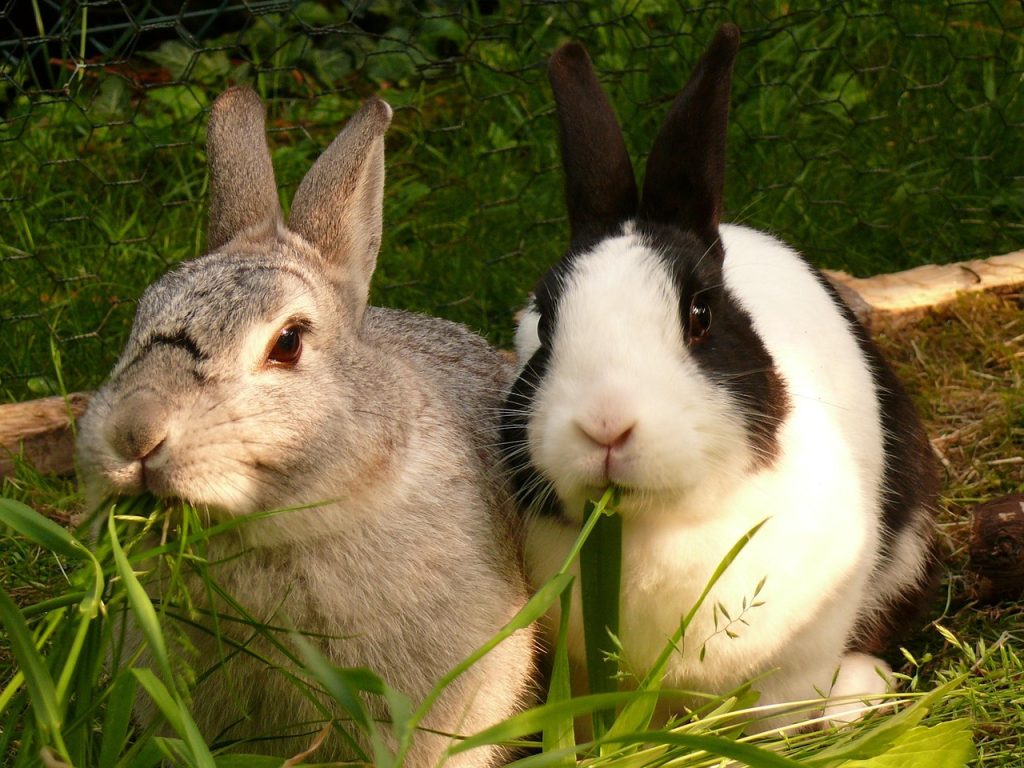
The clinical realities of front-tooth versus back-tooth pathologies require distinct diagnostic and treatment approaches.
Incisor Disease
The incisors are designed for shearing, slicing through tough grass stems, and pulling food into the mouth. When malocclusion hits the front teeth, they can rapidly grow into dramatic, visible structures. Lower incisors tend to grow straight upward and outward, protruding from the lips like miniature tusks. Upper incisors typically curl inward, forming circles that can eventually pierce the roof of the mouth or the lips if left untrimmed.
Rabbits with severe incisor malocclusion can sometimes adapt by using their lips to scoop soft foods or crumbled pellets into their mouths, but they can no longer slice fresh forage or chew safely.
Molar Disease
Because the cheek teeth cannot be visualized without specialized medical instruments, molar disease is a hidden hazard.
When molar wear becomes uneven, the sharp spurs that form follow predictable, highly destructive paths based on jaw anatomy. Lower molar spurs almost always point inward (lingually), growing toward the tongue. As they lengthen, they slice into the sides of the tongue, eventually trapping it down so the rabbit cannot physically swallow.
Conversely, upper molar spurs typically grow outward (buccally), digging directly into the sensitive tissue of the cheeks. Every single chew results in a painful laceration, creating open ulcers that easily become infected with oral bacteria.
Table 4: Molar Spur Pathology
| Affected Teeth | Growth Direction | Direct Impact on Your Rabbit |
|---|---|---|
| Lower Molars | Spur Inward (Lingual Growth) | Lacerates / Traps Tongue |
| Upper Molars | Spur Outward (Buccal Growth) | Slices / Ulcerates Cheeks |
As the clinical profiles from VCA Animal Hospitals highlight, when teeth are forced shut against these massive spurs, the unnatural pressure pushes the tooth roots backward into the delicate bones of the skull, permanently damaging the structural architecture of the head.
6. How Veterinarians Diagnose Dental Disease
A comprehensive veterinary dental evaluation is an orderly, multi-step process. A quick peek in the exam room is rarely enough to build a complete diagnostic picture.
Phase 1: Conscious Physical Exam
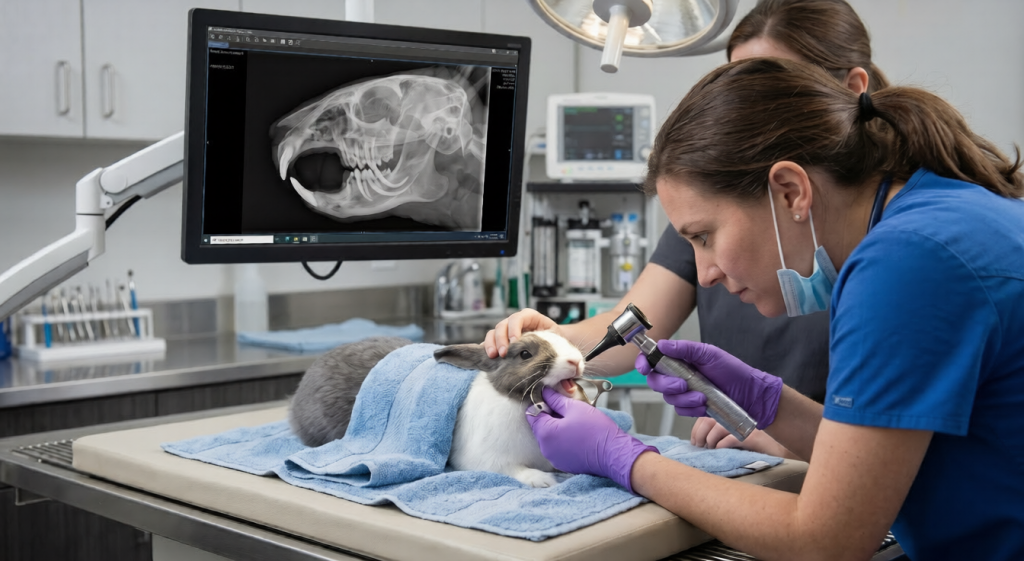
The veterinarian will start by placing their hands on the exterior of the rabbit’s skull, checking for facial symmetry, feeling along the lower jaw for bony swellings, and checking the eyes for swelling or discharge. They will then use an otoscope or a specialized bivalve nasal speculum to peer into the narrow oral cavity of the awake rabbit.
While this can confirm the presence of large molar spurs, a conscious exam is limited by the rabbit’s tongue movements, structural resistance, and chewing reflexes. Trying to look inside a fully awake rabbit’s mouth is an exercise in futility, akin to peering into a tiny, furry cave of deep resentment.
Phase 2: Sedated Oral Examination
To truly see the back molars clearly, full sedation or light general anesthesia is highly recommended. Once the rabbit is safely sedated, the vet can use specialized mouth gags and cheek dilators to open the oral cavity fully. This allows for a 360-degree inspection of every single tooth surface, precise mapping of ulcers, and clean visualization of the deep periodontal pockets.
Phase 3: High-Resolution Dental X-Rays (Radiographs)
Skull radiographs are the gold standard of rabbit dentistry. More than 60% of a rabbit’s tooth structure sits below the gum line. A visual inspection cannot tell you what is happening inside the bone.
Table 5: What Critical Info Dental X-Rays Reveal
| What Critical Info Dental X-Rays Reveal | Description |
|---|---|
| Root Elongation | Extent of backward tooth root growth |
| Bone Density | Cortical thinning or lysis of jaw |
| Early Abscesses | Periapical lucencies (hidden pus) |
X-rays allow the veterinarian to accurately assess the health of the roots, trace whether upper roots are encroaching on the nasal passages or eyes, and identify early bone infections long before an external lump forms on the face.
7. Treatment for Overgrown Teeth in Rabbits
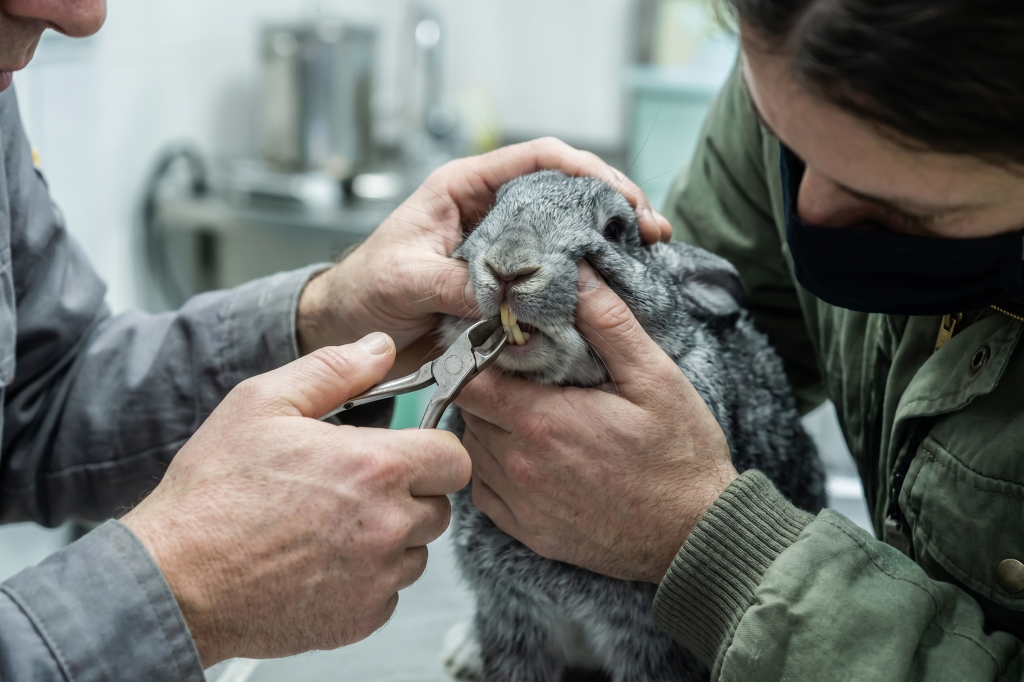
Treating rabbit dental disease requires specialized tools, precise veterinary training, and proper patient stabilization.
Professional Dental Trimming (Burring)
The only safe, modern method for shortening overgrown rabbit teeth is mechanical burring. Using a high-speed, water-cooled rotary dental handpiece equipped with a diamond burr, the veterinarian carefully grinds down the elongated crowns and shapes them back to a natural anatomical plane.
This procedure must be performed under general anesthesia or deep sedation to protect the rabbit from sudden movements that could result in catastrophic soft-tissue lacerations from the burr.
Why Scissor Clipping Is Dangerous
Historically, some practitioners and owners used hound-dog nail clippers or heavy scissors to simply snap off overgrown incisors in conscious rabbits. This practice is highly dangerous and should never be attempted. It is a medieval approach to modern dentistry.
The intense crushing force of mechanical scissors applies massive pressure across the tooth structure, frequently causing the tooth to split vertically down below the gumline into the germinal tissue. This shatters the tooth root, causes intense pain, exposes the pulp cavity to immediate bacterial infection, and can cause permanent, agonizing root deformities or deep jaw abscesses.
Guidance from the American Veterinary Medical Association (AVMA) emphasizes that high-speed burring tools are the standard of care for small herbivorous mammals.
Tooth Extraction
When a tooth is severely diseased, loose, structurally dead, or associated with a chronic periapical abscess, full surgical extraction is often the best course of action. Rabbits can live excellent lives with missing teeth—even without any incisors at all—provided their owners modify their food presentation by shredding greens or chopping forage into manageable, bite-sized pieces.
Post-Operative Recovery and Assisted Feeding
Managing a rabbit’s pain after a dental procedure is vital for a successful recovery. Effective multi-modal pain relief, typically utilizing non-steroidal anti-inflammatory drugs (NSAIDs) like meloxicam, helps reduce oral inflammation and encourages the rabbit to start eating on their own sooner.
Until the rabbit is chewing independently, supportive syringe feeding with a high-fiber recovery food (such as Critical Care) is mandatory to maintain stable gastrointestinal motility and protect against liver issues or GI stasis.
8. Can Rabbit Dental Disease Be Cured?
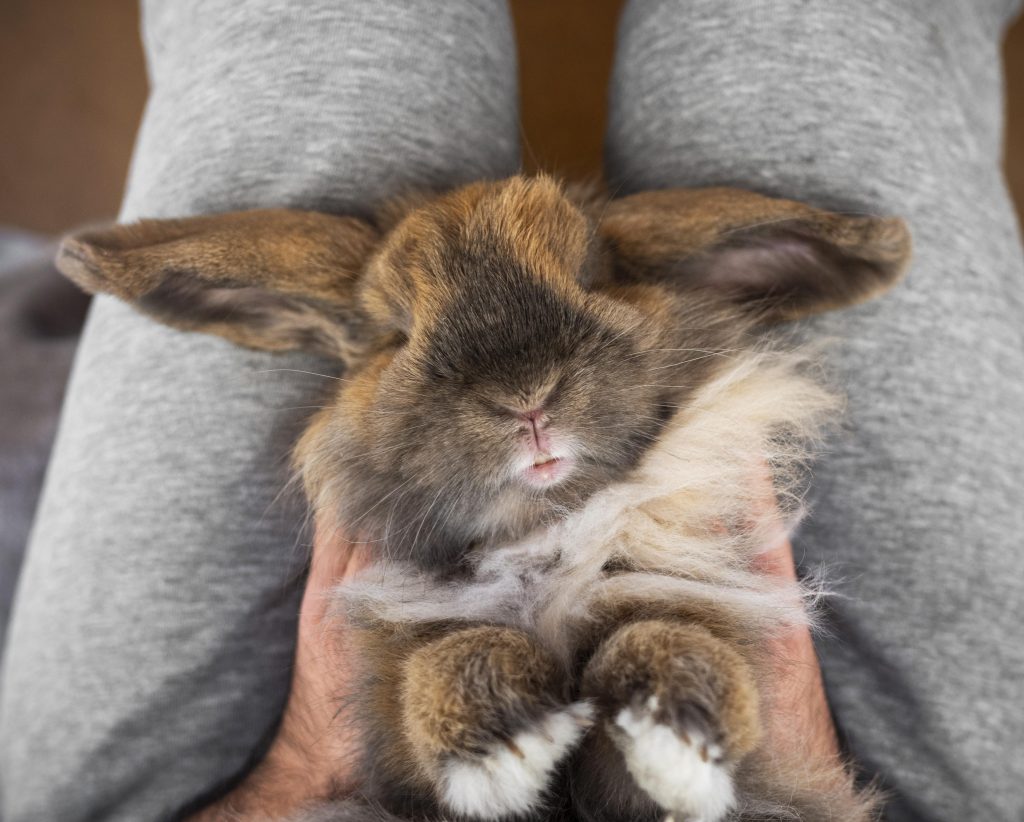
Whether rabbit dental disease can be completely cured depends heavily on the underlying cause and how early the issue was detected.
The Reality of Chronic Management
For rabbits suffering from structural genetic malocclusion or advanced, late-stage root elongation, a complete permanent cure is rarely possible. These animals will require ongoing, lifelong medical maintenance.
Depending on the rapid growth rate of their teeth, these rabbits may need to visit the clinic for routine dental burring every 4 to 12 weeks for the rest of their lives.
Factors Directing Long-Term Prognosis
Table 6: Factors Directing Long-Term Prognosis
| Factor | Impact on Long-Term Prognosis |
|---|---|
| Early Intervention | Catching molar spurs when they are minor spikes rather than massive, ulcer-causing points dramatically improves long-term management outcomes. |
| Root Involvement | If the tooth roots are healthy and the issue is purely dietary, transitioning the rabbit to a high-fiber diet to prevent stasis can sometimes reset the wear cycle. |
| Bone Integrity | Once a deep bacterial infection takes hold within the jawbone, the long-term prognosis drops significantly, requiring intensive, aggressive surgical and antibiotic management. |
Quality of Life Considerations
It is important to understand that a diagnosis of chronic dental disease is not a death sentence. With consistent veterinary care, diligent home monitoring, and customized lifestyle adjustments, rabbits with severe dental issues can maintain a fantastic quality of life for many years.
In our ongoing tracking of rabbit wellness metrics, we emphasize that keeping a meticulous, structured log of weekly body weights and daily food consumption percentages is one of the most effective ways to stay ahead of the curve. By cross-referencing these daily habits with a reliable rabbit health guide, owners can spot the subtle data shifts that signal minor dental flare-ups long before they spiral into a painful lifestyle crisis.
9. How to Prevent Dental Disease in Rabbits
Aside from congenital genetic abnormalities, the vast majority of rabbit dental disease is entirely preventable through proper husbandry and dietary choices. The RSPCA emphasizes that providing an appropriate, species-specific diet is the single most effective action an owner can take to preserve long-term oral health.
The Foundation: Unlimited Grass Hay
At least 80% to 85% of your rabbit’s total daily dietary volume must consist of high-quality, long-stem grass hay. Hay should not just be a side dish; it must be the main course available 24 hours a day, 7 days a week.
The abrasive nature of grass hay comes from microscopic crystals called phytoliths (silica) found naturally within the plant tissue. As the rabbit grinds this fibrous material back and forth between their molars, these crystals act like fine-grit sandpaper, perfectly filing down the enamel surfaces with every bite.
Table 7: Recommended Dietary Profile
| RECOMMENDED DIETARY PROFILE | |
|---|---|
| Grass Hay | 80-85% (Unlimited daily volume) |
| Leafy Greens | 10-15% (Fresh, varied daily) |
| Pellets | 5% (Strictly measured portions) |
Selecting the Right Hay Types
Different types of hay offer varying structural benefits for tooth wear. Identifying the best hay types for rabbits is crucial:
- Timothy Hay (First or Second Cut): The gold standard for adult rabbits. First-cut Timothy hay contains more coarse stems and seed heads, offering maximum dental resistance. Second-cut is slightly softer but still offers excellent fiber content.
- Orchard Grass & Meadow Hay: Fantastic options for rotating textures or for owners and rabbits with specific allergies to Timothy grass.
- Alfalfa Hay Warning: Alfalfa is a legume, not a grass. It is far too high in calcium and protein for healthy adult rabbits and should only be fed to growing kits, pregnant, or lactating animals.
Enforcing Strict Portion Control on Pellets
High-quality, Timothy-based pellets should serve merely as a concentrated vitamin and mineral supplement, not a primary food source. As a general clinical rule of thumb, limit pellet intake to no more than 1/4 cup per 6 pounds of optimal adult body weight per day. If your rabbit finishes their pellets within ten minutes and spends the rest of the day demanding more, they will naturally pivot to eating their hay, keeping their jaw mechanics healthy.
Environmental Enrichment and Chewing Outlets
Provide a dynamic variety of safe chew toys to encourage natural foraging behaviors. Apple wood branches, willow sticks, dried seagrass mats, and plain, dye-free cardboard tubes offer fun mental stimulation and encourage beneficial chewing behaviors throughout the day.
10. When to See a Vet Immediately
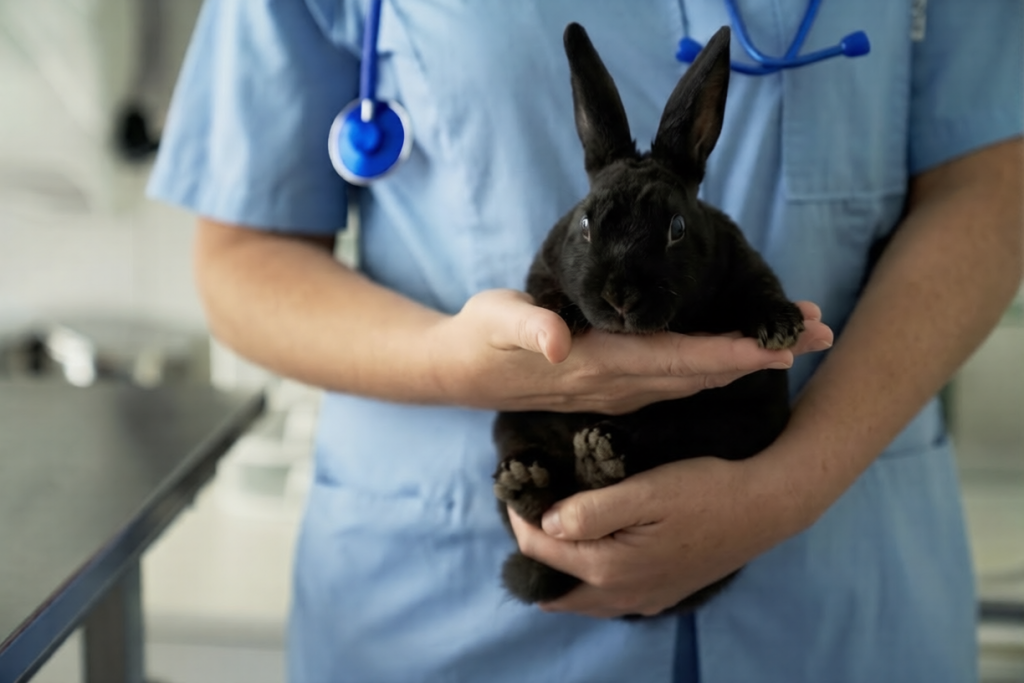
Because things can change quickly with a rabbit’s health, you should head to an emergency veterinary hospital immediately to avoid a sudden death crisis if you notice any of these high-risk clinical triggers:
- Total Food Refusal: The rabbit rejects even their absolute favorite high-value treats or fresh herbs.
- Absence of Fecal Output: No droppings have been passed for 6 hours or longer, or droppings are accompanied by clear gelatinous mucus.
- Extreme Hypersalivation: The entire lower jaw, throat, and chest fur are completely saturated with foul-smelling saliva.
- Obvious Facial Asymmetry: A visible or palpable lump has formed on the lower jawline or directly underneath the eye socket.
- Acute Lethargy: The rabbit is hunched up in a corner, unresponsive to your presence, or clicking their teeth loudly in obvious physical pain.
11. Frequently Asked Questions
Can overgrown rabbit teeth fix themselves?
No. Once a rabbit’s teeth become misaligned or develop sharp molar spurs, they cannot naturally wear themselves back into alignment. The physical presence of the overgrowth alters the mechanics of the jaw, making normal wear impossible. Professional veterinary intervention is required to reset the dental plane.
Can I trim my rabbit’s teeth at home?
Absolutely not. Trimming a rabbit’s teeth requires specialized, high-speed veterinary dental burrs and proper sedation. Attempting to use nail clippers or wire cutters at home will crack the teeth, split the roots, cause intense pain, and likely introduce severe infections into the jawbone.
How often do rabbit teeth need trimming?
The frequency depends entirely on the severity of the specific case. Rabbits with mild, diet-induced molar spurs may only need a single trim followed by a permanent transition to a high-fiber diet. However, rabbits with severe genetic malocclusion typically require professional trims every 4 to 12 weeks.
What foods help wear down rabbit teeth?
Coarse, long-stem grass hays (like Timothy, Orchard, or Meadow hay) are the best foods for wearing down teeth. Fresh, fibrous leafy greens—such as romaine lettuce, celery leaves, and dandelion greens—also encourage healthy chewing mechanics. Avoid sugary toxic foods, soft treats, and seeds.
Are dental problems painful for rabbits?
Yes, dental problems are incredibly painful. Sharp molar spurs continuously slice into the sensitive tissue of the tongue and inner cheeks, creating open, bleeding ulcers. Elongated roots also apply pressure to the nerves inside the skull, causing significant discomfort.
Can rabbits live with chronic dental disease?
Yes. If an owner is committed to maintaining a regular veterinary schedule, tracking body weight, and adjusting food presentation (such as blending greens or syringe-feeding during flare-ups), rabbits with chronic dental disease can live happy lives.
Why is my rabbit drooling?
Drooling (often called “slobbers”) is a primary clinical sign of advanced molar disease. It means sharp spurs are lacerating the tongue or cheeks, or the teeth are physically overgrown to the point where the rabbit cannot close their mouth completely to swallow saliva.
Can dental disease cause eye problems?
Yes. The roots of a rabbit’s upper teeth run directly beneath their tear ducts and eye sockets. When these roots elongate, they compress the tear ducts, causing chronic tearing and staining. In severe cases, the roots can push into the tissue behind the eye, causing the eyeball to bulge.
12. Final Thoughts
Rabbit dental disease is a complex, challenging condition, but it is highly manageable when caught early. By understanding the unique, continuous growth mechanics of your rabbit’s teeth, optimizing their daily diet around unlimited grass hay, and keeping a close eye out for early behavioral shifts, you can protect your companion from severe oral pain and common secondary digestive complications.
Remember, you are your rabbit’s primary healthcare advocate. Regular veterinary dental checks and daily observation are the best tools you have to keep your pet healthy, happy, and chewing safely for years to come.
Medical & Veterinary Disclaimer: bunnyowners.com is an informational resource for rabbit owners and enthusiasts. We are not veterinarians. The content on this website is not a substitute for professional veterinary care, diagnosis, or treatment. Always seek the advice of your veterinarian with any questions you may have regarding your pet’s medical condition, diet, or overall health.