
Disclaimer: The information provided on bunnyowners.com is for educational purposes only and does not constitute veterinary medical advice; always consult your vet before changing your rabbit’s diet. Additionally, this post contains affiliate links. As an Amazon Associate, and other affiliate advertising programs, I earn from qualifying purchases at no extra cost to you
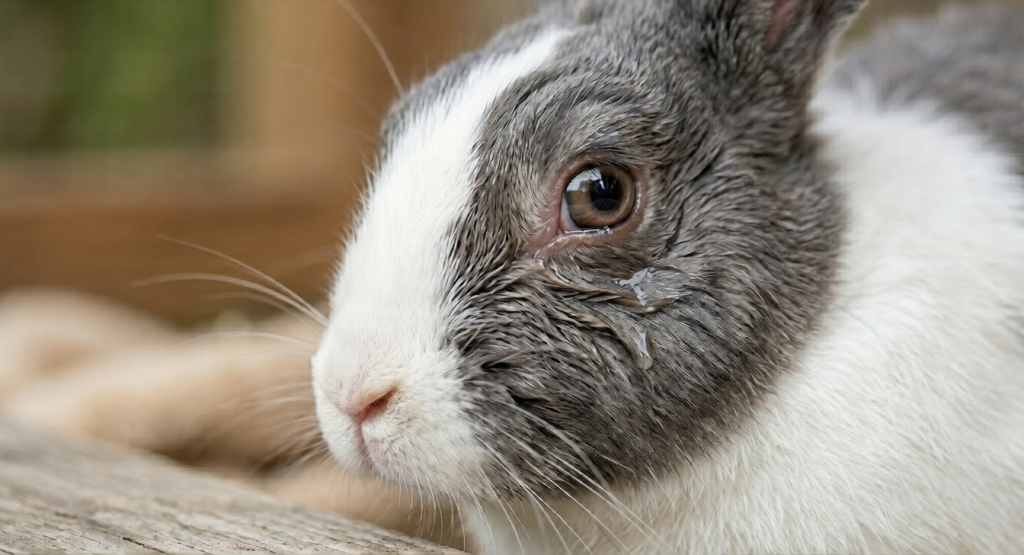
Finding wet, matted fur or persistent tearing around your rabbit’s eyes can be highly concerning for any owner. Because rabbits are prey animals that naturally mask their symptoms, a weeping eye is rarely just a temporary sting; it is usually an early warning sign that their delicate drainage pathway is compromised. Understanding exactly why this fluid is overflowing is the first step in figuring out how urgent the situation is.
Watery eyes in rabbits are commonly caused by blocked tear ducts, dental root disease, hay dust, infections, or corneal injuries. While mild environmental irritation can occasionally resolve on its own, persistent tearing or swelling requires professional evaluation by a rabbit-savvy vet. Because rabbits habitually hide serious pain, a wet cheek is a primary clinical indicator that an underlying health issue needs targeted treatment.
To help you decode what your rabbit is experiencing, this guide will break down the precise anatomy of lagomorph tear overflow (epiphora) and the baseline of a healthy eye. We will analyze the most common underlying causes—including the critical link between dental health and tear drainage—while utilizing my dedicated clinical rabbit wellness resources to provide a practical guide to fluid types, home care boundaries, and the specific warning signs that mean you need to call a vet today.
1. Why Rabbits Get Watery Eyes
To figure out why a rabbit’s eyes are wet, you have to look closely at their internal plumbing. The process is actually very straightforward when things are working correctly:
- Tear Production: Healthy rabbits have tear glands that constantly produce moisture to protect, clean, and lubricate the surface of the eyeball.
- The Tear Duct: Under normal conditions, this fluid doesn’t simply evaporate or run down the face. It drains into a microscopic opening in the corner of the eyelid known as the nasolacrimal duct.
- The Nose: From there, the tube routes directly through the complex bones of the skull and empties out inside the nasal cavity.
- Normal Drainage: Because the fluid drains away invisibly through the nose, a healthy rabbit’s face stays dry and clean.
When that structural pipe hits a snag, you get epiphora (the clinical name for tear overflow). As noted in clinical documentation on common lagomorph ocular conditions, this happens when the physical channel gets clogged by debris, or when acute surface irritation forces the glands to produce fluid faster than the narrow pipe can move it. With the drainage route blocked, the backup has nowhere to go but out. It blows past the lower eyelid margin, soaking the fur and creating that damp trail down the cheek.
2. What Does a Healthy Rabbit Eye Look Like?
Before staging a medical intervention, you need a firm grasp on what a normal, functional rabbit eye actually looks like. Instead of guessing, you can use a quick physical checklist to audit your pet’s current baseline.
A perfectly healthy rabbit eye will always meet the following criteria:
- The eyeball itself is bright, completely transparent, and free of any visible film.
- The eyelids remain completely relaxed and wide open without any involuntary twitching.
- The surrounding tissue (the conjunctival lining) presents a pale pink hue, completely free of localized crimson swelling.
- The facial fur directly beneath the lower lid margin stays dry, clean, and fluffy.
A rabbit’s social life can easily obscure these symptoms. In a home setup with a bonded pair, like my own house rabbits, Mocha and Chino, partners spend hours grooming each other’s faces. If one rabbit experiences mild tearing, the companion will often rapidly lick and clean the damp patch. This keeps the face looking tidy, but it easily hides an early-stage blocked duct or infection from your view until the underlying damage is quite advanced.
Before a bondmate cleans the area, use this visual audit matrix to cross-reference your checklist findings:
Table 1: Rabbit Eye Health Comparison Matrix
| Visual Metric | Healthy Rabbit Eye | Problematic Rabbit Eye |
|---|---|---|
| Surrounding Fur | Dry, clean, fluffy | Wet, matted, or crusty |
| Clarity | Crystal clear, transparent | Cloudy, hazy, or bluish tint |
| Appearance | Bright, fully alert | Dull, squinting, or half-closed |
| Discharge | None | Clear tears, white mucus, or thick pus |
| Eyelids | Wide open, relaxed | Partially closed, swollen, or red |
3. Most Common Causes of Watery Eyes in Rabbits
Blocked Tear Ducts (Epiphora)
A physical backup in the nasolacrimal duct causes the vast majority of wet cheeks. Because this internal channel is highly compressed and narrow, shed skin cells, thick mucus, or localized inflammation can trigger a complete clog. Tears immediately pool and overflow on the affected side. An Exotics Veterinarian remedies this by threading a tiny, blunt cannula into the duct opening to clear the line with a gentle sterile saline flush.
Dental Disease (The Root Compression)
Generic pet blogs often miss this entirely, but it is a massive driver of chronic tearing. A rabbit’s molars and incisors are elodont, meaning they lack true anatomical roots and grow continuously throughout life. If a low-fiber diet or genetic misalignment prevents the teeth from wearing down properly, dangerous dental disease can develop. As the crowns grow long, the base of the tooth is physically forced backward into the skull.
The mechanics are deeply tied to how chronic dental disease alters skull anatomy; the upper molar roots sit directly beneath the path of the tear duct. As they push upward, they physically crush the drainage tube shut. Veterinary case studies tracking respiratory and dental disease correlations confirm that persistent watery eyes are frequently the very first visible sign of deep dental changes before a rabbit begins eating less hay or gradually loses weight.
Hay, Dust, or Foreign Objects
Rabbits eat with their faces buried directly in their food, which creates obvious occupational hazards. Fine bits of hay chaff, dusty bedding particles, or stray grass seeds easily slide beneath the third eyelid. This triggers a sudden onset of heavy tearing, rapid blinking, and frantic face-pawing as the rabbit tries to scrub the irritant clear.
Eye Injuries and Corneal Scratches
Accidents happen quickly when rabbits zoom around furniture. A sharp strand of first-cutting timothy hay, a territorial scuffle with a bondmate, or a collision with a sharp wooden toy can score the transparent surface of the cornea. When a foreign body compromises the eye, an immediate immune response triggers acute epiphora, causing tight squinting, heavy tearing, clear discomfort, and a hazy or bluish spot over the scratch. These require immediate care, as corneal wounds easily develop localized abscesses if bacteria invade.
Conjunctivitis (Pink Eye)
This involves direct inflammation of the pink mucus membranes surrounding the eyeball. In rabbits, it is rarely a simple virus like human pink eye; instead, it points to a localized bacterial flare-up or chronic environmental irritation. Standard medical profiles detailing bacterial ophthalmic infections in small mammals note that the initial signs show conjunctivitis turning into a milky or sticky ocular fluid that can eventually mat the lids completely shut.
Corneal Ulcers
An ulcer is an open, deep sore on the eye surface that forms when a corneal scratch goes undetected or encounters severe bacterial contamination. The rabbit will experience acute pain, holding the eye tightly shut. The surface looks hazy, milky, or shows a distinct visible crater. Corneal ulcers are extremely painful, although rabbits often hide discomfort until they begin showing obvious signs of pain. This is an immediate veterinary emergency to preserve the rabbit’s sight.
Respiratory Infections (Snuffles)
Upper respiratory infections in rabbits, commonly called rabbit snuffles, are typically driven by bacterial pathogens like Pasteurella or Bordetella. Because the respiratory tract connects directly to the eye via the nasolacrimal duct, bacteria can travel upward, inflaming the drainage channel.
As outlined in research surrounding domestic pasteurellosis transmission, a rabbit with snuffles shows wet eyes paired with a mucopurulent nasal exudate, frequent sneezing, and dried, crusty discharge on the inside of their front paws from wiping their face.
Environmental Irritants
Rabbits possess highly sensitive respiratory linings and eyes. Airborne irritants force the tear glands to overproduce fluid to flush the surface. Common household triggers include cigarette smoke, harsh chemical cleaning sprays, heavily scented litters, perfumes, and ammonia gas buildup from a poorly ventilated or infrequently cleaned litter box.
Eyelid Anomalies (Entropion / Distichiasis)
Though less common, some rabbits are born with genetic structural defects of the eyelids. Entropion causes the edge of the eyelid to roll inward, while distichiasis involves eyelashes growing from abnormal positions along the eyelid margin. In both cases, rigid hairs constantly scrape against the eyeball every time the rabbit blinks, leading to chronic, lifelong tearing and minor corneal scarring from a young age.
4. Diagnostic Checklist: One Eye vs. Both Eyes
Checking whether the waterworks affect one eye or both sides provides an immediate clue for your investigation. While rabbits don’t always follow medical textbooks and crossover cases occur, tracking this presentation pattern isolates the most probable cause.
Use this reference table to evaluate how common conditions typically distribute across the eyes:
Table 2: Diagnostic Presentation Guide
| Symptoms Present in One Eye | Symptoms Present in Both Eyes |
|---|---|
| Traumatic Eye Injury (Scratch) | Environmental Irritation (Smoke/Sprays) |
| Foreign Object (Hay Poke) | Upper Respiratory Infection (Snuffles) |
| Unilateral Blocked Tear Duct | Chronic Dusty Bedding or Poor Ventilation |
| Localized Dental Root Compression | Advanced, Systemic Dental Disease |
| Isolated Corneal Ulcer | Widespread Allergenic Irritants |
5. How Bonded Partners React to Ocular Illness
Rabbits are highly social creatures, and observing how a bonded companion treats a mate with a watery eye can offer critical diagnostic clues. When a rabbit experiences eye pain or a drainage block, their partner’s grooming behavior typically shifts in one of two distinct directions.
In many cases, the healthy partner will step up their grooming efforts, focusing intently on the affected eye to lick away the dampness. For instance, if Mocha detects even a hint of moisture or discomfort around Chino’s face, she will spend an hour meticulously cleaning the area. While this keeps the fur from matting, it can mask a growing issue from your view.
Conversely, if an eye infection becomes severe or painful, the ailing rabbit may aggressively push their partner away to protect the sensitive area, or the healthy rabbit may suddenly pull back from grooming altogether. Paying close attention to these subtle changes in your pair’s daily social dynamics can help you spot an ocular issue long before it becomes obvious on the face.
6. Understanding the Texture and Type of Eye Discharge
While the location of the moisture provides context, the actual consistency of the fluid tells an entirely different story. Clear fluid behaves quite differently from thick mucus, and monitoring how the discharge changes over 24 to 48 hours is a critical step in assessing urgency.
In rabbits, inflammatory fluid transitions rapidly based on the severity of the immune response. Because rabbit pus has a unique, highly viscous texture compared to other household pets, identifying these shifts early helps prevent localized infections from invading the deep skull bones or surrounding tissue structures.
Review the breakdown below to understand the clinical meaning behind different types of eye fluids.
Table 3: Symptom Discharge Analysis
| Fluid Appearance | Primary Suspected Cause | Clinical Meaning |
| Clear, Watery Tears | Physical Irritation, Dust, Early Duct Obstruction | Normal tear fluid overflowing due to a drainage backup or minor surface sting. |
| White, Milky Mucus | Early Bacterial Response or Minor Conjunctivitis | The immune system is reacting to an irritant or a low-grade localized infection. |
| Thick, Creamy Pus | Severe Bacterial Infection or Abscess | High Risk. Rabbit pus is naturally thick like toothpaste; indicates a deep infection or dental abscess. |
| Tinged with Pink/Blood | Severe Trauma or Deep Ulceration | Immediate emergency. Indicates structural damage to the eye or surrounding tissues. |
7. Red Alert: Symptoms That Require a Vet Visit Today
Rabbits are evolutionary experts at pretending everything is fine, so you have to actively watch for the cracks in their defenses. A watery eye can pivot from a minor aesthetic nuisance to a structural emergency in a few hours.
If your pet holds its eyelids tightly closed or flinches away when you approach its face, do not wait it out. Structural changes to the eye surface—like a smoky, blue, or milky film clouding the cornea—require immediate clinical backup.
This decline almost always rolls into distinct behavioral shifts. Many rabbits stop eating, become lethargic, or begin grinding their teeth because of the pain. According to the RWAF medical guide on recognizing and managing rabbit pain signs, a rabbit in severe discomfort will completely stage a hunger strike against its hay, reject favorite green treats, and melt into a completely lethargic lump in the corner.
8. What to Expect at the Veterinary Clinic
Visiting a clinic can induce anxiety for both you and your pet, but a experienced rabbit care veterinarian relies on targeted, structured checks rather than guesswork to map out a treatment plan.
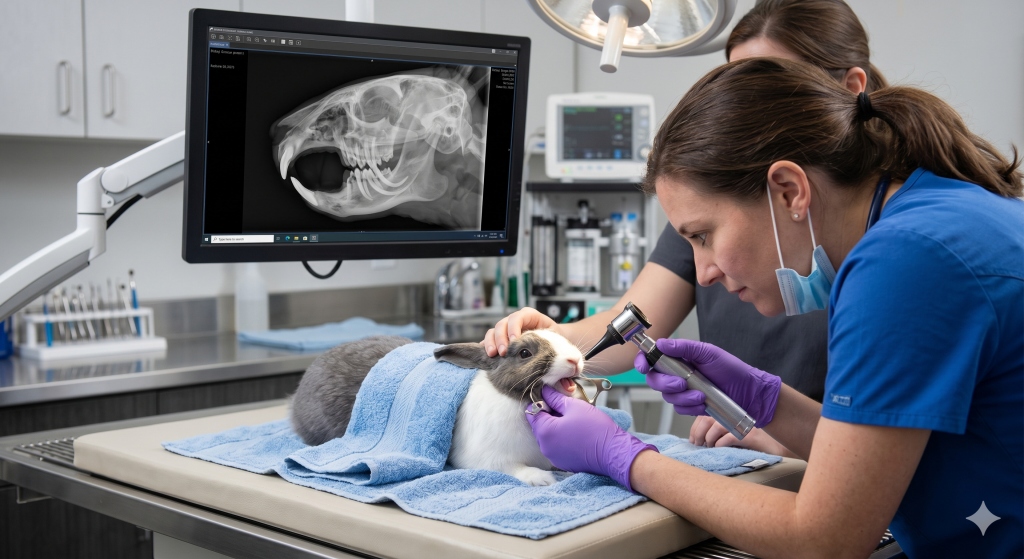
The standard medical sequence begins with a Fluorescein Stain Test, where the vet applies a harmless glowing green dye into the eye. Under a blue diagnostic light in a dimmed room, the stain adheres perfectly to damaged tissue layers, making microscopic scratches or deep ulcers instantly visible.
Following the surface exam, the vet addresses potential internal drainage blockages with a Nasolacrimal Flush. After numbing the eye surface, a microscopic, flexible tube is threaded into the duct opening to gently push sterile saline through the passage until it safely clears out of the nostrils.
Finally, the vet completes a Targeted Dental Exam using an otoscope to check molar wear, often recommending high-definition skull X-rays or diagnostic imaging like a CT scan if they suspect the root systems are physically growing upward into the nasolacrimal pathway.
9. Safe Home Care: Dos and Don’ts
While you wait for your scheduled veterinary appointment, home care boundaries must be maintained to keep your rabbit stable and comfortable. Missteps in eye care can lead to rapid structural damage. If you are ever uncertain about basic clinical parameters, reviewing my comprehensive overview of common rabbit health issues can help ground your care choices before stepping into the clinic.
Actionable Protocol
- ✔ DO: Keep the facial fur clean and dry. Tear fluid contains proteins and salts that will cause severe skin scald (similar to urine scald) if left on the skin. Gently dab the wet area with clean, warm, damp gauze to clear away crusts and dry the fur with a soft tissue.
- ✔ DO: Move the rabbit to a well-ventilated, clean space. Switch out their litter box daily, swap dusty bedding for low-dust paper pellets, and vigorously shake out loose dust from hay before placing it in their enclosure.
- DON’T: Ever use human over-the-counter eye drops (like Visine) or leftover medications from previous pets. Applying unprescribed drops can introduce hidden steroids, which causes rapid corneal breakdown in rabbits and can lead to fatal liver necrosis if an undetected surface scratch is already present.
- ✖ DON’T: Attempt to force the eyelids open roughly or scrape at the eyeball itself to remove debris. If a quick, gentle flush with sterile saline eyewash doesn’t clear a particle, stop and see a professional.
10. How to Prevent Epiphora in House Rabbits
While you cannot prevent every genetic issue or accidental hay poke, maintaining clean husbandry goes a long way toward protecting your rabbit’s eye health. Environmental management directly impacts how hard the nasolacrimal system has to work to keep the eye clear.
High-Quality, Low-Dust Hay Selection
Feed premium, long-strand grass hays like timothy or orchard grass. Choosing the best hay for your rabbits and ensuring your pet eats enough fiber every day dramatically lowers the risk of dental disease while minimizing dusty particles that can irritate the eyes.
Safe Bedding Alternatives
Use dust-free, non-scented paper or compressed wood-pellet bedding materials. Avoid aromatic pine or cedar shavings entirely, as the volatile phenols they release damage rabbit respiratory linings and inflame the conjunctiva.
Routine Veterinary Dental Assessments
Schedule annual or bi-annual wellness exams with an experienced small mammal specialist who performs thorough oral checks. Prioritizing consistent care ensures that you are managing molar root changes proactively, allowing you to catch structural misalignment early for corrective trims. While managing rabbit dental disease fundamentally starts with feeding a proper, high-fiber diet, routine clinical exams help catch subtle structural variations long before elongated tooth roots begin compressing the nasolacrimal ducts.
Optimized Habitat Ventilation
Ensure excellent airflow around the enclosure. Never seal a rabbit cage in a small, unventilated closet or basement room where ammonia gas from localized waste can accumulate and chemically burn the delicate surface of their eyes.
11. Frequently Asked Questions
Can regular hay cause a rabbit’s eyes to water?
Yes. Fine hay dust, sharp strands, or small particles can physically irritate the surface of the eye. This causes the tear glands to temporarily over-produce fluid in an attempt to flush the foreign material out naturally.
Why is only one of my rabbit’s eyes running?
Single-sided tearing strongly points to a localized issue rather than an environmental problem. Common culprits for one-sided weeping include a physical blockage inside that specific tear duct, a foreign object trapped under the eyelid, a corneal scratch, or a localized dental root pressing against the drainage pathway.
Can overgrown teeth really affect their eyes?
Absolutely. Because a rabbit’s upper tooth roots sit directly beneath the tear drainage track, elongated molar roots can physically pinch the tube shut from inside the skull. This prevents normal tear drainage, forcing the fluid to overflow onto the face.
Is a watery eye considered a medical emergency?
Clear, watery tearing on its own is urgent and should be evaluated, but it is not always a same-hour emergency. However, if the wetness is paired with active squinting, surface cloudiness, thick discharge, or a sudden loss of appetite, it immediately becomes a critical situation.
12. Conclusion
Paying close attention to your rabbit’s eyes is a vital part of proactive pet ownership. Because lagomorphs are hardwired to hide discomfort, a symptom as seemingly minor as a damp patch of fur on the cheek is often an early warning signal for an underlying issue like a blocked nasolacrimal duct or evolving dental disease. By acting quickly—keeping the surrounding facial fur clean and dry, minimizing dust in their environment, and consulting a rabbit-savvy veterinarian for a proper diagnostic exam—you can address the root cause before it escalates into a painful infection or a severe corneal ulcer.
Keep a close eye on their daily behaviors, appetite, and energy levels. If you notice multiple symptoms developing together, my guide to changes in your rabbit’s behavior, eating, and overall health can help you determine whether another underlying health condition may be contributing to your rabbit’s watery eyes.
Medical & Veterinary Disclaimer: bunnyowners.com is an informational resource for rabbit owners and enthusiasts. We are not veterinarians. The content on this website is not a substitute for professional veterinary care, diagnosis, or treatment. Always seek the advice of your veterinarian with any questions you may have regarding your pet’s medical condition, diet, or overall health.